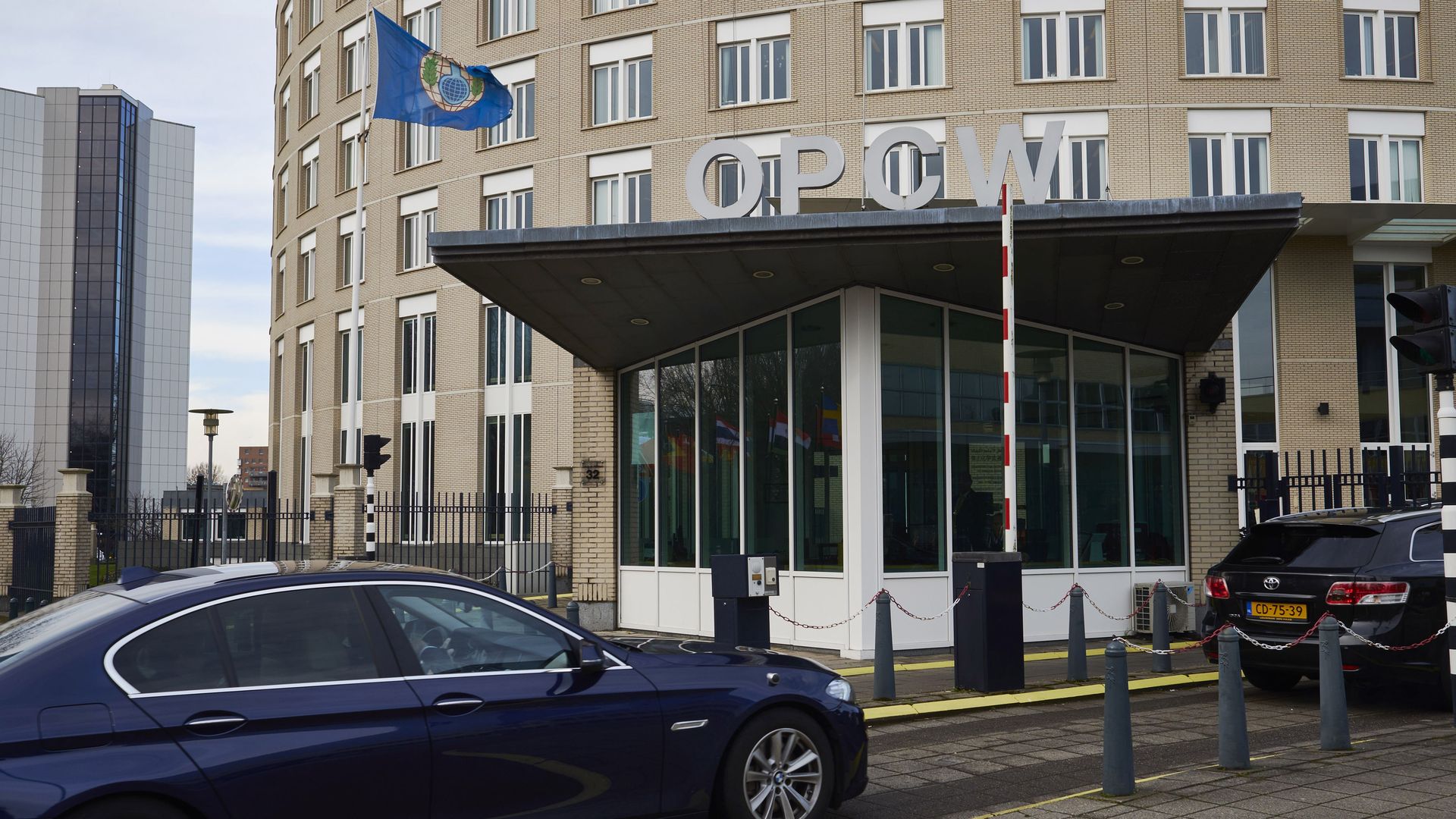
Moscow has reportedly accused the Organization for the Prohibition of Chemical Weapons (OPCW) — an international chemical warfare watchdog — of "manipulating results in Skripal probe," reports the Agence France-Presse. Sergei Skripal, and his daughter Yulia were poisoned in Salisbury, England last month with a nerve agent.
The backdrop: Earlier this month, the OPCW rejected Russia's proposal for a joint investigation into the poisoning. The U.K., along with France, Germany, and the U.S. have blamed Russia for the attack, and countries around the world have expelled Russian diplomats in retaliation. Skripal is reportedly responding to treatment and is no longer in critical condition.
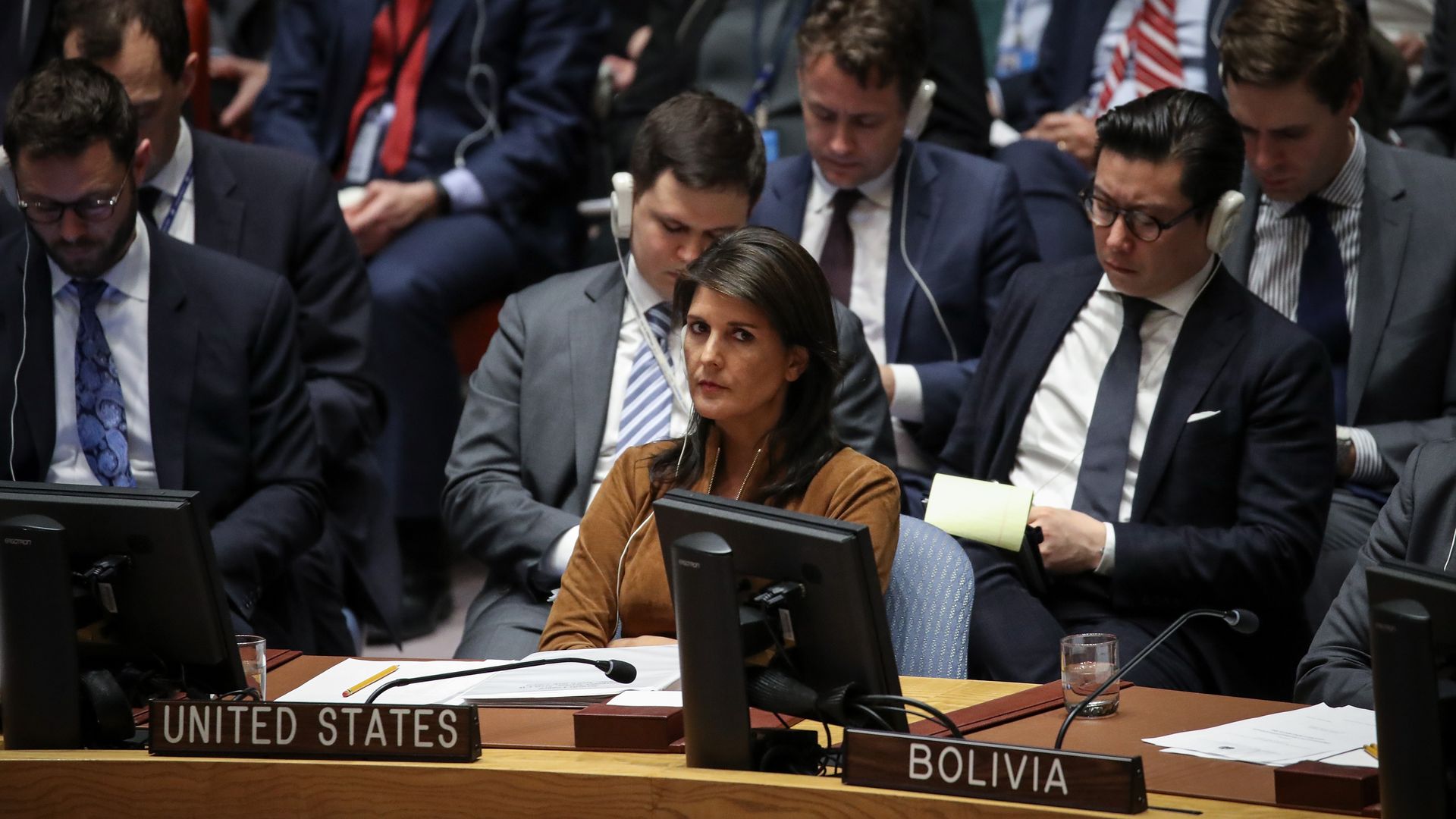
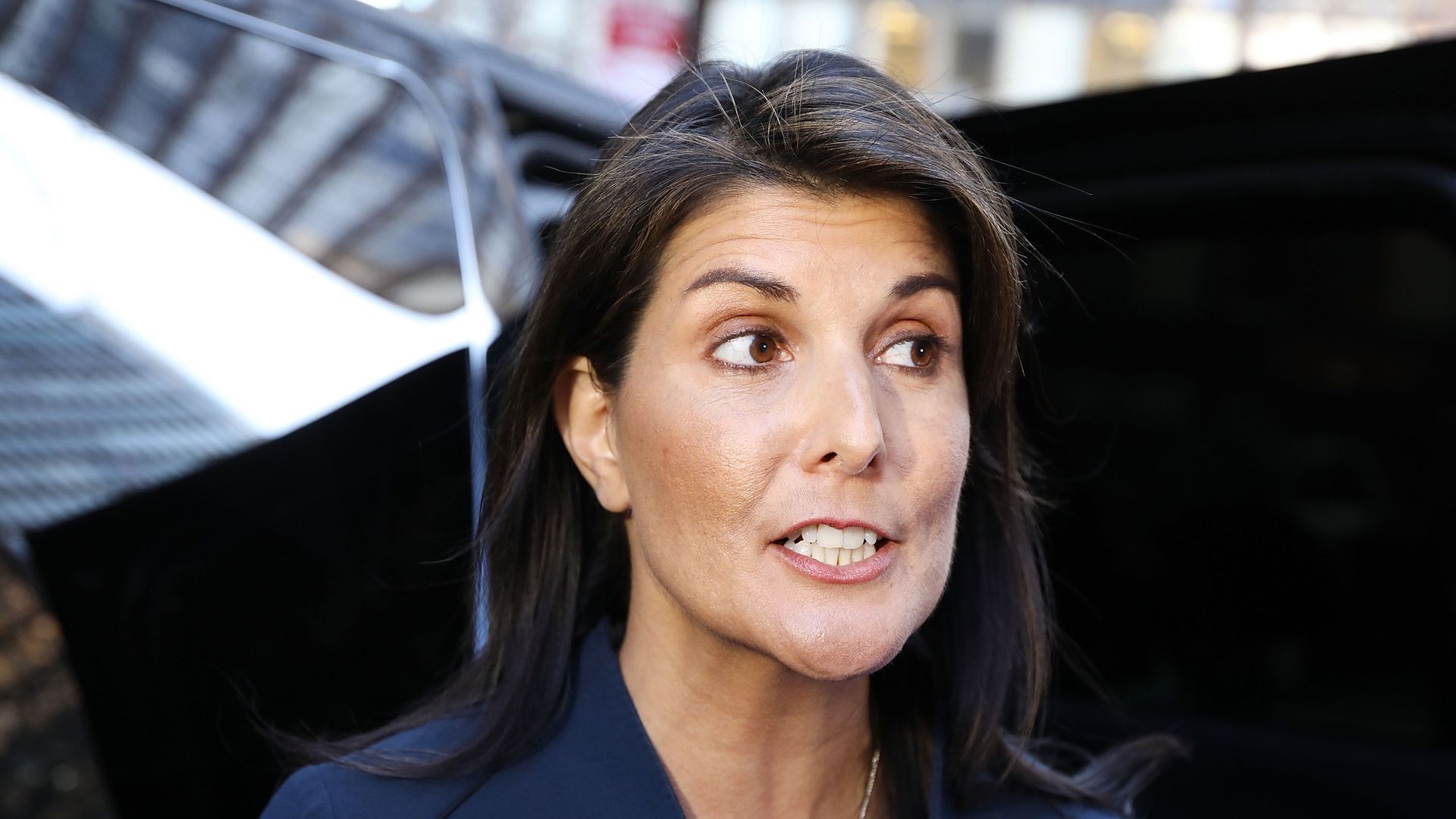
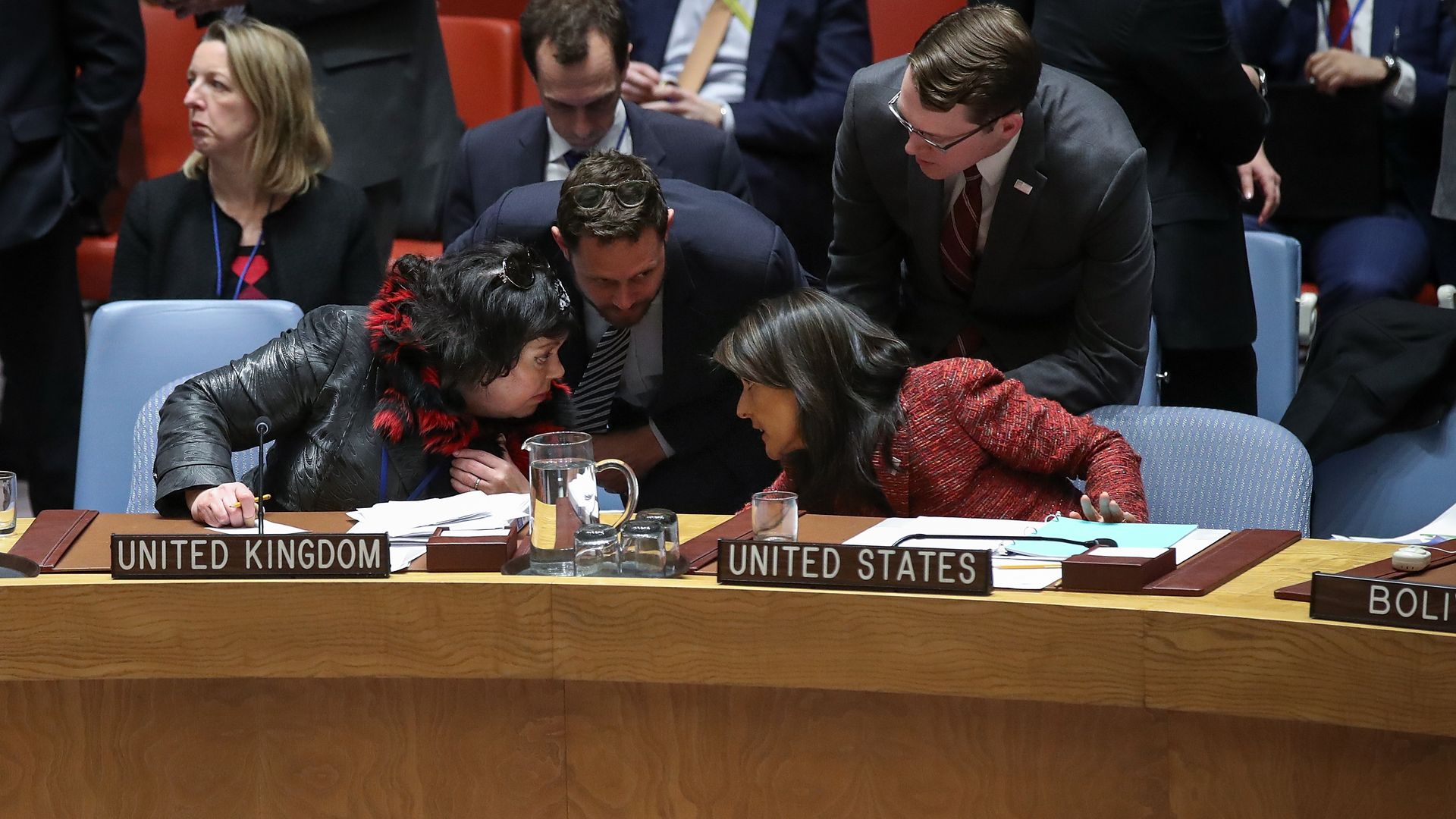
U.N. ambassador Nikki Haley said at a U.N. Security Council meeting Saturday that President Trump told her the U.S. is "locked and loaded" if Syria uses chemical weapons again.
What's happening: Russia called a meeting on Saturday morning to discuss Friday night's coordinated strikes on Syria. Russia was pushing for a vote to condemn the strikes, carried out by the U.S., U.K., and France. It failed.
I asked two of the country's top foreign-policy voices to help Axios readers interpret the strikes on Syria:
CFR President Richard Haass said he thinks President Trump "was right to attack CW-related sites to send the message that CW use is unacceptable and will bring punishment."
Ian Bremmer, president of the Eurasia Group, called it "a notable escalation —more strikes than a year ago," and part of a coalition.
The U.N. Security Council will meet on Saturday morning at Russia’s request, Reuters reports, as it considers giving Syria and “other countries” S-300 missile systems following Friday night’s strikes on the Assad regime's chemical weapons plants.
The backdrop: Per Reuters, Russia declined to supply Syria with those missiles a few years ago, but Colonel-General Sergei Rudskoi said that following the U.S.-led strikes, they "consider it possible to return to examination of this issue not only in regard to Syria but to other countries as well."
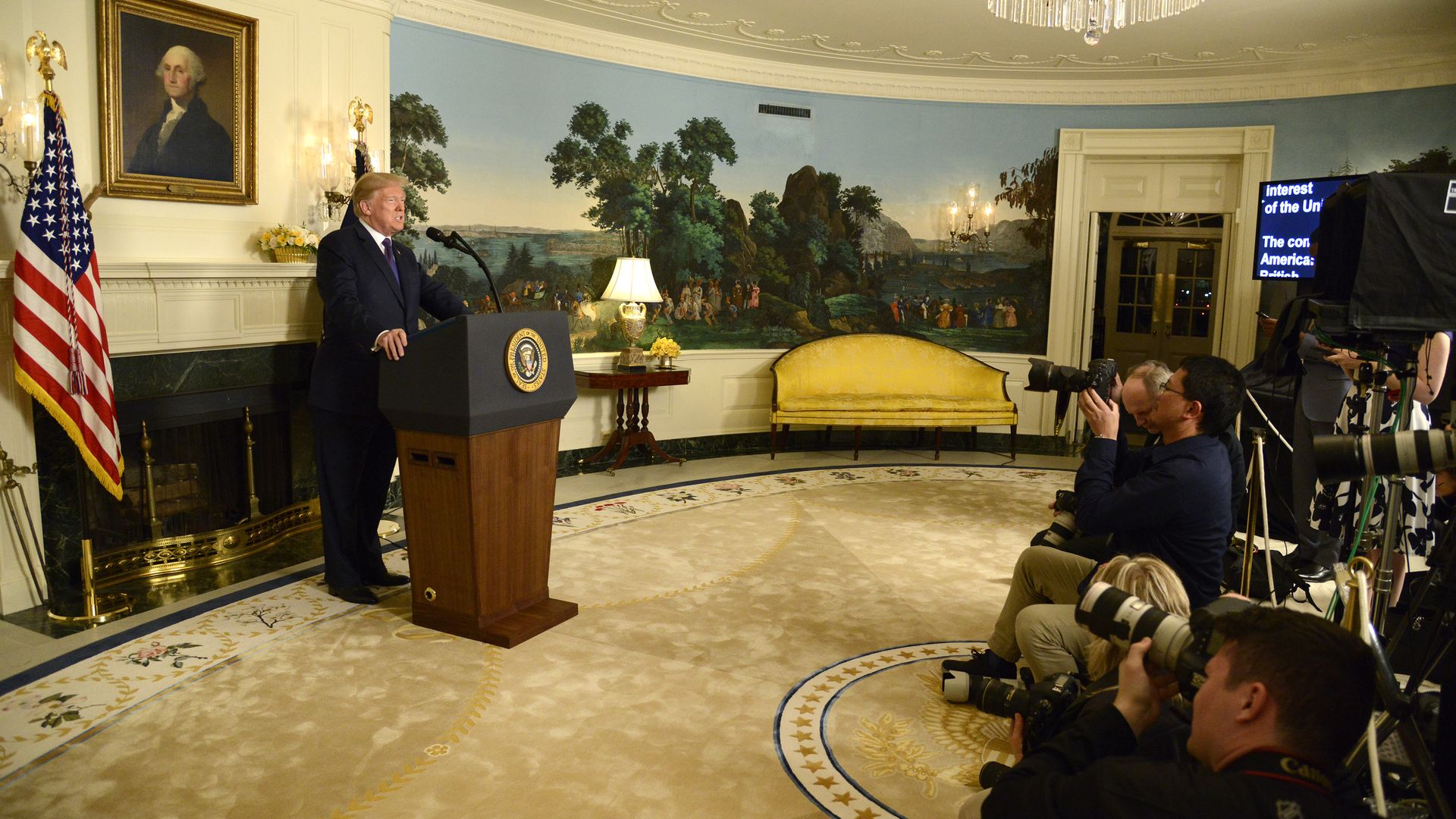
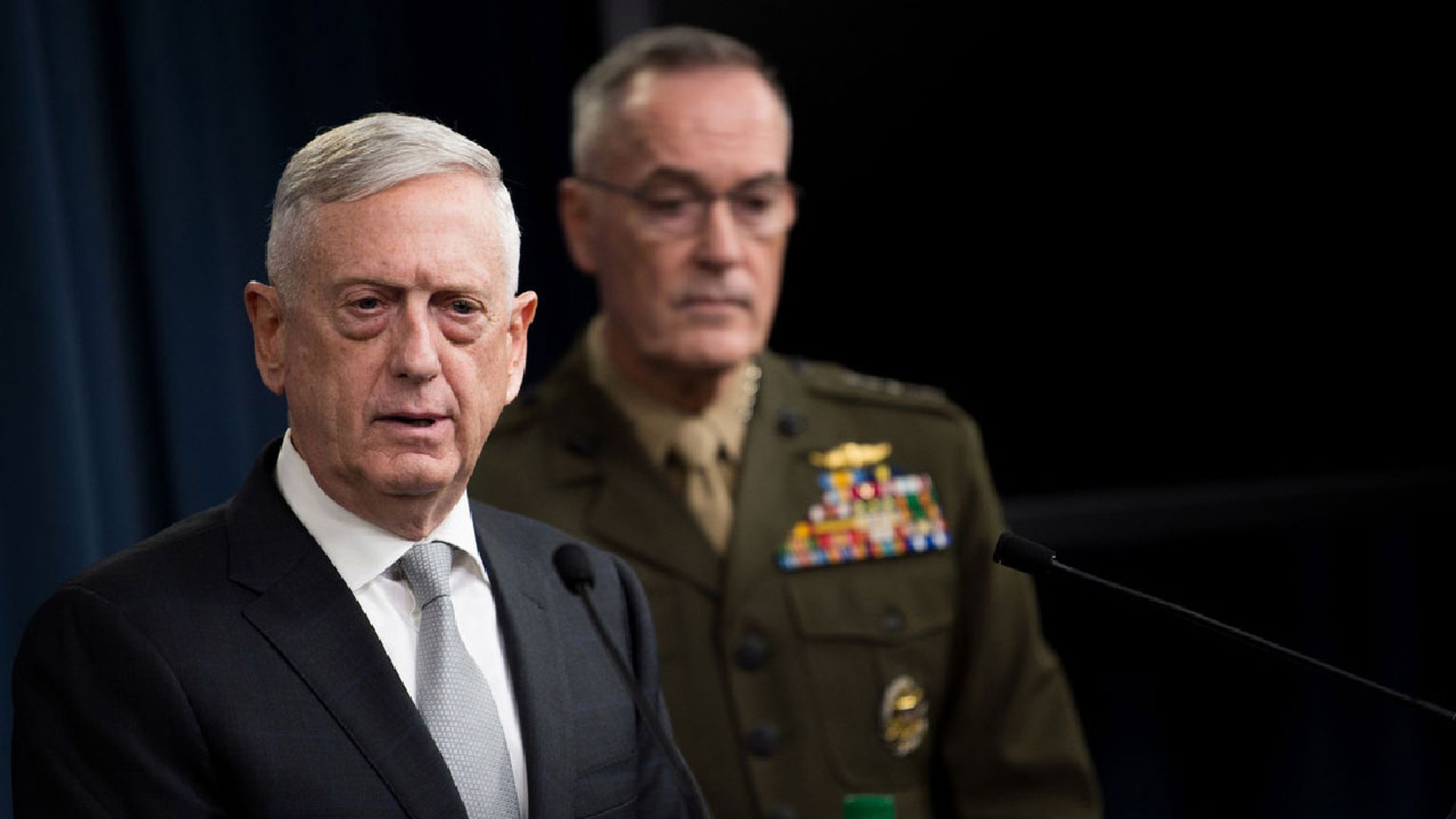
The U.S. launched coordinated strikes on Syria Friday night, in alliance with France and the U.K., in response to chemical weapons attack brought by the Assad regime. Defense Secretary James Mattis confirmed that this was a "one-time shot," and that the strike was directed solely at the Assad regime, not at Russia — a supporter of the Assad regime.
The latest U.S. sanctions on Russian oligarchs and companies have big implications in London, which has long been a playground of the Russian elite.
What's happening: The U.S. is warning U.K. banks that if they want to continue working with American financial institutions, they will have to cut off their links with Russian billionaires and companies sanctioned last week.
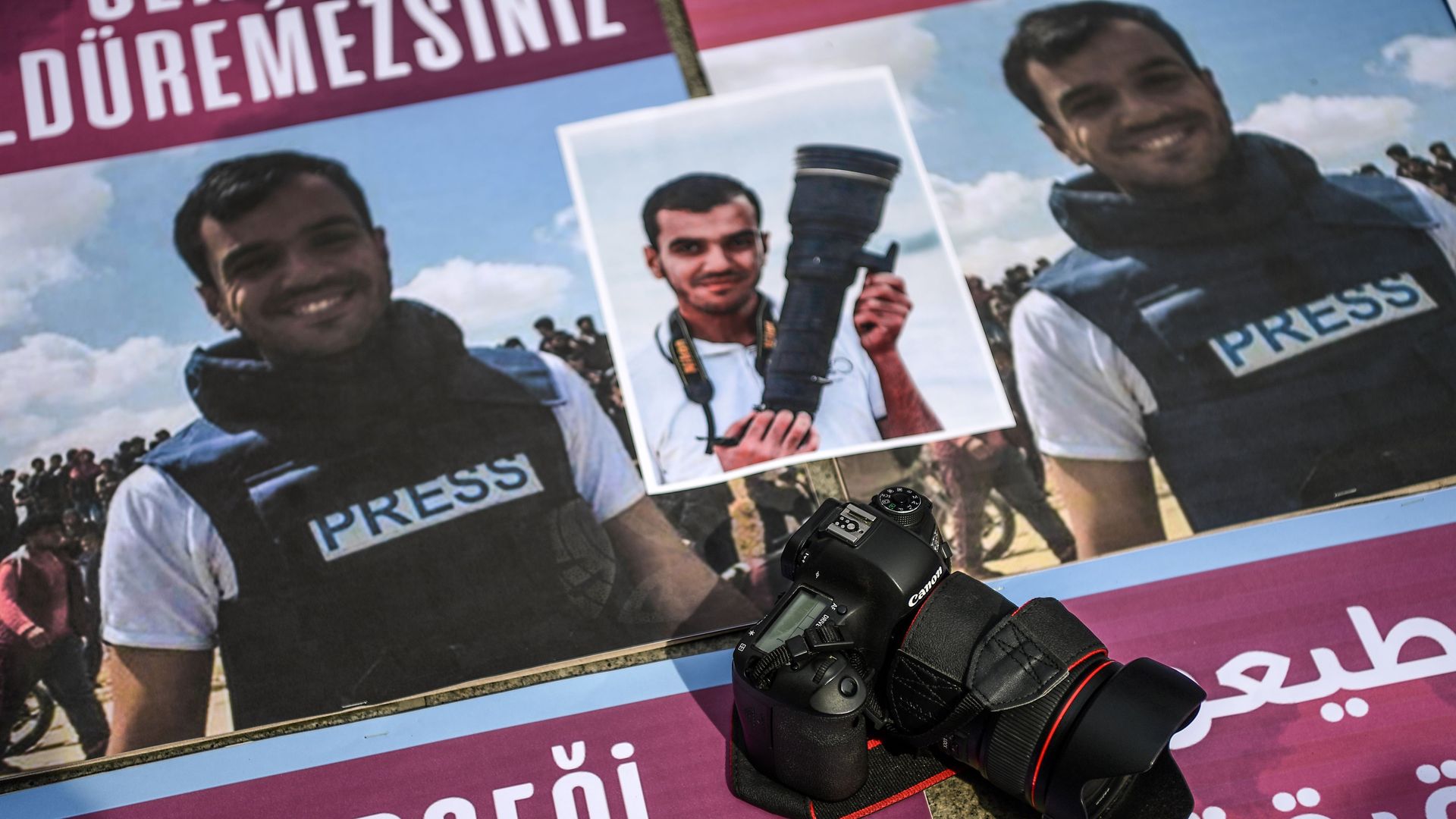
Palestinian protests continued for the third consecutive Friday along the Israel–Gaza border, resulting in another 163 Palestinians injured.
The demonstrations began as a grass-roots movement around the March of the Return. But Hamas, seeking to distract from its own mismanagement, has since assumed a key organizational role, taking advantage of Palestinian suffering and Israeli militarism to renew attention on the conflict. For its part, Israel is determined to prevent massive breaches of the border fence, and its use of live fire has left 33 Palestinian dead and over 1,300 injured since the campaign began.
The bottom line: This flare-up has become the bloodiest since the 2014 war. With no diplomatic recourse in sight, it's likely to get even worse.
Nikki Haley, the U.S. ambassador to the UN, said Friday there should be no rushing into using a military attack in Syria, but “at some point you have to do something,” per AFP. France and Britain both argued for strikes as well, per Reuters.
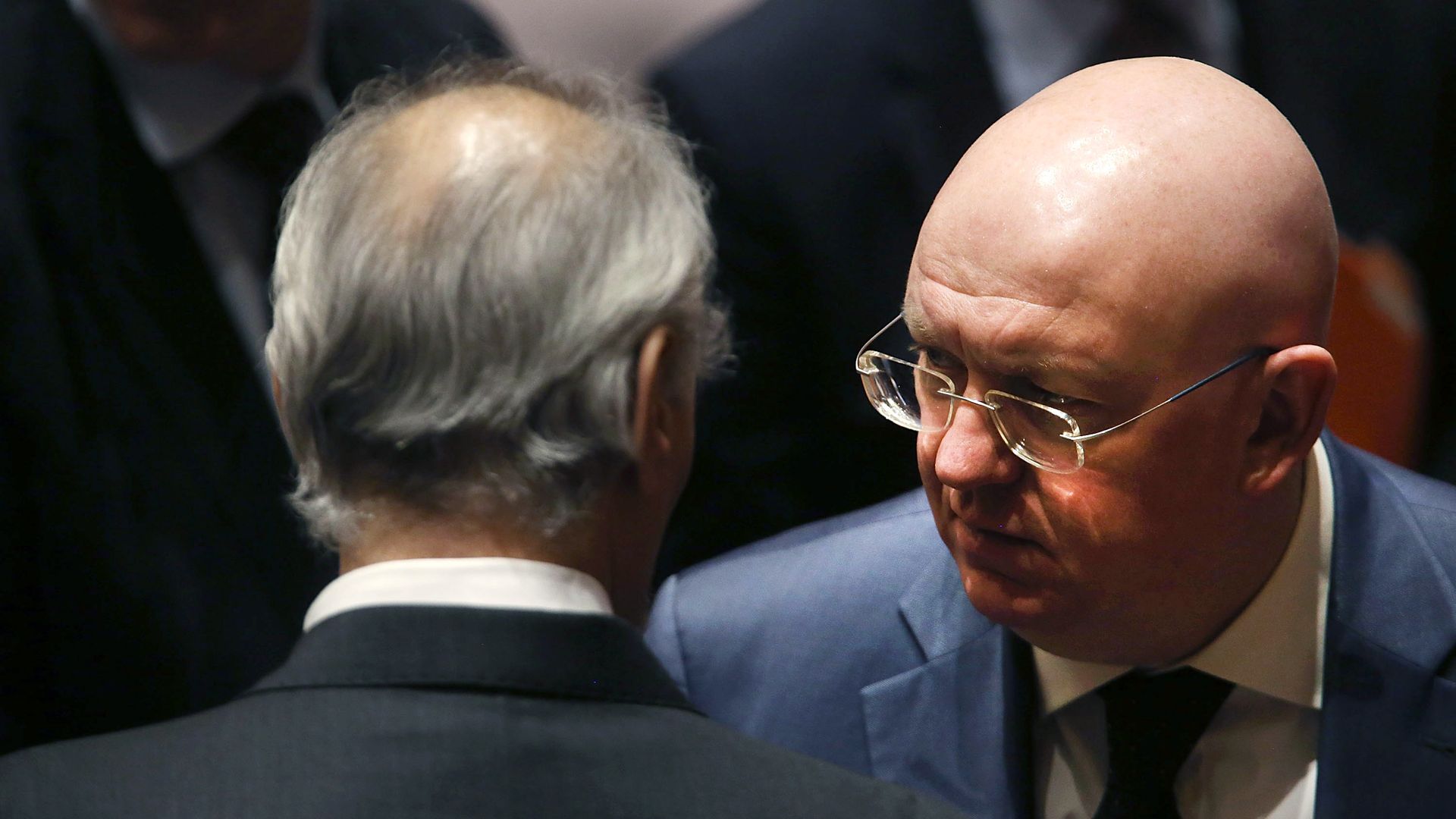
The stakes: Russia’s UN envoy Vassily Nebenzia said he couldn’t rule out war between the U.S. and Russia if strikes take place, per Reuters. However, Nebenzia says the "priority" is to avoid war, and Russia says it's coordinating with France to avoid military escalation in Syria. While consensus is building for avoiding military escalation in Syria, conflict is still possible.
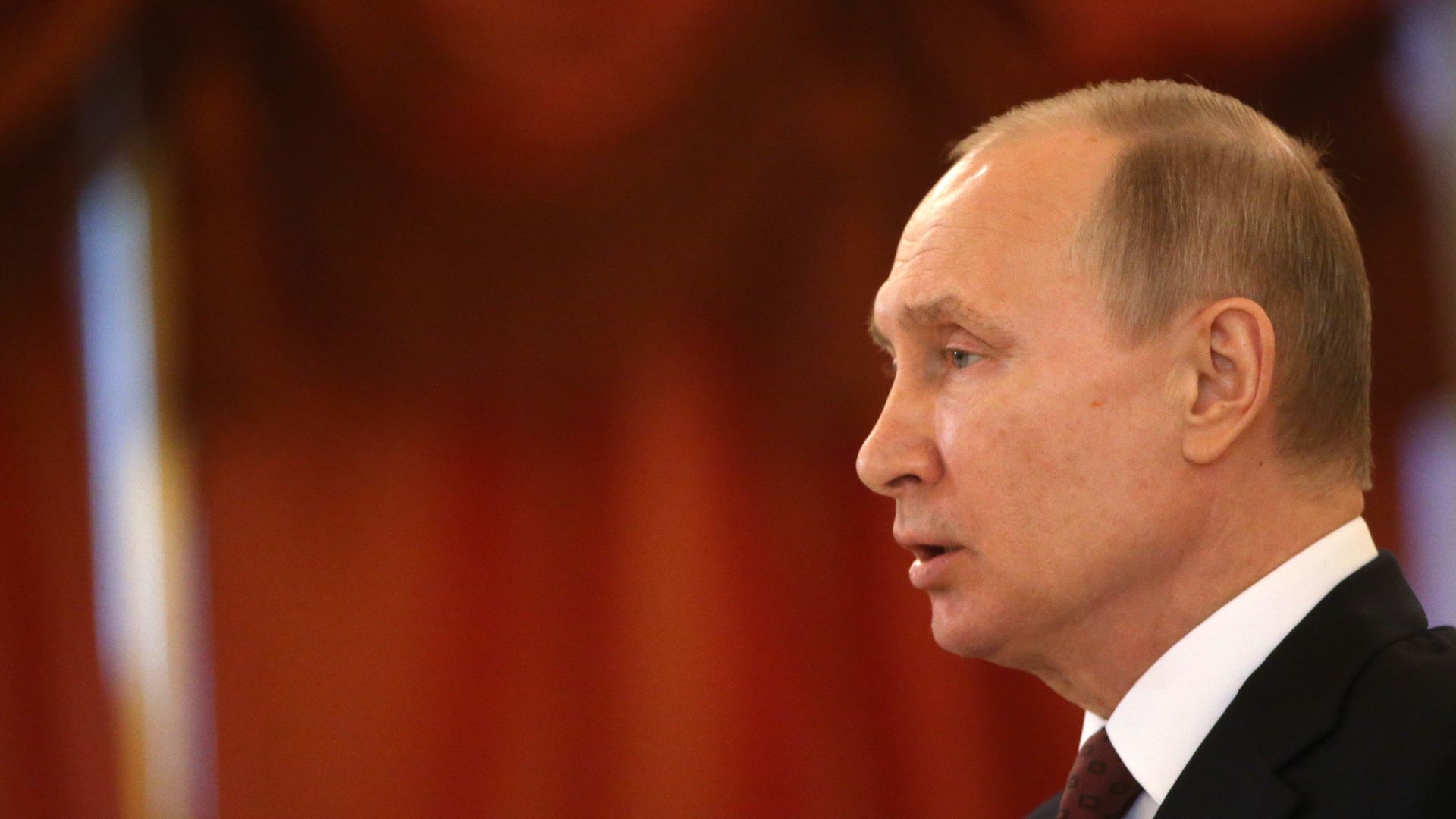
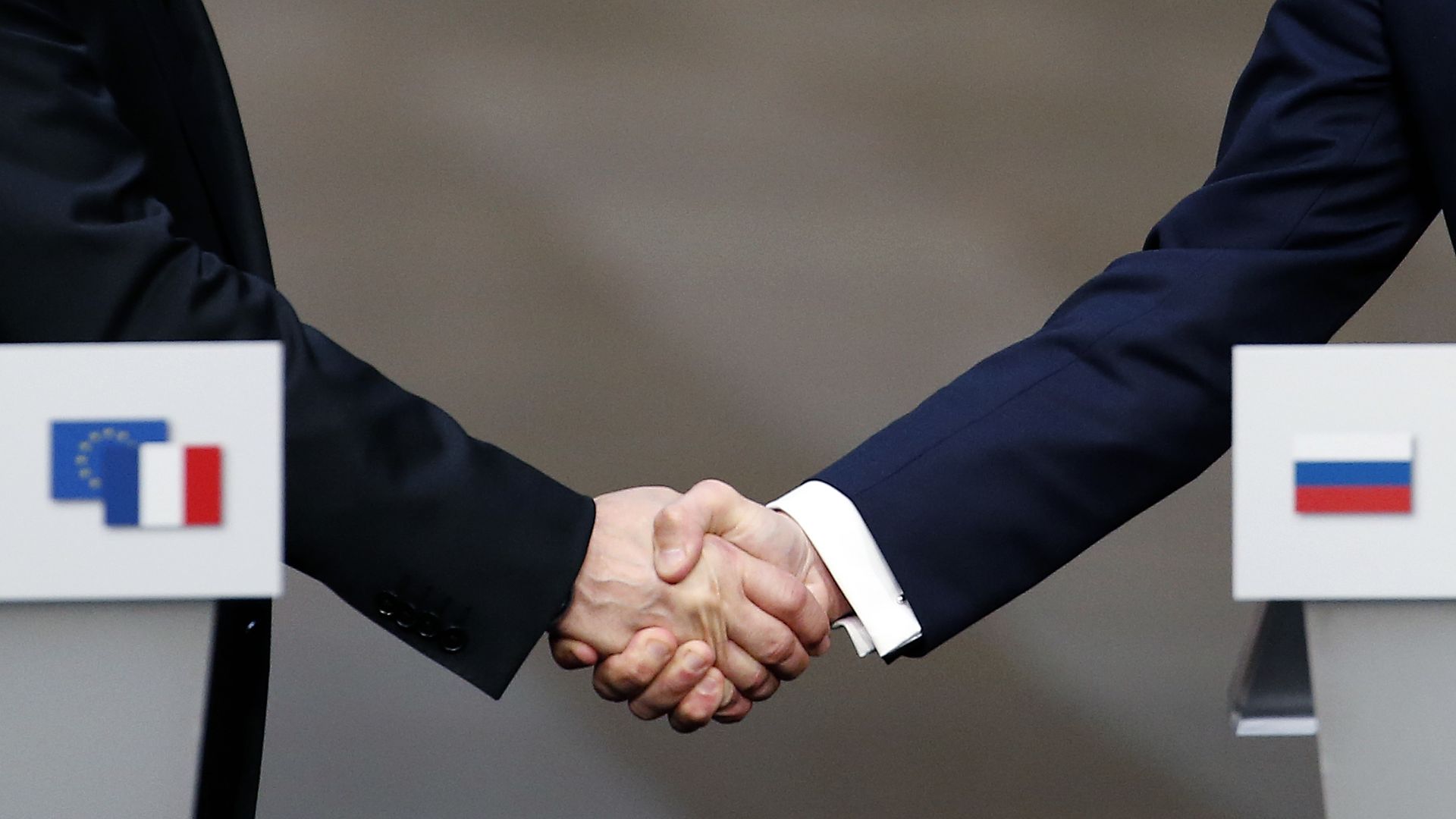
Russia claims Presidents Vladimir Putin and Emmanuel Macron agreed on a phone call to stay in “close contact” and coordinate their actions to avoid military escalation in Syria, per the AP. The French readout did not mention coordination.
What it means: Trump is also coordinating next steps with the French, along with the British. If Russia is being kept in the loop, that reduces the likelihood of escalation. But if strikes only target the Assad regime and not Russia and Iran, “it will not harm Assad’s backers and therefore is unlikely to weaken [Assad's] resolve,” according to Jenny Cafarella of the Institute for the Study of War.
While last week’s horrific chemical weapons attack in Douma has seized the world’s attention, potentially pushing President Trump toward military action, Bashar al-Assad's regime has used chemical weapons more than 20 times since last year’s missile strike, and as many as eight times just since the beginning of 2018. So the question is: What comes after strikes?
The big picture: For Assad, the benefits of using these weapons have outweighed the costs. The U.S. and the international community must change that calculus through a range of economic, diplomatic and legal efforts, in addition to any military response. Otherwise, attacks will resume once the spotlight is gone.
John Boehner said told NBC's Savannah Guthrie on Friday that if he was still Speaker of the House, he would call President Trump and tell him that firing Special Counsel Robert Mueller or Deputy Attorney General Rod Rosenstein is a "very bad idea."
For Sunday's Season 3 premiere of "The Circus" on Showtime (8 p.m.), co-hosts John Heilemann, Mark McKinnon and Alex Wagner (replacing Mark Halperin) report from Moscow, St. Petersburg, London and Washington.
Details: The team interviews Margarita Simonyan, editor-in-chief of Russia’s English-language network RT, who's referenced 27 times in the U.S. intelligence report that found Putin ordered an influence campaign aimed at the U.S. election.
A Russian court has issued a ban on the encrypted messaging app, Telegram, per the request of Roskomnadzor, the country's communications watchdog, though it can still appeal the decision, according to the Financial Times.
What it means: The court-issued ban means that Roskomnadzor can order internet service providers to block access to Telegram for Russian customers, though it will still be accessible via a virtual private network, or VPN, as the FT notes.