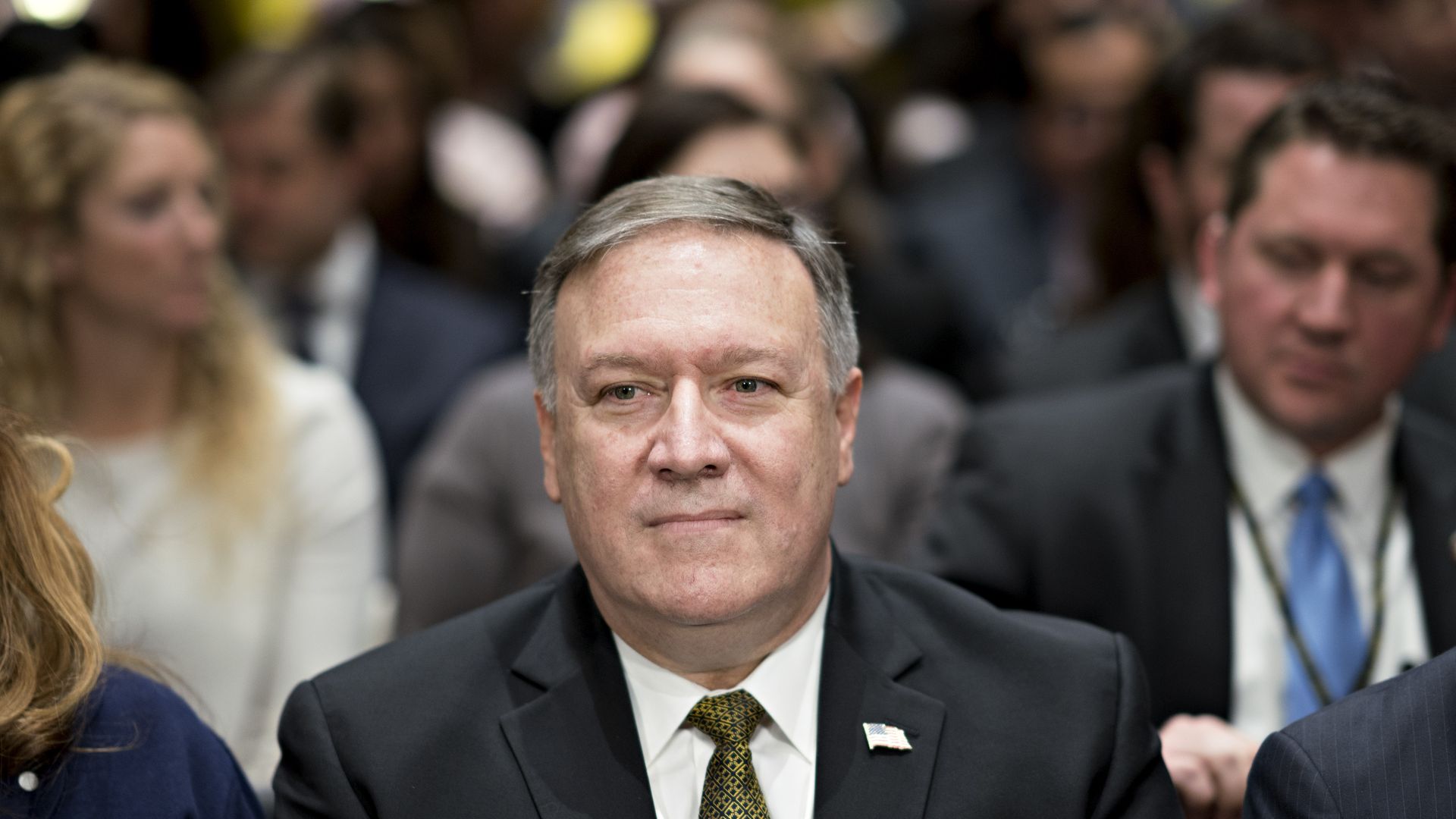
CIA Director Mike Pompeo told the Senate Foreign Relations Committee Thursday that he could imagine a scenario when the U.S. may need to launch a ground invasion in North Korea to reach a solution that "moved past diplomacy."
Quick take: As Trump’s pick to serve as secretary of state, this statement during his confirmation hearing is bound to raise concerns in diplomatic circles, where most believe there is always room for more diplomacy before turning to military operations.
The Trump administration has urged Israel several times in the last few weeks to try to solve the crisis that erupted with Poland over a controversial law which makes it illegal to attribute crimes committed during the Holocaust to Poland.
A senior official at the Israeli foreign ministry told me: "The Americans made clear they don’t like the Holocaust law, think it is unacceptable and asked the Polish government to fix it. But at the same time they told us Poland is an important U.S. ally, especially in NATO, and also an Israeli ally and therefore there is a need to deal with the crisis carefully and not damage the alliance."
The stories of our distant ancestors — when and how they evolved into the Homo sapiens we are now, and how they migrated and eventually populated the world, often center on an exodus of modern early humans from Africa about 60,000 years ago.
What's new: A growing number of researchers believe while there may have been a main migratory event then, recent findings and new technology reveal that groups likely traveled out of Africa and its bordering Levant region earlier than previously thought. The map above by Axios' Andrew Witherspoon shows some of these recent findings.
WeWork is buying Naked Hub, a Chinese office co-working company and part of Naked Group, CEO Adam Neumann said in a blog post. Bloomberg pegs the acquisition price at $400 million, mostly in stock.
Why it matters: The purchase follows two WeWork trends — international growth, especially in Asia, and an acquisition spree. WeWork first opened offices in China in 2016, and last year set up a Chinese entity, bankrolled by SoftBank and Hony Capital, to expand its presence in the country.
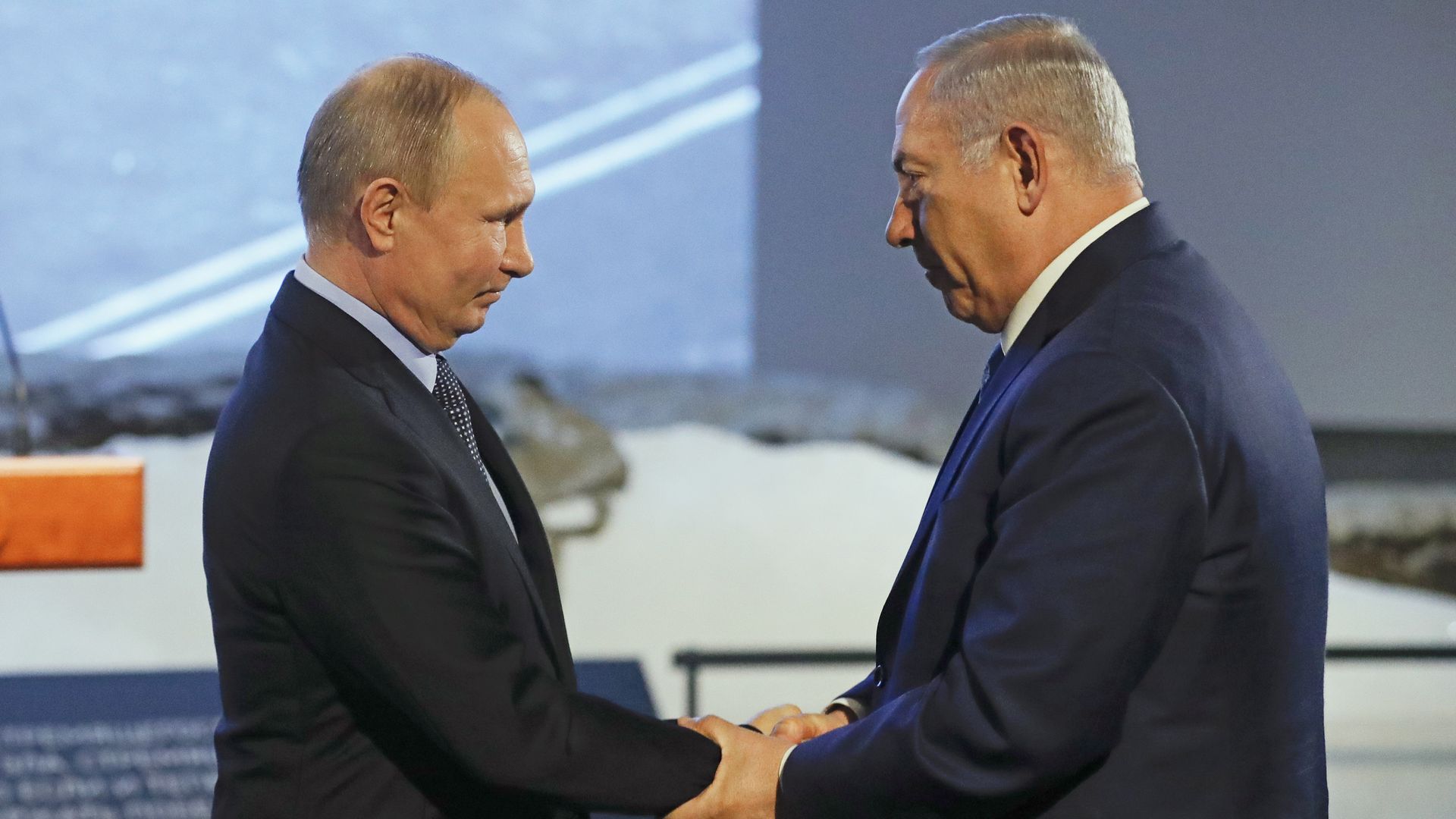
Russian President Putin spoke today on the phone with Israeli Prime Minister Benjamin Netanyahu and warned against further Israeli military strikes in Syria.
The backdrop: Putin made the demand three days after an airstrike on T4 airbase near the city of Homs in Syria killed at least 14 people among them seven members of the Iranian revolutionary guards corps (IRGC). Israel never took responsibility for the airstrike but Russia, Syria and Iran announced officially that Israeli jets fired the missiles that hit the base.
With billions of dollars in tariffs threatened on both sides, the U.S. and China look like warring nations. But experienced trade hands tell us these are only appearances — it's the chest-thumping brinksmanship stage of negotiations, they say.
Okay, but if so, when will we know we are watching war?
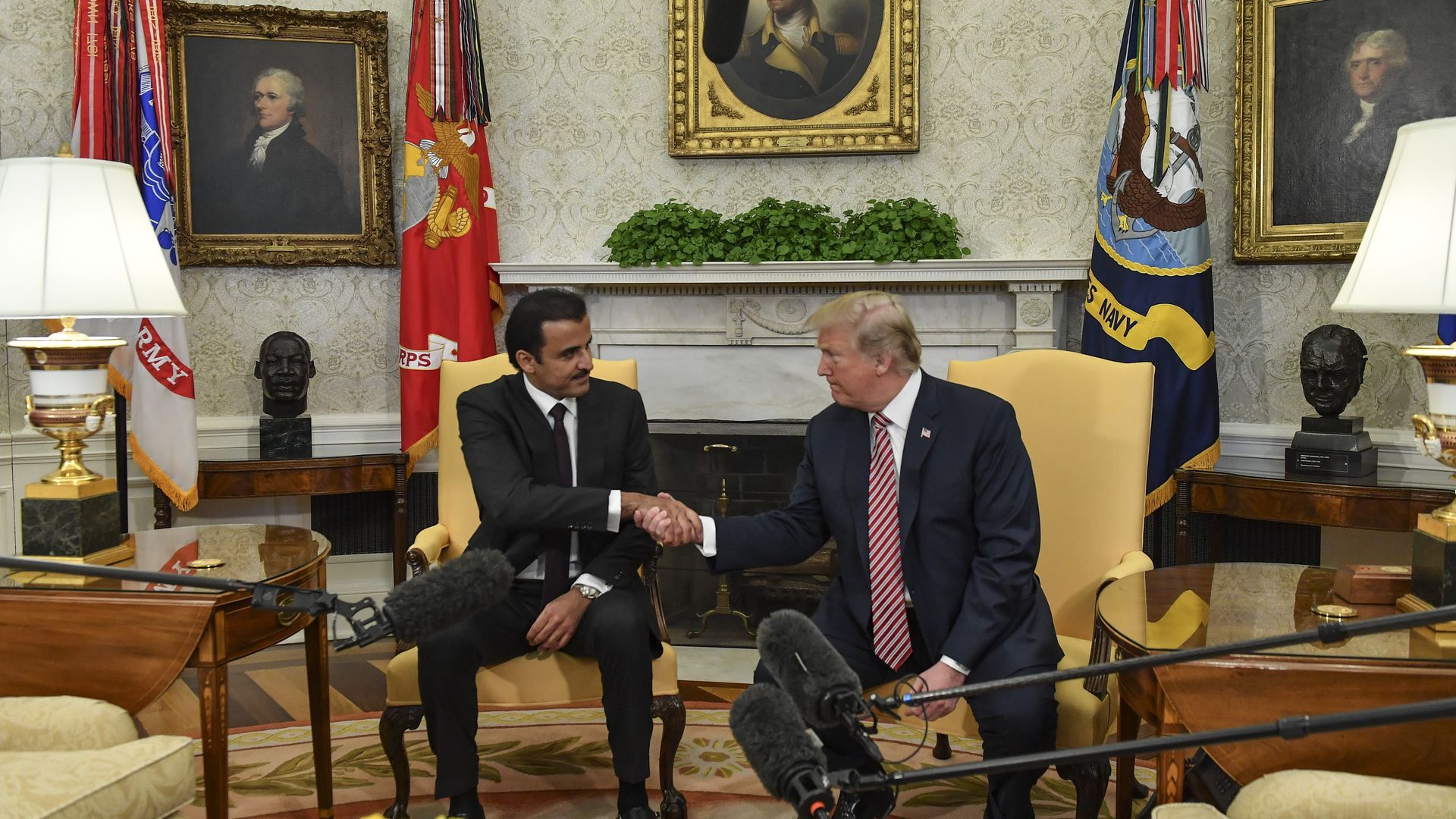
President Trump's meeting with the Emir of Qatar on Tuesday is a sign that the U.S. is "getting our normal historic relationship with the region back on track," according to David Mack, a scholar at the Middle East Institute and former U.S. ambassador to the UAE.
Why it matters: The breakdown of relations within the Gulf Cooperation Council (GCC) has "weakened the United States," Mack told Axios, when it comes to handling international terrorism and confronting Iran.
Although Assad has all but won the civil war in Syria, he has yet to win the peace: As last weekend's chemical attacks illustrate, the country remains a humanitarian disaster.
In deciding how to retaliate, the U.S. must recognize that a symbolic response will be hollow if not accompanied by a more robust strategy. Even at this late stage, there is still an obligation for the international community to intervene purposefully.
The bottom line: Assad must be contained. Russia has given indispensable support to his regime against a largely unsupported opposition and extremist militias with limited armament. But a joint U.S.–NATO intervention would change the equation, and having Putin on his side won't help him if the action is swift and thorough.
After days of hinting at military action in response to a chemical weapons attack on civilians in Syria, President Trump made that threat explicit on Wednesday morning in a message aimed at Russia:
Why it matters: Trump is denouncing Russia in a way he never has previously — and foreshadowing possible military action on Twitter.