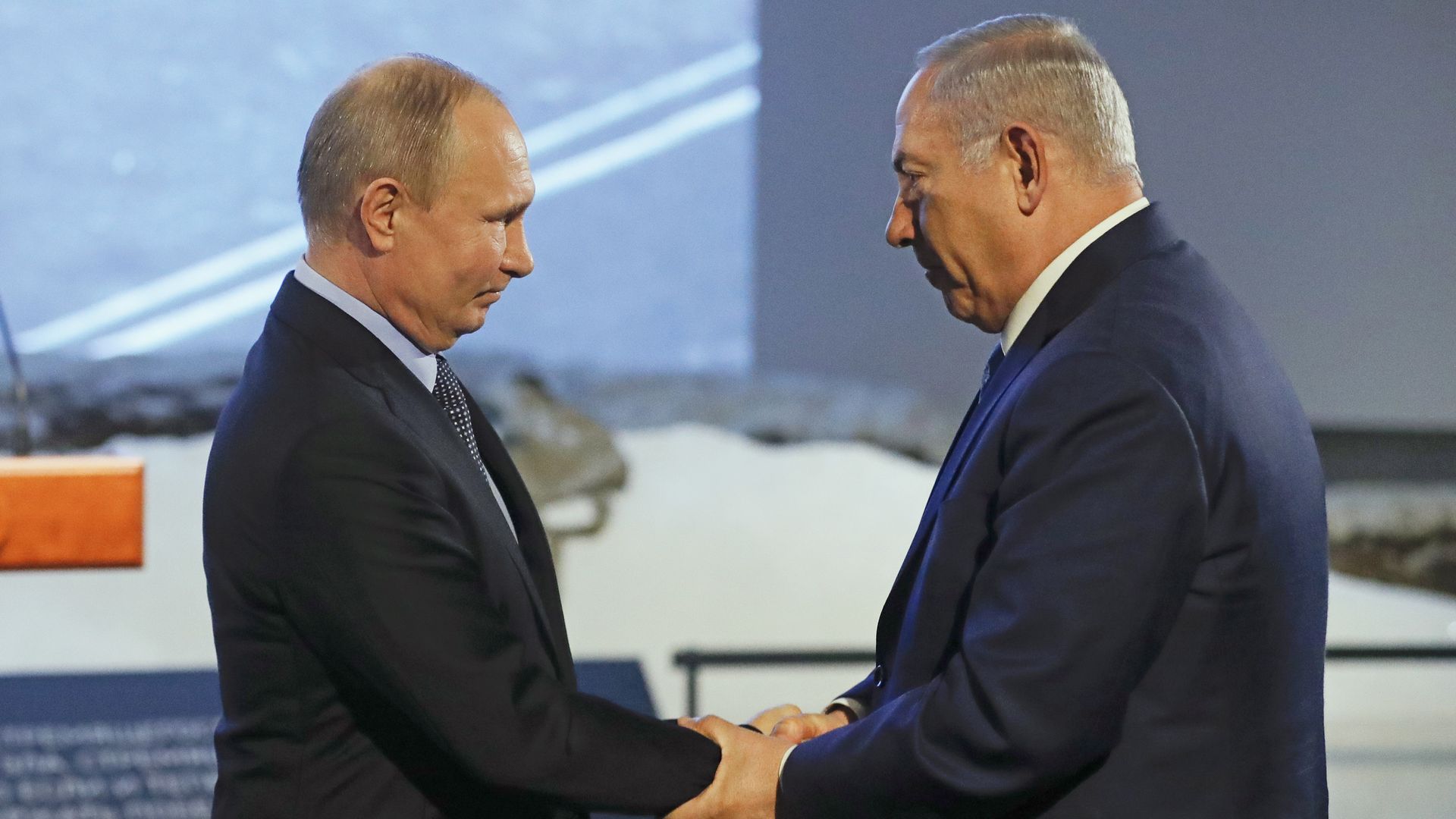
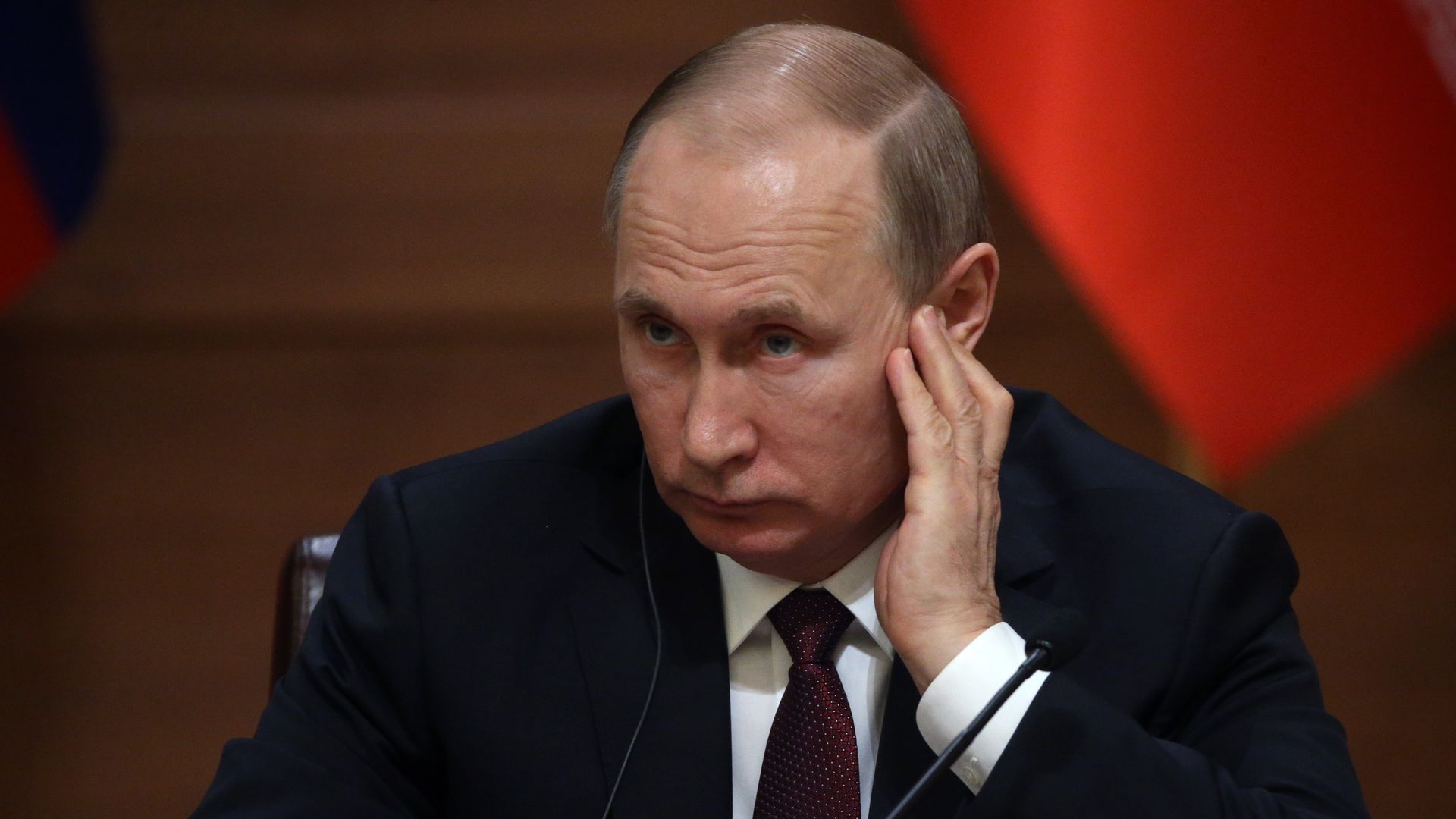
Russian President Putin spoke today on the phone with Israeli Prime Minister Benjamin Netanyahu and warned against further Israeli military strikes in Syria.
The backdrop: Putin made the demand three days after an airstrike on T4 airbase near the city of Homs in Syria killed at least 14 people among them seven members of the Iranian revolutionary guards corps (IRGC). Israel never took responsibility for the airstrike but Russia, Syria and Iran announced officially that Israeli jets fired the missiles that hit the base.
With billions of dollars in tariffs threatened on both sides, the U.S. and China look like warring nations. But experienced trade hands tell us these are only appearances — it's the chest-thumping brinksmanship stage of negotiations, they say.
Okay, but if so, when will we know we are watching war?
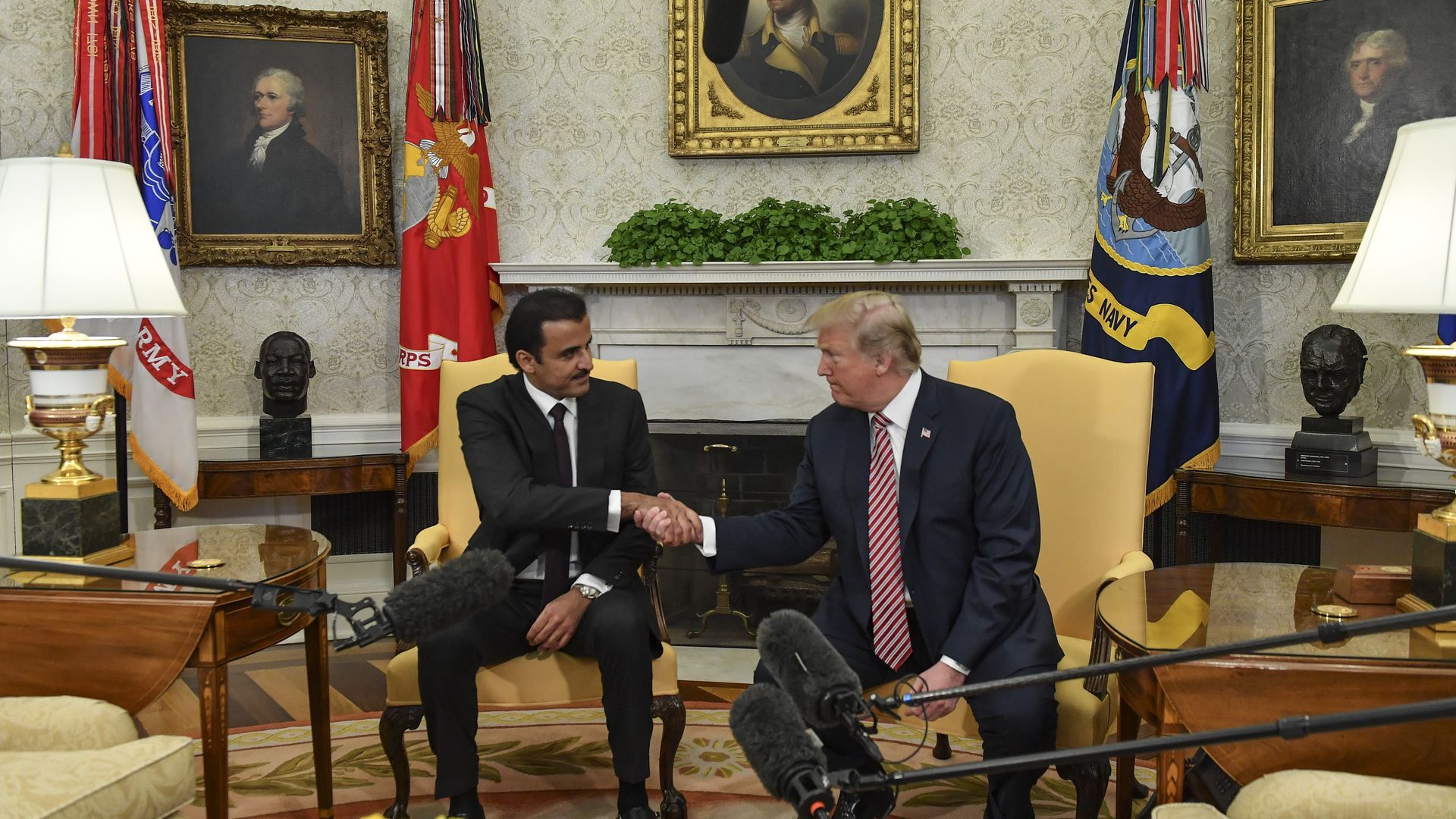
President Trump's meeting with the Emir of Qatar on Tuesday is a sign that the U.S. is "getting our normal historic relationship with the region back on track," according to David Mack, a scholar at the Middle East Institute and former U.S. ambassador to the UAE.
Why it matters: The breakdown of relations within the Gulf Cooperation Council (GCC) has "weakened the United States," Mack told Axios, when it comes to handling international terrorism and confronting Iran.
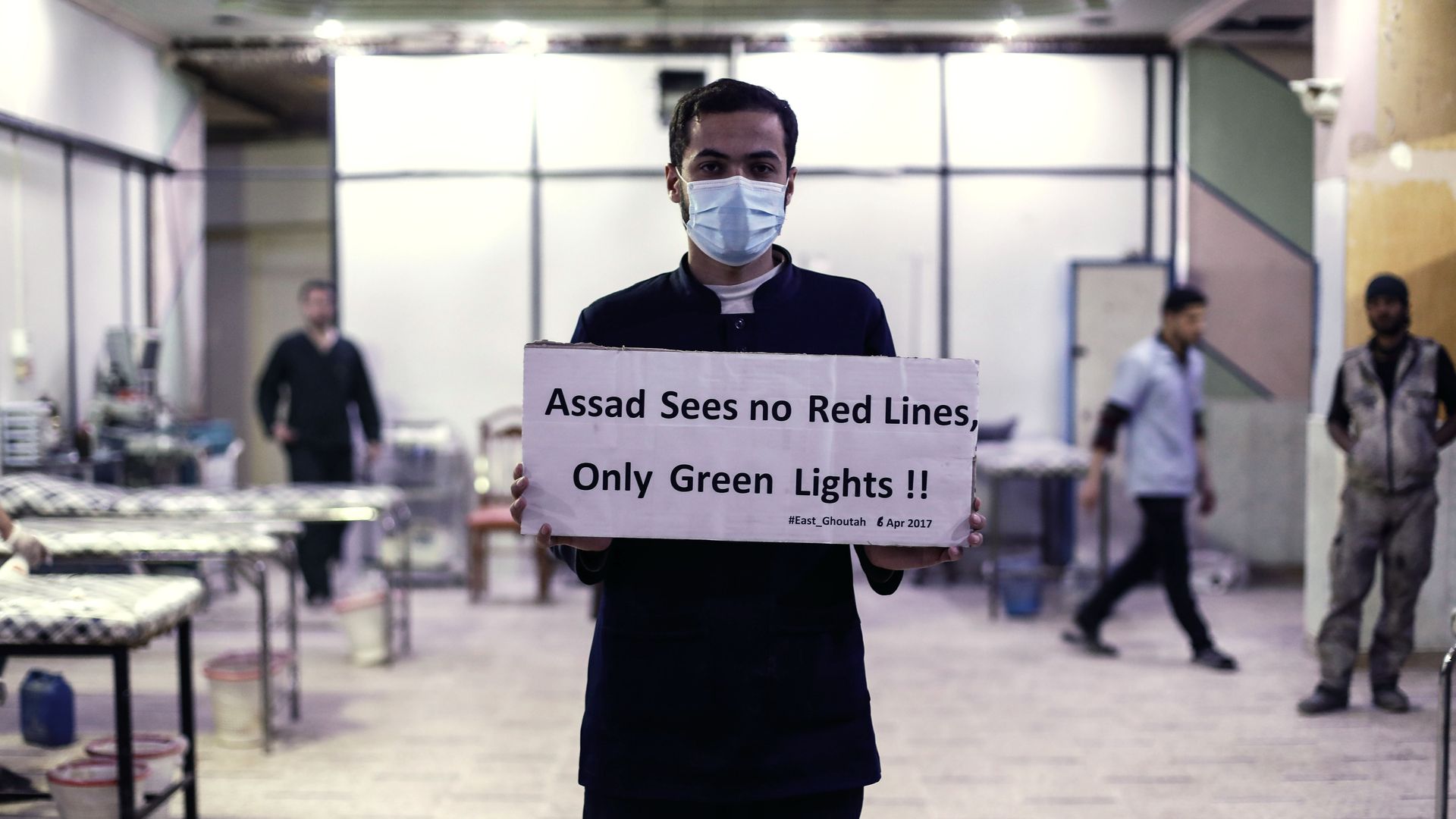
Although Assad has all but won the civil war in Syria, he has yet to win the peace: As last weekend's chemical attacks illustrate, the country remains a humanitarian disaster.
In deciding how to retaliate, the U.S. must recognize that a symbolic response will be hollow if not accompanied by a more robust strategy. Even at this late stage, there is still an obligation for the international community to intervene purposefully.
The bottom line: Assad must be contained. Russia has given indispensable support to his regime against a largely unsupported opposition and extremist militias with limited armament. But a joint U.S.–NATO intervention would change the equation, and having Putin on his side won't help him if the action is swift and thorough.
After days of hinting at military action in response to a chemical weapons attack on civilians in Syria, President Trump made that threat explicit on Wednesday morning in a message aimed at Russia:
Why it matters: Trump is denouncing Russia in a way he never has previously — and foreshadowing possible military action on Twitter.
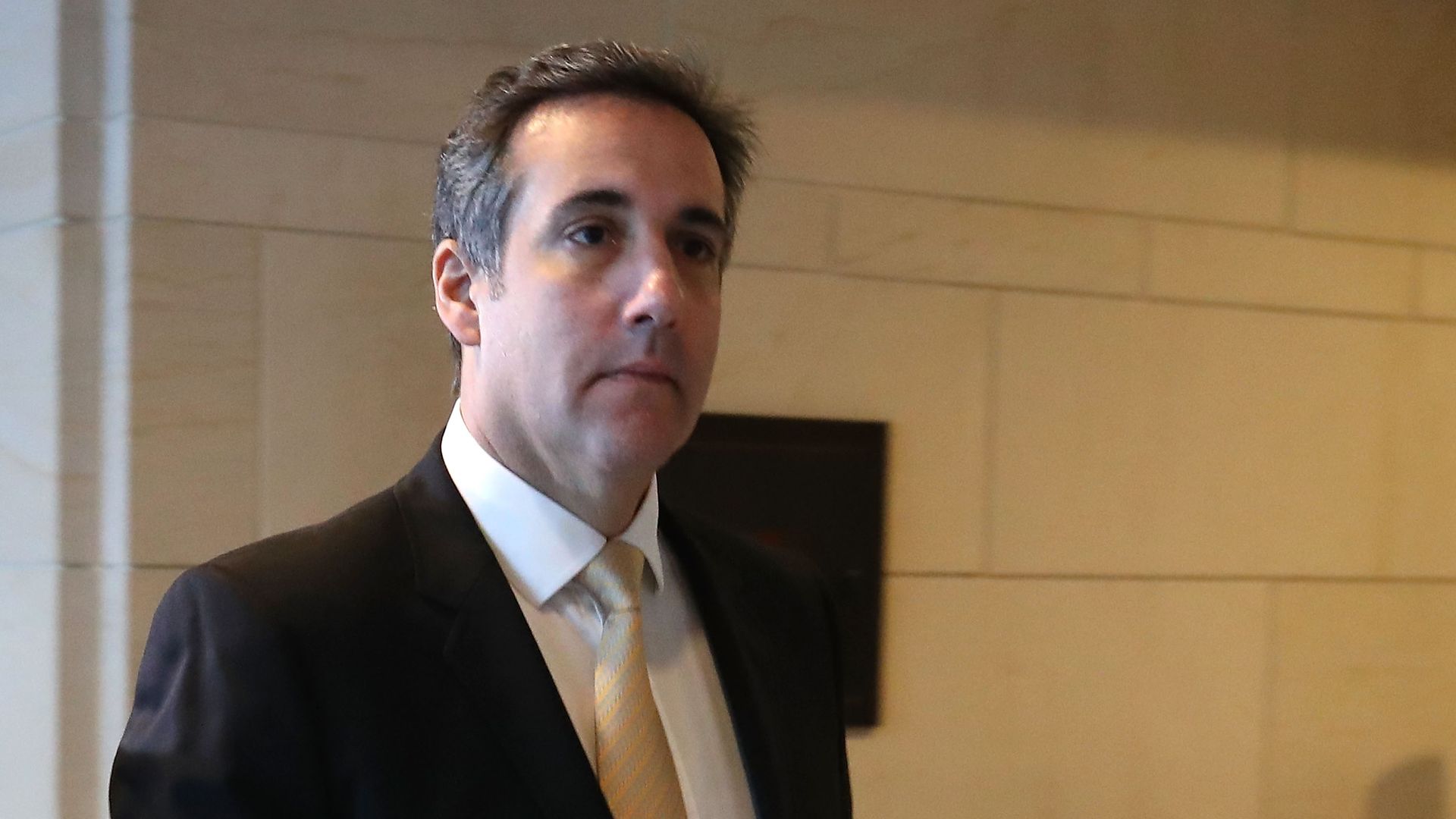
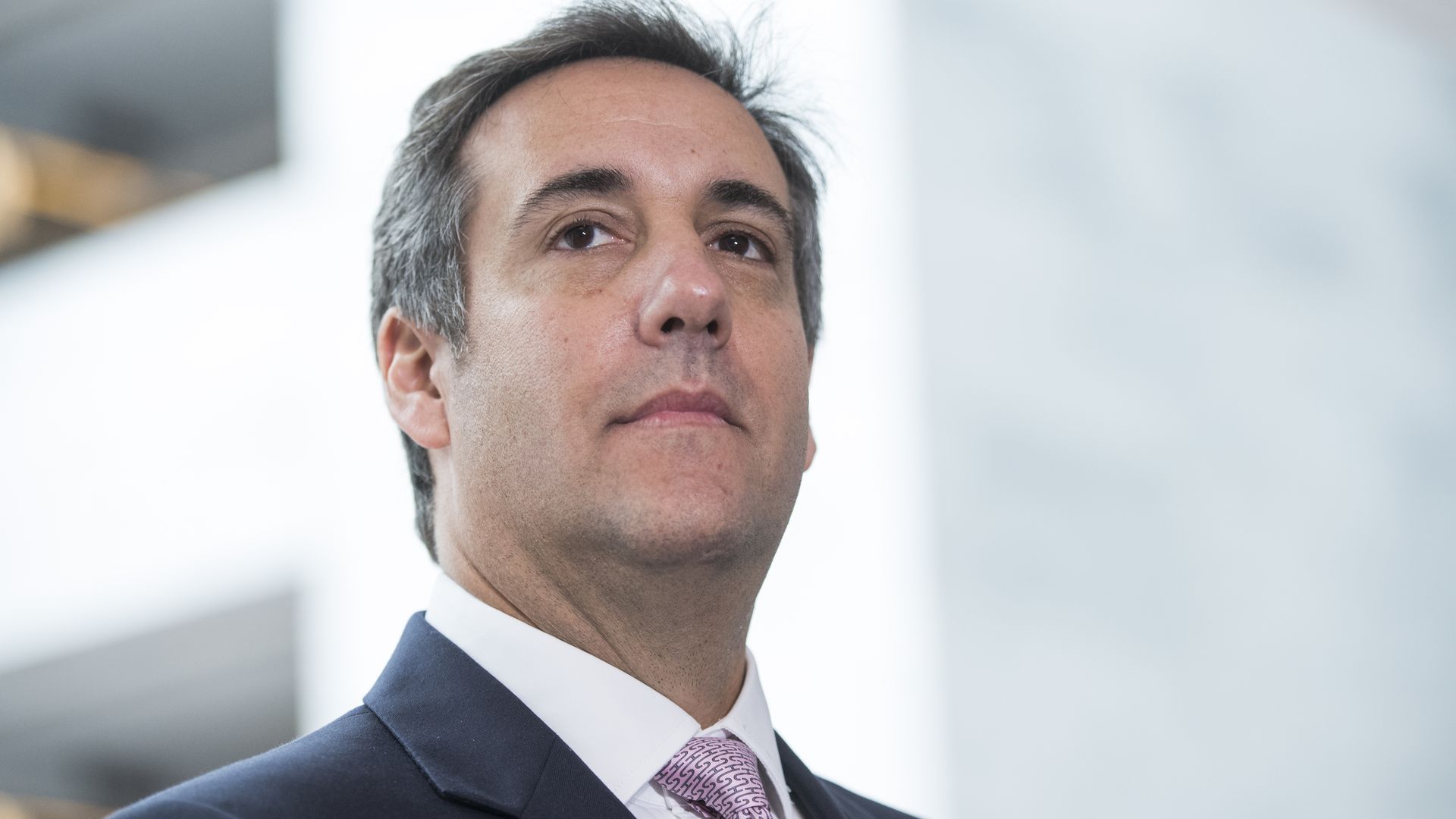
President Trump's personal lawyer, Michael Cohen, told CNN that the FBI officials who conducted an abrupt raid in his office and hotel room in New York City on Monday "were extremely professional, courteous and respectful.”
The details: Cohen's first public comments Tuesday in a phone interview contrast with Trump, who said FBI agents "broke into the office" and labeled the raid as "a total witch hunt." Cohen reportedly didn't go into details about the event, but CNN reports that he said it's "upsetting" and the unwanted attention has affected his family.
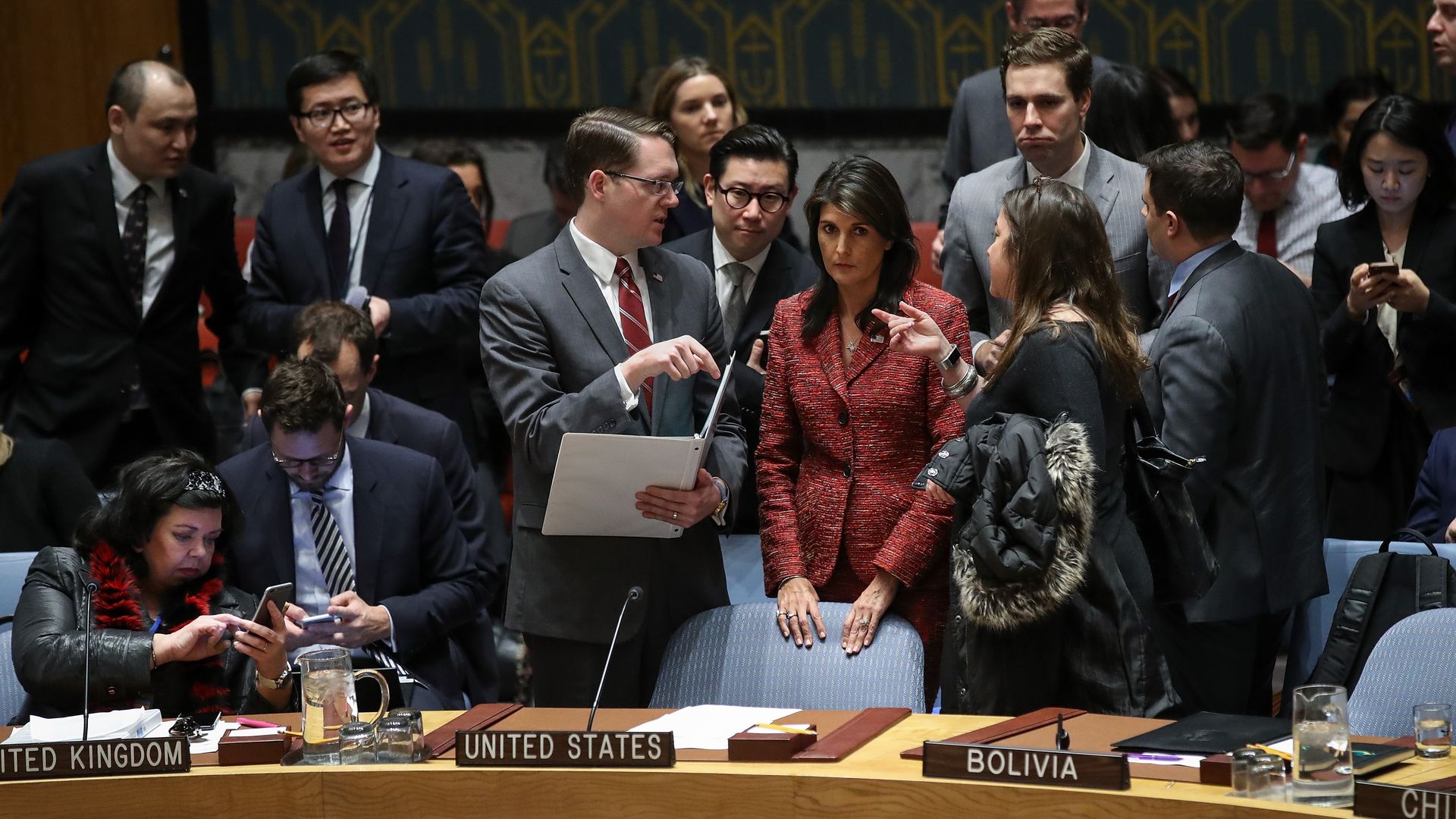
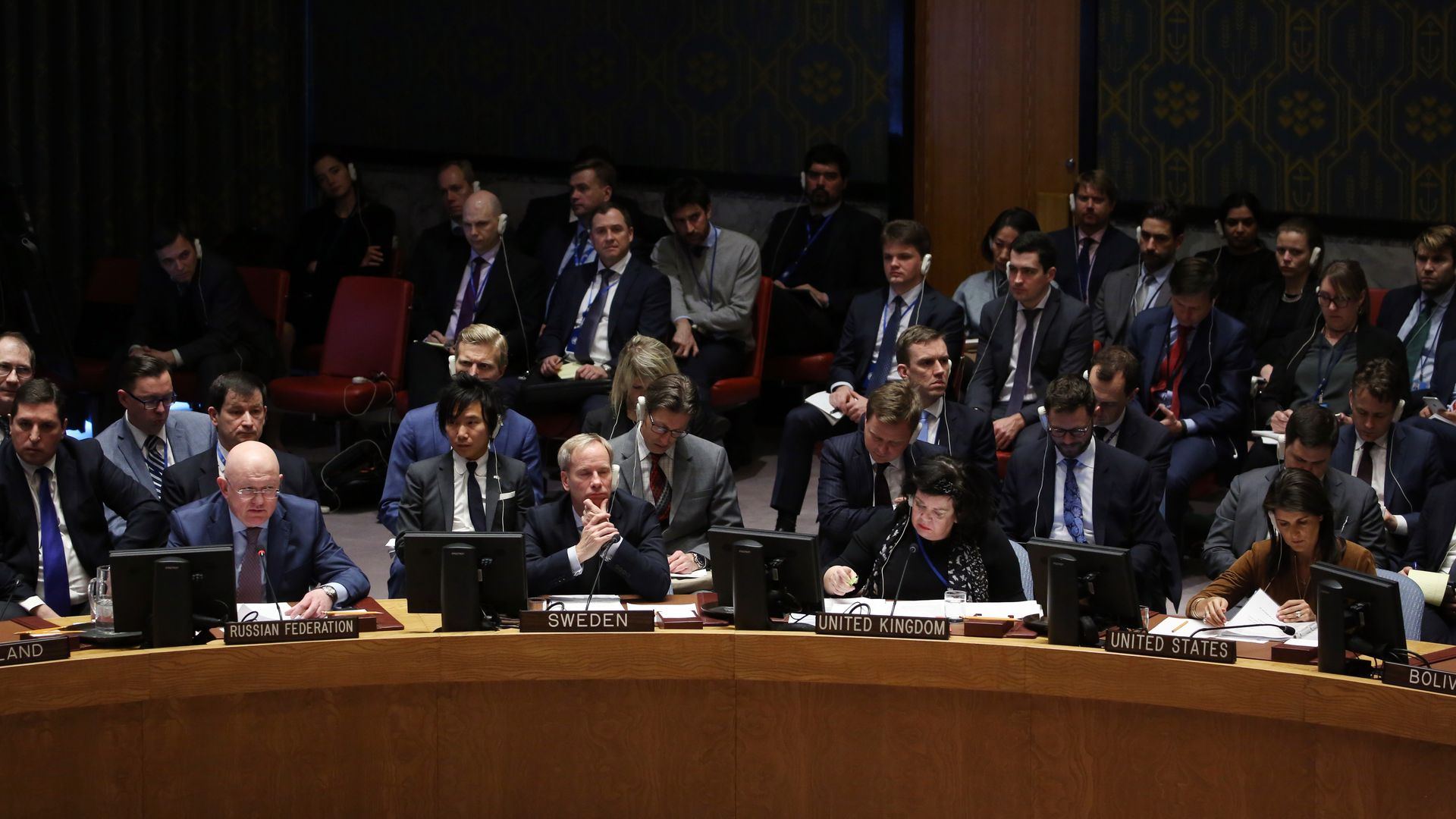
Russia has vetoed a resolution at the U.N. Security Council that would further investigate and determine responsibility for the chemical attack in Syria over the weekend. U.S. Ambassador to the U.N., Nikki Haley, told the Council that "Russia chose protecting a monster over the lives of the Syrian people."
The bottom line: This is not the first time Russia, which backs the Assad regime, has stood in the way of investigations into chemical attacks in Syria. But it comes as President Trump is considering strikes to retaliate over the attack, which would escalate tensions with Russia.
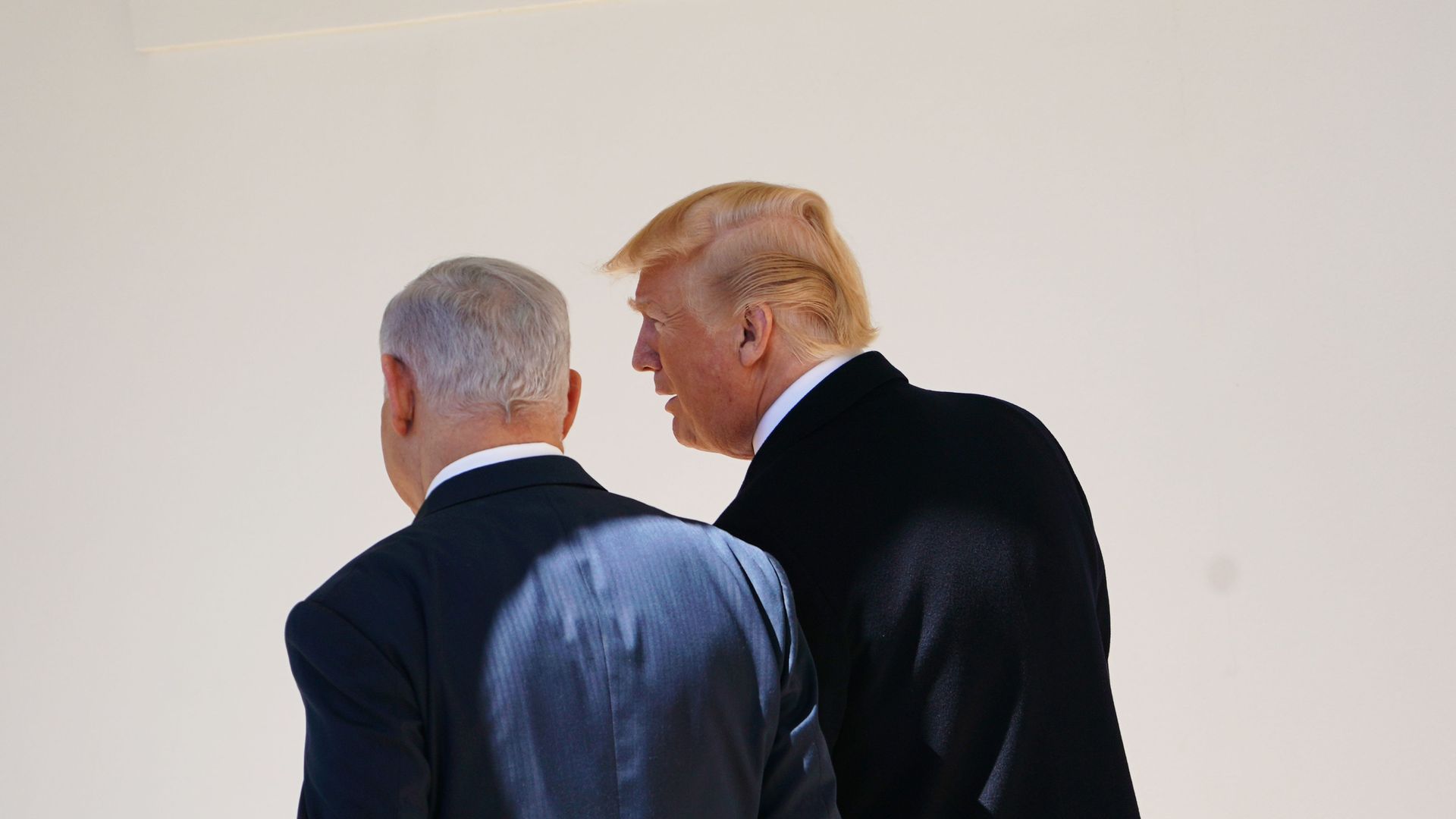
Israeli Prime Minister Benjamin Netanyahu said in security consultations on Monday that he thinks there is high probability President Trump will order a military strike in Syria in retaliation for the recent chemical weapons attack on the Damascus suburb of Douma, a senior Israeli official told me.
The latest: The official said Israel published a formal statement blaming the Assad regime for the attack on Monday night as a consequence of this assessment by Netanyahu. The official said the purpose was to give diplomatic support for possible U.S. military action against Syria and also for possible U.S. diplomatic action against Syria at the UN Security Council.
Russia has been jamming some U.S. drones over Syrian airspace, seriously impacting military operations, four U.S. officials told NBC News’ Courtney Kube. Russia reportedly began jamming other, smaller U.S. drones weeks ago after suspected chemical weapons attacks in eastern Ghouta.
Why: The Russians were concerned the U.S. would retaliate in response to the attacks, and tried jamming U.S. GPSs to prevent an attack, per Kube.
One big fear about President Trump's tariff fight with China is that Beijing would retaliate by resurrecting its campaign of stealing patents, manufacturing processes and other trade secrets from U.S. companies. The Obama administration mostly shut that down in 2015.
Reality check: But Dmitri Alperovitch, co-founder of CrowdStrike, says China didn’t wait for the latest controversy to revive its intellectual-property hacking program — it has already been ramping up efforts ever since Trump took office. “We’ve seen China expand its hacking for IP throughout 2017,” Alperovitch said.
The Summit of the Americas this Friday and Saturday in Peru was to be the centerpiece of President Trump's first visit to Latin America, and the first time he met many of the region's leaders. Now, Trump has suddenly announced he won't be attending after all — he's staying in D.C. to focus on Syria and sending Vice President Pence in his stead.
Why it matters: Jason Marczak, director of the Atlantic Council's Latin America Center, says Trump's decision is a "significant blow" to the chances of improving relations with the region and with those leaders, many of whom are wondering what "America first" means for them.
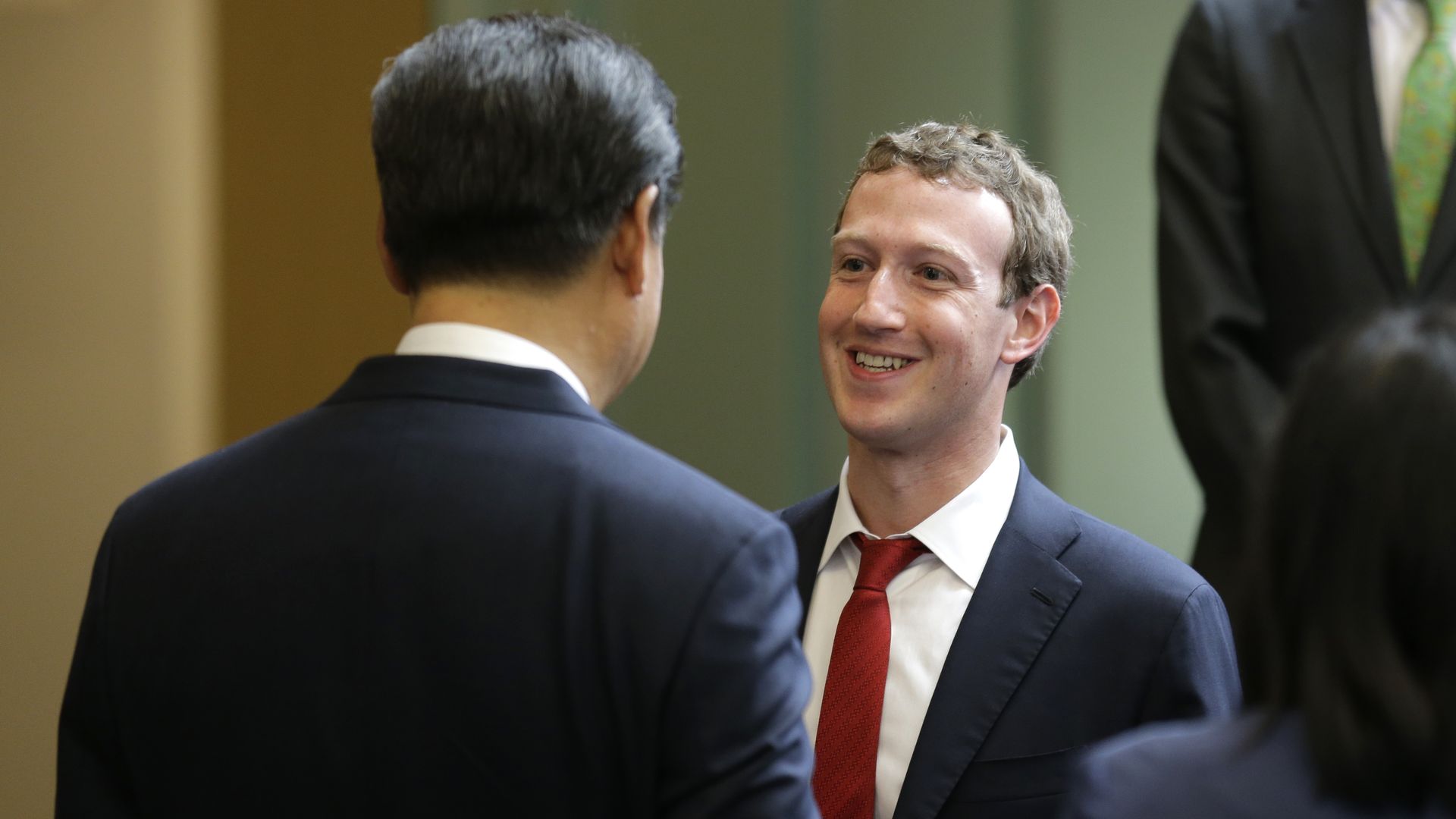
Today brings important statements from the most powerful man on earth and the most powerful man on the internet. Each, in his own way, is a visionary sort of authoritarian. Neither is especially well liked by the US government at the moment.
What to watch: Xi Jinping and Mark Zuckerberg are, in a sense, both making tactical feints in order to avoid more significant reforms to business models that have served them well. How long will their audiences buy it?
When the Assad regime deployed sarin gas against civilians in Khan Shaykhun last April, President Trump took only sixty hours to order missile strikes on a Syrian airfield. Since then, though, the U.S. has largely acquiesced to Assad's routine use of both conventional and chlorine-gas weapons on civilians. That cumulative carnage is far greater than this weekend’s chemical attack in Douma.
Yes, but: A number of factors — including horrific images of victims, which reportedly spurred Trump's decision last April, Russia's warning against U.S. intervention and, ironically, Trump’s recent call to withdraw — may have bolstered rather than diminished the odds of a forceful response. Trump's red-line tweets about Assad paying a big price and his mentioning Putin by name seem to presage military retaliation.
A former U.S. attorney helps Axios readers interpret the raid: "Here’s what must have happened: Mueller bumped into evidence of criminal conduct that was beyond his scope, so he referred it to the Rod," Deputy Attorney General Rod J. Rosenstein.
Why it matters: "HUGELY important: Stormy is almost certainly just the tip of the iceberg. Cohen’s lawyer said the [search warrant] was based 'in part' on referral by Mueller. I expect that after getting the initial referral, the SDNY started poking around and developed independent interest for obtaining the SW."
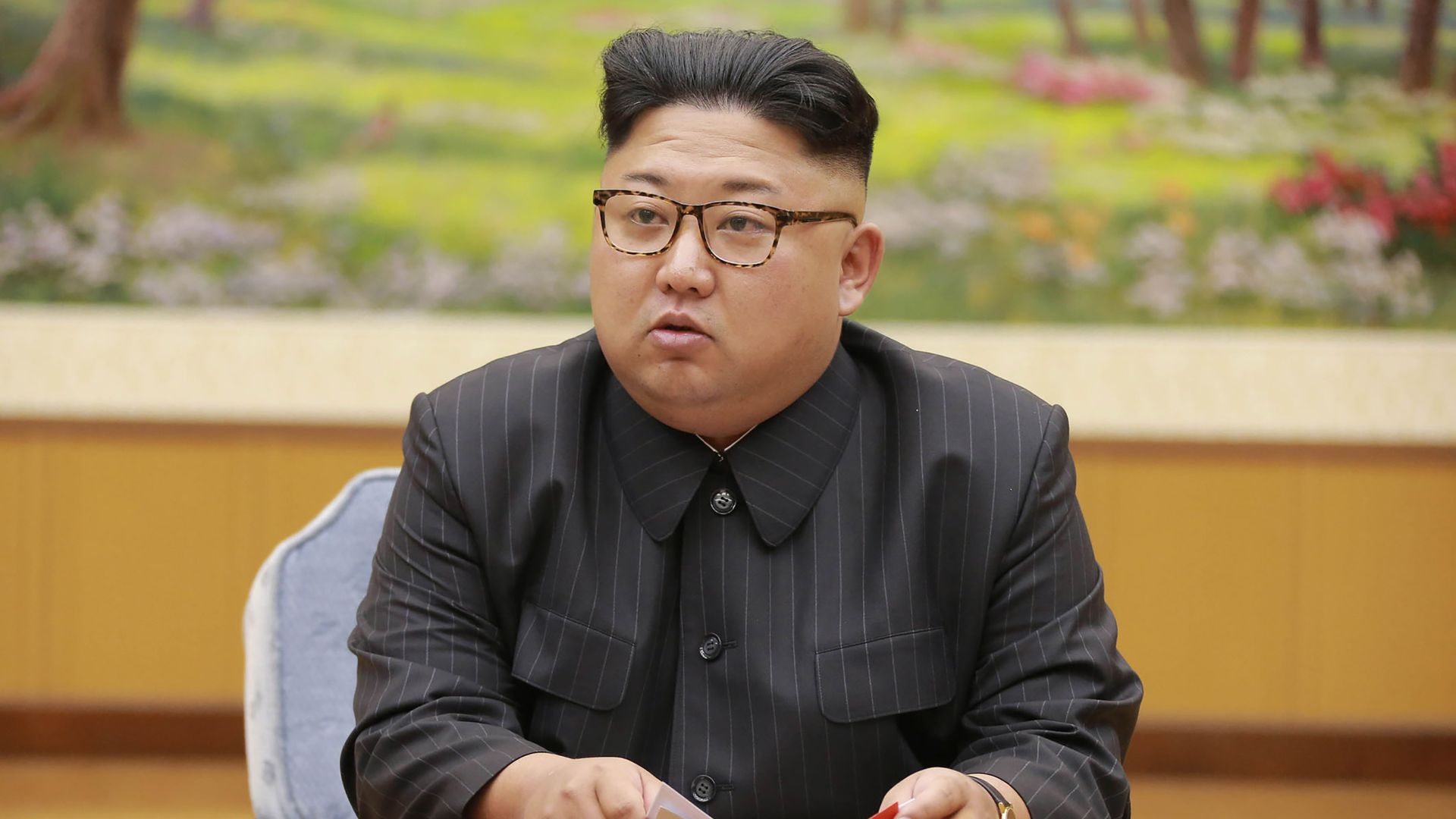
North Korea’s Kim Jong-un briefed top party officials Monday about the prospect of future dialogue with South Korea and the U.S., according to North Korea’s state news agency KCNA, per Reuters.
The backdrop: It’s the North Korean leader’s first official comments on future talks between the U.S. and the North, and comes ahead of a potential summit with President Trump and Kim Jong-un later this month.