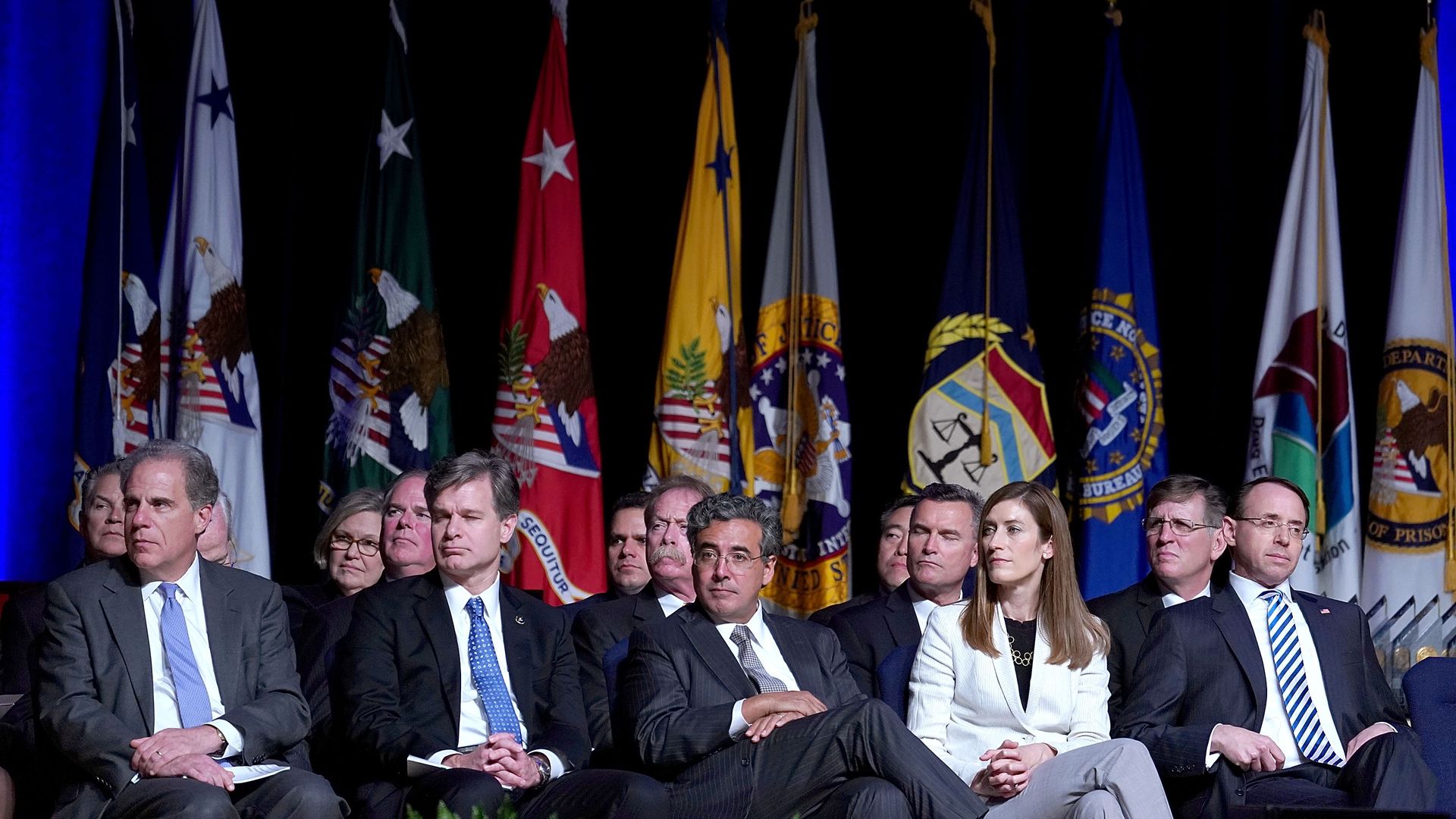
Rachel Brand, Associate Attorney General at the Justice Department, is stepping down after nine months on the job, the NYT reports. Brand assumed the role in May 2017 and is leaving her role for a position as general counsel in the private sector, per NYT.
Why it matters: Brand was seen as Deputy Attorney General Rod Rosenstein's successor. Rosenstein is currently overseeing Robert Mueller's investigation regarding Russian interference in the 2016 election. President Trump has called the investigation a "witch hunt" and has considered firing Rosenstein. At DOJ, Brand directly reported to Rosenstein and Attorney General Jeff Sessions. Sessions recused himself from overseeing the on-going investigation of Russian meddling in the election after it was revealed he met with Russian ambassadors in 2016.
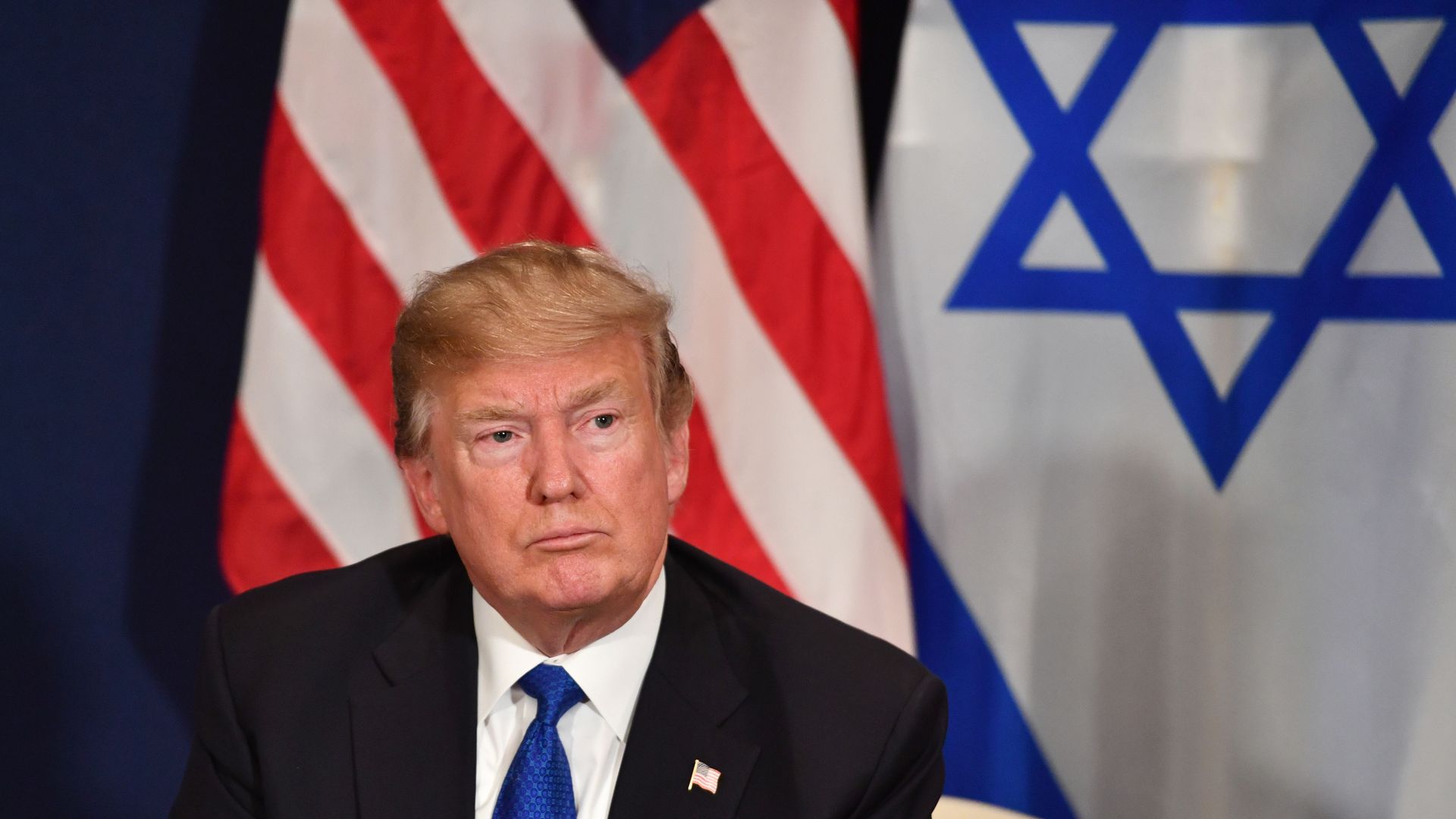
The decision to recognize Jerusalem as Israel's capital was "a peak moment" of the presidency, President Trump told Israel Hayom during a sit-down interview at the White House Thursday.
Why it matters: Palestinian President Mahmoud Abbas announced he would cut ties with the U.S. when Trump made his Jerusalem announcement on Dec. 6. As Axios' Barak Ravid scooped, the White House is now considering presenting a Middle East peace plan even if Abbas refuses to come to the negotiating table.
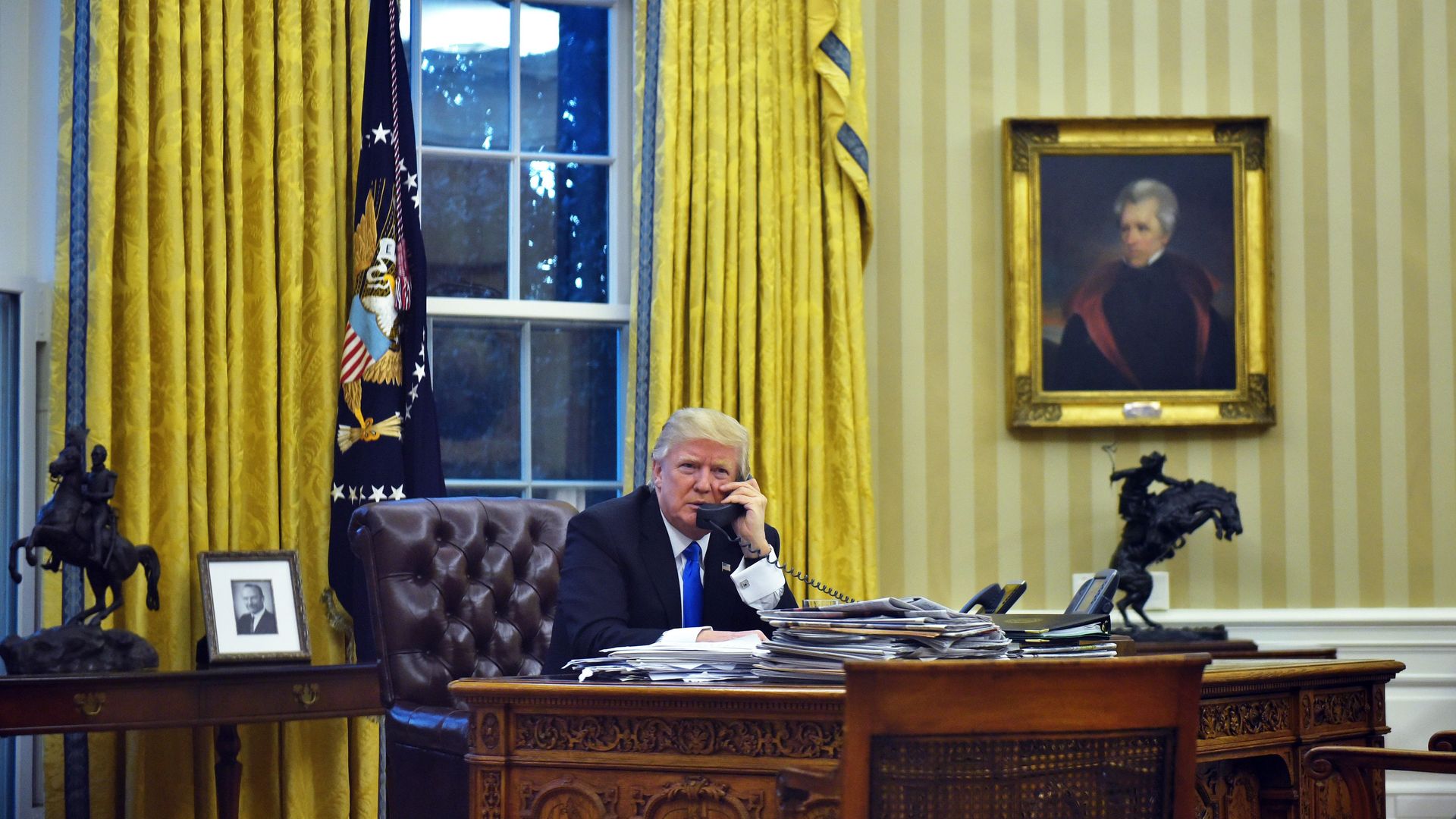
Stemming from his flair for showmanship and notorious inattentiveness, President Trump has — largely as promised — blown up usual White House norms on the topic of national security, often prompting incredulous reporting and dire prognostications from geopolitical experts on cable news.
The latest: Trump doesn't read his President's Daily Brief, each morning's collection of the intelligence community's most pressing information,and instead relies on oral presentations that are "augmented with photos, videos and graphics," per WashPost.
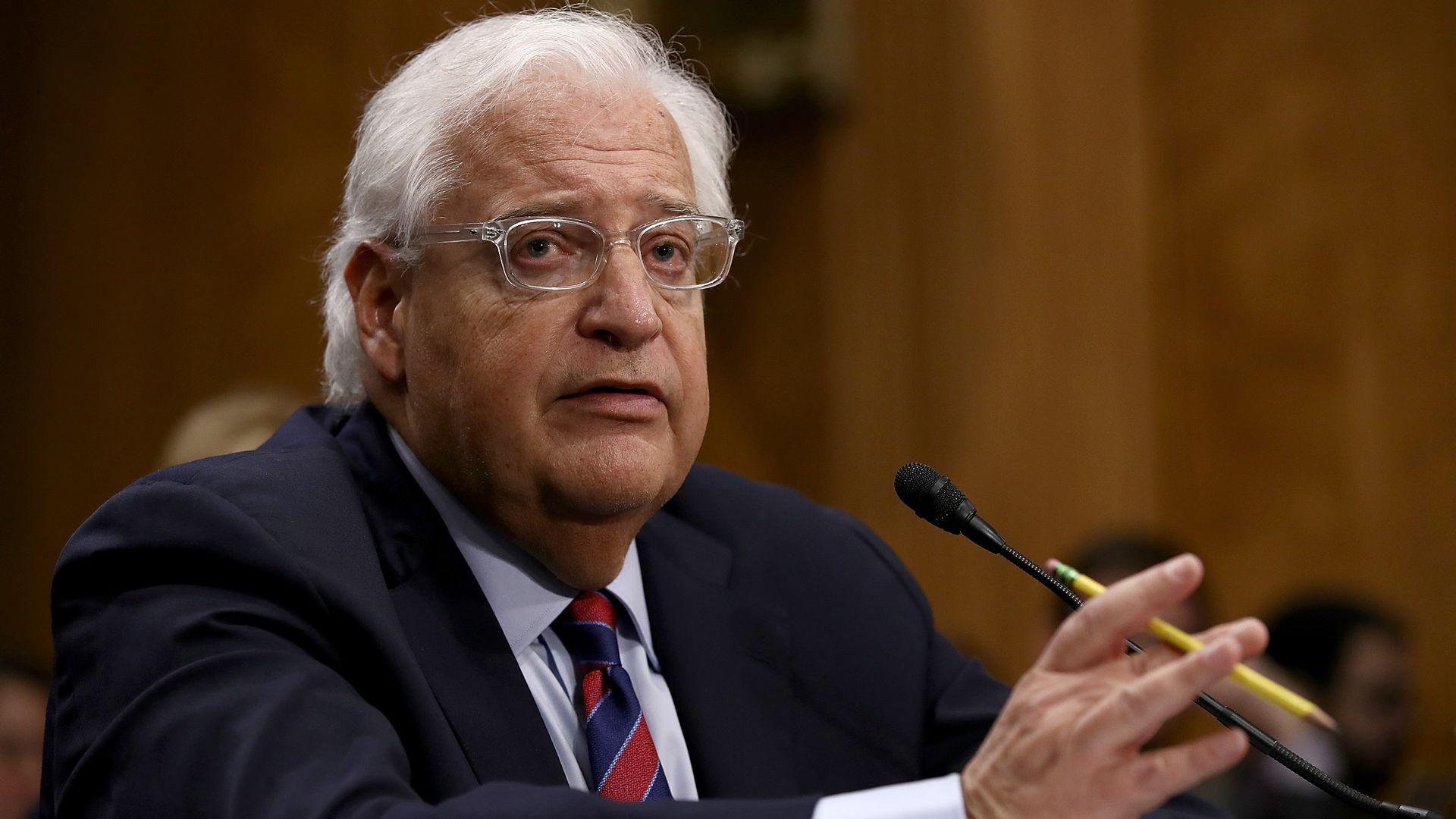
U.S. Ambassador to Israel David Friedman went on an unusual and probably unprecedented attack today against the Haaretz newspaper a day after one of its senior columnists published an op-ed criticizing his support for the Jewish settlements in the occupied West Bank.
Why it matters: It is very rare for foreign diplomats to attack the media in any democracy – especially in Israel – which is a close U.S. ally and a country with strong free press. In my 12 years as a reporter covering the diplomatic corps in Israel, I can't remember a similar case.
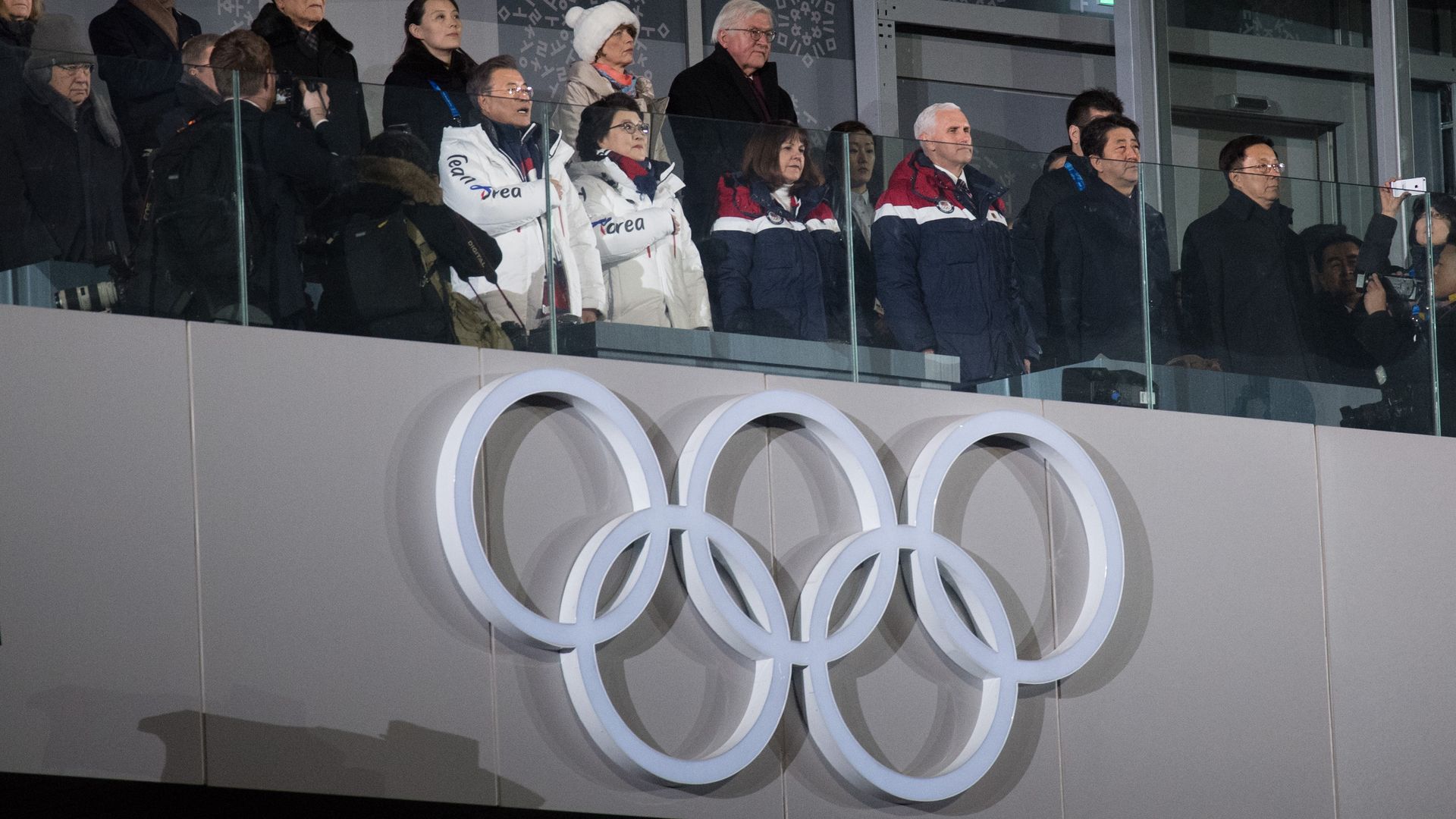
Vice President Mike Pence, who's in South Korea for the Olympics, has promised a new round of tough sanctions on North Korea. But while the U.S. is downplaying the Olympics as a possible starting point for a new round of negotiations with North Korea, South Korea is openly stating its plan to use the Olympics to re-start talks, according to the Washington Post.
Why it matters: Beijing wants to put stress on the U.S.-South Korea alliance and restart talks with North Korea that will reduce the near-term risks of conflict on the peninsula.
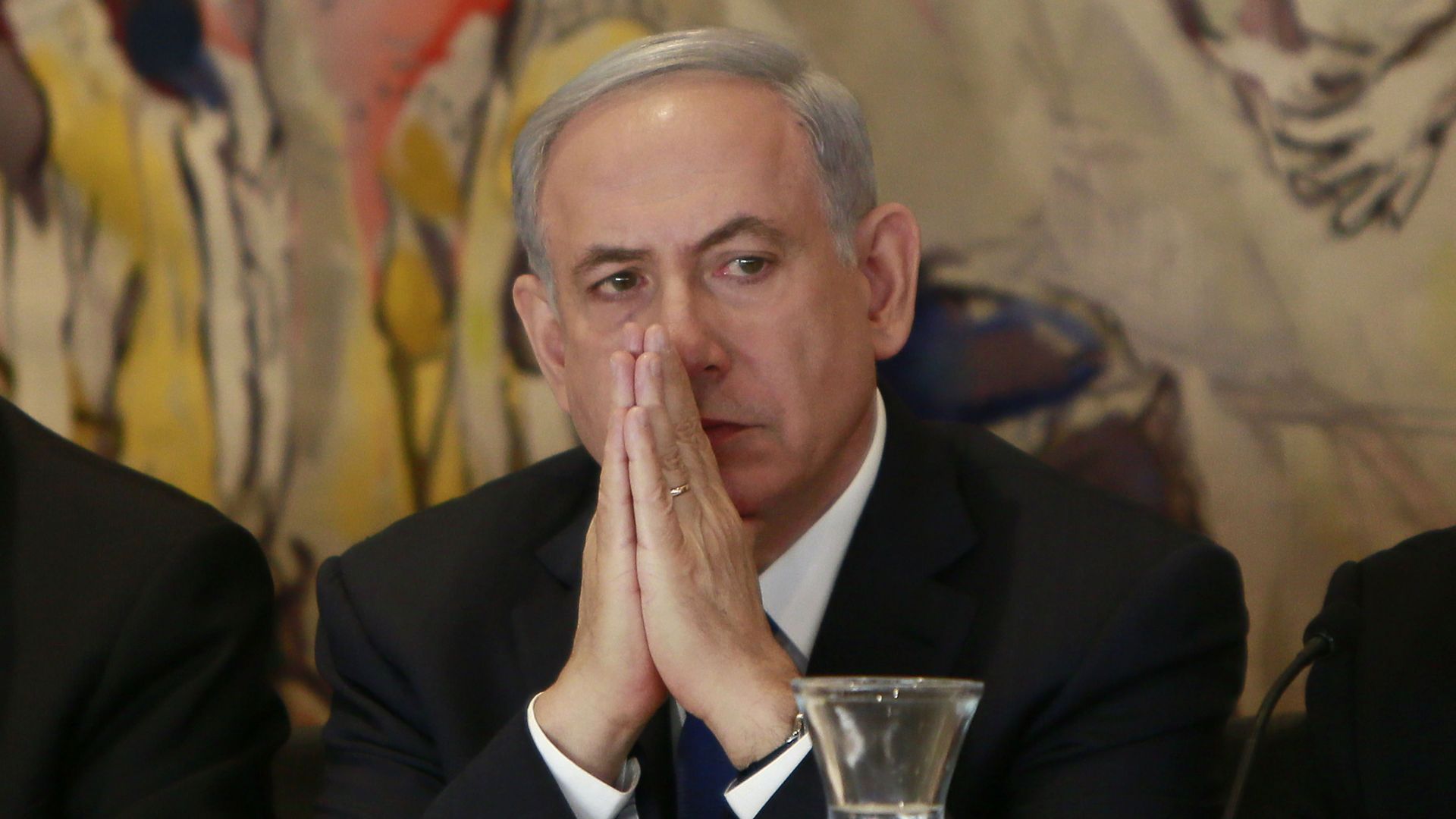
Israeli Prime Minister Netanyahu has asked members of his party in the Knesset not to press forward on a bill annexing the Jewish settlements in the West Bank until President Trump presents his Middle East peace plan.
The bottom line: Netanyahu explained that after Trump presents his peace plan and the Palestinians reject it, Israel will have a better chance to start discussing with the White House the possibility of annexing the settlements.
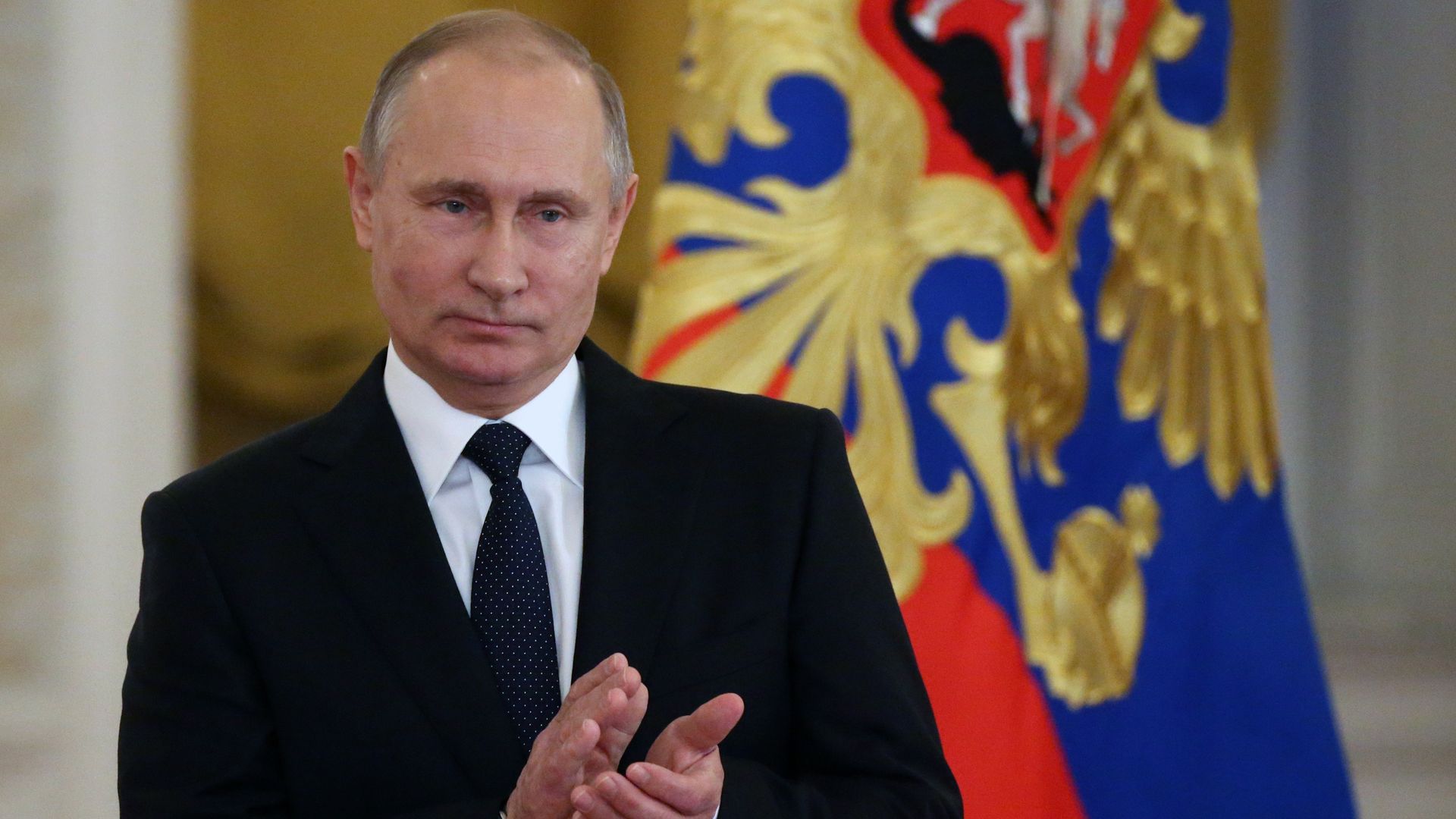
Russia's 2018 presidential elections are rapidly approaching and Vladimir Putin has some, at least nominal, competition. The election committee has registered eight total candidates for the the March 18 vote.
Why it matters, from Axios' Steve LeVine: This election won't be competitive, but it could be Putin's last and he needs a big finish to burnish his legacy as a modern-day czar. Putin depends on the support of the Russian people and is trying to put the uprising in 2012 behind him. In his current term, Putin has relied on the fumes of nationalism and xenophobia to buttress his popular support and put the relatively minor uprising in 2012 behind him. Expect him to pivot, possibly toward serious domestic challenges, ahead of his next, and possibly final, 6-year term.
The United States and Syrian Democratic Forces coalition engaged in "a combination of air and artillery strikes" against pro-regime forces in Syria late Wednesday night, after an "unprovoked" attack, Col. Thomas F. Veale, CJTF-OIR Public Affairs Officer, told Axios.
The bottom line: This is a rare response from the U.S. in a conflict zone that has seen escalation in recent months. The Washington Post reported that the beginning of 2018 has been "one of the bloodiest periods of the conflict yet."
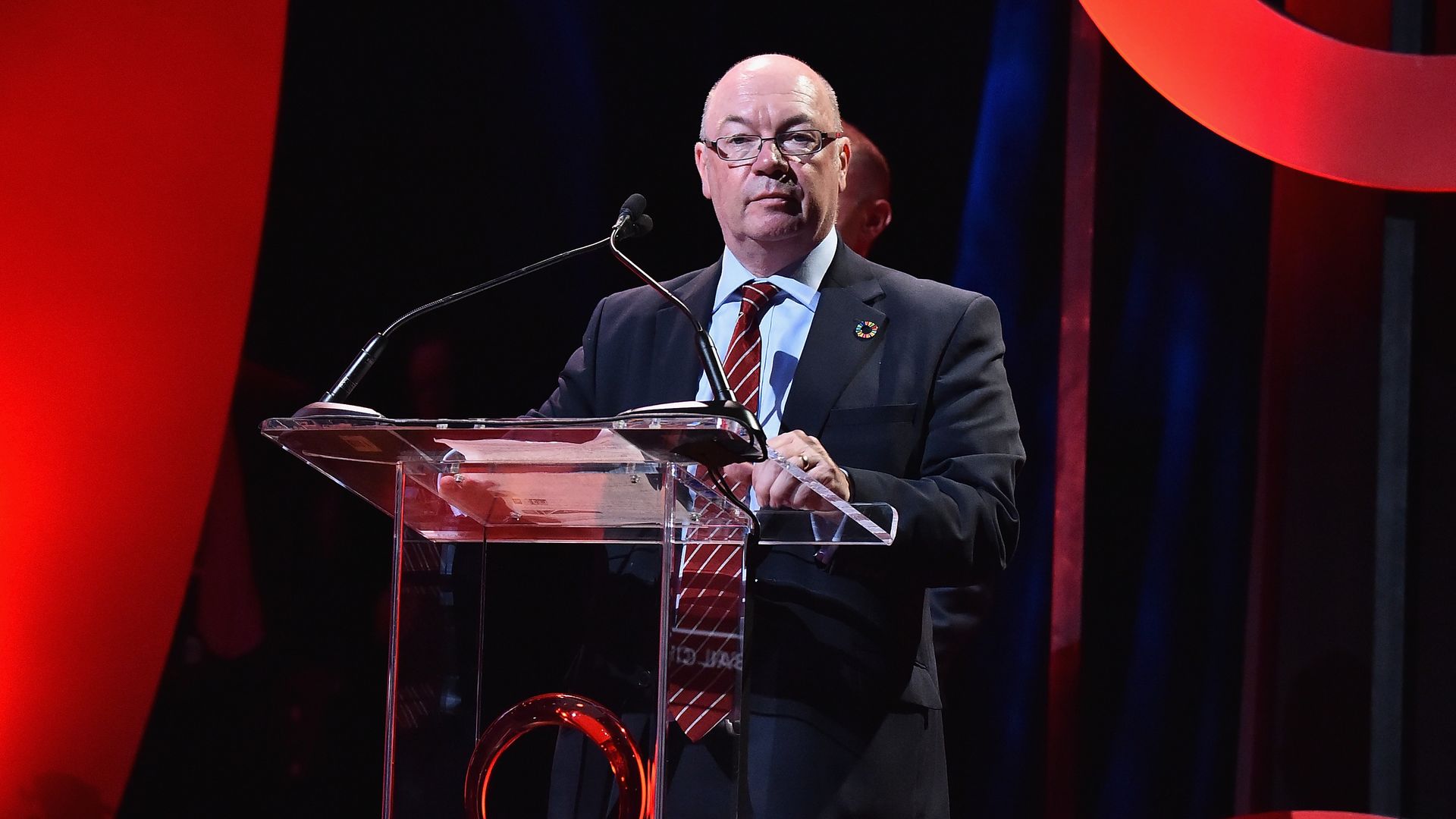
The U.K. is attempting to resolve U.S. concerns with the Iran deal along with its partners, Reuters reports from Paris. “We don’t want to see the JCPOA (nuclear deal) go down and are working with our European partners to mitigate concerns the United States may have to ensure it continues,” Alistair Burt, Britain’s Minister of State for the Middle East said at a Euromoney Iran conference Thursday.
Britain still wants the deal to work out. “We and our European partners are absolutely clear. We want the deal to succeed," Burt said. "Europeans are open to having discussions with U.S. counterparts to alleviate these concerns and address them," Ellie Geranmayeh, a senior policy advisor at the European Council on Foreign Relations with a focus on Iran and the nuclear issue, told Axios. "This doesn’t mean they’re agreeing to concessions."
U.S. arms are on sale at Asia’s largest aerospace and defense event, the Singapore Airshow, this week, per the AP. The U.S. is urging Asian countries to purchase F-35 fighter jets, two of which debuted at the airshow Tuesday.
Why it matters: Beijing and Washington have been accusing one another of a military buildup in the region, and Trump's newly released National Security Strategy prioritized countering China, a “rival” power, by reinforcing the U.S. presence in the Indo-Pacific region.
The House on Wednesday evening cleared a bill — the Ukraine Cybersecurity Cooperation Act — pushing the State Department to increase cooperation with Ukraine over shared Russian cybersecurity threats.
Why it matters: Ukraine’s efforts to separate its government from Russia have positioned the nation as a primary target of Russian cyber campaigns (and, in Crimea, military actions). The digital threats in Ukraine are also frequently interpreted as a test bed for attacks to be used across the world.
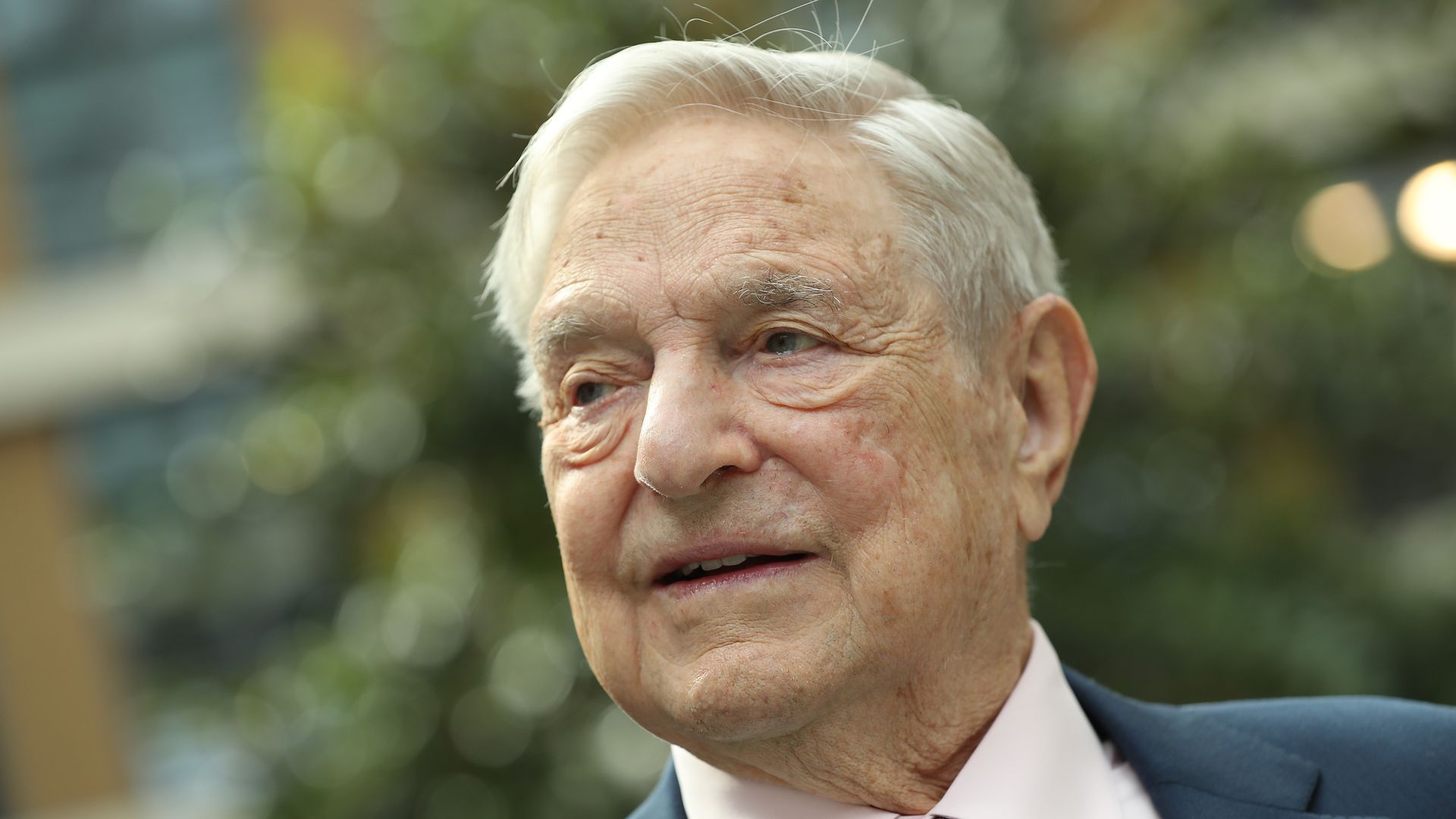
Billionaire philanthropist George Soros has given over $550,000 to the Best for Britain campaign, a group advocating for the U.K. to stop Brexit and remain in the European Union, the Guardian reports. The funds were contributed through Soros' Open Society Foundation.
The big picture: Soros' donation alone almost equals what Best from Britain raised from all of its other donors combined. The campaign plans to use the funds to run ads aimed at rallying public support and convincing members of Parliament to vote against Brexit, per BBC.
The majority of Americans (57%) think Russia will try to interfere in the 2018 midterm elections, and most (55%) aren't confident that the federal government is doing enough to stop it, according to a new NBC News SurveyMonkey poll.
Why it matters: The U.S. is still investigating the extent of Russia's interference in the 2016 presidential election, and public opinion shows they see the 2018 elections as a new threat. Secretary of State Rex Tillerson said as much Tuesday, stating that Moscow has already begun meddling.