Anthropic's new automated analysis tool provides some fresh insights into how the model operator weeds out malicious users trying to manipulate its Claude chatbot.
Why it matters: Distinguishing adversaries' queries from run-of-the-mill user inputs is the biggest challenge model operators face in their quest to identify and stop emerging threats.
Trend Micro, a major cybersecurity vendor, has been quietly rolling out a new "AI brain" that gives customers the ability to automate their threat defenses.
Why it matters: For years, cybersecurity vendors have promised that AI-enabled tools would one day help companies predict attacks and automatically patch new security flaws.
Trend Micro, a major cybersecurity vendor, has been quietly rolling out a new "AI brain" that gives customers the ability to automate their threat defenses.
Why it matters: For years, cybersecurity vendors have promised that AI-enabled tools would one day help companies predict attacks and automatically patch new security flaws.
That day is now here.
The big picture: Most successful cyberattacks continue to target human error, such as not patching a security flaw quickly enough or failing to detect hackers posing as legitimate employees as they exfiltrate hundreds of files.
Between the lines: Most security teams are burnt out and overburdened with hundreds of notifications each day detailing new threats to their online systems.
Anthropic's new automated analysis tool provides some fresh insights into how the model operator weeds out malicious users trying to manipulate its Claude chatbot.
Why it matters: Distinguishing adversaries' queries from run-of-the-mill user inputs is the biggest challenge model operators face in their quest to identify and stop emerging threats.
Driving the news: Last week, Anthropic released details about its new Clio tool — which studies what users are asking Claude in a similar way to how Google tracks search trends.
The tool can help Anthropic assess how everyday users are relying on Claude — and it can detect new threat actors trying to use the chatbot to do their bidding.
💥 Rep. Mike Waltz, who will be Trump's national security adviser, said over the weekend that U.S. cyber strategy needs to "start going on offense" in response to the Salt Typhoon hacks. (Politico)
🥊 Republican leaders of the House Homeland Security Committee and China Select Committee called for similar offensive measures in a new op-ed. (Fox News)
😬 Employees at the Cybersecurity and Infrastructure Security Agency are worried about what cuts the Trump administration will make at the agency, especially after it became a target of conservative criticism for saying the 2020 election was secure. (Wired)
Laurene Powell Jobs,founder and president of Emerson Collective, writes in her year-end letter that "humans have never stopped proving, in good times and bad, that we possess the abilities and the skills to carry the world forward":
"There is an abundance of noise in our country, but if we listen closely, we can hear the hum and buzz of all the original work that is always taking place in our midst."
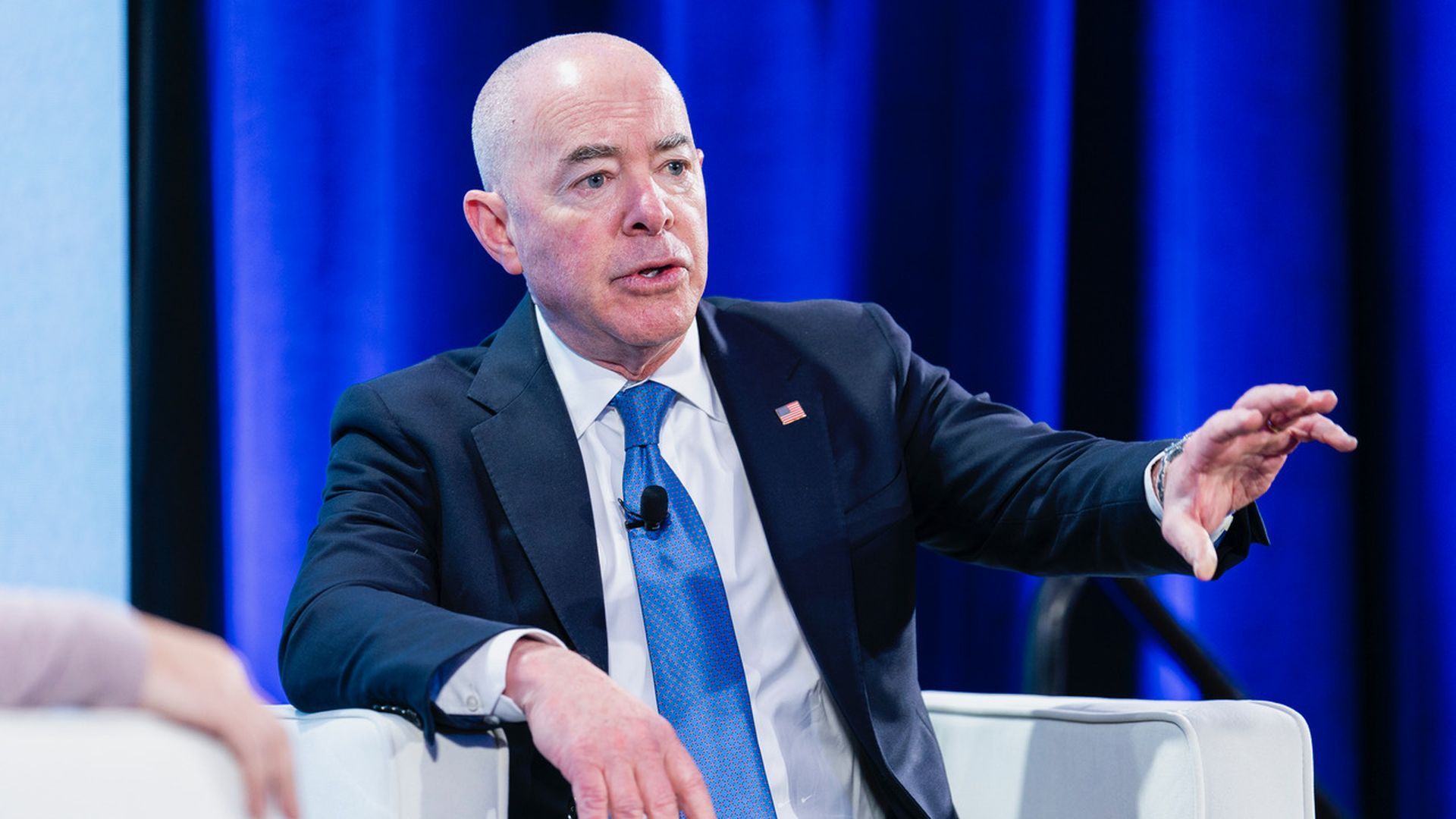
The head of the Homeland Security Department said Monday that a preliminary investigation of suspicious drone activity in New Jersey has found no evidence of a specific threat, but he urged Congress to give the agency more money and authority to defend against threats.
The big picture: Waves of reports of mystery drones in the sky in states including New Jersey, New York and Virginia have raised public concern, and lawmakers have urged they be investigated.
TikTok asked the Supreme Court on Monday to temporarily block a law that would effectively ban the social media app in the U.S.
Why it matters: This is TikTok's last resort as the request follows a denial by a U.S. Appeals Court to grant an injunction on the ban law until the Supreme Court decides whether or not to take up the case.
Meta on Thursday named longtime executive John Hegemanas its new chief revenue officer, a role that was not directly filled after the company's former CRO David Fischer departed in 2021.
Why it matters: The new leadership restructure is meant to bring Meta's business and product organizations closer together, according to an internal note to staff from Meta chief operating officer Javier Olivan.
A new report out from the Senate Committee on Health, Education, Labor and Pensions (HELP), led by Sen. Bernie Sanders (I-Vt.), accuses Amazon of manipulating data on worker injuries and ignoring safety concerns.
SoftBank is back in the Donald Trump flattery business, pledging to invest $100 billion into U.S. companies over the next four years and to create 100,000 jobs.
Driving the news: SoftBank founder and CEO Masayoshi Son is expected meet with the president-elect later today at Mar-a-Lago, where he'll announce his firm's plans at a press conference.
Apple has designed Apple Intelligence to make significant use of personal information, but the company promises that it keeps that information private — even from Apple — and doesn't use your data to train its AI models.
Why it matters: In order to deliver the highly personalized results Apple promises, it needs the trust of users and the policies designed to earn it.
Senate Majority Leader Chuck Schumer (D-N.Y.) said Sunday that he's "working to pass a bill" to give local law enforcement "more tools for drone detection" following a spate of mysterious sightings in Northeastern U.S. states.
The big picture: Schumer in online statements urged Homeland Security Secretary Alejandro Mayorkas to send "special drone-detection tech" to New York and New Jersey to tackle the unidentified flying objects problem that saw N.Y. Stewart International Airport shut down Friday.