Amazon's Prime Day is "major" driver of worker injuries, Senate report finds

Add Axios as your preferred source to
see more of our stories on Google.
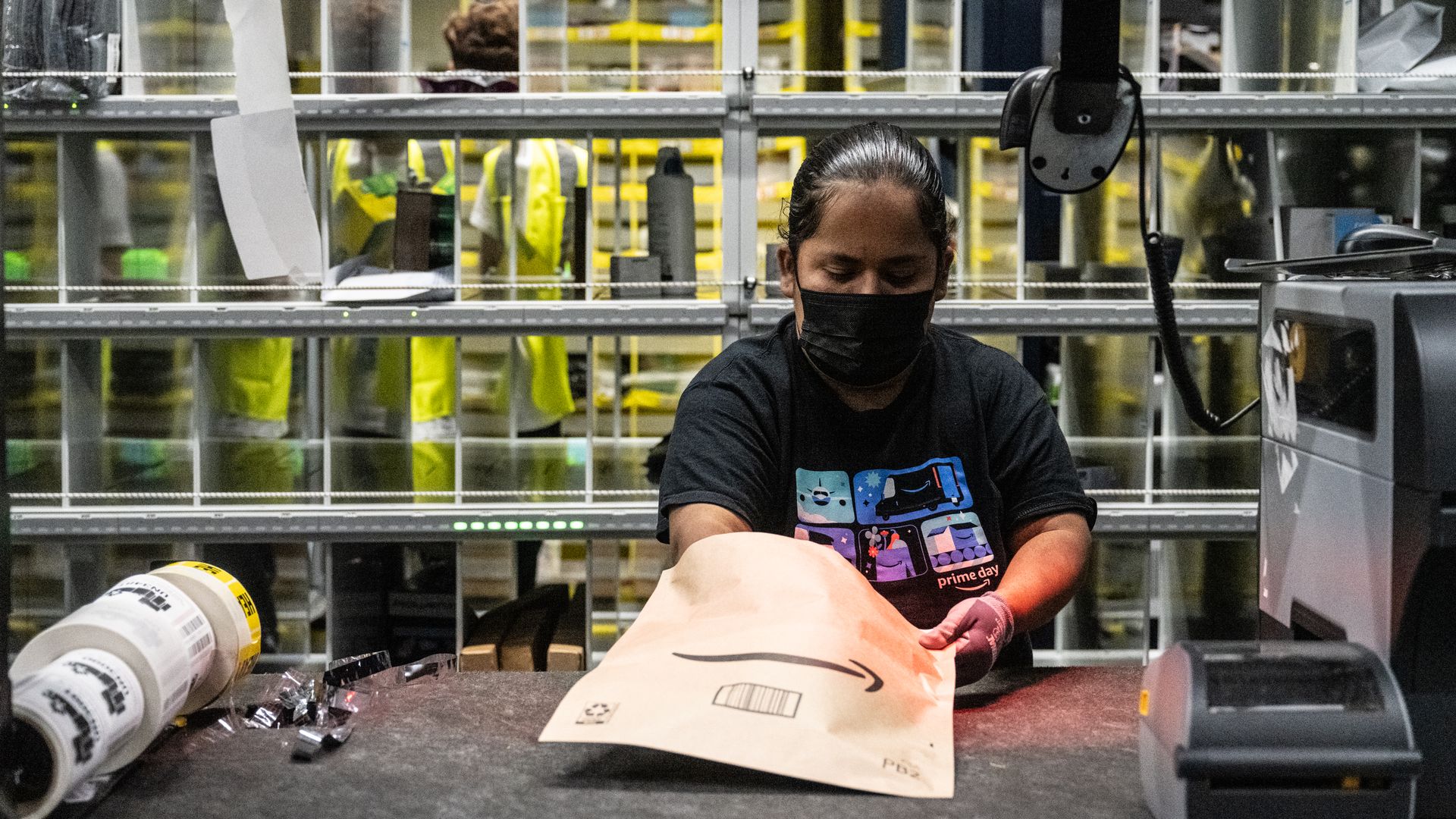
An Amazon worker preparing packages at a same-day fulfillment center in New York City on July 16. Photo: Stephanie Keith/Bloomberg via Getty Images
Almost half of Amazon warehouse workers suffered injuries around the company's past Prime Day sales, according to a new report from Sen. Bernie Sanders (I-Vt.), chair of the Health, Education, Labor, and Pensions (HELP) Committee.
Why it matters: Prime Day has become an industry-wide shopping phenomenon. The annual sale is a major source of revenue for the company and is expected to drive record-breaking online spending this week.
- Shipping the high volume of steeply discounted goods has put workers at increased risk of injury, according to the new report from Sanders.
- The committee has been investigating working conditions at Amazon's warehouses.
By the numbers: The report, based on internal company data, found that Amazon's rate of injuries that must be reported to the Occupational Safety and Health Administration (OSHA) was over 10 per 100 workers around Prime Day 2019, or more than double the industry average.
- Amazon's total injury rate, which includes injuries that the company is not required to report to OSHA, was almost 45 injuries per 100 workers during the same time period, according to the report.
- Injuries also significantly increased during holiday seasons in previous years, per the report.
What they're saying: Sanders said in a statement the report's results "are a perfect example of the type of corporate greed that the American people are sick and tired of."
- "Despite making $36 billion in profits last year and providing its CEO with over $275 million in compensation over the past three years, Amazon continues to treat its workers as disposable and with complete contempt for their safety and wellbeing," he said.
- "That is unacceptable and that has got to change."
The other side: Kelly Nantel, an Amazon spokesperson, said the company since 2019 has reduced its recordable incident rate by 28% and lost time incident rate by 75%.
- "But unfortunately, this report (which was not shared with us before publishing) ignores our progress and paints a one-sided, false narrative using only a fraction of the information we've provided," Nantel said.
- "It draws sweeping and inaccurate conclusions based on unverified anecdotes, and it misrepresents documents that are several years old and contained factual errors and faulty analysis."
Go deeper: Americans' retail spending flat in June as gas prices, auto sales dip
Editor's note: This story has been corrected to reflect that Sen. Sanders released the report, not the Senate.
