SoftBank revisits old playbook with Trump pledge

Add Axios as your preferred source to
see more of our stories on Google.
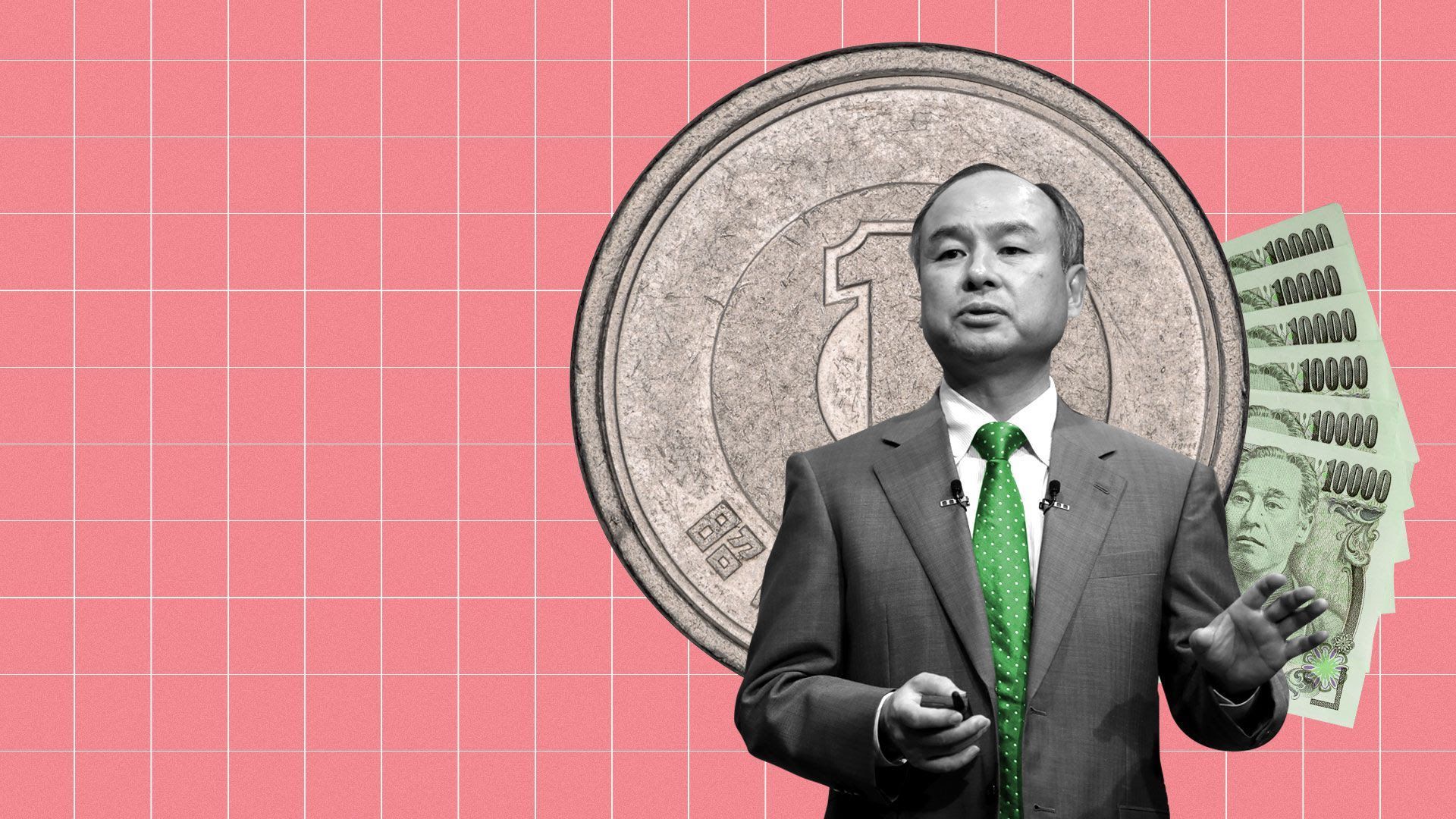
Photo illustration: Eniola Odetunde. Photo via Yoshikazu Tsuno/Getty Images
SoftBank is back in the Donald Trump flattery business, pledging to invest $100 billion into U.S. companies over the next four years and to create 100,000 jobs.
Driving the news: SoftBank founder and CEO Masayoshi Son is expected meet with the president-elect later today at Mar-a-Lago, where he'll announce his firm's plans at a press conference.
- This is very similar to what Son did after Trump's prior election in 2016, then traveling to the lobby of Trump Tower to promise $50 billion of U.S. investment and the creation of 50,000 jobs.
- SoftBank met those marks, although nearly half of the money went into WeWork.
Behind the scenes: Most of the upcoming investment is likely to be in AI infrastructure, including chips, data centers, and energy, according to a source familiar with the situation.
- The money would come from SoftBank's balance sheet, rather than the formation of a new Vision Fund, although it's also likely to seek partners for larger projects.
The big picture: This is a change in PR strategy more than a change in investment strategy.
- Back in 2016, SoftBank was raising its $100 billion Vision Fund before Trump won the election. So it cost nothing beyond plane fare for Son to do the press conference.
- Same story today, as SoftBank already has been investing heavily in AI with plans to go even deeper. For example, it held pre-election discussions with Apollo about a $20 billion partnership, while Son talked about saving up money for his "next big move" during an October conference in Saudi Arabia.
- Consider this SoftBank's version of an inaugural donation, in the pursuit of a lighter regulatory touch for the firm and its portfolio companies. For example, SoftBank has a stake in TikTok parent company ByteDance.
The intrigue: Son is a technologist and financier, not an industrialist, but his visit comes as Trump continues to pledge to block Japan's Nippon Steel from buying U.S. Steel — at a moment when CFIUS may not give President Biden the recommendation he seeks.
- Perhaps the friendly gesture may help Trump move off his 1980s-tinted view of Japan-U.S. economic relations.
The bottom line: It's late 2016 all over again for both America and SoftBank. That last part might make some in Silicon Valley a little nervous.
