Thursday's technology stories

Hackers target government agencies through vulnerable file-transfer tool
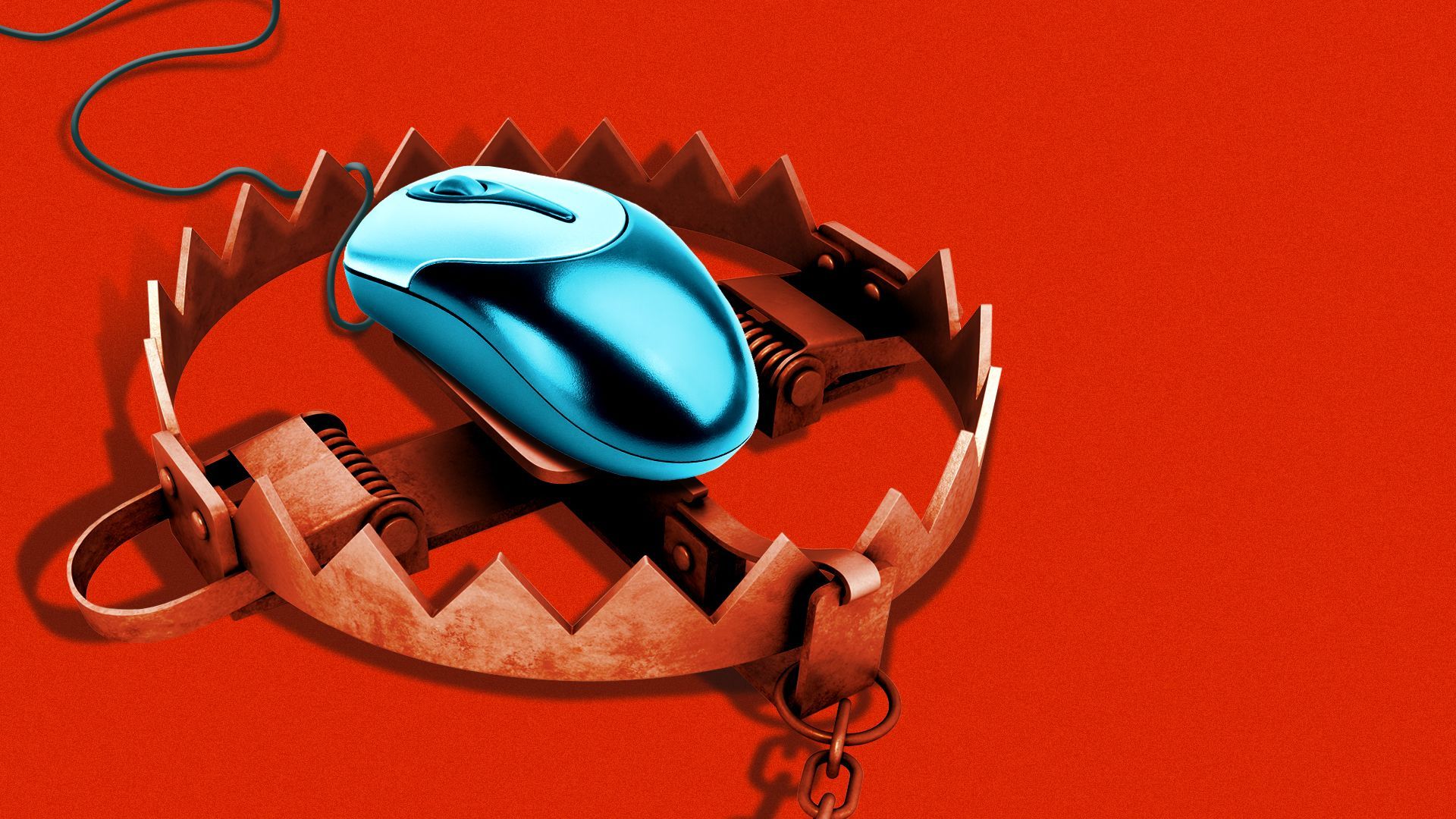
Several government agencies are responding to data breaches tied to a recently discovered security flaw in a popular file-transfer tool, the nation's cyber defense agency said Thursday.
Why it matters: The breaches highlight just how vulnerable the U.S. government remains to cyberattacks after years of investments to improve agencies' security postures.


MakerDAO breaks away from GUSD stablecoin
MakerDAO is breaking up with Gemini by cutting its position in the exchange's GUSD stablecoin, Brady and Crystal write.
Zoom in: The decision is largely informed by a desire for MakerDAO, a decentralized autonomous organization with $8 billion in assets, to take advantage of generous interest rates on U.S. Treasuries.

Xbox's game studios are finally ready to show off
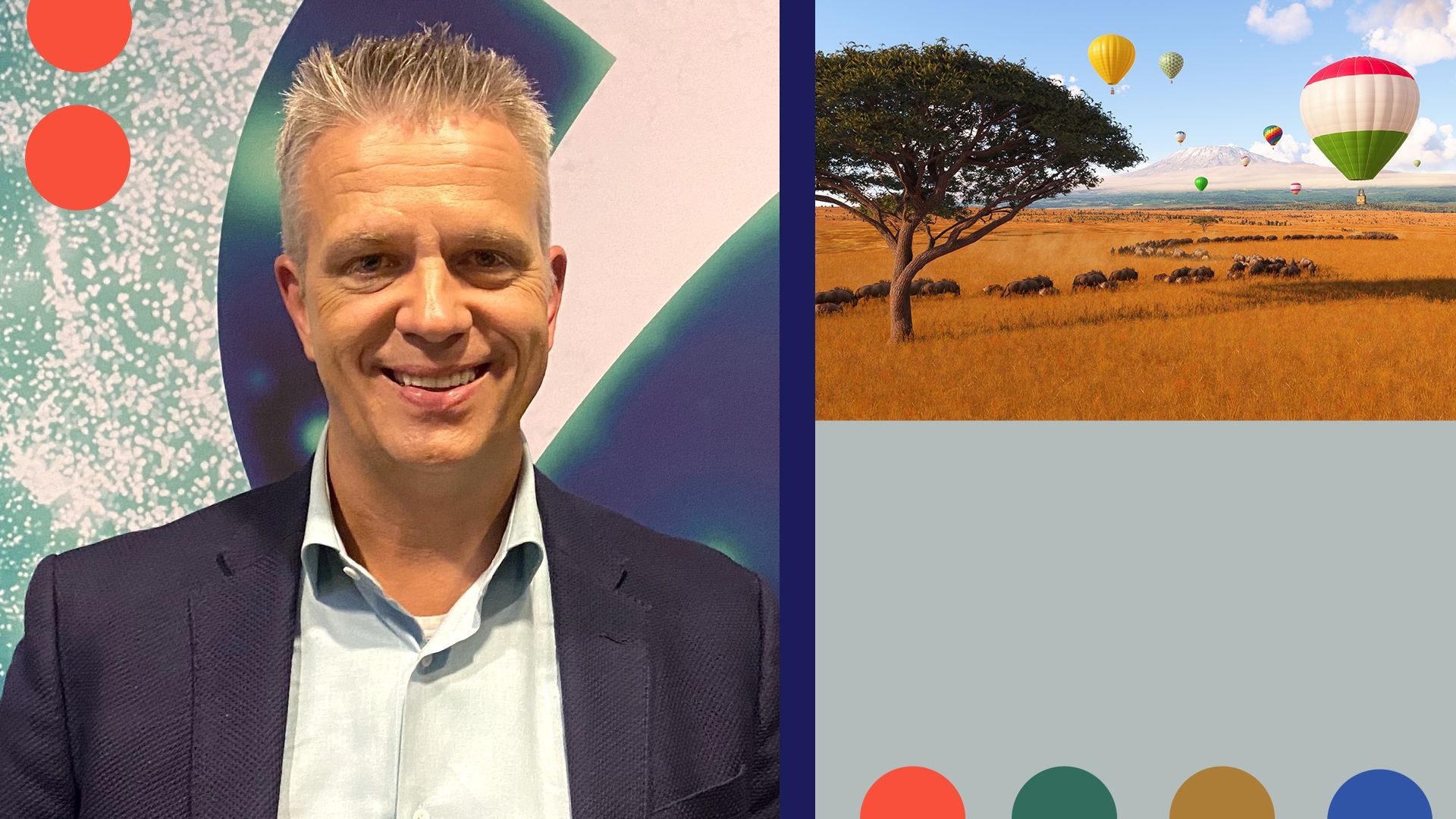
Microsoft’s video game studios are adopting longer development cycles, collaborating more with each other and finally ditching last generation’s Xbox One tech, if not that console’s playerbase.
Driving the news: These shifts are part of an updated approach to making games for PC and consoles at Microsoft, the company’s game studio chief Matt Booty tells Axios.
The Value Prop compiles crypto use-cases to battle skeptics
/2023/06/14/1686777032427.gif?w=3840)
Polygon launched a database cataloguing the different ways folks are using blockchain-related services across verticals from social impact to education.
Why it matters: The initiative was inspired to answer the question of "what is crypto's value proposition," Rebecca Rettig, chief policy officer at Polygon, tells Axios, and in part, to push back on Washington criticism enshrined in the President's economic report that its innovation has been mostly about creating "artificial scarcity."

GLAAD: Social media companies are enabling real world violence
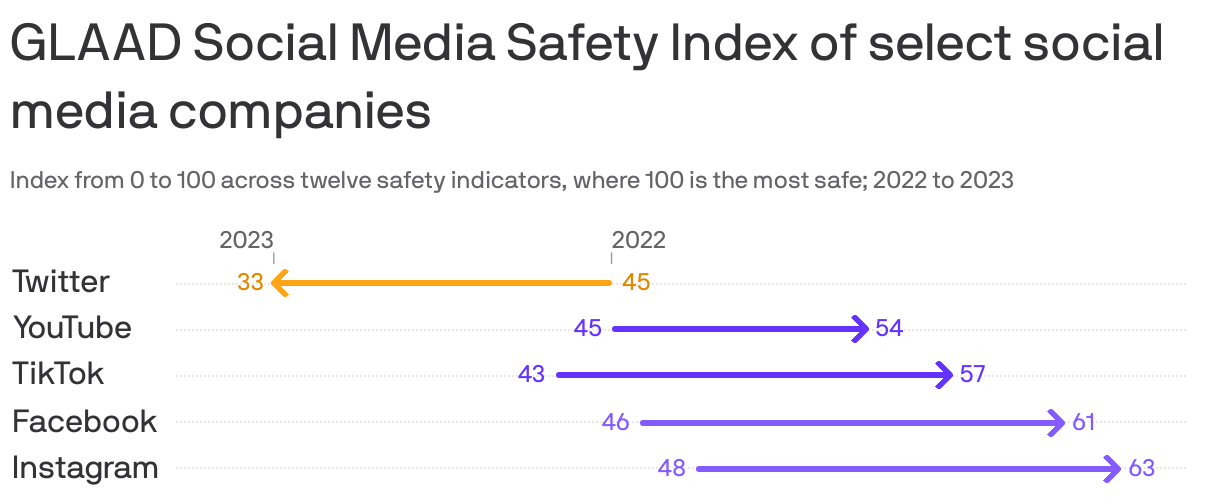
By continuing to allow harassment and hate on their platforms, Facebook, Instagram, TikTok, YouTube and Twitter are fostering an environment that has led to a wave of threats and violence against the LGBTQ community, according to a new report from GLAAD.
- The social media companies "are directly responsible for the uptick in hate and violence on the LGBTQ community," GLAAD CEO Sarah Kate Ellis told Axios, pointing to more than 160 documented acts or threats of violence at LGBTQ events so far in 2023.

Europe comes for Big Tech, again

European leaders have spent the week doing what they do best: regulating, and promising to poke around in other people's tech.
Driving the news: The EU's legislative reconciliation process is underway to finalize the bloc's AI Act. While officials met until nearly midnight — after a supermajority of legislators approved the text Wednesday — the process will likely take months, and the law won't take force until 2025.

Music publishers accuse Twitter in $250M lawsuit of copyright infringement

The National Music Publishers' Association accused Twitter in a lawsuit Wednesday of repeatedly violating copyright law by allowing users to post music to Elon Musk's platform without permission.
Driving the news: "Twitter fuels its business with countless infringing copies of musical compositions, violating Publishers' and others' exclusive rights under copyright law," alleges the NMPA's lawsuit, brought on behalf of 17 music publishers that represent some of the world's biggest artists.

Trump's Truth Social troubles
When former President Trump in October 2021 agreed to merge his fledgling social media company with a SPAC, it made tons of sense.
State of play: Twenty months later, with the deal mired in legal and regulatory limbo, it would make sense for both sides to walk away.
Vodafone agrees to U.K. mobile megamerger
Vodafone agreed to merge its British operations with Three UK, a unit of Hong Kong-based CK Hutchison.
Why it matters: This would create the U.K.'s largest mobile operator with 27 million customers, topping current leaders BT Group and Virgin Media O2.

EU hits Google with antitrust charges over ad tech
The European Union hit Google with a formal antitrust complaint Wednesday, two years after regulators first opened an investigation into whether Google abused its market dominance to favor its own ad tech.
Why it matters: The complaint puts even more pressure on Google parent Alphabet to possibly divest parts of its lucrative ad business.

Meta and Microsoft join AI standards group on "synthetic media"
Meta and Microsoft joined a group working on a framework to promote responsible practices in the development, creation and sharing of media created by AI, per an announcement Wednesday shared first with Axios.
Driving the news: The two tech giants, both pushing forward with respective generative AI projects, are joining the Partnership on AI group working on the framework, with plans to meet later this month to discuss recommendations and case studies.
- The group is working on technical, legal and social implications of AI-generated work.
- "Meta is excited to join the cohort of supporters of Partnership on AI’s Responsible Practices for Synthetic Media and to work with PAI on developing this into a nuanced approach to educating people about generated media,” Nick Clegg, president of global affairs at Meta, said in a statement.
- "We're optimistic about the developments in this space and about using this technology to bring more tools for creative expression to our community."
What they're saying: "Meta and Microsoft reach billions of people daily with creative content that is rapidly evolving," Claire Leibowicz, head of AI and media integrity at the Partnership on AI, said in a statement.
- "These companies have both the expertise and the access needed to reach users all around the world and help them learn to discern AI-generated images, video, and other media as synthetic media’s prevalence grows."
Be smart: Founding members of the framework, first launched in February, include Adobe, Bumble, OpenAI, TikTok, BBC, the Canadian Broadcasting Company and WITNESS, a human rights and technology group.
- Adobe has its own Content Authenticity Initiative (CAI), launched four years ago, that allows the provenance of an image to be tracked over time, including how and when it was altered, Axios previously reported.
- CAI and the new framework from Partnership on AI are "separate but complementary initiatives," said Aimee Bataclan, spokesperson for the Partnership on AI, with the framework giving recommendations for anyone creating and distributing media.
- "It incorporates several recommendations related to CAI in its sections on disclosure. However, the framework’s interventions go beyond disclosure — including an emphasis on responsible and harmful use cases for synthetic media, an emphasis on informed consent, and broader transparency."
Our thought bubble: Tech industry groups generally gather together to establish best practices and guidelines to head off the imposition of more formal regulation.
- The companies involved here are well aware that regulation will likely come for AI, and in most cases they're embracing that. But they're also grabbing a chance to push their own ideas forward in the name of responsibility while lawmakers decide what to do.
Where AI's productivity revolution will strike first

As large cloud and software providers race to unfurl new enterprise AI offerings, a new McKinsey report says banks and retail are the business sectors first in line for the biggest boost from generative AI.
- In these and other companies, 75% of the productivity gains from generative AI will come from just four business functions: customer operations, marketing and sales, software engineering and R&D.
Why it matters: AI providers are starting to deliver specific tools to transform predicted AI productivity gains from theory to reality.
- The higher the pay and education associated with a work function, the more susceptible it will be to AI's impact, according to McKinsey.
Driving the news: Oracle on Tuesday announced an end-to-end platform for generative AI services, a day after Salesforce launched its Cloud AI offering.
- Both are branded as privacy and security-focused and are designed to appeal to regulated industries.
What's happening: McKinsey studied 63 practical uses of generative AI across 2,100 existing work activities to assess its potential.
- McKinsey expects activities that consume about two-thirds of our work time today to be automated over the next 20 years.
- A key example is R&D, where the emerging field of generative design — turbocharged by foundation models that enable faster drafting and testing of products and services — will provide big efficiencies, per McKinsey.
By the numbers: Generative AI could deliver total value between $2.6 trillion to $4.4 trillion a year, a sum greater than the GDP of Germany, the world's fourth-largest economy.
- Retail and packaged consumer goods companies would be in line for $660 billion a year in productivity gains, if "use cases were fully implemented" — which would mean a 44% boost to profits.
- Banks, which tend to have higher profit margins, wouldn't receive as big a boost to profits (9% to 15%) but stand to gain up to $340 billion annually.
Of note: McKinsey held back from attaching a timeline to these gains — a spokesperson said, "How quickly that value will be captured is dependent on how many and how fast companies decide to implement these use cases. It will undoubtedly take years."
Yes, but: While innovators and researchers agree on the huge potential of generative AI, even bigger dividends are possible from non-generative AI — the basic machine-learning and analytics technology that has been steadily evolving for the past 15 years.
- McKinsey estimates extensive use of non-generative AI would deliver $11.0 trillion to $17.7 trillion economic value, roughly four times that of generative AI.
- These rosy scenarios come with a warning: "Significant human oversight is required," and there's no replacement for human "strategic thinking specific to each company’s needs."
What they’re saying: Michael Chui, partner at McKinsey Global Institute, which prepared the report, told Axios he was most surprised to see generative AI’s impact “is highest for occupations which have the highest educational requirements and wage rates.”
- Antonio Neri, CEO of Hewlett Packard Enterprise, told Axios that much of realizing AI's potential pivots around making better use of data. Companies today are "exploiting only about 10% of the data they're accumulating," he said.
- Clara Shih, CEO of Salesforce AI, sees new enterprise AI applications as "democratizing generative AI" by lifting up the standards of work all staff can deliver.
- Using the example of marketing and sales emails, Shih said it's now possible for "every seller in your organization, every service agent, every marketing manager" to prepare text at the level only the "top few percent" could previously.
SAP chief marketing officer Julia White told Axios that generative AI is converting the notion of 1-to-1 marketing from theory to reality. "We can start delivering on that idea in a way that never would have scaled before," White said.
- White said her team is conducting a number of internal pilots, including one that suggests to sales people which demos might be most appropriate using characteristics such as a prospect's location and industry.

Court grants FTC restraining order against Microsoft's Activision Blizzard deal

A federal judge on Tuesday granted the FTC's request for a temporary restraining order that prevents Microsoft from closing its acquisition of gaming giant Activision Blizzard.
Why it matters: We're inching quite close to the July 18 deadline for the deal to either close, or an extension to be negotiated — or else, Microsoft will owe Activision Blizzard a $3 billion breakup fee.