Amazon will pay over $30 million to settle Federal Trade Commission (FTC) allegations that its Ring and Alexa divisions violated the privacy of users.
The latest: A lawsuit filed by the Department of Justice on behalf of the FTC said Wednesday Amazon violated the Children's Online Privacy Protection Act by retaining voice and geolocation information from young users for years despite parents' requests that they delete the data.
Activision Blizzard saw an uptick in employee reports of misconduct in late 2022, a rise the company attributes to greater scrutiny of the issues.
Driving the news: The game maker’s inaugural transparency report, released Wednesday, says the company received 114 reports of harassment, discrimination or retaliation by its employees last year.
Cars must be able to stop themselves when they detect an imminent crash, even at high speeds and at night, per a newly proposed rule from U.S. safety regulators.
Why it matters: The proposed standard, which goes far beyond today's crash-avoidance technology, aims to reduce the carnage on U.S. roadways.
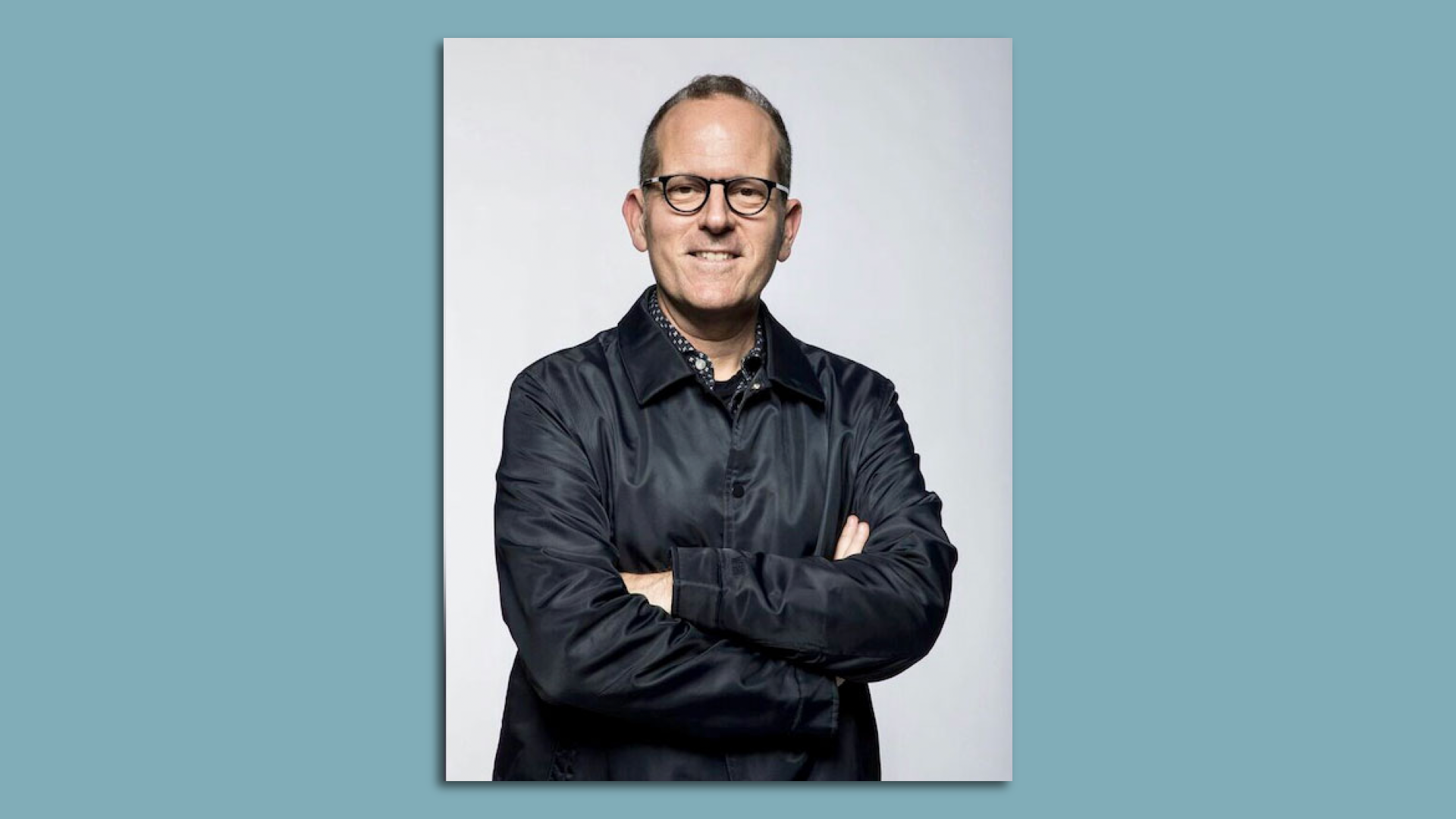
Corey duBrowa will depart Google and parent company Alphabet in June to serve as CEO of global public relations firm Burson Cohn & Wolfe (BCW), Axios has learned.
Why it matters: DuBrowa's departure comes at a pivotal time for Google as the tech giant embarks on the generative artificial intelligence race.
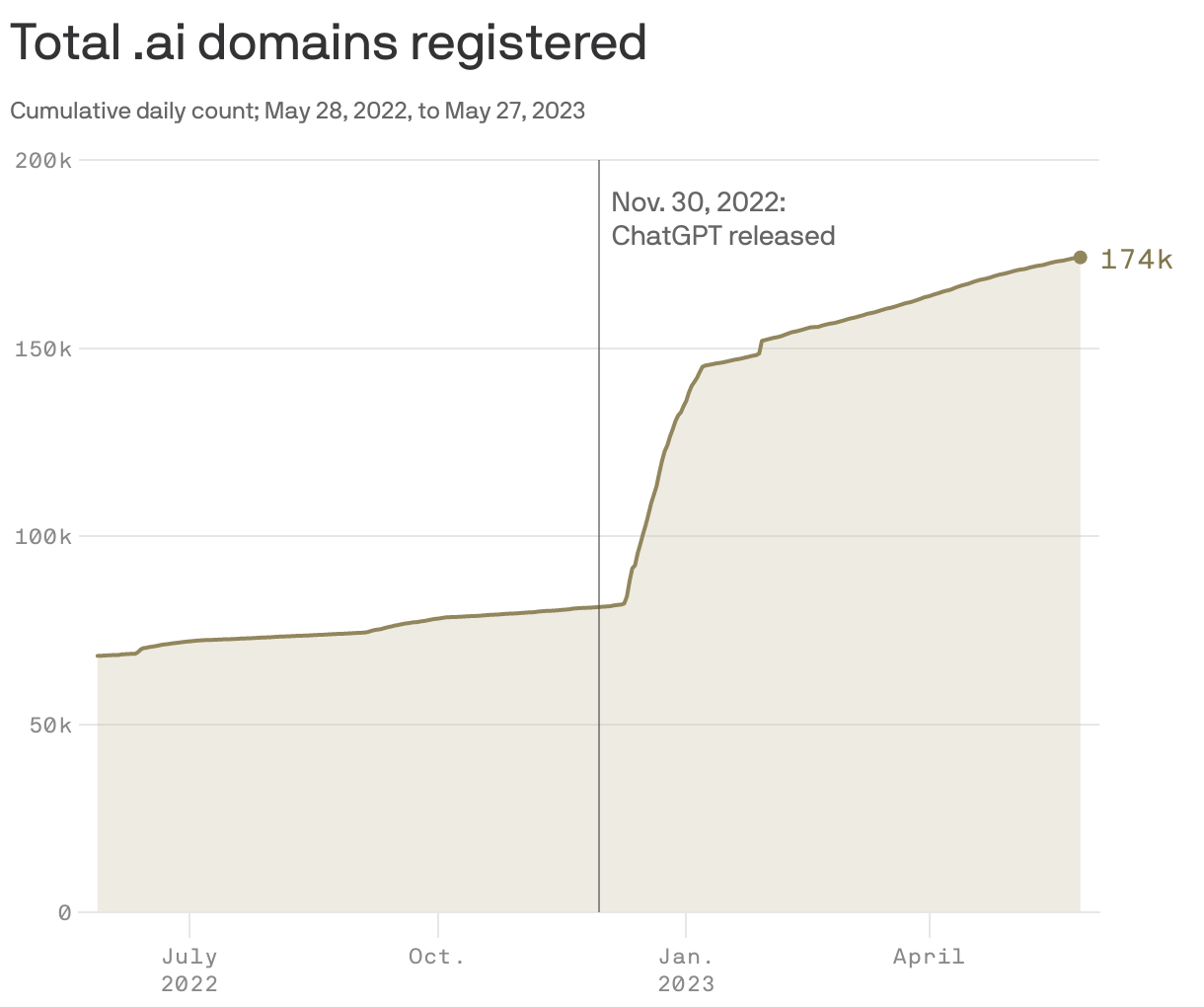
It feels like every new startup is calling itself an AI company, no matter what it really does, while many old ones are rebranding as such. And some of that is showing up in domain name registrations.
Driving the news: Registrations of .ai domain names are up 156% over the past year, compared to just a 27% increase for .com domains over the same time period, according to Domain Name Stat.
Breaking: Equatic, a UCLA spin-out pairing carbon dioxide removal using seawater and hydrogen production, just unveiled a major deal with Boeing.
Why it matters: While the deal is preliminary and contingent upon Equatic's ability to scale its tech, it's large for the nascent carbon removal market.
🗞️Driving the news: The "pre-purchase option agreement" is for 62,000 metric tons of CO2 removal, and 2,100 metric tons of "carbon-negative" hydrogen that Boeing sees as feedstock for cleaner jet fuel.
It covers a roughly five-year period that starts mid-decade, a spokesperson said.
Equatic is also divulging more details about its structure and plans.
John Browne, the former BP CEO who's now chairman of the climate tech fund BeyondNetZero, is heading Equatic's advisory board.
Reality check: Volumes in recent industry deals are growing. But they're still tiny compared with the global scale envisioned to make removal a meaningful tool in future decades, which involves handling multibillions of tons a year.
That's hardly a sure thing, and for now, the priority is scaling and driving down costs.
How it works: Equatic's tech passes electrical current, obtained via renewables, through seawater — a process called electrolysis that splits water into hydrogen and oxygen.
They then pass atmospheric air through the processed seawater. "These steps trap CO2 in solid minerals and as dissolved substances that are naturally found in the oceans," the company said.
🧮The big picture: The process enables precise accounting of how much CO2 is removed, Equatic said.
And the hydrogen can be used in heavy industry, electricity, production of transport fuels — or powering Equatic's CO2 removal plants.
🔍Zoom in: Equatic has pilot projects in L.A. and Singapore.
It hopes to reach 100,000 metric tons of carbon removal annually by 2026, and millions by 2028 for under $100 per ton, a goal set by the Energy Department.
Removal pledged under a far smaller deal with Stripe in 2021, when Equatic was called SeaChange and housed at UCLA, was for $1,370 per ton.
🏃🏽♀️Catch up fast: Equatic has raised over $30 million. Its many backers include the Chan Zuckerberg Initiative, the Anthony and Jeanne Pritzker Family Foundation and DOE.
The intrigue: Chief Operating Officer Edward Sanders told Axios that Equatic's hydrogen production will be eligible for climate law tax credits for U.S. projects.
But separate carbon removal credits don't apply because they're only for geologic storage, not ocean-based removal, he said.
Sanders said he hopes lawmakers will broaden the applicability but added that Equatic's business model doesn't rest on it.
He's also confident a U.N. panel will eventually reverse its preliminary view that engineered removal should be excluded from carbon markets under the Paris Agreement.
The bottom line: Equatic's novel vision of merging direct air capture, CO2 storage in oceans and hydrogen production shows how no tech is yet dominant in the emerging removal field.
Artificial intelligence's rise is already beginning to reshape tech's business landscape, with the emergence over the past week of the first big winner: chipmaker Nvidia.
Driving the news: Nvidia opened trading Tuesday with a market capitalization that topped $1 trillion before closing just shy of that level. That placed it in an elite club that also includes Apple, Google/Alphabet, Amazon and Microsoft.
Twitter is worth one-third of the amount it was when Elon Musk and co-investors bought the social platform for $44 billion, according to a new disclosure from Fidelity.
Driving the news: In Fidelity's latest Twitter markdown, the financial services giant estimated in a monthly report of portfolio valuations that the company is now worth about $15 billion, or 33% of the October purchase price, per a Bloomberg assessment Tuesday.
Venmo-ing crypto is already here — the latest development in PayPal's nearly one-year-old service enabling on-chain transfers.
Why it matters: It's an incremental advance in the payment giant's vision of a more cashless future, one that includes solving what it sees as some of the roadblocks keeping crypto from playing a more significant role in payments.
A security vendor popular with small to medium-size businesses' IT teams is starting to make it easier for its customers to get cyber insurance.
What's happening: Kaseya, a leading provider of remote monitoring and management tools, launched a partnership with cyber insurance provider Cysurance Tuesday so that customers are fast-tracked for a new policy.
CrowdStrike is the next major cybersecurity firm bringing generative AI into its product stack.
Driving the news: CrowdStrike — a publicly traded company that provides a mix of cloud security tools, endpoint security, and incident response and threat intelligence products — rolled out its own generative AI assistant for customers Tuesday.
European countries are turning to existing laws to regulate cutting-edge technology like ChatGPT in the absence of legislation that deals directly with artificial intelligence.



















/2023/05/30/1685409873727.gif?w=3840)