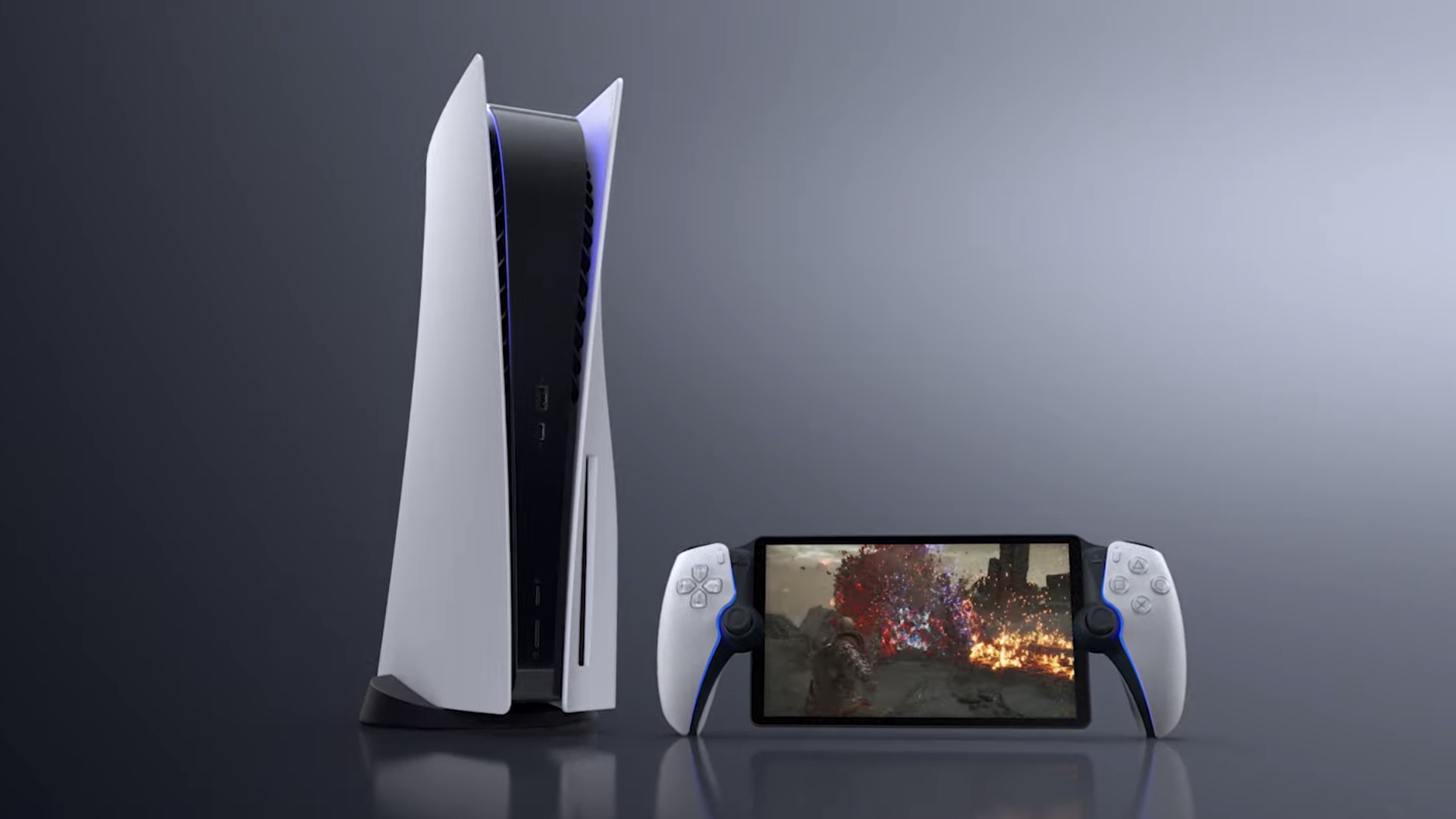
Sony plans to release a new handheld later this year that will play games streamed from the PlayStation 5, a partial return to portable gaming after a decade away.
Why it matters: The device, codenamed Project Q, will further test the potential of cloud-based gaming, just as it'll test whether Sony can rediscover its footing in a market where it struggled.
A lab-made opioid makes its way as chemical components from China to a shop in Latin America, where it's made into fentanyl, packaged and trafficked into the U.S. — a drug move that crypto can track.
Why it matters: Criminals use crypto as a means to operate — but that also means that law enforcement can leverage blockchain analysis to stop them.
The sprawling Swedish video game company The Embracer Group is reeling following its announcement that a "transformative" partnership that's been negotiated for months fell apart Tuesday night.
Driving the news: Embracer said the collapse of the mega-deal, the partner of which still has not been revealed, was unexpected. Embracer said it had a verbal commitment in October and described negotiations as "taking far longer than expected."
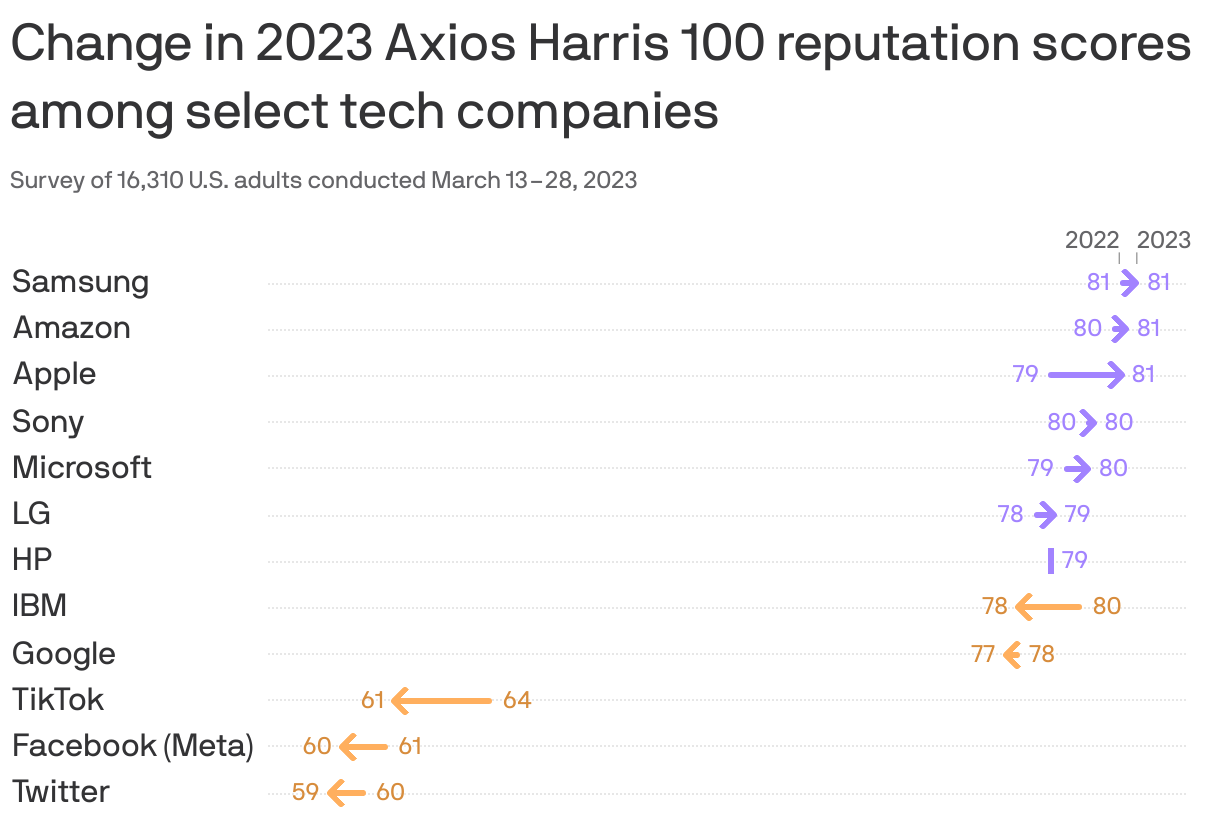
Large tech companies crowd both ends of the rankings in this year's Axios Harris Poll 100 brand reputation survey, with those that provide tangible products and useful services clustered near the top and those that trade in social-media messages banished to the bottom.
Elon Musk appears to be readying a new project to enter the AI arena against Microsoft and OpenAI.
Why it matters: His plans could involve harnessing together technology from at least two of his companies — Tesla and Twitter — "to some degree," according to Musk.
The first U.S. national cyber director is returning to Paladin Capital Group as a strategic adviser, the venture capital firm first shared with Axios.
The big picture: Chris Inglis stepped down from his White House position in February. His new gig at Paladin, a VC firm focused on cyber and advanced technologies, marks the first of what could be several private sector gigs for Inglis during what he's calling his "nominal retirement."
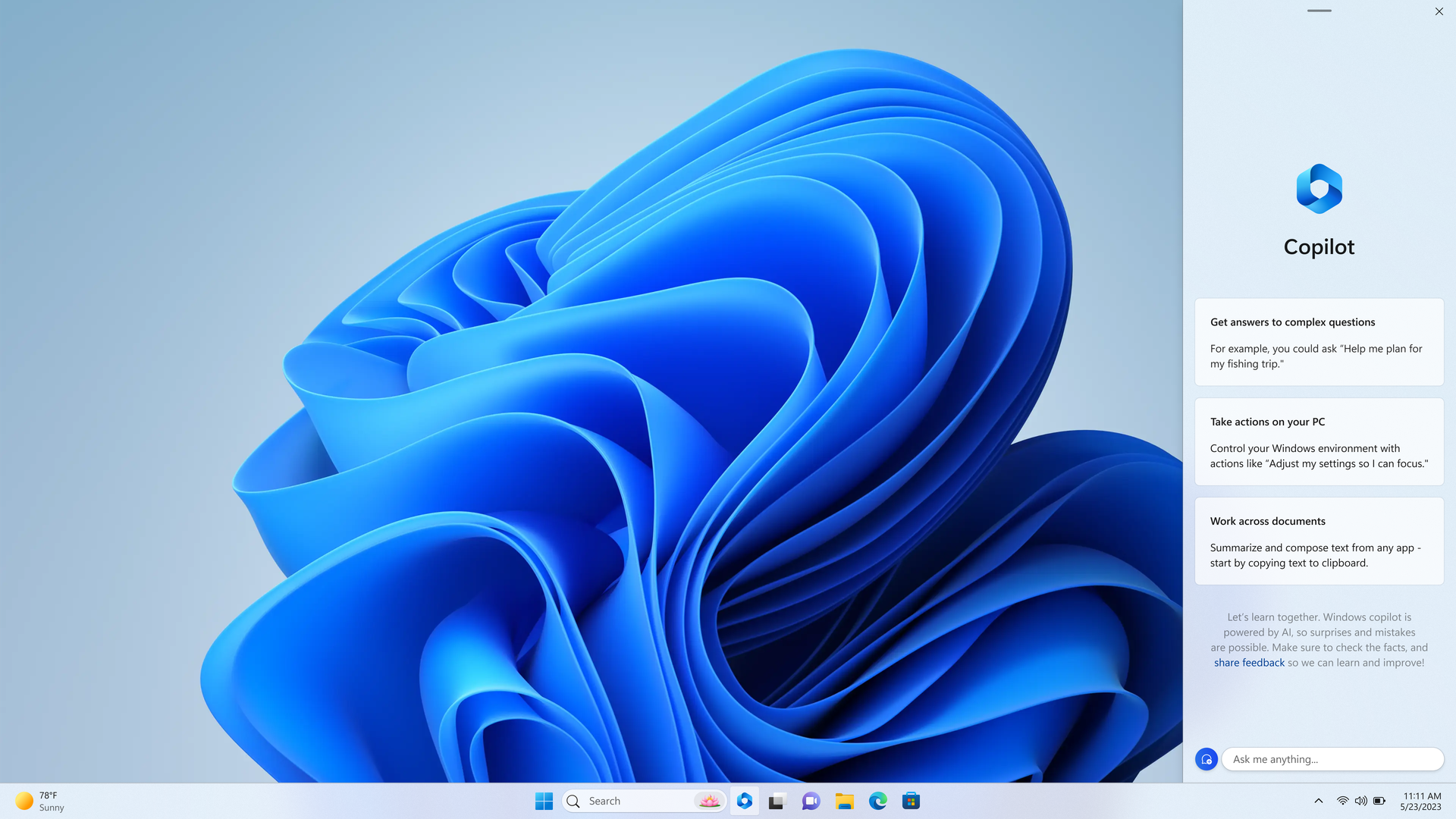
Microsoft used its Build developer conference on Tuesday to announce that it is bringing an AI-assisted "copilot" directly into its Windows operating system.
The big picture: Microsoft has already announced plans to put OpenAI's technology into nearly every major product in its portfolio — including its Bing search engine, Edge web browser, and Office apps such as Word, Excel and Powerpoint. It also offers a number of cloud-based AI services through Azure.
In adding generative AI tools to Photoshop, Adobe isn't advancing the state of the art in terms of deepfakes — but it is putting the ability to make convincing fakes into far more hands.
Why it matters: Concerns are running high that the technology to alter images in deceptive ways is advancing far faster than the ability of humans or machines to detect such fakes.
FTX and Tesla, once seen as shining examples of innovation and opportunity, took two of the biggest reputational hits in this year's Axios Harris Poll 100 brand reputation survey.
Why it matters: Amid a crypto collapse and Musk madness, Americans have grown wary and weary of big ideas and powerful moguls who they feel have overpromised and underdelivered.