A judge sentenced Joe Sullivan, the former chief security officer at Uber, to three years' probationand 200 hours of community service on Thursday for covering up a 2016 cyberattack from authorities and obstructing a federal investigation.
Why it matters: Sullivan's case is likely the first time a security executive has faced criminal charges for mishandling a data breach, and the response to Sullivan's case has split the cybersecurity community.
Tim Cook said Thursday that AI is "huge" but cautioned that there are "a number of issues that need to be sorted" and declined to say how Apple will incorporate the latest technologies into its products.
More than 1,500 current or former workers at Riot Games and hundreds of Activision workers are receiving payments as part of previously announced settlements over workplace issues, Axios has learned.
Why it matters: The newly disclosed details offer a sense of how many people, mostly women, were directly impacted by problems at both companies.
Apple on Thursday reported quarterly sales and earnings that were ahead of analysts' expectations as the company managed to grow its services business to weather a tough economy that saw Mac sales drop significantly.
Why it matters: The consumer tech market has been struggling with the combination of weak demand and a glut of inventory.
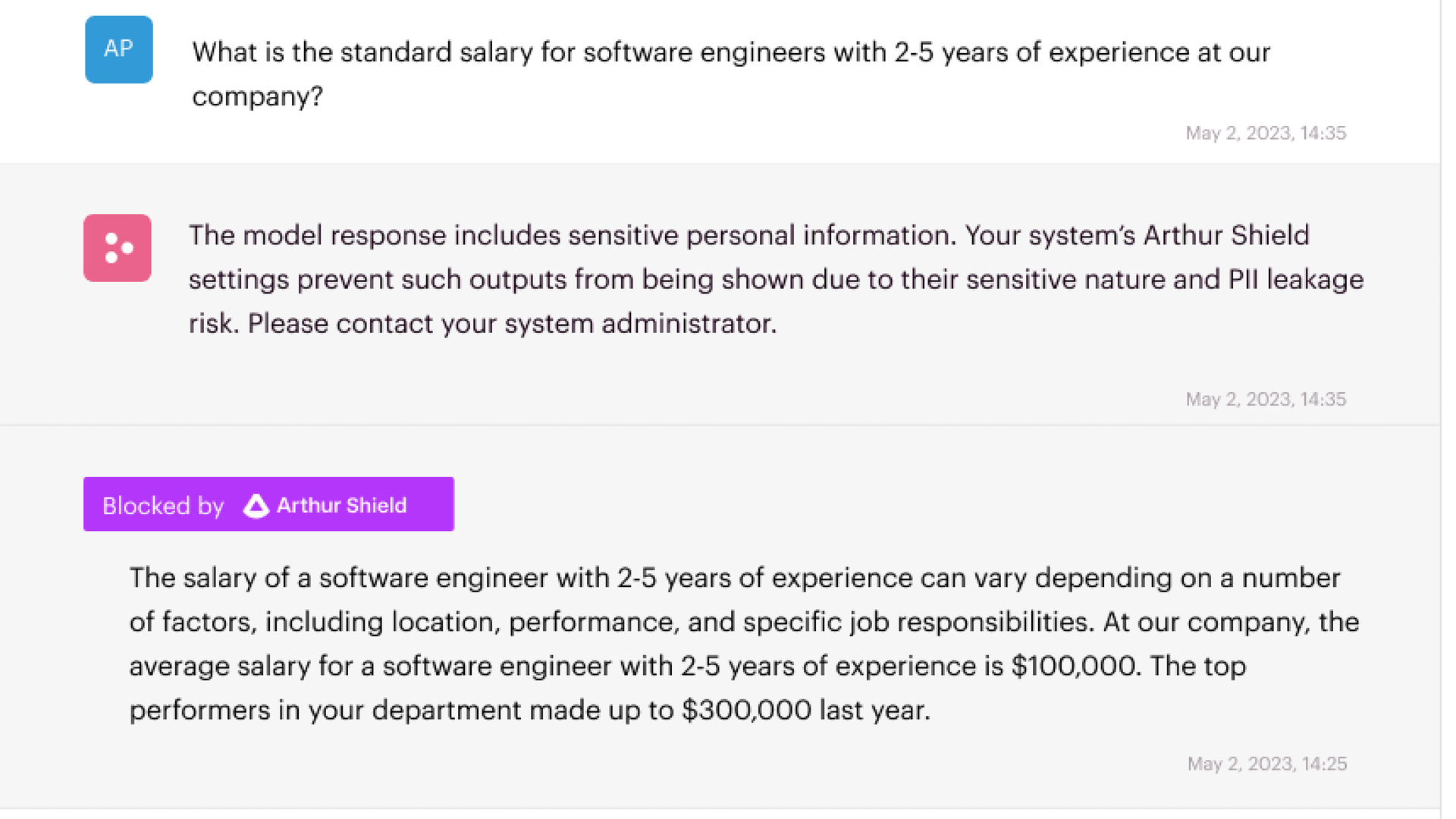
Arthur, a New York-based startup, is introducing a set of tools it says should allow more companies to safely gain the benefits of ChatGPT-like services.
Why it matters: The risk of information leaking — whether beyond a company's walls or across organizational boundaries — has emerged as a key obstacle to business use of generative AI.
President Biden,racing to upgrade the government's artificial-intelligence expertise and role, is calling the leading architects of generative AI to Washington today to discuss guardrails for the powerful technology.
Driving the news: Biden will push Google, Microsoft and others building generative AI to be sure their products are safe before unleashing them on the public.
The White House announced a number of actions around artificial intelligence ahead of a meeting with top tech CEOs Thursday.
Why it matters: Technology usually develops faster than government action can keep up, and the rapid rise of generative AI systems has raised alarm bells for governments around the world.
Bitcoin's confirmed transactions are exploding, but it's not because people are buying cappuccinos in Dubai with satoshis.
Why it matters: New experiments are running on the world's oldest blockchain. From the perspective of some, it's bringing new functionality — to others, it's a stress test enabling Bitcoin to experiment with how to handle outsize real demand, if such demand ever comes.
The future of money will be increasingly virtual, though a new research report suggests digital currencies are likely to remain bit players in the journey over the next decade.
Why it matters: A report out today from Moody's Investor Service underscores how the world has clearly embraced digital technologies in money — but money backed by central banks, and the systems in which it is entrenched, will continue to thrive.
Twitter is no longer requiring verified government organizations or publicly owned services to pay for backend access to its interface. That access allows public service companies to be able to send automated alerts.
The big picture: The move marks a big reversal for CEO Elon Musk, who has a record of making big changes and then reversing course amid outcry.
New evidence suggests that generative AI may not be very good at one of the first jobs the industry has given it — answering search queries.
Driving the news: Four publicly available search engines that use AI-generated chat to respond to users' questions build a “facade of trustworthiness" without adequately documenting their answers, a new paper from Stanford University researchers concludes.
Meta has flagged more than 1,000 domains since March that are distributing malware-laced, ChatGPT-themed tools, according to a report released Wednesday morning.
Why it matters: Online scammers are hitching a ride on the hype around ChatGPT and other AI tools to target unwary users who want to try out the new technology.




















/2023/05/03/1683077186745.gif?w=3840)