Condemnations from a wide range of groups and figures followed President Trump's executive order aiming to curtail protections for social media companies, with only a few of the president's staunchest allies voicing support.
The big picture: There's no shortage of critics of Big Tech in general and social media in particular, but few entities believe the president should — or even legally can — regulate the policies of a private company.
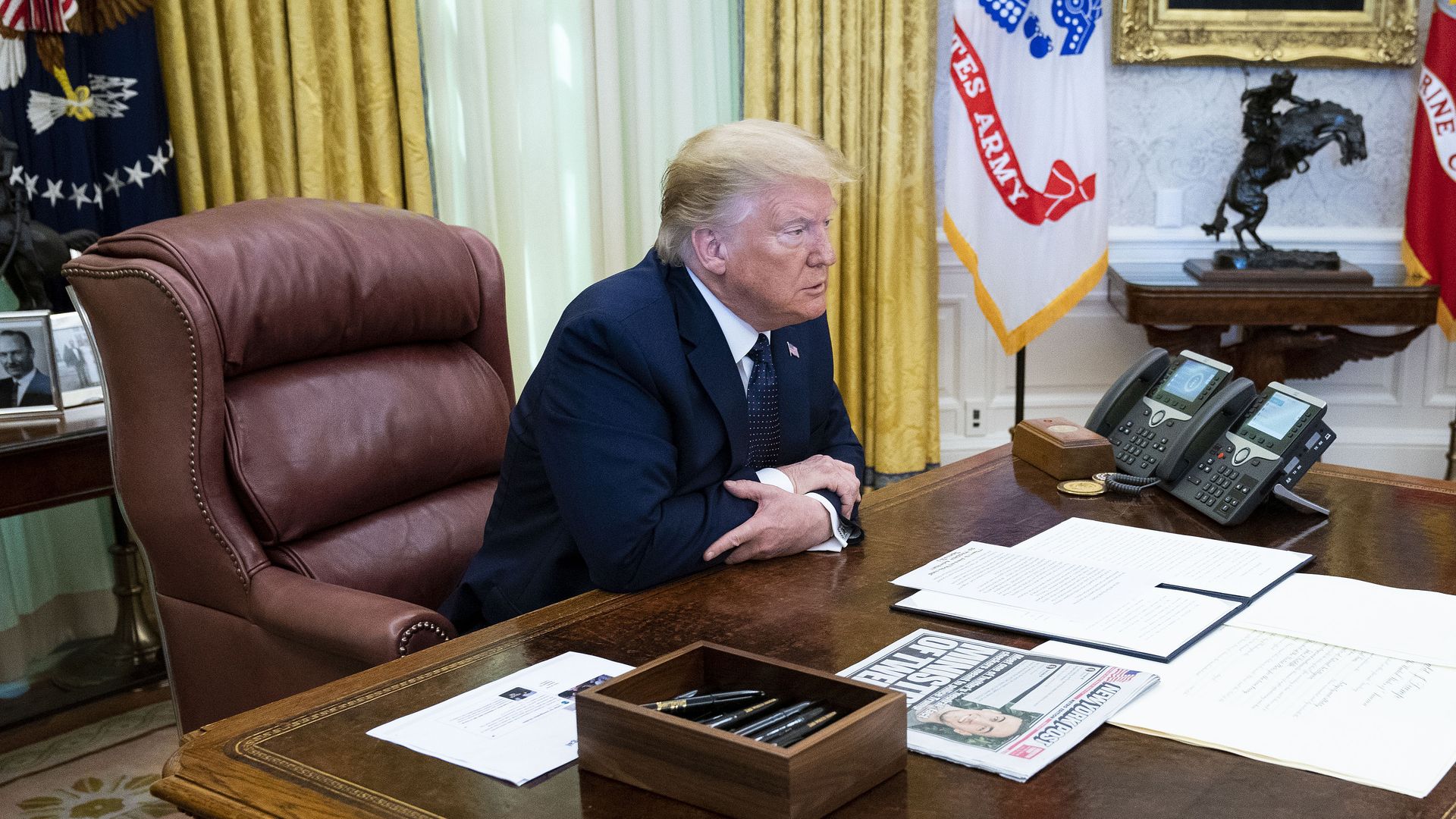
President Donald Trump's executive order targeting social media companies, signed Thursday, calls on independent agencies, the Justice Department and states to carry out the new policy.
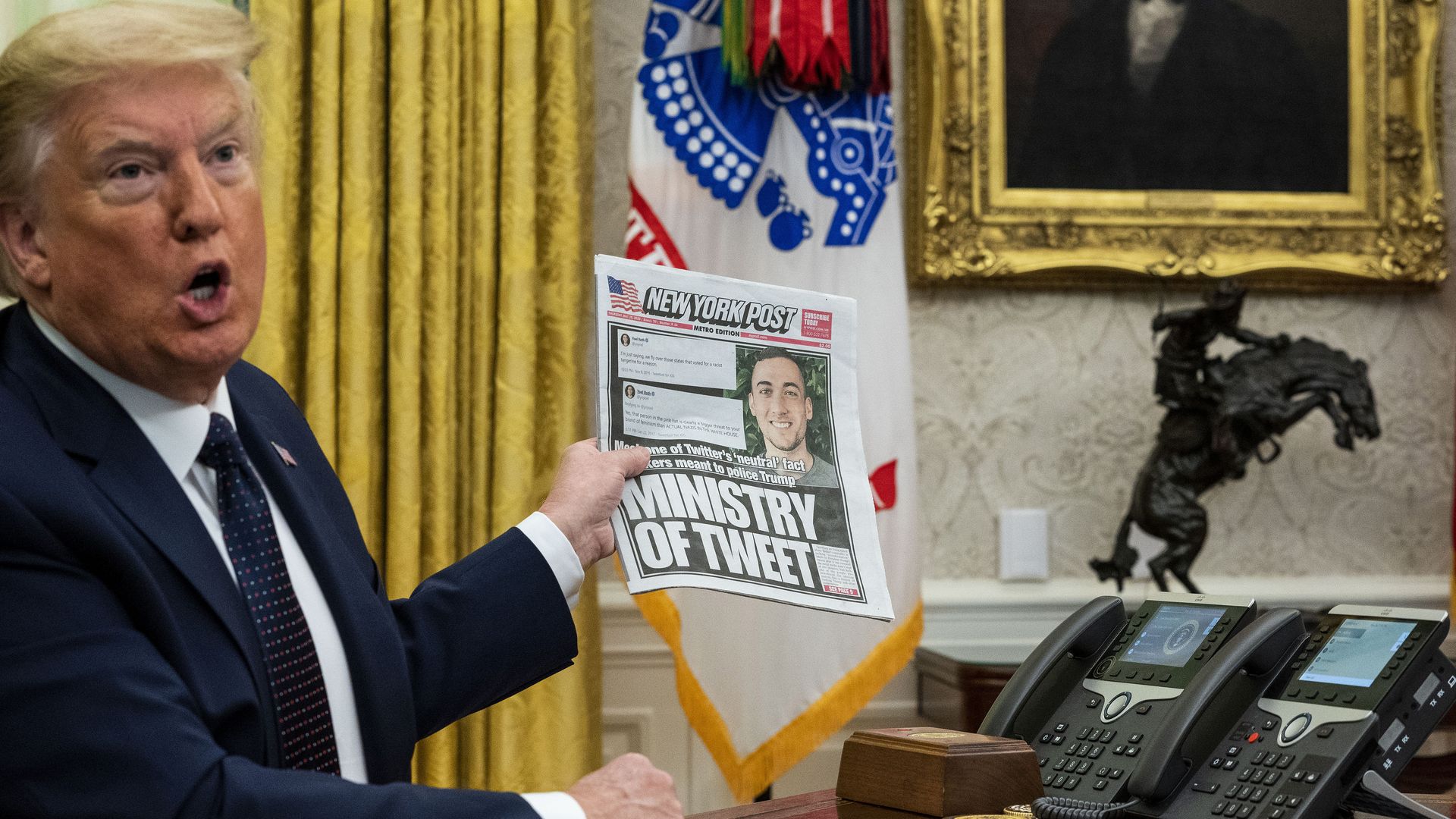
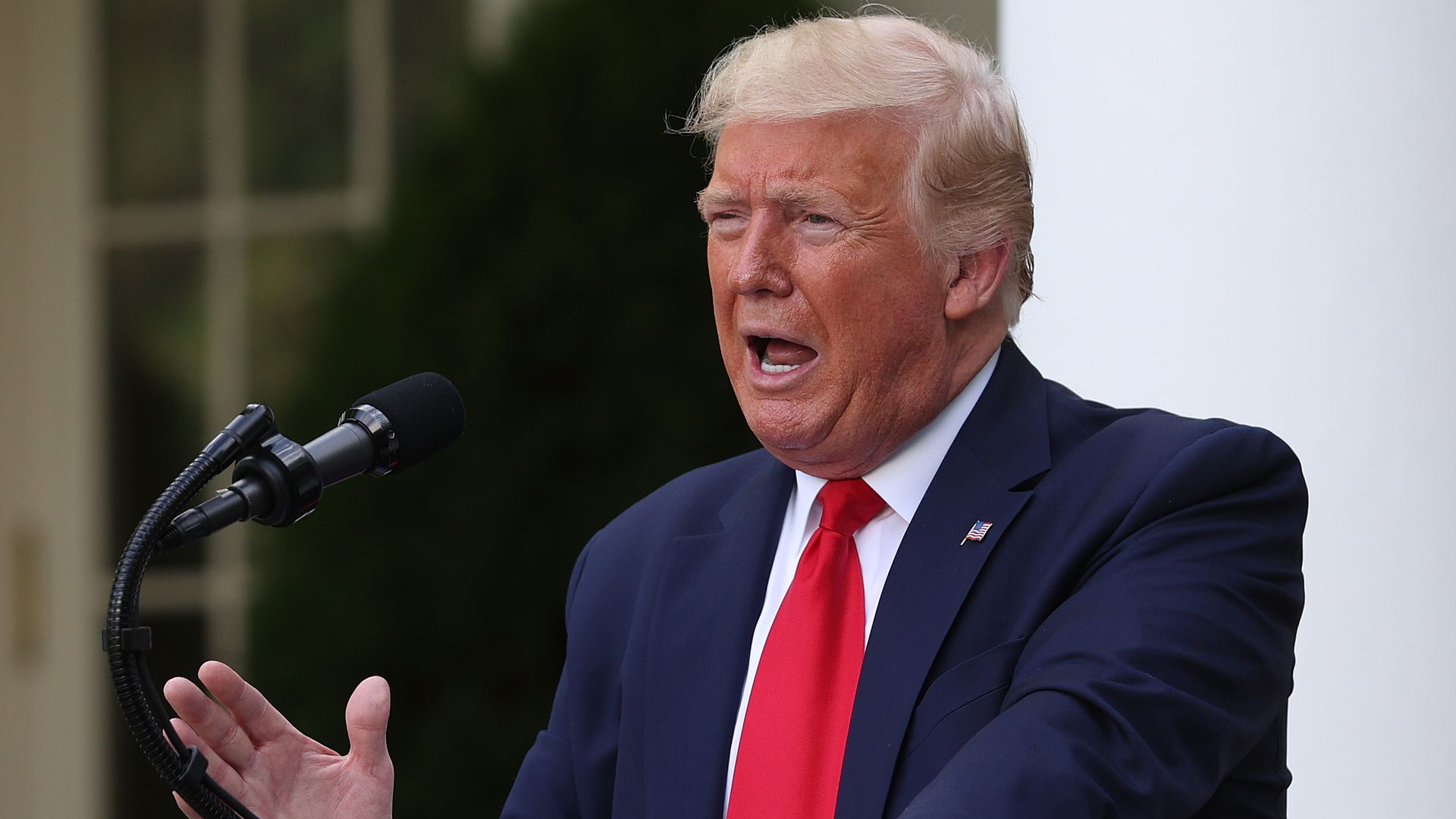
President Trump signed an executive order on Thursday designed to limit the legal protections that shield social media companies from liability for the content users post on their platforms.
What they're saying: "Currently, social media giants like Twitter receive an unprecedented liability shield based on the theory that they are a neutral platform, which they are not," Trump said in the Oval Office. "We are fed up with it. It is unfair, and it's been very unfair."
Google said Thursday it will start making "page experience," or how user-friendly a web page is, a ranking factor in Google Search, as well as in the "Top Stories" feature in mobile Search. Factors like load time and interactivity will be included in the evaluation.
Why it matters: It's part of a long list of actions Google has taken to force web publishers to deliver better experiences for users. For example, Google has in the past banned traffic to publishers with annoying pop-up ads.
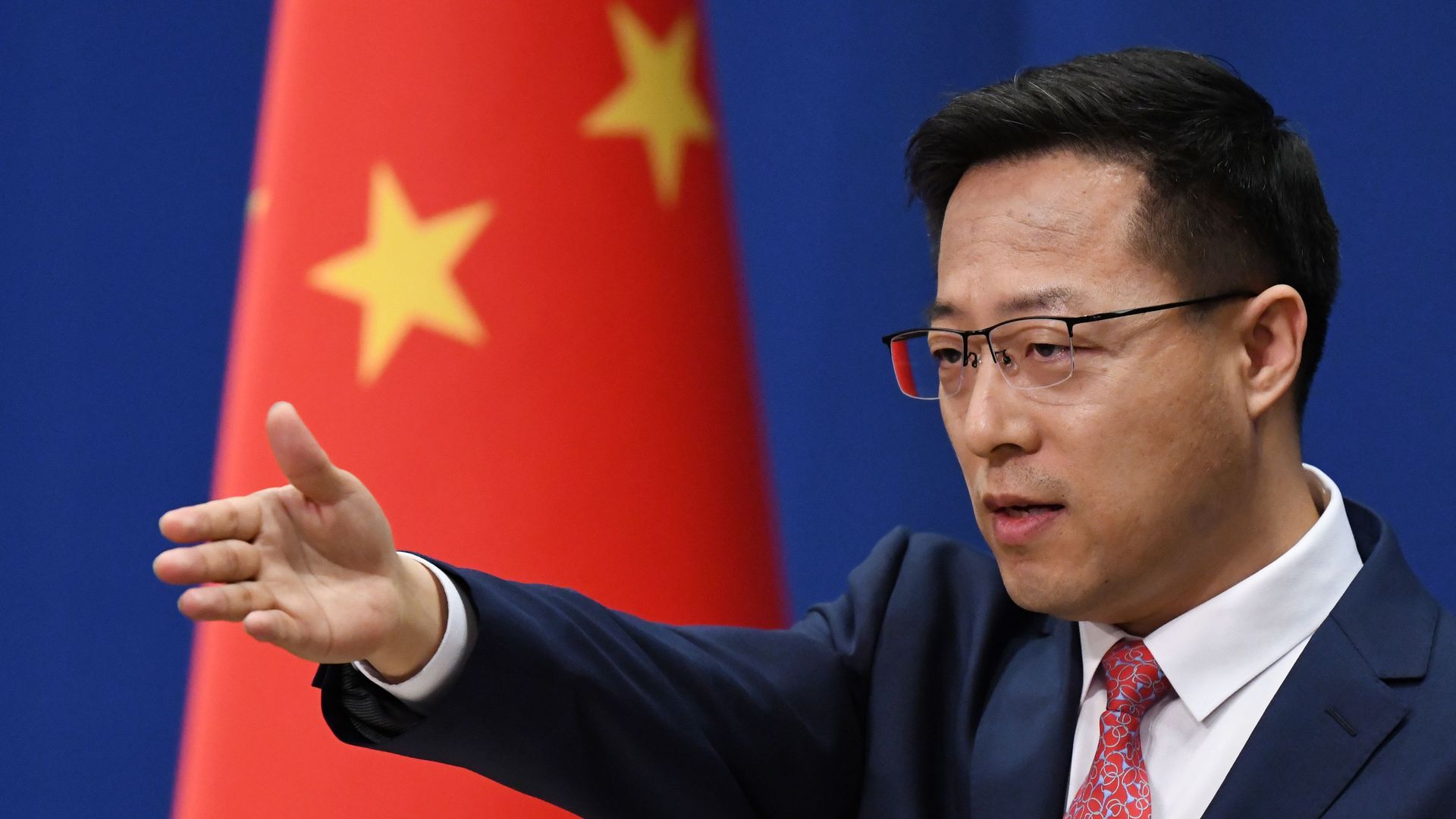
Twitter slapped a fact-check label on a pair of months-old tweets from a Chinese government spokesperson that falsely suggested that the coronavirus originated in the U.S. and was brought to Wuhan by the U.S. military, directing users to "get the facts about COVID-19."
Why it matters: The labels were added after criticism that Twitter had fact-checked tweets from President Trump about mail-in voting, but not other false claims from Chinese Communist Party officials and other U.S. adversaries.
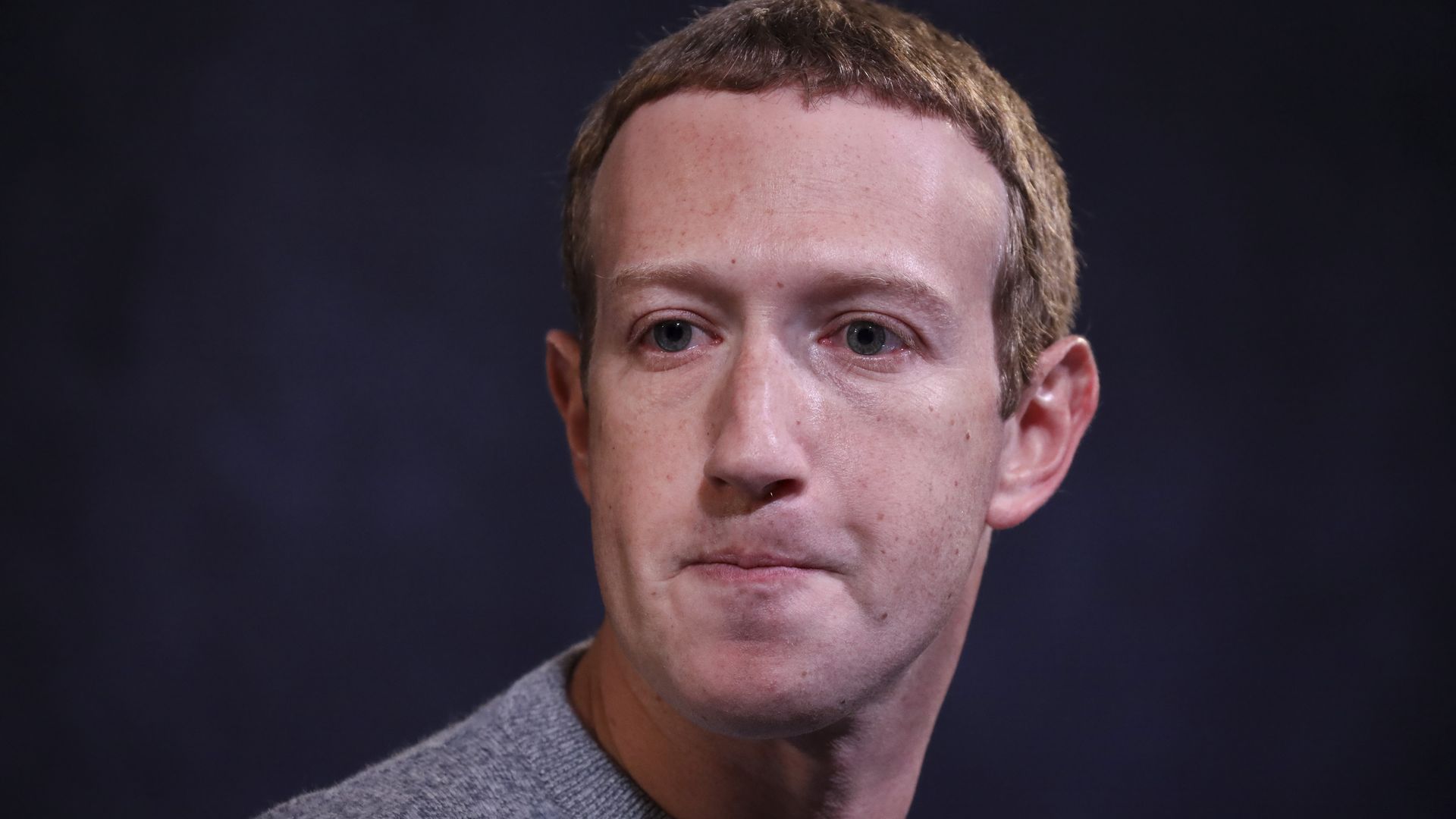
Facebook CEO Mark Zuckerberg argued on CNBC's "Squawk Box" Thursday that social media platforms should not police political speech, and that "people should be able to see what politicians say.”
Why it matters: Zuckerberg was responding to Twitter's decision this week to fact-check a pair of President Trump's tweets that claimed that mail-in ballots are "substantially fraudulent." Twitter's label, which directs users to "get the facts" about mail-in voting, does not censor Trump's tweets.
Driving the news: Over the last few days, reportsthat stocks of JUMP bikes in several cities are getting scrapped have angered biking advocates. They see Uber's decision as a waste of some of the most beloved vehicles for shared use.
Policymakers and advocates are pushing for new limits on political advertisers' ability to narrowly target voters with tailored messaging on major tech platforms.
Why it matters: Critics say the targeted political ads are a key means of spreading misinformation on topics like the presidential election and the pandemic.
The top U.S. megacities boasting the highest economic growth and biggest talent-attracting companies may start losing people to other cities, thanks to the remote-work wave brought on by the coronavirus.
Why it matters: With more people finding long-term flexibility to work from anywhere, they have less reason to live in the most expensive cities like New York, San Francisco, Los Angeles and Seattle. That could create a wave of rising-star cities that have already begun to attract people looking for a better quality of life.
Arizona's state attorney general sued Google on Wednesday, accusing the company of violating state law by misleading customers on its location tracking practices.
Why it matters: This opens up yet another legal front for Google at a time when it's also facing antitrust scrutiny at the state and federal level.
Untappd, a popular beer-rating app, can easily be manipulated to identify and track military and intelligence personnel, according to a report in the investigative open-source journalism and research outlet Bellingcat.
Zoom in: In one case, Bellingcat located an individual who “checked in” multiple times from Camp Peary, commonly known as “The Farm” — a highly restricted Virginia military base where CIA operations officers are trained in spycraft.
The Justice Department's arrest of Simon Saw-Teong Ang, an engineering professor at the University of Arkansas, for wire fraud earlier this month ratcheted up a long-running confrontation with China over a controversial scholarship program.
What’s happening: Ang’s indictment was related to his failure to disclose the extent of his ties to China’s 1000 Talents Program, an initiative of the Chinese government to encourage U.S. scientists and researchers to share technical know-how and innovations with Chinese universities and businesses.
Twitter came under fire on Tuesday for allowing President Trump to tweet conspiracy theories about Joe Scarborough and the 2001 death of one of his staffers, despite the objections of the staffer's family. The company came under further fire from Trump himself for fact-checking two of his tweets about mail-in voting.
Dan and the New York Times' Kara Swisher dig into Trump’s use of the platform and Twitter’s steps — and missteps — in handling it.
LinkedIn announced Tuesday that it is sharing the approach it uses to ensure that its new products don't inadvertently worsen existing societal inequalities.
The big picture: The Microsoft-owned platform has been working to ensure that it serves all job seekers, not just the socially well-connected.
Twitter made headlines Tuesday after labeling two election-related tweets from President Trump as potentially misleading — the company’s first action against the president’s tweets, which often test its policies on misinformation and abuse.
The big picture: Twitter's unprecedented move, which swiftly drew Trump's fury, was just one of four controversies over the last 24 hours involving tech platforms grappling with free speech issues. And all of them, Axios' Sara Fischer and I report, reflect what a partisan issue the policing of social media content has become.
President Trump threatened to shut down or regulate social media platforms due to anti-conservative bias in a pair of Wednesday tweets — the day after Twitter's first fact-check against the president's claims on its platform.
Reality check: While his claim that social media companies target conservatives isn't new, an Axios analysis last year found that stories about the 2020 presidential election that drove the most engagement online often came from right-wing media outlets.
A wave of cyber-spying around COVID-19 medical research is once more demonstrating the perils of treating cybersecurity as a separate, walled-off realm.
Driving the news: U.S. officials recently announced an uptick in Chinese-government affiliated hackers targeting medical research and other facilities in the United States for data on a potential COVID-19 cure or effective treatments to combat the virus. Additionally, “more than a dozen countries have redeployed military and intelligence hackers to glean whatever they can about other nations’ virus responses,” reports the New York Times.