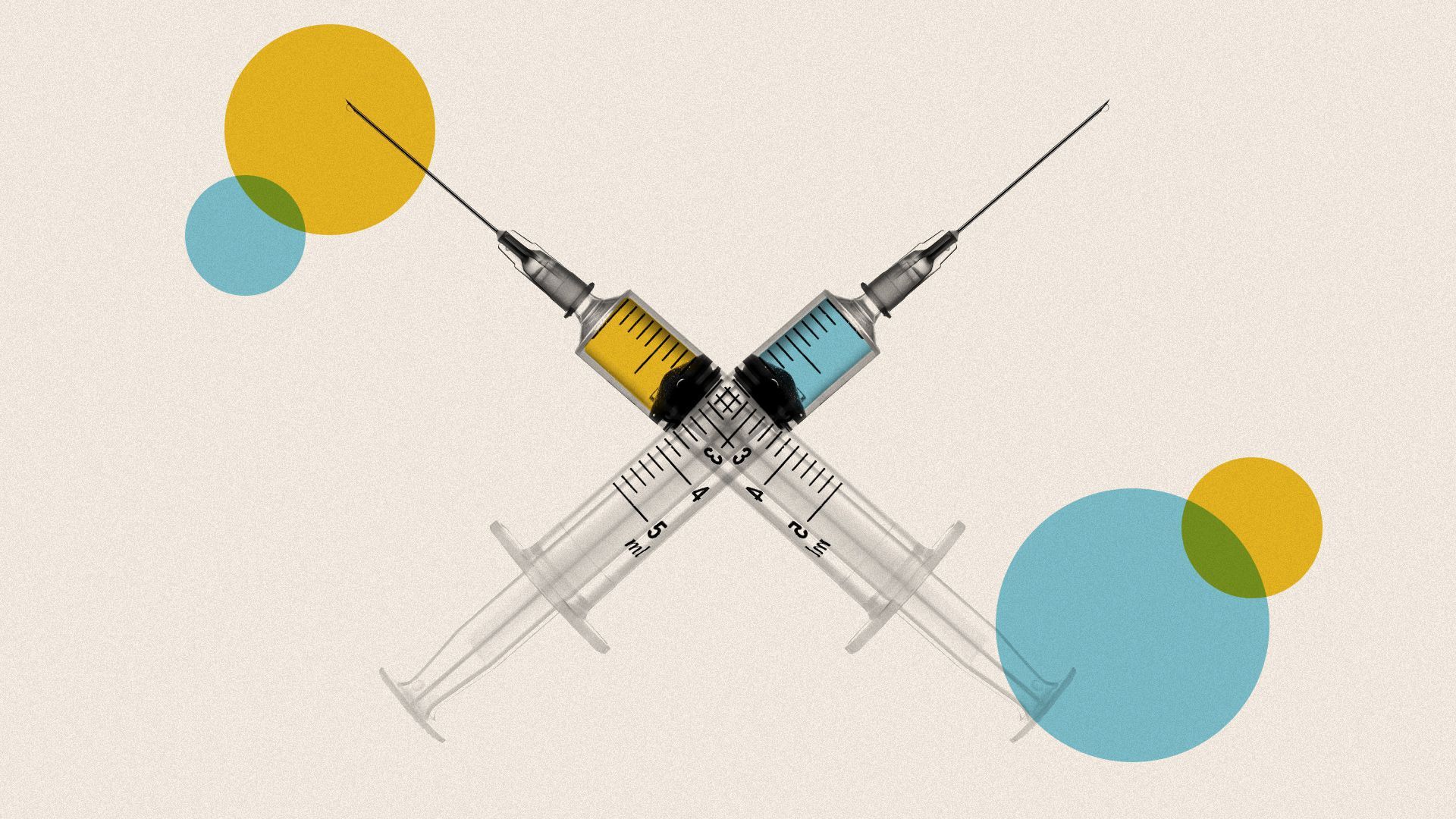
A security group warns that the COVID-19 pandemic could inspire terrorists to turn to bioweapons.
Why it matters: New technologies like gene-editing have the potential to make future bioweapons deadlier and easier to create, while COVID-19 demonstrates just how vulnerable the world is to any kind of biological threat.
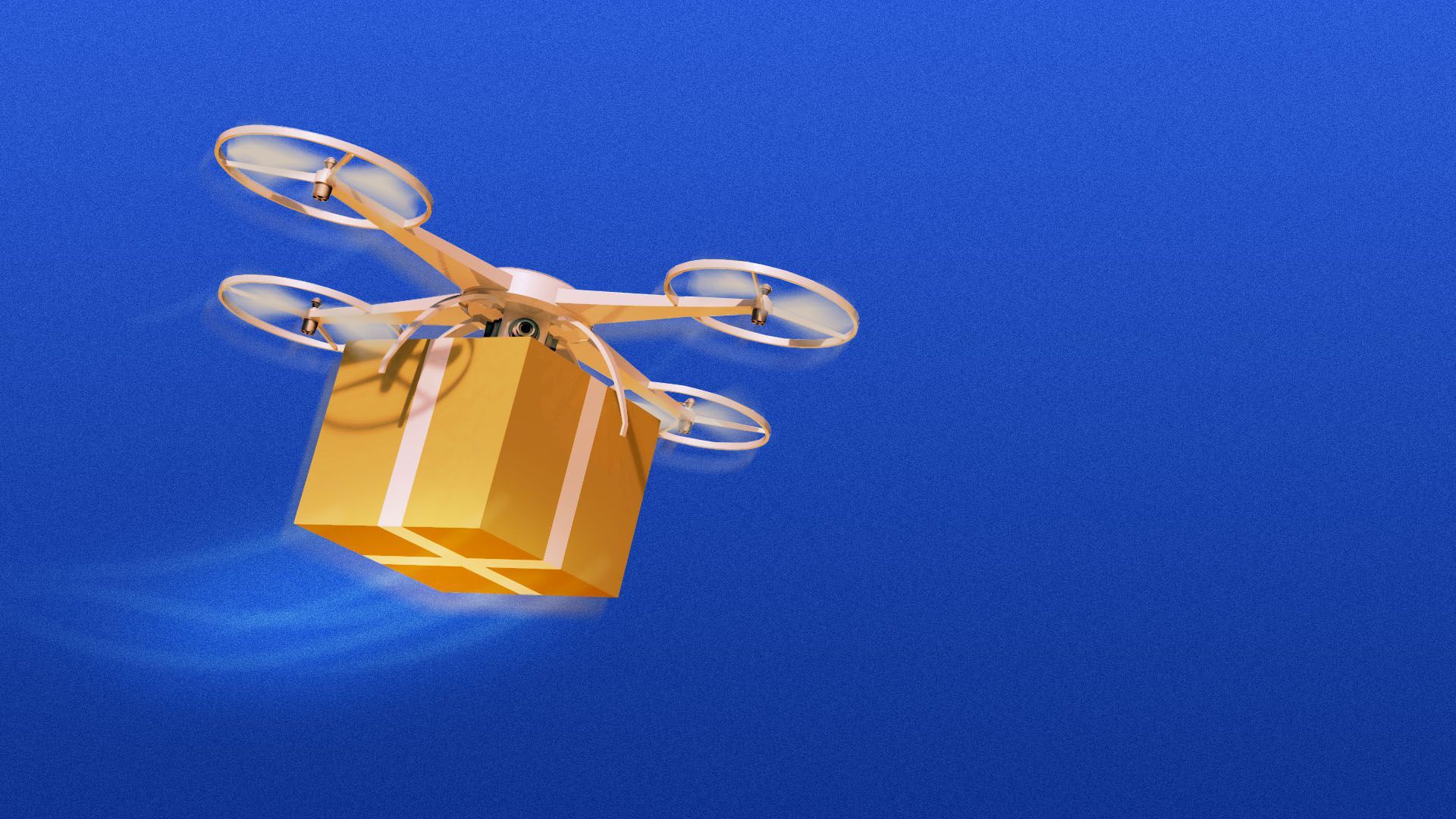
From medical deliveries to monitoring to remote inspections, the pandemic lockdown has accelerated the use of drones.
Why it matters: At a moment when human beings can be both victims and spreaders of infection, fleets of remote drones can help keep the economy humming. But civil liberty advocates worry that drones could push the limits of real-world surveillance.
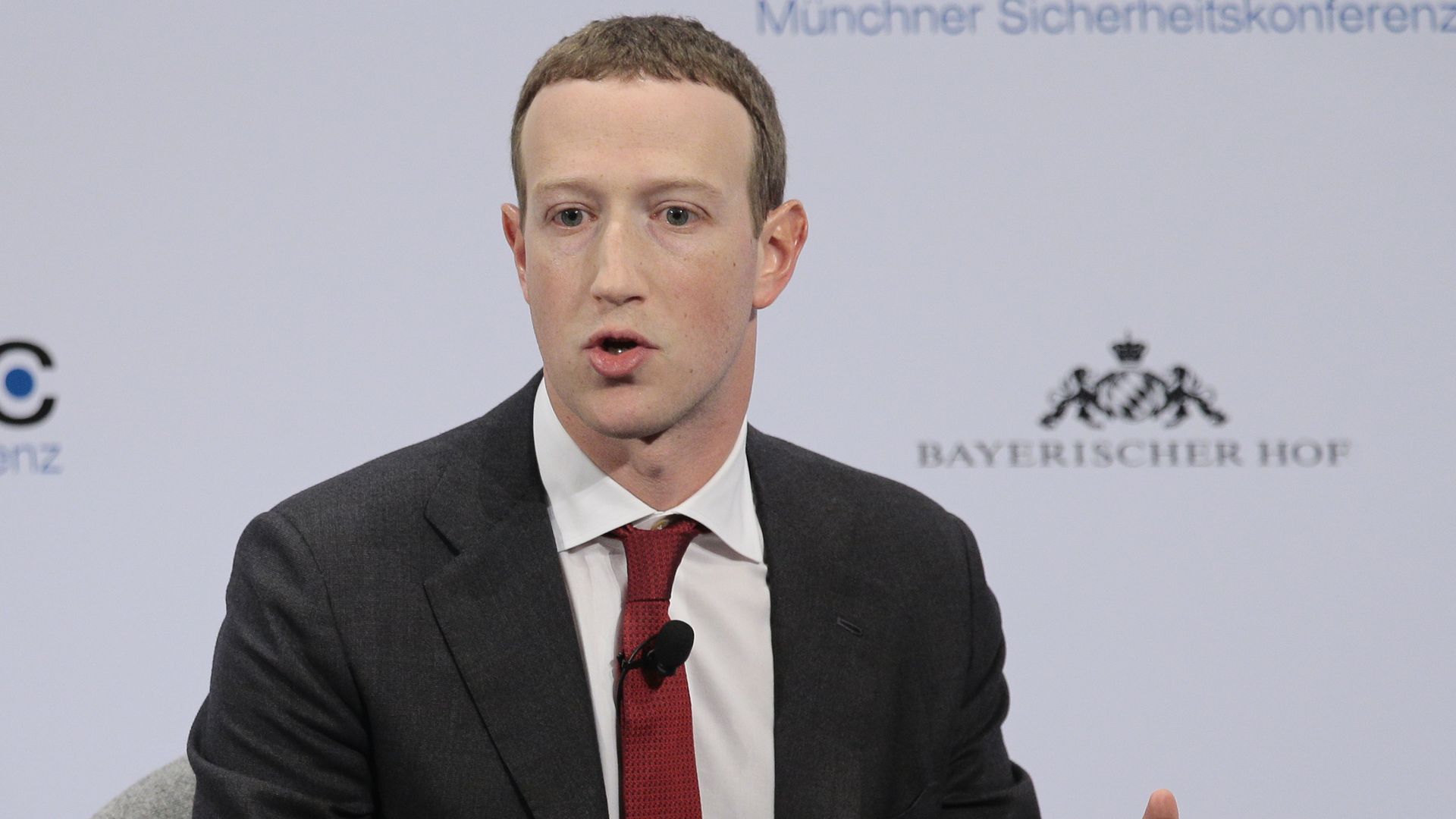
Facebook did not remove President Trump's threat to send the National Guard to Minneapolis because the company's policy on inciting violence allows discussion on state use of force, CEO Mark Zuckerberg explained in a post on Friday.
The big picture: Zuckerberg's statement comes on the heels of leaked internal criticism from Facebook employees over how the company handled Trump's posts about the Minneapolis protests and his unsubstantiated claims on mail-in ballots — both of which Twitter has now taken action on.
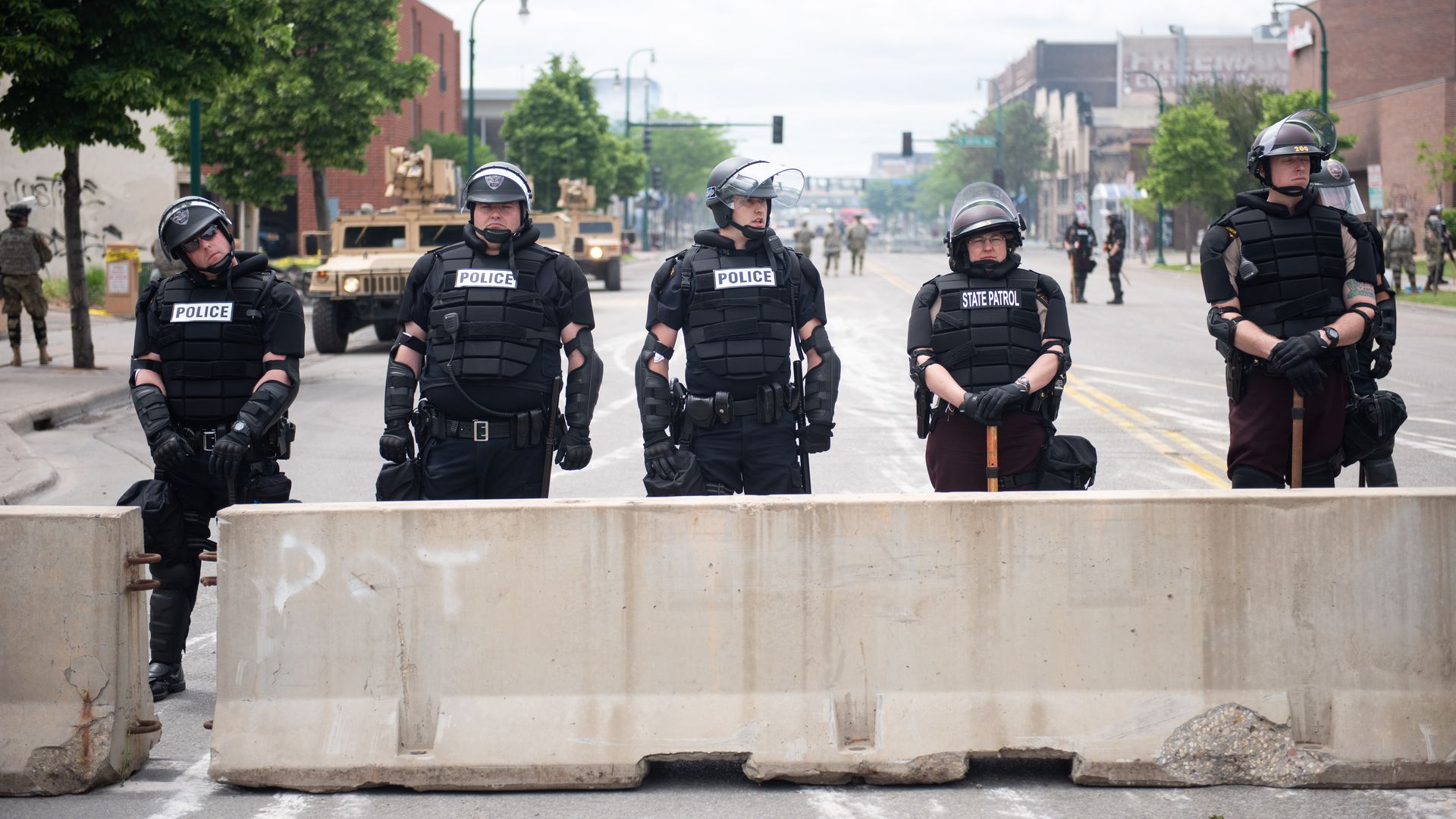
Customs and Border Protection sent a drone into Minneapolis on Friday to take live footage of protestors at the request of federal law enforcement, a CBP spokesperson told Axios.
What's happening: Demonstrations have surged in the city for three days as people protest and mourn the death of George Floyd, a black man who died after at least one police officer knelt on his neck on Monday. Protestors set fire to a Minneapolis police station on Thursday night.
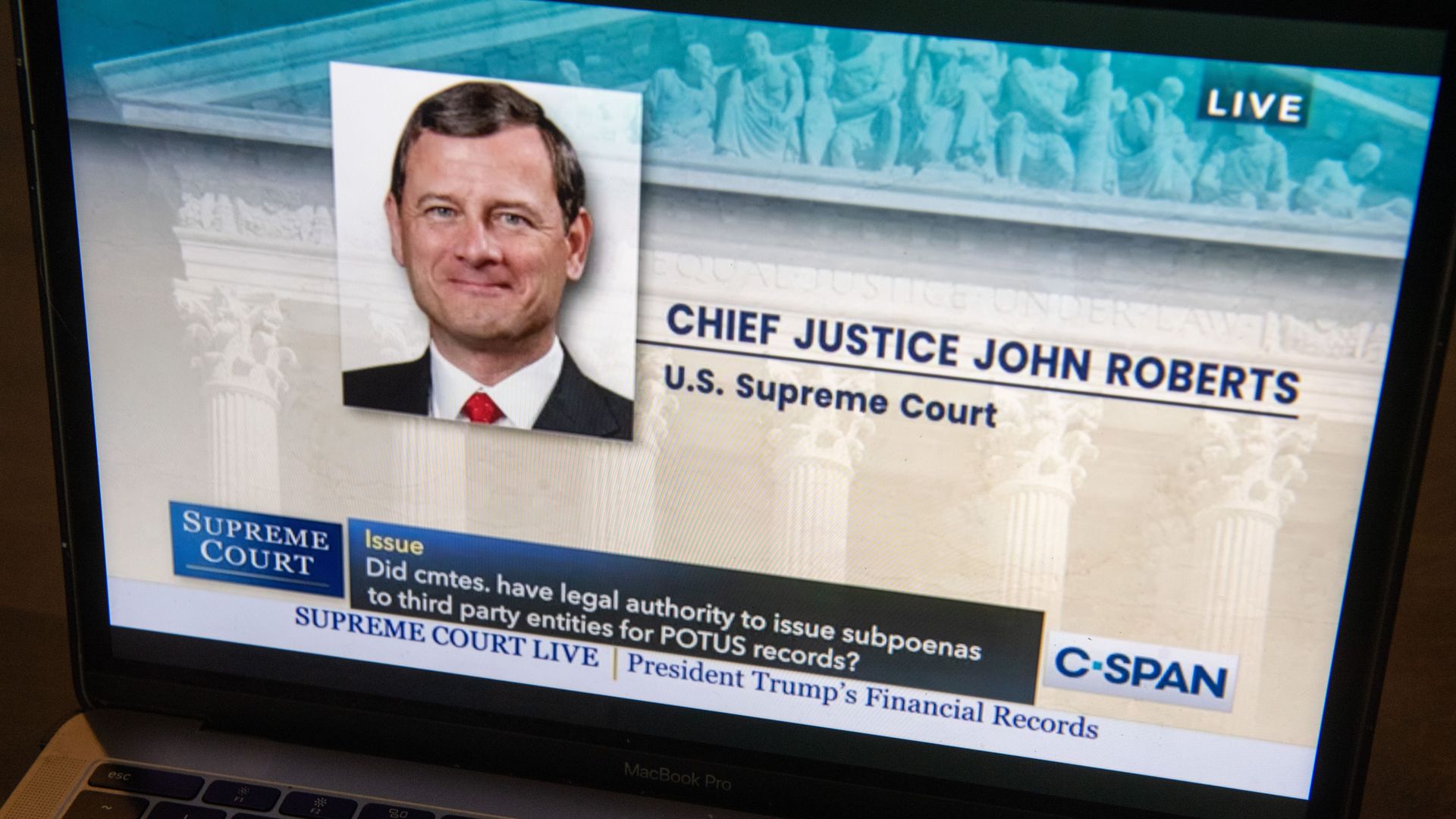
Sens. Chuck Grassley (R-Iowa) and Patrick Leahy (D-Vt.), who both sit on the Senate Judiciary Committee, asked Chief Justice John Roberts in a letter Friday to extend indefinitely the Supreme Court's live audio streams of oral arguments — as it was forced to work remotely by the coronavirus pandemic — and consider video streams as well.
Why it matters: The senators say these "simple yet meaningful measures of transparency" would benefit American citizens and democracy even after the court returns to its normal operations sometime in the future.
President Trump's war with Twitter is confronting social media platforms with a hard dilemma: whether to take fuller responsibility for what people say on their services, or to step back and assume a more quasi-governmental role.
The big picture: Facebook is trying to bemore like a government — committing to impartiality and protecting free speech and building mechanisms for arbitration. Twitter, pushed by Trump's inflammatory messages, is opting to more aggressively enforce conduct rules on its private property, like a mall owner enforcing rules inside the gates.
President Trump finally acted on his now year-old threat to take action against social media platforms for alleged bias against conservatives. But so far, according to experts in both government and the industry, the threat looks mostly empty.
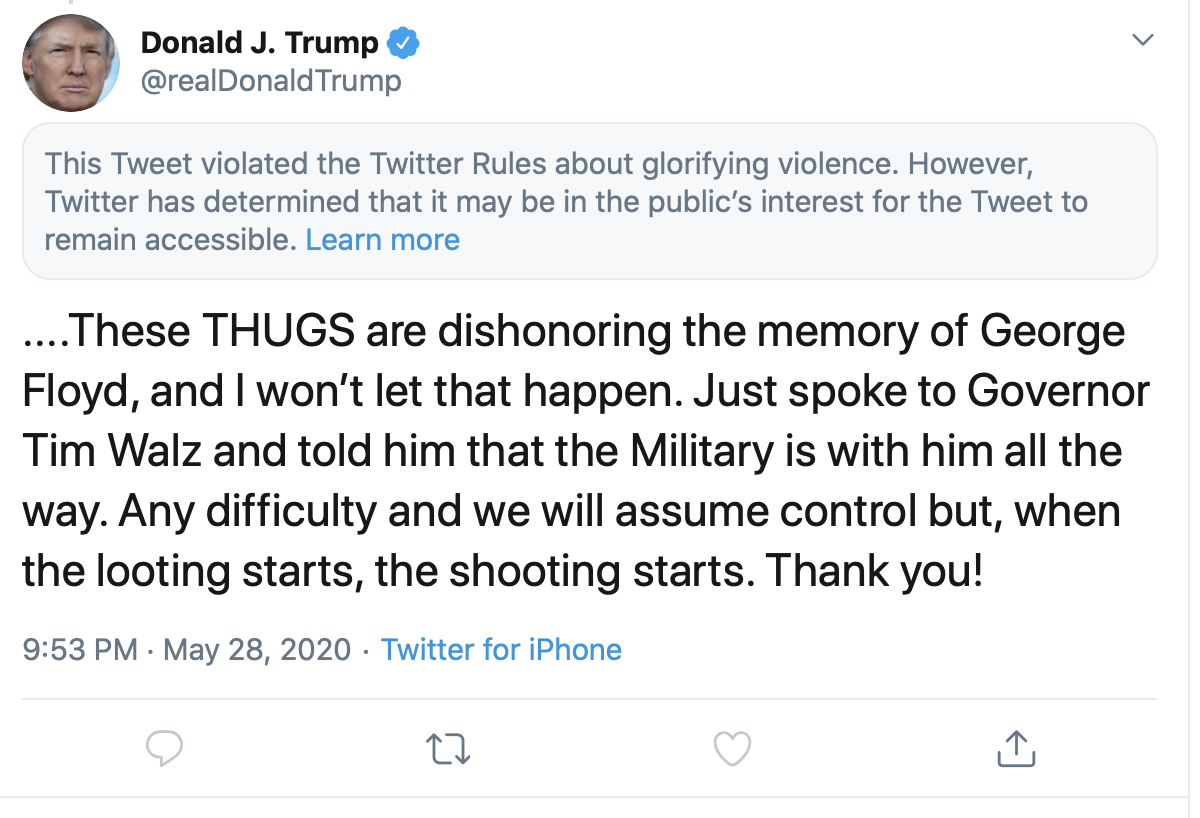
Driving the news: Trump escalated his war on Twitter Friday morning, tweeting repeatedly that the company needs to be regulated after it overnight added a warning label to a tweet of his calling for the military to start shooting looters, which violated Twitter’s rules against glorifying violence.
Cisco Systems agreed to buy ThousandEyes, a San Francisco-based IT performance management platform. No financial terms were disclosed, but Bloomberg put the price tag at around $1 billion.
Why it matters: This is a pandemic-related merger on the upside, with the company accelerating its sale process due to concerns that it could struggle to meet added demand for its services.
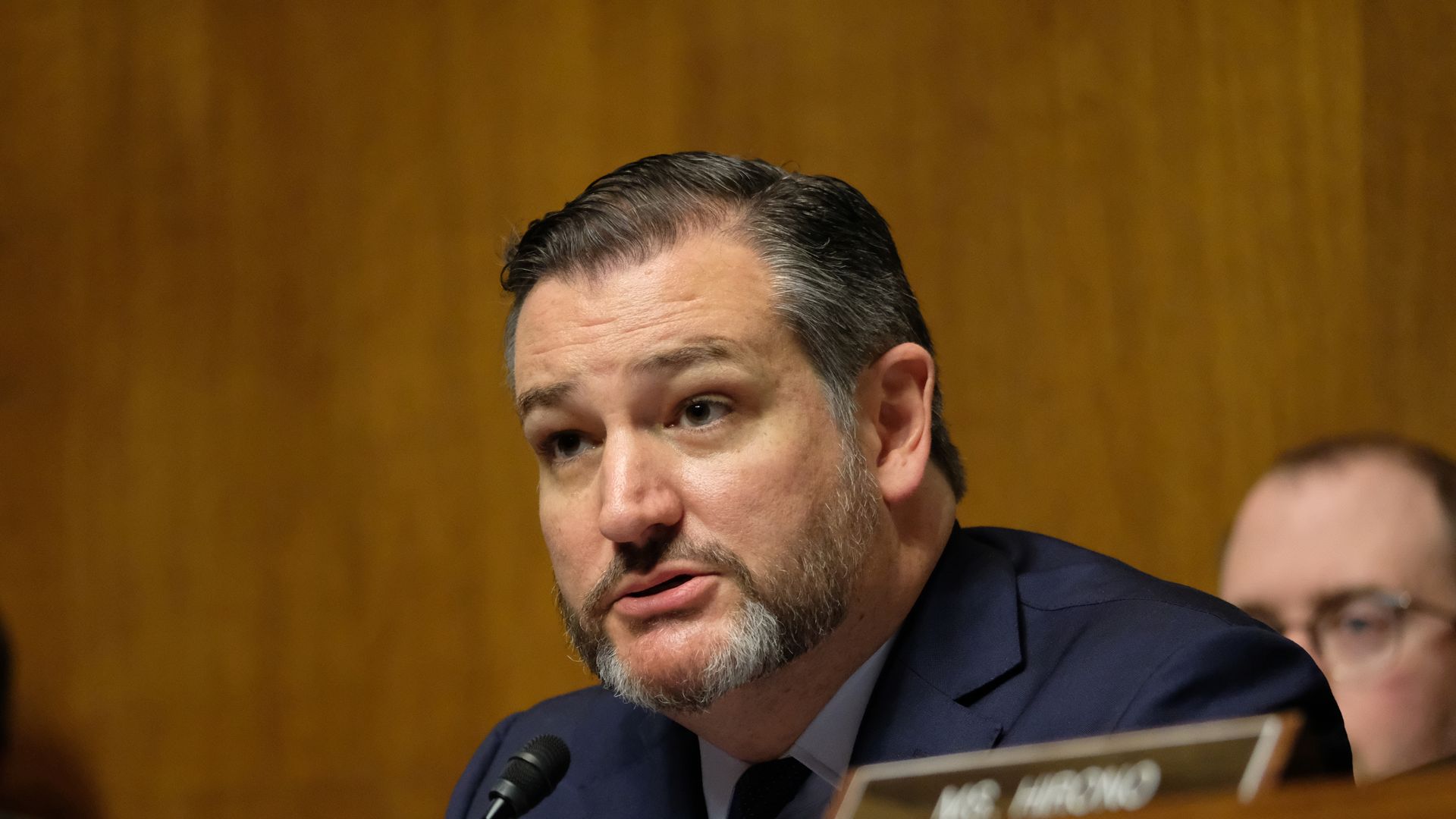
Sen. Ted Cruz (R-Texas), in a letter Friday to the Justice and Treasury departments, is calling for a criminal investigation of Twitter over allegations the company is violating U.S. sanctions against Iran.
Why it matters: Twitter is already under fire from President Trump for adding fact checks and a warning label, respectively, to misleading and incendiary tweets he made in recent days. Cruz's letter adds another dimension to the tech company's woes in Washington.
President Trump's director of social media and deputy chief of staff for communications Dan Scavino tweeted Friday that "Twitter is full of s--t" after the platform determined that one of the president's tweets in response to civil unrest in Minneapolis violated the company's rules.
Why it matters: Scavino is the "caretaker of Trump's explosive Twitter feed," as Politico reported last year, and the president relies on him for advice on how some of the administration's most controversial moves will be received on social media.
Twitter said Friday morning that a tweet from President Trump in which he threatened shooting in response to civil unrest in Minneapolis violated the company's rules. The company said it was leaving the tweet up in the public interest.
Why it matters: The move exacerbates tensions between Twitter and Trump over the company's authority to label or limit his speech and, conversely, the president's authority to dictate rules for a private company.