Federal prosecutors have launched a criminal investigation into Facebook's data partnerships with global technology giants, adding to the already-intense scrutiny of the company's conduct as it works to boost its reputation, according to the New York Times.
Details: Two companies that have done business with Facebook and had access to the personal data of hundreds of millions of users were subpoenaed by a grand jury in New York.
A central promise of artificial intelligence is to automate away tedious routine tasks, but a lingering worry is that it will chip away at our humanity, causing people to lean on computers to the detriment of their ability to think critically.
Catch up quick: A new survey from the PR firm Edelman, conducted last summer with 1,000 Americans, shows widespread worry around the social effects of swiftly advancing AI.
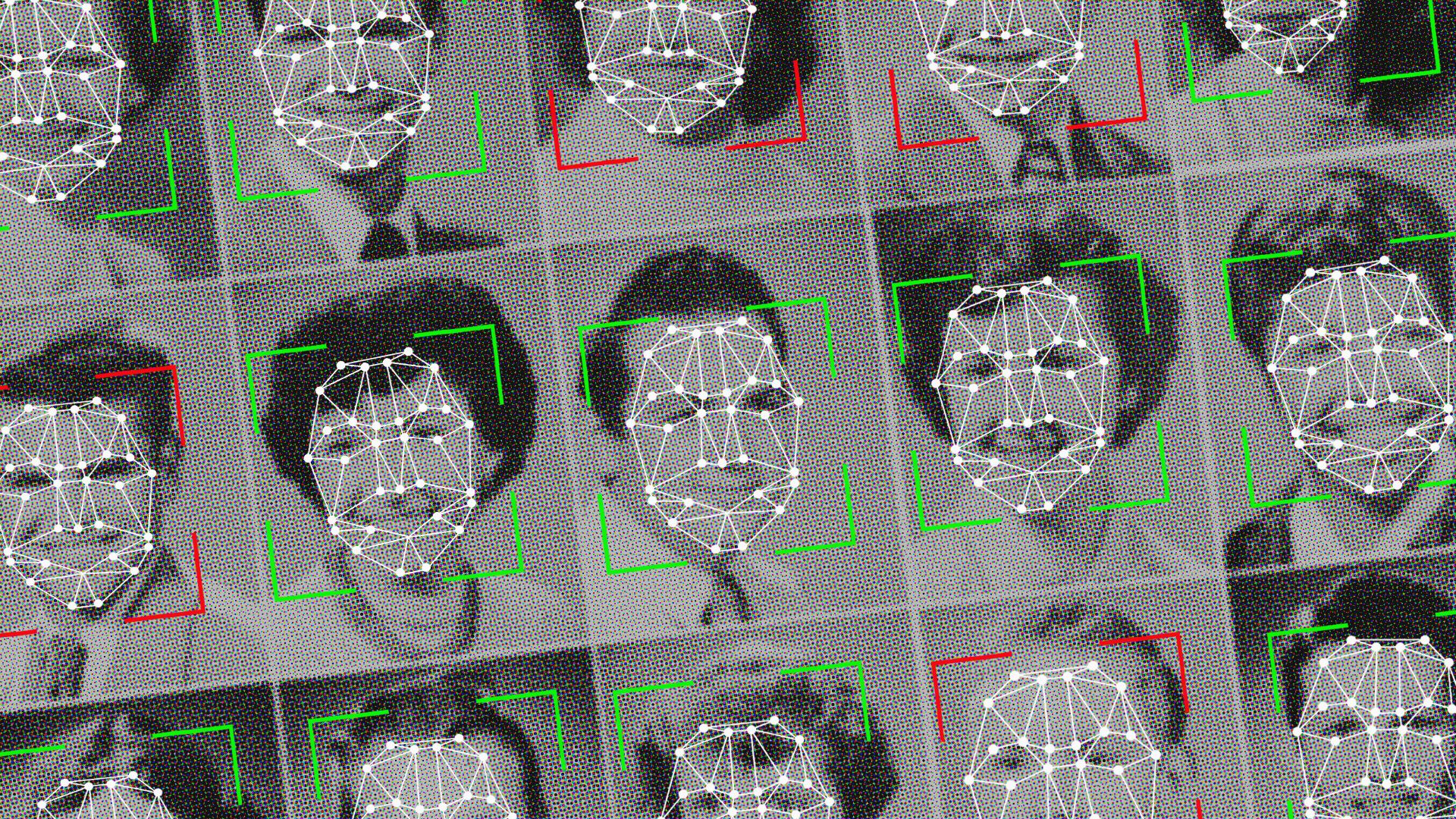
The expanded use of facial recognition by law enforcement agencies poses significant risks, from misidentifications and unlawful targeting to the danger of disclosing sensitive information about people's daily lives.
What's happening: There are few legal constraints on the use of facial recognition. Both federal and state lawmakers are trying to address the technology's risks while responding to pressure from law enforcement and from Big Tech companies like Amazon and Microsoft.
Newly unsealed court documents reveal that Uber's self-driving car unit was burning through $20 million a month in the run-up to this year's expected IPO.
The bottom line: Self-driving cars require billions of dollars of investment, with no guarantee of success. Many companies will lose their shirt.
IBM is facing a backlash after NBC News reported the company is using a set of Flickr images to help train a facial recognition system.
Why it matters: Although the photos in question were shared under a Creative Commons license, many photographers note they never imagined their images would be used in this way. Furthermore, the people shown in the images didn't consent to anything.
Spotify CEO Daniel Ek wrote in a post Wednesday that the company filed a complaint against Apple with the European Commission claiming Apple's App Store tries to "deliberately disadvantage other app developers" by forcing a 30% tax on Spotify and other digital services and limiting communication to customers.
Why it matters: Netflix has been directing their users to subscribe in different ways than the App Store to avoid the exact same fees since at last August, Billboard reports. Though Apple Music is a competitor, Spotify claims Apple's App Store purposely makes it difficult for the developer. After the two companies couldn't work it out, Ek turned to the EC, which oversees fair and nondiscriminatory competition in business practices.
Amazon lobbied more federal entities last year than any other public U.S. company, pressing its case throughout the government at a time when its power and reach is under a magnifying glass.
Data: Federal lobbying disclosures; Get the data; Interactive: Lazaro Gamio/Axios
Why it matters: The sprawling nature of Amazon’s lobbying operation is a reflection of its vast business. What began as an online retailer is now a behemoth that touches healthcare, cloud computing, media and the transportation sector — and the regulatory challenges it faces are just as complex.

Every mile, every block, every inch of pavement driven by a Tesla vehicle generates a trove of information that can reveal as much about you as about your car.
Why it matters: Tesla is more of a tech company than a car company. And because data is critical to self-driving cars, it has designed its vehicles from the outset to be sophisticated rolling computers. As all cars get smarter and more automated, the data they collect will unlock new conveniences for drivers — but also new privacy concerns.
With his decision to emphasize encrypted messaging, Facebook founder Mark Zuckerberg has effectively accepted that the fight to police the platform against bad actors and other excesses can't be won.
Why it matters: The future of global messaging is now much different — not the remarkable, if profoundly flawed, public square of more than 2 billion members that Facebook has become, but a fractured one, with the world chatting and spending money on smaller platforms and in countless separate channels.
In one of the biggest remote hiring pushes in memory, Amazon has 3,000 jobs open for remote customer service representatives. But there are caveats.
Between the lines: The Amazon customer service jobs, available in 18 states, are temporary, a company spokesperson said, with no career ladder. And they will be just an average of 20–29 hours per week at $15 an hour, which is the company's minimum wage.
Uber has agreed pay $20 million to settle a 6-year-old class-action lawsuit brought by drivers claiming they are employees of Uber, not independent contractors, and are therefore eligible for benefits and reimbursement for expenses, Reuters reports.
Between the lines: Last year, a California Supreme Court ruling made it more difficult for employers to label gig-economy workers as independent contractors. U.S. District Judge Edward Chen rejected Uber's offer in 2016 to pay the drivers a settlement of $100 million, claiming it was not sufficient. The class now includes 13,600 drivers in California and Massachusetts, significantly smaller than the original class size of 385,000.
The U.S. has made its first threat to curtail sharing intelligence with an ally if that government ignores U.S. warnings about Huawei 5G equipment, the Wall Street Journal reported.
Why it matters: This is no small threat. The warning to Germany represents an escalation from previous American statements that raised the prospect of strained relationships and suggested the U.S. can't safely maintain a presence in countries where it believes infrastructure is not secure.
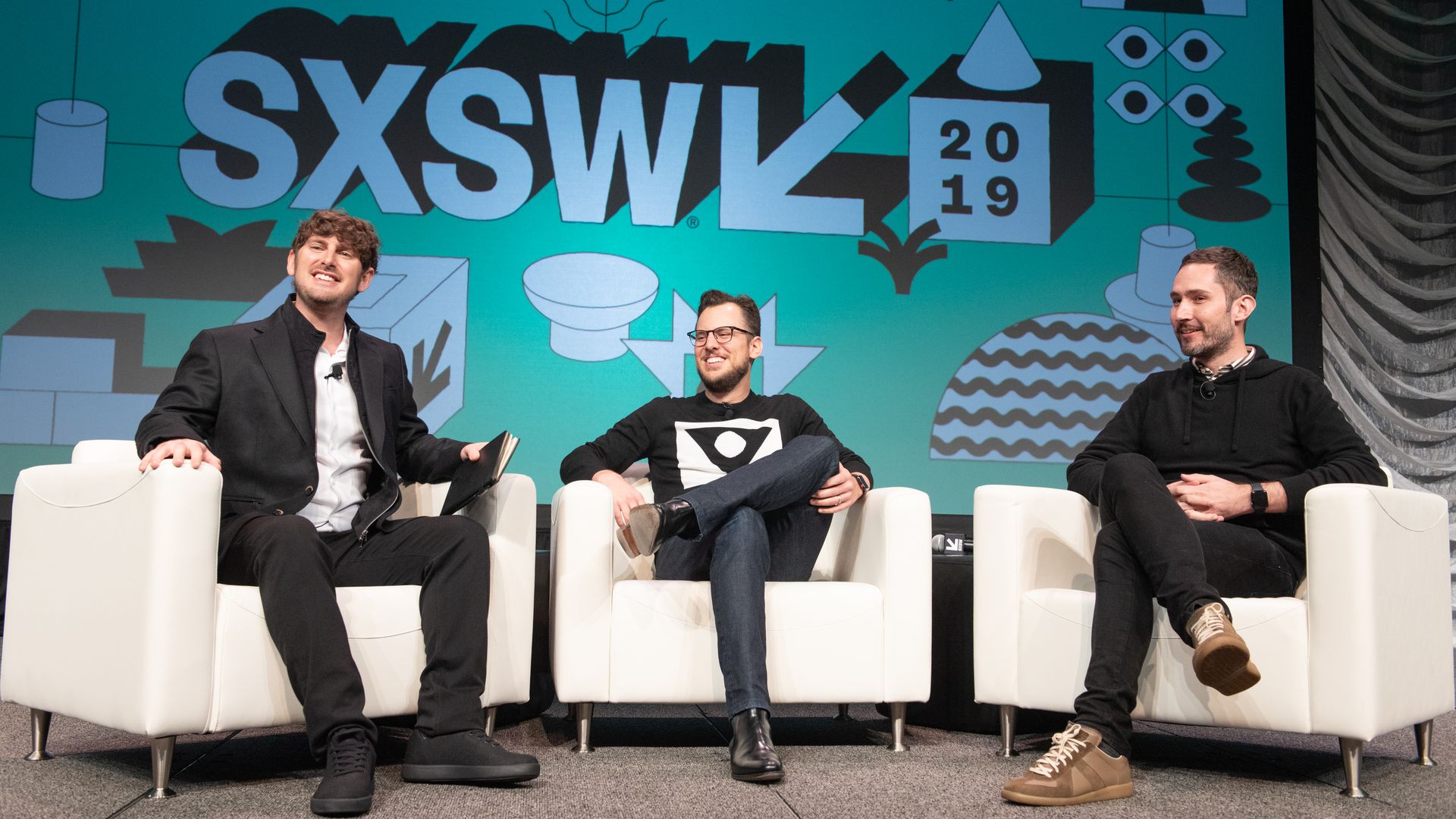
Months after their departure from Facebook, Instagram's co-founders took to the stage at SXSW to explain why they sold their company to Facebook, and why they left the social network.
The big picture: “The idea behind it was that we wanted to make a bet on the company,” Instagram co-founder Kevin Systrom said of the decision to sell to Facebook. And if the goal was to pick a company that would help Instagram continue to grow, that bet paid off, he said.
In a race to win over the hearts and budgets of consumers, tech giants are squeezing as many services together as possible, making it more cost efficient for users to buy those services, than individual music, video or news subscriptions.
Driving the news: Hulu and Spotify Premium announced a new entertainment bundle early Tuesday morning that would give individual U.S. Spotify Premium users access to Hulu's ad-supported digital TV and movie content plan at no additional cost to current.
When leaders in Silicon Valley assess the new antitrust fever among candidates and policymakers, the prospect of corporate breakups isn't their biggest worry. Instead, insiders fear missing the next cycle of industry change if they're distracted and hobbled by antitrust conflicts.
Why it matters: If executives are busy answering lawmaker inquiries and defending regulator lawsuits, they're less likely to be protecting their businesses from upstart challengers. And if they're under constant regulatory scrutiny, they'll be less able to either elbow aside or snatch up the competition.
New data from an exclusive Axios/Harris poll finds that public perception of companies is deeply impacted by how much those companies can promise a better future for society.
Why it matters: Legacy brands are facing their stiffest competition yet from mission-driven upstarts. Many are hoping that marketing campaigns centered around "social good" will improve the narrative that older corporate giants are stodgy and ruthless.
The most visible faces in the predicted coming wave of job displacement belong to the likes of factory workers and truck drivers — primarily men threatened by robots and AI.
The big picture: But the wave will crash harder over women, who do the majority of highly automatable jobs. Policymakers thus far appear blind to the coming job losses for women, experts say, and risk putting in place training programs and safety nets that mainly rescue men.
Facebook on Monday briefly removed and then restored Sen. Elizabeth Warren’s advertisements promoting hear plan to break-up big technology companies, including the social media platform.
"We removed the ads because they violated our policies against use of our corporate logo. In the interest of allowing robust debate, we are restoring the ads.”
— Facebook spokesperson said in a statement.
Details: The removal of the Democratic presidential candidate's ads was first reported by Politico. The publication also said that over a dozen of other Facebook advertisements on Warren's tech proposal were not affected.