Thursday's technology stories

Microsoft shares hit record high after upbeat earnings report
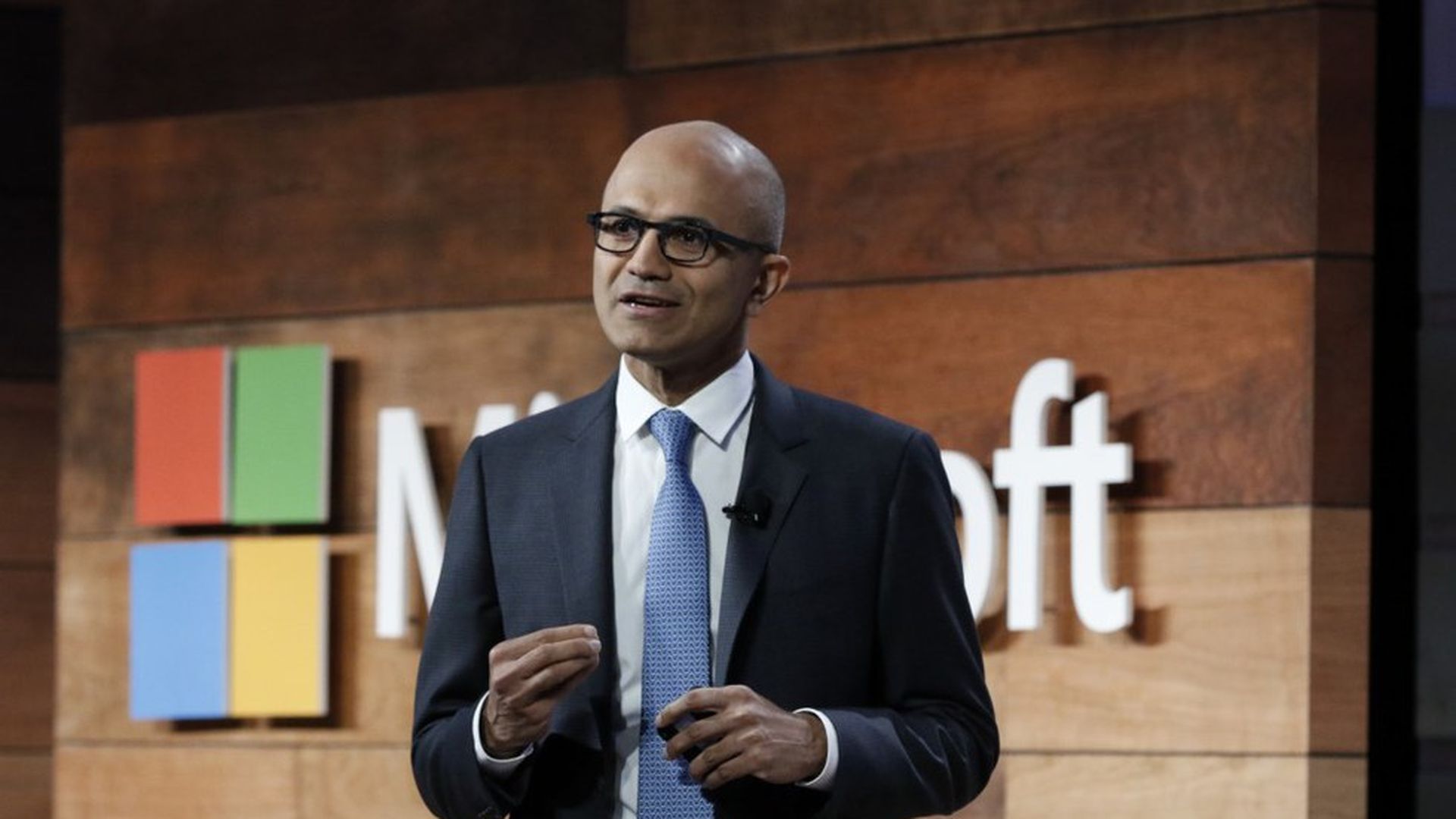
Shares of Microsoft hit record territory in after-hours trading on Thursday, topping $75 a share, after the software giant's better-than-expected financial results.
As has been the case for the last several quarters, strength in Microsoft's cloud business, including Office 365 and Windows Azure, was the key to the company's growth. Of note, Microsoft CFO Amy Hood told analysts that, for the first time, Microsoft got more revenue from Office 365 subscriptions than from traditional Office software licensing.
Why it matters: Microsoft has shown an ability to grow its business even as the PC market has stalled, reflecting moves the company made in the cloud both since Satya Nadella took over as CEO as well as some that were in place before he took over the top spot.

YouTube will try to intervene in searches for extremist content
YouTube is mounting an intervention when users search for terms linked to extremism. The company said that when those searches are performed it will "display a playlist of videos debunking violent extremist recruiting narratives."
What's next: YouTube will also show the content when non-English keywords are searched for, and it will make counter-extremist videos in collaboration with outside groups.
Why YouTube is doing this: Governments, particularly in Europe, really want YouTube and other major tech companies to do more to combat the spread of extremist messaging on their platforms.

Amazon quietly acquired data startup in May to boost Alexa
Aiming to make its Alexa assistant smarter, Amazon quietly bought a startup called Graphiq for an estimated $50 million back in May, according to a new report from the Los Angeles Times. The 100-person, Southern-California based startup, created by the same person who founded Google's DoubleClick, provides clients with data analysis about "products, people and places" to optimize online searches. Sources told the Times that the company also had interest from Google and IBM before going with Amazon.
Why it matters: It's a significant acquisition for Amazon, who's hoping to expand the role and audience for its voice assistant and perhaps introduce advertising into Alexa's vocabulary. Reports surfaced in May that Amazon is possibly adding 15-second ads that can be inserted into user conversations.

Internet unleashes .health domain names

The health care industry now has its own domain name on the internet, just like universities have .edu and not-for-profits have .org. Several companies and organizations went live Thursday with the .health extension through DotHealth, the official registry.
This could be big: Jose Ignacio Rasco, CEO of DotHealth, told Axios that a wide array of companies with trademarks registered for their own .health web addresses during the 60-day "sunrise" period before the launch. That includes large health care brands Mayo Clinic, Oscar, Pfizer and UnitedHealthcare as well as the big tech giants Amazon, Apple, Facebook, Google and Instagram.
Rasco said he didn't know what the tech companies had planned for their .health domains, but "we know they are somehow going to use them in the future." He also said there are already two hospital system mergers in the works that will use the .health domain name as rebranding strategies.
The allure of health care for tech giants

There are reasons Amazon, Apple, Google, Microsoft and other tech giants aren't more deeply immersed in health care (and have failed in some past projects). Health care has a lot of spending concerns, regulatory hurdles and life-and-death decisions that aren't a part of running a web site or making an iPad.
But health care has a lot of appeal, both from the money to be made and the prospect of helping keep people healthier by analyzing health care data. The industry has moved a lot of its records from paper to digital form, but many people think the information could be made a whole lot more useful and shareable.
Look ahead: If a major tech conglomerate wanted to take a bigger gamble on health care, there are a lot of ways to get in the industry right now. There's already speculation among industry analysts that Apple could try to buy Athenahealth, which makes cloud-based electronic health records for physician offices and small hospitals.
Facebook launches Instant Articles analytics tool for publishers
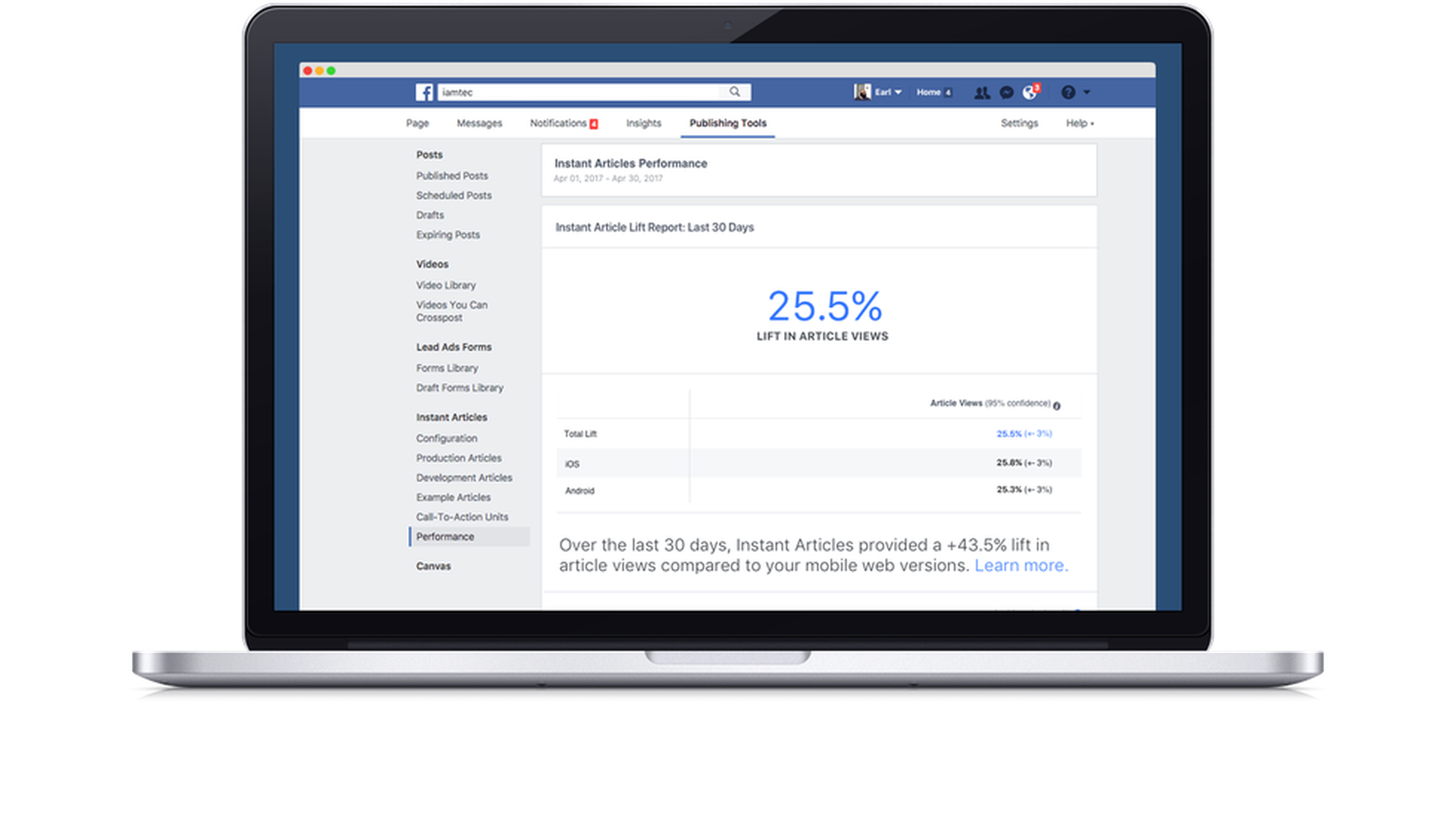
Facebook is rolling out a new tool for publishers using Instant Articles to measure how their articles perform on their platform compared to the mobile web. The tool, with article views calculation methodology verified by Nielsen, will only be available to publishers who have published enough Instant Articles and mobile web versions of articles to measure the difference. The tech giant says they hope to add more metrics to measure Instant Article performance in the coming months.
This is is one of many in a series of moves Facebook has taken to make Instant Articles a better experience for publishers, in light of complaints from some outlets that Instant Articles are hard to monetize and convert for other platforms.
Why it matters: The goal of the tool is to help publishers make better decisions around how they share content on Facebook. In a blog post, Facebook touts the success of Instant articles in engaging users, which means that they likely hope the measurement tool will reaffirm to publishers the power of Instant Articles.

This tiny robot can fold and unfold without batteries

Harvard roboticists have engineered a folding robot that can move without batteries. The origami robots, which are about the size of a quarter, could have biomedical applications. Imagine "robots that you could swallow and then … control their motions for diagnostic procedures, biopsies, drug delivery," says study author Robert Wood from Harvard University.
How it works: Wirelessly induced electrical currents are delivered to the robot's "muscles" — mechanical actuators — to activate them. The robot can change shape — including returning to its original configuration — when heated with electrical current because of the specialized metal alloy coils in its joints. The combination of the two features allows the researchers to fold and unfold the robots parts independent of each other, or together, creating complex movements. For example, this technology could get a ship in a bottle to move its sail without any connection.

Self-driving car bill moves forward

House lawmakers voted Wednesday to move forward with a broad bill that would for the first time create federal laws around self-driving cars. The bill would give wide-ranging authority to the National Highway Traffic Safety Administration to oversee development and testing, which is supported by manufacturers who say a patchwork of state laws could severely slow down the technology.
What's next: The bill heads to a full House Energy & Commerce committee markup next week, and will head to the House floor in September. The Senate is also taking up similar legislation.
NBC launches daily news show on Snapchat

Beginning Wednesday, NBC News will produce a twice-daily news show exclusively for Snapchat's mobile content platform, Discover.
- Roughly 30 people will produce the show, around the same size as a regular TV show team, and correspondents Gadi Schwartz and Savannah Sellers will be assigned to the show team, led by NBC's Director of Social Media strategy Andrew Springer.
- NBCUniversal was the first major media partner to develop and produce Shows for Snapchat, and the first to receive and Emmy nomination for a Show on Snapchat with "The Voice."
- Why it matters: This is the first time a daily TV news show will exist on Snapchat's platform, demonstrating a major shift in how TV news will transition to mobile in the digital age. Snapchat already hosts daily news content from The Washington Post and news content from others, and hosts its own original news series in Good Luck America, but this will be the first daily TV news show from a broadcaster on Discover.