Wednesday's technology stories

Facebook launches Instant Articles analytics tool for publishers
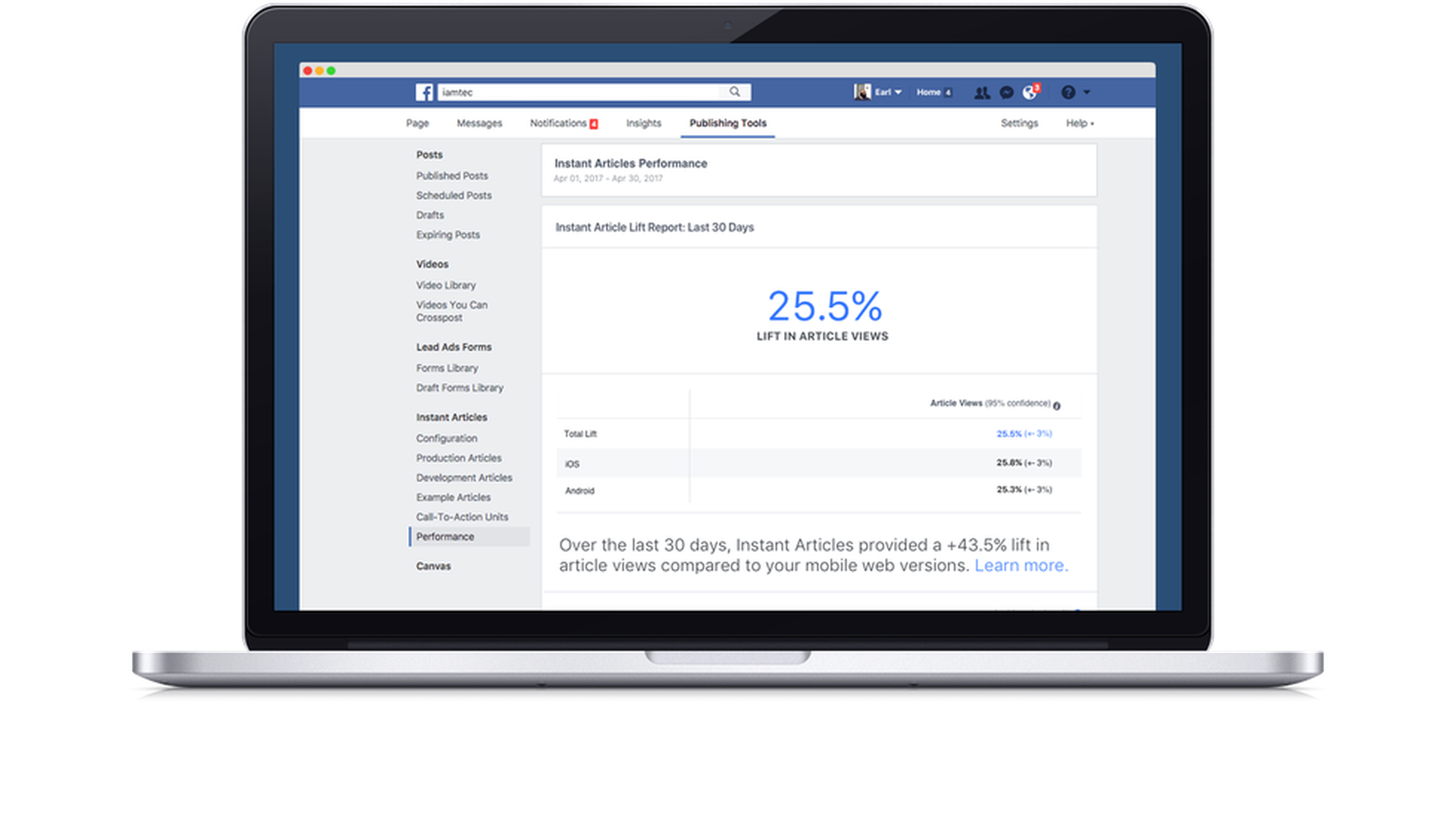
Facebook is rolling out a new tool for publishers using Instant Articles to measure how their articles perform on their platform compared to the mobile web. The tool, with article views calculation methodology verified by Nielsen, will only be available to publishers who have published enough Instant Articles and mobile web versions of articles to measure the difference. The tech giant says they hope to add more metrics to measure Instant Article performance in the coming months.
This is is one of many in a series of moves Facebook has taken to make Instant Articles a better experience for publishers, in light of complaints from some outlets that Instant Articles are hard to monetize and convert for other platforms.
Why it matters: The goal of the tool is to help publishers make better decisions around how they share content on Facebook. In a blog post, Facebook touts the success of Instant articles in engaging users, which means that they likely hope the measurement tool will reaffirm to publishers the power of Instant Articles.

This tiny robot can fold and unfold without batteries
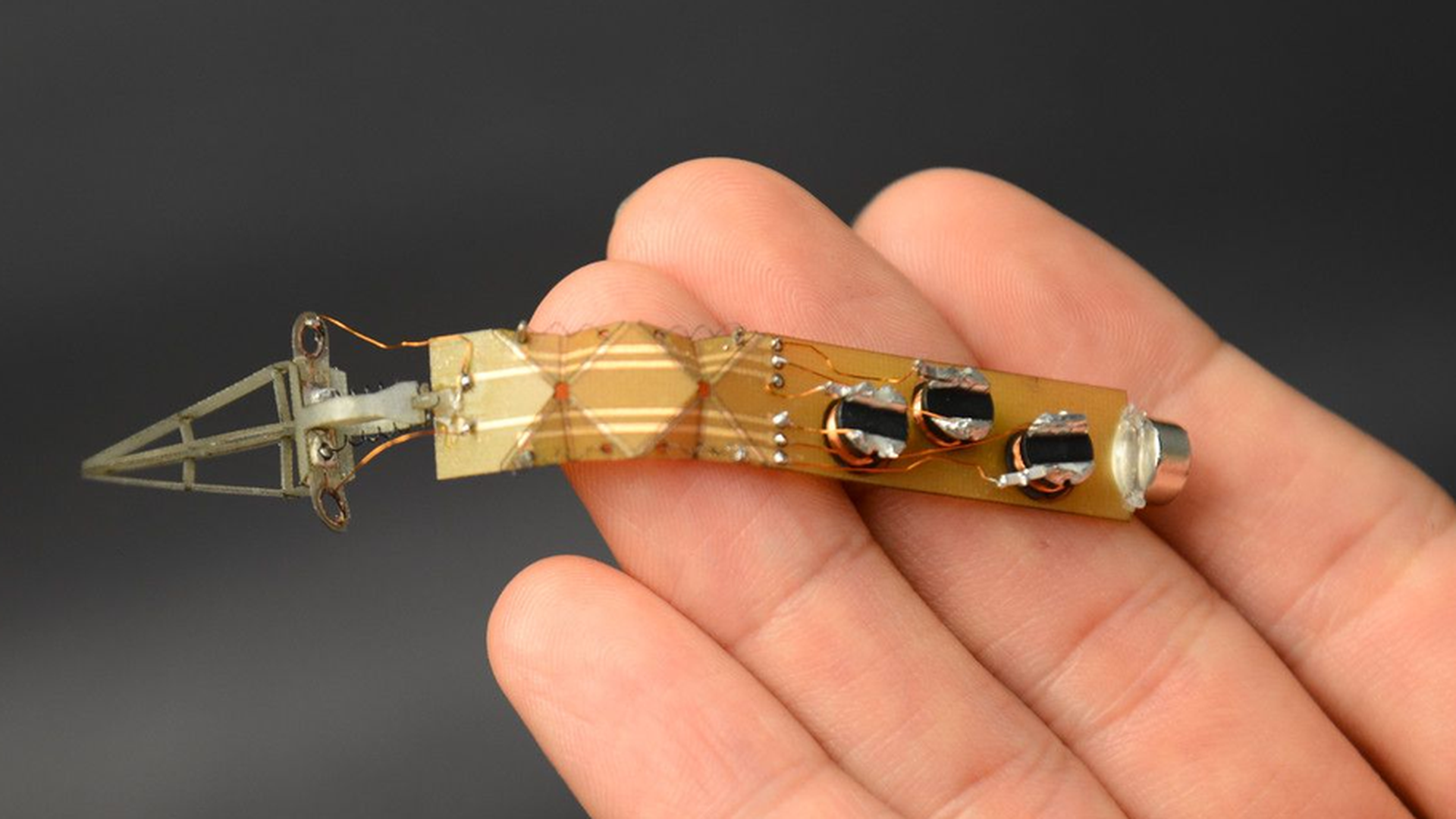
Harvard roboticists have engineered a folding robot that can move without batteries. The origami robots, which are about the size of a quarter, could have biomedical applications. Imagine "robots that you could swallow and then … control their motions for diagnostic procedures, biopsies, drug delivery," says study author Robert Wood from Harvard University.
How it works: Wirelessly induced electrical currents are delivered to the robot's "muscles" — mechanical actuators — to activate them. The robot can change shape — including returning to its original configuration — when heated with electrical current because of the specialized metal alloy coils in its joints. The combination of the two features allows the researchers to fold and unfold the robots parts independent of each other, or together, creating complex movements. For example, this technology could get a ship in a bottle to move its sail without any connection.

Self-driving car bill moves forward

House lawmakers voted Wednesday to move forward with a broad bill that would for the first time create federal laws around self-driving cars. The bill would give wide-ranging authority to the National Highway Traffic Safety Administration to oversee development and testing, which is supported by manufacturers who say a patchwork of state laws could severely slow down the technology.
What's next: The bill heads to a full House Energy & Commerce committee markup next week, and will head to the House floor in September. The Senate is also taking up similar legislation.
NBC launches daily news show on Snapchat

Beginning Wednesday, NBC News will produce a twice-daily news show exclusively for Snapchat's mobile content platform, Discover.
- Roughly 30 people will produce the show, around the same size as a regular TV show team, and correspondents Gadi Schwartz and Savannah Sellers will be assigned to the show team, led by NBC's Director of Social Media strategy Andrew Springer.
- NBCUniversal was the first major media partner to develop and produce Shows for Snapchat, and the first to receive and Emmy nomination for a Show on Snapchat with "The Voice."
- Why it matters: This is the first time a daily TV news show will exist on Snapchat's platform, demonstrating a major shift in how TV news will transition to mobile in the digital age. Snapchat already hosts daily news content from The Washington Post and news content from others, and hosts its own original news series in Good Luck America, but this will be the first daily TV news show from a broadcaster on Discover.

Snap's Spectacles now available on Amazon

Snap has now started selling its Spectacles camera glasses directly through Amazon, marking a change from the fall debut when Snap rebranded itself as a "camera company," per The Verge.
Why it matters: The commodity culture around them seems to have worn off. But for a camera company, Snap's struggling to sell its camera hardware — sales have been modest. Spectacles only accounted for about 8% of Snap's revenue in Q1 of this year.

Google revamps hub for government data requests
Google has given its hub for data related to government requests for data and other assistance a face lift. Project Lead Michee Smith said that the new Transparency Report design "features clearer data visualizations, more context for the data, a Recent Updates section so you can see what's new, and a better way to download data from our most popular reports."
Why it matters: It's now commonplace for large companies to disclose how many times they've been asked for user data or to take content down. That data could get more attention as lawmakers look to reauthorize a key surveillance law later this year.
Why tech firms are fighting California's privacy push
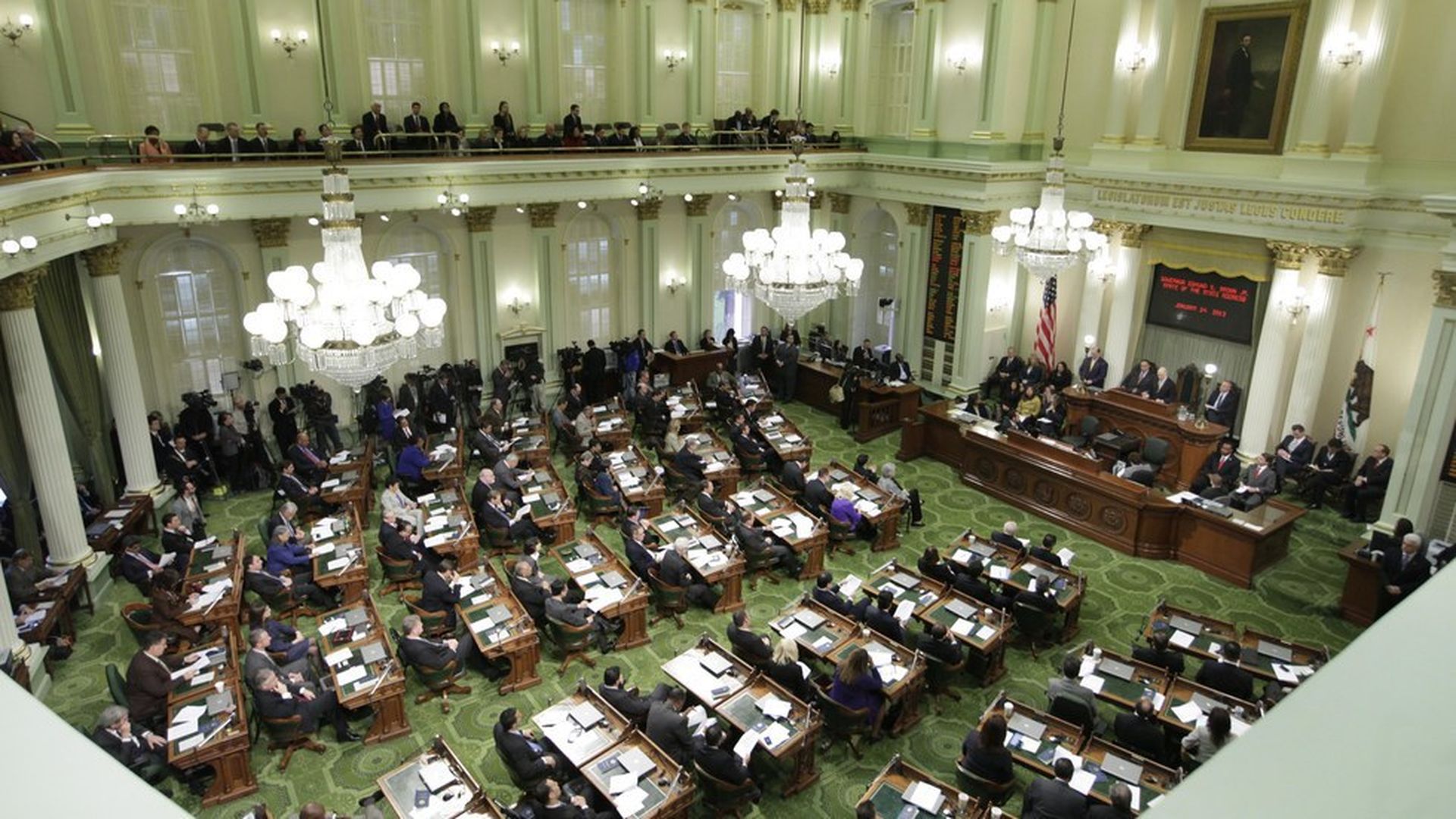
States across the country are trying to figure how out to regulate consumer privacy in the digital ad space, but the battlefield to watch is Sacramento. There, lawmakers are vetting a bill today that would require internet service providers like Verizon and Comcast to get permission from customers before sharing their data with marketers.
Battle lines converging: As the lines between media, tech and telecom companies blur, Internet providers and the web companies that use their pipes have a rare alliance in opposing the bill. They all have a stake in the fight as telcos buy media companies (think Verizon buying Yahoo and AOL) and web companies are, in some cases, working on their own connectivity initiatives (think Google Fiber). A new privacy law in California would be a threat to ISPs trying to break into the digital advertising market and the start of a slippery slope for the Facebook-Google duopoly.

Robotics experts dismiss Musk's call for AI regulation
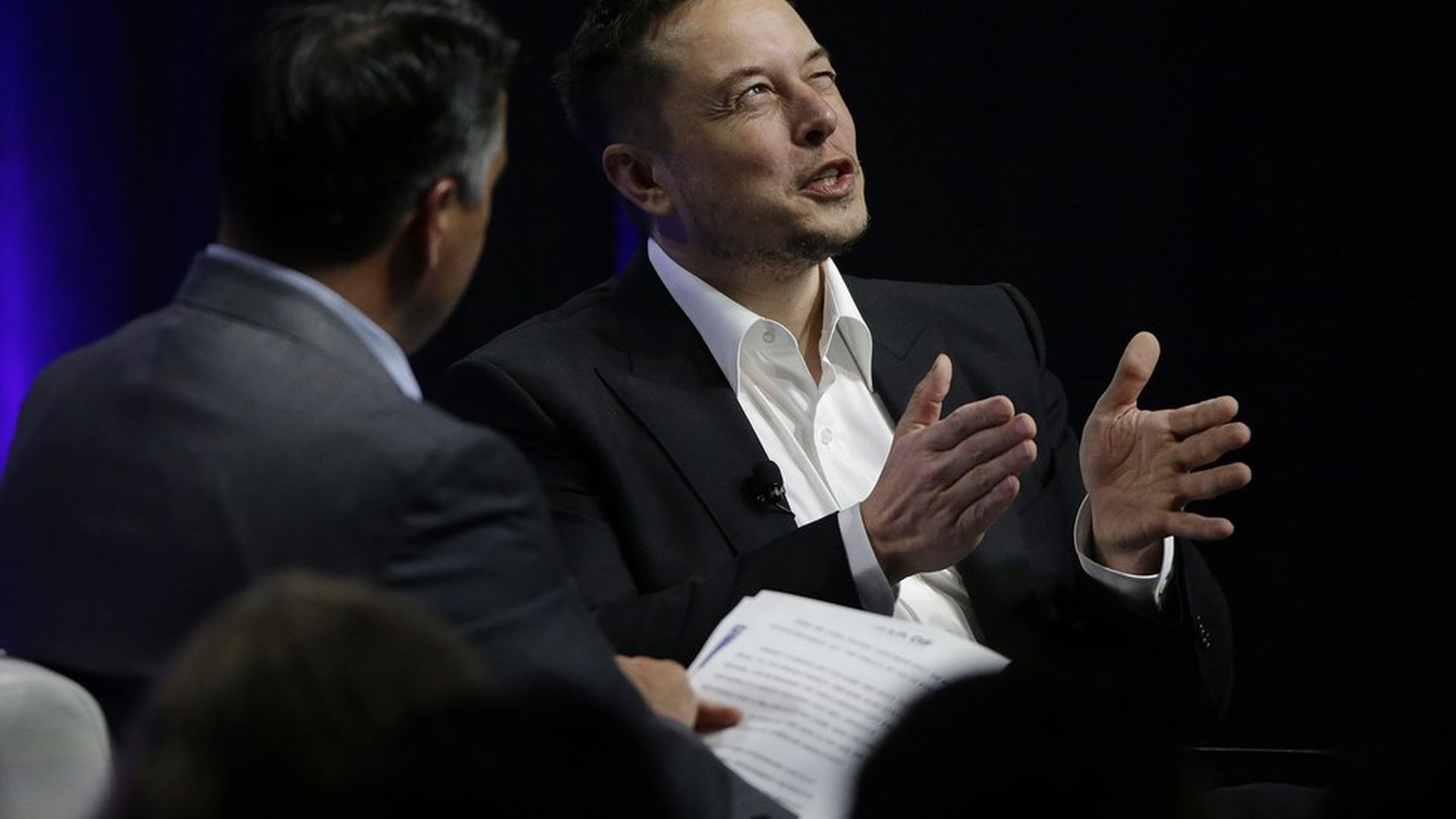
Leading robotics experts are rebuffing Elon Musk's siren call for the urgent regulation of artificial intelligence, which he calls an existential threat to the human race. "Let's talk about regulation of the self-driving system on his Teslas," Rodney Brooks, a robotics pioneer, told an audience at the Massachusetts Institute of Technology on Monday.
On Saturday, Musk said that AI should be regulated before it's too late. "In my opinion it is the biggest risk that we face as a civilization," he said. Musk was following up on earlier such remarks, in which he warned that machines are on their way to becoming smarter than humans, and out of control of their makers.
But Brooks, in addition to robotics executives from Amazon and Toyota, suggested that work on AI is at a very embryonic level, and that such worries verge on hysteria. The people such as Musk conveying such warnings "share a common thread: they don't work in artificial intelligence themselves," Brooks said. "But we know how hard it is to get anything to work at product level."
Netflix stock up 10% after crushing subscription growth estimates
Netflix blew past Q2 subscription expectations, adding 5.2 million subscribers last quarter, the company's executives told investors in an earnings report Monday. The company's stock jumped 10.7% after close Monday.
Why it matters: Netflix saw a slowdown in subscriber growth in the first quarter of 2017, despite season renewals of some its biggest hit shows, like "House of Cards" and "Orange Is the New Black," but Q2 growth beat investor estimates by a whopping 2 million subscribers. It's especially impressive given that the company has historically seen slowed subscriber growth during Q2. The company now has a total of 104 million subscribers globally.
- Streaming time: Nielsen estimates released earlier this year found that Netflix accounts for nearly half of the internet streaming time spent by adults in the U.S. and is available to 51.2% of U.S. households — far more than its subscription streaming rivals.
- Awards: Netflix was nominated for a whopping 92 Emmy awards this year, more than all cable companies besides HBO. Earlier this year, Netflix took home its first Academy Award for its film The White Helmets.