Saturday's technology stories

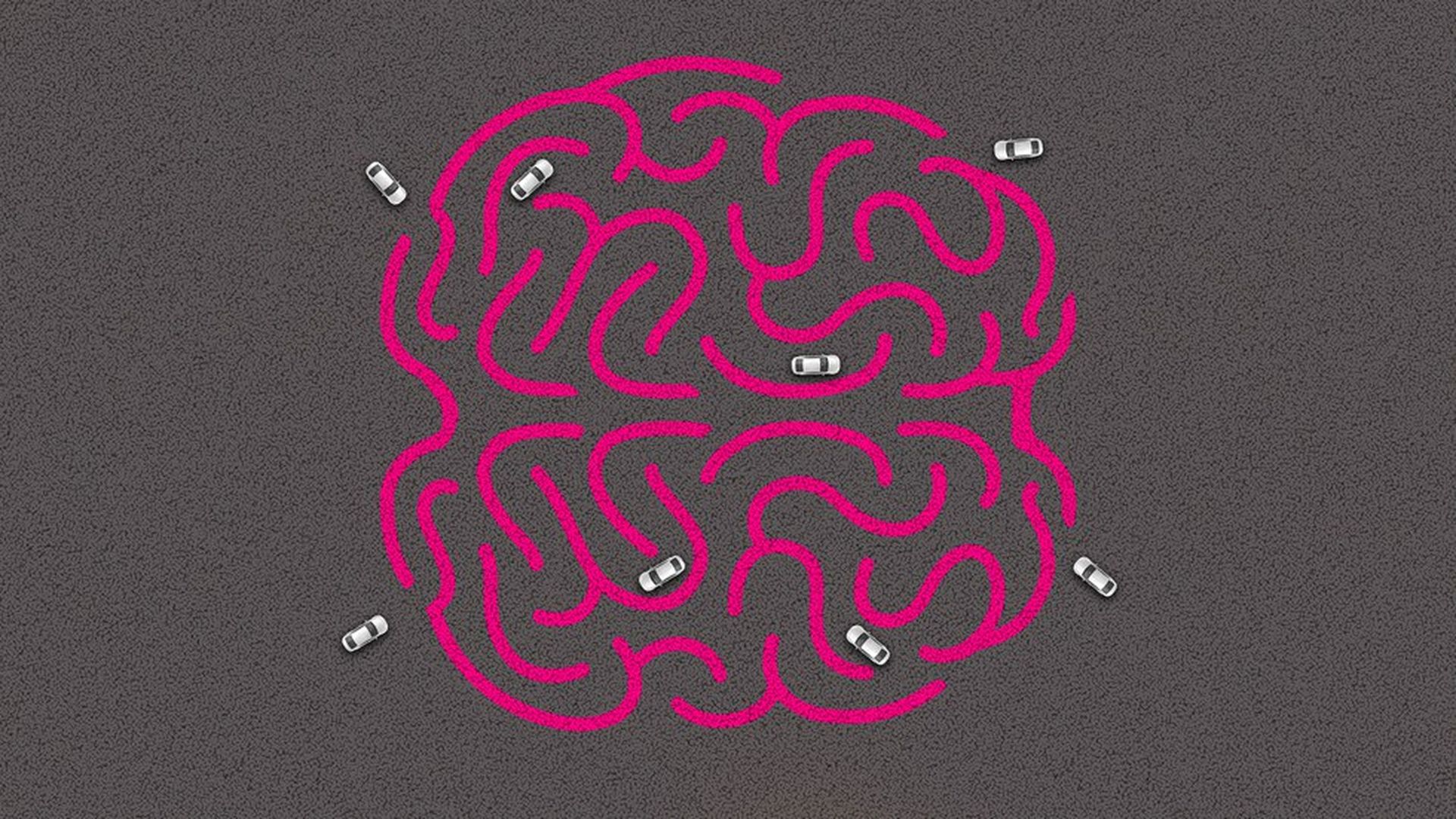
Lyft will develop its own autonomous driving tech
Doubling down on its investment in self-driving cars, ride-hailing company Lyft is set to open a new office in Silicon Valley that will focus on autonomous driving tech. Named after the highest level of autonomous driving — Level 5 — the facility will house several hundred employees by the end of 2017.
In-house tech: Until now, Lyft's self-driving car efforts have been limited to working with other technology makers by providing them access to its ride-hailing network and data via its Open Platform. But now the company plans to develop its own technologies to tackle mapping, perception, localization, path planning, and motion control. Already, 10% of the company's engineers are working on autonomous driving tech, says Lyft.
Why it matters: Lyft's new move is not only a significant increase in its investment in self-driving cars, but it's also turning into a more direct competitor to its partners like Waymo and GM, which are developing their own versions of autonomous driving tech.

Researchers push for mandatory black boxes on robots
Researchers in the U.K. are suggesting that — like aircraft — robots be equipped with a black box that records their decisions, the rationale behind them, and their step-by-step actions, per the Guardian. The proposal is a half-way solution to a growing push in the field for "explainable artificial intelligence," or AI with which you can engage in robust discussion about its opinions.
Alan Winfield, a professor at the University of the West of England, and Marina Jirotka, a professor at Oxford University, are proposing the "ethical black box" as a step toward understanding accidents involving robots and AI-backed systems. They were to argue the case for such mandatory systems at a conference Thursday at the University of Surrey.
Why it matters: Winfield argues, "Serious accidents will need investigating, but what do you do if an accident investigator turns up and discovers there is no internal datalog, no record of what the robot was doing at the time of the accident? It'll be more or less impossible to tell what happened."


What a world without drivers will look like
What will it look like when fully autonomous vehicles take over the roads? Forrester has some predictions in a new report:
- Platoons of autonomous trucks will replace human-driven freight, especially on long-haul routes, as soon as it is technologically and legally possible. (David wrote about the implications of this a while back.)Your insurance bill may stay high. Sure, human error will be taken out of the equation. But all those high-tech sensors and software will make it more difficult to decipher what's to blame when something goes wrong, per CNET. (We're not so sure about this: Other people think that the cost of insurance will be baked into the car price because drivers won't really be at fault).Your commute will be bombarded with ads. Advertisers and media companies will compete for a spot inside the new vehicle experience and big brands will sponsor rides.
Bottom line: As Forrester puts it, "We predict that by 2035, the global economy will be unrecognizably different