Friday's technology stories

Google will stop scanning free Gmail to target ads
The tech giant will now treat its free Gmail product the same way it treats its G Suite's enterprise products, and will use settings-based ad targeting as opposed to content scanning for ad personalization.
Why it matters: The decision likely stems from consumer concerns broadly in the U.S. about data privacy and security. In a statement, Google touted Gmail's reputation to protect users from spam, hacking, and phishing. "G Suite customers and free consumer Gmail users can remain confident that Google will keep privacy and security paramount as we continue to innovate," the statement says.

Tracking American wealth
The "Richest Person in Every State", from Forbes' Chase Peterson-Withorn with the magazine's 2017 rankings:
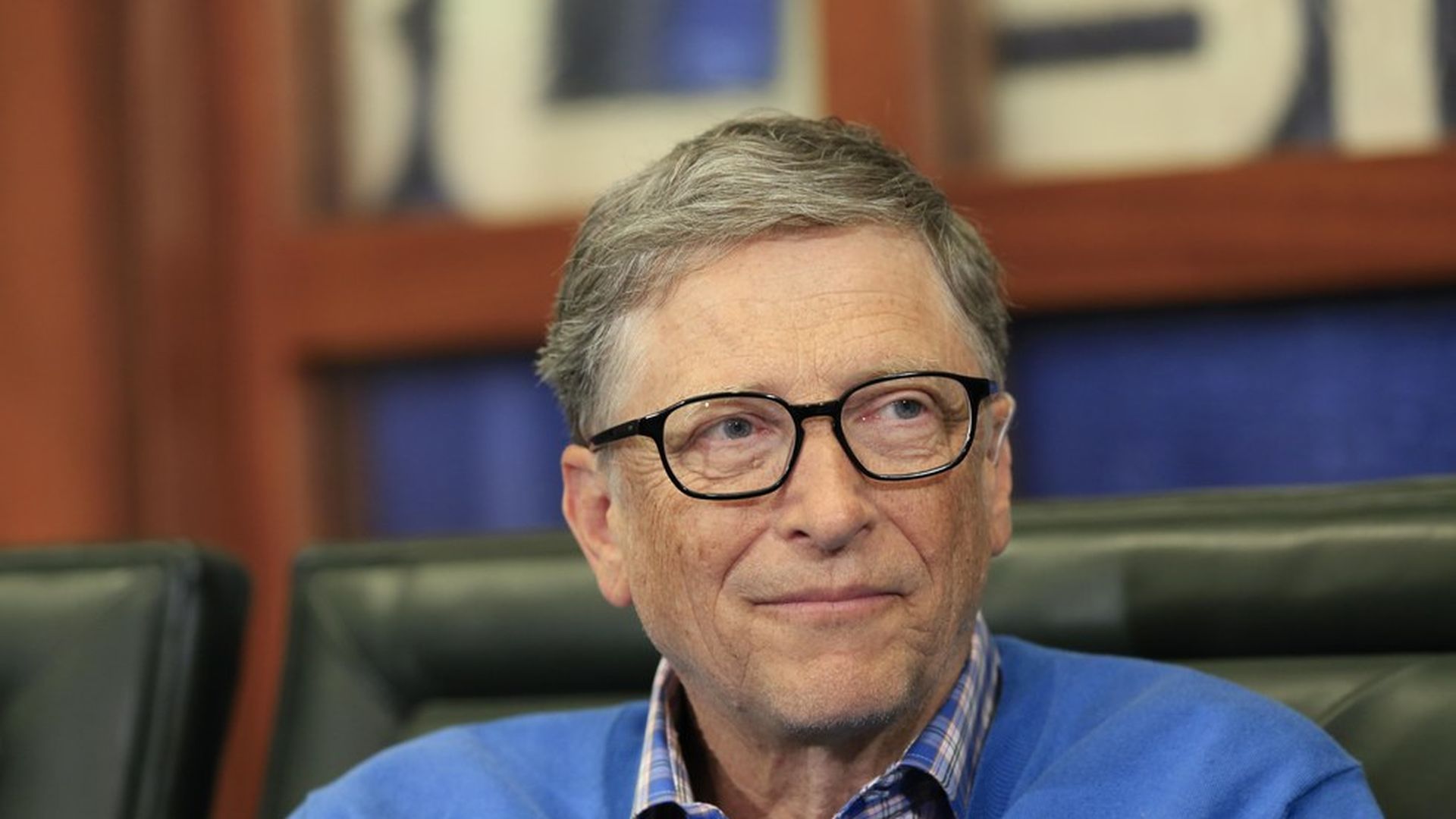
- "The biggest gainer in sheer dollars is Bill Gates. He added $12.9 billion to his fortune since last year as the rising stock market has boosted his portfolio, which includes Microsoft and a number of other public and private investments."
- Gates, "the richest person in Washington state — and the world — is actually in danger of losing both titles. This year his net worth is $88.9 billion, but fellow Washington resident Jeff Bezos finished just shy of Gates, at $83.3 billion, thanks to a nearly 50% rise in Amazon's stock price since last year's list."
- "Dish Network cofounder Charles Ergen, of Colorado, was the biggest gainer as a percentage of net worth. His fortune rose 41%, or $5.5 billion."

Venture capital investment in AI skyrockets
Venture capitalists are pushing a lot of cash into artificial intelligence and machine learning technologies, more than doubling the investment into virtual reality technologies in 2016, according to PitchBook data via the National Venture Capital Association.
Why it matters: U.S. investors want an edge on the development of next-generation technologies that center around AI, including self-driving cars. Other countries such as China are also charging ahead.

Trump mulls drone regulation and wireless infrastructure
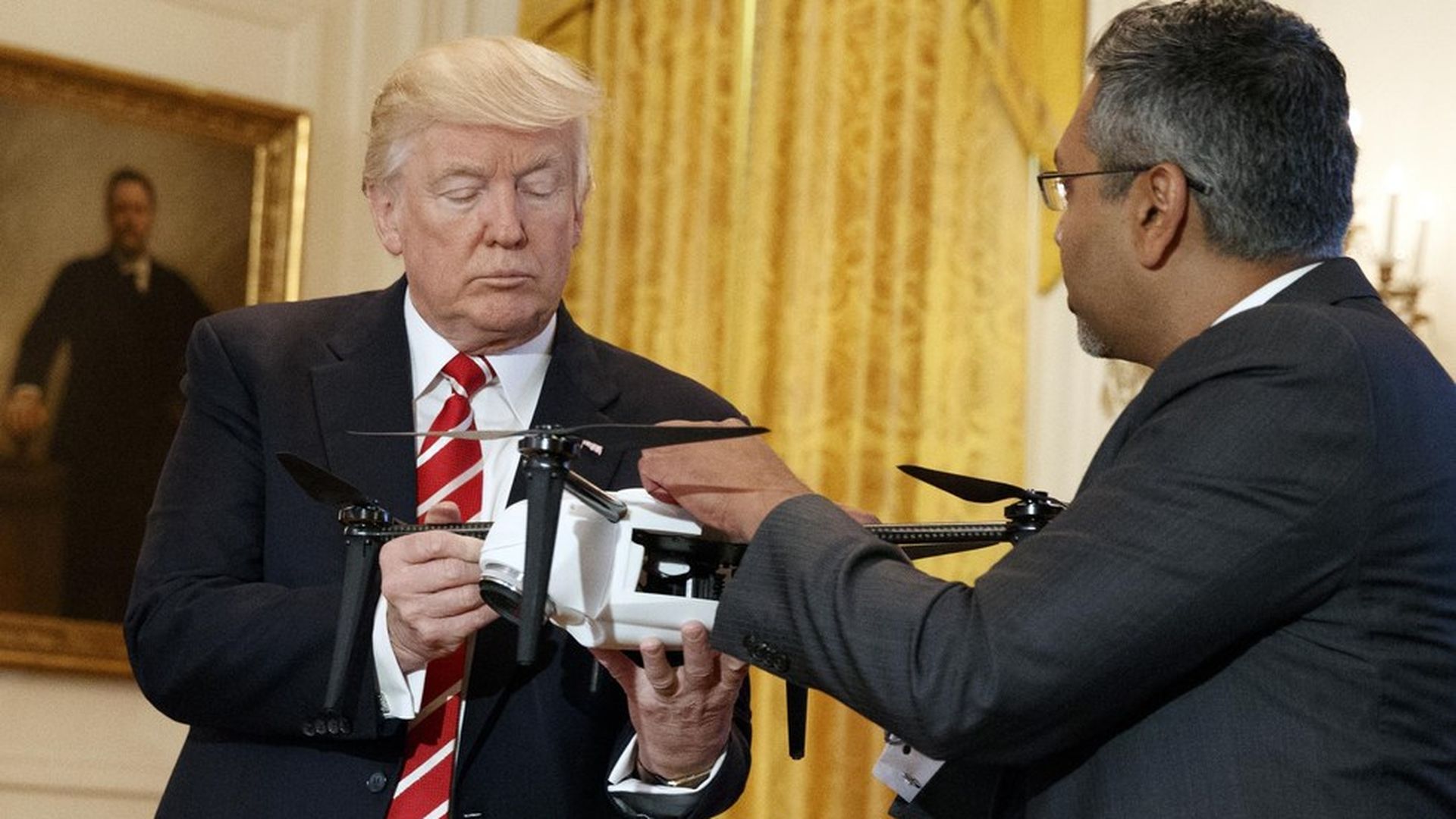
Drone and wireless companies came to the White House to ask President Trump for help in rolling out their emerging technology — and turning it into big business. The event also featured representatives from venture capital, though most major firms weren't present.
"We want our innovators to dream big, like the folks around me and surrounding me in this room," he said. "And we want them to create new companies and to create lots of jobs."

Facebook's new mission: building communities
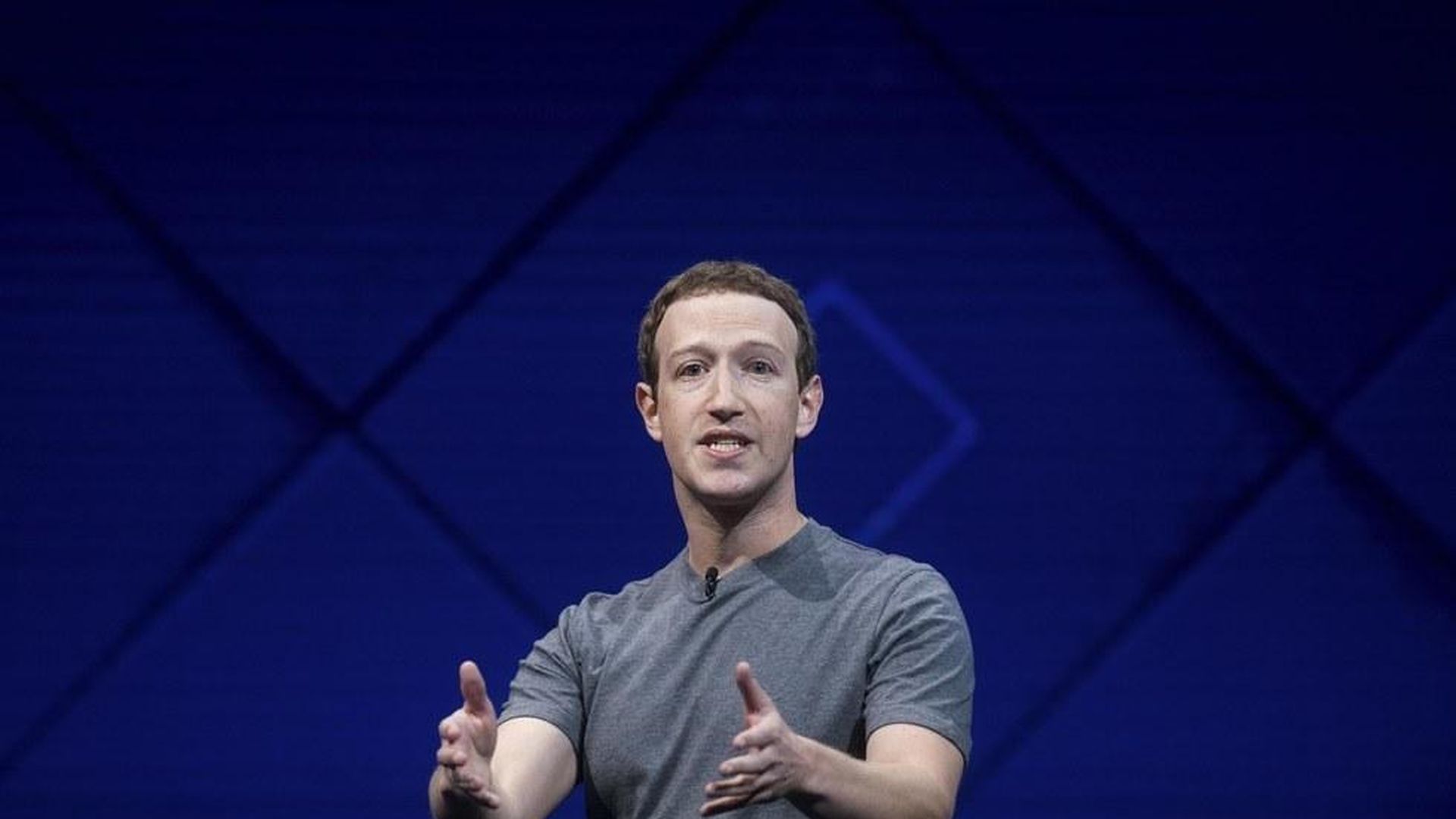
During the social network's first convention for community leaders in Chicago, Facebook CEO Mark Zuckerberg announced a new mission statement for his company: "Give people the power to build community to help bring the world closer together."
For years, Facebook's stated goal had been about "making the world more open and connected," though Zuckerberg hinted at a new focus on community building in February, when he released an updated founder letter.
What it means: Of course, Zuckerberg's newfound reckoning isn't groundbreaking. Connecting family and friends is inherently related to community building, and the company's had tools and features for groups for years. But the company's new community-focused convention and its new mission statement add to Zuckerberg's recent (and slow) coming to terms with Facebook's role in the world. The last U.S. presidential election in particular seemed to have had an impact on him, highlighting the growing division between people.
New tools: To help leaders who manage Facebook community pages, Facebook announced that they'll get more tools for filtering and managing membership requests. They'll also get more data about requests and when members are most active, schedule posts, link to other groups, and the ability to remove bad actors.

An AI algorithm says domestic security risk is down
Mass shootings are up in the U.S., but domestic security risks have been falling for a month, according to an artificial intelligence algorithm used by GeoQuant, a Berkeley-based political risk firm.
Meanwhile, the multiple crises abroad — North Korea, Syria and Russia among them — have raised U.S. geopolitical risk, said Mark Rosenberg, GeoQuant's CEO. In late May, the firm's measure of domestic security risk crossed over the geopolitical risk line.
What it means: Unlike on Wall Street, where algorithms are now widely used for trading and forecasting, machine learning tools are new in political risk. GeoQuant is one of the first firms testing them in the field, developing forecasts alongside political scientists. According to its current forecast, the threat of U.S. political violence remains high, with the decline in security risk coinciding with the Trump administration's greater openness to police crackdowns, along with the fall of border crossings and immigration.
Data: GeoQuant; Chart: Lazaro Gamio / Axios


Who might be the next Uber CEO
Following months of controversies, Uber's search for a COO has now grown to a hunt for a new CEO following Travis Kalanick's resignation on Tuesday. Here are some of the names that have been floated as possible candidates, and the list will surely shift as the search continues:
Waymo wants Uber found in contempt
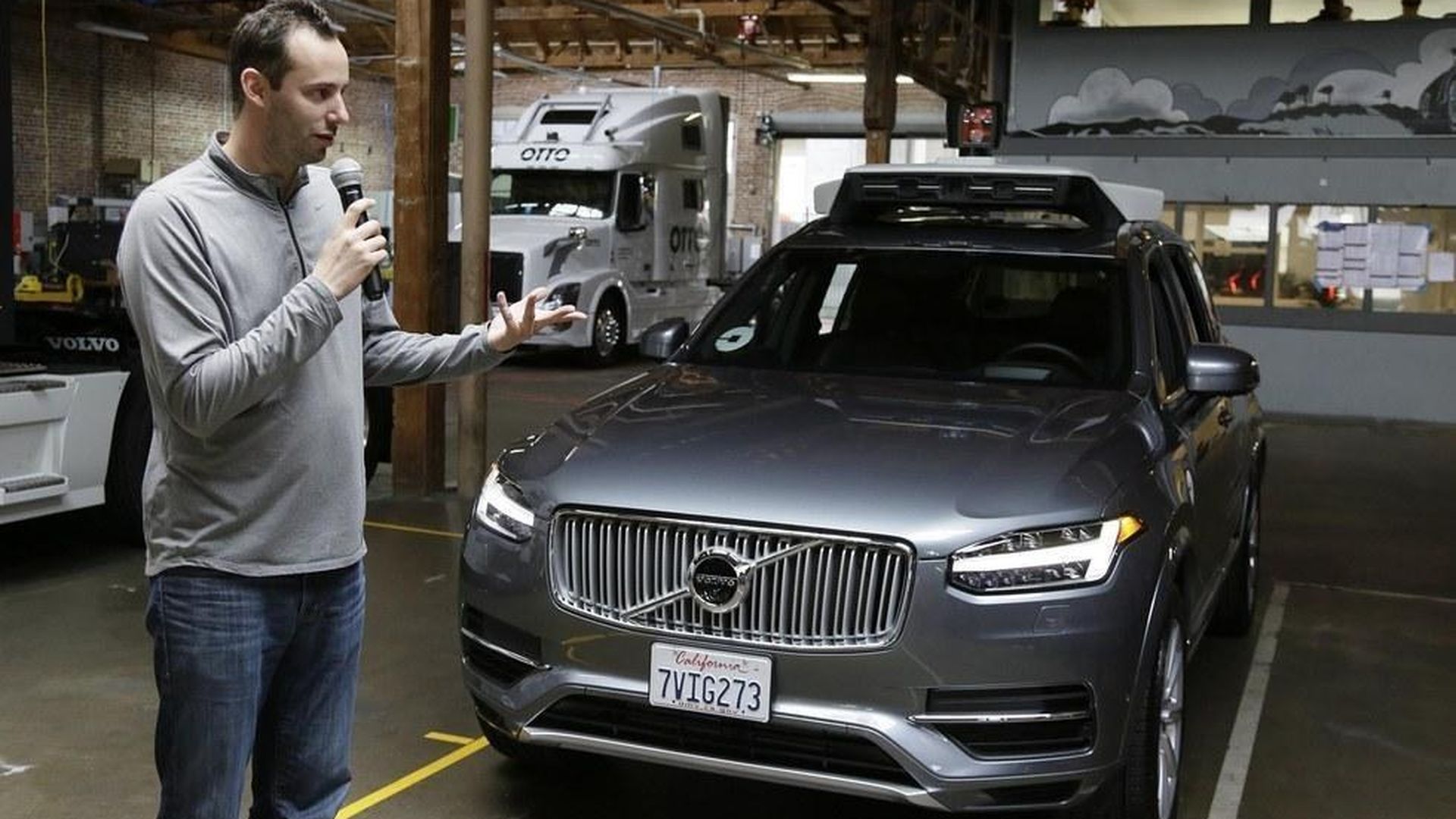
In arguing that a judge should find Uber in contempt, Waymo says that Uber has admitted it knew a former self-driving car executive had documents from his former employer.
According to new court documents filed by Waymo, Uber has acknowledged that Anthony Levandowski told Travis Kalanick and other Uber executives that he had five discs containing files belonging to Waymo. Uber said that during the March 2016 exchange, Kalanick told Leandowski to destroy the documents and not bring them into Uber. Soon after, Levandowski told Kalanick he had destroyed the discs, according to the court papers.


Uber's board shakeup continues, with Bill Gurley to leave
Venture capitalist Bill Gurley, whose firm Benchmark was one of Uber's earliest investors, has stepped off the ride-hailing company's board and will be replaced by fellow Benchmark partner Matt Cohler, who helped broker Benchmark's original investment in Uber. Bloomberg first reported the move, which Axios has confirmed.
Why: Gurley for years was a vocal supporter of Uber and CEO Travis Kalanick, but yesterday was part of the group of investors who requested that Kalanick resign from his job as the company's chief (which he did, although he will remain on the board of directors). By that point, their relationship had become so strained that Cohler and Benchmark's Peter Fenton handled most of yesterday's discussions with Kalanick (Fenton also was under consideration to be the replacement).