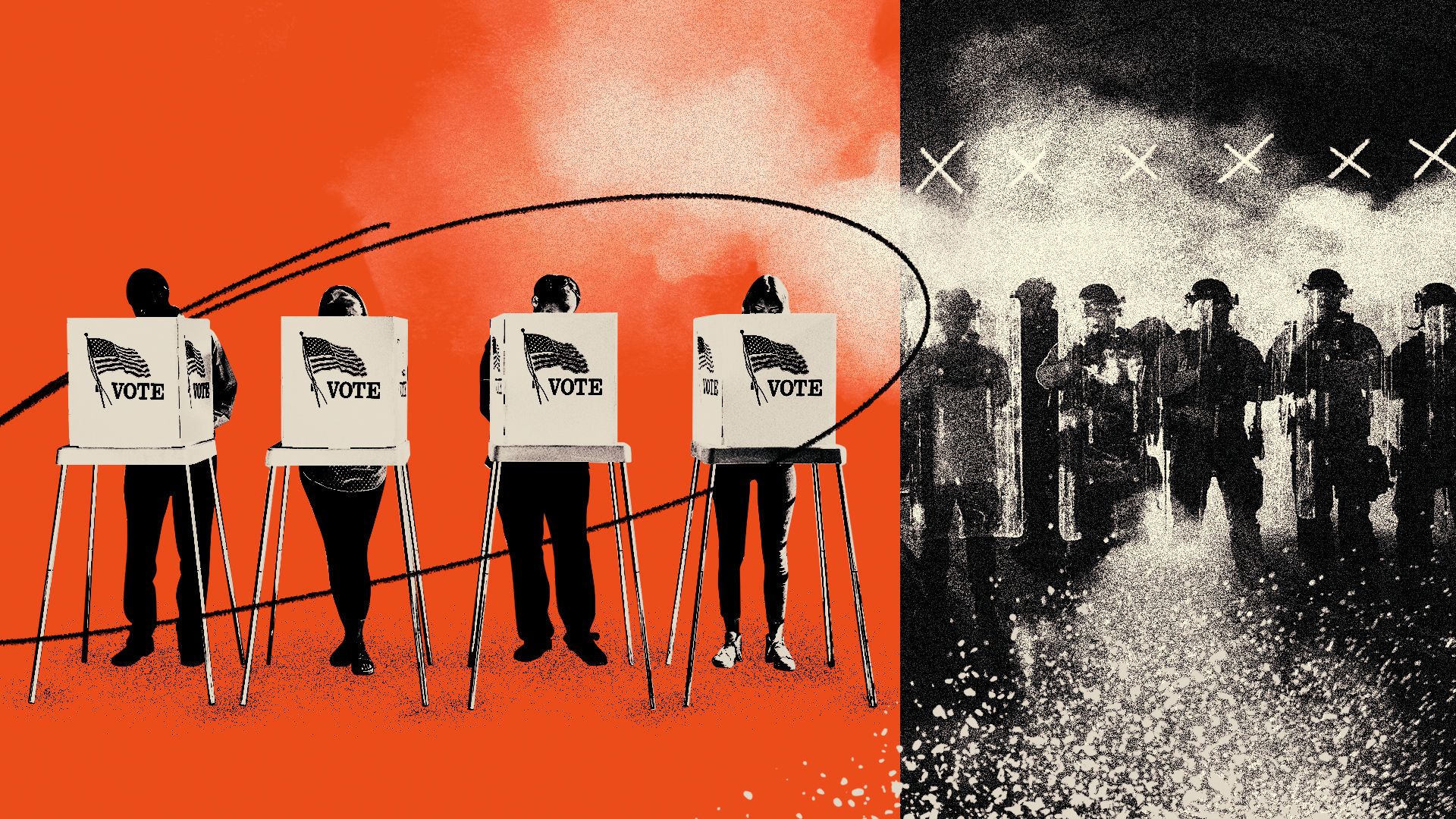
The Trump administration's hints about sending ICE agents to election polling places this fall have led state officials from Maine to Oregon to make plans to counter any actions that could affect voters.
Why it matters: It's illegal for federal law enforcement to be at polling places — and there are limits on how close local authorities can be — but when asked about ICE at the polls, President Trump said in May he'd "do anything necessary to make sure we have honest elections."
Earlier this month, Homeland Security Secretary Markwayne Mullin said ICE agents could be at polling places if they were serving an immigration warrant.
"We would be engaging in malpractice if we didn't prepare for the concern [about ICE agents showing up at polls] and we didn't address it," New Mexico Secretary of State Maggie Toulouse Oliver told Axios.
The big picture: State election officials nationwide told Axios how they're working with local election officials and state attorneys general to prep for the possibility of ICE disrupting voting or ballot drop box operations.
"ICE doesn't have a role here," said Aghogho Edevbie, Michigan's deputy secretary of state. "Certainly any ICE activity near a polling location can be considered voter intimidation, and we would take steps to counter that immediately."
Zoom in: Toulouse Oliver said her office's preparations for any federal agents are similar to how it would deal with other unauthorized people at the polls.
Her office is training local election officials to initially ask any officers to leave the voting area. If necessary, then they should call the county sheriff. The next step would be legal action against any unauthorized people.
"An ICE agent is the same as any other unauthorized individual at a polling location, and the same protocols should be followed," she said.
What they're saying: "If the Trump administration were to go down that path, the individuals involved would be committing crimes," Maine Secretary of State Shenna Bellows said, describing a similar protocol in her state.
"The coordination between secretaries of state, clerks, attorneys general, and partners at every level is very close," she added.
Zoom out: Election officials typically respond to myriad disruptions during election season.
Bellows told Axios she has dealt with several cases of "swatting" at polling places, referring to when someone calls in a fake emergency to a location to try to interrupt voting.
In Oregon, Secretary of State Tobias Read compared preparing for ICE agents to dealing with major wildfires during a past election season.
"Our system has to deal with all kinds of disasters, not just manufactured ones like the one from the White House right now," Read said.
Colorado's secretary of state, Jena Griswold, has experience responding to a case of potential voter intimidation in 2020, when two observers who were openly carrying weapons began filming people at the polls. The men eventually left the area after prompting from local officials, and weren't charged.
The city of Denver, a major target for Trump's immigration crackdown, is involved in litigation aimed at preemptively blocking ICE agents from showing up at the polls.
Between the lines: Mullin's recent statements that ICE agents will be at polling places only if they're making a targeted arrest haven't reassured election officials.
"I think people could look to Minnesota and the fact that Alex Pretti and Ms. [Renée] Good are dead to talk about ICE's effectiveness and the appropriateness of their action," Read said.
The other side: "America's elections are NOT a sanctuary from federal criminal law, and [the Department of Homeland Security] will not pretend otherwise because a secretary of state held a training," a DHS spokesperson told Axios in a statement.
"ICE is not planning operations targeting polling locations. ICE conducts intelligence-driven targeted enforcement, and if an active public safety threat endangered a polling location, they may be arrested as a result of that targeted enforcement action."
DHS used to have a more robust partnership to help secure elections from physical and digital threats, through the Cybersecurity and Infrastructure Security Agency (CISA).
But the Trump administration has made significant cuts to that agency, and some of the regional offices that handled that work are now empty.
LOS ANGELES — Left-wing streamer Hasan Piker tells Axios he believes America conducts more terrorism in the world than al-Qaeda, the terror network that carried out the 9/11 attacks.
"Pound for pound as far as the number of deaths, yes," Piker said in an exclusive interview for a new episode of "The Axios Show." Piker added: "We have caused tremendous terror all around the world."
Why it matters: Piker is one of the most popular streamers on Twitch, and his history of incendiary statements has become central to Republicans' attacks in the critical Senate race in Michigan since Democratic nominee Abdul El-Sayed had Piker campaign for him in the primary.
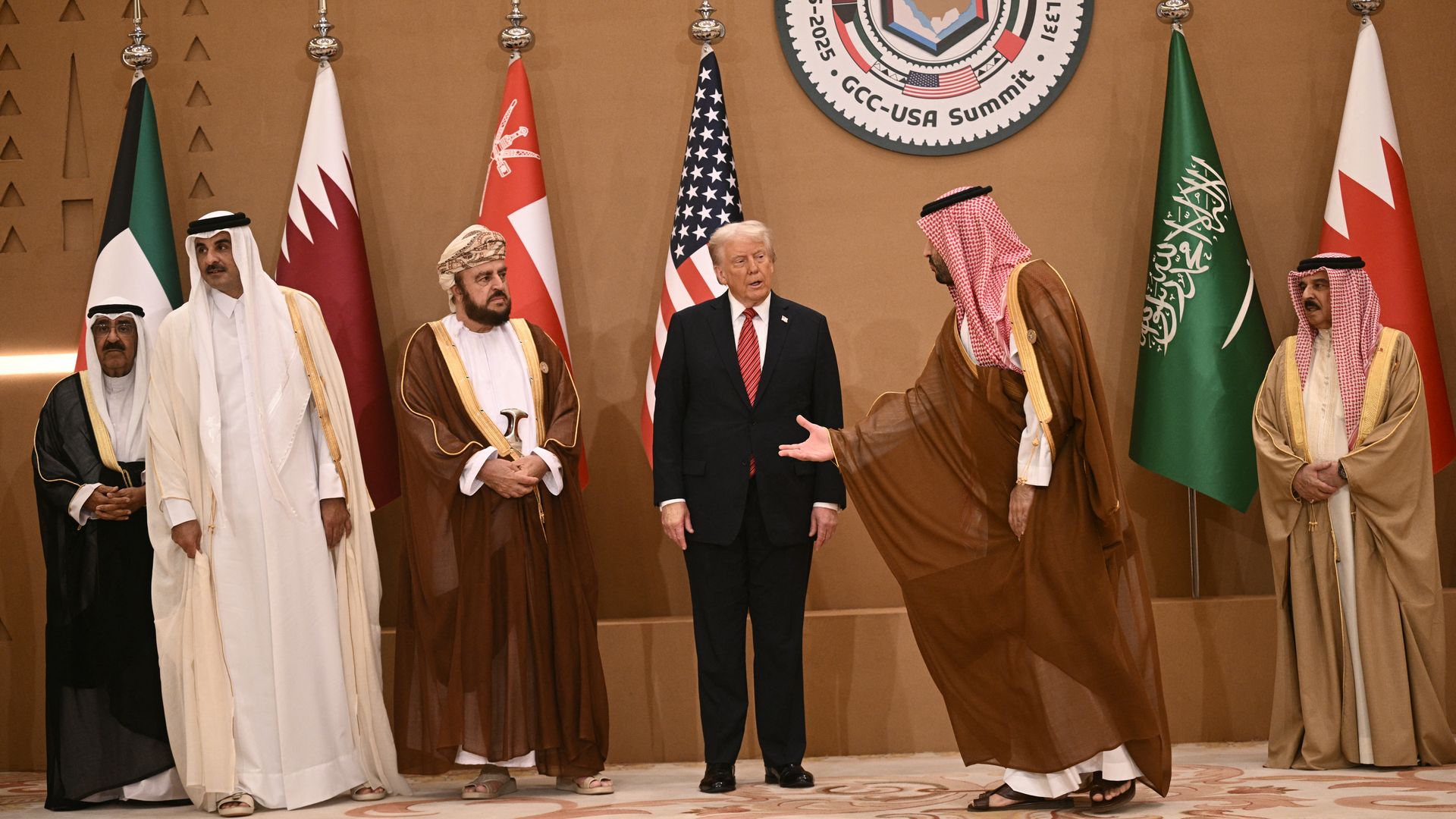
President Trump is expected to hold a meeting with Gulf leaders on the sidelines of the UN General Assembly in New York next Tuesday to discuss the next steps in the war with Iran, three sources with direct knowledge tell Axios.
Why it matters: The meeting is expected to focus on U.S. ideas for a postwar strategy as Trump and his senior team work on a day-after plan expected to be finalized after the midterms.
The Democrats' main Senate super PAC is pouring an additional $10 million into the Michigan Senate race to boost progressive Democrat Abdul El-Sayed, Axios has learned.
Why it matters: The Democratic establishment is coalescing around El-Sayed after a primary that was nasty, bruising — and late in the season.
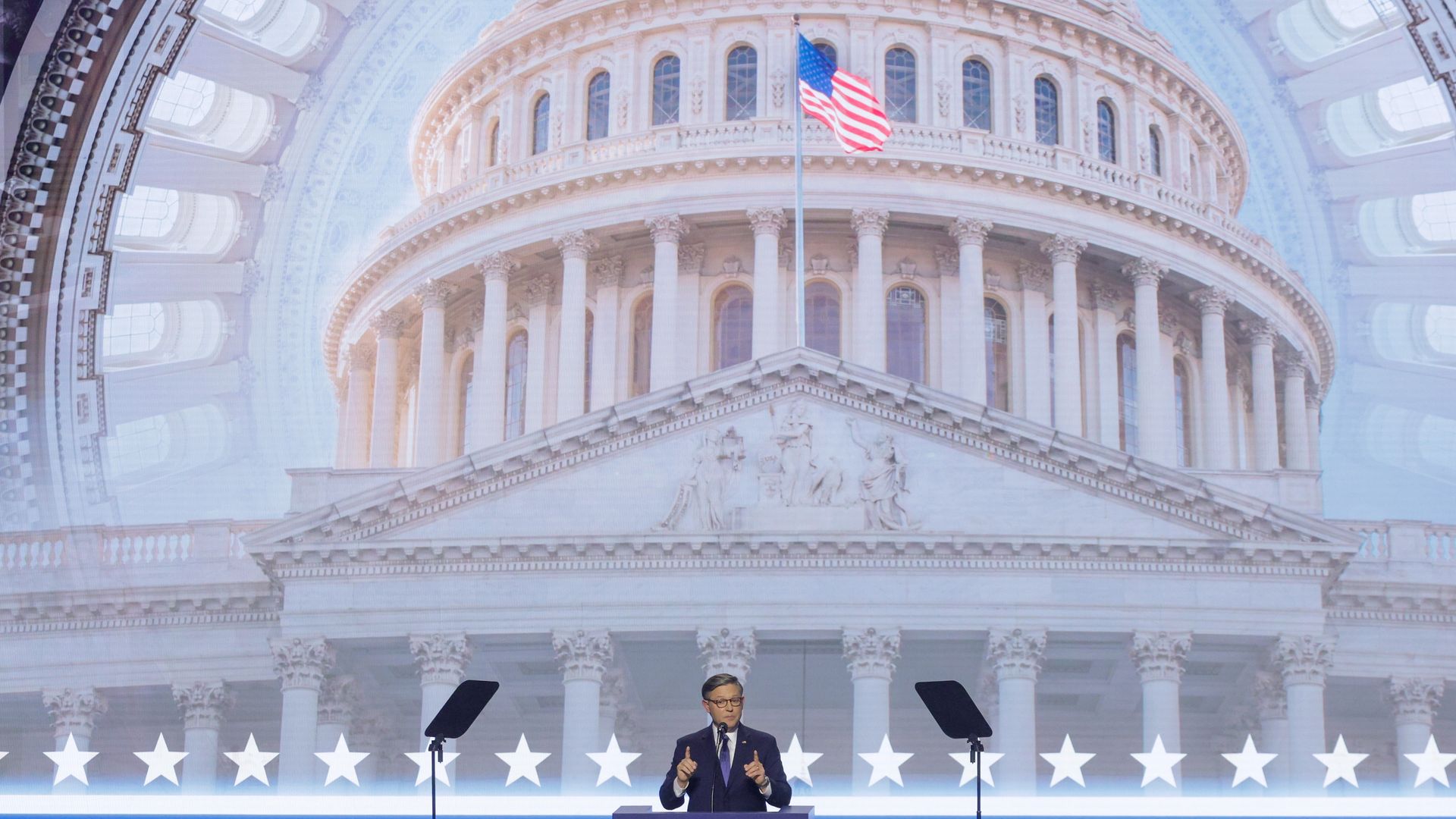
Mike Johnson's decision to send the House home early — again — is fueling an increasingly bitter feud with Rep. Thomas Massie (R-Ky.) over whether the speaker is using the calendar to dodge politically painful votes.
Why it matters: The House will now be gone for more than six weeks ahead of the midterms, delaying Massie's effort to force a vote on impeaching Defense Secretary Pete Hegseth over his handling of the Iran war.
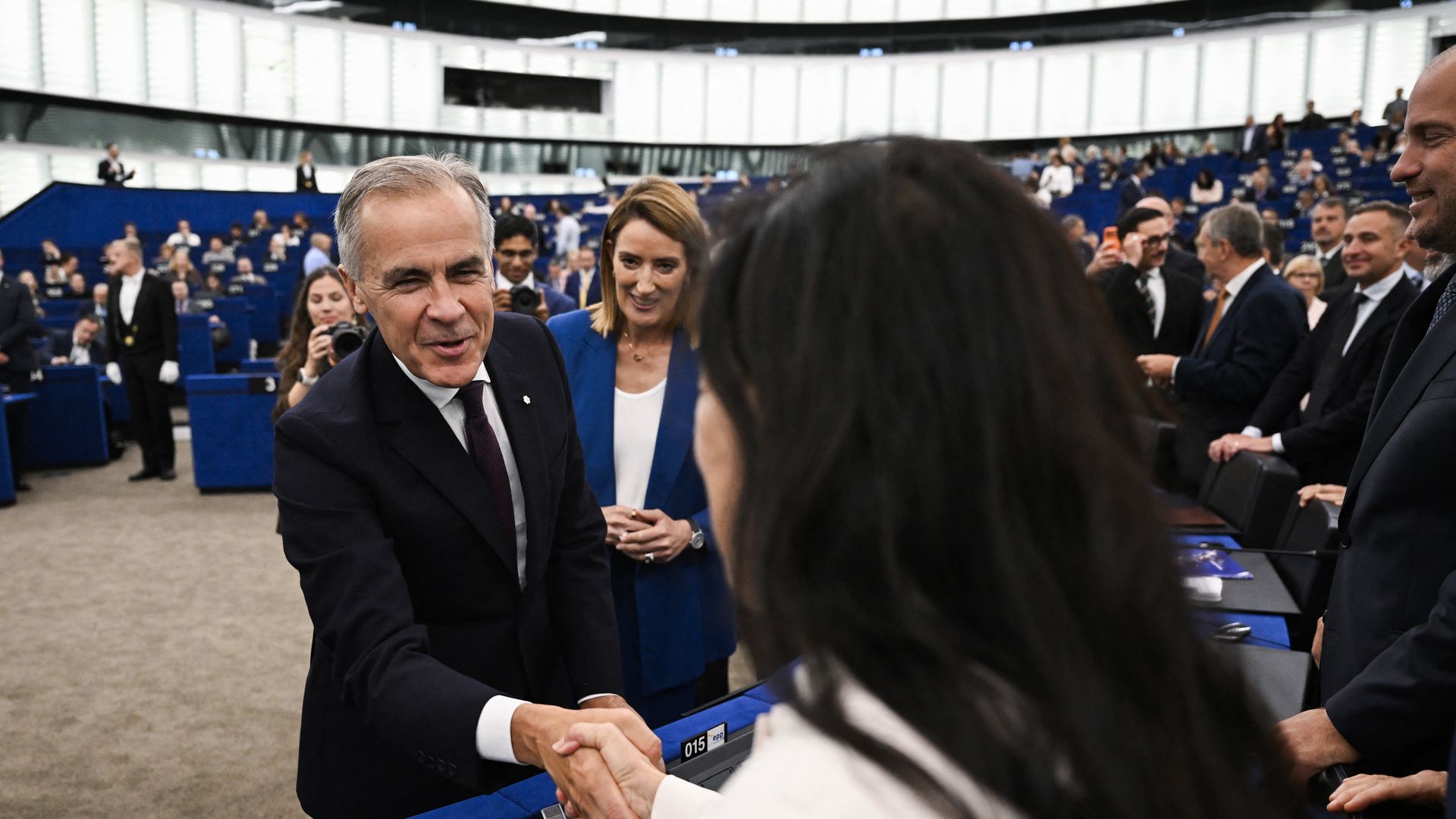
European Commission President Ursula von der Leyen on Wednesday proposed making Canada the European Union's first "associate member."
Why it matters: Canada and the EU are testing whether a nation deeply dependent on the U.S. market can find economic independence by moving closer to Europe.
This could also present one of the most permanent effects of President Trump's trade wars: U.S. allies building markets, supply chains and security ties designed to make them less vulnerable to Washington.
The House passed the bipartisan Ratepayer Protection Act on Wednesday, marking Congress' most significant step yet to shield consumers from the soaring infrastructure costs of the AI boom.
Why it matters: Washington is facing growing pressure to put guardrails around AI's rapid expansion, from the technology itself to the data centers powering it.
The House passed a sweeping Russia sanctions bill Thursday, sending the long-awaited legislation to President Trump's desk.
Why it matters: The measure would significantly expand economic pressure on Russia while handing Trump fresh authority to impose secondary tariffs of up to 100% on buyers of Russian oil and gas.
About 25% of Americans don't think measles vaccines for children are safe, according to new polling.
Why it matters: The U.S. is experiencing its highest number of measles cases in decades as childhood vaccination rates decline and Trump administration officials continue to cast doubt on vaccine safety.
President Trump responded to the Federal Reserve raising interest rates for the first time in three years by saying they should be lowered — "AND FAST!"
Why it matters: The rate hike immediately puts Trump at odds with the central bank under new Fed chair Kevin Warsh, whom he picked to lead it.
White House Chief of Staff Susie Wiles announced Wednesday she is cancer free.
The big picture: Wiles, President Trump's most trusted adviser, announced in March that she had early stage breast cancer, but planned to stay on the job as she sought treatment.
The Federal Reserve raised interest rates a quarter point Wednesday, the first policy adjustment of Kevin Warsh's chairmanship, and hinted that another rate hike is on the way this year, as it seeks to bring inflation down more quickly.
The big picture: The action could bolster Warsh's credibility as an inflation-fighter, but risks putting him in the crosshairs of President Trump, who has long demanded lower interest rates and pilloried Warsh's predecessor for failing to deliver them.
The amount of diesel that Americans buy in a single day costs roughly $321 million more than it did a year ago — driving a new round of chatter about an export ban to preserve domestic supplies.
Why it matters: Investors and economists warn that it could backfire spectacularly, driving up prices globally and potentially putting further upward pressure on domestic interest rates.
The U.S. is open to discussing shared risks with China in upcoming AI talks this weekend, Treasury Secretary Scott Bessent told Axios.
Why it matters: The Trump administration has flatly rejected calls from industry to pace or slow down the development of AI, citing a fierce race against China.
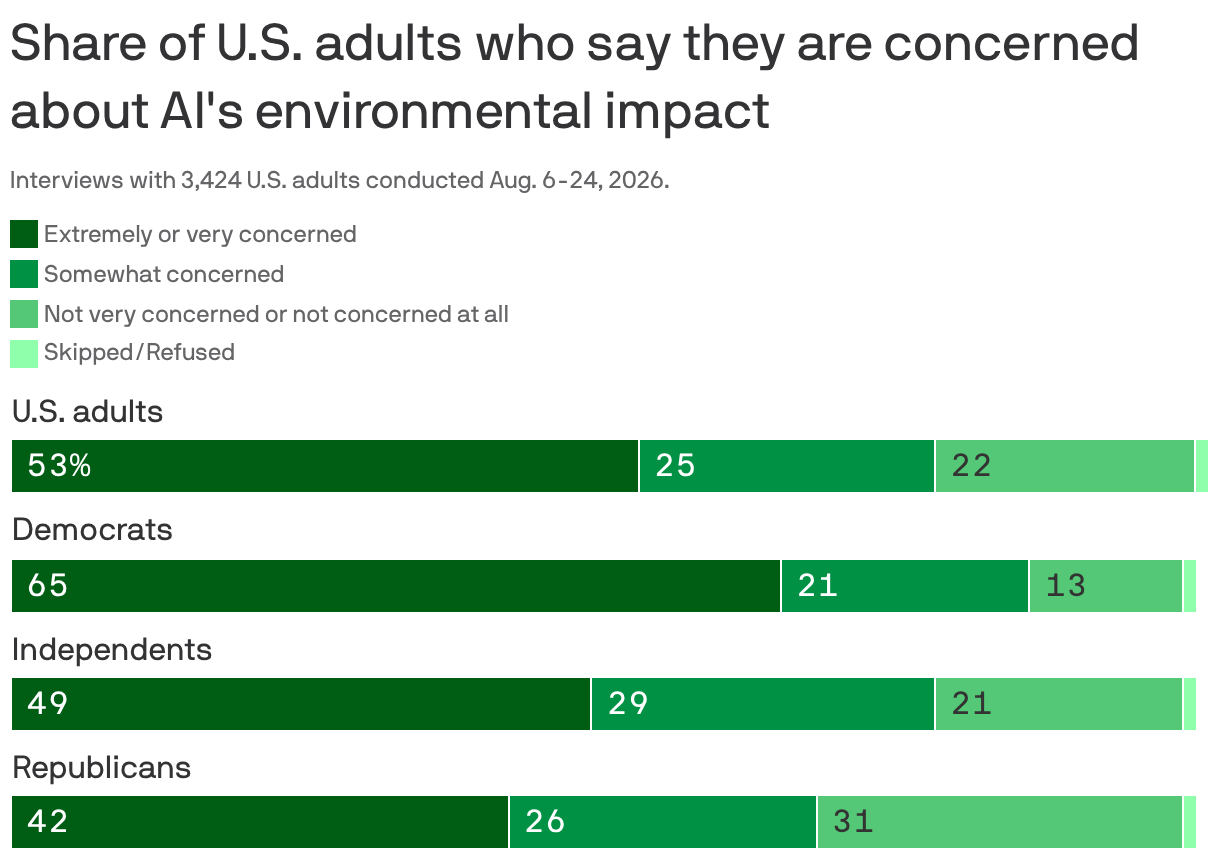
Data: The AP-NORC Center for Public Affairs Research and the Energy Policy Institute at the University of Chicago; Chart: Avery Lotz/Axios
More than half of Americans are extremely or very concerned about the environmental impacts of AI, up more than ten percentage points from last year, per polling results out Wednesday.
Sen. Elizabeth Warren (D-Mass.) is the latest prominent Democrat to back a pause on advanced artificial intelligence, her office told Axios exclusively.
Why it matters: The idea of slowing down AI development — once considered a nonstarter in a fierce race to beat China — is gaining momentum.
Rep. Thomas Massie (R-Ky.) did not clue Republican leaders in on his plans to introduce an impeachment resolution against Defense Secretary Pete Hegseth over the Iran war, Axios' Kate Santaliz reported.
The big picture: Lame-duck Republicans who lost Trump-backed primary challenges are increasingly using their final months in office to buck the administration and GOP leaders.
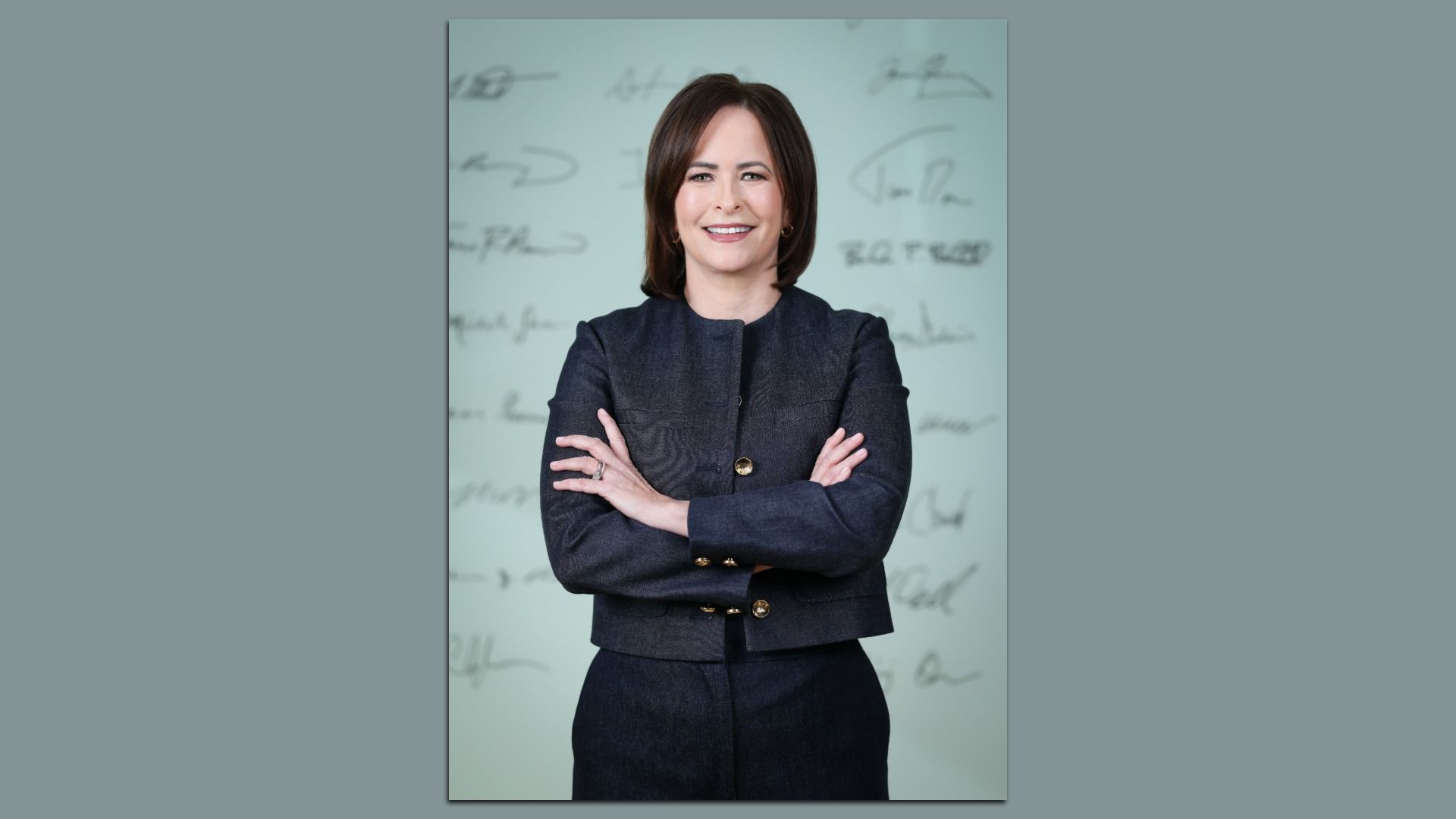
Kristen Silverberg, a widely respected policy expert and former ambassador, was named the new president and CEO of Business Roundtable, the top policy voice of America's leading CEOs.
Silverberg, now BRT's president and chief operating officer, will succeed Josh Bolten, a former White House chief of staff who has led the organization for the past decade, when he steps down on Jan. 31.
Why it matters: Business Roundtable is one of Washington's most influential associations. The 200+ members are CEOs of the biggest U.S.-based companies, most with global reach.
Members of Congress and governors are under increasing pressure to regulate AI, but more than two dozen of them who spoke with Axios said they don't use the technology or have rarely done so.
Why it matters: That striking admission — particularly among older, influential lawmakers — comes amid calls for an AI slowdown and warnings within the industry that it could end humanity if left unchecked.
The nerdy, traditionally apolitical world of federal data is increasingly getting swept up in the Trump administration's push to control every level of government.
Across the federal government, agencies are changing how they collect and publicize information. More and more, politics and ideology are part of the equation.
Why it matters: Reliable, unbiased data informs nearly everything the federal government does — from distributing benefits and enforcing workplace discrimination laws to responding to public health threats.
U.S. household income hit a record in 2025, but the lowest earners barely shared in the gains, new Census data show.
Why it matters: On paper, Americans look richer than ever. But broader measures of financial security show millions still getting squeezed by medical costs, uneven income gains and a thinning public safety net.