Keep a close eye on the ads that inundate your screens as the 2026 midterm elections heat up. You, the taxpayer, paid for some of them.
Why it matters: Each election cycle, incumbent House members use a privilege called "franking" to put millions in taxpayer dollars towards giving their reelection campaigns a thinly veiled boost.
President Trump's 2027 budget proposal is here — and it suggests changes to how the U.S. government operates.
Why it matters: Many of the decisions align with Trump's long-term goals of consolidating the federal government, pushing out the "woke" agenda, and doubling down on AI and new military technology.
Officials embodying decades of experience have exited — or been booted from — the U.S. military under the second Trump administration as the nation's defense apparatus undergoes a massive MAGA makeover.
The big picture: Expertise matters, especially with the U.S. presently locked in a fiery conflict in the Middle East, one where the president has threatened to push the bounds of the generally accepted principles of warfare.
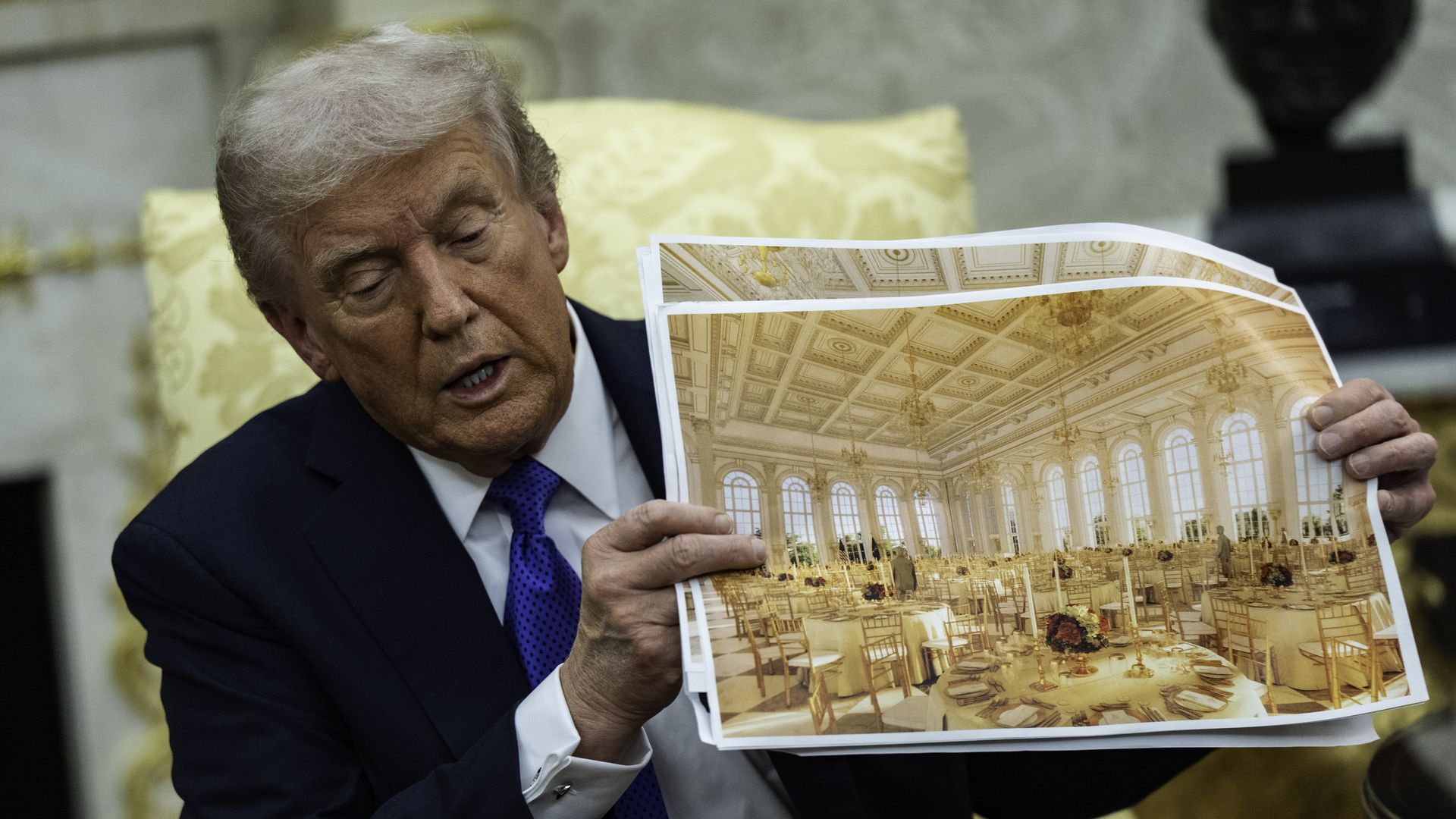
President Trump's $400 million ballroom renovation to the White House remains up in the air — but it's far from his only legacy project in the works.
The big picture: Throughout his second term, Trump has been advocating for makeovers of the White House and promoting his name and likeness — many times in ways that have never been done by a president.
President Trump's 2027 budget proposes a $5 billion cut to the National Institutes of Health, setting up a showdown with Congress and patient advocacy groups over medical research funding.
Why it matters: The amount is a fraction of the nearly $20 billion cut the administration proposed for NIH last year, which Congress rejected. But it shows how the biomedical research institution remains a lightning rod for criticism from the right.
Why it matters: As always, the presidential budget is more of a statement of the White House's goals than a road map that is likely to be enacted by Congress. This one shows a president who is eager to spend big on the military while bringing austerity to the rest of the federal budget.
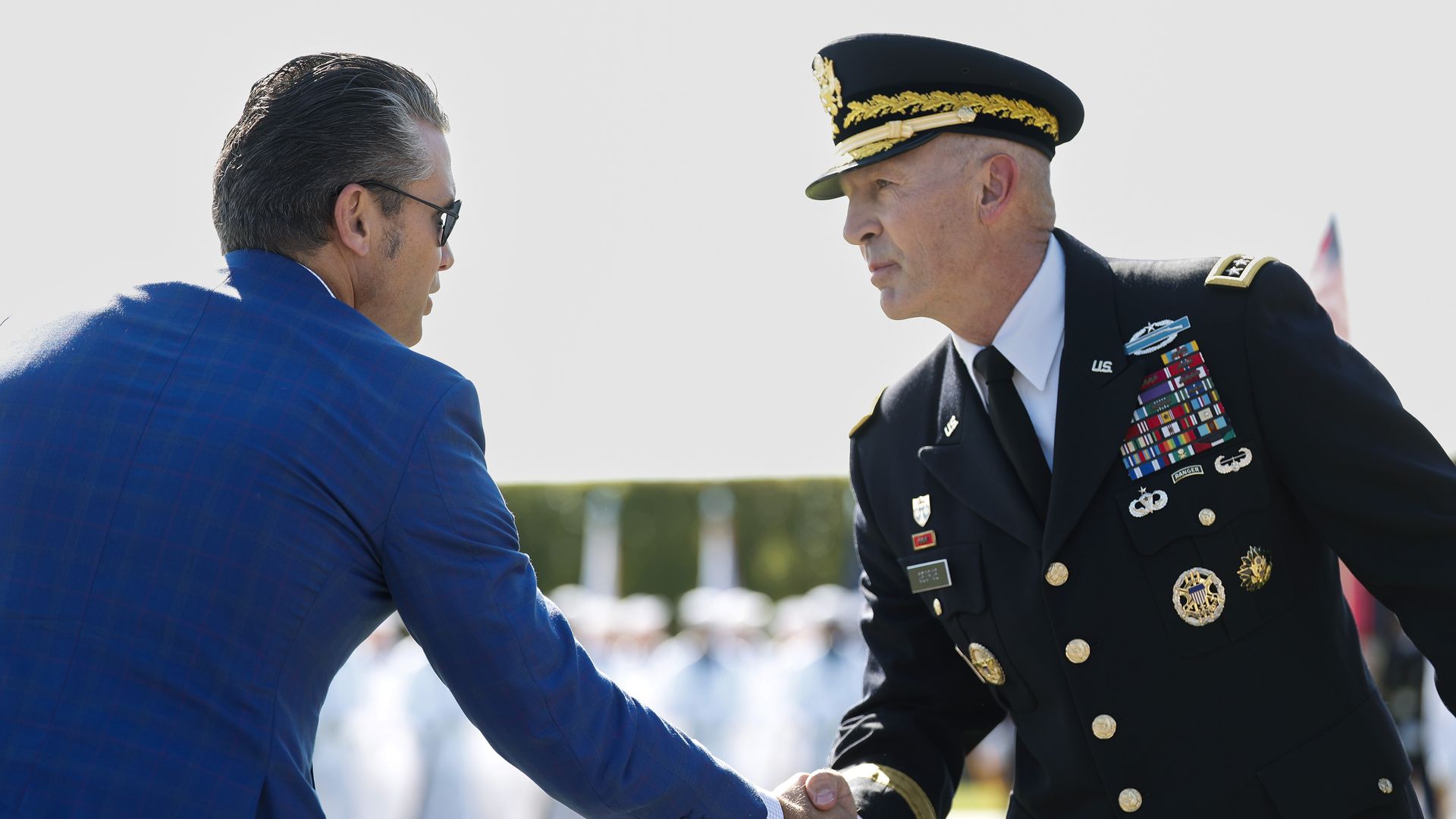
The ousters of Army Chief of Staff Gen. Randy George and Army Gen. David Hodne blindsided military leaders and have generated concern among defense officials about the implications for the war in Iran and the longer-term adoption of new tech and tactics.
Why it matters: George and Hodne join a growing list of generals and flag officers booted by Defense Secretary Pete Hegseth. These abrupt exits have reshaped the Joint Chiefs of Staff, intel-collecting agencies and combatant commands.
The U.S. Commodity Futures Trading Commission on Thursday sued three states — Arizona, Connecticut and Illinois — for what what it calls "unconstitutional and invalid" applications of state anti-gambling laws to prediction markets.
Why it matters: These cases could determine who really regulates companies like Kalshi and Polymarket, which have raised billions of dollars from venture capitalists
The labor market snapped back with 178,000 jobs added in March, while the unemployment rate ticked down to 4.3%, the government said Friday.
Why it matters: Hiring boomed after shedding jobs in February, suggesting a steadying labor market as the Iran war injected fresh uncertainty into the economic outlook.
To see where tech policy is going in the U.S., look west: California is escalating its push to regulate AI across multiple fronts.
Why it matters: California's multipronged approach makes it likely that AI companies in the U.S. will treat the state's rules as a de facto national standard, even as the White House moves to rein in state regulation.
Public resistance to data centers isn't driven as much by electricity prices as conventional wisdom suggests — it's more about how the giant projects might alter theircommunities, a new Harvard/MIT poll shows.
Why it matters: The poll could shape how developers engage with communities as they try to build more data centers to meet AI's massive electricity demands, said Harvard researcher Stephen Ansolabehere, who oversaw the poll.
The big picture: The alliance was built on the premise that an attack on one member is an attack on all. President Trump has made that conditional: if you won't help me in my war, I might not show up for yours.
Defense Secretary Pete Hegseth has asked Army Chief of Staff Gen. Randy George and two other military leaders to leave their posts, two Defense officials confirmed to Axios.
Why it matters: George is the Army's most senior general and is being removed during the Iran war. Axios could not immediately confirm the reasons for his ouster, which was first reported by CBS.