U.S. bombs Iran's civilian infrastructure for first time after "Stone Ages" threat

Add Axios as your preferred source to
see more of our stories on Google.
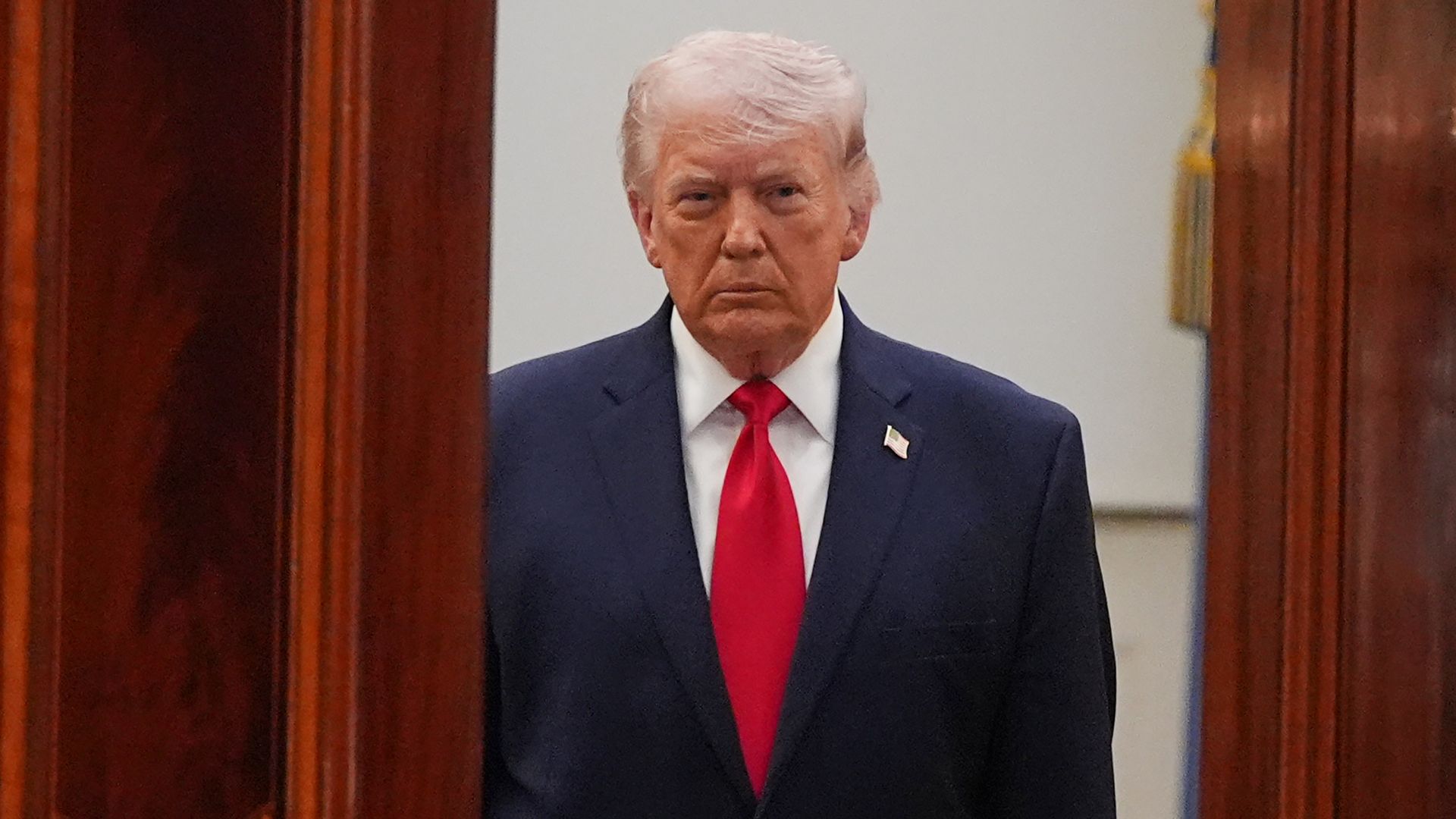
Trump arrives for his speech on Iran. Photo: Alex Brandon-Pool/Getty Images
The U.S. military on Thursday attacked major civilian infrastructure in Iran for the first time, hours after President Trump threatened in a prime-time address to bomb the country "back to the Stone Ages."
Why it matters: The attack on the B-1 bridge near Tehran signals a widening of the U.S. military's targets and could be a first step toward attacks on energy, water and transportation infrastructure.
- Trump has said the U.S. could conduct such attacks, which would have devastating effects for Iranian civilians, to punish the regime if it won't cut a deal.
- U.S. defense officials claim the strike on the bridge was conducted for military purposes to prevent the Iranian armed forces from moving weapons across the bridge. Iran's state media said eight people were killed and 95 wounded.
- A U.S. defense official told Axios more bridges are likely to be targeted.
Trump celebrated the strike on Truth Social: "The biggest bridge in Iran comes tumbling down, never to be used again — Much more to follow!"
- "IT IS TIME FOR IRAN TO MAKE A DEAL BEFORE IT IS TOO LATE, AND THERE IS NOTHING LEFT OF WHAT STILL COULD BECOME A GREAT COUNTRY," he added.
Zoom in: Thursday morning's strike was on a bridge that connects Tehran and the suburb of Karaj. It partially collapsed.
- While U.S. officials said the bridge was opened in January, some Iranian press reports said it was still not operational.
- The night prior, Trump had declared that the U.S. would hit Iran "extremely hard" in what he suggested would be the final two to three weeks of the operation.
- "We're going to bring them back to the Stone Ages, where they belong," he said.
What they're saying: The U.S. defense official told Axios the bridge was attacked because it was used by the Iranian armed forces to try to secretly move missiles and missile parts from Tehran to launch sites in Western Iran.
- The official claimed the missile parts were sent in large boxes and crates across the bridge and assembled at the launch sites.
- According to the official, the bridge was also used to send logistical support to Iranian military forces in Tehran.
- A second defense official described it as a "planned military supply route for sustaining Iran's ballistic missile and attack drone force" but did not say it was currently being used for those purposes.
The other side: The Iranian mission to the UN wrote on X that the attack on the bridge was part of a series of U.S. and Israeli strikes against civilian targets in Iran.
- "They openly threaten to bomb our power infrastructure and return Iran to the Stone Age. It seems these realities do not reach Australian and EU officials, or they are unwilling to condemn them. Instead, they criticize Iran's self-defense. The world and history will judge you," the post read.
- Iran's foreign minister said striking civilian structures, "including unfinished bridges," would not convince Iranians to surrender, and that the country would rebuild after the war.
