Trump: U.S. will bomb Iran "back to stone ages" over next 2-3 weeks


Add Axios as your preferred source to
see more of our stories on Google.
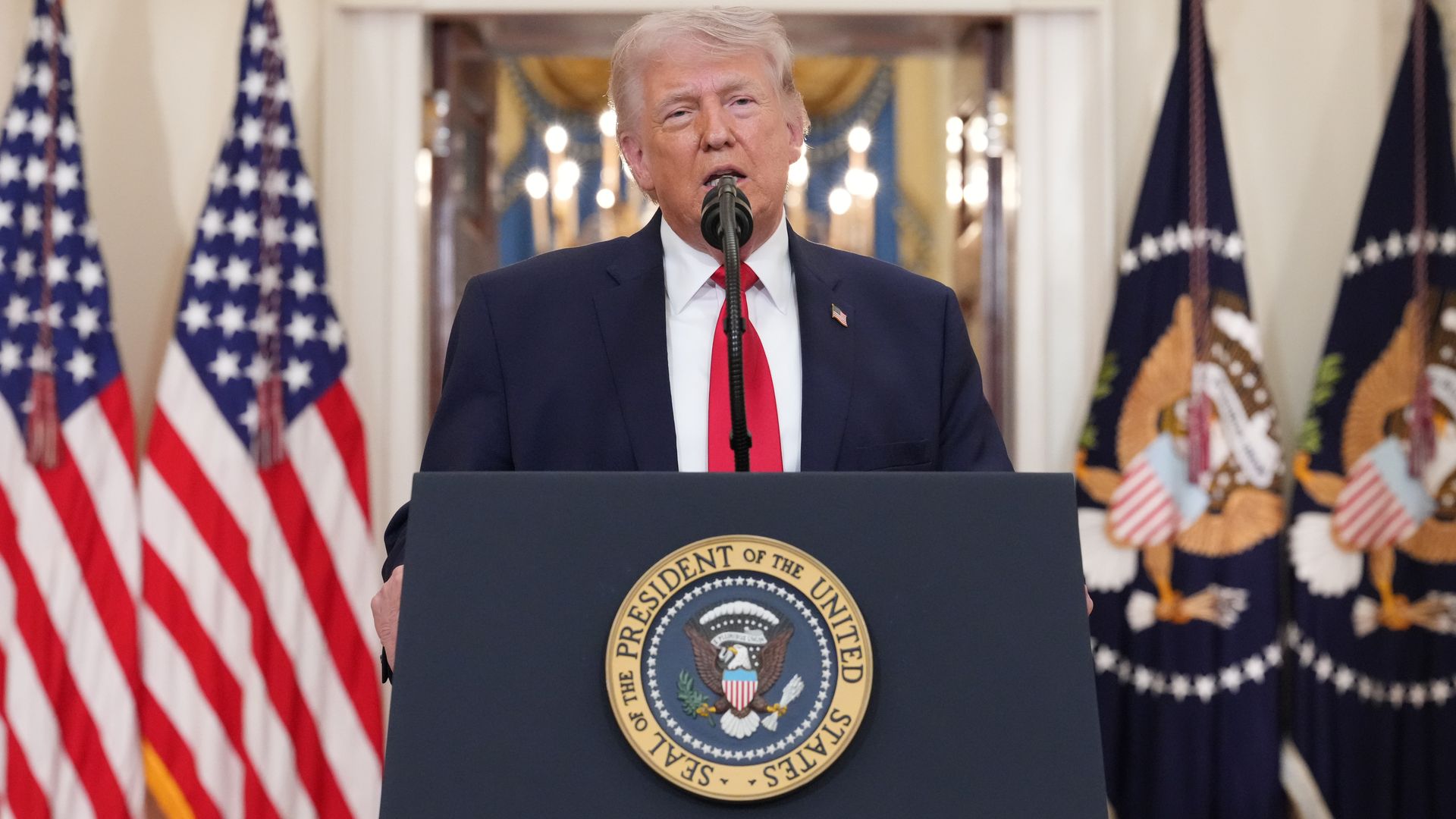
Trump during his speech. Photo: Alex Brandon-Pool/Getty Images
President Trump said in a prime time address that the U.S. was close to ending its war in Iran but would spend the next two to three weeks bombing the country "back to the stone ages."
The big picture: If a deal to end the war cannot be reached, he said, the U.S. would bomb all of Iran's power plants and perhaps its oil fields. That would have devastating consequences for Tehran's civilian population and the future of the country, while likely inciting retaliation on America's allies in the region.
Between the lines: Trump's threat to wreck Iran's power infrastructure betrayed his frustration, expressed to others privately, that Iran's leaders don't believe they're losing the war and therefore don't feel motivated to strike a deal favorable to the president's point of view.
- "The Iranian military leadership has lost so much but they're not feeling the pain and there's a discussion about testing their pain tolerance," said one confidant who spoke with Trump last week about the war.
- The massive bombing campaign to come was an indication of the Trump administration's plan to strike a "final blow" to close out the bombing campaign that began Feb. 28.
Of note: Trump appeared to back away from plans to dispatch special operations forces to seize highly enriched uranium at Iran's nuclear sites that the U.S. had bombed last year and also attacked in this war.
- "The nuclear sites that we obliterated with the B2 bombers have been hit so hard that it would take months to get near the nuclear dust and we have it under intense satellite surveillance and control," Trump said.
- "If we see them make a move — even a move for it — we'll hit them with missiles very hard again."
- Called "mowing the grass," that pledge to return for future bombing raids has increasingly been discussed by Trump's advisers.
Behind the scenes: The U.S. has told Tehran, through mediators, that it is interested in a ceasefire in exchange for the reopening of the Strait of Hormuz.
- But the speech publicly laid out a darker scenario for Iran and the global economy: the U.S. could leave the key strait closed and bomb Iran's civilian infrastructure before concluding the war.
- "If there is no deal, we are going to hit each and every one of their electric generating plants very hard and probably simultaneously," he said, adding the U.S. "could hit their oil ... And there's not a thing they could do about it."
- If that happens, a war Trump began with the hope of improving the lives of Iran's people could end with them being plunged into darkness and economic ruin by American bombs.
State of play: Trump did not announce any new policy to end the war, focusing his prime time address on trying to convince a skeptical public that it was necessary and has been successful.
- Trump's claims that all U.S. military objectives were near completion initially sent oil prices lower.
- But oil prices rose and stock futures fell after it was over, possibly due to his suggestion that the U.S. will end the war without resolving the closure of the strait. This could prolong the global energy crisis indefinitely.
- Trump variously suggested at one point that U.S. allies should "go into the straight and take it," before claiming the strait would "just open up naturally" once the war ends.
Zoom in: Trump argued that previous presidents should have handled the threat from Iran, but that he was the one who finally took it on.
- He made the exaggerated claim that Israel and the entire Middle East would have been destroyed by now if he hadn't withdrawn from the 2015 Iran nuclear deal.
- Trump claimed the Iranian regime had begun to try and rebuild its nuclear program after the 12-day war last June, necessitating U.S. action.
Context: Trump's claim that he launched the war in response to an "imminent threat" has been widely questioned because Iran's nuclear facilities remain heavily damaged and the country's formidable missile stockpile did not include any that could reach the U.S. homeland.
- He argued that Iran was building up its military capacity as a "shield" for an eventual nuclear weapon.
What's next: Trump said the war was nearing its end but the U.S. would "hit them extremely hard" over the next two to three weeks, and conduct massive strikes on civilian infrastructure if no deal is reached.
Go deeper: Trump's mixed messages on Iran perplex his own team
Editor's note: This article has been updated with additional details throughout.
