Trump's all guns, no butter budget proposal

Add Axios as your preferred source to
see more of our stories on Google.
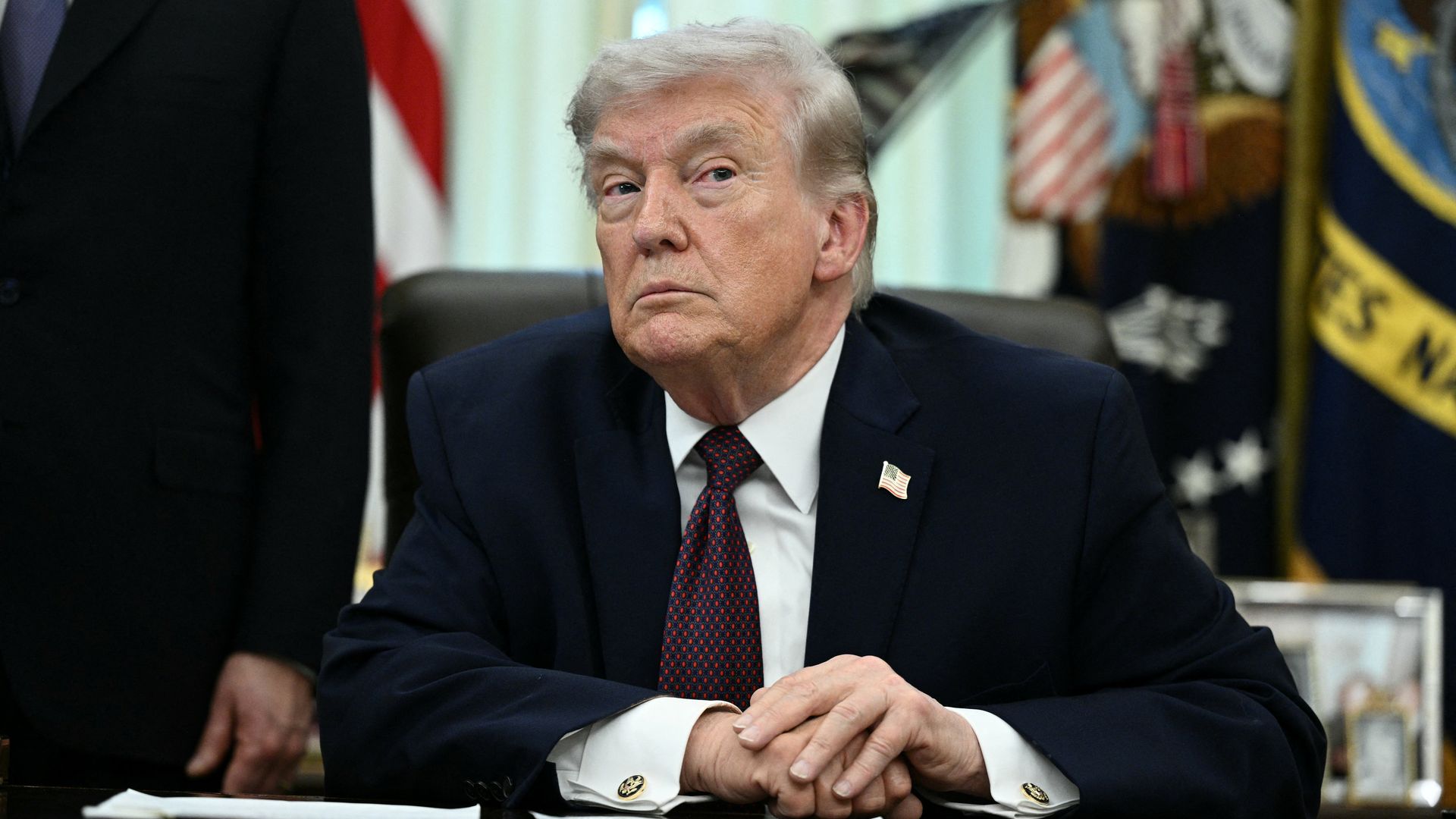
Photo: Brendan Smialowski/AFP via Getty Images
A sharp rise in defense spending. Steep cuts elsewhere. All against a backdrop of rapid growth.
- That is the Trump administration's formal 2027 budget proposal, in a nutshell.
Why it matters: As always, the presidential budget is more of a statement of the White House's goals than a road map that is likely to be enacted by Congress. This one shows a president who is eager to spend big on the military while bringing austerity to the rest of the federal budget.
- It is premised on a period of much more robust growth than is envisioned by other forecasters — and a steep decline in interest rates from current levels.
- The proposal does not contain projections of how the administration's fiscal agenda would affect deficits and debt, normally a mainstay of these documents.
By the numbers: The White House proposes a $1.5 trillion military budget for the 2027 fiscal year, up 42% from 2026.
- It includes a 10% cut in non-defense discretionary spending, or $73 billion in spending cuts.
- The departments with the steepest proposed cuts are the Small Business Administration (down 67.2% from 2026 funding levels), the National Science Foundation (down 54.7%) and the Environmental Protection Agency (down 52.4%).
- "Savings are achieved by reducing or eliminating woke, weaponized, and wasteful programs, and by returning State and local responsibilities to their respective governments," a White House fact sheet says.
The intrigue: In the administration's economic assumptions, GDP growth clocks 3.5% this year and 3.1% from 2027 to 2029.
- That would be a remarkable acceleration from 2025, which was around 2%.
- Forecasts from the Congressional Budget Office and the Federal Reserve put GDP growth below 2% in the coming years, reflecting demographic shifts that result in slow growth in the labor force.
- The White House's higher growth projections imply much faster productivity growth than has been seen over the last couple of decades, perhaps from AI advances.
Of note: The projections have the 10-year U.S. Treasury yield falling to 3.5% in 2027 and even further in ensuing years.
- The current yield is 4.35%, and CBO forecasts have rates staying near that level, at 4.3% in the years ahead.
