Sen. Tim Kaine (D-Va.) said he and his colleagues want to see what comes out of their classified briefing Tuesday before scheduling a vote on his war powers resolution, which could come as soon as Wednesday.
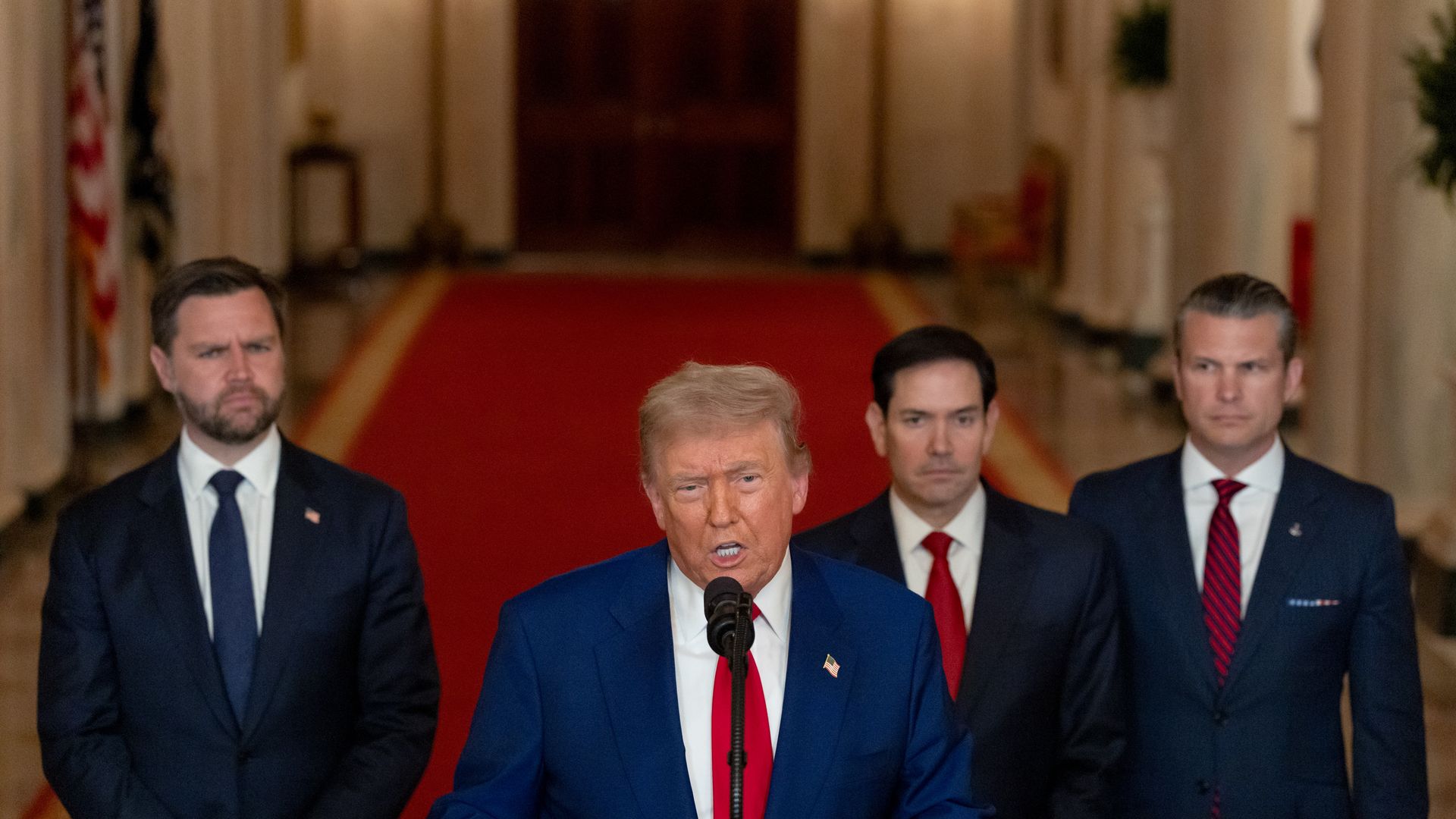
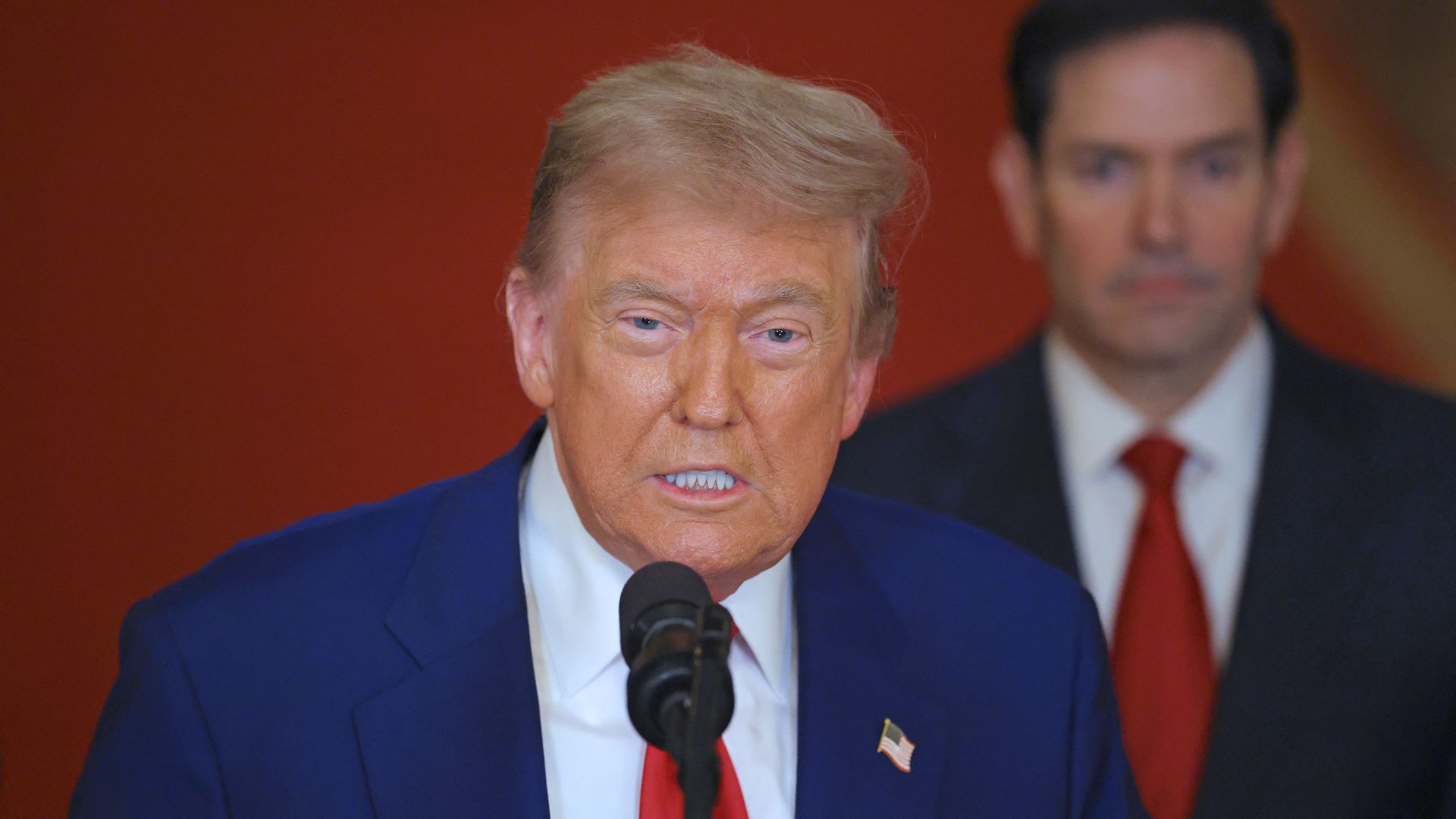
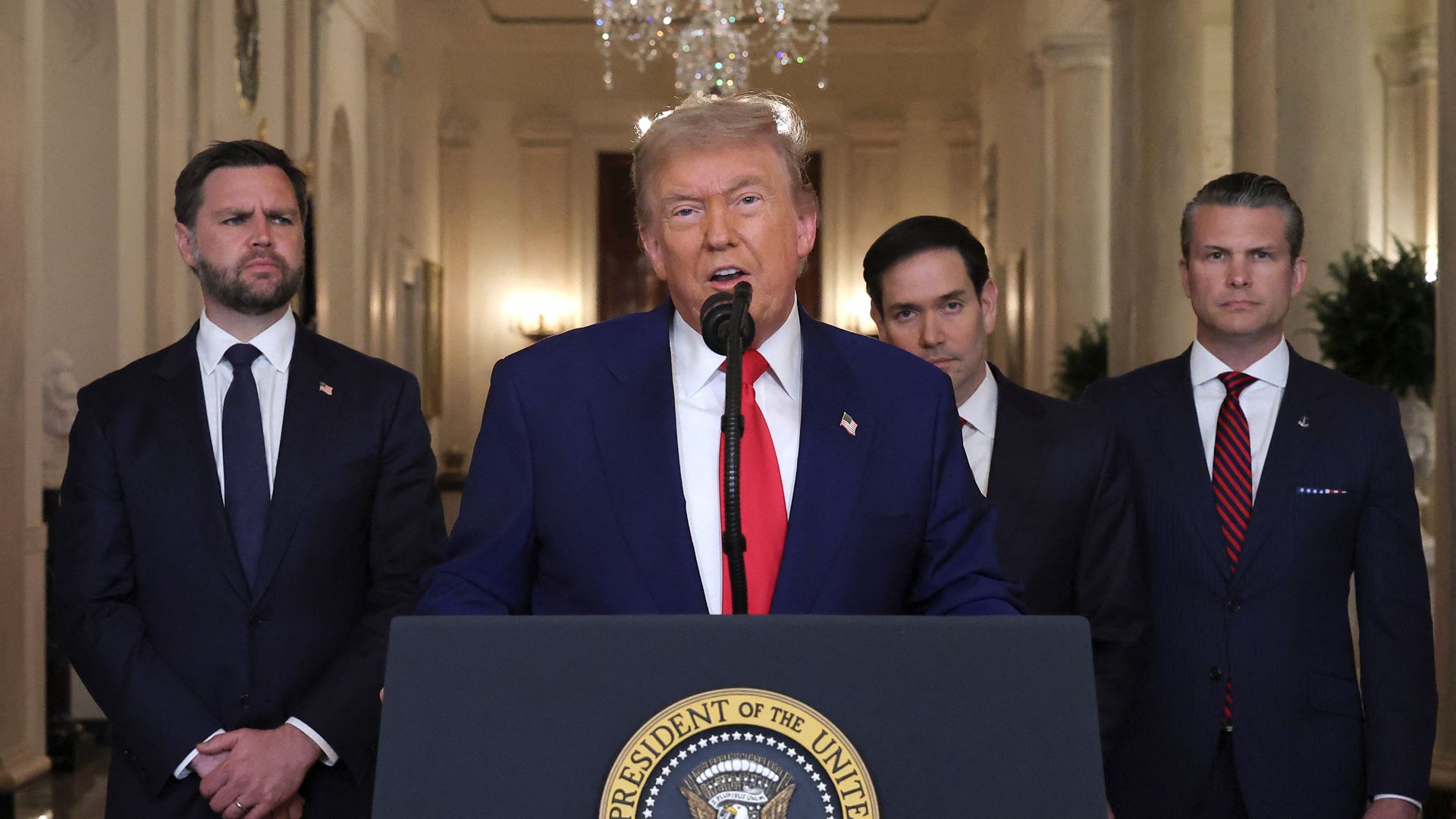
President Trump informed the Senate on Monday that he ordered the military strikes against Iran's nuclear facilities under his constitutional authority and insisted that his actions were consistent with international law.
Why it matters: Trump is asserting his inherent presidential power. He isn't citing any existing authorization of the use of military force previously approved by Congress.
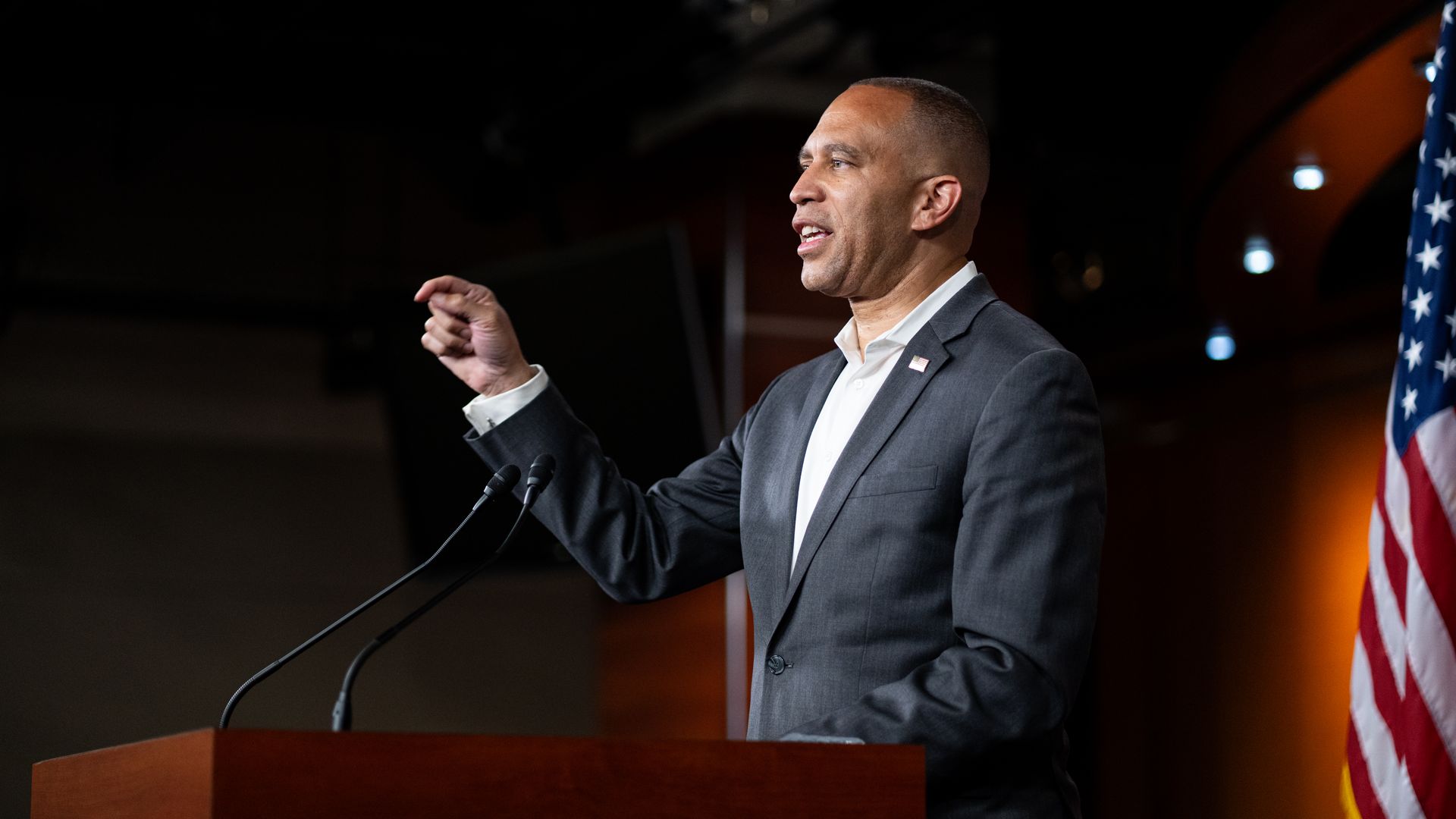
House Minority Leader Hakeem Jeffries (D-N.Y.) on Monday flashed some fury with the Trump administration for sidelining Congress on its strikes on Iranian nuclear facilities.
Why it matters: Jeffries notably did not weigh in on a measure to limit Trump's ability to carry out such attacks unilaterally and signaled that evidence the administration presents to Congress will be key.
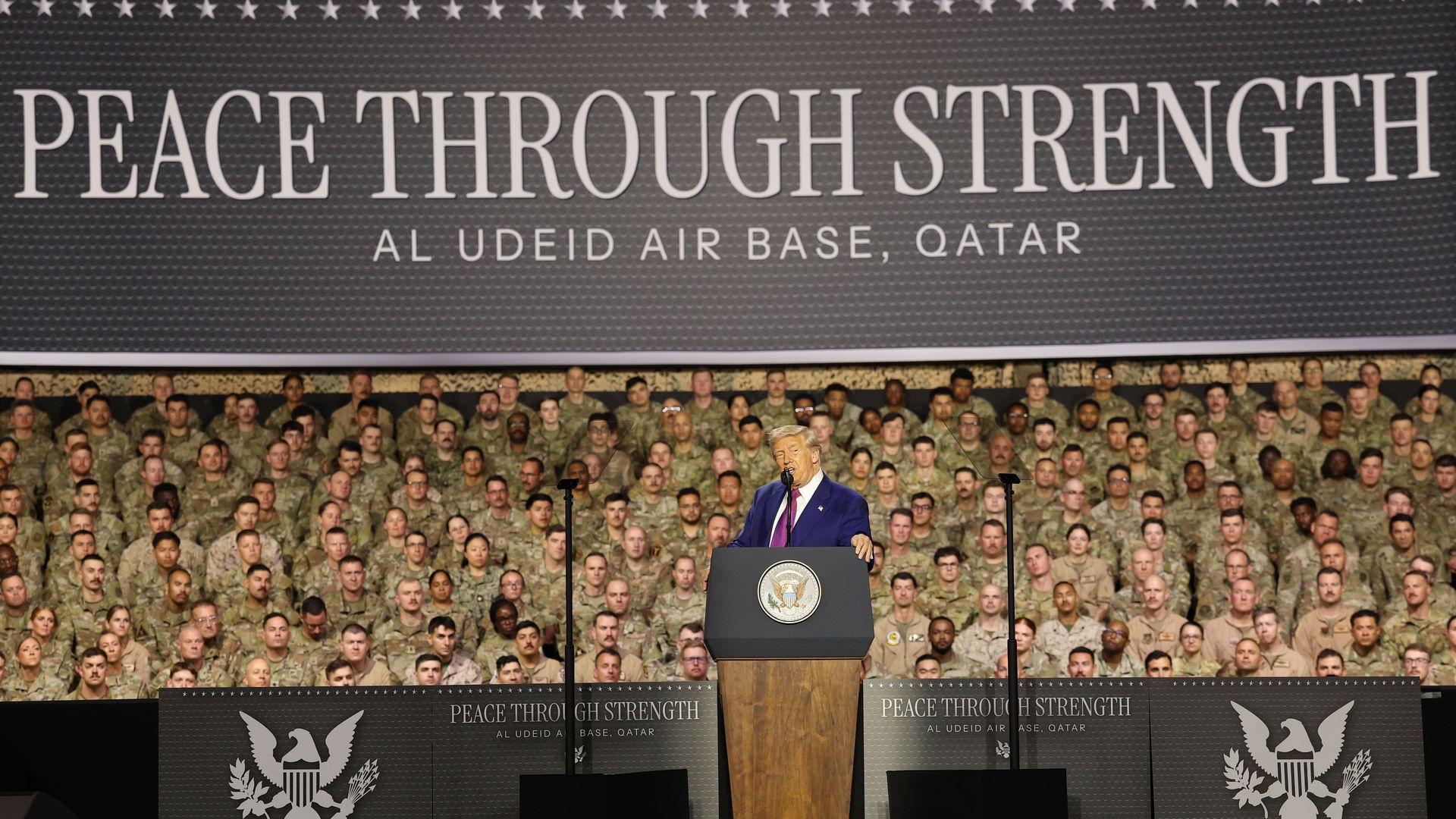
President Trump on Monday thanked Iran for giving "early notice" on its retaliatory missile attack, and called for ending the war between Israel and Iran.
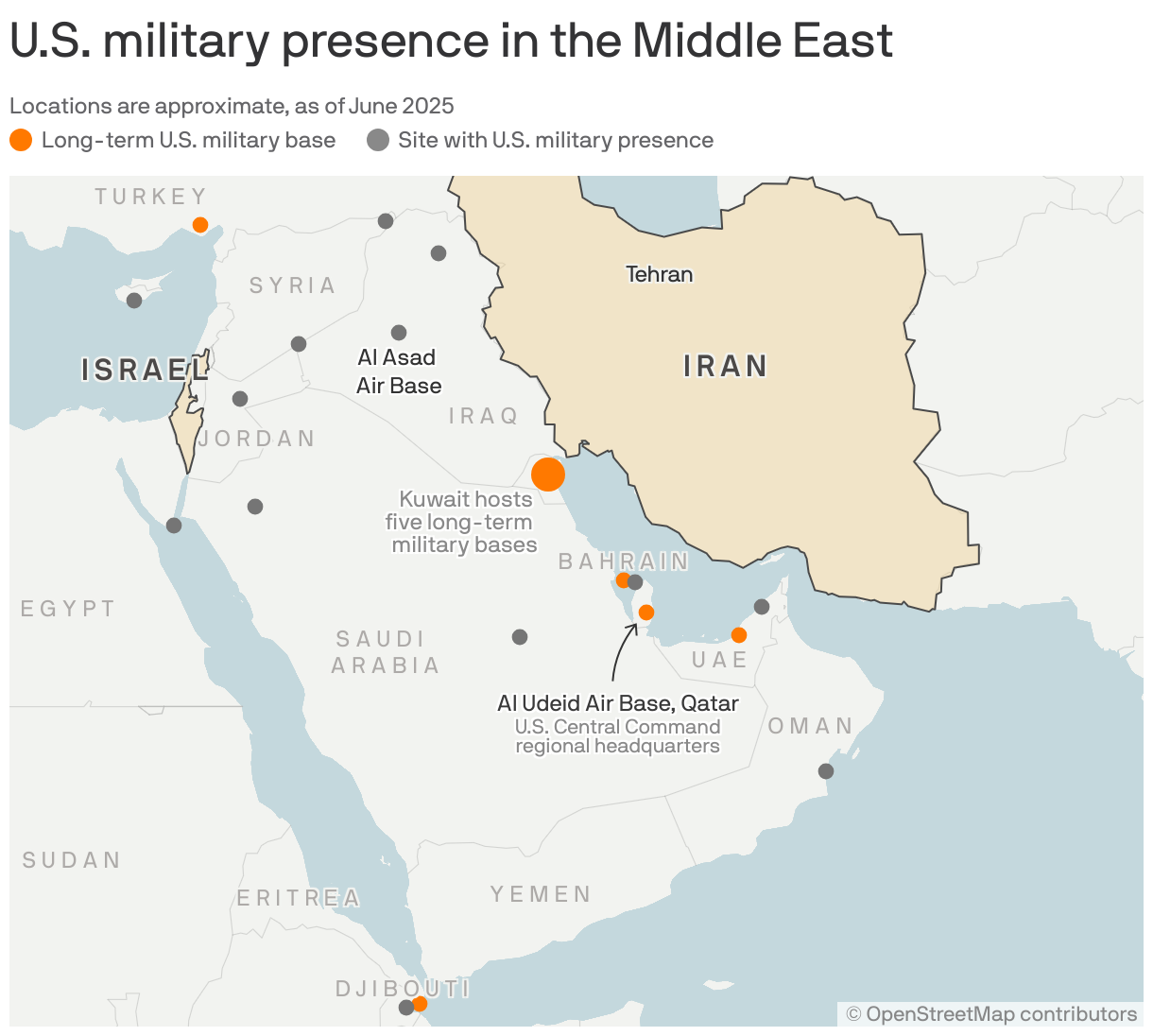
Data: Congressional Research service, CFR; Map: Axios Visuals
Iran launched multiple missiles against an American military base in Qatar on Monday in retaliation for the U.S. strike on its nuclear facilities this weekend.
No casualties were reported, and both Qatar and the Trump administration were made aware of the Iranian attack ahead of the time, sources tell Axios.
Why it matters: It's unclear if the attack on Al Udeid Air Base marked the full extent of Iran's retaliation. Three hours after the attack, President Trump issued a statement thanking Iran for giving "early notice" for what he called a "very weak" missile attack.
The Trump administration's decision to bomb Iranian nuclear facilities marked a dramatic new chapter in a decades-long tale of boiling tensions.
The big picture: It was the most direct and consequential U.S. military action against Iran since the Islamic Republic's founding more than four decades ago.
The conflict in Iran escalated Monday, after the country launched multiple missiles against an American military base in Qatar in retaliation for the U.S. strike on its nuclear facilities over the weekend.
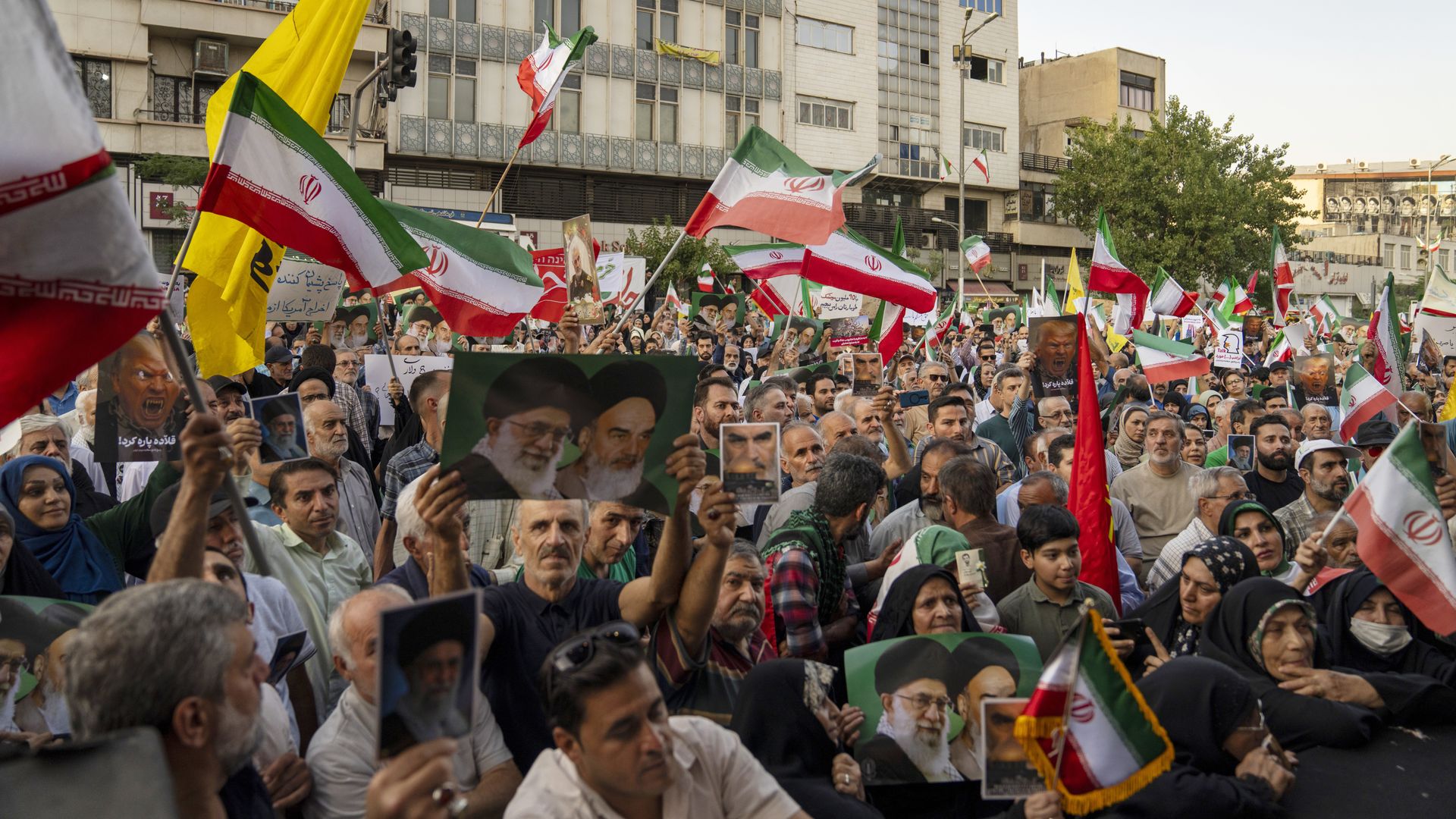
The big picture: Althoughits government is facing immense pressure amid Israel's war against Iran — and despite decades of mass protests in Iran — there is currently no clear and organized opposition movement rising in the country.
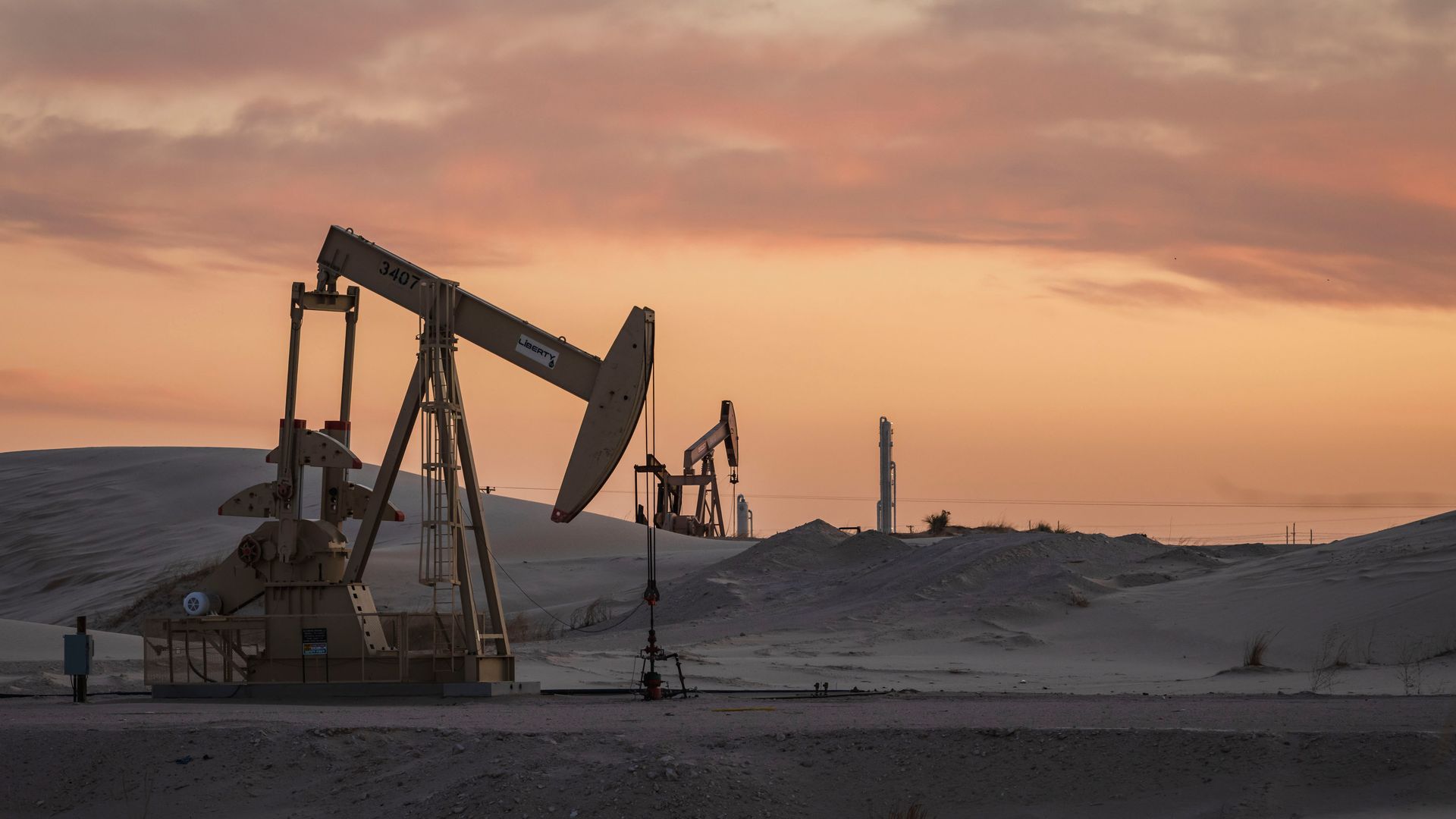
The modest oil-market response in the wake of U.S. attacks against Iranian nuclear sites over the weekend is striking to at least one analyst.
Why it matters: "It's remarkable to have such a limited risk premium in the face of this uncertainty and potential for escalation," oil scholar Ben Cahill of the University of Texas-Austin told Axios via email.
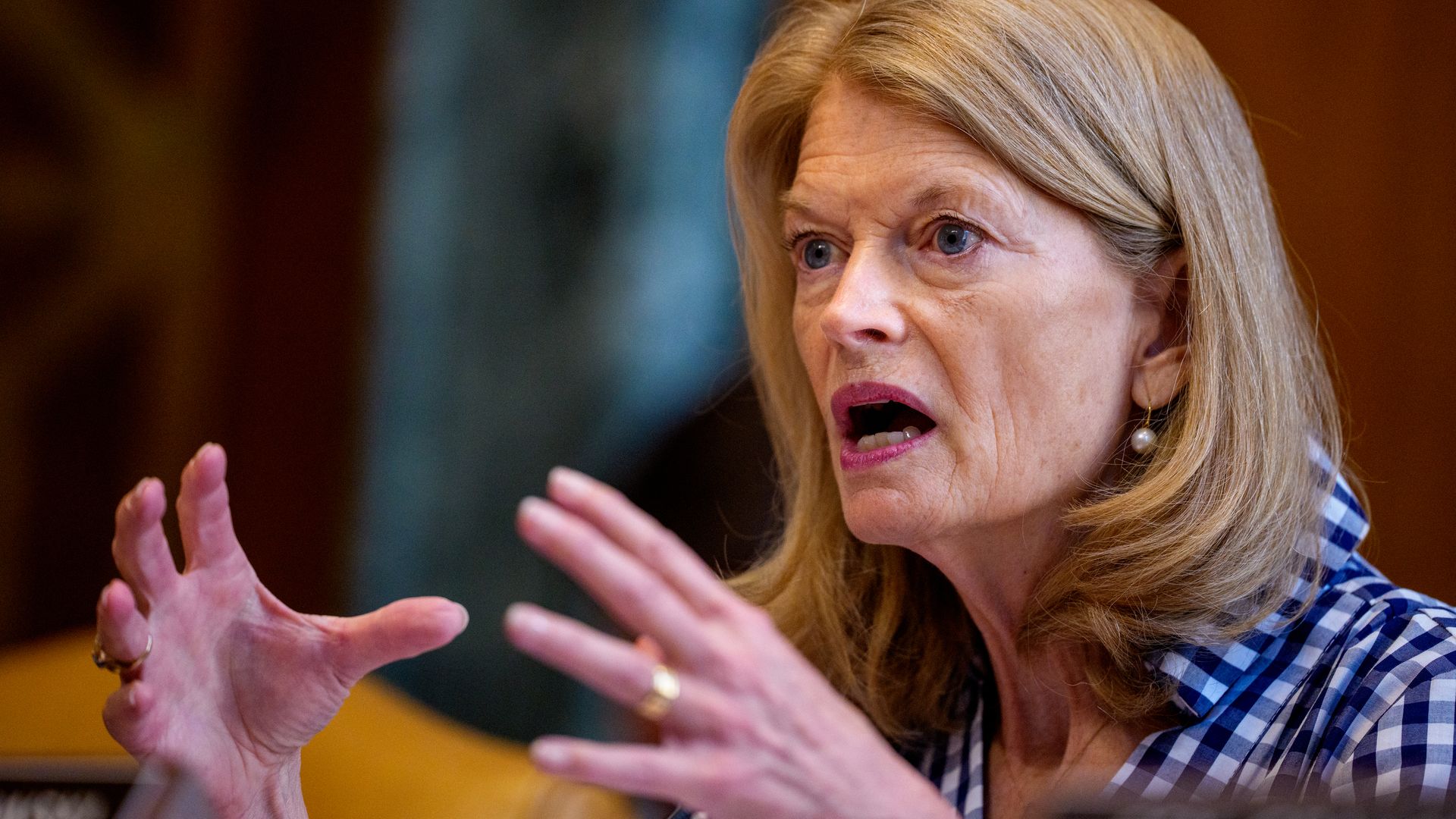
Sen. Lisa Murkowski thinks the Senate is rushing on President Trump's budget bill, and is asking why her colleagues are "afraid" of conference negotiations.
Why it matters: The Alaska Republican is publishing a memoir this week, intended to tell of her historic write-in ballot win in 2010, but going on through her vote to convict Trump of impeachment. She finds herself once again at the center — of attention and political parties.
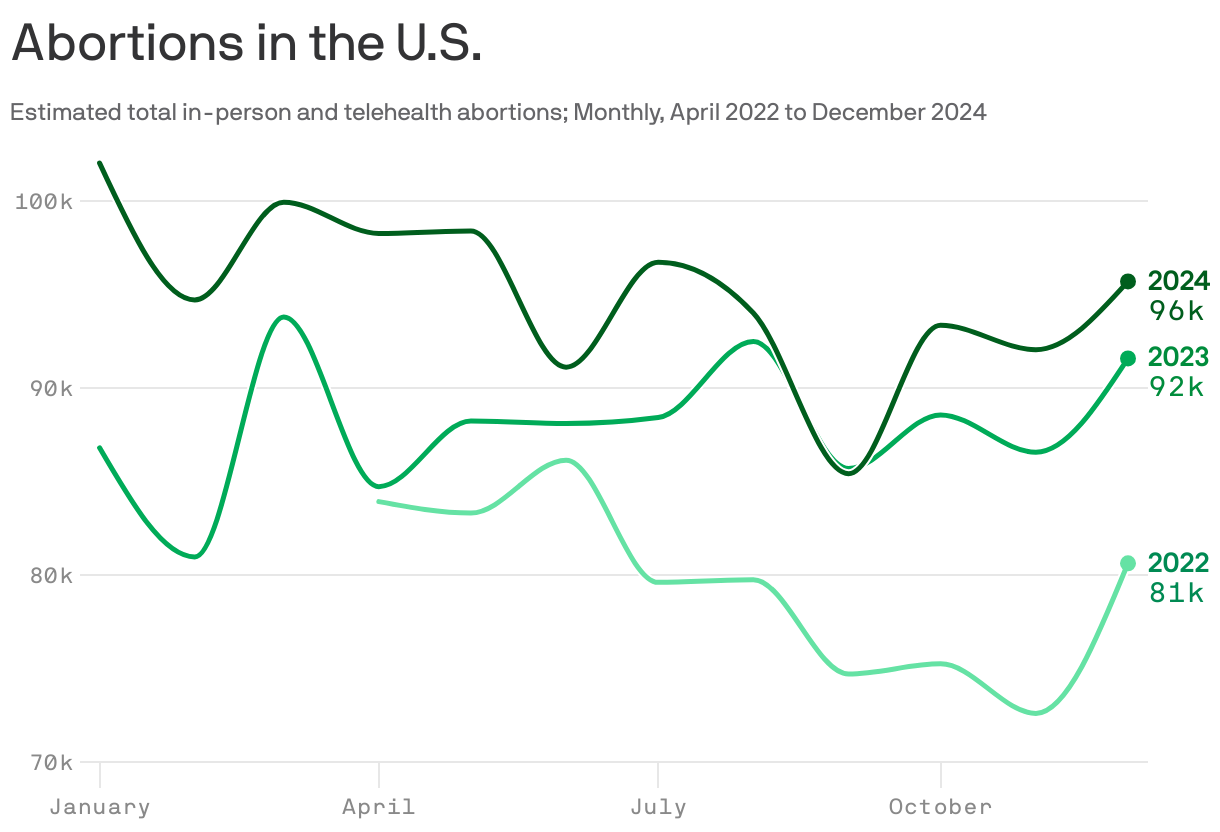
Data: Society of Family Planning; Chart: Axios Visuals
The number of abortions in the U.S. continued to rise in 2024 — totaling 1.14 million — despite years of bans and restrictions on reproductive care, according to a national report released on Monday.
The big picture: Abortions delivered via telehealth have jumped significantly since Roe v. Wade was overturned, with clinicians protected by shield laws.
Travel disruptions, cyber attacks, demonstrations and heightened security presence are likely following attacks on Iran, U.S. officials have warned.
The big picture: The weekend airstrikes on Iran's nuclear facilities by the U.S. — dubbed Operation Midnight Hammer — marked a historic escalation in the Middle East that Tehran has framed as a betrayal of diplomacy.
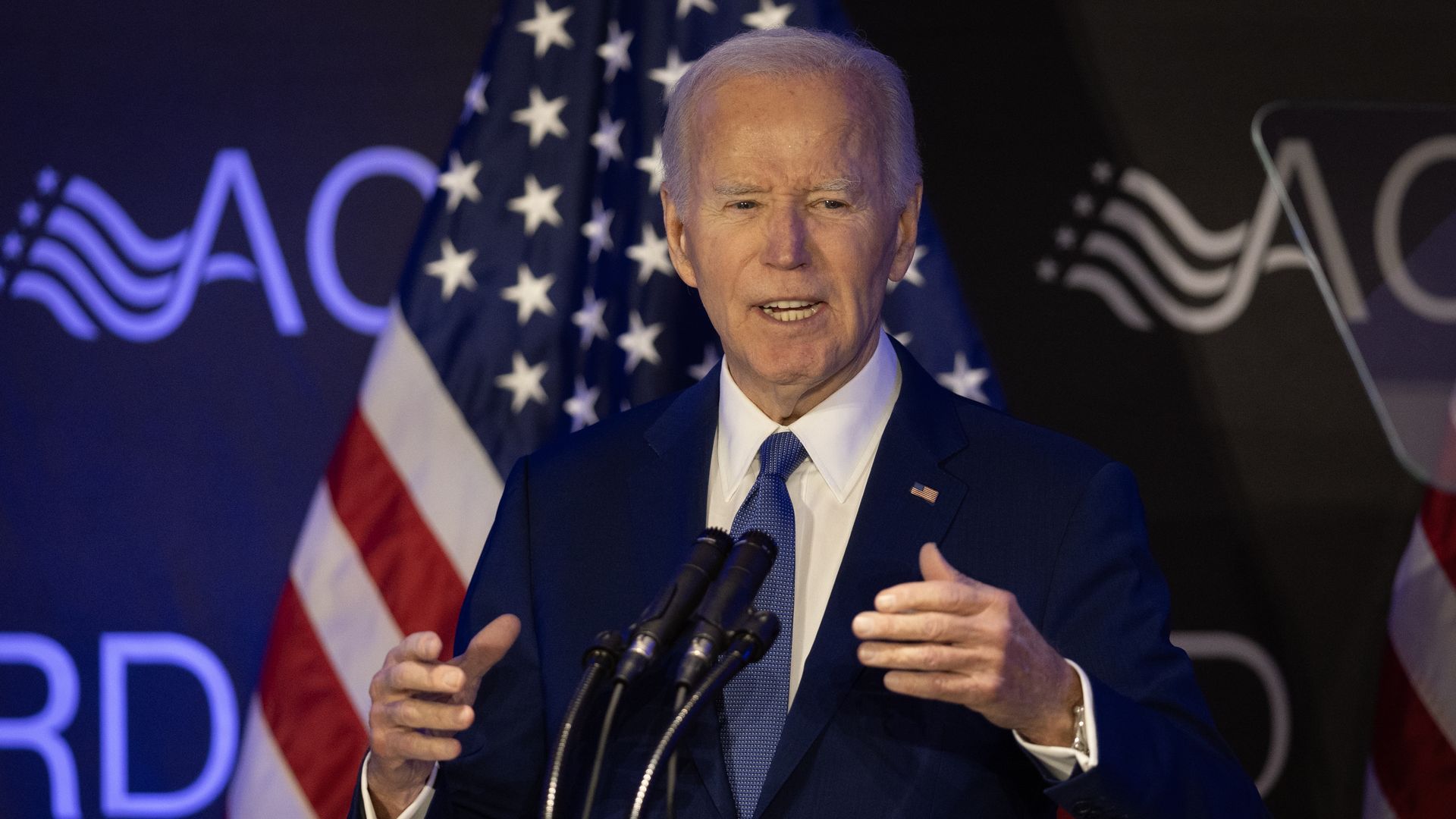
Former President Biden's onetime personal physician Kevin O'Connor is set to be deposed by the House Oversight Committee next month, sources confirmed to Axios.
Why it matters: The interview is part of a wide-ranging Republican investigation into the former president's health spurred in part by revelations from Alex Thompson and Jake Tapper's new book, "Original Sin."
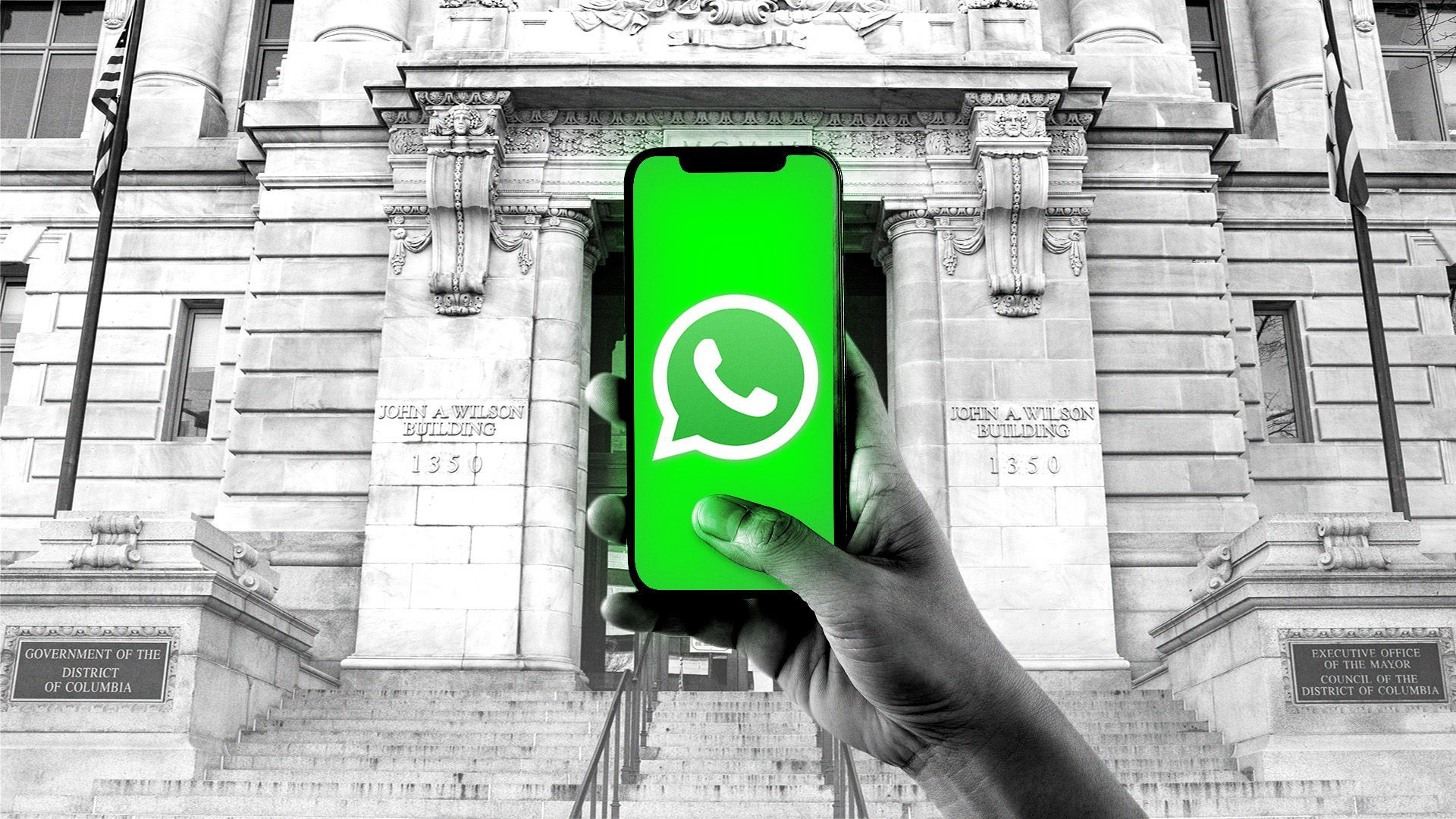
The U.S. House's chief administrative officer informed congressional staffers Monday that messaging app WhatsApp is banned on their government devices, Axios has learned.
Why it matters: The ban, which centers on the vulnerability of staffers' data, comes as Congress is also taking steps to limit the use of AI programs it deems similarly risky.
A federal judge on Sunday said Kilmar Abrego Garcia should be released ahead of trial — though that does not mean he will go free.
The big picture: Abrego Garcia, whose erroneous deportation to El Salvador became a major standoff amid the administration's aggressive immigration crackdown, was recently returned to the U.S., where he now faces smuggling charges.
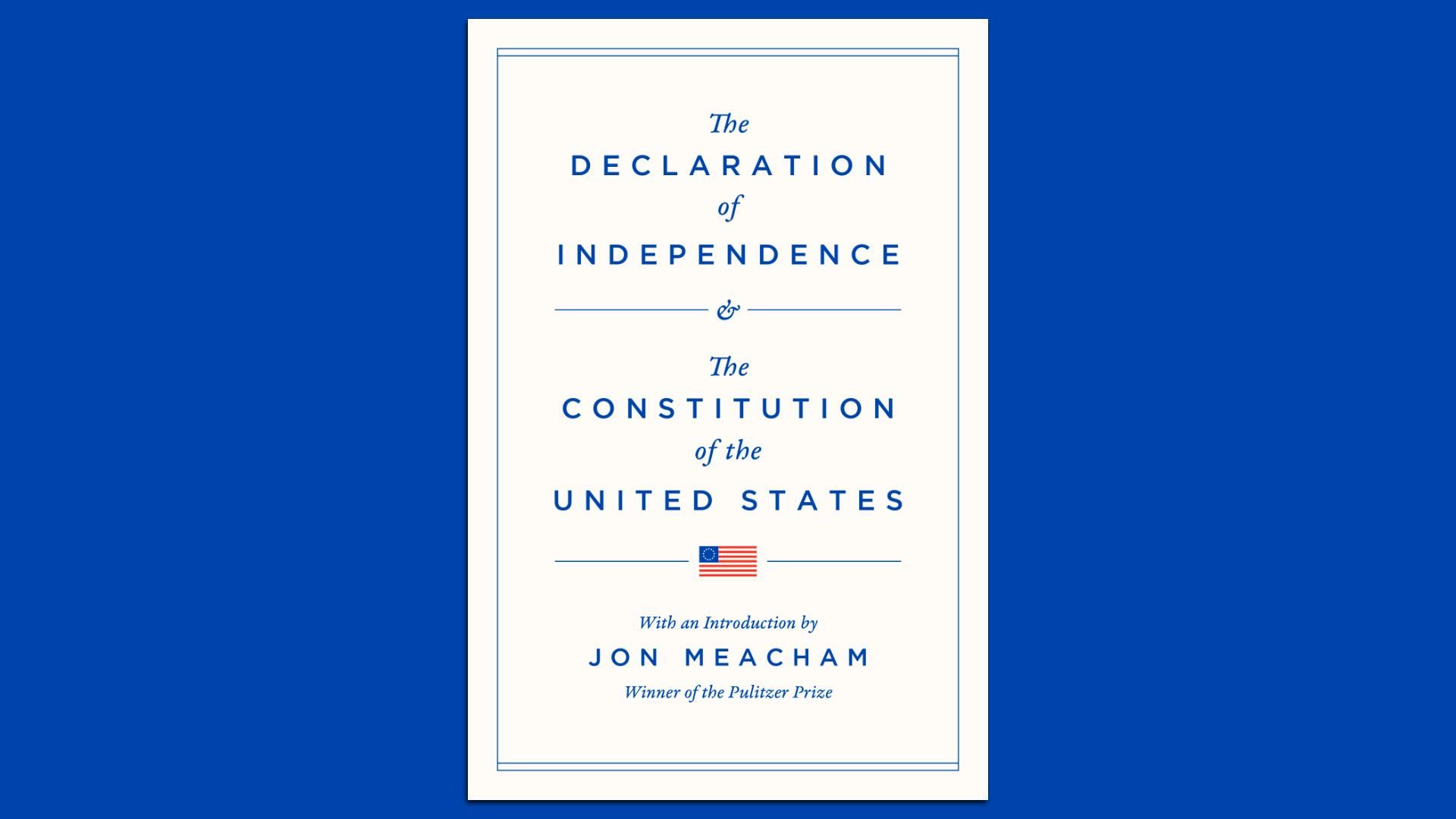
Jon Meacham — the Pulitzer Prize-winning presidential historian — will be out Tuesday with an introduction for a new Random House volume of the Declaration of Independence and the Constitution.
Why it matters: The intro draws on and explores Abraham Lincoln's private notes and letters on the eve of his presidency — and the outbreak of the Civil War.
The CDC center that provides a window into how Americans are accidentally killed could see much of its work zeroed out under the Trump administration 2026 budget after it was hit hard by staff cuts this spring.
Why it matters: Unintentional injuries are the leading cause of death for Americans younger than 45, and the data the National Center for Injury Prevention and Control churns on fatal car accidents, drug overdose deaths, firearm injuries and even dog bites help inform public health strategies.