Post-Dobbs abortions continue to increase: Report

Add Axios as your preferred source to
see more of our stories on Google.
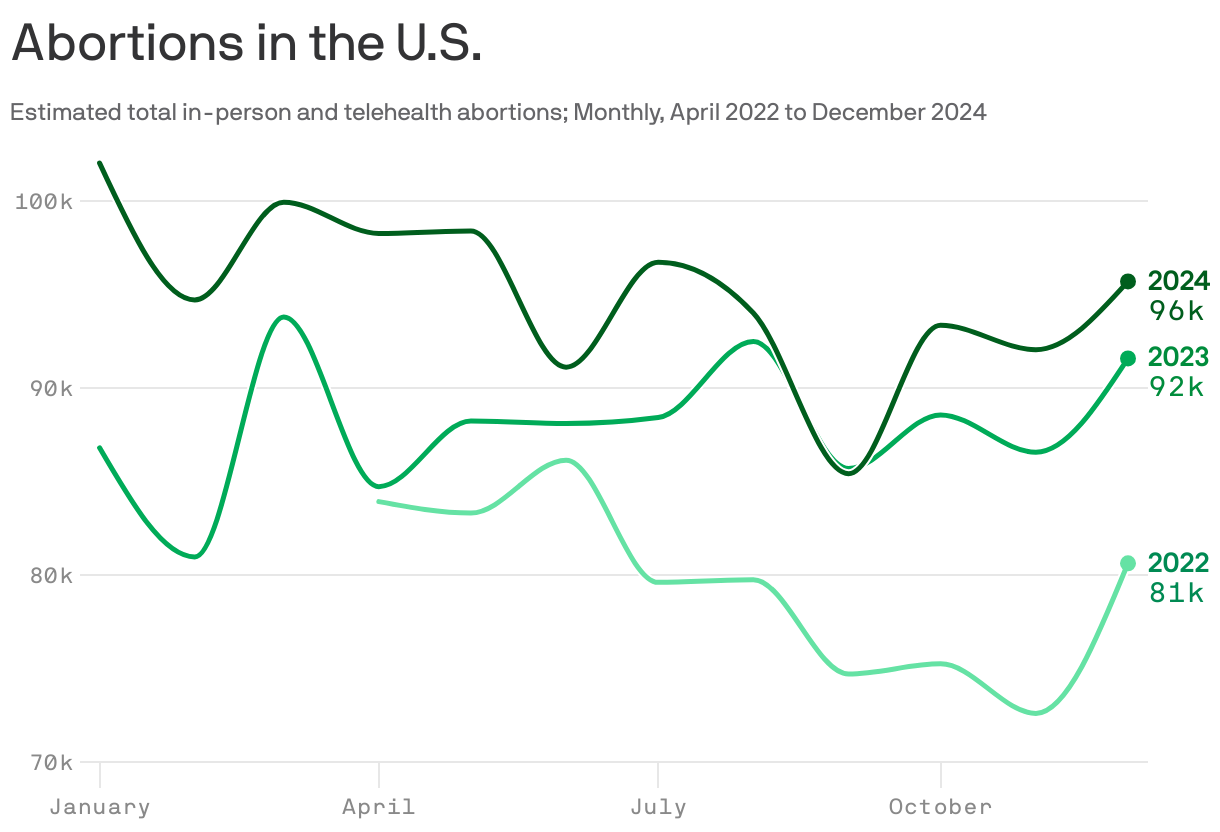
The number of abortions in the U.S. continued to rise in 2024 — totaling 1.14 million — despite years of bans and restrictions on reproductive care, according to a national report released on Monday.
The big picture: Abortions delivered via telehealth have jumped significantly since Roe v. Wade was overturned, with clinicians protected by shield laws.
- "Drivers of these trends are unclear, especially in the context of multiple changes in the service delivery environment," the #WeCount report from the Society of Family Planning nonprofit said.
Zoom in: While in-person abortion care declined slightly, the majority of abortions still occurred in person.
- The number of abortions delivered via telehealth has increased since 2022. Expanded telehealth access to medication abortion has allowed patients to circumvent state laws banning the procedure.
State of play: Shield laws provide legal protections to clinicians who offer telehealth abortion care to patients in states with restrictions.
- An average of 12,330 abortions per month were provided under shield laws by the end of 2024, per #WeCount.
- Half of abortions provided via telehealth in 2024 were facilitated by shield laws.
By the numbers: U.S. abortions totaled 1.14 million in 2024, the largest number in recent years.
- The monthly average number of abortion increased each year since 2022.
- By the end of 2024, 25% of abortions were provided via telehealth, a sizable increase from 5% in the second quarter of 2022.
What they're saying: "Anti-abortion extremists are using junk science and now turning their attacks toward telehealth, trying to dismantle a lifeline for people in ban states by attempting to roll back access," #WeCount co-chair Ushma Upadhyay said in a statement.
- "By providing safe, affordable medication abortion via telemedicine, we make sure people can get the care they need—no matter where they live or what they can afford," Angel Foster, Co-Founder of the Massachusetts Medication Abortion Access Project, said.
Go deeper: Mapped: How late in pregnancy states allow abortion
