How past U.S. presidents have approached Iran's nuclear program

Add Axios as your preferred source to
see more of our stories on Google.
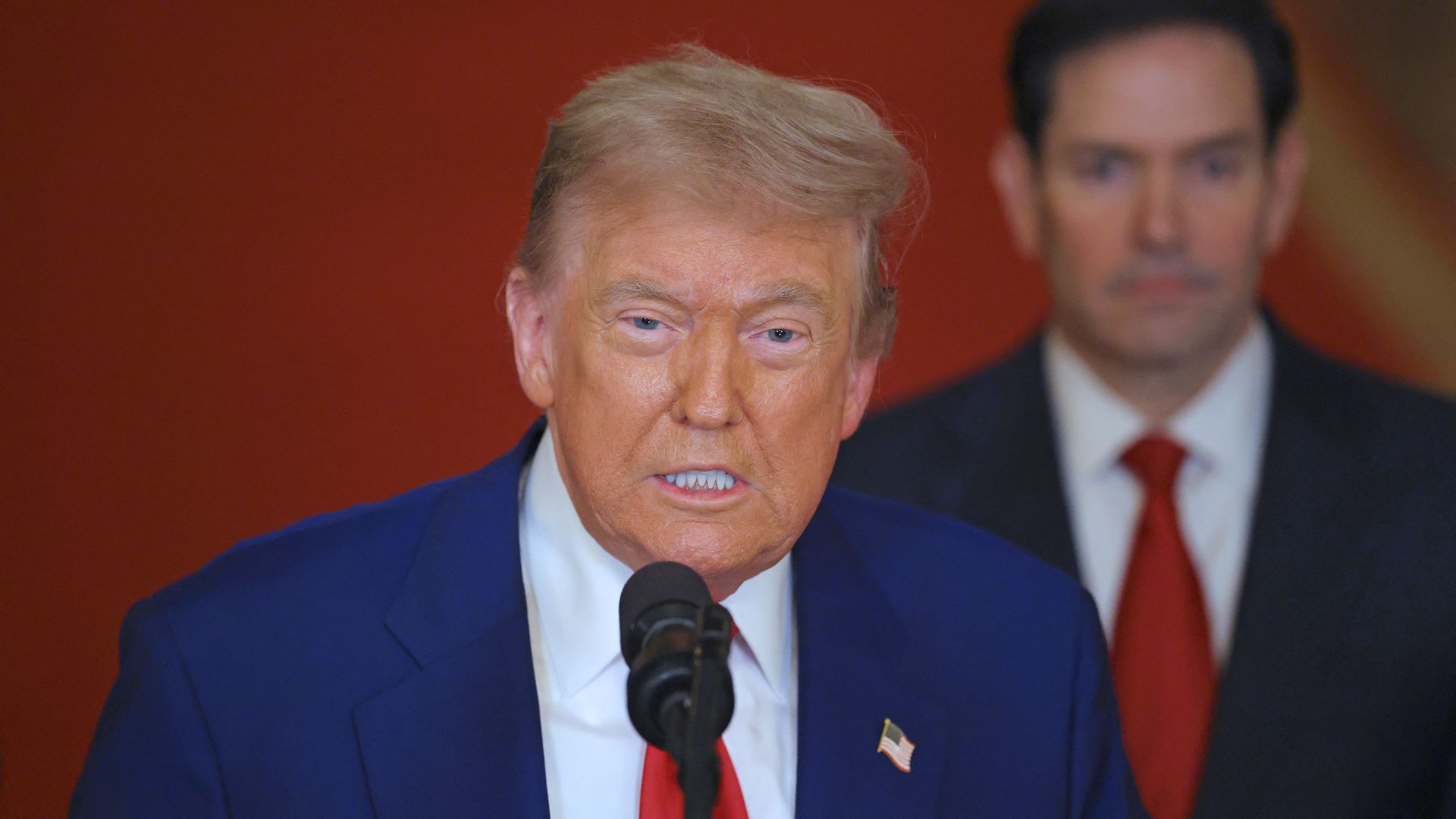
President Trump addresses the nation, alongside US Secretary of State Marco Rubio, from the White House on June 21 following the announcement that the US bombed nuclear sites in Iran. Photo: Carlos Barria/POOL/AFP via Getty Images
The Trump administration's decision to bomb Iranian nuclear facilities marked a dramatic new chapter in a decades-long tale of boiling tensions.
The big picture: It was the most direct and consequential U.S. military action against Iran since the Islamic Republic's founding more than four decades ago.
- The U.S.-Iran relationship has been one of tumult and twists, with modern presidents overseeing new waves of geopolitical brinkmanship.
The latest: Iran, in retaliation for the U.S. strike on its nuclear facilities over the weekend, launched multiple missiles against an American base in Qatar on Monday, Axios' Barak Ravid reported.
- While U.S. officials said there is no plan for a protracted conflict, the scope of Iran's retaliation will determine how President Trump responds.
Context: Decades of American foreign policy with its onetime ally-turned-adversary serve as an undercurrent for today's skyrocketing tensions.
- In 1957, the U.S. and Iran signed the Cooperation Concerning Civil Uses of Atoms agreement, under an initiative through which the U.S. gave developing countries nuclear education and resources. That collaboration lasted until the start of Iran's 1979 revolution, per a Council on Foreign Relations timeline.
- Washington ended diplomatic ties with Iran under the Carter administration and imposed sanctions after Iranian students broke into the U.S. embassy in Tehran and took 52 Americans hostage in 1979.
- In the 1980s, the U.S. sided with Iraq in its invasion of Iran, and officially designated Iran a state sponsor of terrorism in 1984. Years of tensions and sanctions persisted.
Read below for a brief timeline of modern U.S.-Iran relations:
George W. Bush: Iran is part of an "axis of evil"
January 2002: Following the 9/11 terrorist attacks, President George W. Bush said Iran was part of an "axis of evil" during his State of the Union address, saying it "aggressively pursues" weapons of mass destruction.
March 2003: U.S. forces invaded Iraq. As noted by CFR, a U.S. Army study on the war stated that "an emboldened and expansionist Iran appears to be the only victor" from the conflict.
Obama: Iran nuclear deal
September 2013: President Barack Obama spoke on the phone with Iranian President Hassan Rouhani to discuss "ongoing efforts to reach an agreement over Iran's nuclear program."
July 2015: Iran, the U.S. and several other world leaders reached the Iran nuclear agreement to restrict Iran's nuclear program in exchange for sanctions relief.
January 2016: The agreement went into effect.
Trump 1.0: Trump yanks U.S. from deal
October 2017: Trump disavowed the Joint Comprehensive Plan of Action (JCPOA) and threatened to leave it if it wasn't changed to permanently bar Iran from building nuclear weapons or intercontinental missiles.
- During his first-term remarks, Trump called the deal "one of the worst and most one-sided transactions the United States has ever entered into."
May 2018: A few months later, he withdrew the U.S. from the JCPOA, which the White House said "failed to protect America's national security interests."
- Trump then imposed severe sanctions on Iran.
January 2020: The U.S. killed Qassem Soleimani, leader of the Quds Force of the Islamic Revolutionary Guard Corps and one of the regime's most powerful figures, in an airstrike.
- Iran in response abandoned its commitment to limiting its uranium enrichment.
Biden: Talks fizzle
When Biden took office in 2021, his administration grappled with a dilemma on how to approach talks with Iran.
- There was some initial progress, but talks fizzled out eventually.
October 2022: The Biden administration said it would not "waste time" on trying to revive the nuclear deal amid a complicated path forward.
- In December of that year, Biden stated on the sidelines of a rally that the 2015 deal was "dead" but that the U.S. wouldn't formally announce it.
Trump 2.0: Tensions flare
March 2025: Trump, in a letter to Iran's Supreme Leader Ali Khamenei, set a two-month deadline for reaching a new nuclear deal.
- Revealing that he had sent the letter, the president stressed in an interview with Fox News' Maria Bartiromo that Iran can't have a nuclear weapon.
- He told reporters the U.S. was "down to the final moments" with Iran.
May 2025: White House envoy Steve Witkoff sent Iran a new proposal for a nuclear deal in May, which Axios' Barak Ravid reported would allow low-level uranium enrichment on Iranian soil.
- But Trump soon after said the U.S. would not allow "ANY ENRICHMENT OF URANIUM!"
June 2025: Israel launched an operation targeting Iran's nuclear facilities, missile sites, scientists and generals.
- On June 21, Trump announced that the U.S. had conducted airstrikes on Iran's nuclear facilities in Fordow, Natanz and Isfahan, writing, "NOW IS THE TIME FOR PEACE!"
- The next day, he floated the possibility of "regime change" in Iran.
Go deeper: Scoop: Trump's back channel to Iran failed after supreme leader went dark
