Israel's attack on Iran mires years of Trump and Obama seeking a nuclear deal

Add Axios as your preferred source to
see more of our stories on Google.
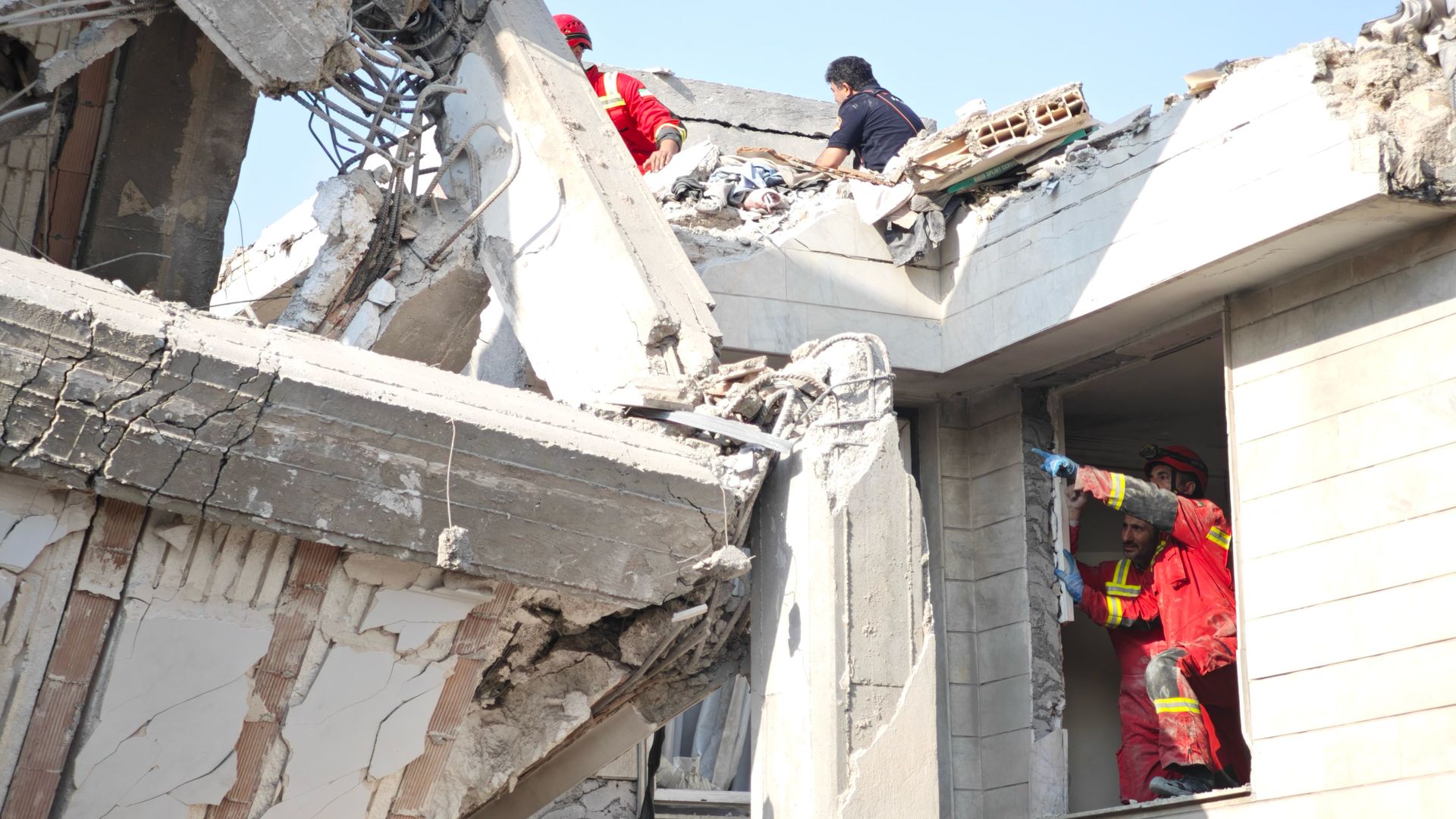
People look over damage to buildings following Israeli airstrikes on June 13 in Tehran, Iran. Iran's three top military generals were killed in the attacks that also targeted nuclear and military facilities. Photo: Majid Saeedi/Getty Images
Israel's Thursday strike on Iran follows more than a decade of geopolitical brinksmanship since the Iran nuclear deal reached under former President Obama.
The big picture: Israel targeted some of Iran's key nuclear facilities, likely to prompt retaliation in the already conflict-ridden region and add more uncertainty to the US-Iran talks.
Catch up quick: Israel attacked its biggest and best-armed adversary without explicit backing from the U.S.
- The Trump administration quickly denied any direct involvement, though President Trump has since expressed support for the operation.
- In the weeks leading up to the operation, Israel had assured the U.S. it wouldn't strike Iran unless the negotiations between the U.S. and Iran failed, per Israeli officials. Trump is now pushing Iran to resume negotiations, though that's extremely unlikely.
- Iran quickly launched more than 100 drones toward Israel in response.
Read more about the history of the conflict:
World powers reach the Iran nuclear deal
July 2015: Iran and several world powers, including the U.S., signed the Iran nuclear agreement to ensure Iran's nuclear program is exclusively peaceful.
- "Under its terms, Iran agreed to dismantle much of its nuclear program and open its facilities to more extensive international inspections in exchange for billions of dollars' worth of sanctions relief," a Council on Foreign Relations report said.
- If all parties had adhered to their pledges, the deal could have prevented Iran from getting nuclear weapons for longer than a decade, the report said.
- China, France, Germany, Russia, the United Kingdom, the United States, the European Union and Iran reached the deal.
October 2015: The Joint Comprehensive Plan of Action (JCPOA) was officially adopted.
January 2016: Agreement officially went into effect.
- Israel explicitly opposed the agreement, calling it too lenient, per the Council on Foreign Relations.
Trump rips ups the agreement
October 2017: Trump disavowed the Iran nuclear deal and threatened to leave it if it did not block Tehran from building nuclear weapons or intercontinental missiles.
December 2017: Trump decertified the Iran deal and issued new sanctions on Iran's Revolutionary Guard.
May 2018: Trump ended U.S. participation in the Iran deal.
- "It failed to protect America's national security interests," a White House announcement said. "The JCPOA enriched the Iranian regime and enabled its malign behavior, while at best delaying its ability to pursue nuclear weapons and allowing it to preserve nuclear research and development."
U.S. kills Soleimani
January 2020: The U.S. killed Qassem Soleimani, leader of the Quds Force of the Islamic Revolutionary Guard Corps, in an airstrike.
- He was one of the Iranian regime's most powerful figures and the mastermind of its regional ambitions.
- In response, Iran announced it would no longer limit uranium enrichment used for nuclear weapons. The government said its announcement "eliminates the last key operational restriction" of the agreement.
Biden shelves Iran nuclear talks
January 2021: Biden expressed support for a new nuclear deal with Iran upon taking office, though members of his administration have questioned whether he was truly committed to the talks, which showed some initial progress but fizzled out.
October 2022: The Biden administration said it would not "waste time" on trying to revive the nuclear deal because of several concerns with Iran.
December 2022: Biden, at an election rally, said that the nuclear deal with Iran was "dead" but that the U.S. wouldn't formally announce it.
- This marked the strongest confirmation that the Biden administration believed there was no path toward reaching a deal.
- "The JCPOA is not our focus right now. It's not on the agenda," a White House National Security Council spokesperson told Axios at the time.
February 2023: United Nations inspectors reported that Iran enriched trace amounts of uranium to nearly weapons-grade levels.
- Iran claimed this was accidental. The uranium stockpiling continued to increase.
Iran and Israel trade limited strikes
October 2023: Israel begins a multi-pronged war against Iranian proxy forces across the region following Hamas' Oct. 7 attack. That eventually escalated to direct tit-for-tat attacks between Israel and Iran.
October 2024: Iran launched about 180 ballistic missiles toward Israel in a two-wave attack — Iran's largest-scale attack against Israel to date.
- U.S. and Israeli officials said the missiles were largely repelled. Some hit hit Israeli military sites.
- Biden said he would oppose a Israeli strike in return on Iran's oil facilities.
- Israel's retaliatory strike against Iran took out a critical component in Israel's ballistic missile program, per Israeli sources.
Israel launches new war in the Middle East
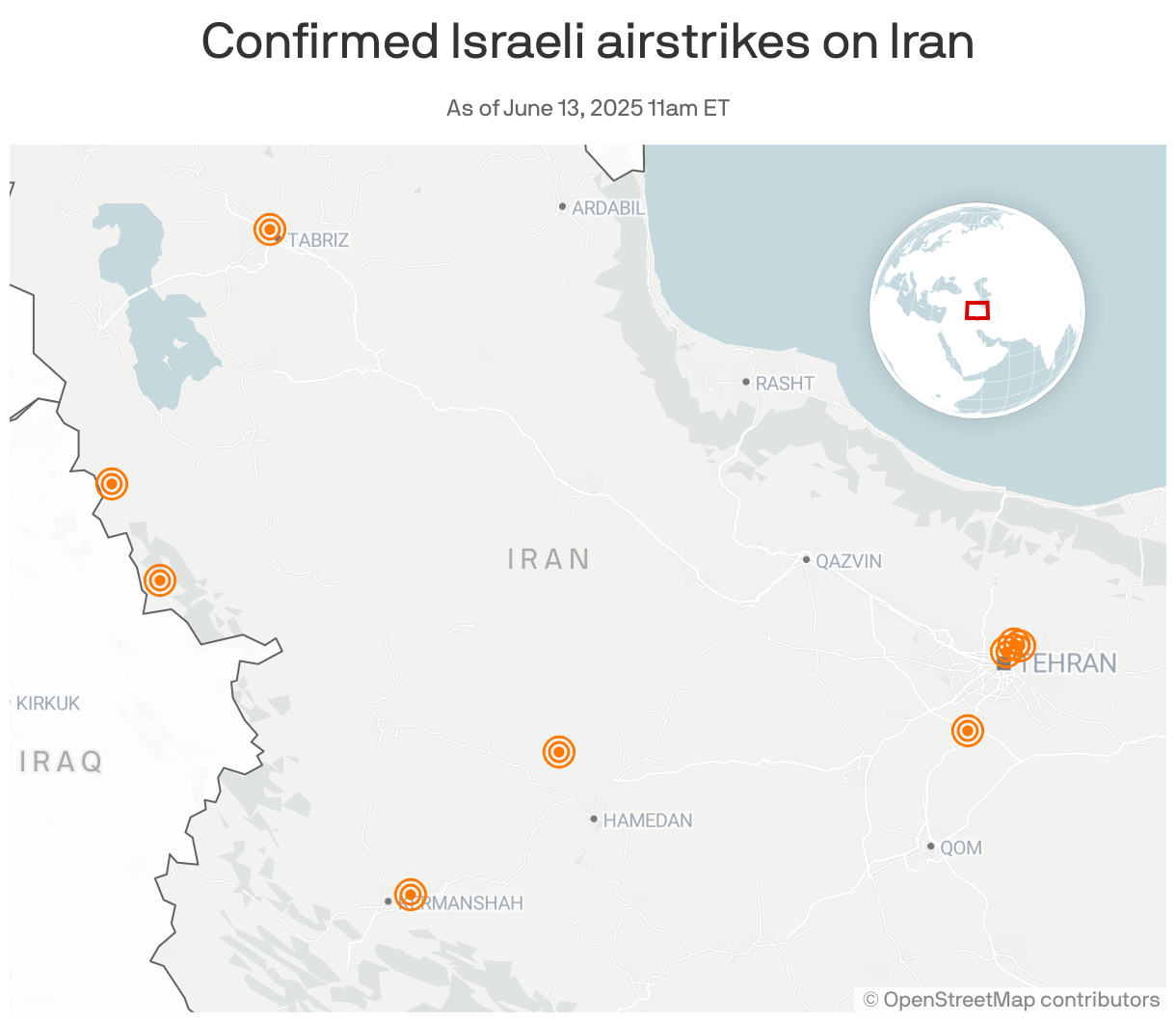
June 2025: Israel launched an overnight attack targeting Iran's nuclear facilities, missile sites, scientists and generals in an attempt to "eliminate" Iran's nuclear and ballistic missile capabilities.
- The operation is expected to last between days and weeks.
- Before the attacks began, the U.S. told Israeli that it wouldn't be directly involved in any military strike against Iran's nuclear facilities.
Between the lines: A UN-backed atomic watchdog passed a resolution on Thursday that Iran was not complying with nuclear non-proliferation obligations.
- The U.S. had proposed a deal to Iran earlier in June allowing limited low-level uranium enrichment.
Go deeper: Israel's strike on Iran was 8 months in the making
Editor's note: This story has been updated with a map of confirmed Israeli strikes.
