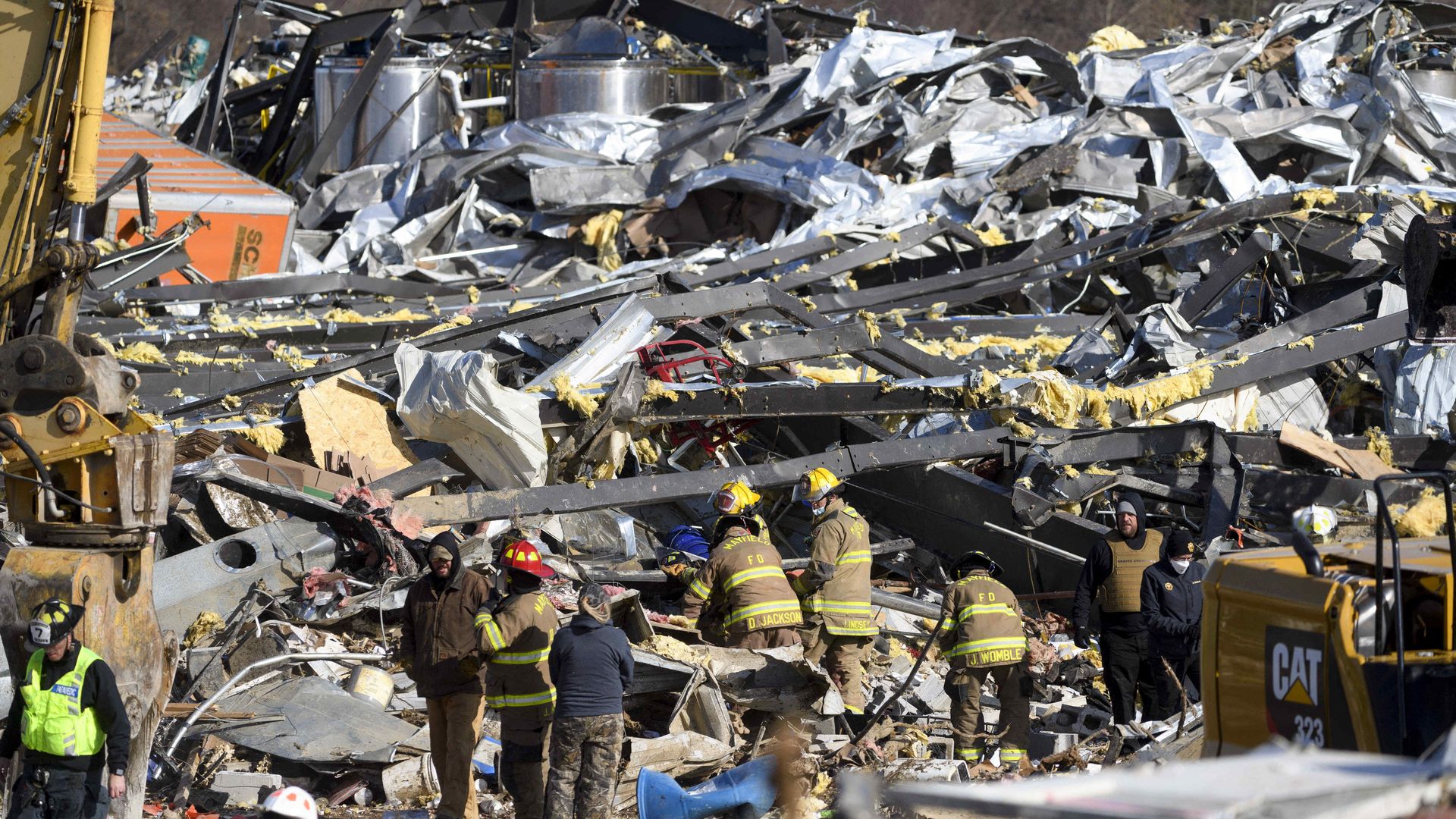
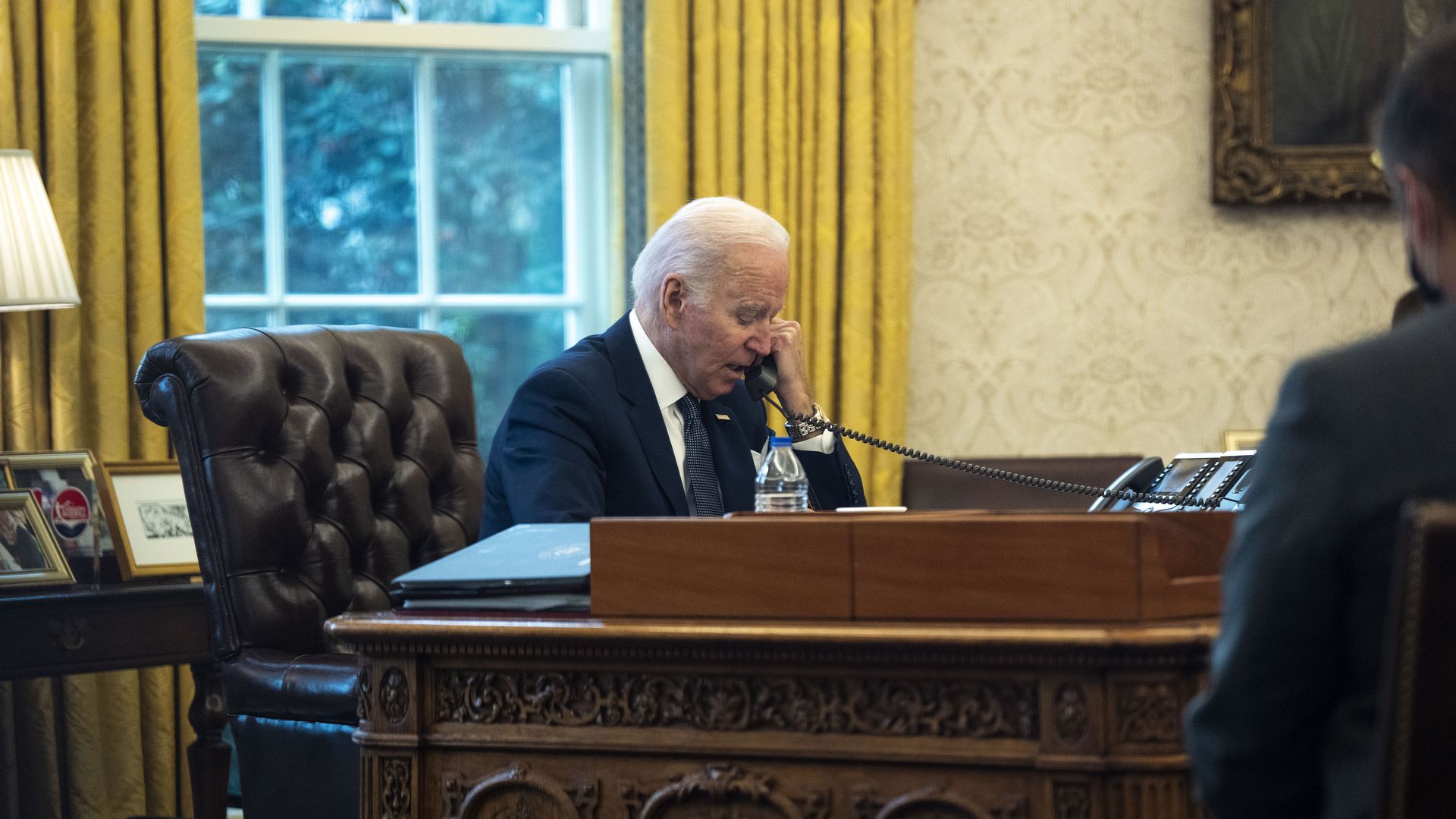
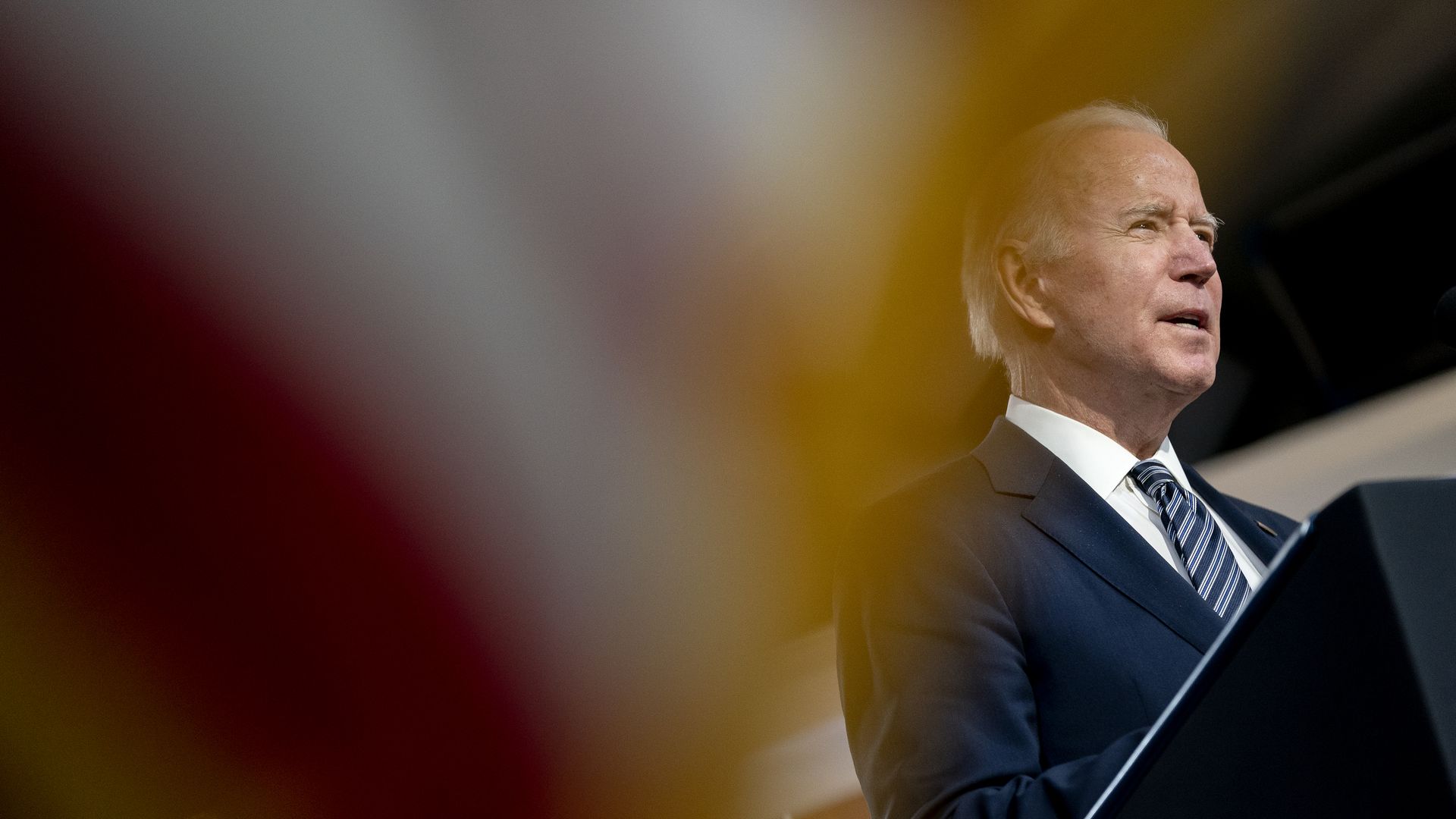
President Biden on Saturday issued an emergency declaration in Kentucky and ordered federal assistance to support recovery efforts after a tornado tore through the state killing at least 70 people.
Driving the news: The president also saidhe stands "ready to do the same for the governors of the other states," during a press conference from Delaware on Saturday afternoon.
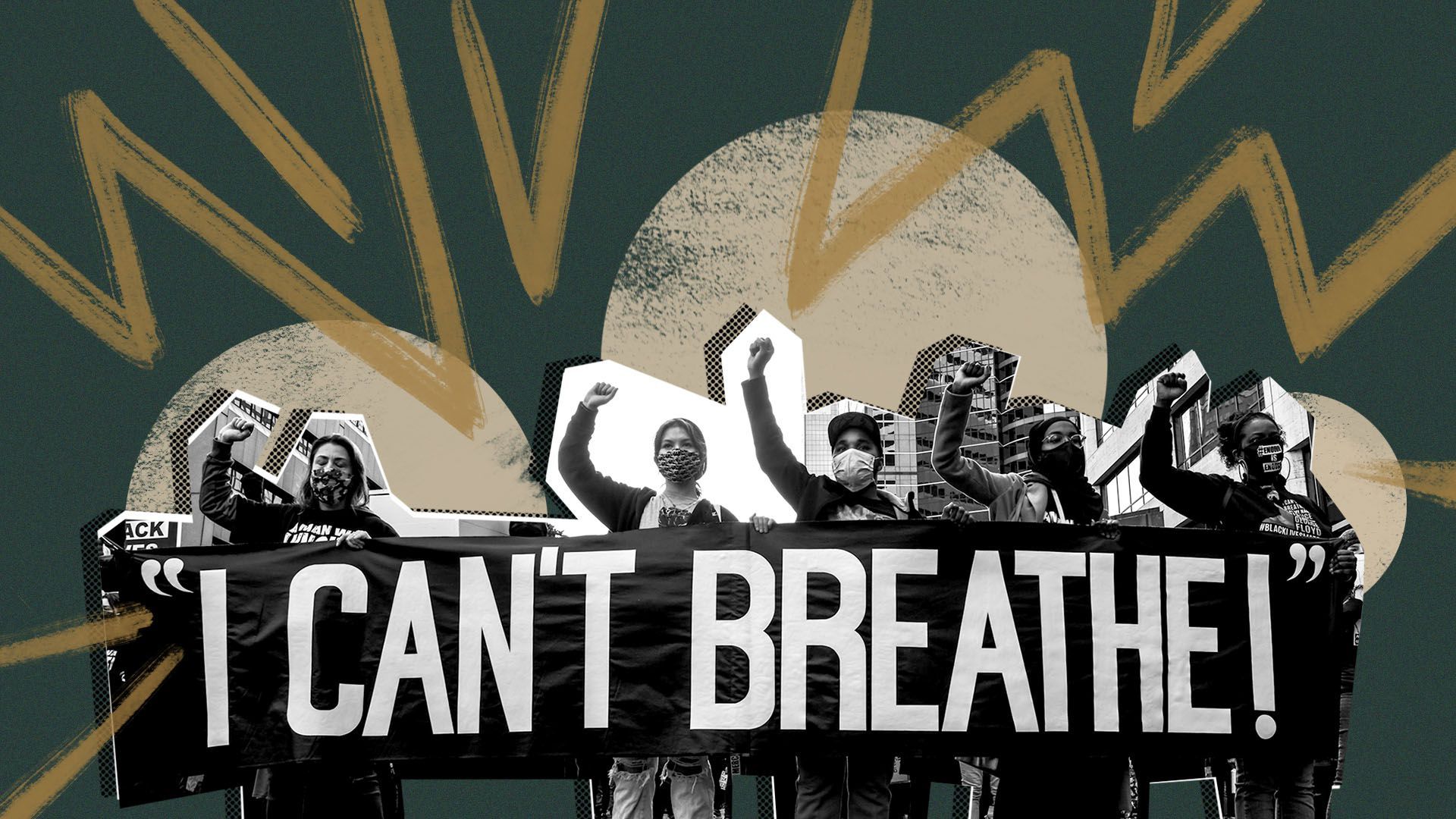
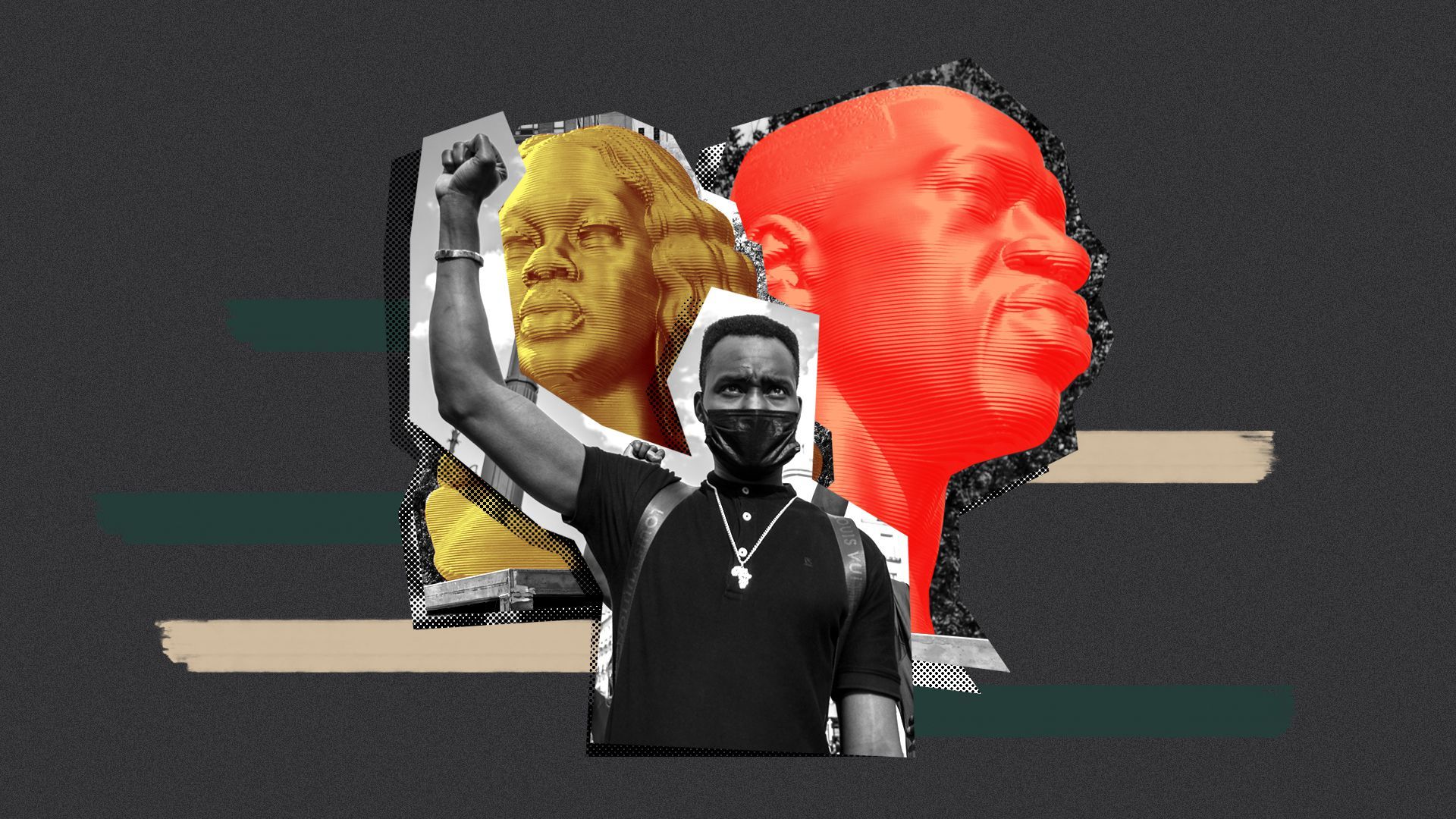
A Minneapolis suburb's effort to overhaul its approach to public safety after George Floyd's murder and the fatal police shooting of Daunte Wright capture the challenges the movement faces in swiftly enacting major change.
Why it matters: If activist pressure to revamp policing could succeed anywhere, you'd think it would be Brooklyn Center, a diverse and solidly blue suburb about 10 miles from where Floyd was murdered.
"Allyship" peaked as a hot term after the racial justice protests in the summer of 2020. Since then, its meaning and impact havebeen complicated by questions over what it looks like in action — what's "performative" or real.
Why it matters: Activists for racial justice say allyship is the support and empathy from other groups that forces change — think the end of South Africa's apartheid system and the 1960s civil rights movement.
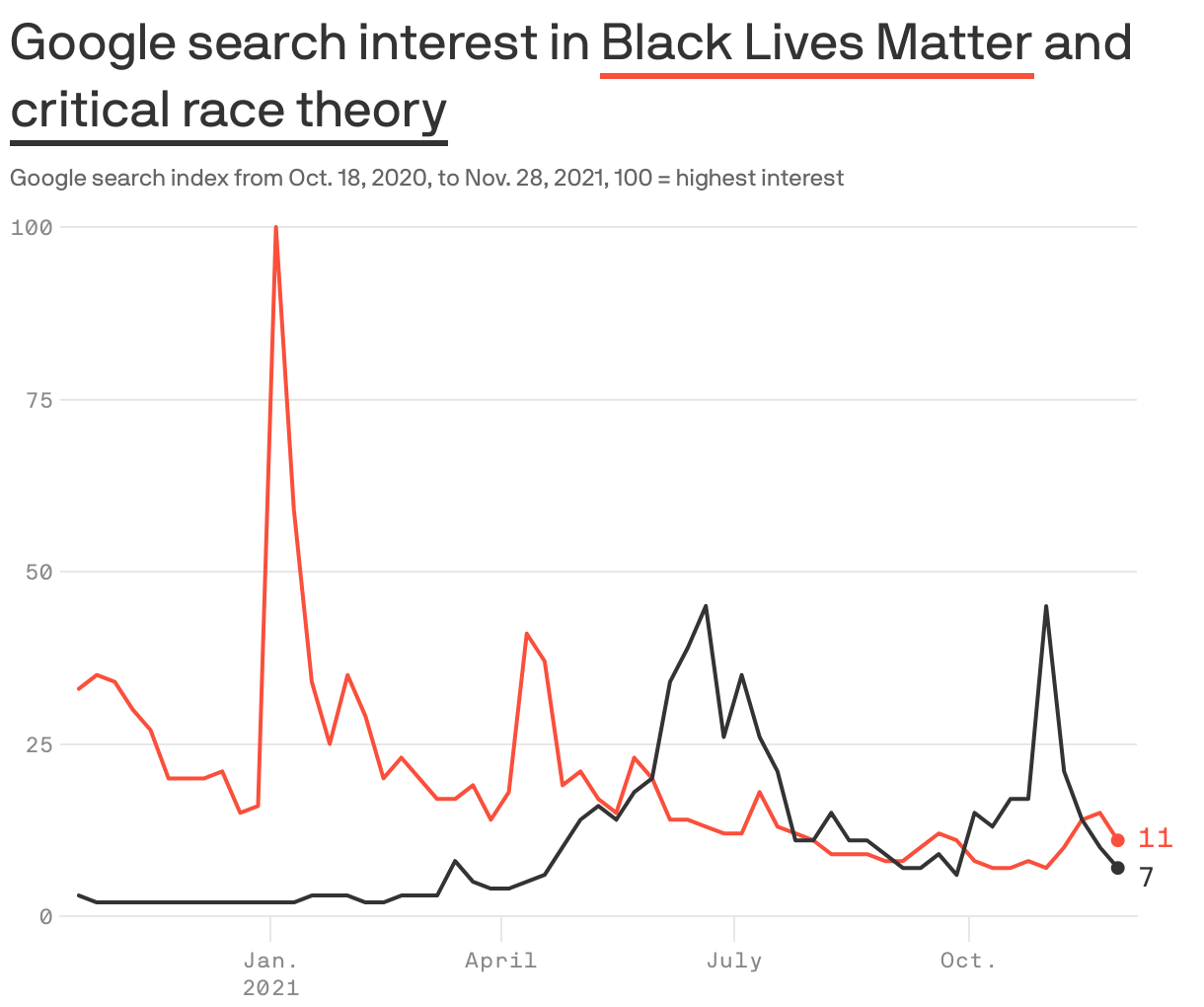
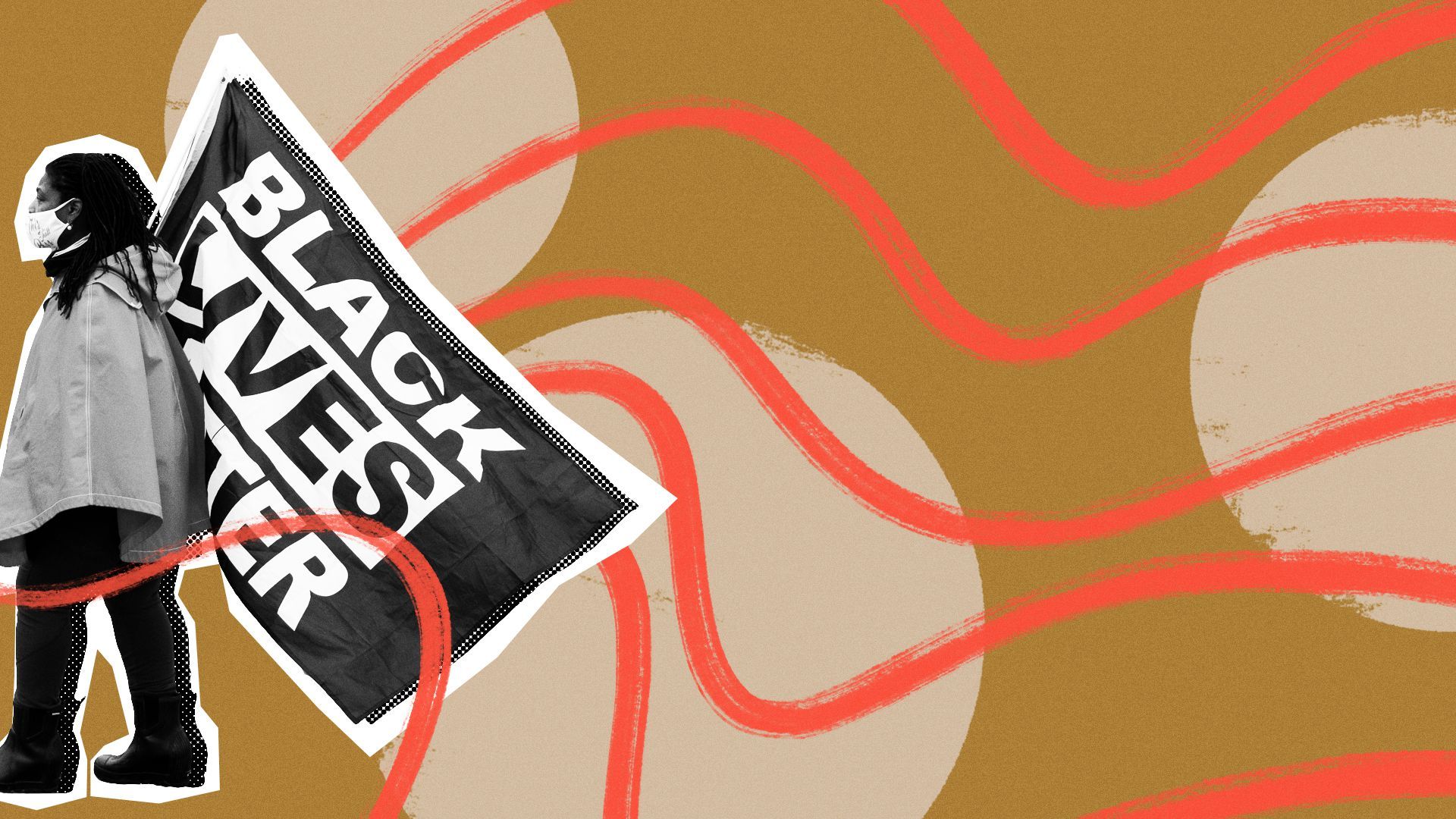
The share of Google searches about Black Lives Matter spiked shortly after Axios launched its Hard Truths series — but those have been overtaken by searches about critical race theory in recent months.
Why it matters: The search trends provide a window into how the national conversation about racial justice has shifted over the course of this series.
Last year's racial reckoning led to dramatic, visible changes in professional sports as teams ditched racist mascots while leagues pledged millions to support new social justice efforts and made improvements in hiring practices.
Why it matters: Some long-awaited changes have been realized, but both the sports world and society at large are still struggling to bridge the gap between cosmetic vs. real progress.
The final monthly Axios AM Deep Dive in our Hard Truths series explores what has changed about race and justice in America — and what hasn't — since the series launched in October 2020.
The murder of George Floyd and the protests that followed fueled hope that the U.S. might finally reckon with systemic racism. Instead, a backlash has even some once strong allies backtracking.
Why it matters: A wave of proposed reforms rose up and crashed into the status quo bulkhead. Defund the police plans fizzled.Federal voting rights and police reform bills are stalled. But U.S. history shows the walls of inequality seldom collapse all at once. Instead, cracks emerge and with time turn into larger openings.
Republicans are betting that Democrats have gone too far in addressing systemic racism — so they're leaning into culture wars over school curriculum, college admissions, voting rights, hiring practices and policing.
Driving the news: These calculations are playing out in governor's races, in the battle for control of both chambers of Congress, and in local races all the way down to school boards, as Republicans try to maximize their base's turnout and win back swing voters in 2022.
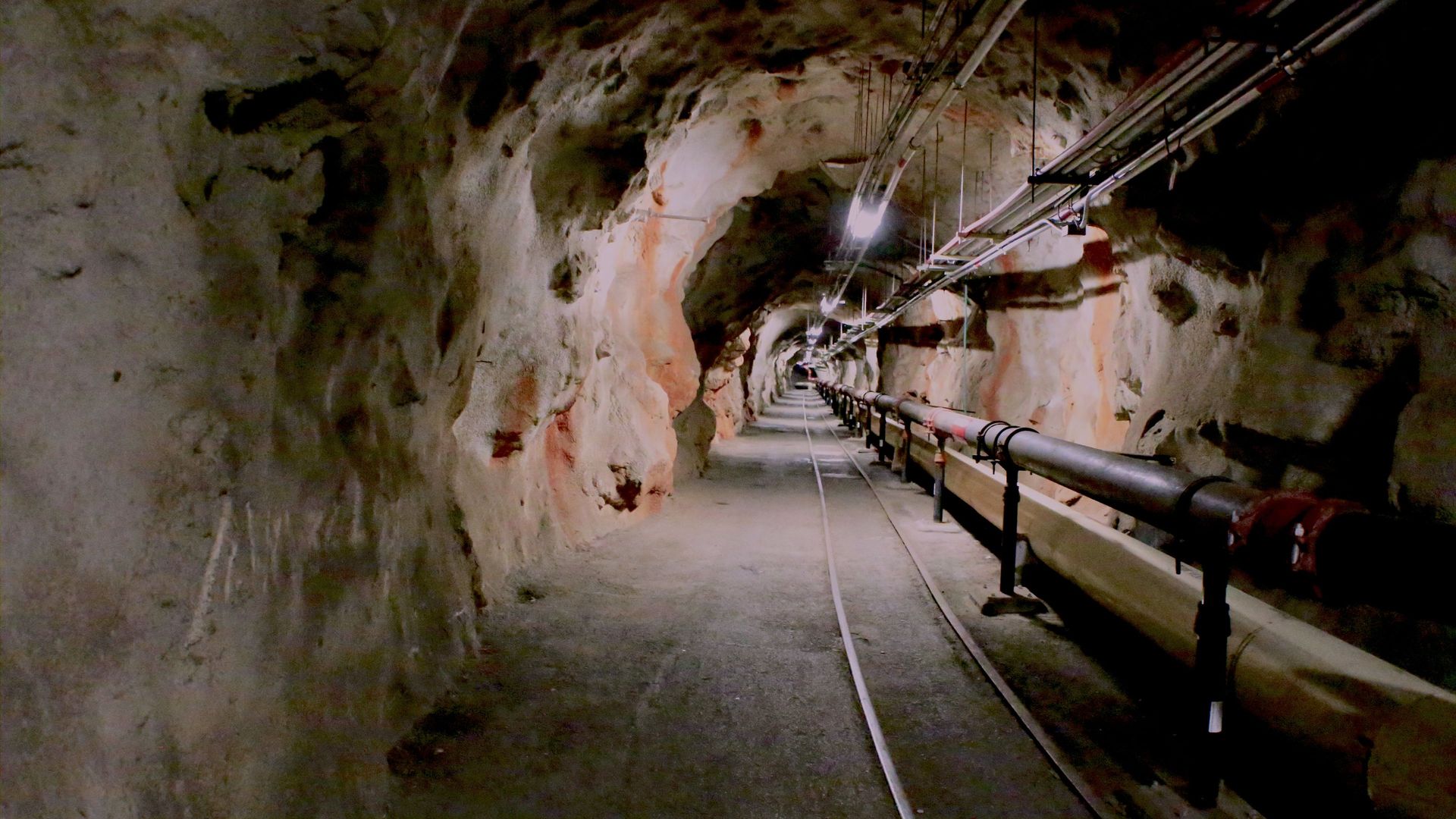
At Red Hill — a Navy fuel storage facility near Pearl Harbor, Hawaii — samples of drinking water bound for military families contained diesel fuel 350 times the safe level, the state announced Friday.
Why it matters: The Navy has been denying complaints by military families and other residents for weeks.
The incoming chairman of the Democratic Governors Association (DGA) says the party’s candidates in gubernatorial contests in 2022 should talk more about health care, infrastructure, and education — and less about Donald Trump.
Driving the news: The nation’s Democratic governors are gathered in New Orleans for their annual winter meeting.
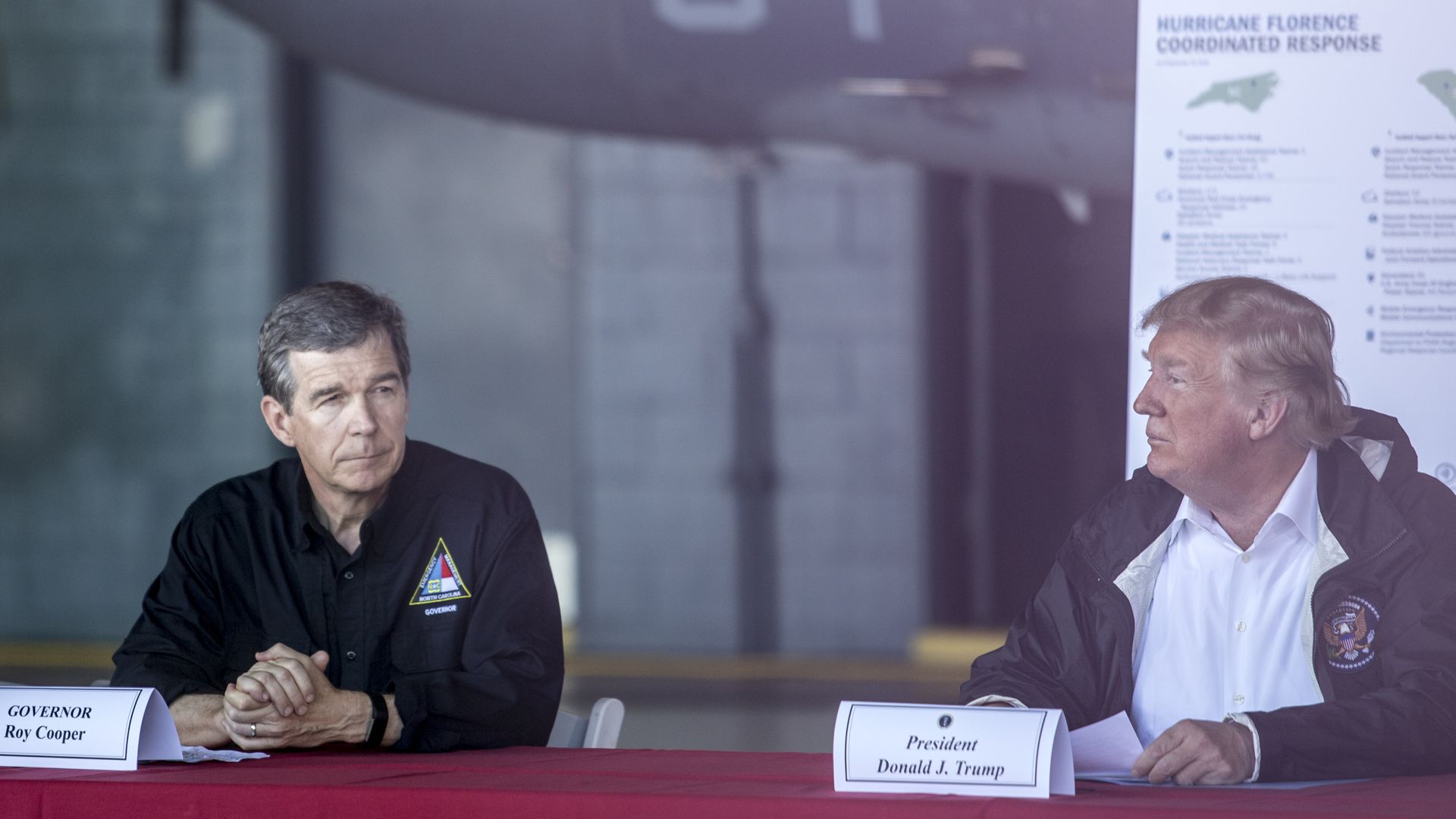
Gov. Roy Cooper of North Carolina begins his term as chair Saturday, weeks after Dems’ lost in Virginia and barely won re-election in New Jersey.
Press freedom is starting to get more attention from world leaders, as new data suggests 2021 was yet another record-breaking year for violations of those rights.
Why it matters: Press freedoms have taken an unprecedented toll during the pandemic, especially in poorer nations and in countries teetering on the edge of democracy.
The big picture: Biden reaffirmed his support for "robust U.S.-German relations and desire to further strengthen transatlantic cooperation," the White House said.
Mohammed Khalifa pleaded guilty on Friday to providing material support to the Islamic State via the violent propaganda videos he narrated in English that were part of the the terrorist group's campaign to recruit Westerners.
Why it matters: Federal prosecutors said the videos that Khalifa narrated showed explicit footage of terrorists executing and decapitating prisoners — with the 38-year-old Canadian citizen participating in some of the cases.
The Biden administration on Friday announced new sanctions on dozens of people and entities with ties to human rights abuses in China, Myanmar, Bangladesh and North Korea.
Why it matters: The move, timed with international Human Rights Day and the State Department's two-daySummit for Democracy, is a tool "to draw attention to and promote accountability for human rights violations and abuses," the department said.