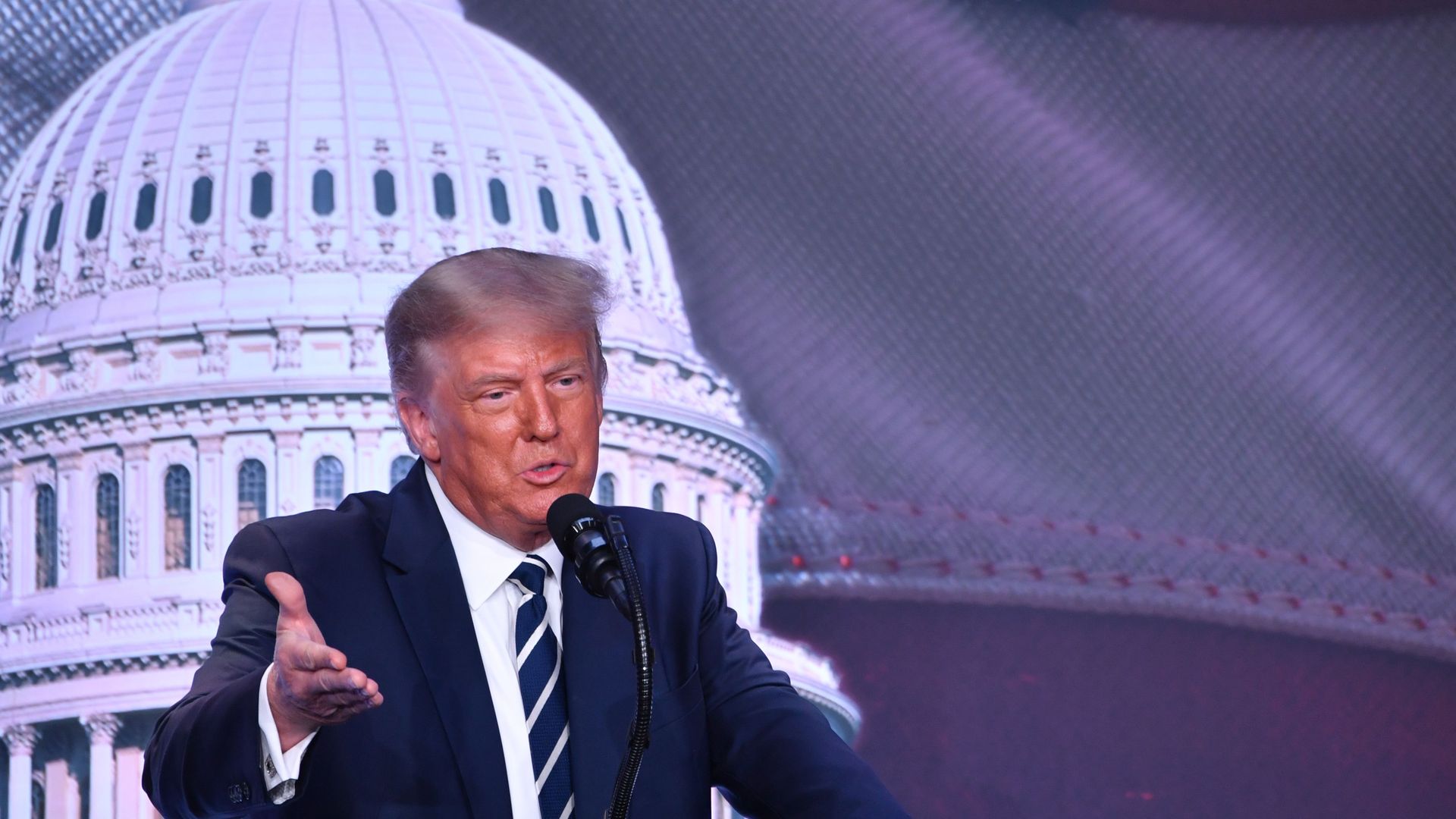
The Second Circuit Court of Appeals on Friday denied President Trump's request to immediately delay his financial records from being turned over to a New York state grand jury, pushing the hearing until September 1.
Driving the news: Trump's request came in response to a federal judge dismissing the president's lawsuit on Thursday to block Manhattan District Attorney Cy Vance's subpoena for his records — the latest clash in a battle that went to the Supreme Court last month.
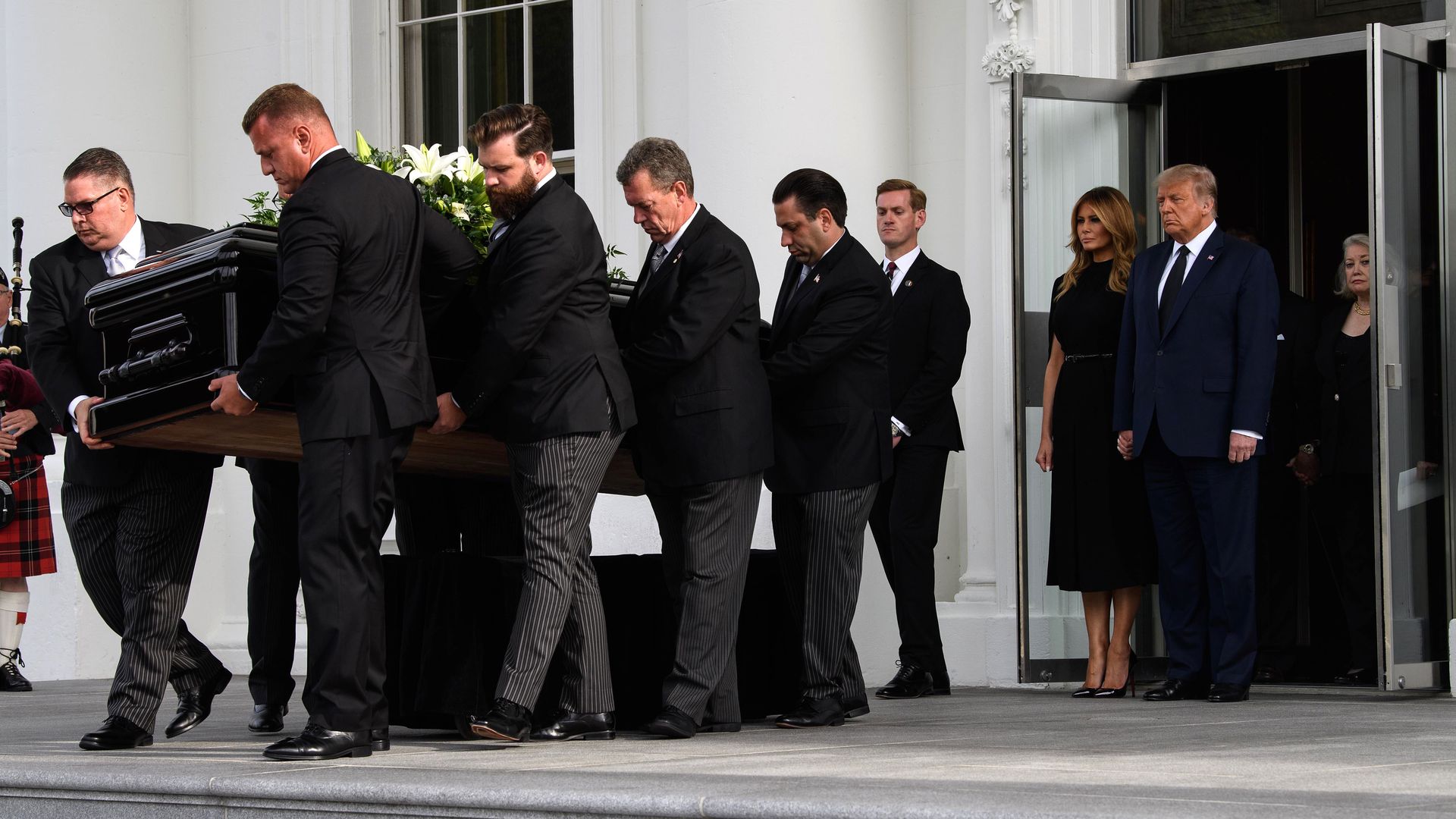
A funeral procession for Robert Trump, the president's younger brother, was held Friday afternoon at the White House.
Details: The hymn "Abide With Me" was played on bagpipes for the procession, per pool reporters. The president's younger brother died last Saturday night, at 71, after being hospitalized in New York with an unspecified illness.
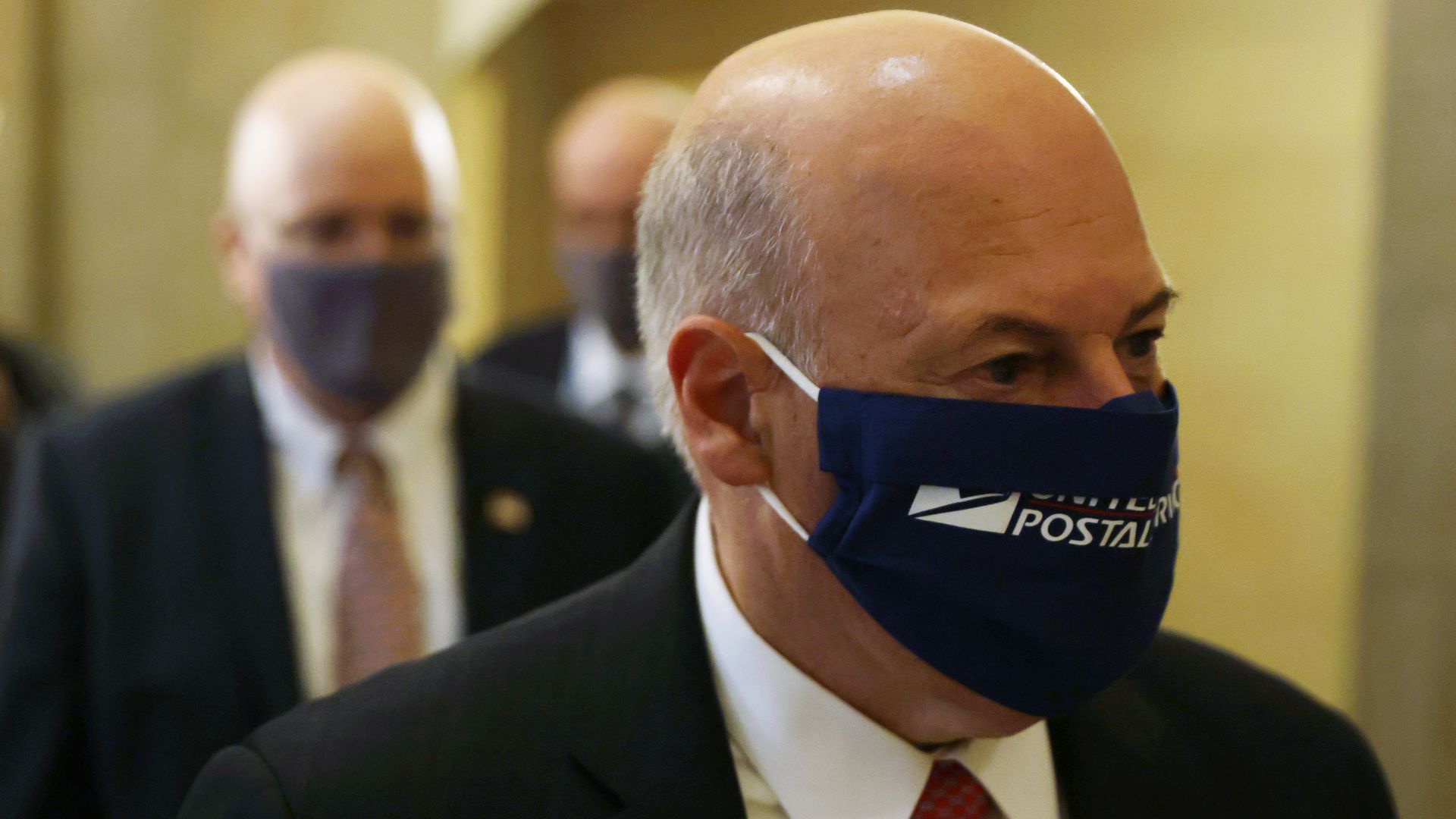
Six states and the District of Columbia filed a lawsuit against Postmaster General Louis DeJoy Friday, alleging recent changes to the U.S. Postal Service were "unlawful" and designed to impede efforts to conduct "free and fair elections."
Why it matters: DeJoy, an ally of President Trump, has come under scrutiny for implementing cost-saving measures that resulted in widespread delays and prompted fears that the USPS will not be able to handle a surge in mail-in ballots in November's election.
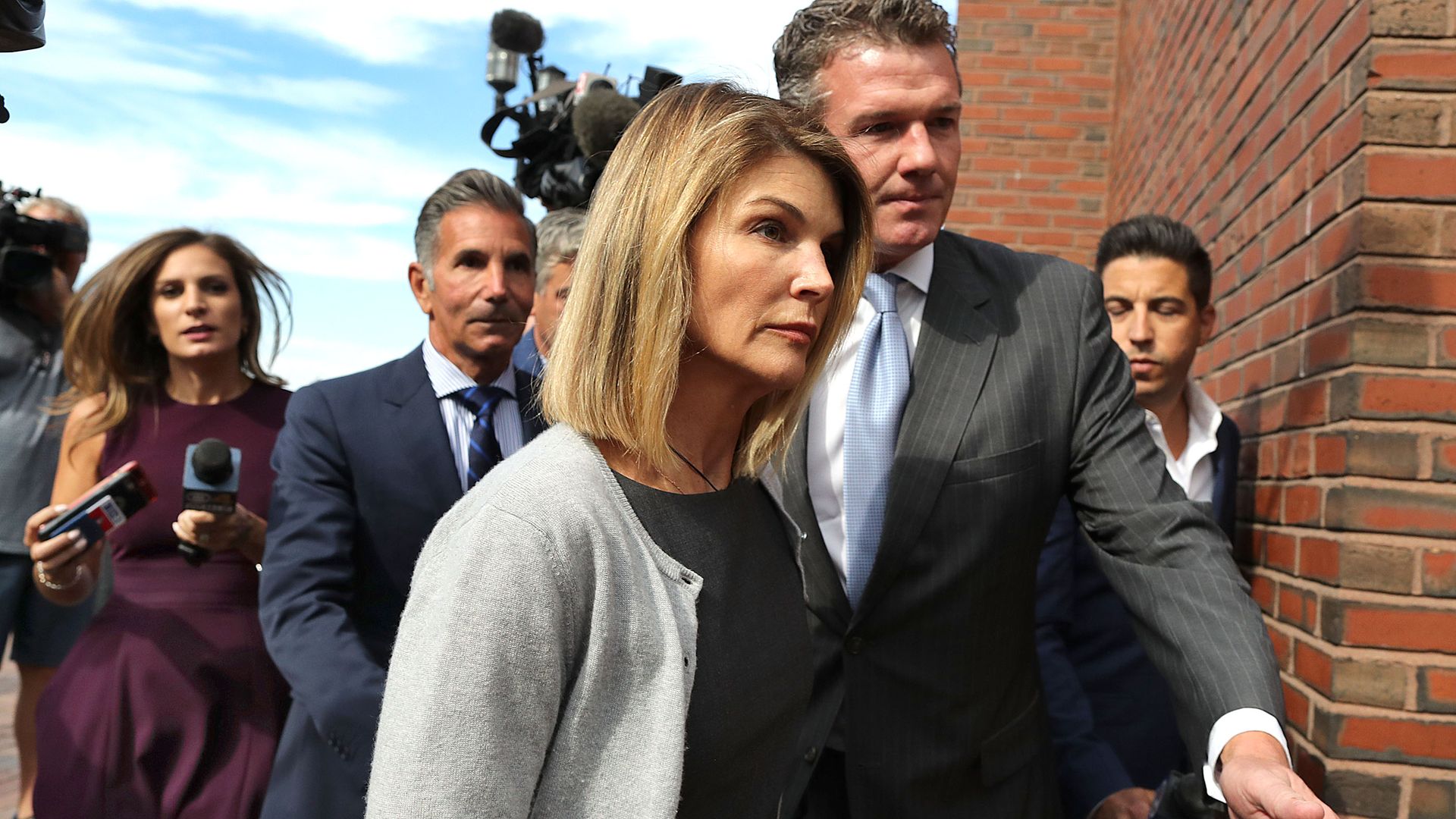
The state of play: Loughlin and her husband, Mossimo Giannulli, pleaded guilty earlier this year over their involvement in a scheme to bribe coaches to allow their two children to be admitted into the University of Southern California as fake athletic recruits.
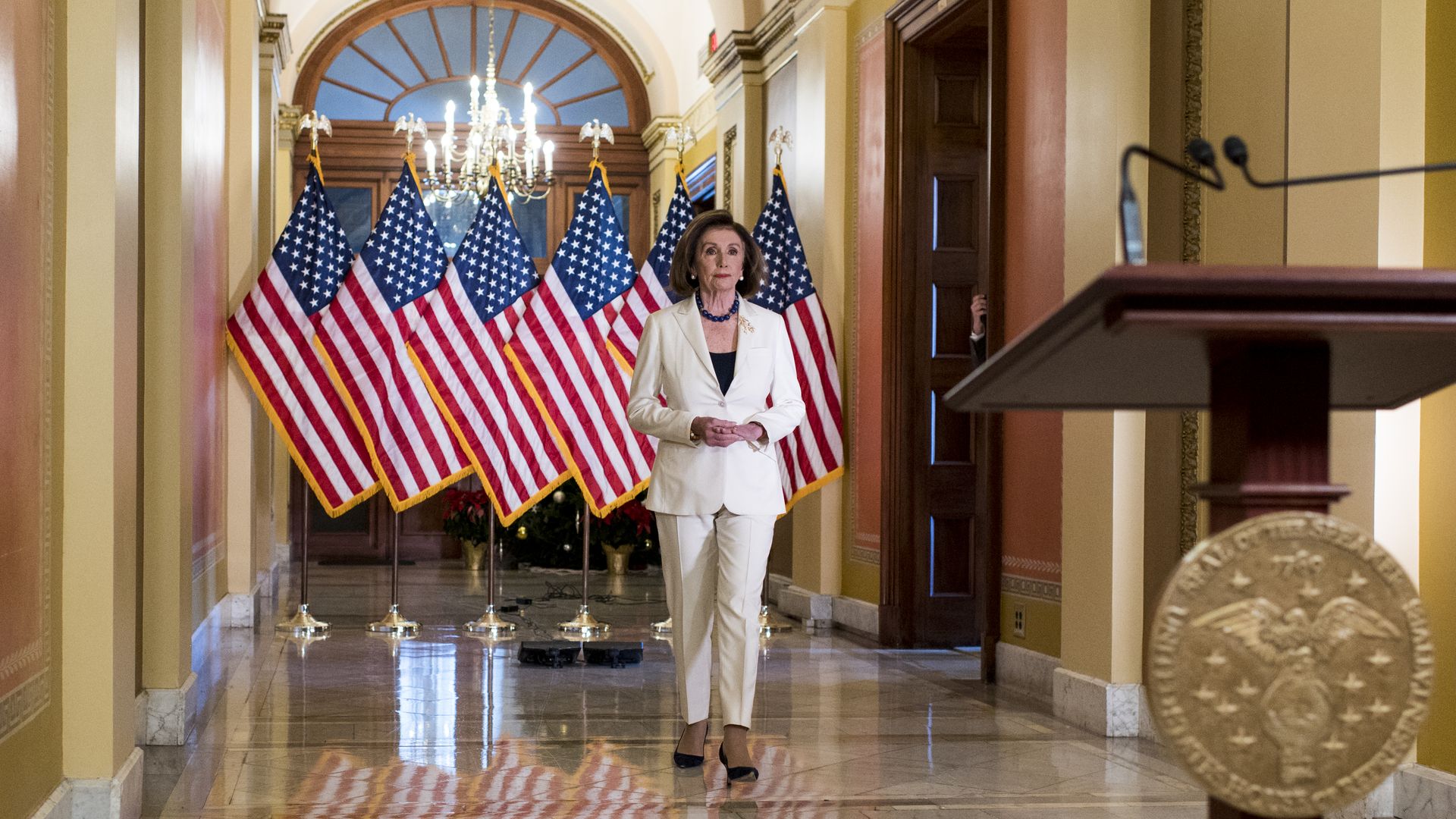
The Democratic National Committee (DNC) will host daily events next week focused on different crises they say President Trump's "chaos has created or made worse," featuring high-profile Democrats like House Speaker Nancy Pelosi.
Why it matters: These events will serve as Democrats' counter-programming around the Republican National Convention, which starts Monday.
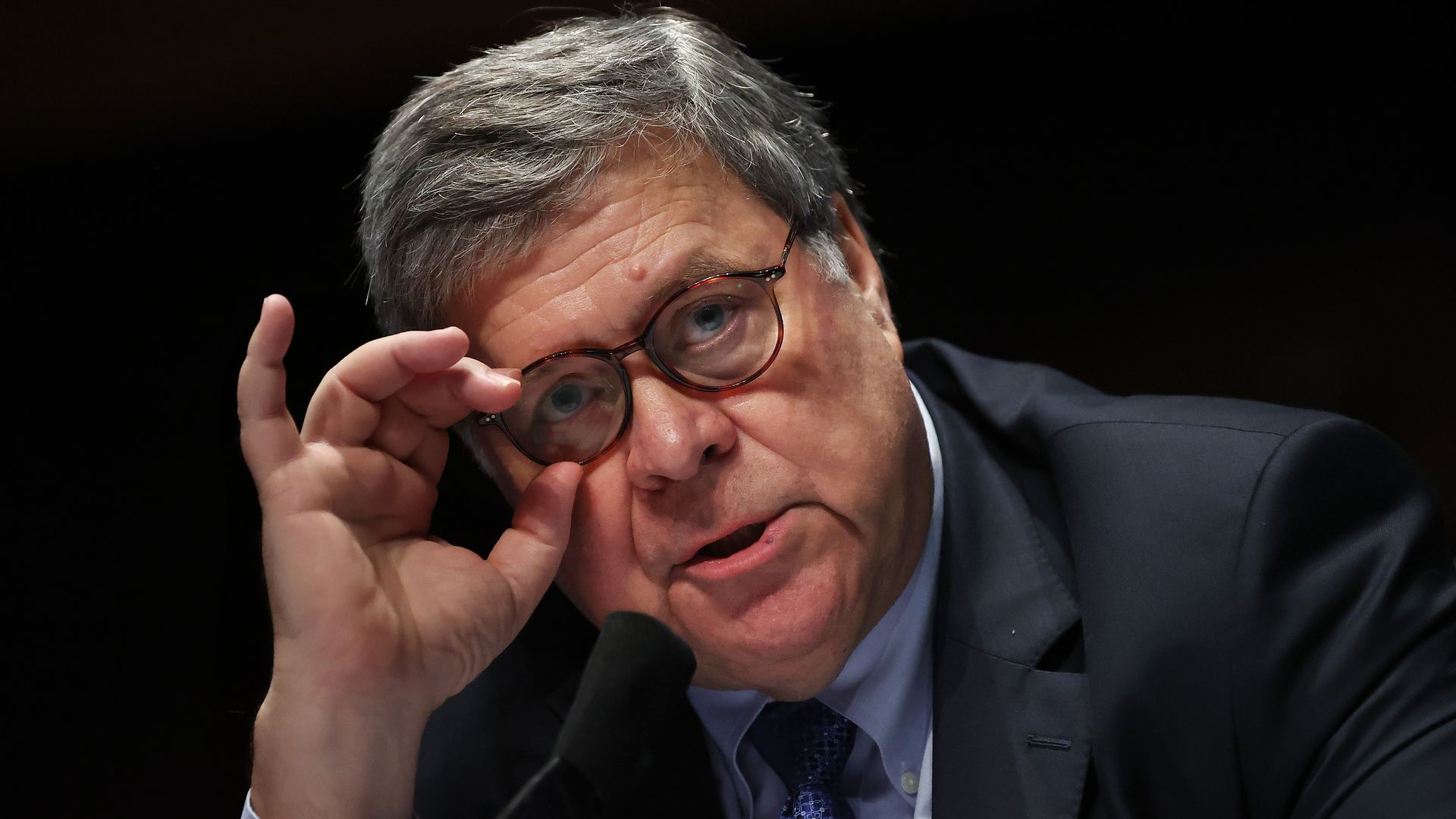
Attorney General William Barr told the AP on Friday that he is "vehemently opposed" to pardoning Edward Snowden.
Why it matters: Barr's comments come just days after President Trump said he would "look at" pardoning Snowden, who was charged under the Espionage Act in 2013 for leaking highly classified information on government surveillance programs.
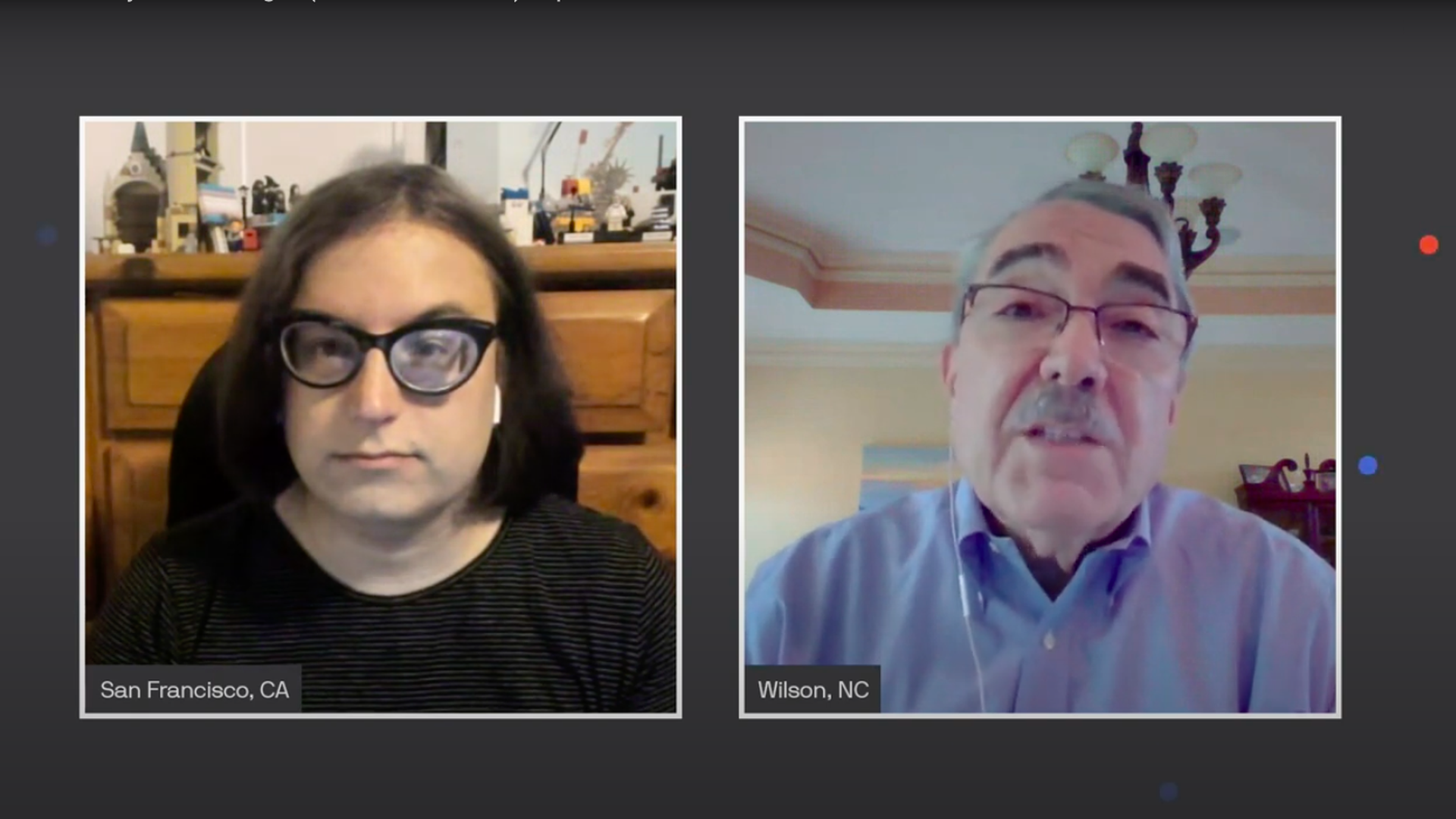
The federal government must prioritize local and state transportation for the economy to recover from the pandemic, Rep. G.K. Butterfield (D-N.C.) stressed on Friday, calling the alternative "unthinkable" during an Axios virtual event on The Future of Transportation & COVID-19.
The big picture: Many cities have introduced funding cuts to their public transit systems after the pandemic shut down economies. Ridership is still down in many regions, and those cuts affect essential workers the most, Butterfield said.
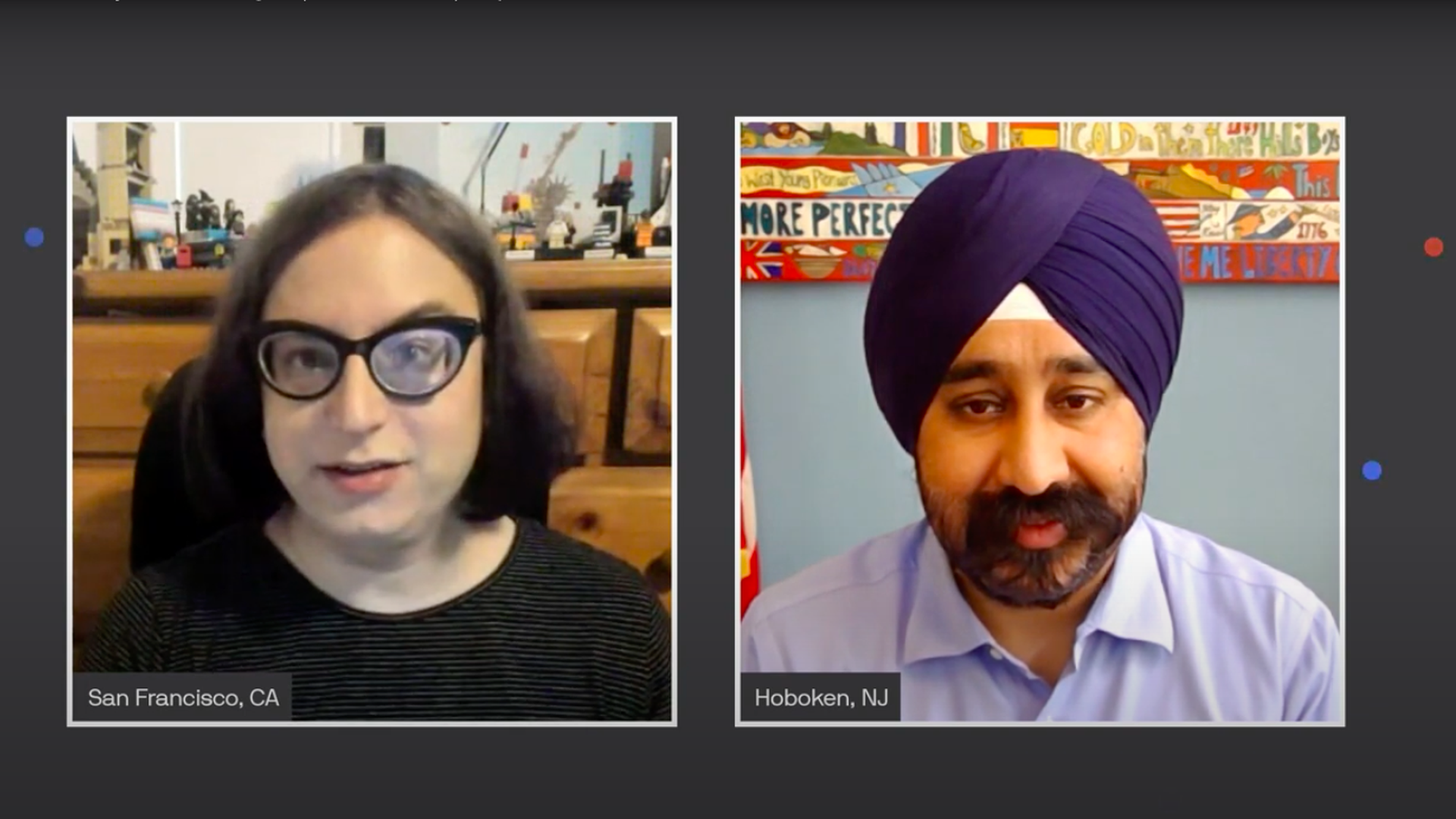
Hoboken, N.J., Mayor Ravinder Bhalla said at an Axios virtual event Friday that the city is ramping up its bike-share program with Citi Bike to make commuting to Manhattan and Jersey City easier.
Why it matters: Hoboken is the fifth-most densely populated city in the country and many of its residents use public transit. Fear of using public transit is still high during the coronavirus pandemic.
DNC week: On Friday, August 21 Axios Chief Technology Correspondent Ina Fried hosted an event on the future of how people get around in the era of COVID-19, featuring Rep. G.K. Butterfield (D-N.C.) and Hoboken, N.J. Mayor Ravinder Bhalla.
Mayor Bhalla discussed Hoboken's expansion of its bike-share program. Partnering with Citi Bike, residents will be able to commute to Manhattan and Jersey City without having to change e-bike systems.
On the city's dependence on mass transit: "Hoboken has the highest population of residents that rely on mass transit to commute to-and-from work every day in the country. That creates a real challenge for us,"
On strategizing how to make the commute as quick as possible: "We thought the most logical way to be more efficient...is to view these city borders as really artificial because it takes a 10-minute bike ride to get to NYC."
Rep. Butterfield discussed the need to prioritize public transportation for the economy to fully recover from the pandemic.
On the importance of equitable, accessible transportation: "If we don't have a robust transportation system, then we are not going to have a robust economy."
On autonomous vehicles: "The American people are not fully informed about autonomous vehicles and so we've got to wage a comprehensive campaign to educate the American people what it is and what it is not...Autonomous vehicles are safe, it's the future of transportation."
Axios co-founder and CEO Jim VandeHei hosted a View from the Top segment with Lyft Chief Policy Officer Anthony Foxx, and discussed the Lyft workforce, legislation in California, and the future of rideshare platforms.
"The reality is that the vast majority of our workers do not want to be employees...We've asked them & 71% prefer freedom of being independent contractors to the benefits of employment...What they really want is independence and benefits."
Postmaster General Louis DeJoy told the Senate Homeland Security Committee on Friday that he never discussed any changes to U.S. Postal Service policies with President Trump.
Why it matters: DeJoy, a Trump mega-donor, denied having any substantive policy conversations with the president amid increasing public scrutiny over proposed cost-saving measures that many fear could hinder the USPS' ability to properly handle mail-in ballots during November's election.
The TikTok shot clock is down to just 25 days, by which time it either has a deal for its U.S. business or has a presidential shutdown notice pinned to its back.
The state of play: Everyone is taking this timeline very seriously. It's possible that President Trump would give an extension, or find another rhetorical wriggle to save millennial face, but those close to the situation say it's a risk they have no intention of taking.
Joe Biden emphasized climate change in his speech accepting the Democratic nomination Thursday night, as the days leading up to it offered fresh evidence of the problem's scale and tensions within his coalition.
Why it matters: It was a statement of priority in the most important speech of Biden's campaign to unseat President Trump, and the address mentioned the topic repeatedly.
A new report from several groups shows strong opposition among asset managers, financial advisers and other industry actors to Labor Department plans to restrict sustainable investing — or ESG, for environmental, social, and governance.
Why it matters: The rule has transformed the Labor Department into a battleground over climate (though of course climate is just one part of ESG investing).
Vice President Mike Pence told "CBS This Morning" on Friday that he doesn't "know anything about" the QAnon conspiracy theory, adding that he dismisses it "out of hand" when pressed.
Why it matters: President Trump said earlier this week that he does not know much about QAnon, but said its supporters "are people that love our country," drawing a wave of controversy.
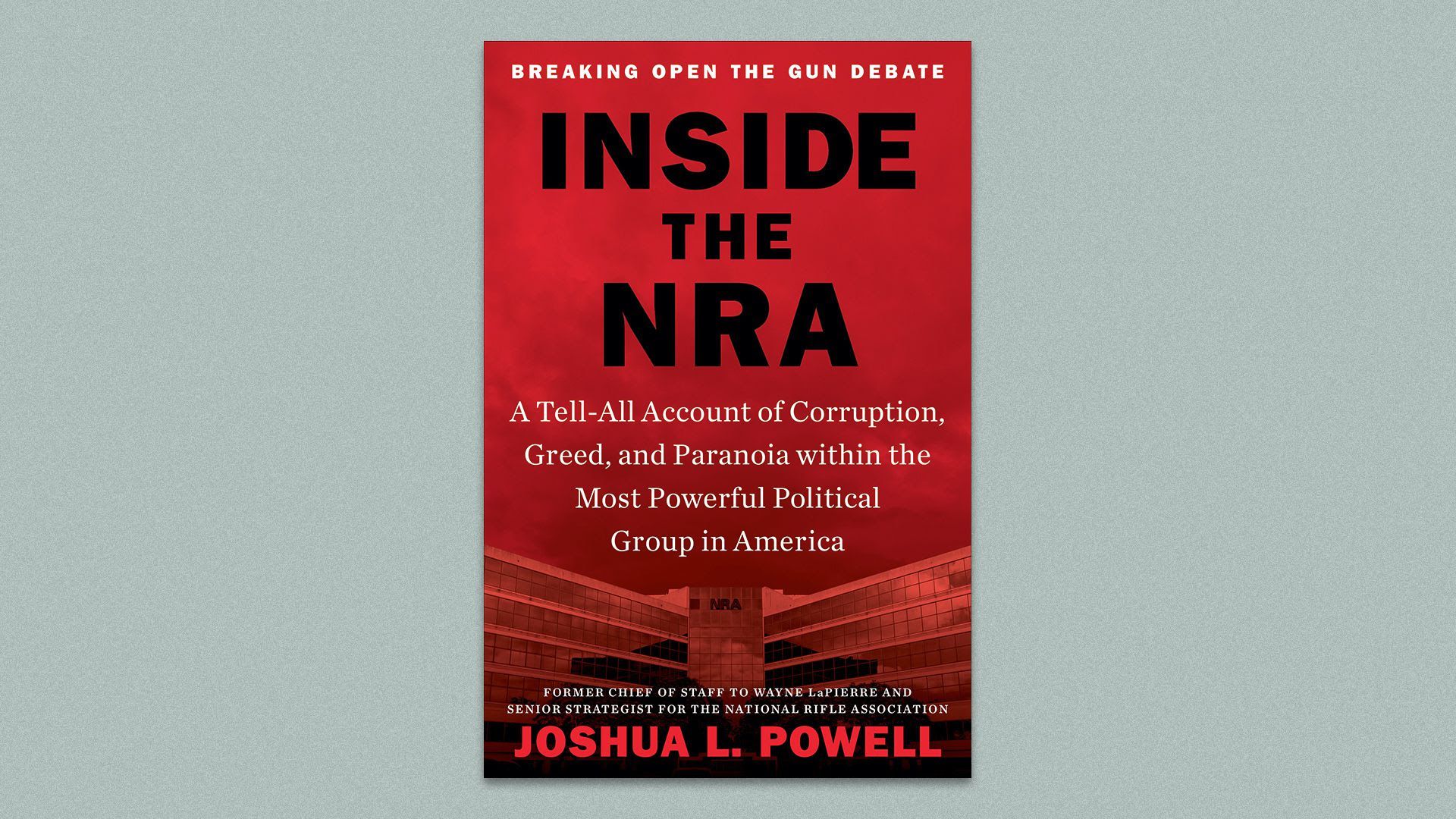
Josh Powell, former chief of staff to longtime NRA leader Wayne LaPierre, writes in "Inside the NRA" — out Sept. 8 from Twelve — that the pro-gun group botched its response to the Parkland shooting of 2018, when "for the first time, parents and politicians began to fight back in a bigger, more organized way".
What they're saying: "Wayne went on the attack, blaming Democrats, the FBI, and socialism for the tragic shootings. ... Six years after Sandy Hook, it felt like we had done nothing to stop the violence and prevent shootings like Parkland from happening."
The state of play: "Without the foil of President Trump, ... CEOs will have to back specific policy proposals, build coalitions, and put real political muscle behind their principles."
In last night's acceptance speech, Joe Biden never said President Trump's name. The former vice president used the biggest stage of his 50 years in politics to humanize himself, with the intended subtext: "I am you. You are me."
If you didn’t know anything about Biden before last night, you’d remember four things: He conquered a childhood stutter, he lost his wife and daughter, found redemption and joy in Jill, then encountered grief again when Beau died.
Newsrooms around the U.S. are adding dozens of positions that involve covering race and social justice. They're also publishing statistics about their own staffs for the first time, in an effort to better address their decades-long shortcomings around diversity and inclusion.
Why it matters: A national awakening surrounding systemic racism in America ahead of an historic election is awakening newsrooms to the fact that they can't adequately cover the current state of affairs if their editorial teams don't reflect the changing dynamics of their readership and the nation.
Immigrant voters could be pivotal this fall to election outcomes in some battleground suburbs, according to a new analysis of county-level Census data reviewed by Axios.
Why it matters: Texas, Georgia and Virginia as well as Florida could see swings with statewide or national implications. Congressional races to watch include Texas' 22nd district, Georgia's 7th and California's 39th, 45th, and 48th — reaching into countieswhere immigrants comprise around one in five eligible voters, according to the analysis by New American Economy (NAE).
Sen. Tammy Duckworth (D-Ill.) rebuked President Trump at the Democratic National Convention for not confronting Vladimir Putin over intelligence reports that alleged Russia paid the Taliban to kill U.S. troops in Afghanistan.
Why it matters: Duckworth, an Army veteran who lost her legs in the Iraq War, sought to draw a sharp contrast between Trump and Biden, whose son Beau was deployed to Iraq, on the issues of national security and protecting U.S. troops.
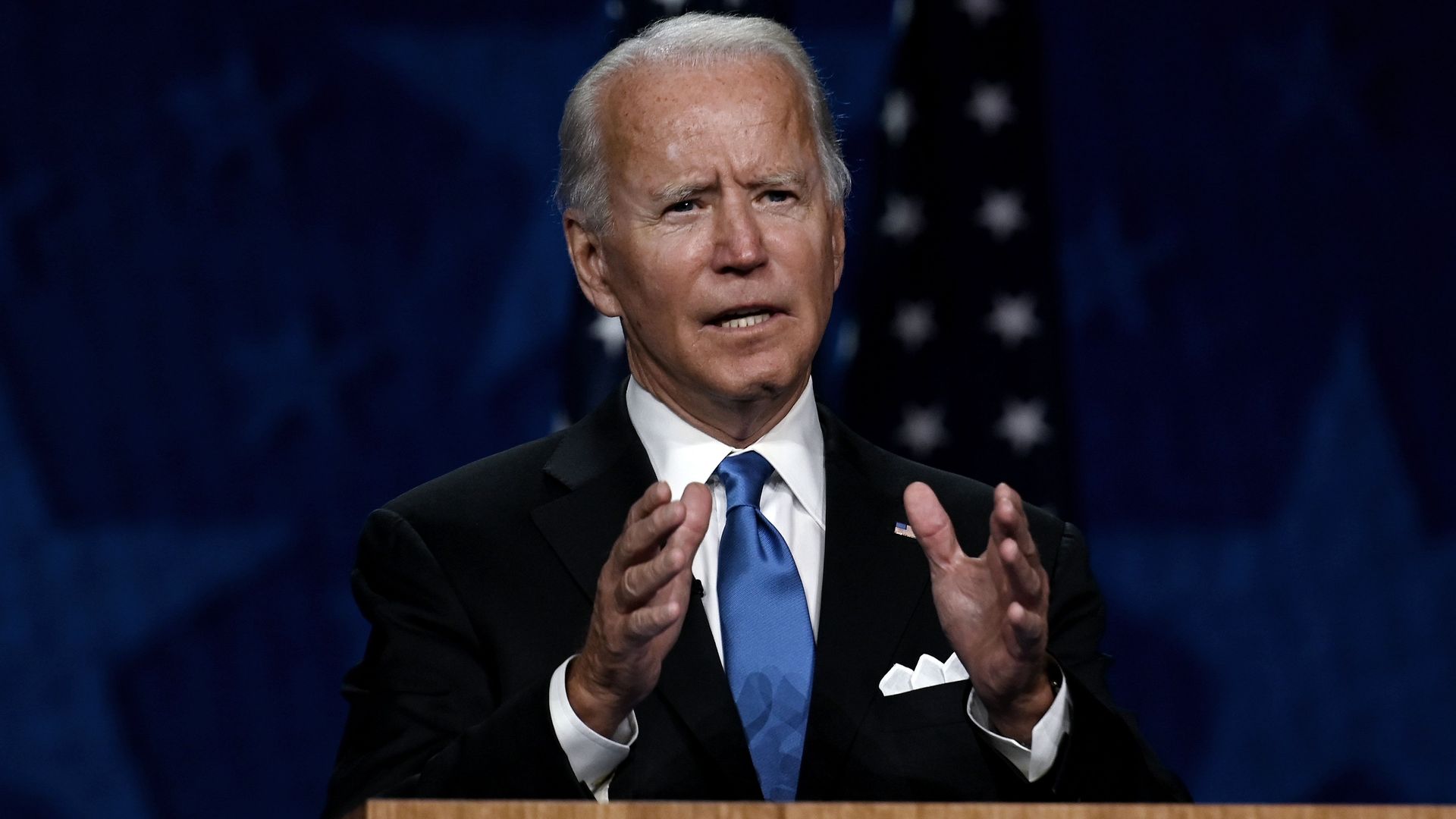
Joe Biden officially accepted the Democratic nomination in a speech largely centered on the coronavirus crisis — from the economic devastation and mass death it has caused, to the inequalities it has laid bare, to his campaign-defining argument that President Trump "has failed in his most basic duty to the nation: He's failed to protect us."
Why it matters: After three presidential runs, 36 years in the U.S. Senate, and eight years in the White House as vice president, tonight marked the most important speech of Biden's career — kicking off a 74-day sprint to what will be, in his words, a "life-changing" election.
Brayden Harrington, a 13-year-old from New Hampshire who struggles with a verbal stutter, addressed the Democratic National Convention on Thursday and shared a story about meeting Joe Biden and learning that "we were members of the same club."
Why it matters: Biden's boyhood stutter was the subject of a profile in The Atlantic earlier this year, following a series of verbal miscues during the primary debates. Biden's outreach to Harrington, who said the Democratic nominee "made me feel better about something that's bothered me my whole life," is one of a number of anecdotes told during the DNC that sought to underscore empathy as one of Biden's strongest traits.
Historian Jon Meacham invoked the words of Martin Luther King Jr. at the Democratic National Convention Thursday, saying that "bending the arc of the moral universe" toward justice "requires all of us" — and a "president of the United States with empathy, grace, a big heart and an open mind."
Why it matters: Meacham's task during his address was to define "The Soul of America" — the title of his 2018 bestseller. He said the soul is "animated by the proposition that we are all created equal and by the imperative to ensure that we are treated equally."
President Trump told Fox News's Sean Hannity he will be watching Joe Biden's acceptance speech as the Democratic nominee Thursday night and that there has been "tremendous hate" throughout the Democratic National Convention.
Why it matters: Trump tried to crash the DNC by calling into one of his favorite TV shows with a targeted message to geographical groups. The president focused on how a Biden presidency could impact the energy industry for a slew of states like Texas and Pennsylvania. He also reiterated that mail-in voting threatens election security — which contradicts the lengthy history and widespread use of the practice.
Comedian Julia Louis-Dreyfus, the emcee for Night 4 of the Democratic National Convention, concluded a segment on Joe Biden's faith by quipping: "Just remember, Joe Biden goes to church so regularly that he doesn't even need tear gas and a bunch of federalized troops to get there."
Why it matters: The line served as both a rebuke of President Trump — who faced widespread criticism after federal agents forcibly cleared protesters outside of the White House just ahead of his visit to St. John's Church, where he posed with a bible for a photo op — and a nod to Biden's reputation as a practicing Catholic.
Atlanta Mayor Keisha Lance Bottoms paid tribute at the Democratic National Convention Thursday to civil rights icon Rep. John Lewis, urging all Americans to "pass on the gift John Lewis sacrificed to give us" by registering and voting.
Why it matters: Voting, whether by mail or in-person, has been one of the most dominant overarching messages of all four nights of the DNC. Bottoms' powerful invocation of Lewis, who dedicated his life to securing voting rights for Black Americans, was following by a montage of clips and speeches from the life of the late Georgia congressman.
Appearing at the Democratic National Convention on Thursday, comedian Sarah Cooper — best-known for her viral lip-sync impersonations of President Trump on TikTok — mocked the president for his claims about mail-in ballots before breaking character to encourage all Americans to vote.
Why it matters: Cooper is one of dozens of figures over the past four nights of the convention to condemn Trump's attempts to undermine universal mail-in voting, which he has baselessly claimed will lead to a "rigged" election.
California Gov. Gavin Newsom (D) used his Democratic National Convention address on Thursday to highlight the real-world effects of climate change, speaking just a mile from the site of one of the over 370 wildfires that are currently ravaging his state.
What he's saying: "Well, I confess this is not where I expected to be speaking here tonight," said Newsom, who was originally set to speak at the DNC but remained in California to monitor the fires. "We are just coming off a record heat wave that led to 130 degree temperatures — the highest temperature ever recorded in California."
Former presidential candidate Andrew Yang said at the Democratic National Convention Thursday night that he understands and empathizes with those who voted for President Trump in 2016, but that recovery in this current crisis "is only possible with a change of leadership and new ideas."
Why it matters: The core theme of Yang's run was that Trump's victory in 2016 was rooted in the economic despair caused by thousands of jobs in America's heartland being lost to automation. Throughout his campaign, he repeatedly referred to Trump's election as simply a "symptom of the disease" exacerbated by the failures of the political class.
Hillary Clinton criticized her former Republican colleagues for their responses to the explosive findings in the Senate Intelligence Committee's report on 2016 Russian interference, accusing them of giving up "their principles, their values, their backbone" to follow President Trump.
Why it matters: The fifth and final volume of the committee's report released this week went further than the Mueller report in showing the extent of Russia's connections to members of the Trump campaign. But the reactions to the findings were starkly divided along partisan lines, with Republicans claiming that the report puts an end to any claims of Trump campaign "collusion" with Russia in 2016.