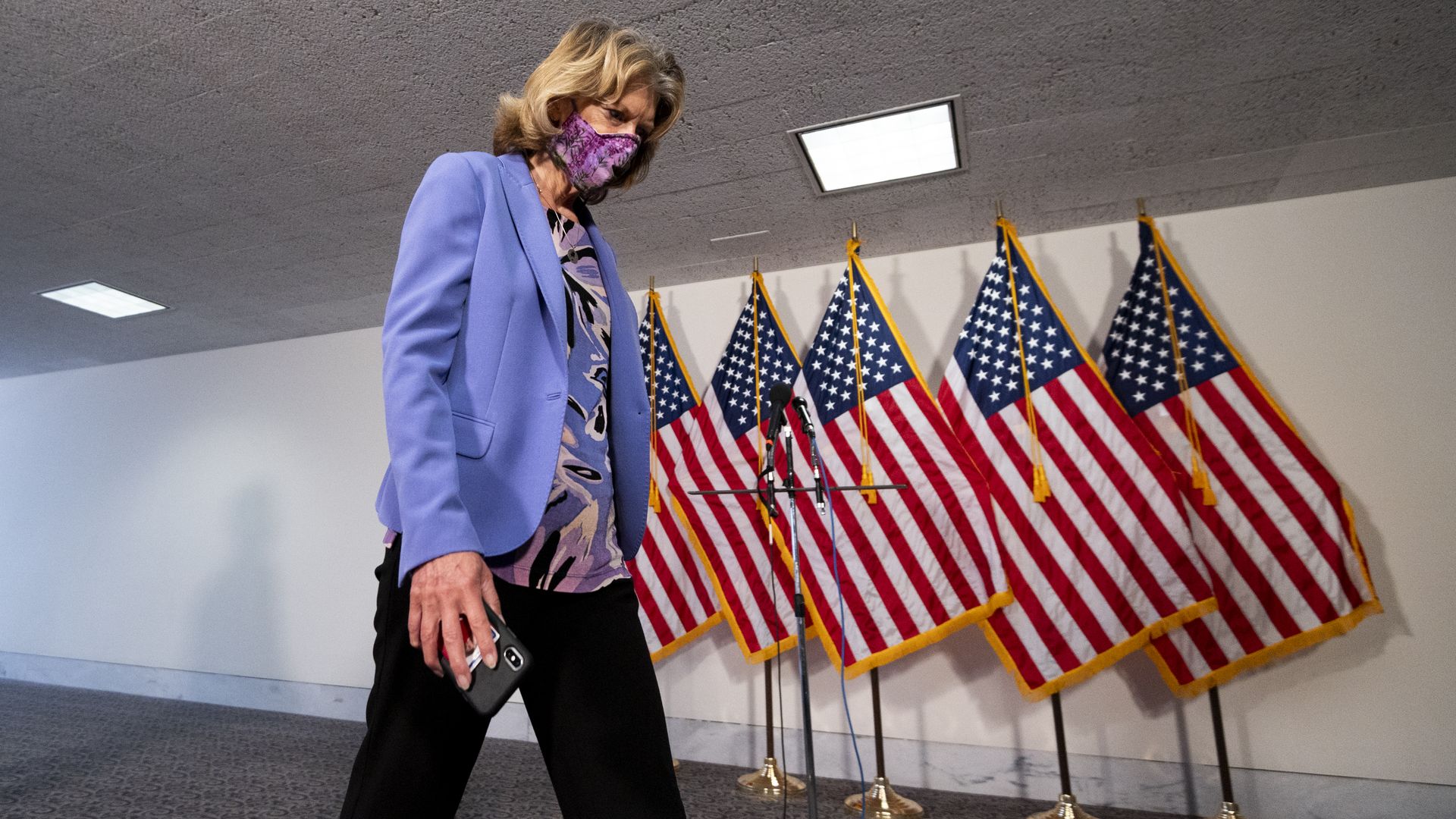
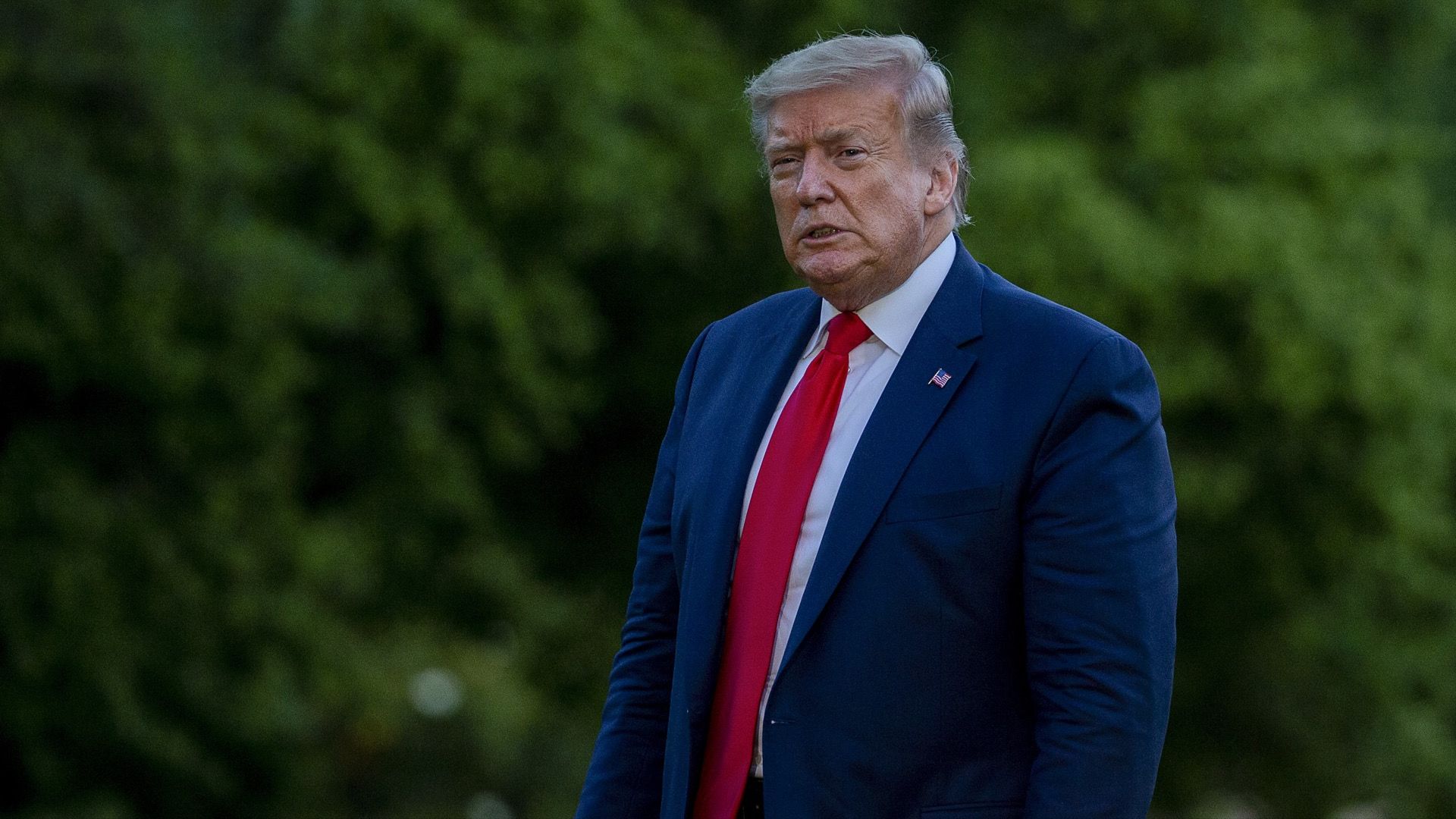
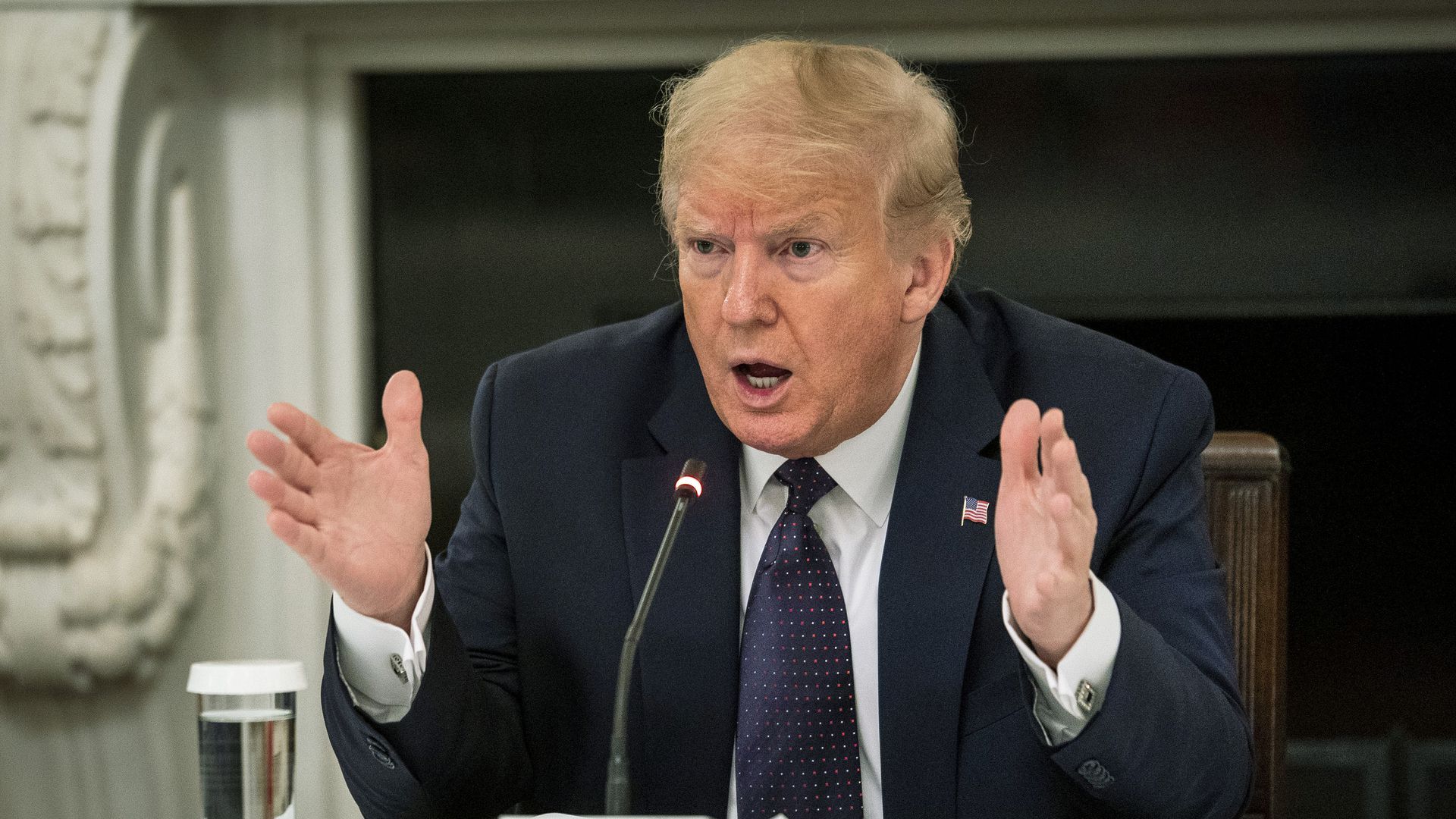
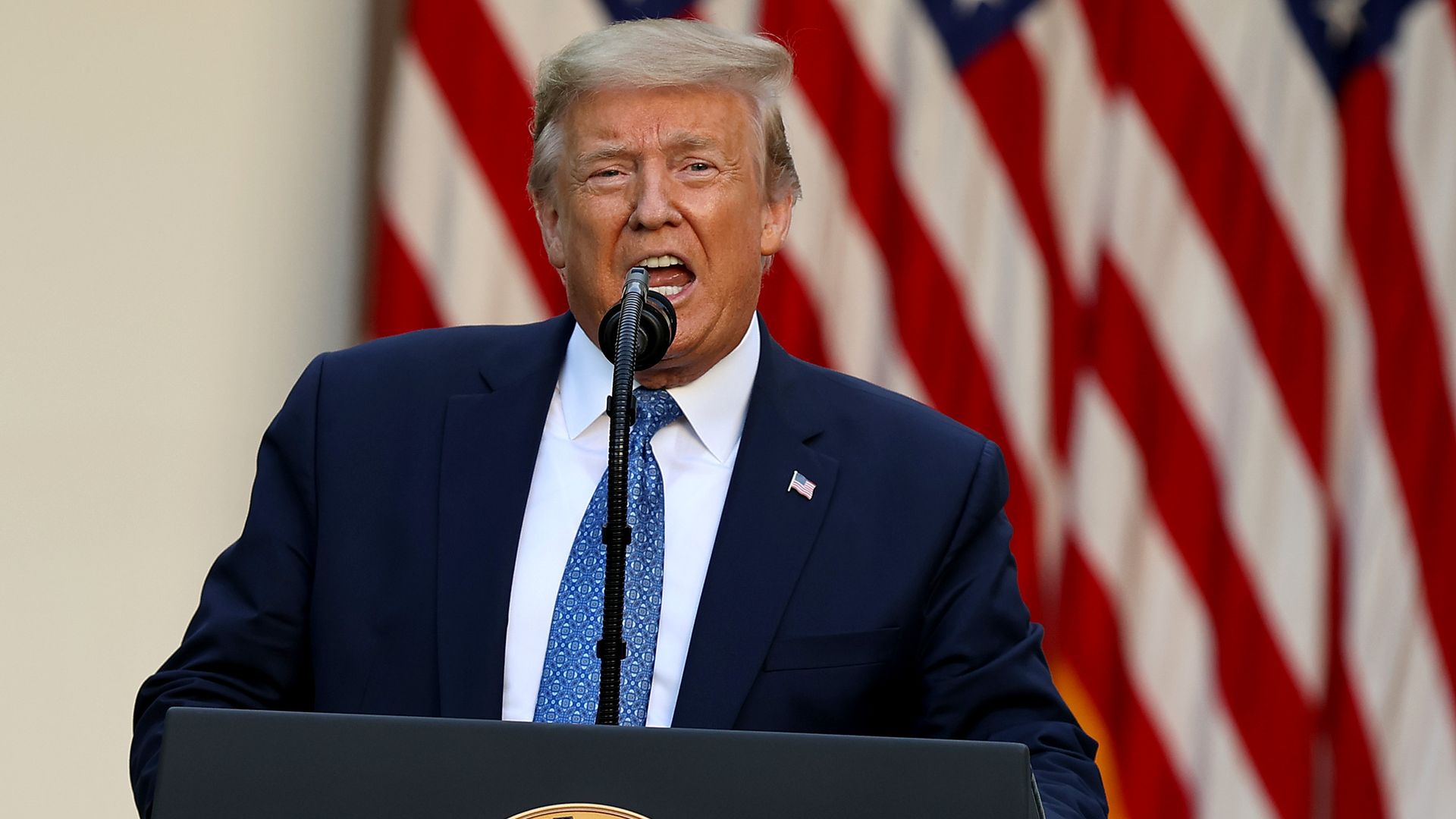
President Trump tweeted on Thursday that he would endorse "any candidate" with a pulse who runs against Sen. Lisa Murkowski (R-Alaska).
Driving the news: Murkowski said on Thursday that she supported former Defense Secretary James Mattis' condemnation of Trump over his response to protests in the wake of George Floyd's killing. She described Mattis' statement as "true, honest, necessary and overdue," Politico's Andrew Desiderio reports.
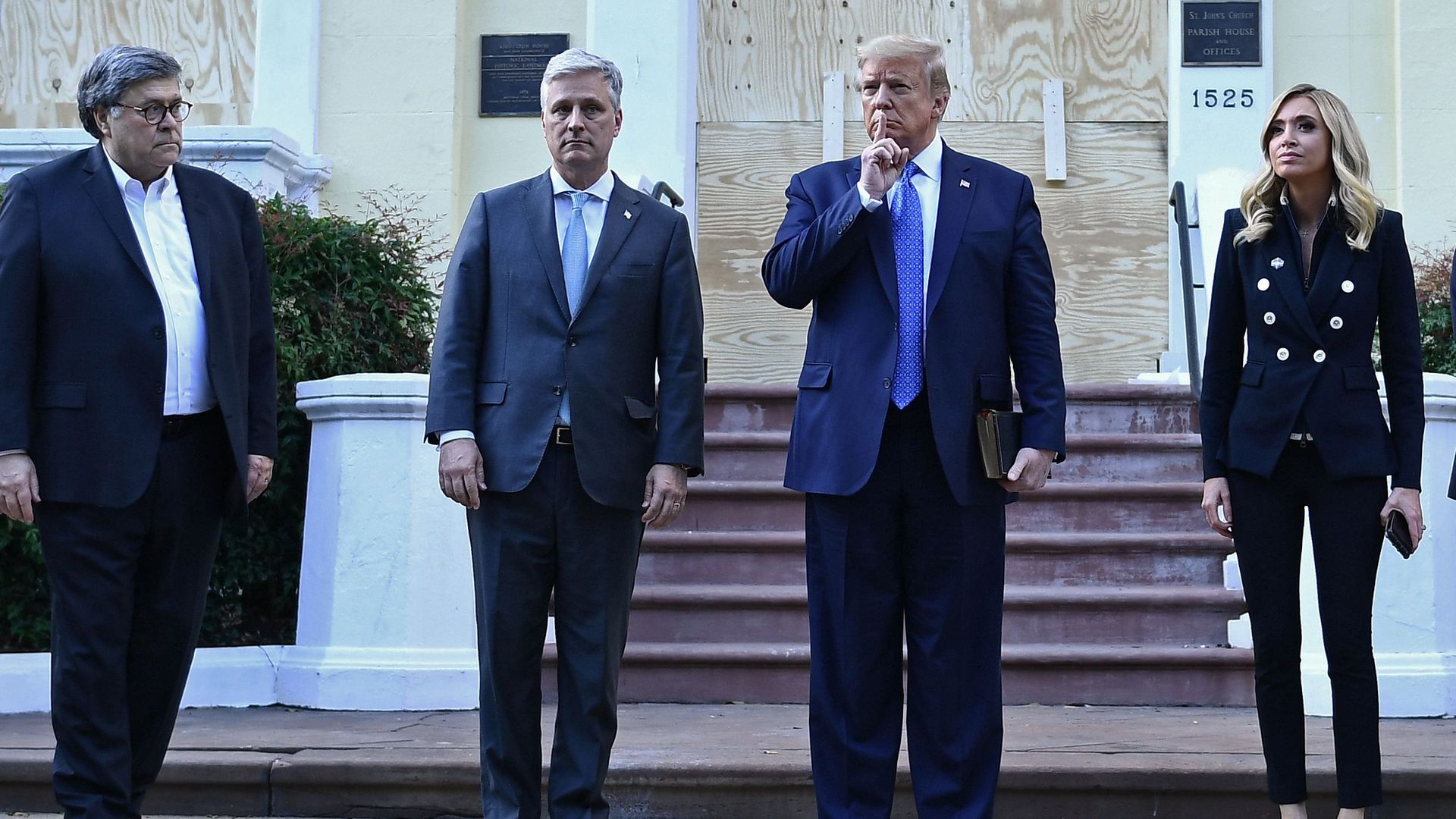
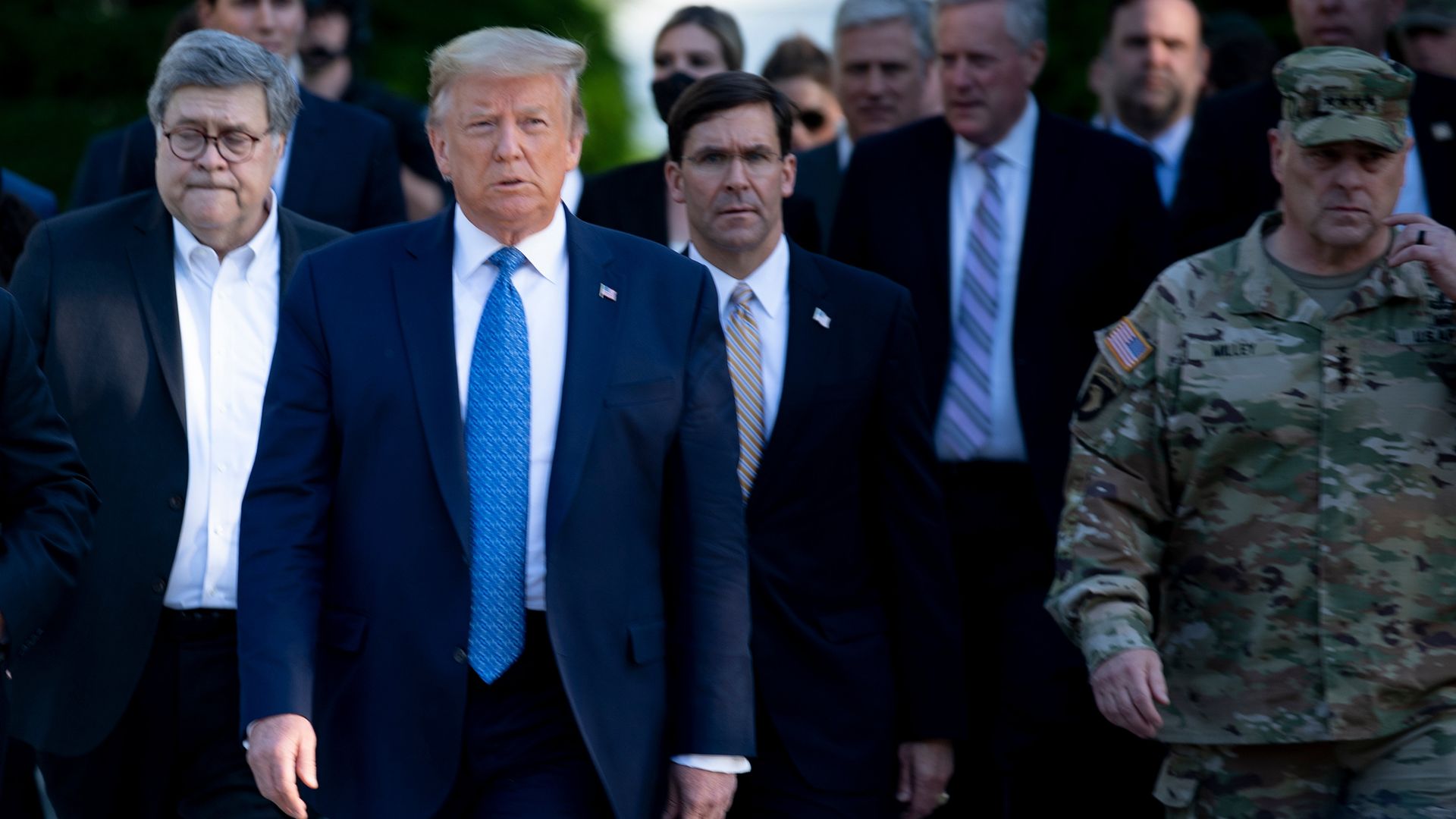
Civil rights groups filed a lawsuit Thursday against President Trump, Attorney General Bill Barr and other federal officials on behalf of Black Lives Matter and other peaceful protesters who were forcibly removed with rubber bullets and chemical irritants before Trump's photo-op at the historic St. John’s Episcopal Church on Monday.
What they're saying: "The President's shameless, unconstitutional, unprovoked, and frankly criminal attack on protesters because he disagreed with their views shakes the foundation of our nation’s constitutional order," said ACLU of D.C. legal director Scott Michelman. "And when the nation's top law enforcement officer becomes complicit in the tactics of an autocrat, it chills protected speech for all of us."
President Trump signed an executive order on Thursday allowing agencies to accelerate infrastructure projects that may have significant environmental impact without formally weighing those potential consequences or requesting public input, the Washington Post reports.
Why it matters: The move is based on Trump identifying the coronavirus pandemic as an economic emergency, which waives the usual rules that federal agencies follow when reviewing projects like highways and energy infrastructure.
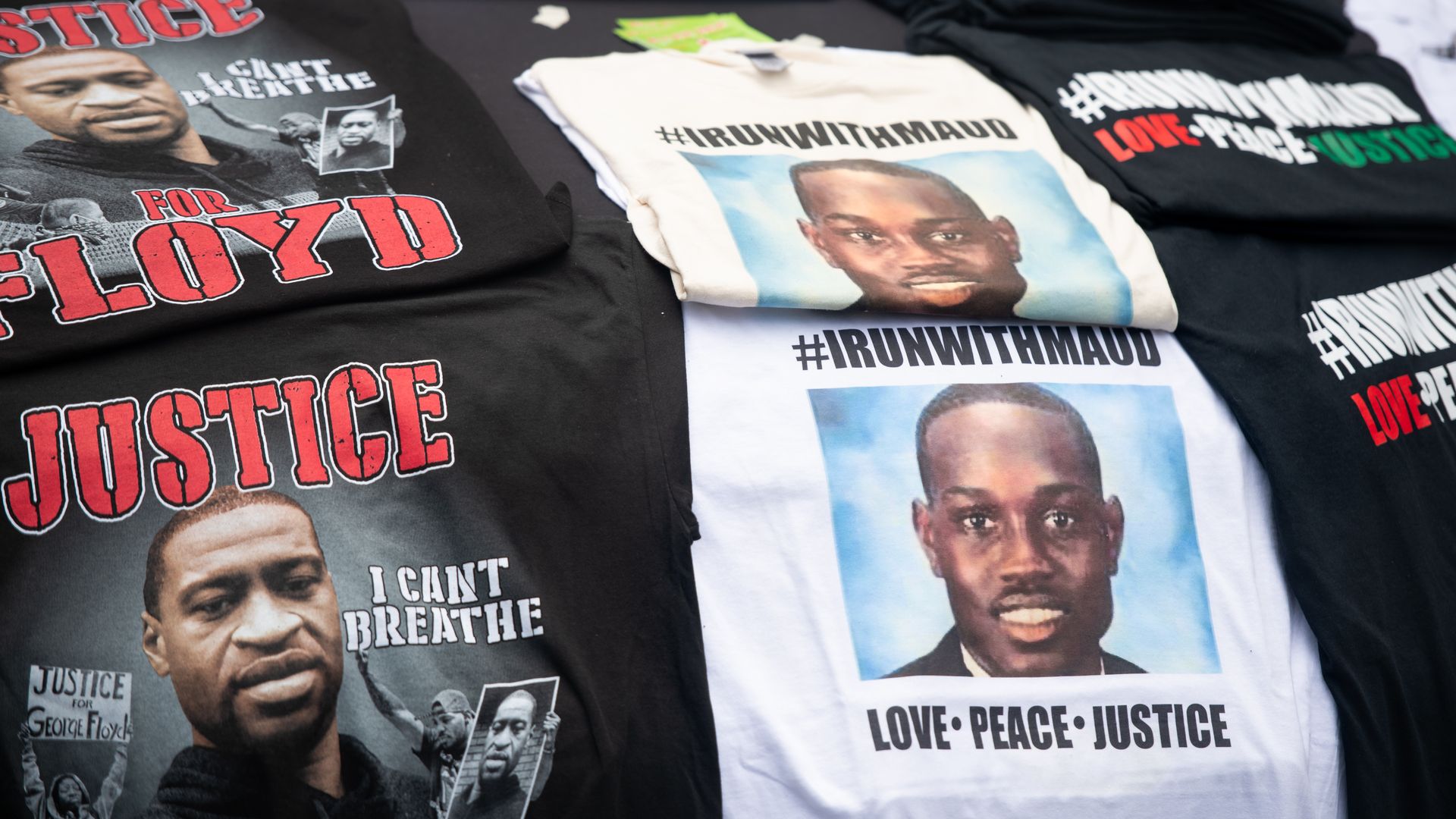
A judge ruled on Thursday that all three men charged in the death of Ahmaud Arbery, a 25-year-old black man who was shot and killed in February Glynn County, Georgia, will stand trial, AP reports.
Why it matters: The video of Arbery's death was among several catalysts in the mass protests against racial injustice that have unfurled across the country and world over the past week and a half.
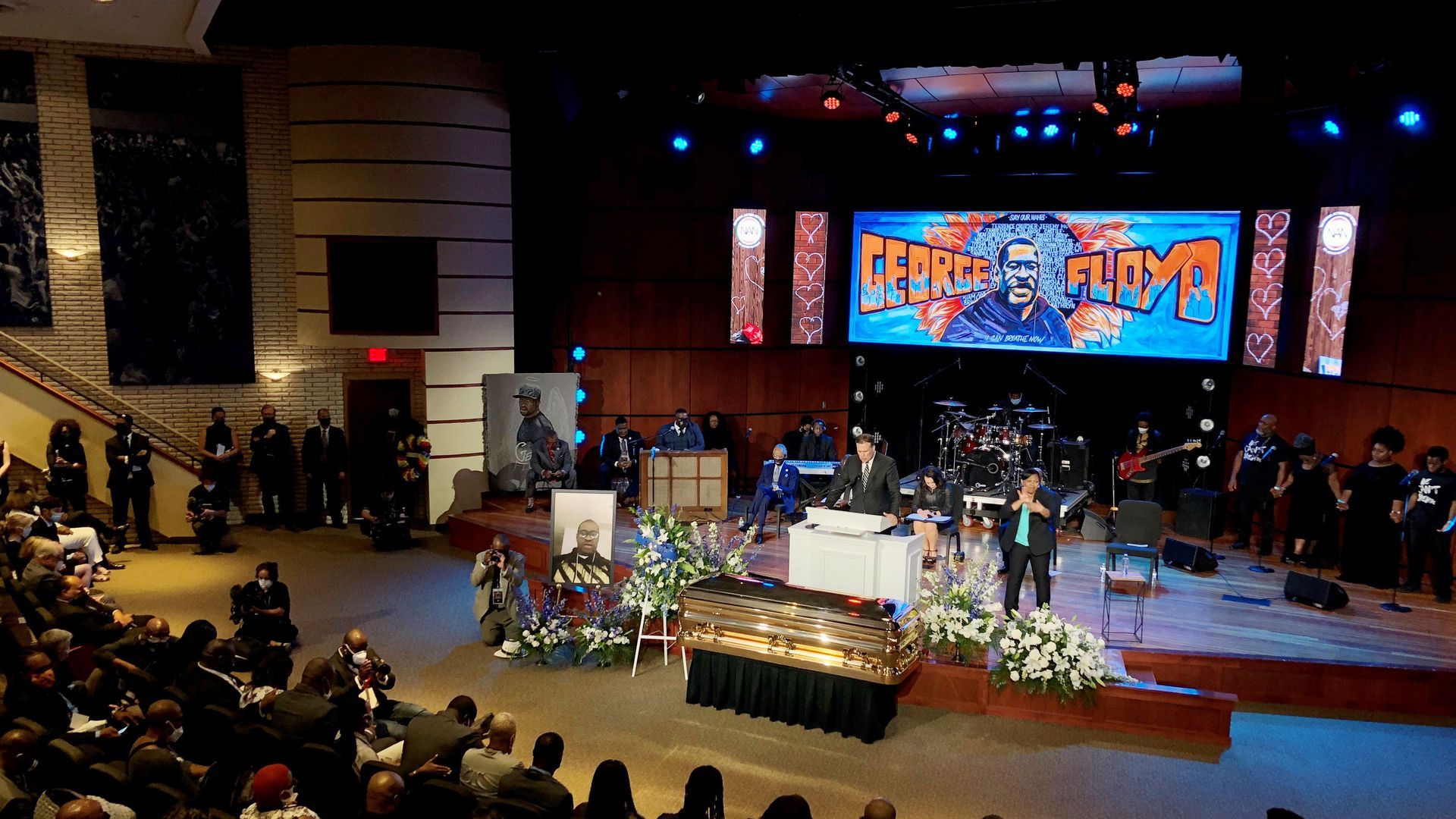
With politicians, clergy and law enforcement in attendance on Thursday in Minneapolis, the family of George Floyd demanded recognition for his life well lived.
Why it matters: Floyd has become the latest symbol of police brutality after he was killed last week when a police officer held a knee to his neck.
The family of George Floyd is teaming up with the Rev. Al Sharpton to hold a march on Washington on Aug. 28 — the 57th anniversary of the civil rights movement's March on Washington — to call for a federal policing equality act, Sharpton announced during a eulogy at Floyd's memorial service in Minneapolis Thursday.
Why it matters: The news comes amid growing momentum for calls to address systemic racism in policing and other facets of society, after more than a week of protests and social unrest following the killing of Floyd by a Minneapolis police officer.
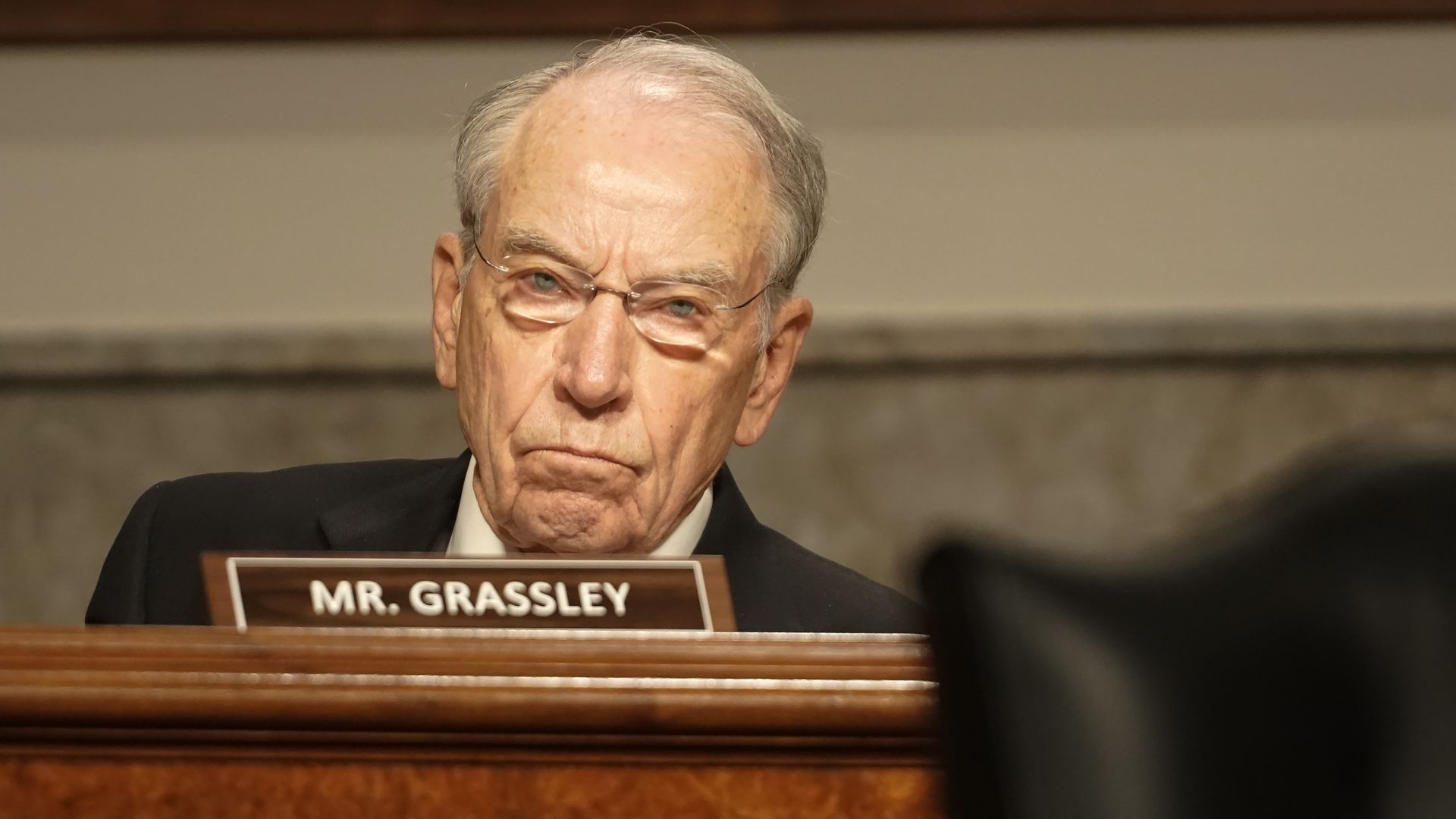
Sen. Chuck Grassley (R-Iowa) said on Thursday that he will block the confirmation of two of President Trump's nominees until the White House provides "adequate explanations" for why the inspectors general for the intelligence community and State Department were ousted in the past two months.
Why it matters: It's a rare attempt by a Republican to hold Trump accountable for his recent purge of federal watchdogs. Grassley has long considered himself a defender of inspectors general.
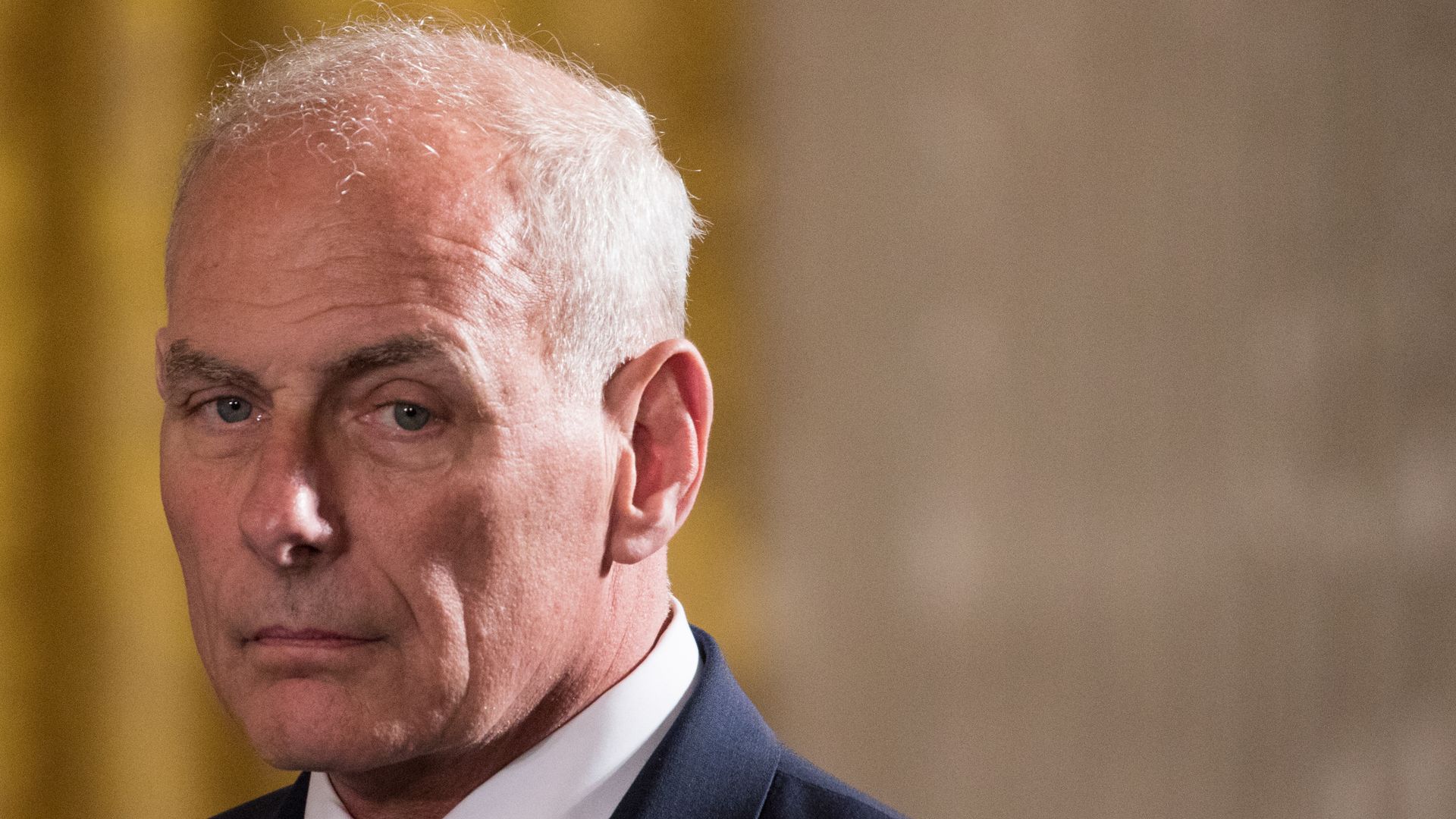
Former White House chief of staff John Kelly defended James Mattis on Thursday after President Trump attacked the former defense secretary as "the world's most overrated general" and claimed on Twitter that he was fired.
What he's saying: “The president did not fire him. He did not ask for his resignation,” Kelly told the Washington Post in an interview. “The president has clearly forgotten how it actually happened or is confused."
Attorney General Bill Barr said at a press conference Thursday that there was "no correlation" between his decision to order police to forcibly remove protesters from Lafayette Park and President Trump's subsequent visit to St. John's Episcopal Church earlier this week.
Driving the news: Barr was asked to respond to comments from Defense Secretary Mark Esper, who said Tuesday that he "did not know a photo op was happening" and that he does everything he can to "try and stay out of situations that may appear political."
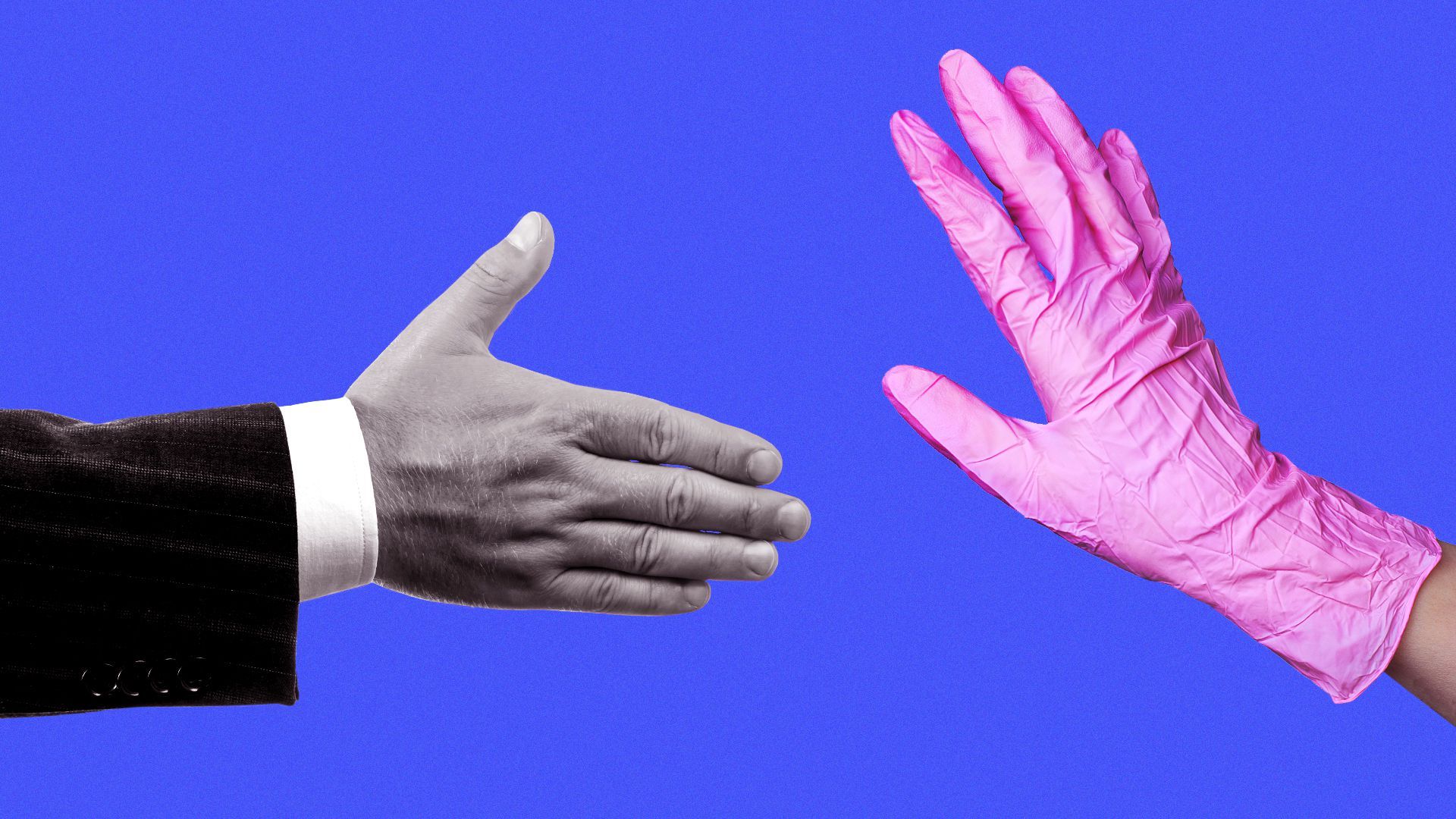
The U.S. is about to embark upon the most momentous social experiment in living memory: What happens when you take laissez-faire economic principles and apply them to public health?
Why it matters: When millions of people make their own individual risk/reward calculations, the result is superior to top-down decision-making by the government. That's the central tenet of capitalism — but you'd be hard-pressed to find any epidemiologists making the same argument.
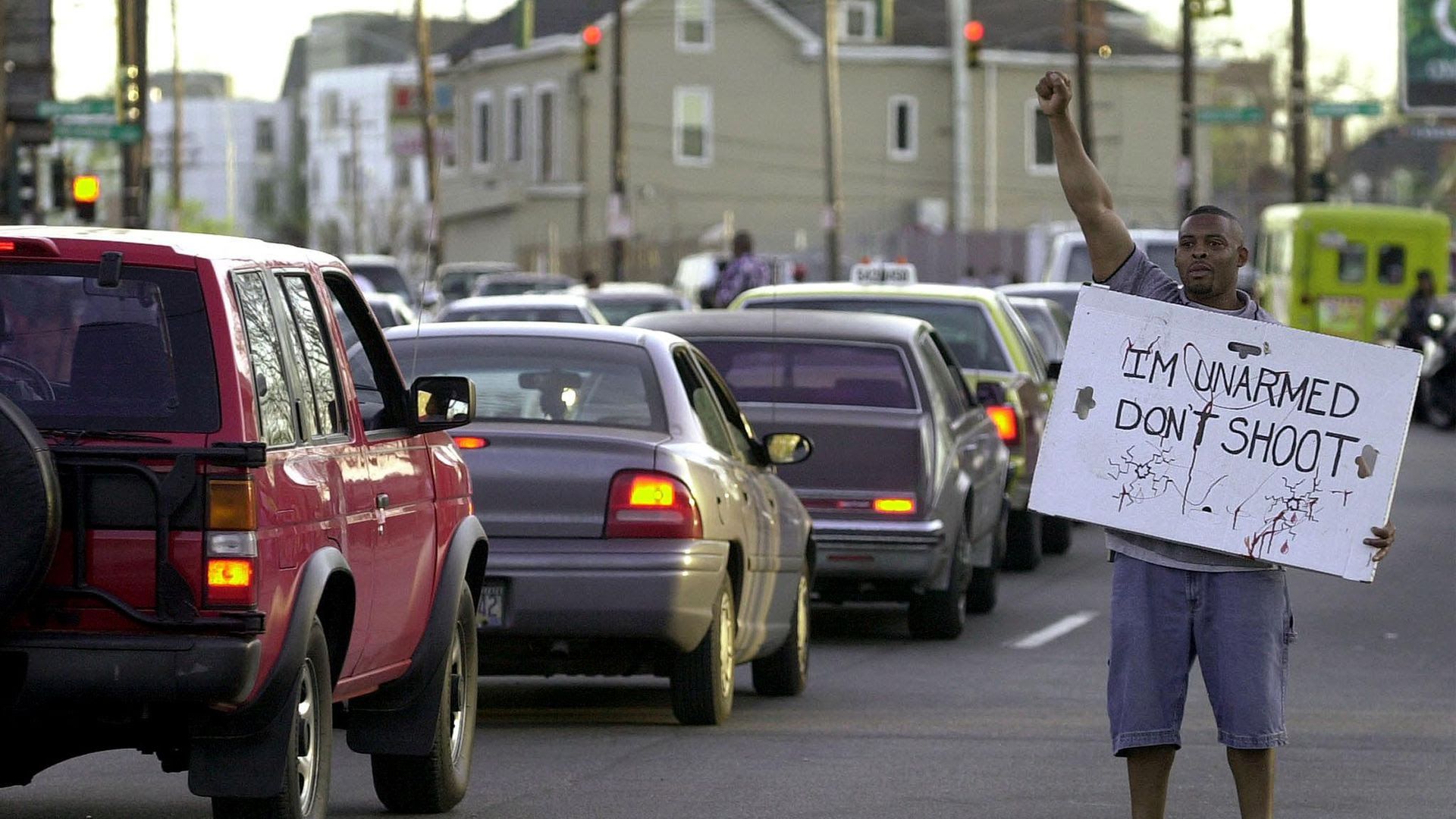
On April 7, 2001, 19-year-old Timothy Thomas — unarmed and wanted for minor misdemeanors like not wearing a seatbelt — was fatally shot while running from police in Cincinnati, Ohio.
Why it matters: In the wake of the 2001 riots that followed his killing, Cincinnati overhauled its policing policies, which could prove constructive for cities looking to do the same today.
Cities were already furloughing workers and considering cutting back essential services — including public safety — because of the dramatic drops in the local tax revenue that funds them. Now they're also dealing with turmoil in their streets.
Why it matters: "Unfortunately, the increasing levels of social unrest across the country reallocated efforts and scarce resources away from the former focus of getting state, regional and local economies back to some semblance of normalcy," per Tom Kozlik, head of municipal strategy and credit at HilltopSecurities.
Several cities are ending curfews after the protests over the death of George Floyd and other police-related killings of black people led to fewer arrests and less violence on Wednesday night.
The big picture: Los Angeles and Washington D.C. are the latest to end nightly curfews. Seattle Mayor Jenny Durkan tweeted Wednesday night that "peaceful protests can continue without a curfew," while San Francisco Mayor London Breed tweeted that the city's curfew would end at 5am Thursday.
Sen. Lisa Murkowski (R-Alaska) said Thursday that she agreed with former Defense Secretary James Mattis' criticism of President Trump, calling it "true and honest and necessary and overdue."
Why it matters: Murkowski, who has signaled her discomfort with the president in the past, also said that she's "struggling" with her support for him in November — a rare full-on rebuke of Trump from a Senate Republican.
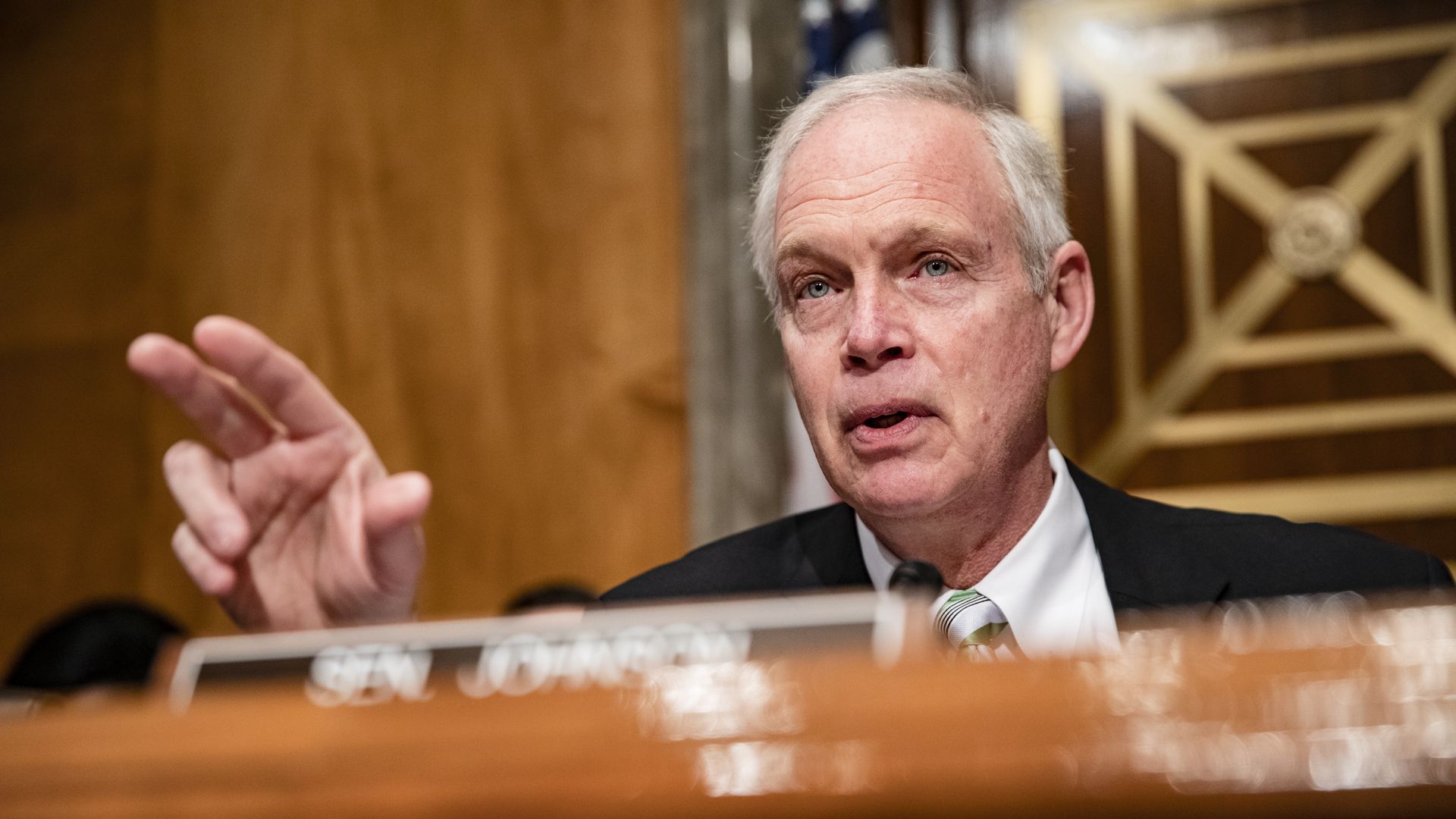
The Senate Homeland Security Committee voted 8-6 along party lines Wednesday to allow its chairman Sen. Ron Johnson (R-Wis.) to issue subpoenas to more than 35 individuals as part of a wide-ranging review of the origins of the Russia investigation.
The big picture: The sweeping authorization will allow Johnson, who is investigating the FBI's probe into Trump campaign and transition officials, to subpoena Obama administration officials like former FBI director James Comey, former CIA director John Brennan, former Director of National Intelligence James Clapper and more.
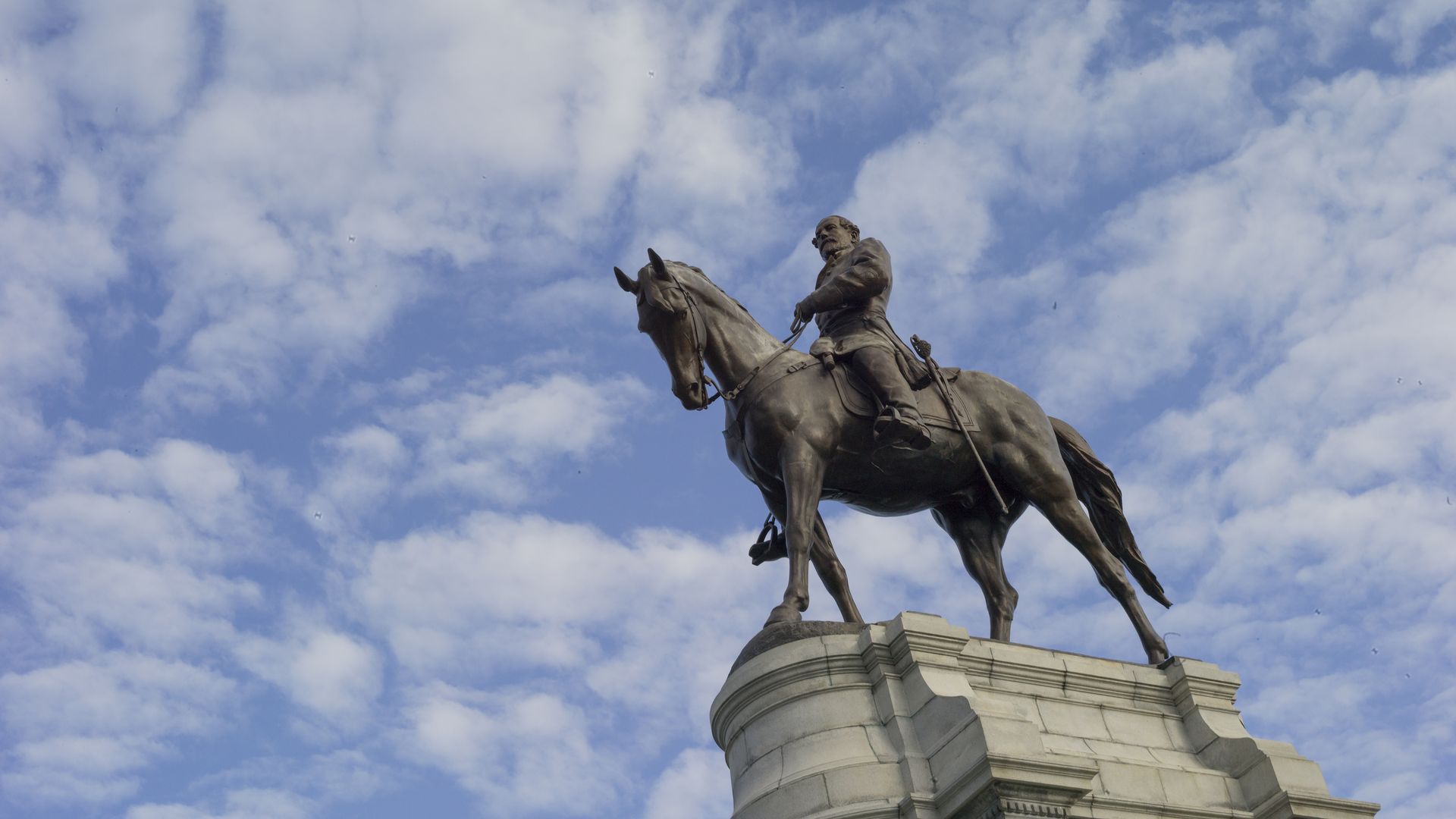
Virginia Gov. Ralph Northam announced on Thursday that the state will remove the statue of Confederate Gen. Robert E. Lee from Richmond's historic Monument Avenue.
Why it matters: It's a watershed moment for Virginia, which has been at the center of a years-long national debate about whether Confederate monuments should be displayed publicly. That discussion reached a boiling point when protests about a statue of Lee in Charlottesville turned violent in 2017.
The Republican National Committee is planning site visits over the next 10 days to more than a half-dozen cities — across the South and into Texas and Arizona — as it scrambles for a new convention host, people familiar with the internal discussions tell Axios.
Driving the news: The RNC's executive committee voted Wednesday night to allow most of the convention to move — with only a smaller, official portion remaining in Charlotte — after North Carolina's governor said the coronavirus pandemic would mean a scaled-back event with social distancing and face coverings.
Sen. Lindsey Graham (R-S.C.) said Thursday that former Defense Secretary James Mattis' criticism of President Trump's response to mass protests in the wake of George Floyd's killing was "unfair" during an interview on "Fox & Friends."
What he's saying: "To General Mattis, I think you're missing something here, my friend. You're missing the fact that the liberal media has taken every event in the last three-and-a-half years and laid it at the president's feet."
House Democrats unveiled a five-year, roughly $500 billion transportation proposal Wednesday aimed at bolstering mass transit and creating carbon-cutting initiatives.
Why it matters: The bill arrives as mass transit agencies are struggling with a collapse in ridership from the coronavirus pandemic, and facing a tough future as social distancing will require reduced capacity and virus-wary riders may stay away in favor of cars.
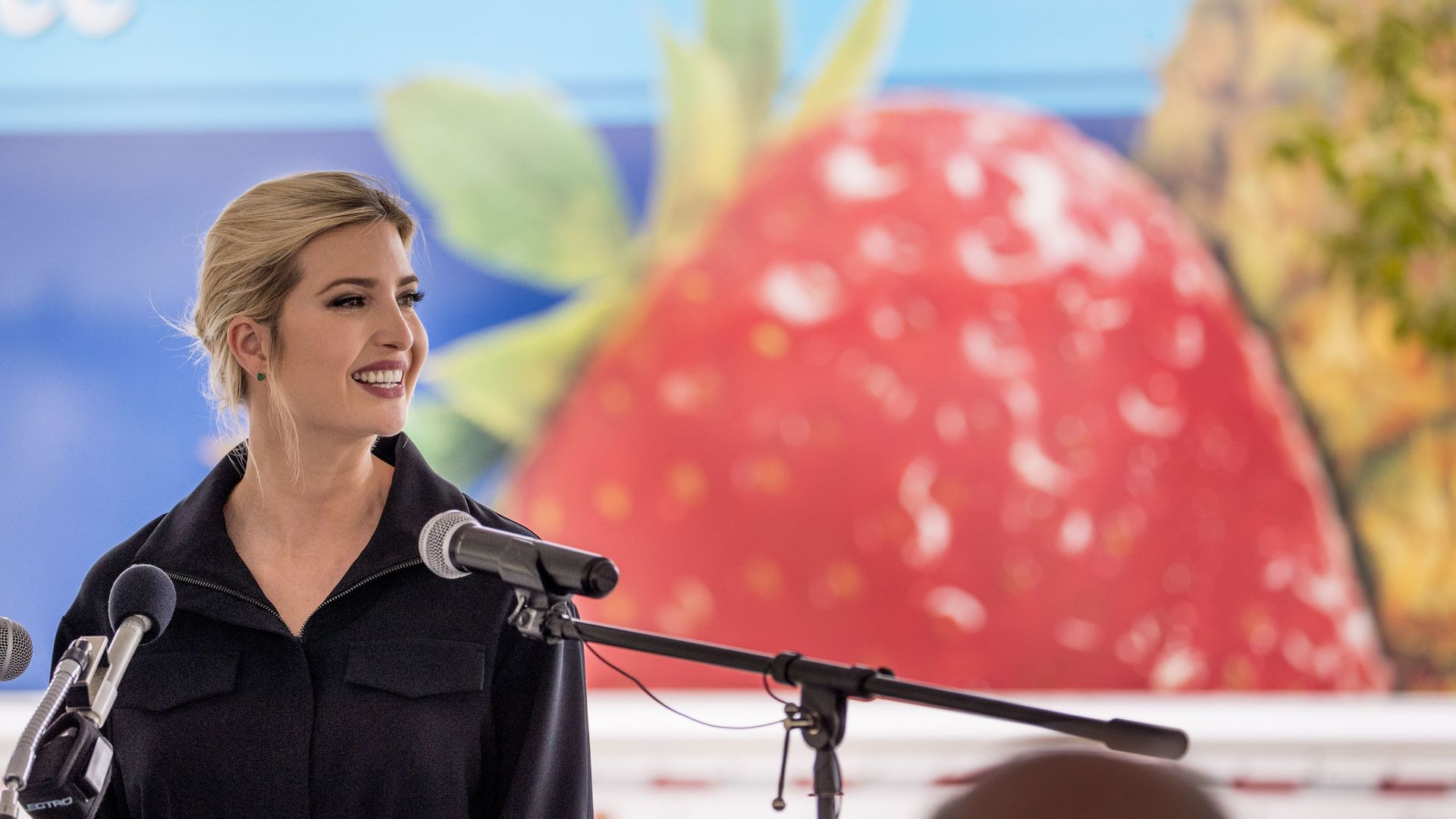
Ivanka Trump, delivering a virtual commencement address to WSU Tech in Wichita, Kansas, on Saturday, will say: "You are a wartime graduate."
"Our entire society is engaged in a national endeavor to defeat the virus, protect our fellow citizens, and open up America again to rebuild our economy," the presidential adviser says in prepared remarks. "Amidst the uncertainty, your training ... has prepared you for exactly this moment."
President Trump is confronting the most dire political environment of his presidency, with his support dropping fast from Texas to Wisconsin, even among his base of religious and older voters.
Why it matters: Top Republicans tell Axios that Trump's handling of the nation's civil unrest, including his hasty photo op at St. John's Church after the violent clearing of Lafayette Park, make them much more worried about his chance of re-election than they were one week ago.
"Defund the police" isn't just a slogan on a protester's sign — it's a political movement to relieve cops of responsibility for managing intractable social problems and shift spending to agencies that are better equipped to handle them.
Why it matters: The aftermath of George Floyd's killing has brought a renewed focus to the two dominant trends in policing: sweeping reforms on one side, militarization on the other. Neither of these responses will make our cities safer or our justice system fairer, civil rights activists argue, because the problems are much broader and deeply entrenched in society.
Mayors across the country are vocally condemning the police killing of George Floyd, marching with protesters in their streets and outlining concrete steps to address the systemic racism that still plagues U.S. communities.
Why it matters: De-escalating the violence that's erupted amid protests is only the start of rebuilding a constructive relationship between the public and local law enforcement. And mayors are in a unique position to do that, given their close relationships with both.
Defense Secretary Mark Esper said at a press briefing Wednesday that he does not currently support invoking the Insurrection Act, an 1807 law that permits the president to use active-duty troops on U.S. soil, in order to quell protests against racial injustice.
Why it matters: President Trump threatened this week to deploy military forces if state and local governments aren't able to squash violent protests. Axios reported on Tuesday that Trump is backing off the idea for now, but that he hasn't ruled it out.
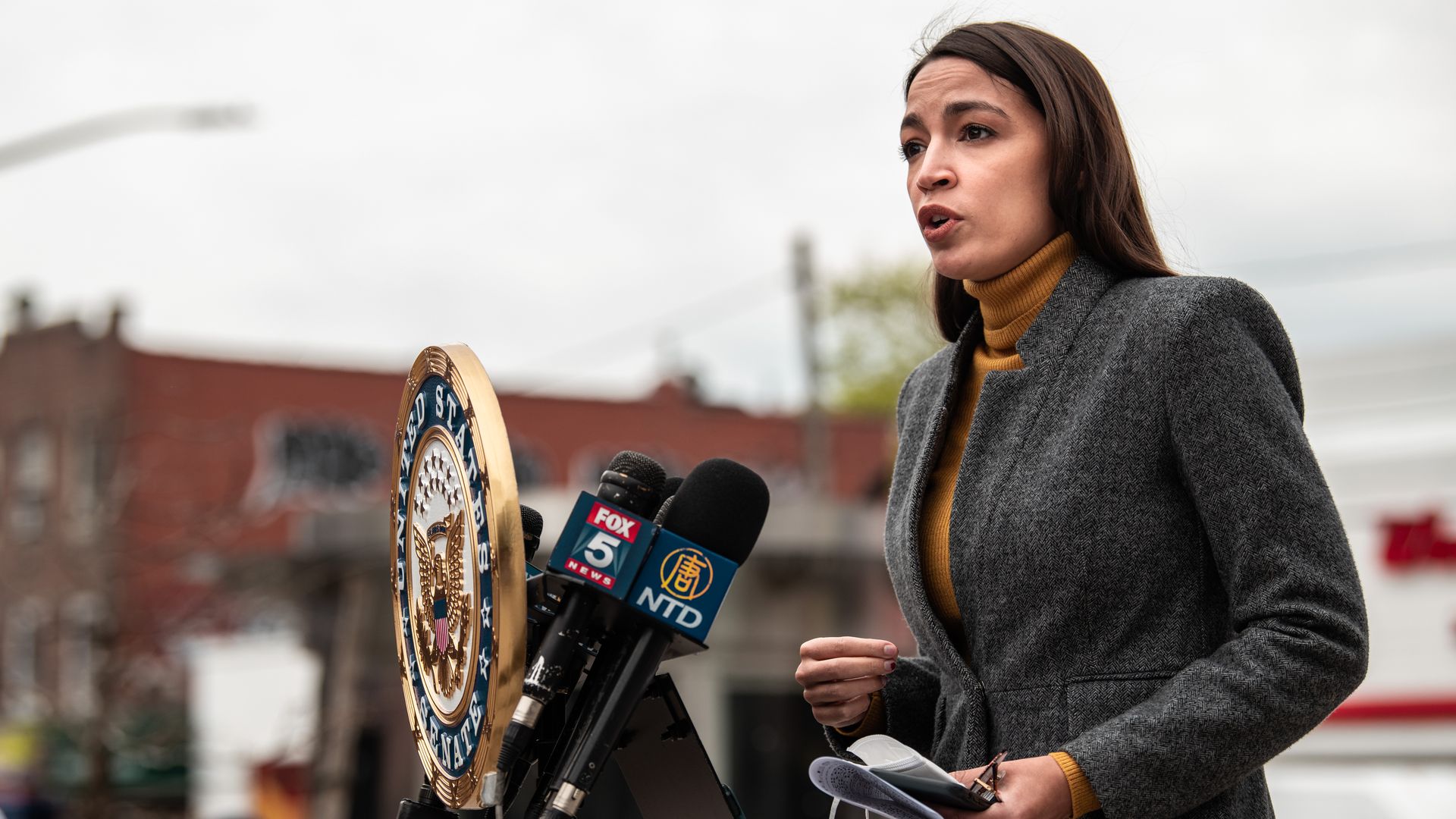
Rep. Alexandria Ocasio-Cortez (D-N.Y.) on Wednesday endorsed Jamaal Bowman over incumbent House Foreign Affairs Committee Chair Eliot Engel (D) for New York's 16th congressional district.
Why it matters: Bowman, if elected, would end Engel's 16-term career in Congress, much like Ocasio-Cortez concluded former Rep. Joe Crowley's 10-term streak as a New York congressman in 2018. AOC's endorsement holds weight with young, progressive voters.
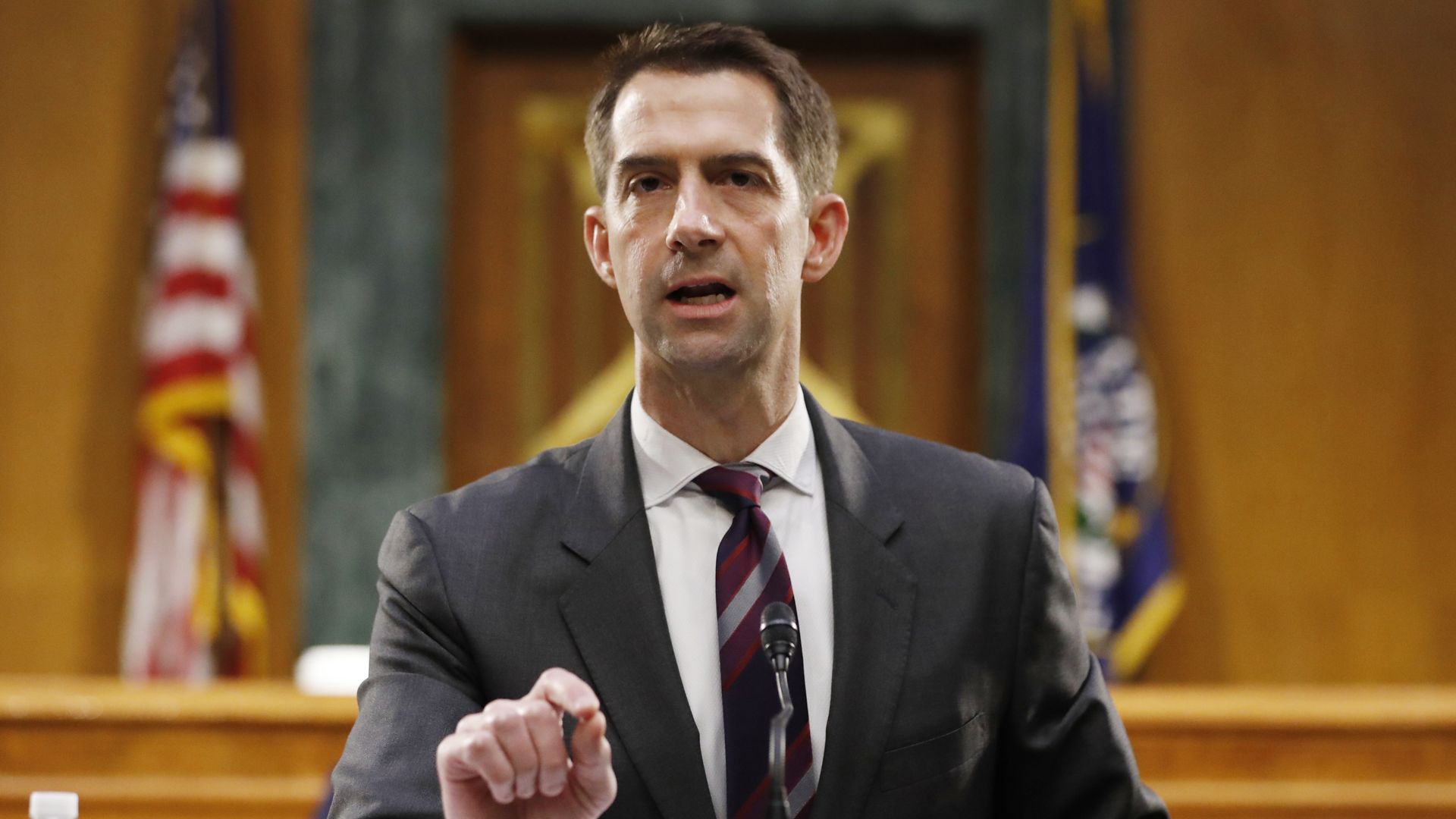
New York Times employees on Wednesday posted en masse on social media saying that the editorial board's decision to run an op-ed by Sen. Tom Cotton (R-Ark.) calling to "Send In the Troops," put black Times' staff members in danger.
What he's saying: Cotton wrote that the U.S. military should be sent to cities across the country to address protests following the death of George Floyd, saying, "One thing above all else will restore order to our streets: an overwhelming show of force to disperse, detain and ultimately deter lawbreakers."
What he's saying: "Probably the only thing Barack Obama & I have in common is that we both had the honor of firing Jim Mattis, the world’s most overrated General. I asked for his letter of resignation, & felt great about it. His nickname was 'Chaos', which I didn’t like, & changed it to 'Mad Dog'"
The Senate unanimously passed a bill on Wednesday to loosen some of the rules that small businesses must follow when applying for Paycheck Protection Program loans.
By the numbers: Businesses now have 24 weeks to use loans obtained through the program, instead of eight weeks. Only 60% of a PPP loan now has to be used for payroll, instead of 75% — a requirement that "tens of thousands of borrowers" weren't expected to meet, per a recent inspector general report.






/2020/06/04/1591289927209.gif?w=3840)