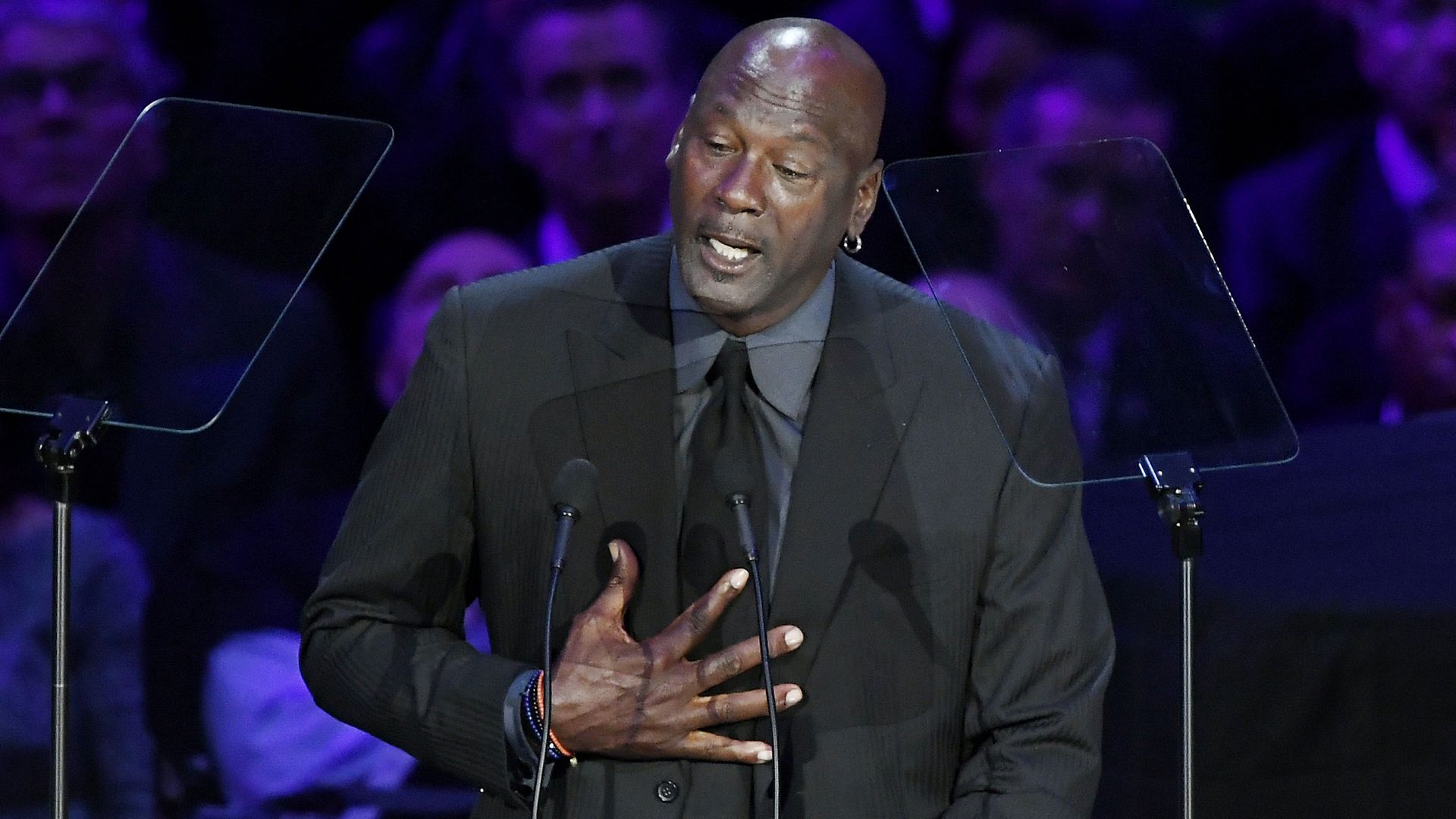
Michael Jordan and the Jordan Brand announced on Friday plans for a $100 million donation over the next decade "to organizations dedicated to ensuring racial equality, social justice and greater access to education."
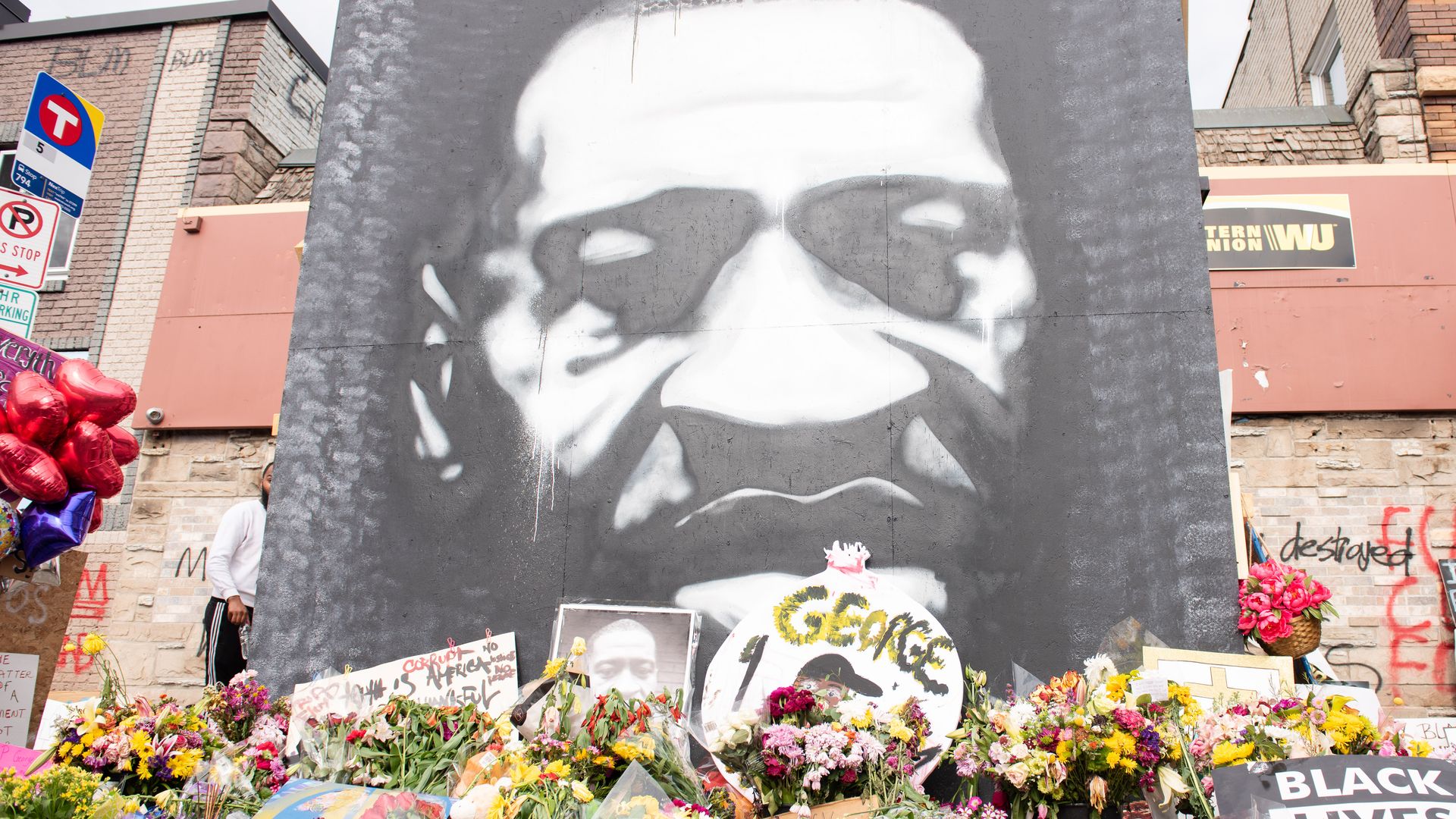
Driving the news: Following George Floyd's killing and 11 days worth of Black Lives Matter protests in cities across the country, a variety of current and former athletes have also called for social justice reform.
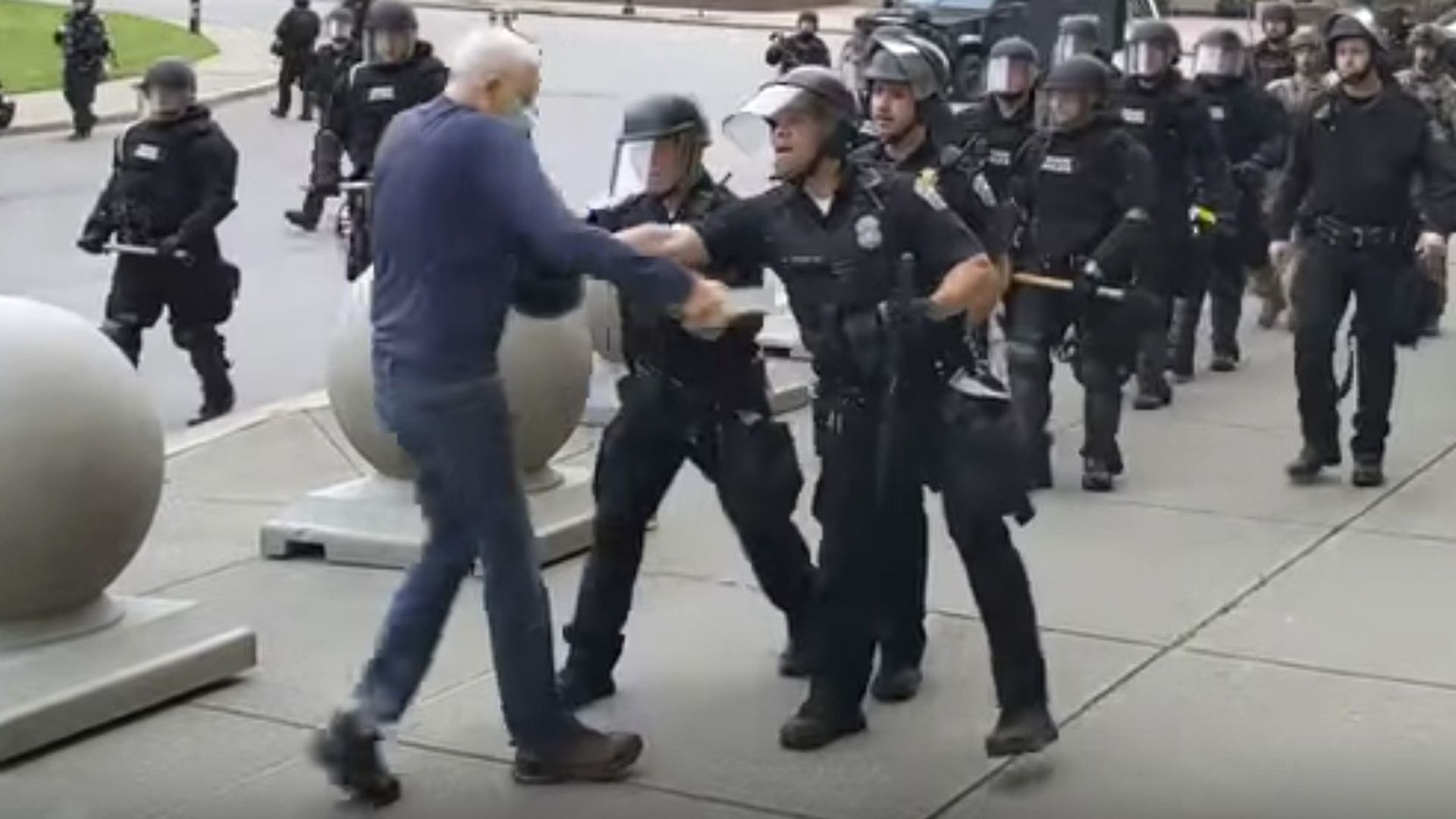
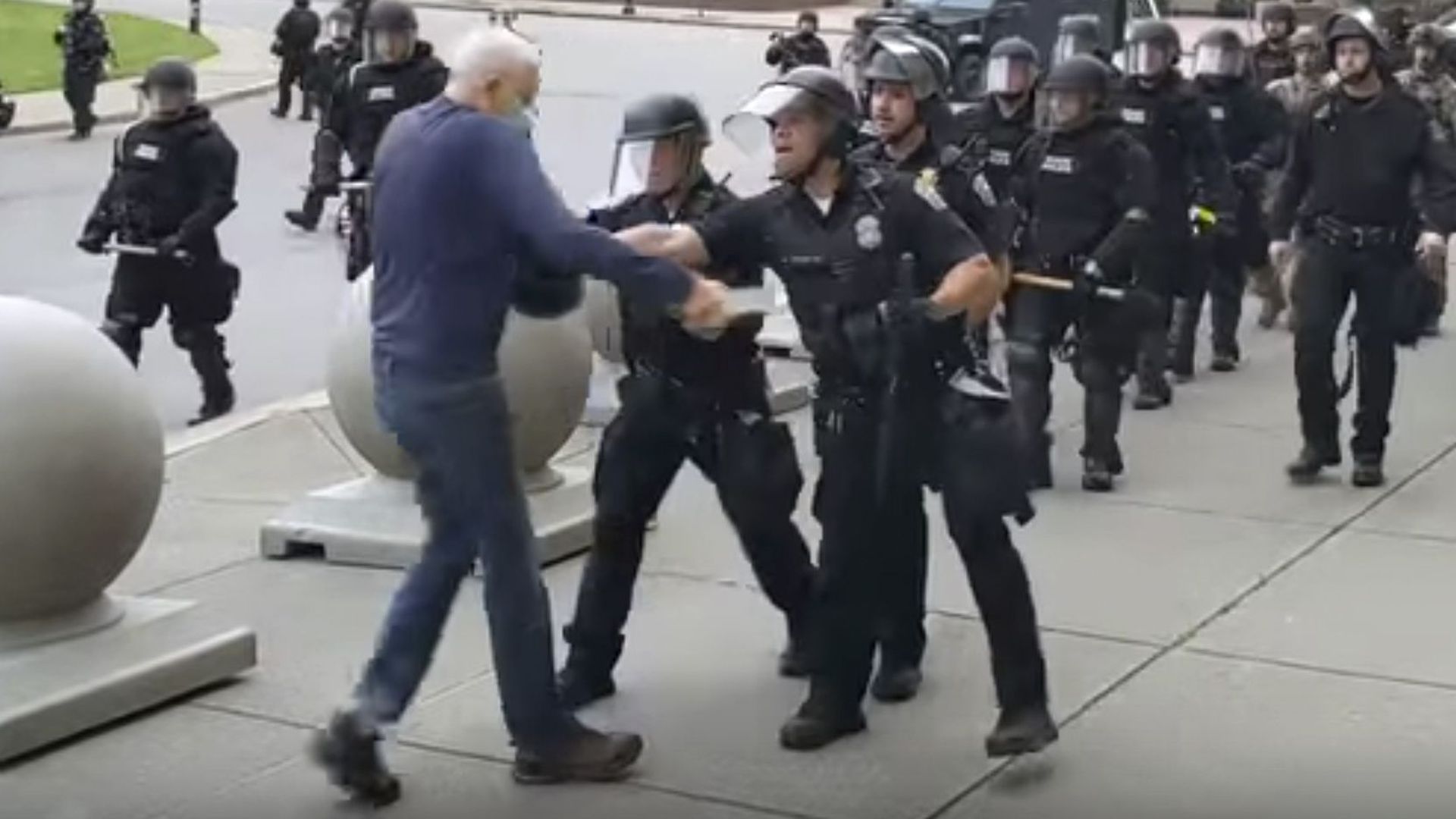
All 57 officers on the Buffalo Police Department's Emergency Response Team resigned from the tactical unit in support of two colleagues who were suspended for their involvement in shoving a 75-year-old protester on Thursday, The Buffalo News reports.
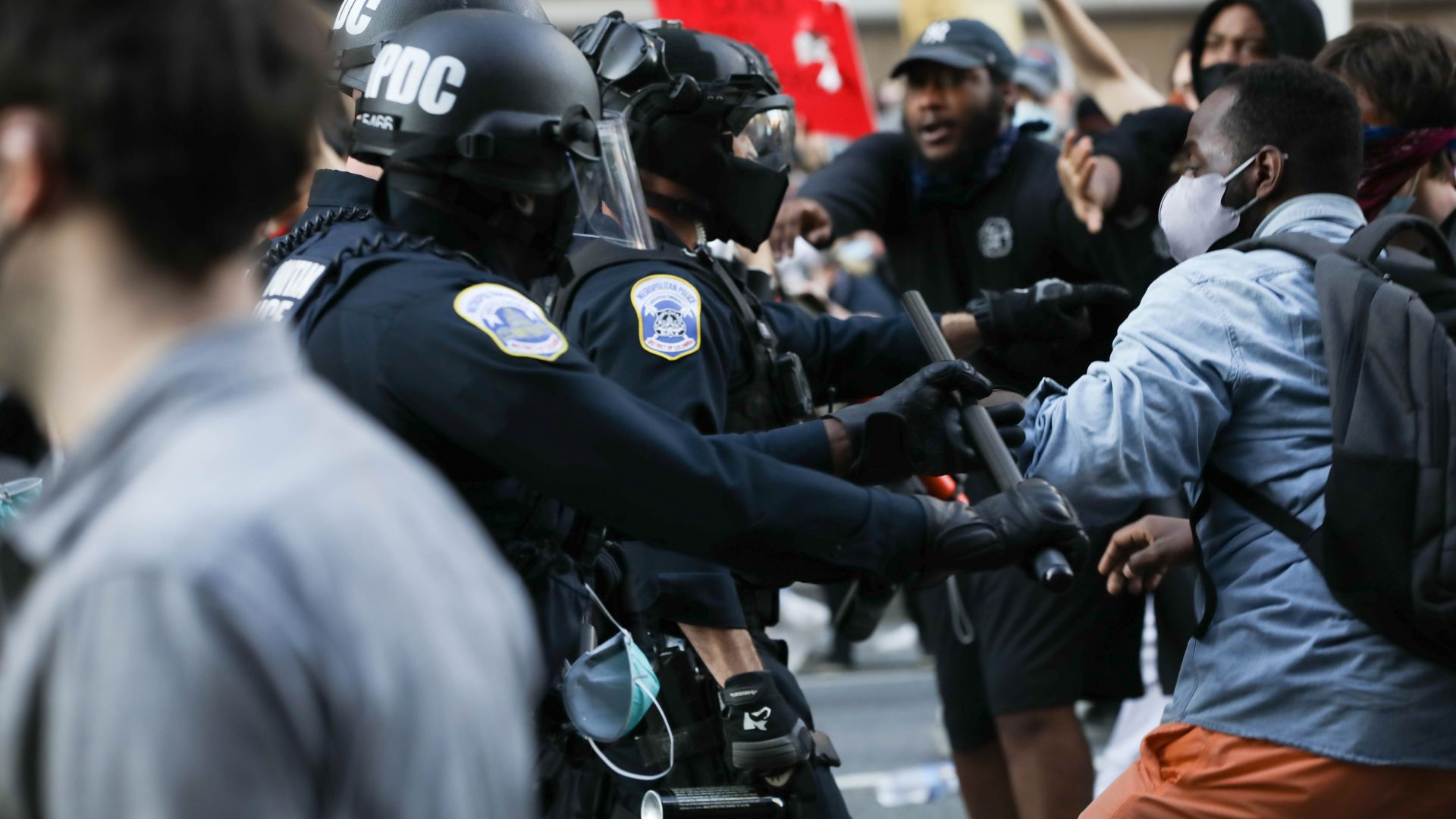
Why it matters: It comes as videos of violent confrontations between law enforcement and demonstrators have surfaced across the U.S., and amid a crescendo of calls to reform policing to address systemic racism and violence.
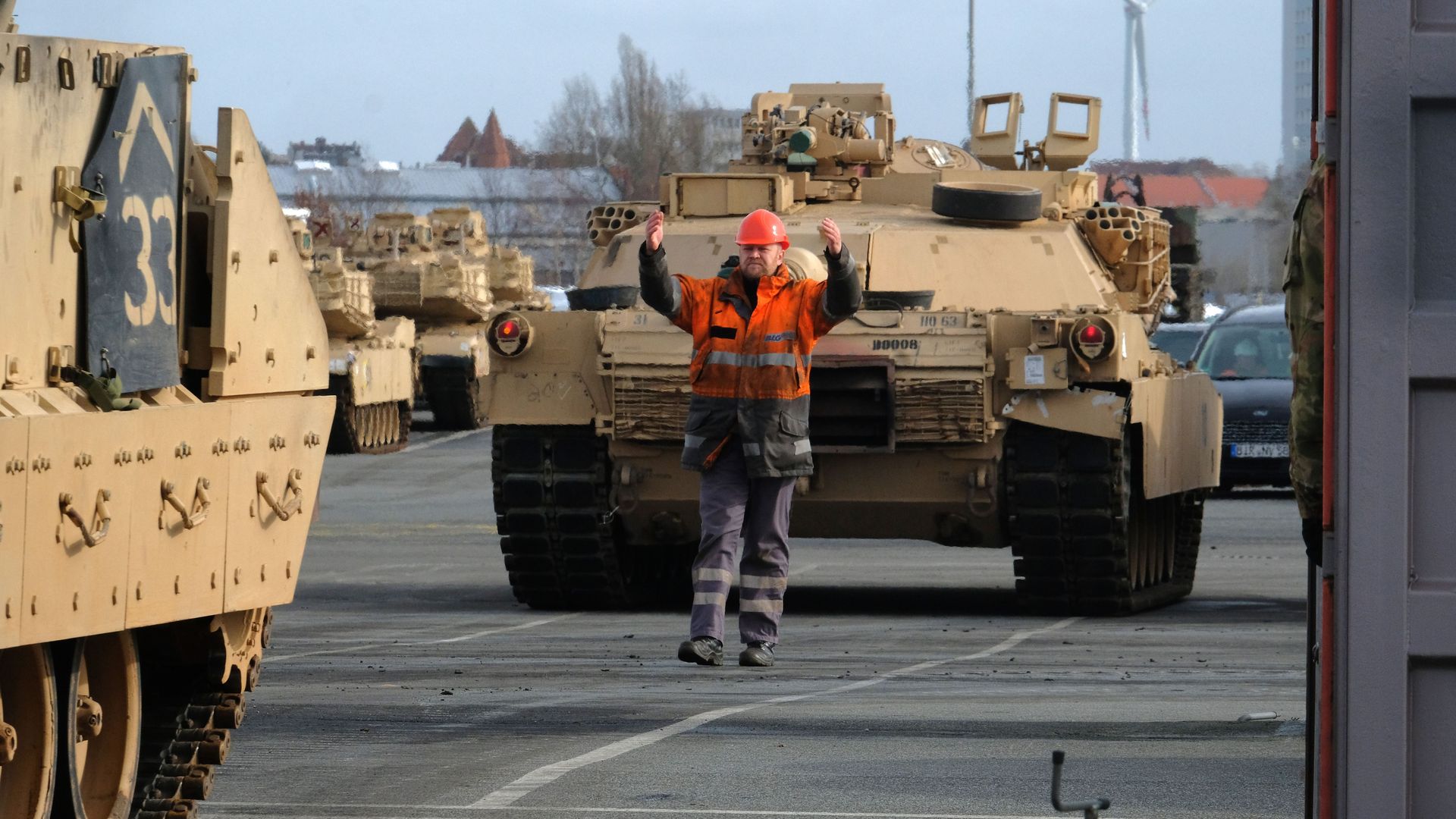
President Trump recently directed the Pentagon to move 9,500 troops out of Germany by September, the Wall Street Journal reports, citing government officials.
The big picture, via Axios' Jonathan Swan: This is a decision that Trump has long discussed privately. He gave a somewhat surprising answer in 2018 when Axios asked about the value of a U.S. military presence in Europe, by saying that the troops provided some psychological and military value for the U.S. But his instincts were always to draw down.
More than 280 former senior U.S. diplomats and military leaders came down on President Trump, saying the military has "no role" when Americans are exercising their right to free speech, according to a letter obtained by Foreign Policy.
The big picture: Trump has been battling with the Pentagon this week over whether to deploy troops to cities across the U.S. to squash protests that have followed the death of George Floyd. The response from former military leaders was swift and harsh, a rare instance in political matters.
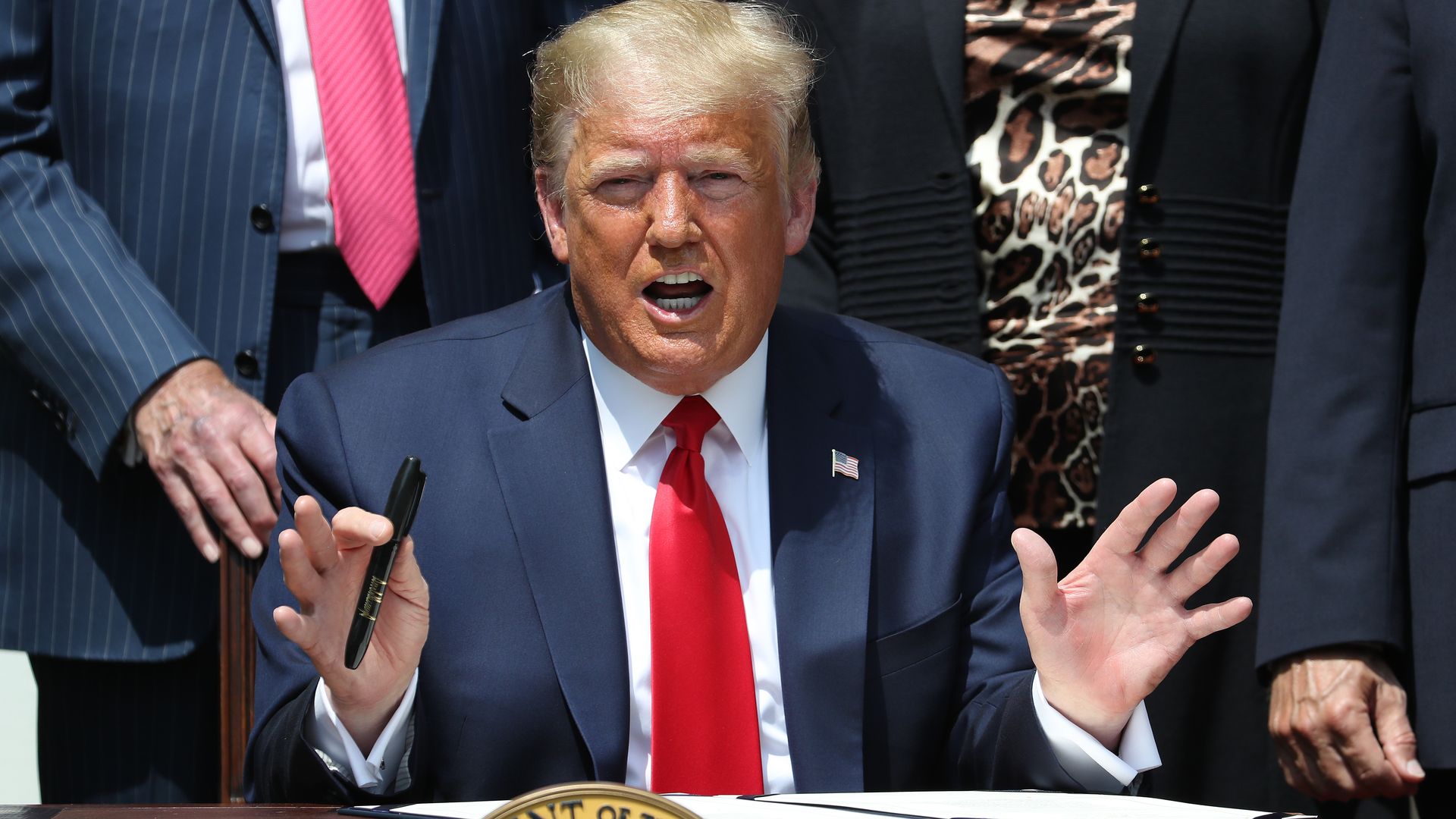
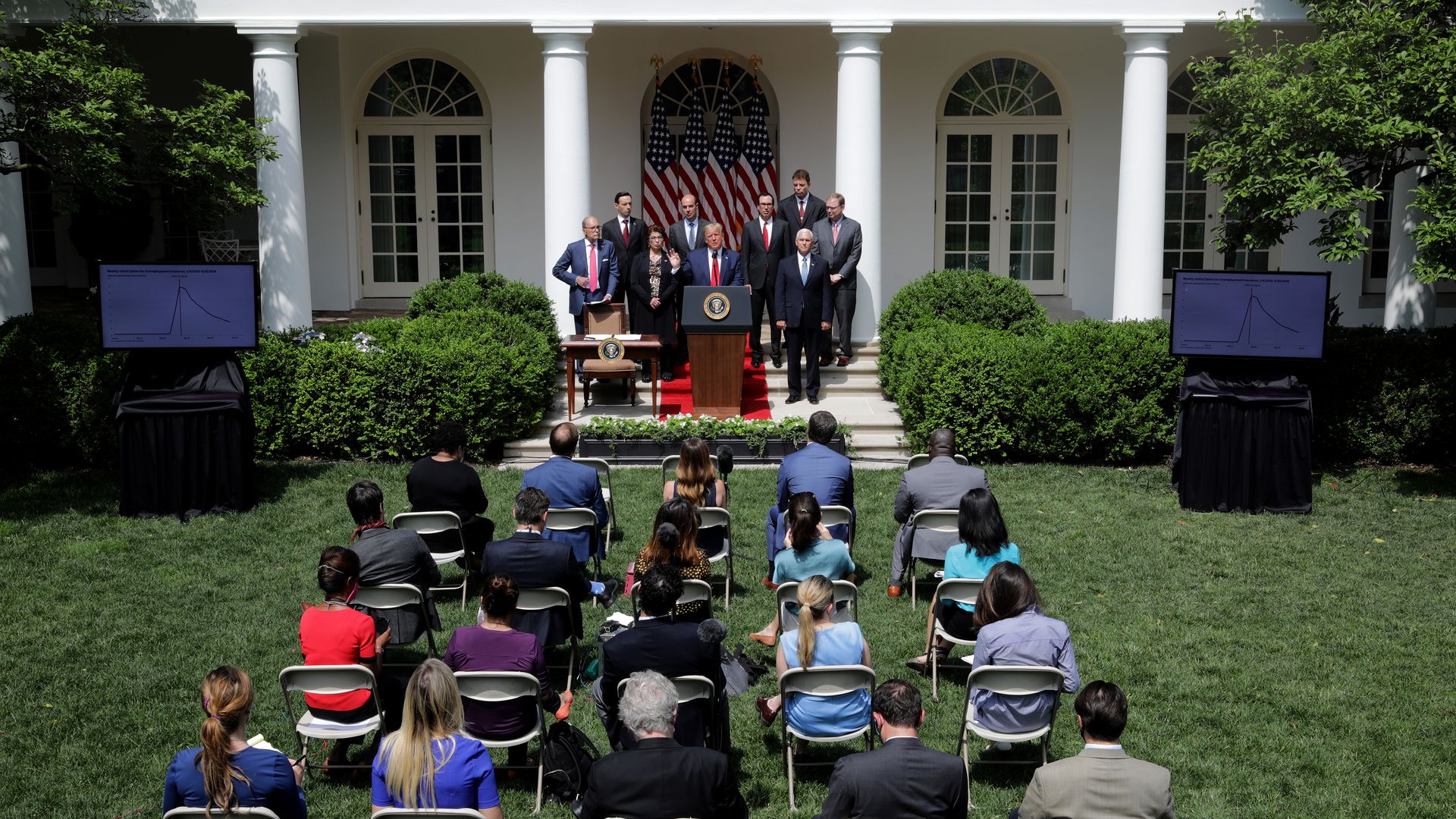
ABC News' Jonathan Karl, the president of the White House Correspondents' Association, said Friday that the White House "needlessly put reporters' health at risk" by moving chairs closer together for President Trump's Rose Garden event in violation of the CDC's social-distancing guidelines.
What he's saying: "The health of the press corps should not be put in jeopardy because the White House wants reporters to be a prop for a 'news conference' where the president refused to answer any questions," Karl told CNN's Brian Stelter.
The big picture: Sgt. Eduardo Delgado described the mistake as a difference in semantics. The department — as it claimed in its statement — only used "smoke canisters and pepper balls," which, he conceded, can cause tears and irritate eyes.
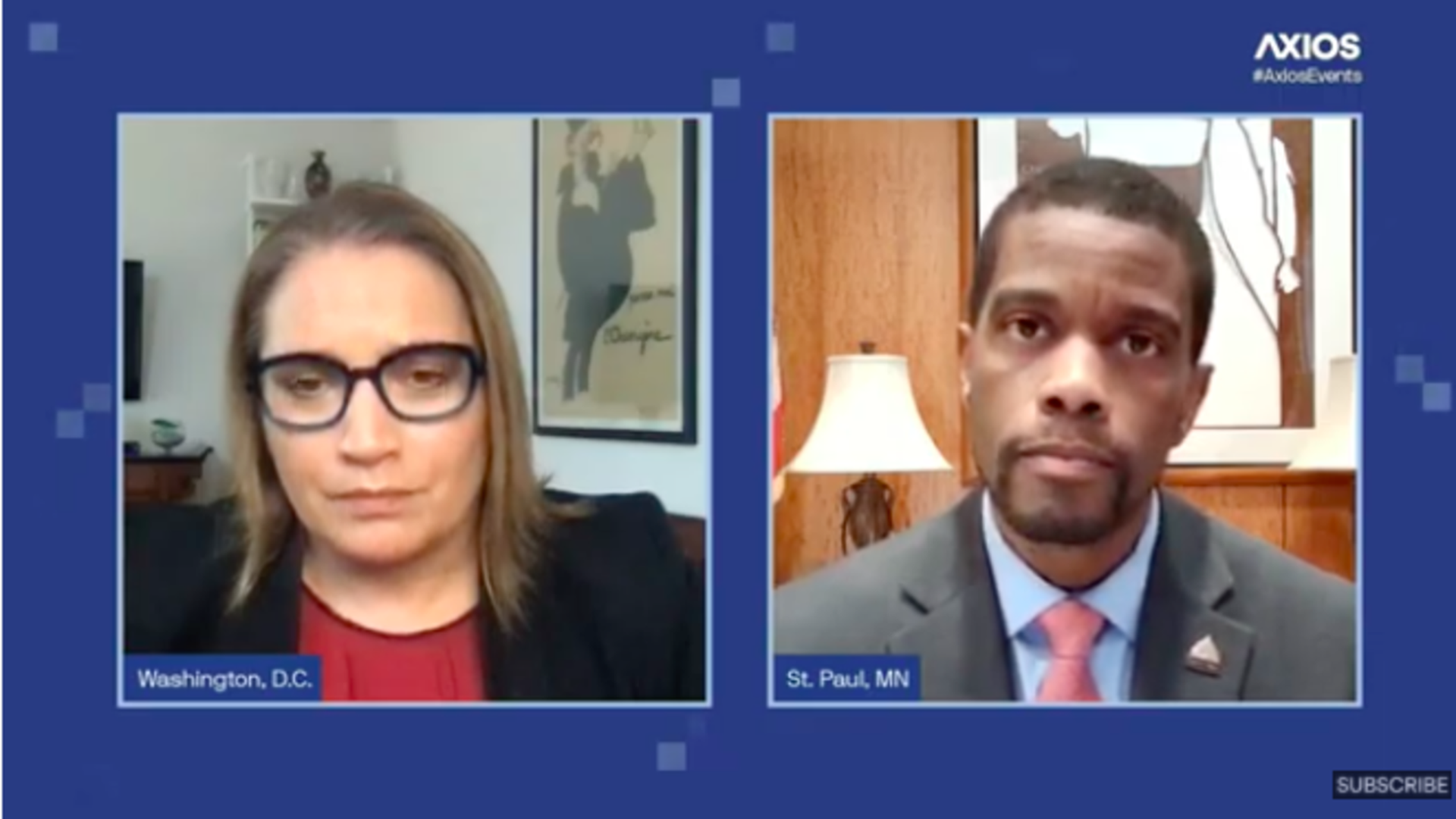
St. Paul, Minn., Mayor Melvin Carter recalled the nearly 30 years his father served his city as a police officer, but added that made no difference in the way police officers treated him as a teenager and young adult.
What he's saying: "I grew up praying for the safety of our officers. ... I got a chance to see him use that badge and that uniform as an amazing, incredible force for good. I saw it as a cape, a superhero cape, and of course, I turned 16 and started driving," he told Axios' Margaret Talev during a virtual event on Friday.
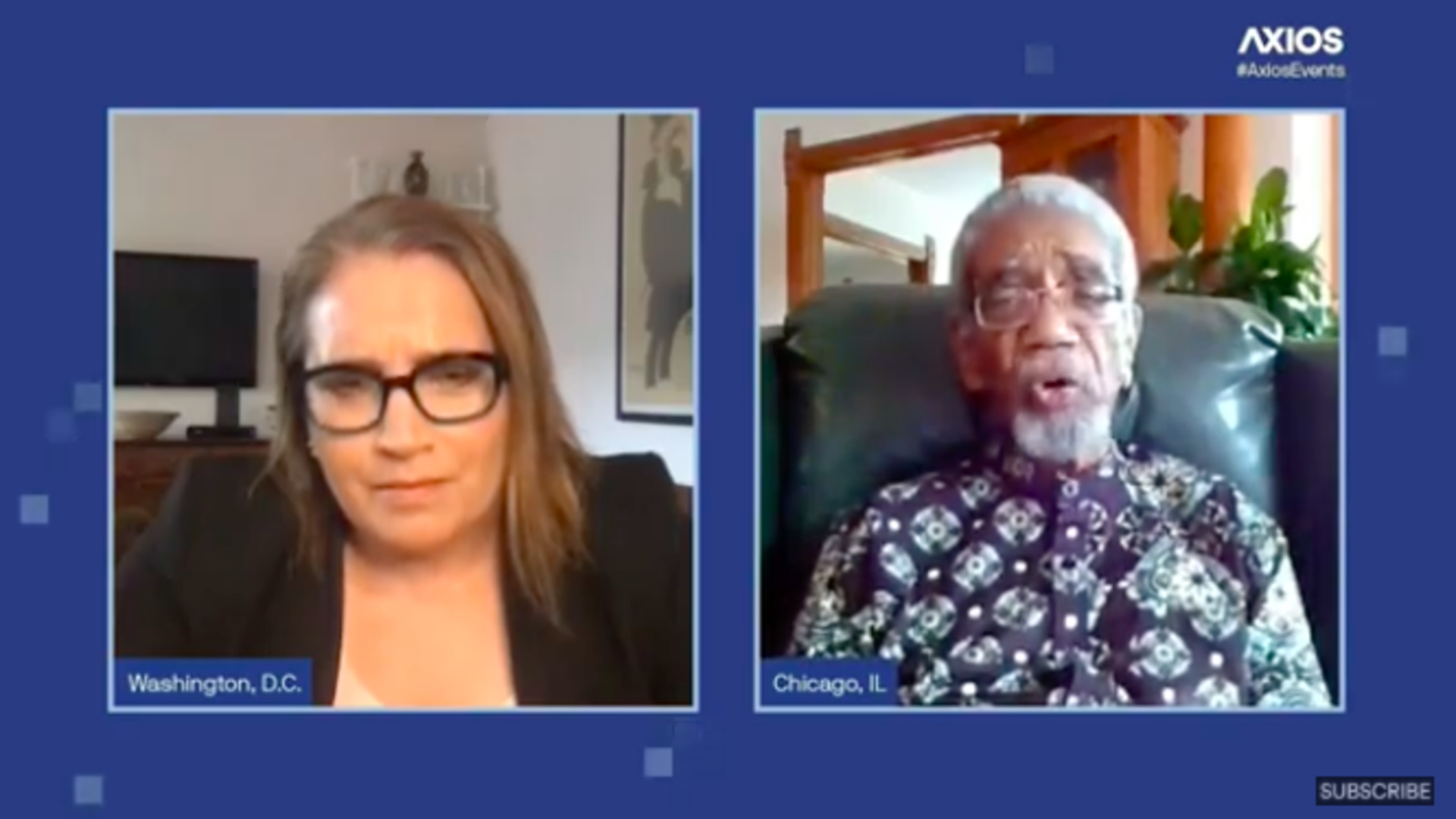
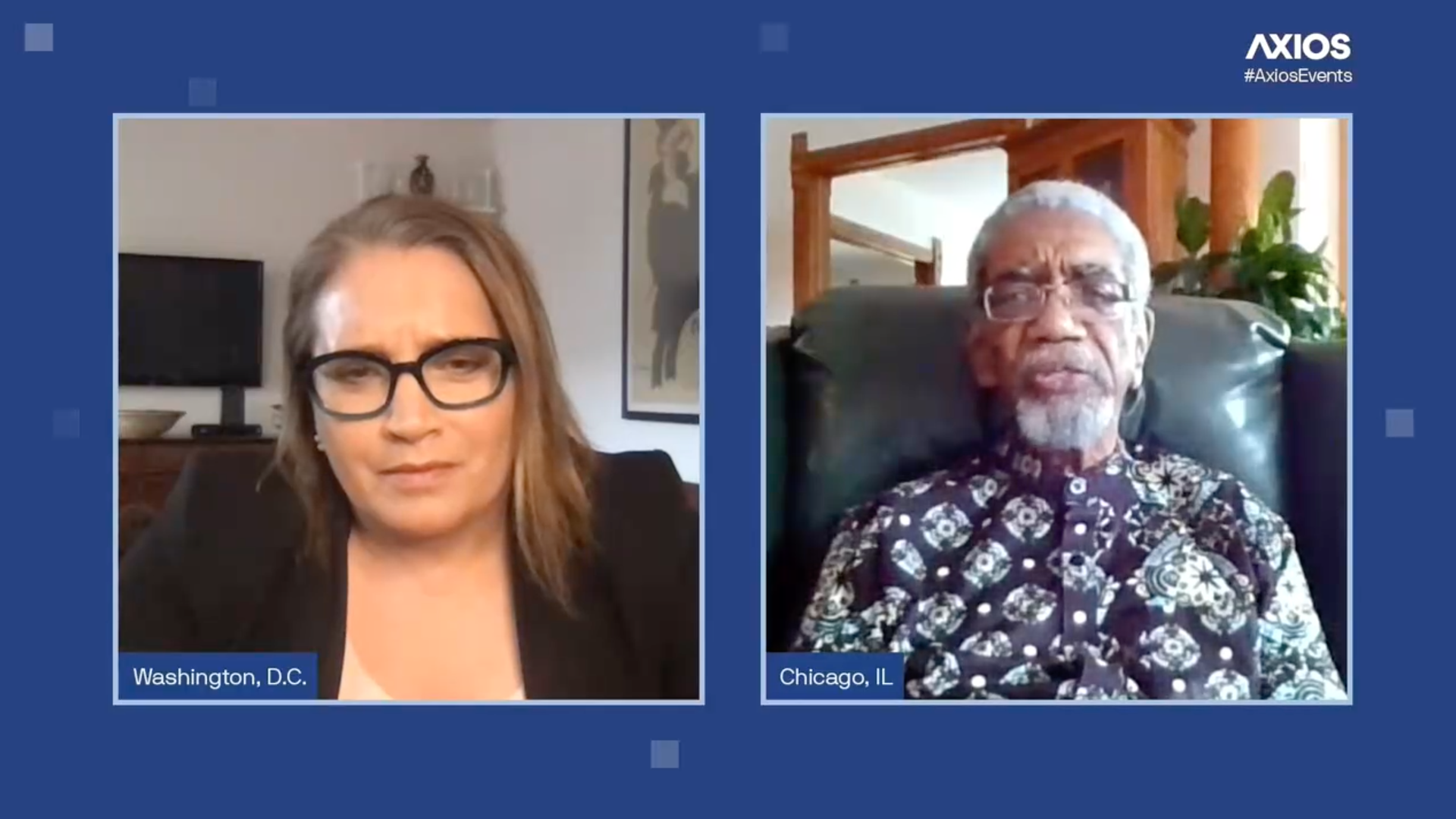
Rep. Bobby Rush (D-Ill.) criticized Sen. Rand Paul's (R-Ky.) attempts to block an anti-lynching bill that has bipartisan support, saying Friday the Kentucky senator wants to "gut the bill."
What he's saying: "I think he's acting as a scoundrel here. I think he’ll be treated and defined as a scoundrel that's standing in the pathway, standing in the doorway of passing a federal anti-lynching bill, after over 100 years of attempting to pass an anti-lynching bill," he said during a virtual Axios event on Friday.
Minneapolis has agreed to ban the use of police chokeholds and will require nearby officers to act to stop them in the wake of George Floyd's death, AP reports.
Why it matters: The agreement between the city and the Minnesota Department of Human Rights, which has launched an investigation into Floyd's death while in police custody, will be enforceable in court.
However long the momentum of the George Floyd protests continue, Rep. Bobby Rush (D-Ill.) stressed at a virtual Axios event on Friday that lasting change for police reform must be achieved by clear goals from organizers.
What he's saying: "I think the anti-police or the police reform movement, the social justice movement is expressed today on the streets of our nation, in a righteous way. ... "You got to have organization. You can't have organization without an organization."
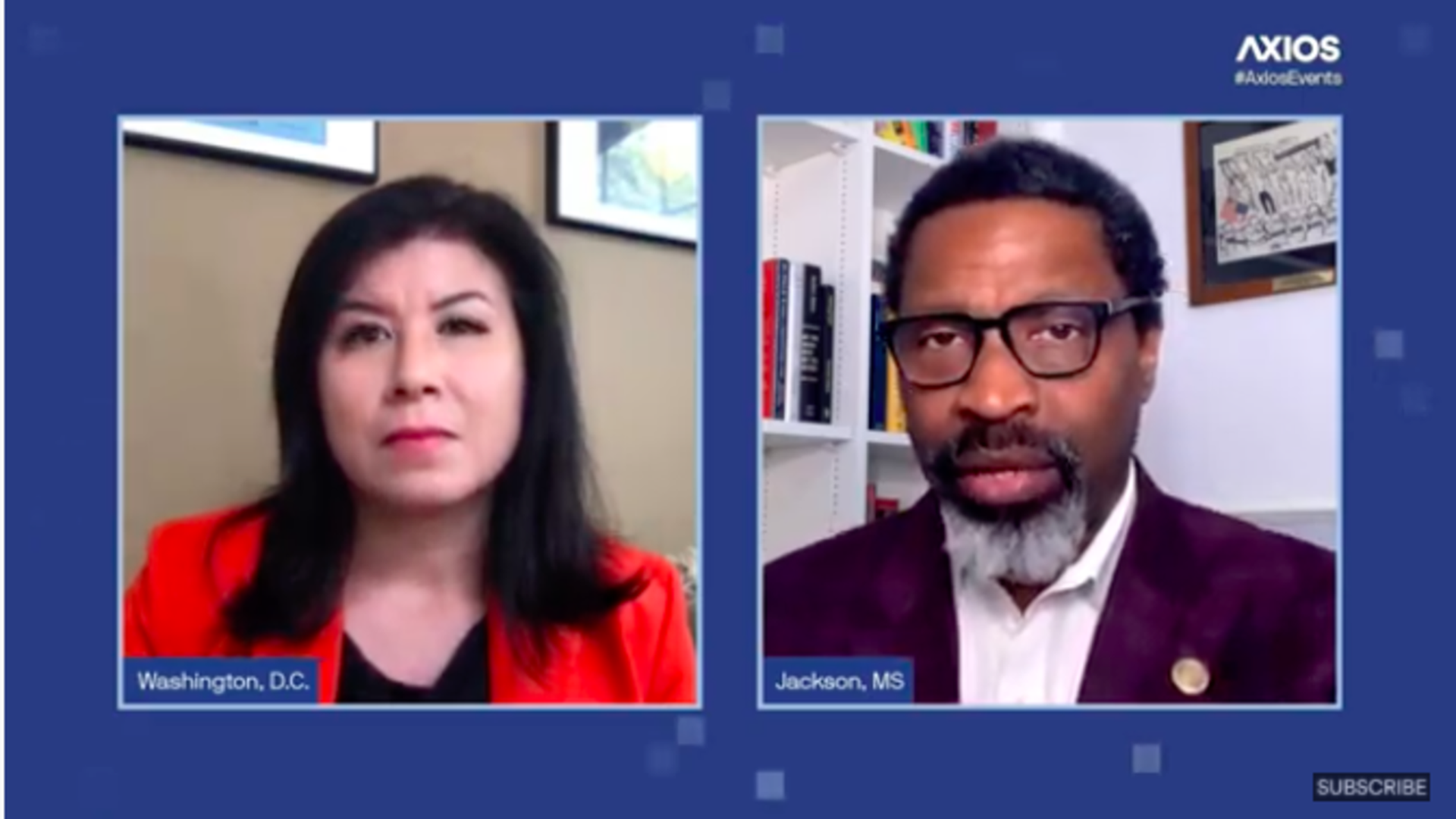
Derrick Johnson, national president and CEO of the NAACP, called for a federal policy requiring complete transparency for law enforcement and any disciplinary actions against the bad actors, during an Axios event on Friday.
What he's saying: "Many police unions negotiate in their contract that the records of officers are not to be publicly disclosed... An officer can create a lot of problems in discipline in one agency and then move onto another agency, and no one ever knows he or she actually was a problem officer or a bad apple."
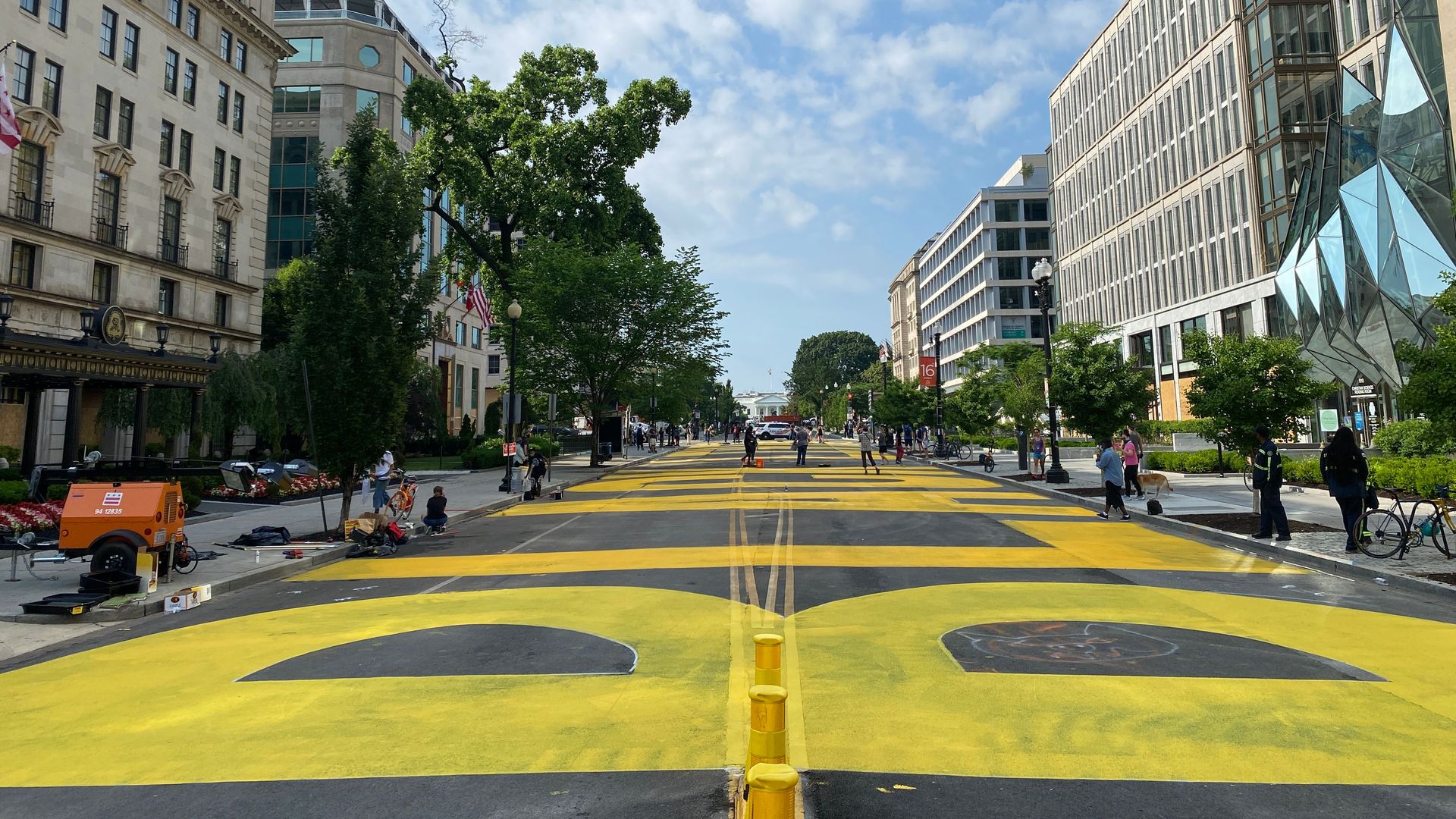
Washington D.C. painted Friday a giant sign in support of the Black Lives Matter movement that stretches down two blocks of 16th Street leading to the White House.
Why it matters: It is just north of Lafayette Square, which has been the center of the city's protests over the death of George Floyd — and was where peaceful protesters were cleared out earlier this week ahead of President Trump's photo op at St. John's Episcopal Church.
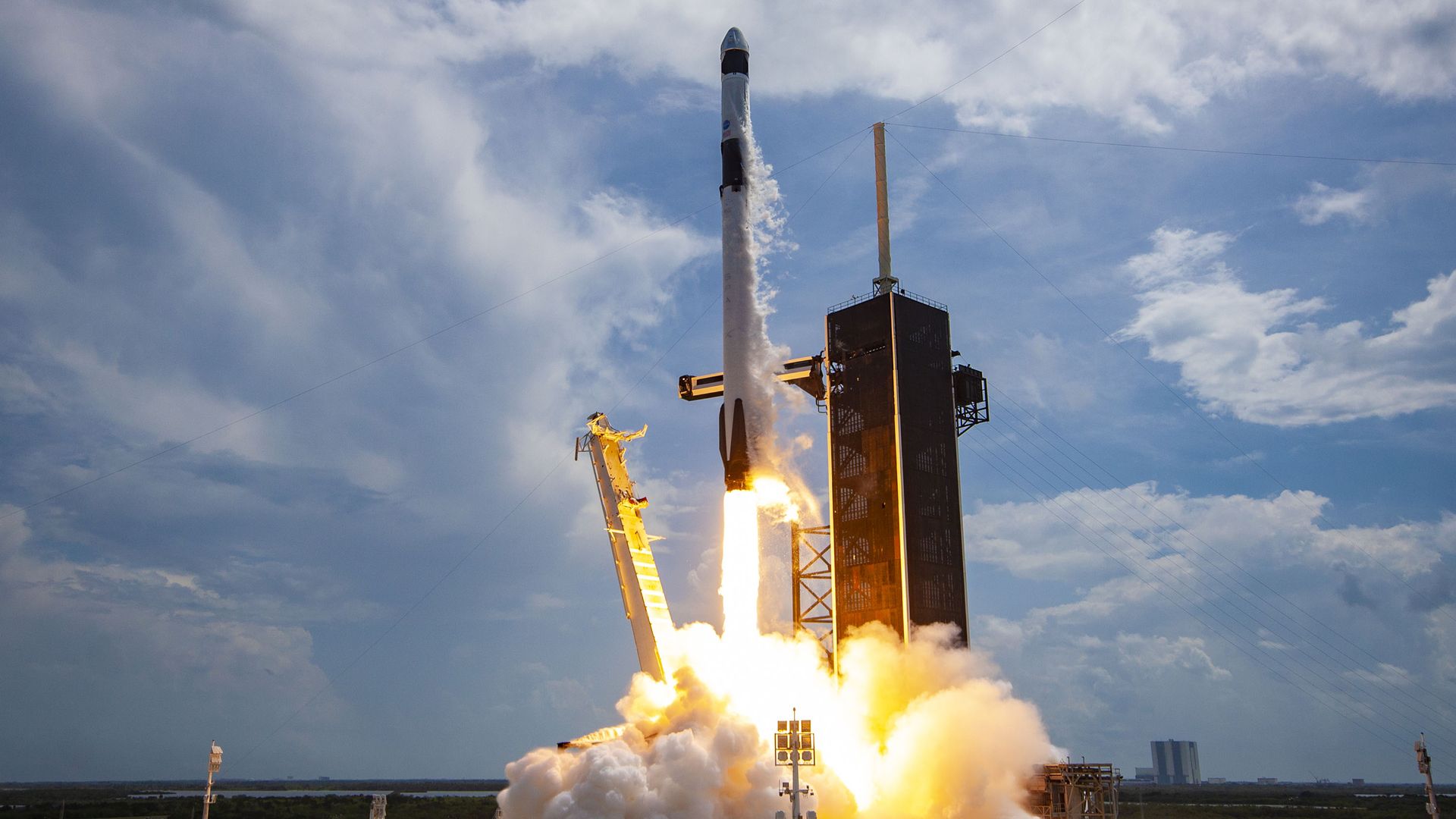
The state of play: NASA doesn't allow the likenesses of its astronauts to be used in advertisements, and an agency spokesperson told Bloomberg it was unaware of the video until it had been posted.
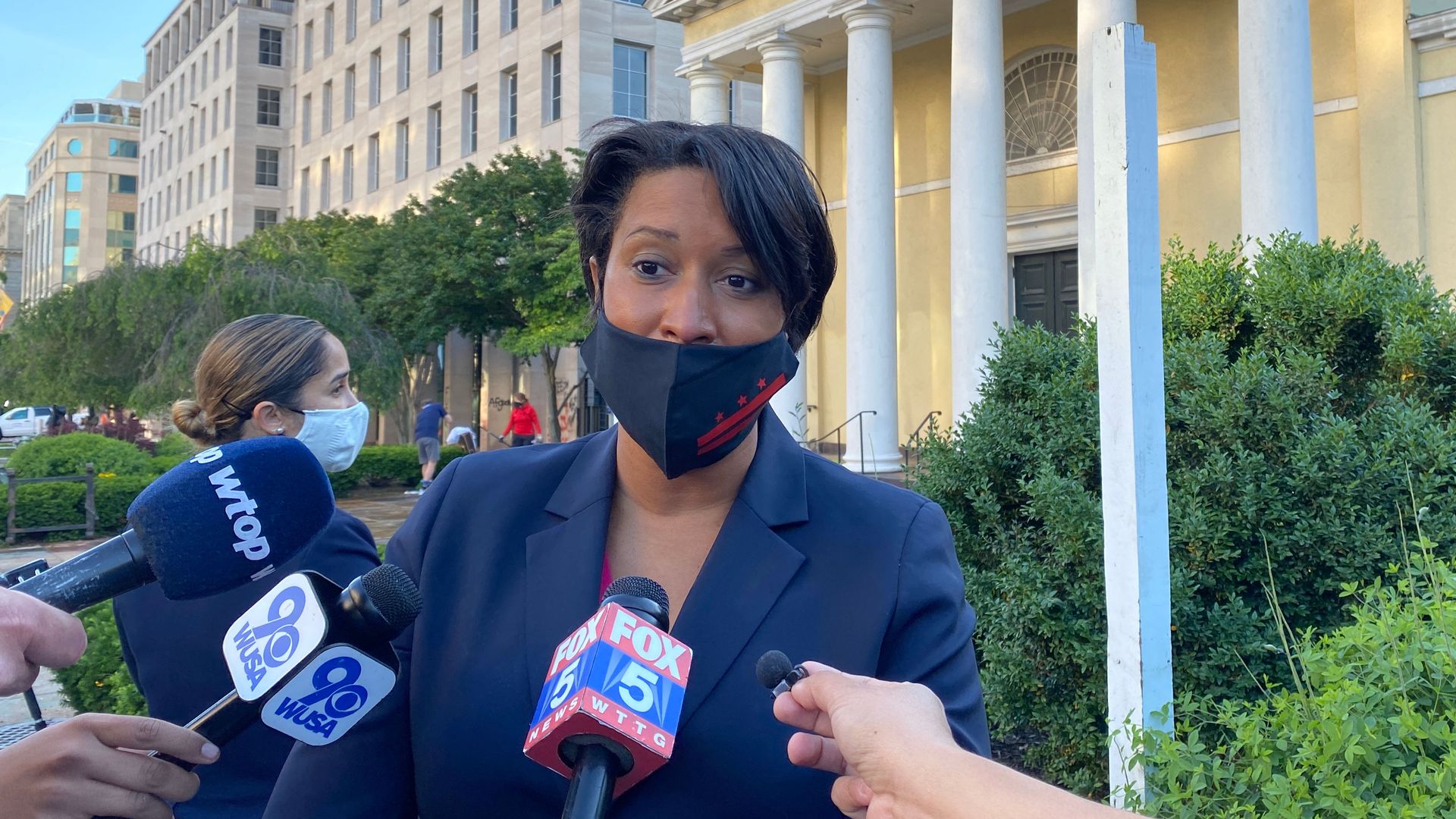
Washington, D.C., Mayor Muriel Bowser formally requested in a letter dated Thursday that President Trump remove "all extraordinary federal law enforcement and military presence" in place due to the protests over the killing of George Floyd from the city.
The big picture: Tensions between protesters and law enforcement in the capital have died down this week, with the demonstrations becoming overwhelmingly peaceful. Bowser has ended both the district's curfew and state of emergency.
Retired Navy Admiral William McRaven said Friday on MSNBC's "Morning Joe" that there was "nothing morally right" about the Trump administration's decision to clear peaceful protesters for the president's photo op at St. John's Episcopal Church earlier this week.
The big picture: McRaven, who planned and executed the Osama bin Laden raid in 2011, joined a growing chorus of individuals who condemned the president's actions. President Trump's former Defense Secretary James Mattis wrote that the photo op was an "abuse of executive power" that made "a mockery of our Constitution."
Two Buffalo police officers were suspended without pay Thursday night after video emerged of them violently shoving a 75-year-old man to the ground while clearing a protest in the wake of George Floyd's killing in the city’s Niagara Square, WBFO reports.
The state of play: Before WBFO’s video of the incident went viral, a Buffalo police spokesman issued a statement that said "one person was injured when he tripped and fell."
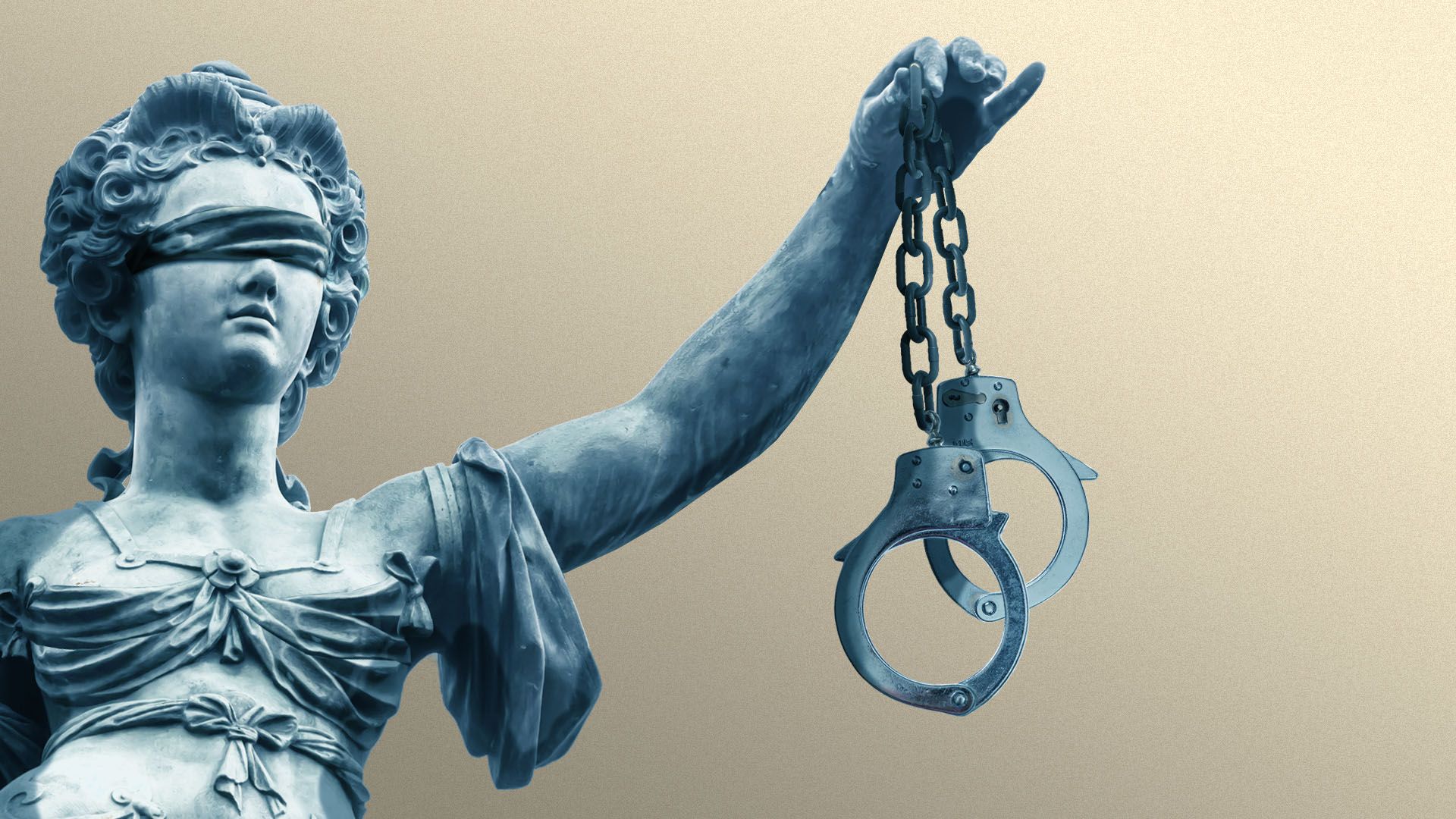
George Floyd's death has reignited the long and frustrating push to reform a law enforcement system whose systemic flaws have been visible for years.
Why it matters: Solving these problems will require deep political, structural and cultural changes, experts and advocates say — but they also point to a handful of specific policy changes that, while not a cure, would make a difference.
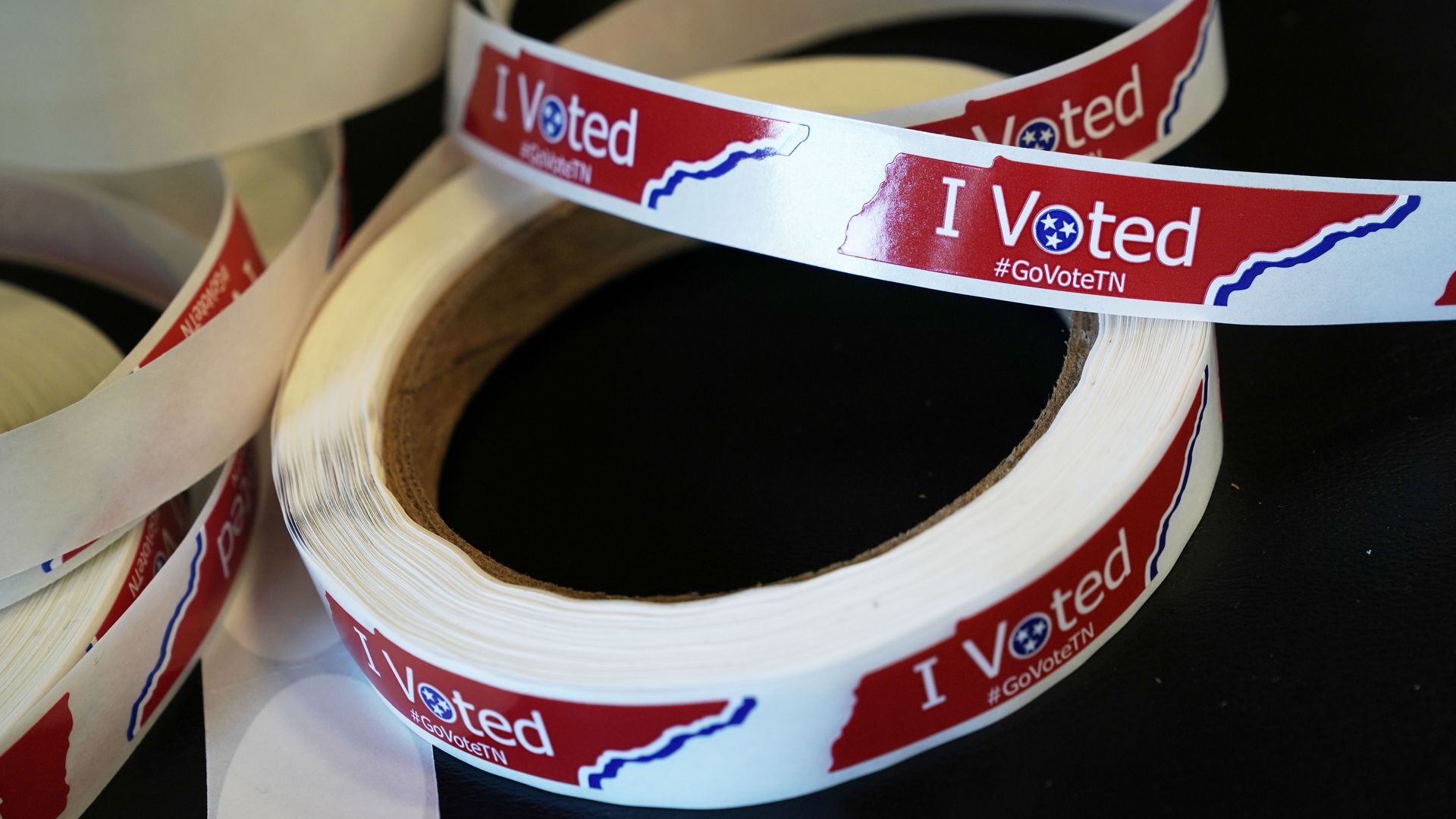
A Tennessee judge on Thursday ordered the state to permit vote-by-mail for all registered voters, the Tennessean reports.
Why it matters: Mail-in ballots have become a point of political contention in the wake of the coronavirus pandemic. Though President Trump has claimed mail-in voting will lead to corruption and fraud, multiple states have moved to expand their absentee options amid COVID-19.
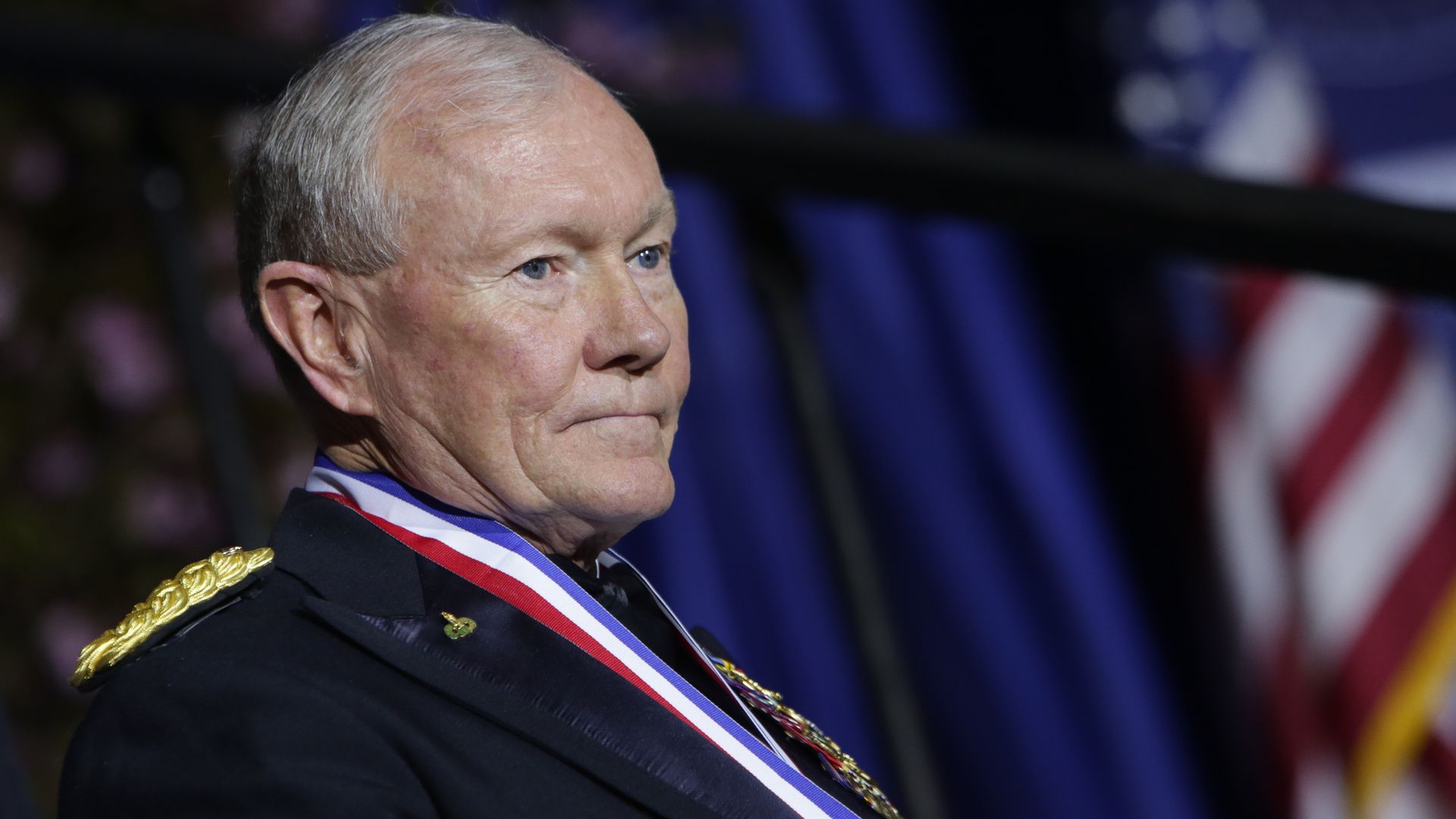
Former Joint Chiefs of Staff Chairman Ret. Gen. Martin Dempsey condemned President Trump's threat to deploy military personnel to hubs of civil unrest following the death of George Floyd, NPR reports.
What he's saying: Dempsey stated, "The idea that the military would be called in to dominate and to suppress what, for the most part, were peaceful protests — admittedly, where some had opportunistically turned them violent — and that the military would somehow come in and calm that situation was very dangerous to me."