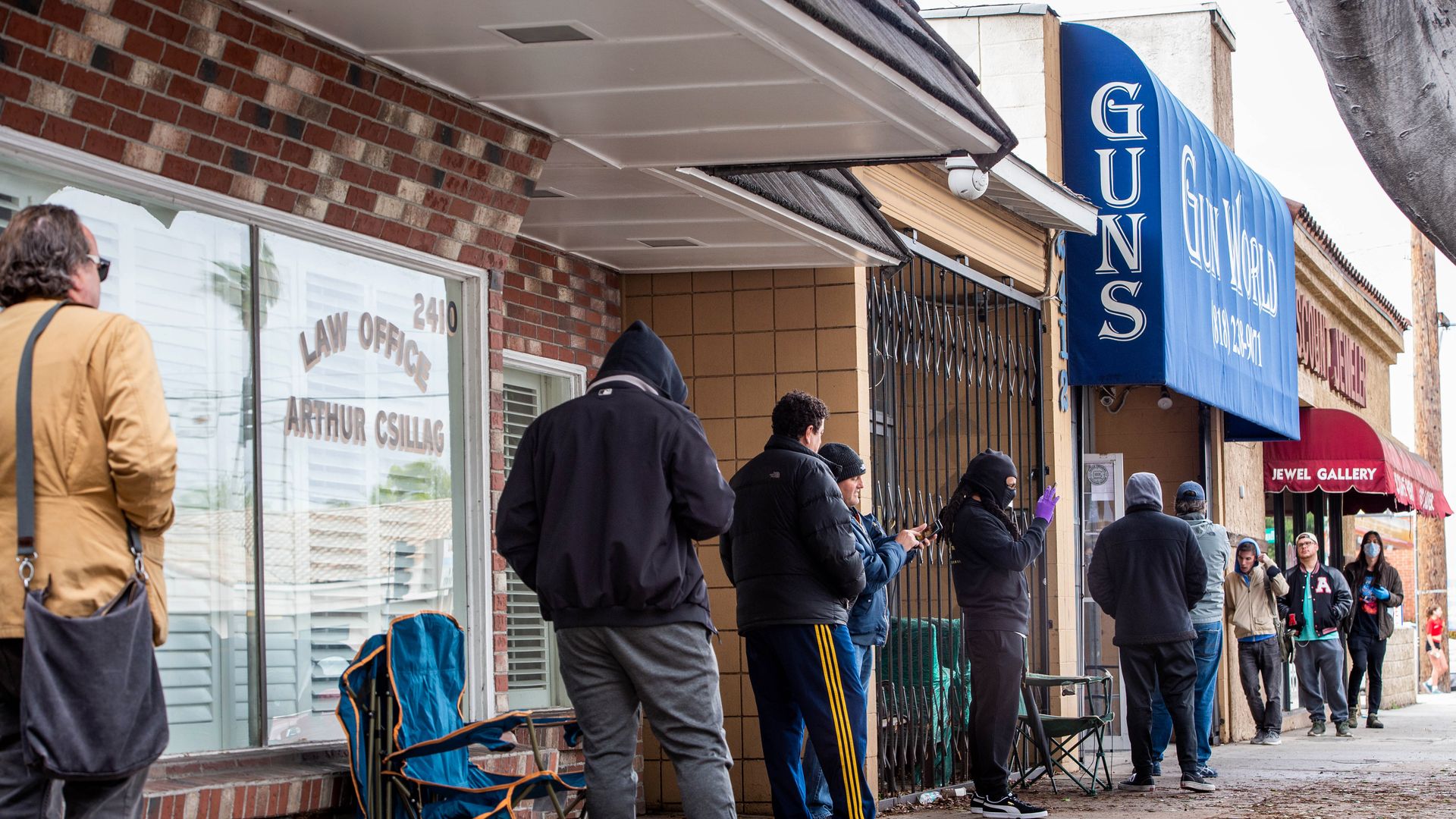
The National Rifle Association and other pro-gun groups filed a lawsuit against California Gov. Gavin Newsom and state officials on Friday after gun stores were deemed non-essential and required to close for the state's stay-at-home order amid the novel coronavirus outbreak.
Why it matters: Both Second Amendment advocates and gun control backers argue that shutting federally licensed firearms dealers could push buyers to purchase guns online or through private sales without background checks, per AP.
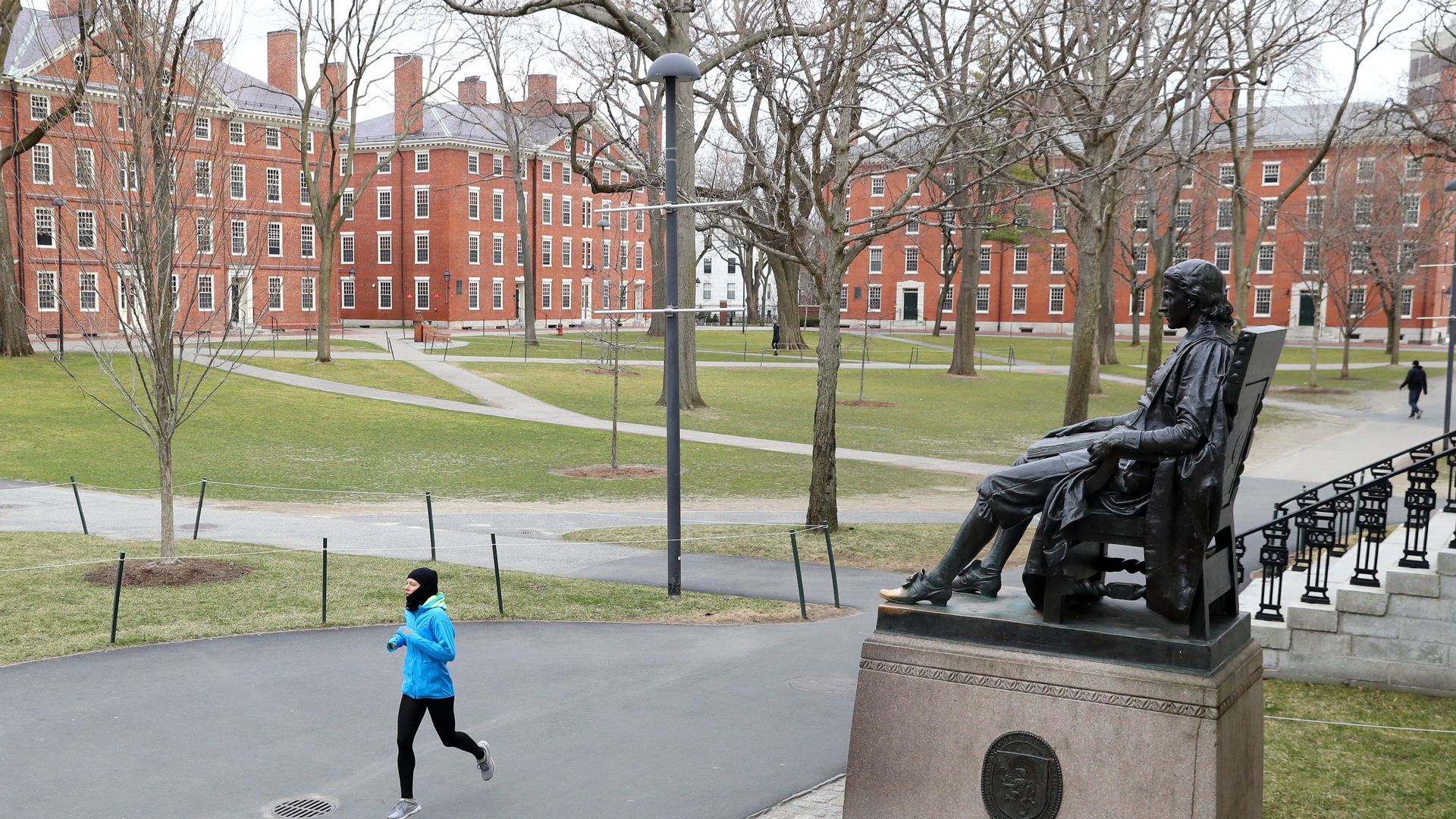
Some Ivy League schools saw freshman admission rates slightly tick up this year, reversing a multi-year trend of frantic competition and scrutiny over the selective spots, The Wall Street Journal reports.
Why now: The novel coronavirus has presented colleges with a variety of challenges, with the pandemic confusing enrollment projections for the coming academic year. Some schools took students off waitlists or changed their denials and admitted them to ensure they enroll full classes, per the WSJ.
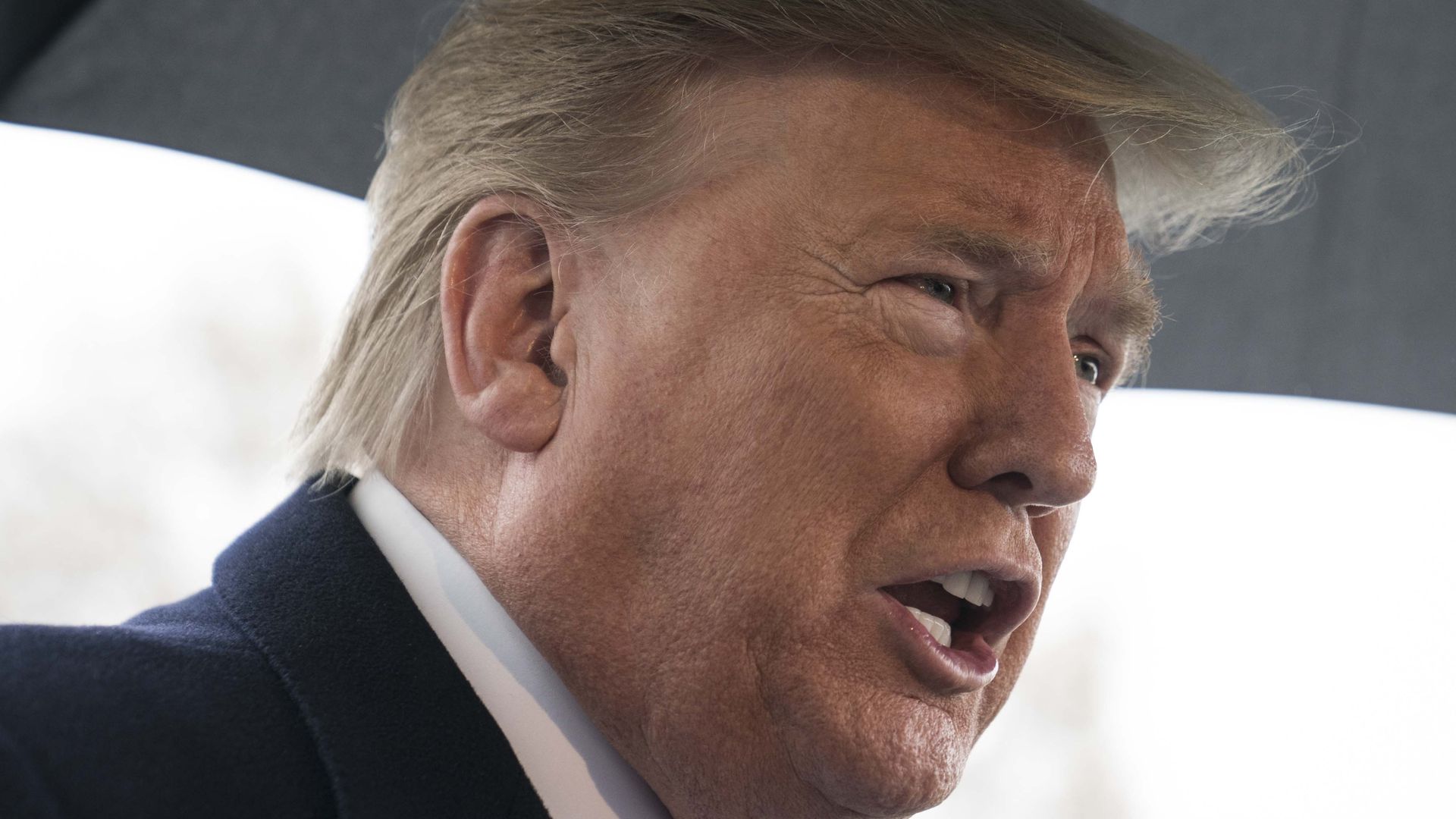
President Trump said on Saturday he is considering a "short term" quarantine of New York, New Jersey and parts of Connecticut — areas congruent with the New York metro area, the epicenter of the novel coronavirus in the U.S.
Reality check: These states have already taken steps to quarantine residents and promote social distancing to combat COVID-19. The governors of New York and New Jersey issued statewide stay-at-home orders last week, and non-essential businesses in Connecticut were ordered to close as of this Monday.
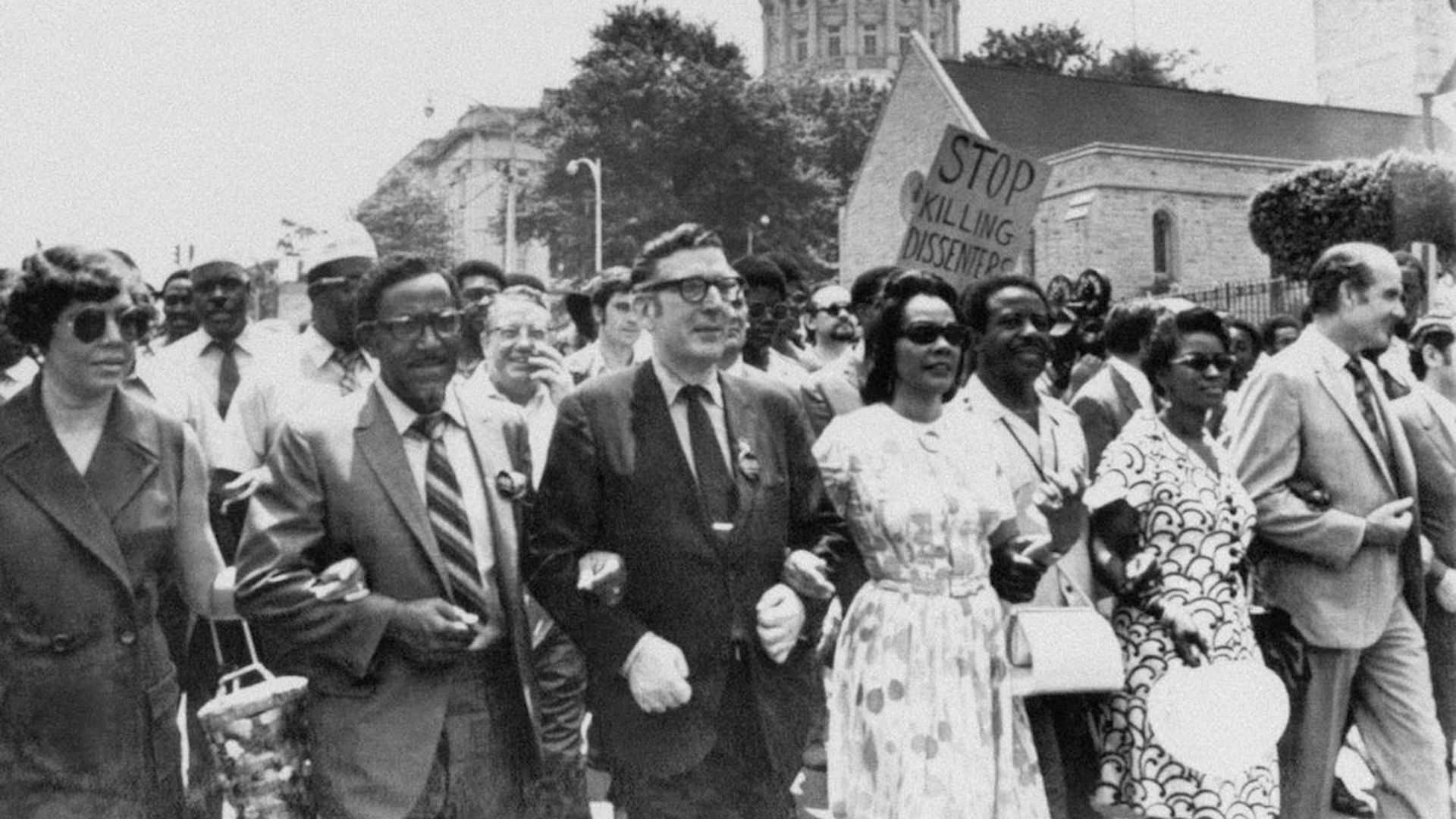
Rev. Joseph Lowery fought to end segregation, and lived to see the election of the United States' first black president, AP writes.
The big picture: Lowery was born in Huntsville, Ala., in 1921. He helped coordinate the 1955 Montgomery bus boycott and co-founded the Southern Christian Leadership Conference in 1957, leading the organization for 20 years as president.
President Trump pledged to reopen the U.S. economy by Easter, a date that most medical experts agree is too soon to effectively contain the spread of the novel coronavirus. Dan digs into the backstory and what comes next with Axios' Jonathan Swan.
A group of Midwestern swing voters that supported President Trump's handling of the coronavirus less than two weeks ago is balking at his call for the U.S. to be "opened up" by Easter, saying they'll tolerate business closures for as long as it takes to contain the spread.
Why it matters: Their feedback suggests that some voters otherwise mostly supportive of the president — and who still see financial threats outpacing health threats — aren't so tired of social distancing that they're willing to risk ending it too quickly.
Former Vice President Joe Biden said that President Trump should "stop personalizing everything" in his approach to dealing the novel coronavirus pandemic, at a CNN town hall on Friday.
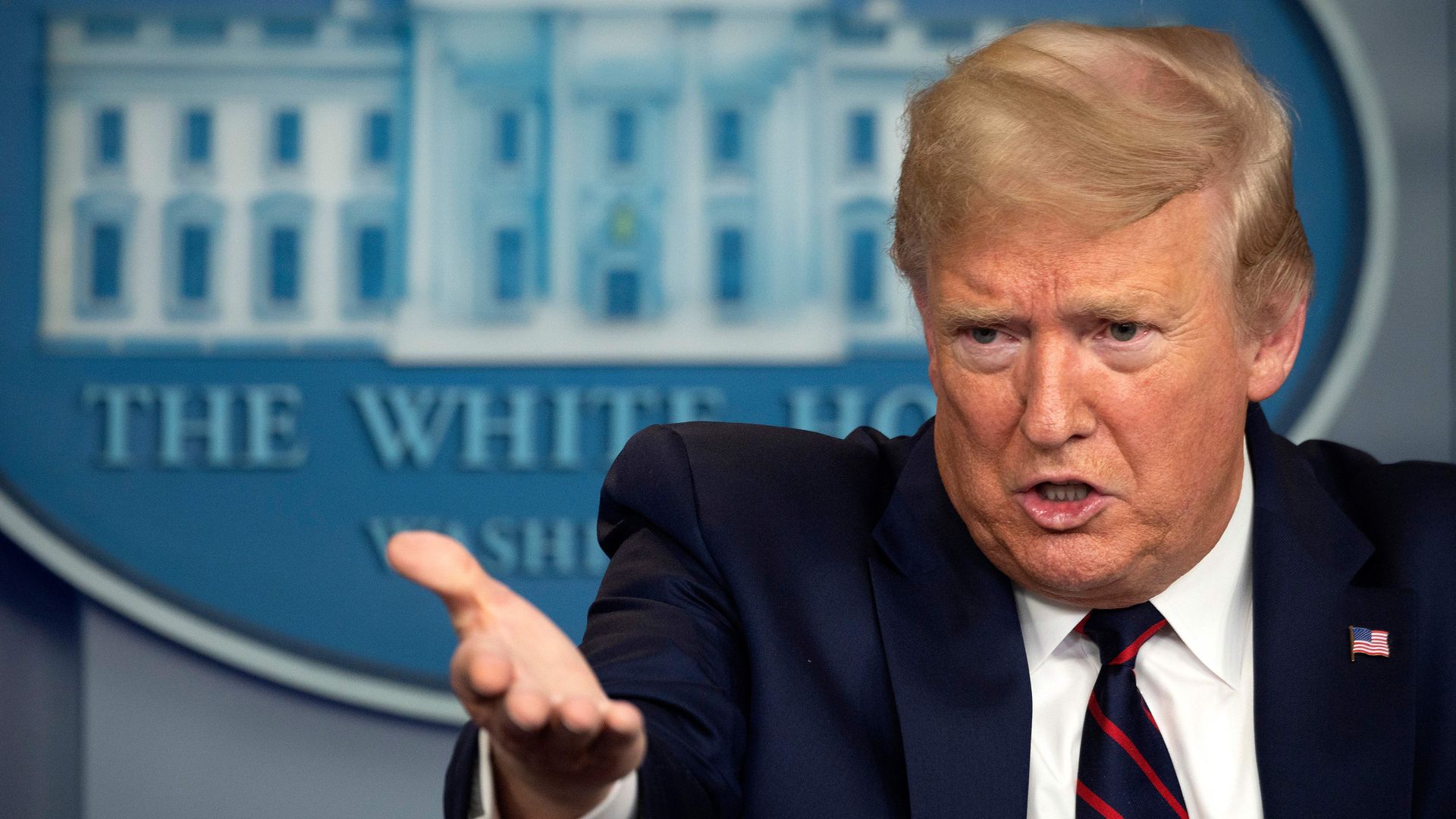
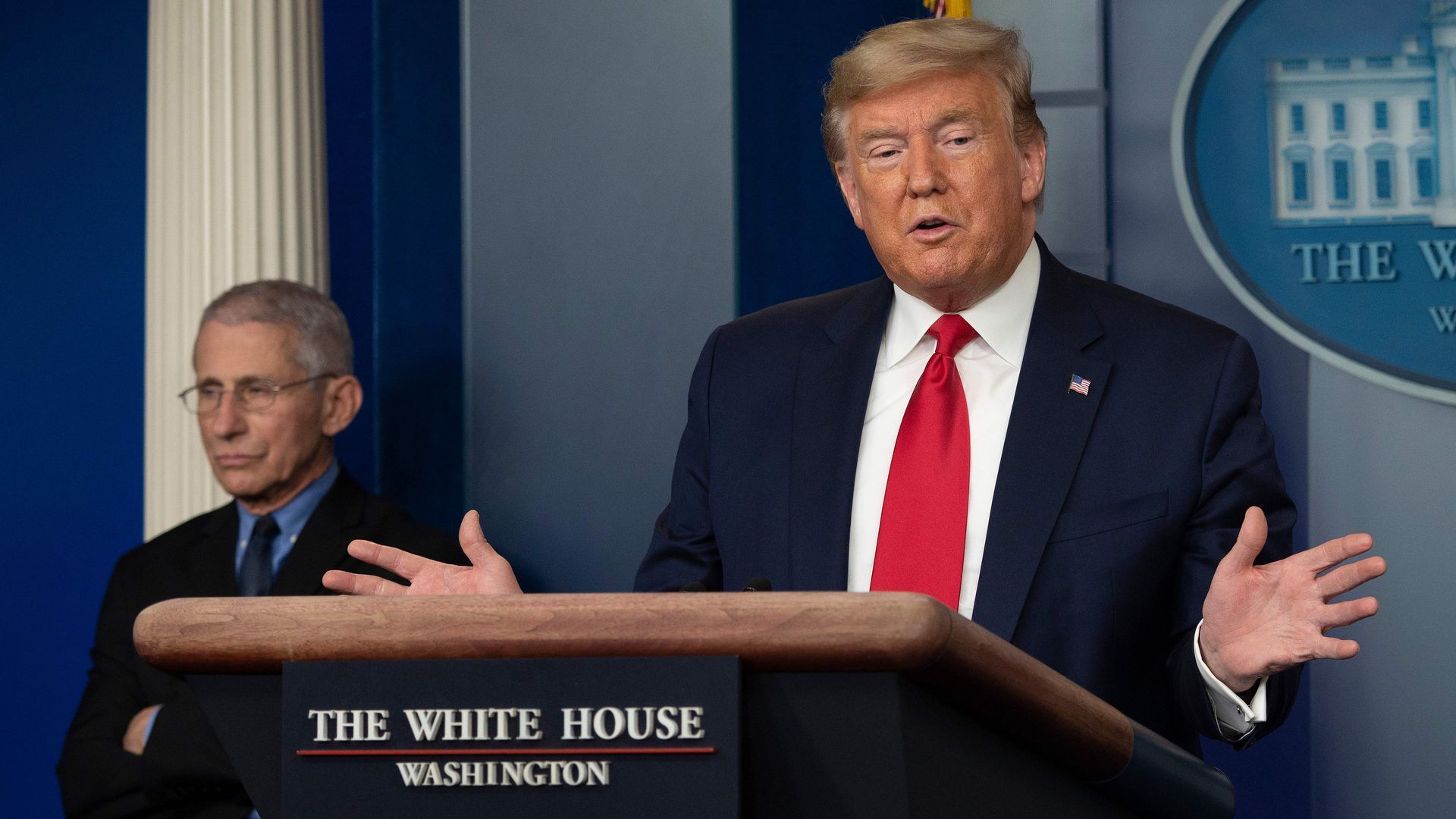
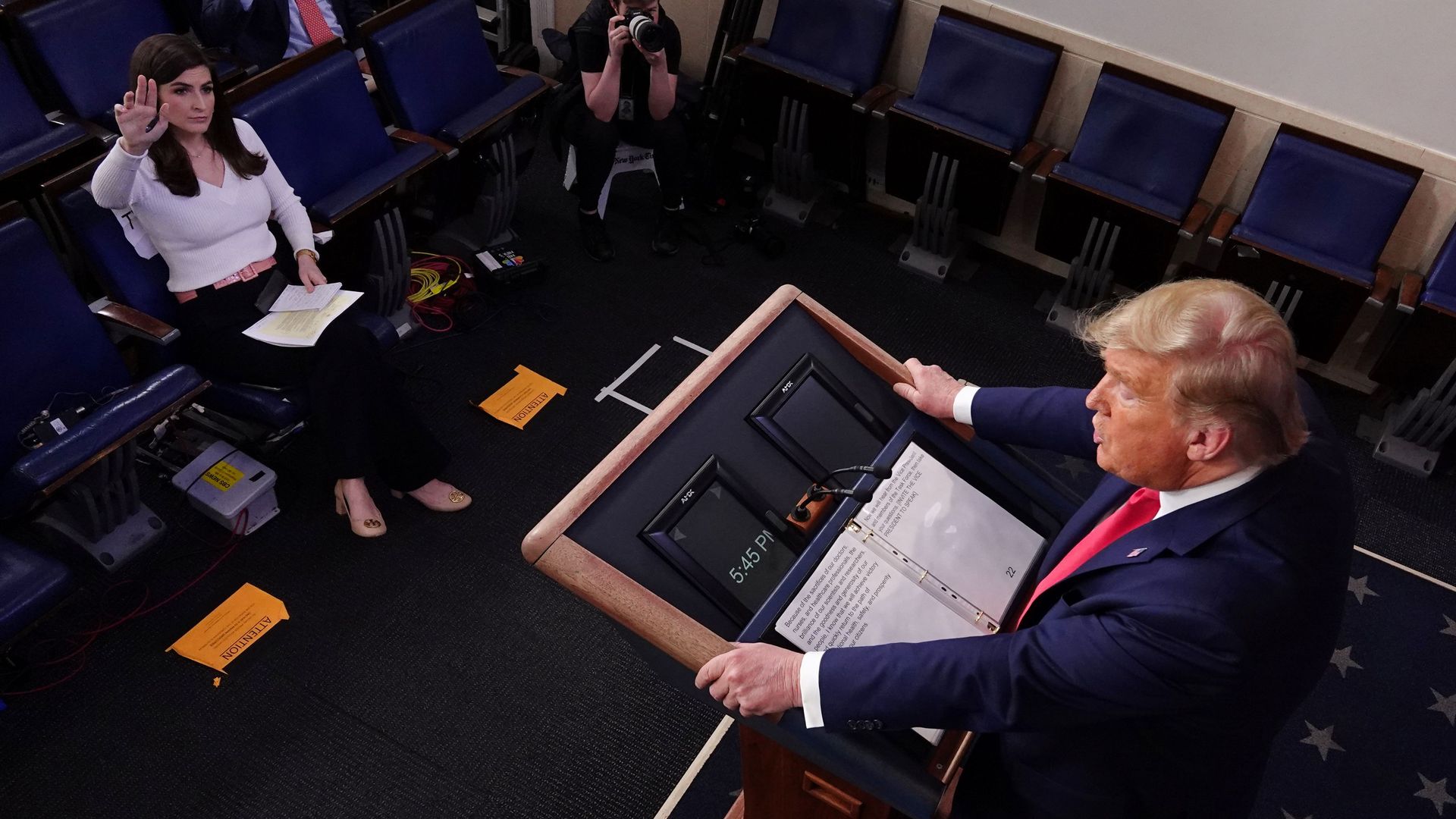
Driving the news: "If they don't treat you right, I don't call," Trump told reporters at the White House coronavirus task force briefing on Friday, referring to managing COVID-19. Trump said Vice President Mike Pence "calls all the governors," but he advises Pence against contacting those he views as unappreciative.
"If they don't treat you right, I don't call," President Trump told reporters at the White House coronavirus task force briefing on Friday, referring to U.S. governors battling the spread of COVID-19.
What he's saying: Trump said that while "generally speaking," the nation's governors have been appreciative of his administration's efforts to combat the spread of COVID-19, there are some — including Washington Gov. Jay Inslee and Michigan Gov. Gretchen Whitmer — who the task force should not bother contacting.
White House trade adviser Peter Navarro was appointed as the Trump administration's point man to enforce the Defense Production Act on Friday, after President Trump authorized the use of the DPA to direct General Motors to build ventilators for patients affected by the novel coronavirus.
Why it matters: America's hospitals, doctors and nurses have urged Trump since last week to use the DPA to ramp up the country's domestic production of medical supplies crucial for health care workers, saying "there will not be enough medical supplies" without it.
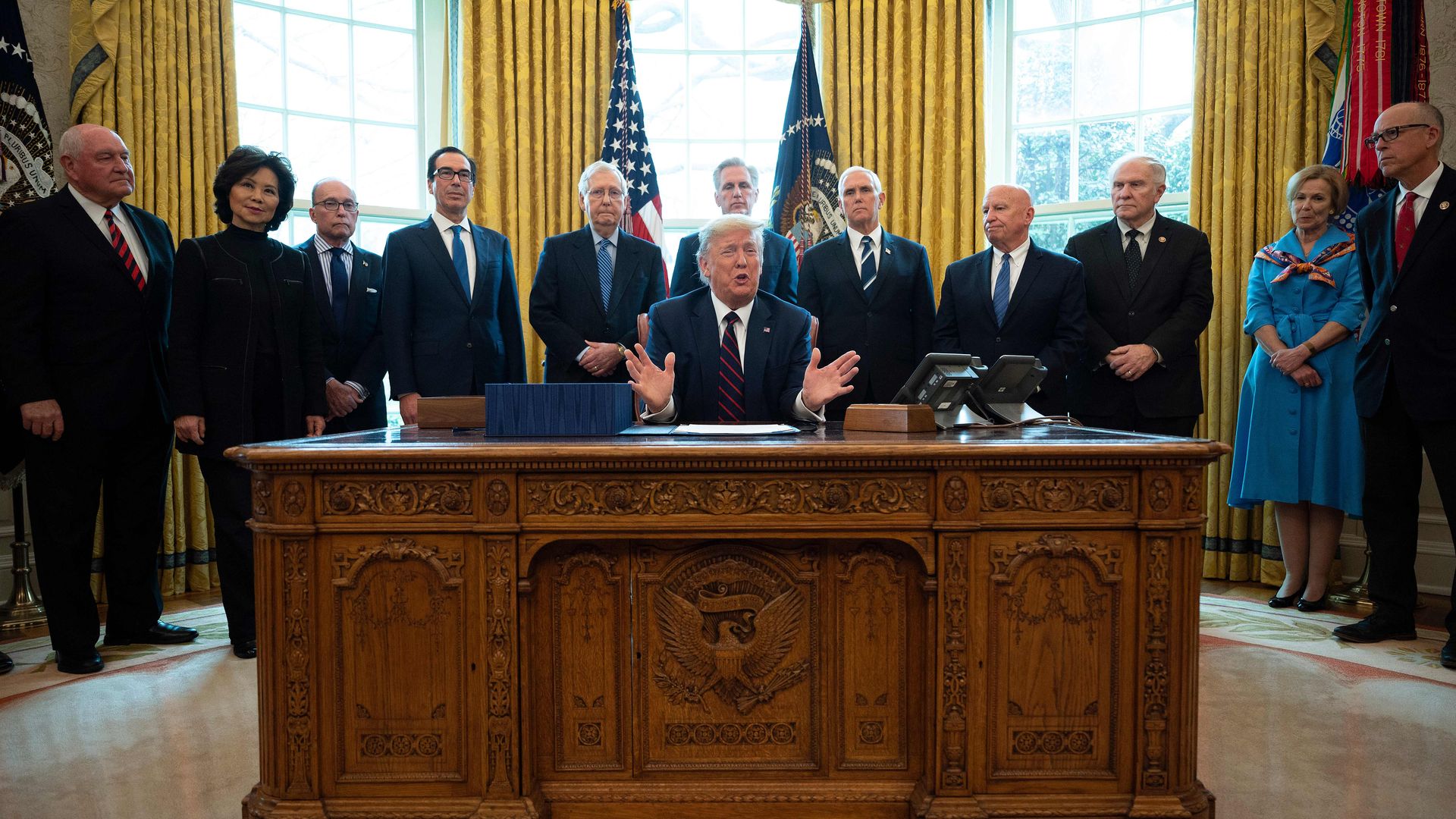
President Trump signed the $2.2 trillion coronavirus stimulus package into law on Friday shortly after the House passed the bill.
Why it matters: What happens in Washington is often lost on the rest of the country. But this rescue package is the largest in American history, has the attention of leaders on both sides of Pennsylvania Avenue and matters to Americans back home.
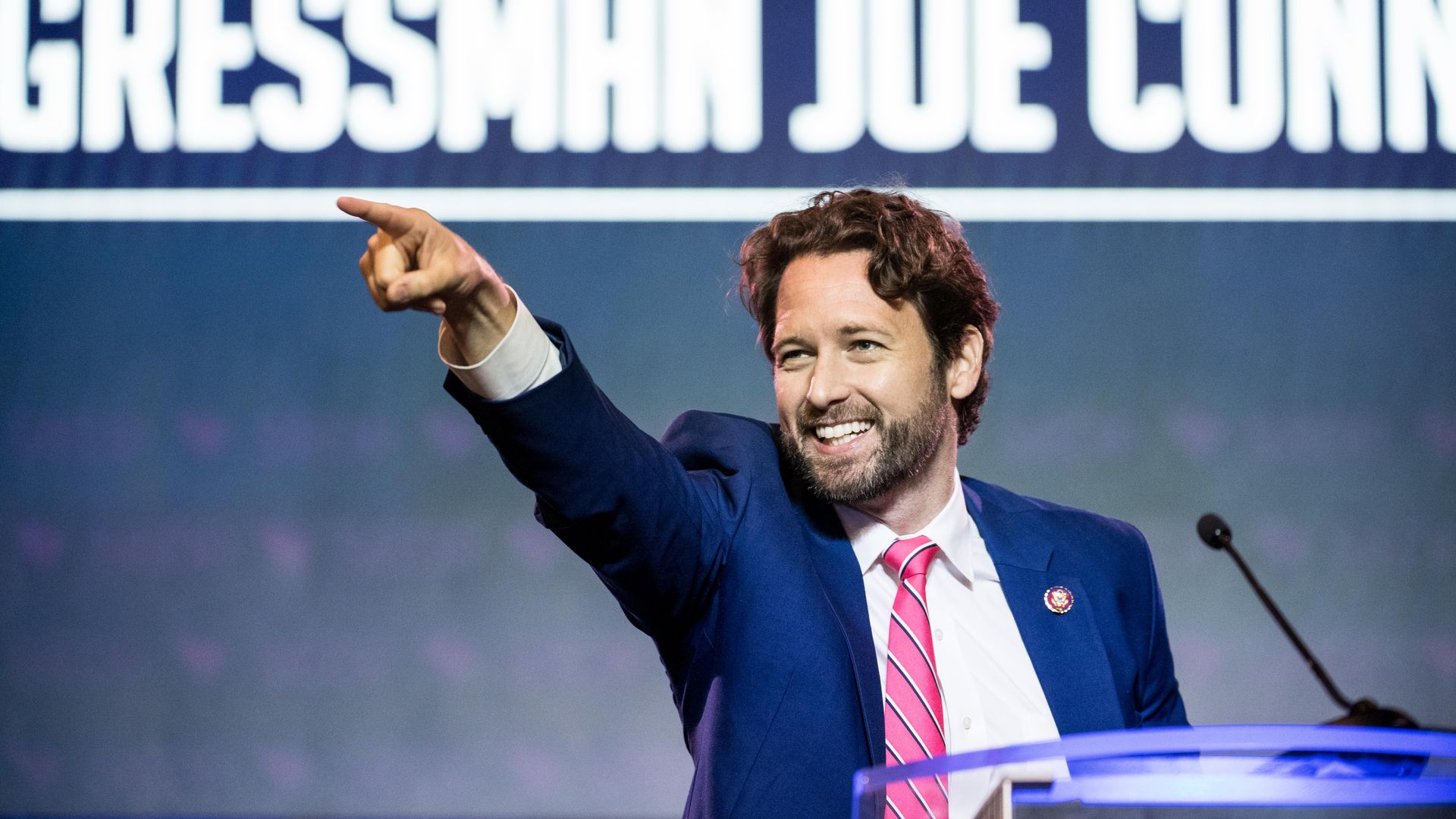
Rep. Joe Cunningham (D-S.C.) has tested positive for COVID-19, the freshman congressman revealed publicly on Friday.
Where it stands: The 37-year-old is the third known member of the House to contract the virus, after Rep. Mario Diaz-Balart (R-Fla.) and Rep. Ben McAdams (D-Utah) announced they tested positive last week. Sen. Rand Paul (R-Ky.) is the only known senator to have tested positive.
At President Trump's urging, automakers have mobilized with astonishing speed to help medical equipment makers produce much-needed ventilators and masks to fight the coronavirus.
But, but, but: With pressure mounting as the pandemic spreads and mixed signals coming from the White House's emergency response team, an agitated president lashed out at GM and Ford Friday morning on Twitter.
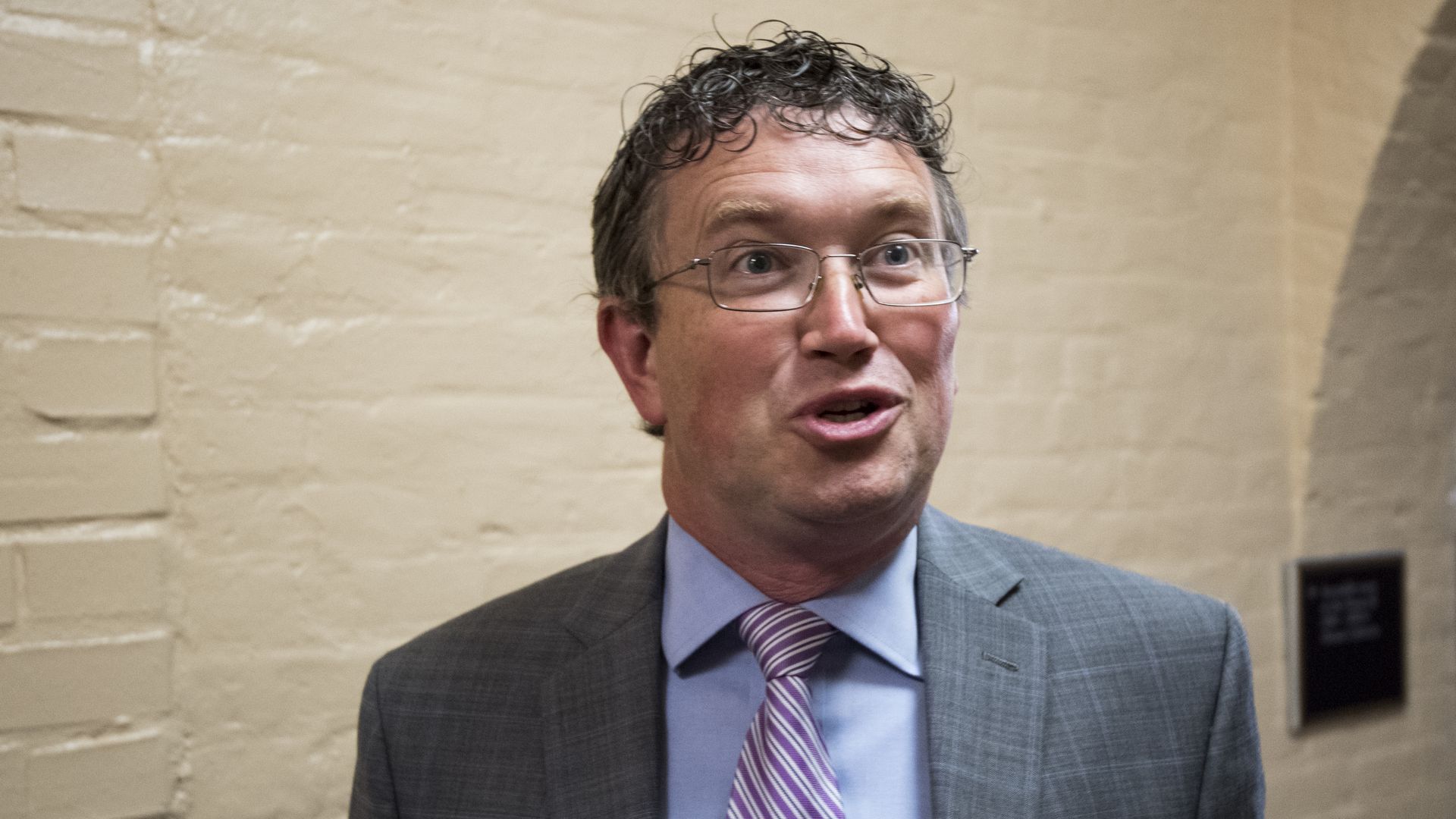
Politicians on both sides of the aisle lined up to condemn Rep. Thomas Massie (R-Ky.) Friday for his reported attempt to delay the passage of the $2 trillion coronavirus stimulus package, which he opposes.
What's happening: Congress had wanted to approve the measure by voice vote on Friday to reduce the risk of exposure to the coronavirus for members who had to travel back to D.C. But those plans changed late Thursday over concerns that Massie could force a roll-call vote, requiring at least 216 members present on the House floor, per NBC New York.
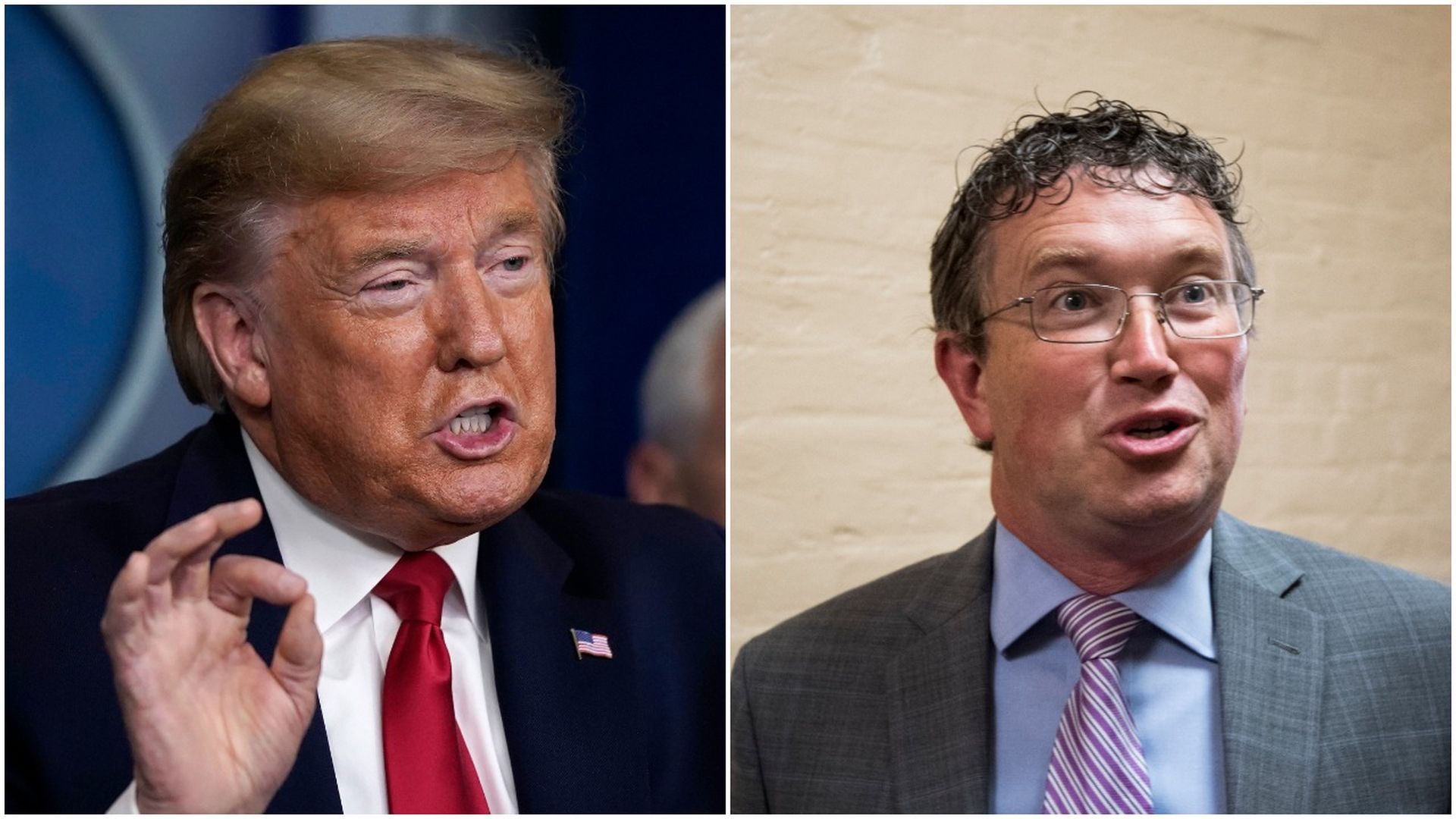
President Trump has denounced Rep. Thomas Massie (R-Ky.) after a report that the congressman could delay passage of Congress' $2 trillion stimulus package by calling for a vote that requires members to be present on the House floor.
What's happening: Massie opposes the package. Congress had wanted to approve the measure by voice vote on Friday to reduce the risk of exposure to the coronavirus for members who had to travel back to D.C.
The growing throng of critics who have assailed the Senate's $2.2 trillion spending bill as avarice, insufficient and disappointing have an alternative.
Enter Rep. Rashida Tlaib (D-Mich.) and the Automatic BOOST to Communities Act, a bill so massive, audacious and unparalleled in scope that one of its primary authors asserts "There is no number that would be meaningful to estimate" its cost.
Believing the worst is yet to come, some top advisers to President Trump are struggling to steer him away from Easter as an arbitrary deadline for much of the nation to reopen.
State of play: The operating assumption among administration officials involved in the coronavirus planning is that the April 12 mark — 16 days away — will not, in fact, turn out to be the starting gun for businesses across America to reopen.
Congress is about to provide $100 billion for hospitals and other health care providers to cope with the fallout from the coronavirus, but small hospitals have no idea how to access those funds — and many need the money immediately.
What they're saying: "A lot of rural hospitals out there need a cash infusion today," Alan Morgan, CEO of the National Rural Health Association, told Axios. "How is it going to happen? What is the process? There are way more questions than answers."
The White House canceled an announcement planned for Wednesday on a proposed venture between General Motors and Ventec Life Systems to build necessary ventilators amid the coronavirus outbreak, the New York Times first reported and Axios confirmed.
What we know: The announcement was called off to buy more time for the Federal Emergency Management Agency to assess whether the estimated cost of more than $1 billion was too expensive, and how many ventilators would be produced. Per the Times, the deal could still happen, but government officials are currently looking at other proposals.