Three immigrant minors in government custody who had crossed into the U.S. without their parents are confirmed to have the novel coronavirus, according to a statement by Health and Human Service's (HHS) Office of Refuge Resettlement (ORR).
Between the lines: Of the roughly 3,500 children in ORR’s care, these are the first with confirmed cases of coronavirus. HHS had earlier stopped sending immigrant minors to shelters in California and Washington state, and now has stopped placing migrant children in New York as well.
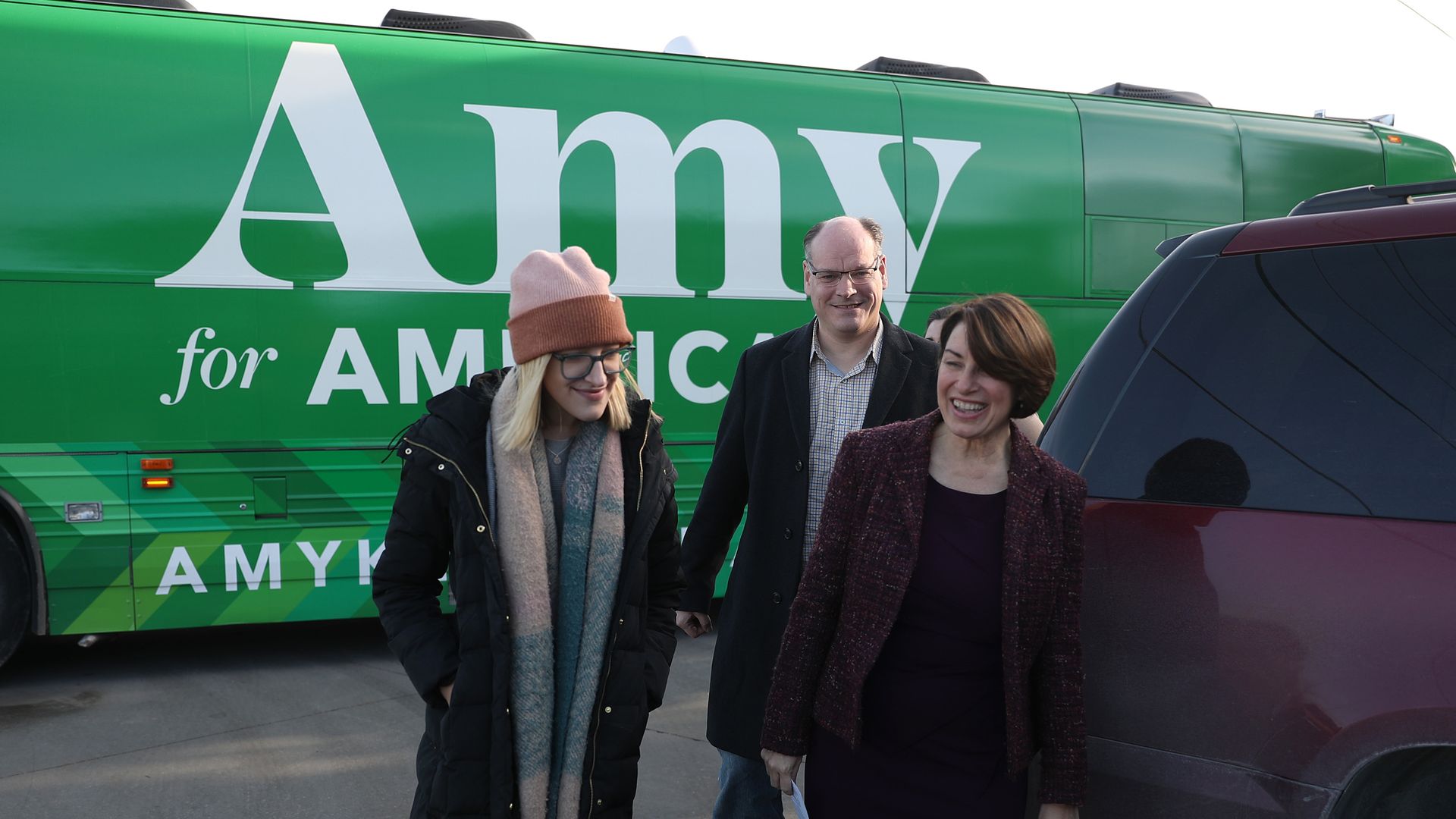
Sen. Amy Klobuchar (D-Minn.) announced Monday that her husband, John Bessler, has been released from the hospital after testing positive for coronavirus.
The latest: "Thanks to all who sent kind words and prayers for my husband John," Klobuchar said in a statement. "He has coronavirus and has been in the hospital for pneumonia and low oxygen. He took a good turn, was just released and is now recovering at home. Thanks to those who cared for him and for all front line health care workers."
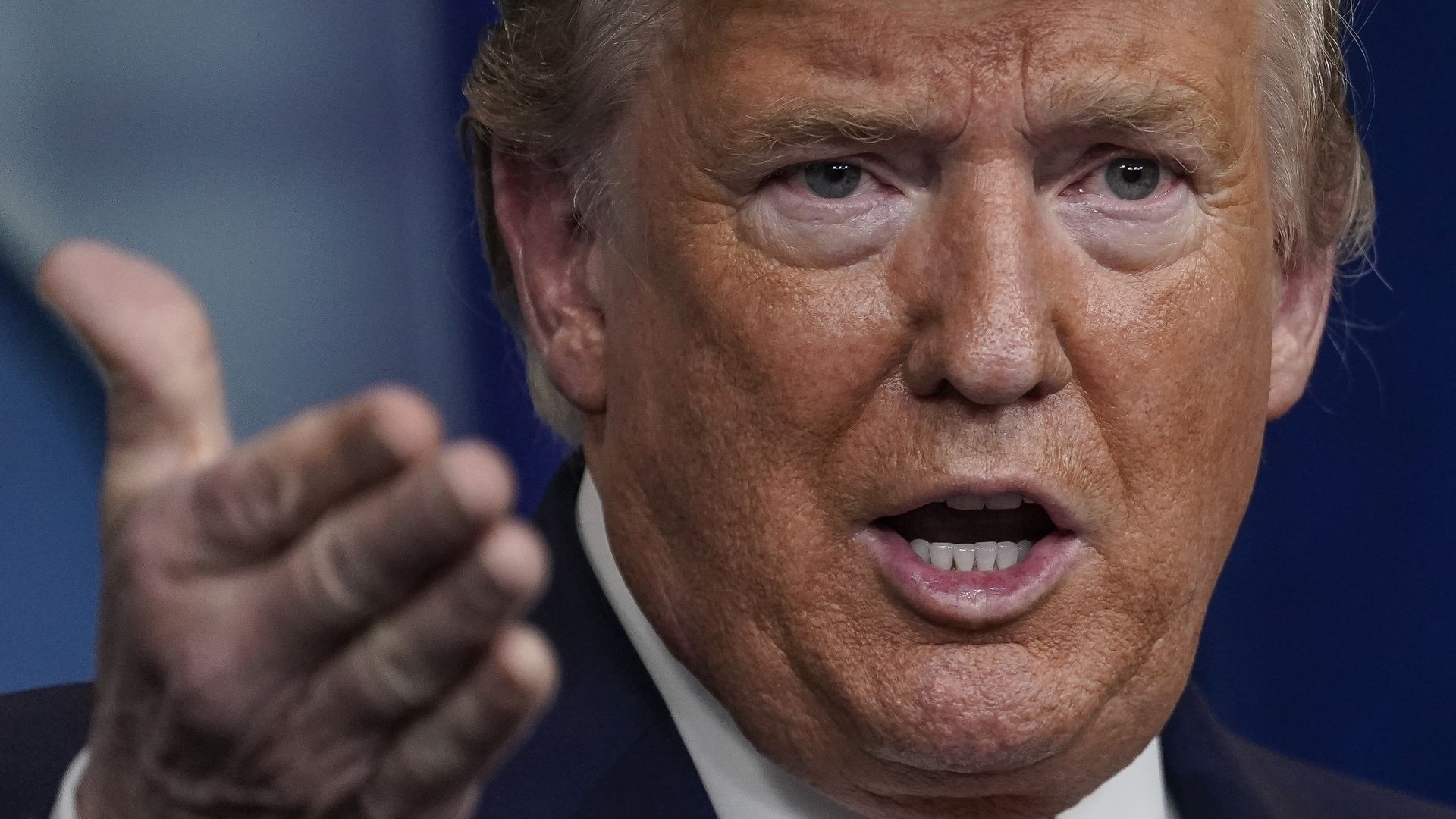
The Trump administration is developing a plan to label counties across the country as "high-risk, medium-risk, or low-risk" areas for the spread of the coronavirus, President Trump said in a letter to the nation's governors on Thursday.
Why it matters: Against the warnings of health experts, Trump is pushing for parts of the country to lift social distancing restrictions over the next few weeks and months, believing that the economic toll of an extended quarantine will be more damaging than the virus itself.
The Trump administration did not follow a National Security Council "playbook" detailing how the federal government should respond to global pandemics, Politico's Dan Diamond and Nahal Toosi report.
Why it matters: Based on recommendations from the document, the government should have started gathering personal protective equipment like masks and gloves at least two months ago in preparation for coronavirus.
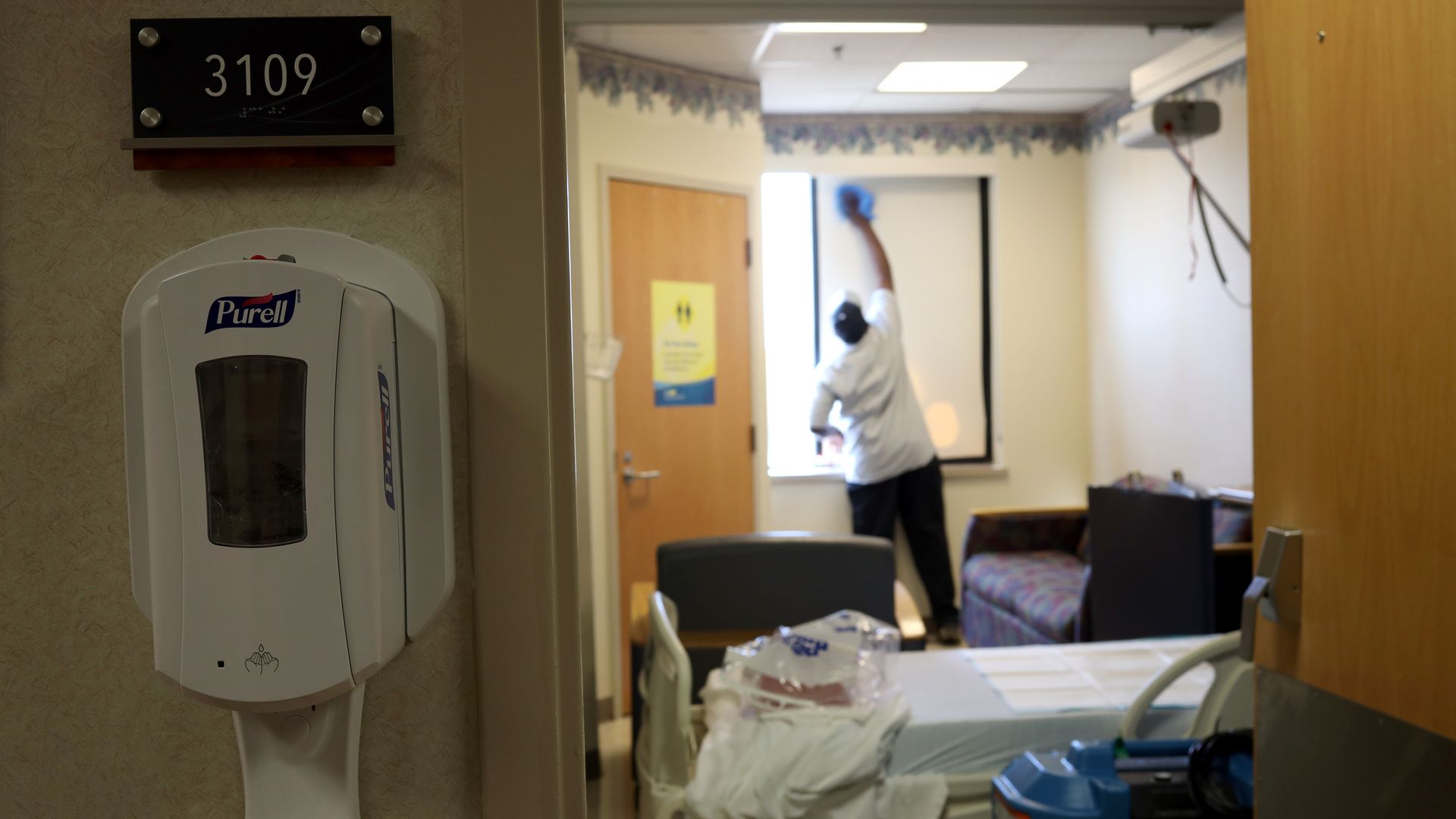
Congress' big stimulus package will provide more than $100 billion and several favorable payment policies to hospitals, doctors and others in the health care system as they grapple with the coronavirus outbreak.
The big picture: Hospitals, including those that treat a lot of rural and low-income patients, are getting the bailout they asked for — and then some.
Why it matters: The roughly $2 trillion COVID-19 relief package includes thousands of dollars in direct payments to most Americans — millions of whom face unemployment related to the spread of COVID-19 — as well as a $500 billion loan fund for large corporations and a $367 billion loan program for small businesses.
Congress' $2 trillion coronavirus stimulus package is the rare legislative agreement that will have an immediate — and lasting — impact on ordinary citizens across the country.
Why it matters: The 883-page bill, titled the "CARES Act," includes thousands of dollars in direct payments to most Americans, and huge loan packages designed to help keep small businesses and corporations afloat.
If President Trump follows through on his statements that he wants to "open" the U.S. up again, an already patchwork shield of state "stay at home" orders could look like even more of a patchwork.
The big picture: As of Wednesday night, just 21 states have ordered people to stay at home, and most of those are states with Democratic governors. Only six — Ohio, Indiana, Idaho, West Virginia, Massachusetts and Vermont — have Republican governors.
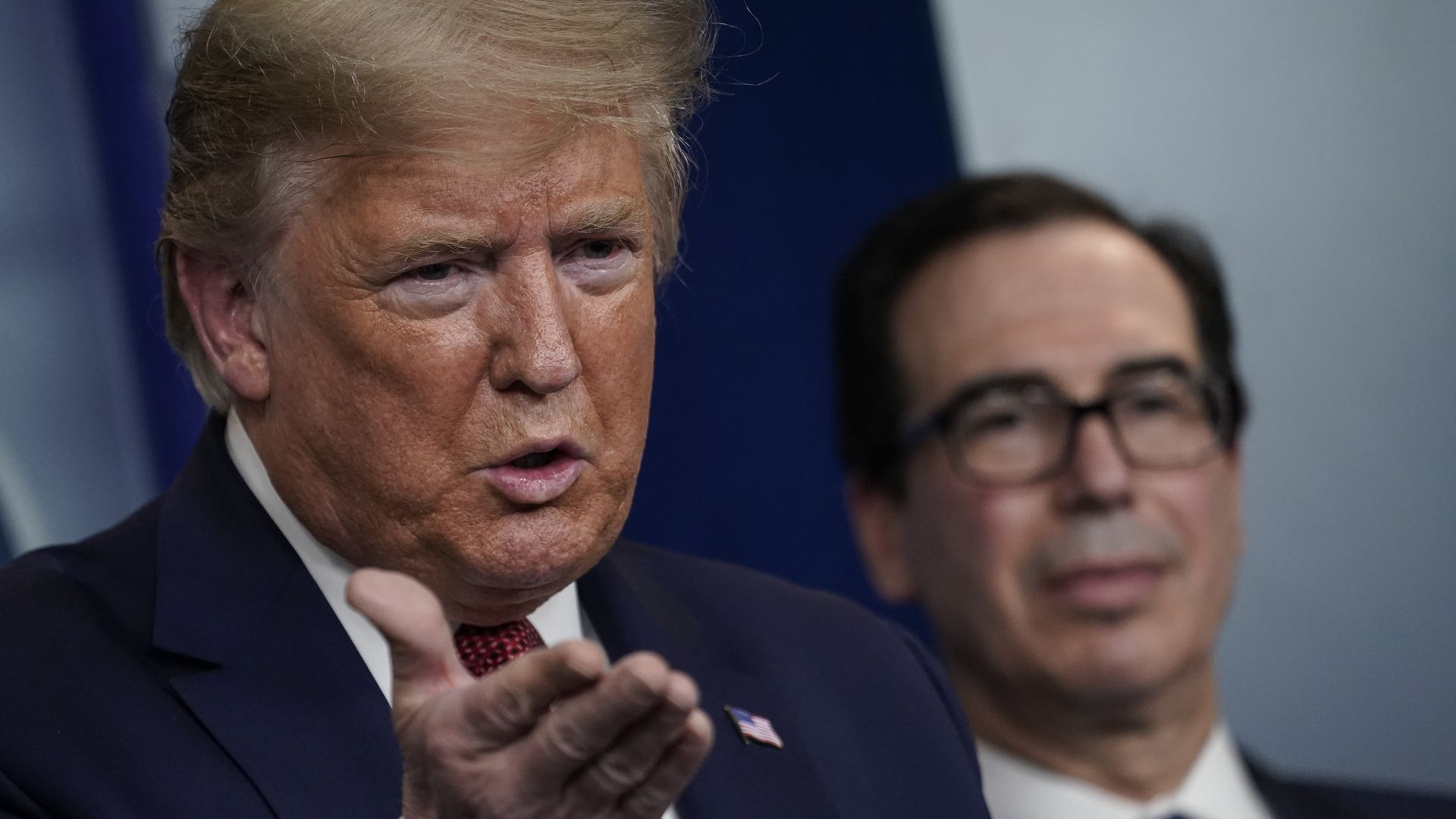
President Trump's daily White House novel coronavirus task force briefings are attracting record viewership, but some critics say TV news networks shouldn't air them because he and administration officials have dispensed misinformation about COVID-19.
Why it matters: Live briefings can be difficult for networks to fact-check in real time. Critics argue that airing the press events unfiltered on a daily basis will mislead the public about the pandemic, putting Americans' health and safety at risk.
After several days of intense negotiations and an 11th-hour standoff over a key provision, the Senate has released the final legislative text for its $2 trillion bill to combat the novel coronavirus.
Why it matters: The bill is the largest rescue package in modern history, and it offers thousands of dollars in direct aid to American families, billions in emergency loans to small businesses and industries hardest hit by COVID-19, and desperately needed resources to hospitals.
Anthony Fauci, director of the National Institute of Allergy and Infectious Diseases, said on Wednesday that the U.S. and other countries "need to be prepared for another cycle" of the novel coronavirus next winter.
The big picture: Research on how COVID-19 behaves in response to different temperatures and humidity levels has only just begun, the Washington Post notes.