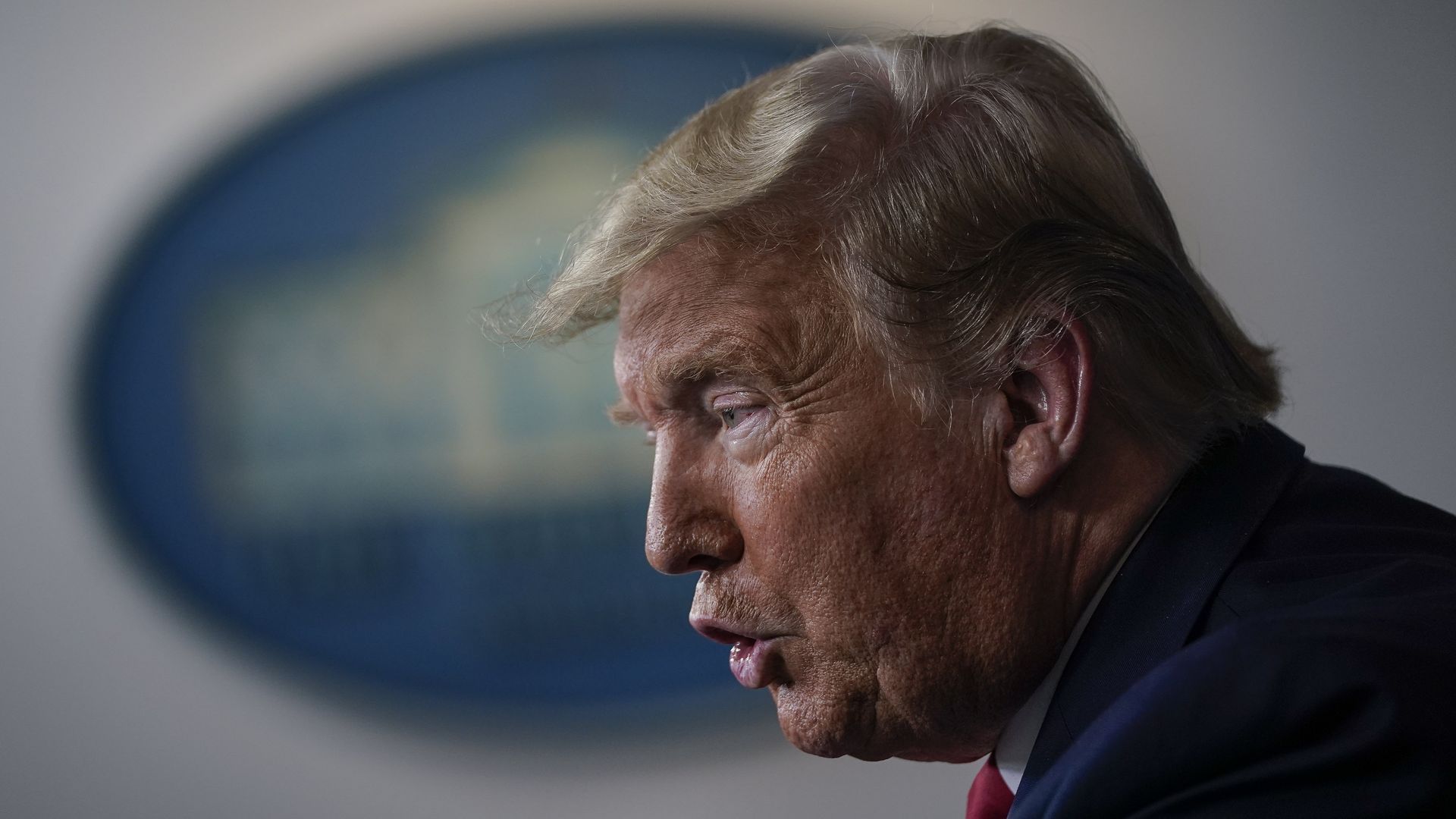
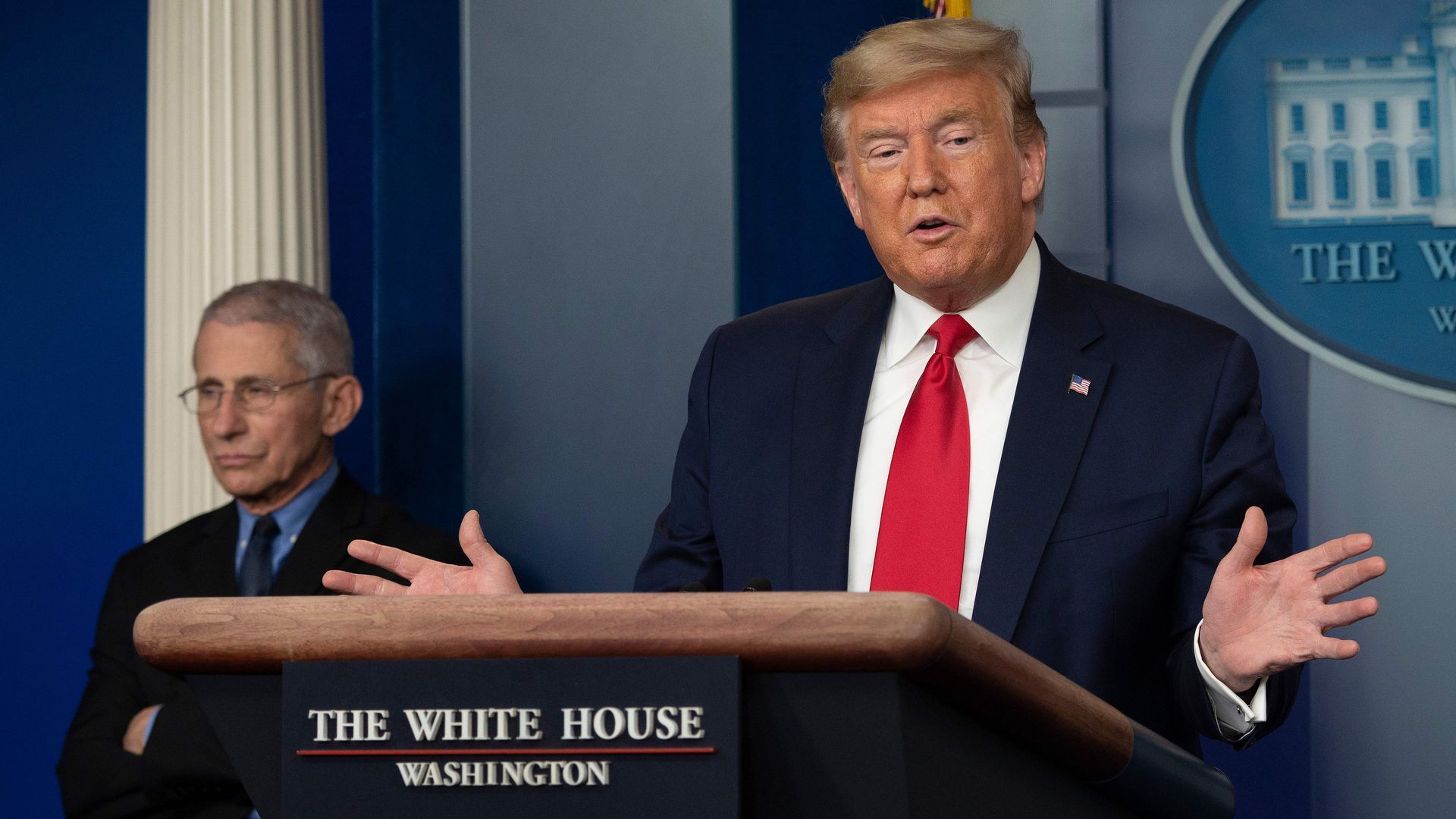
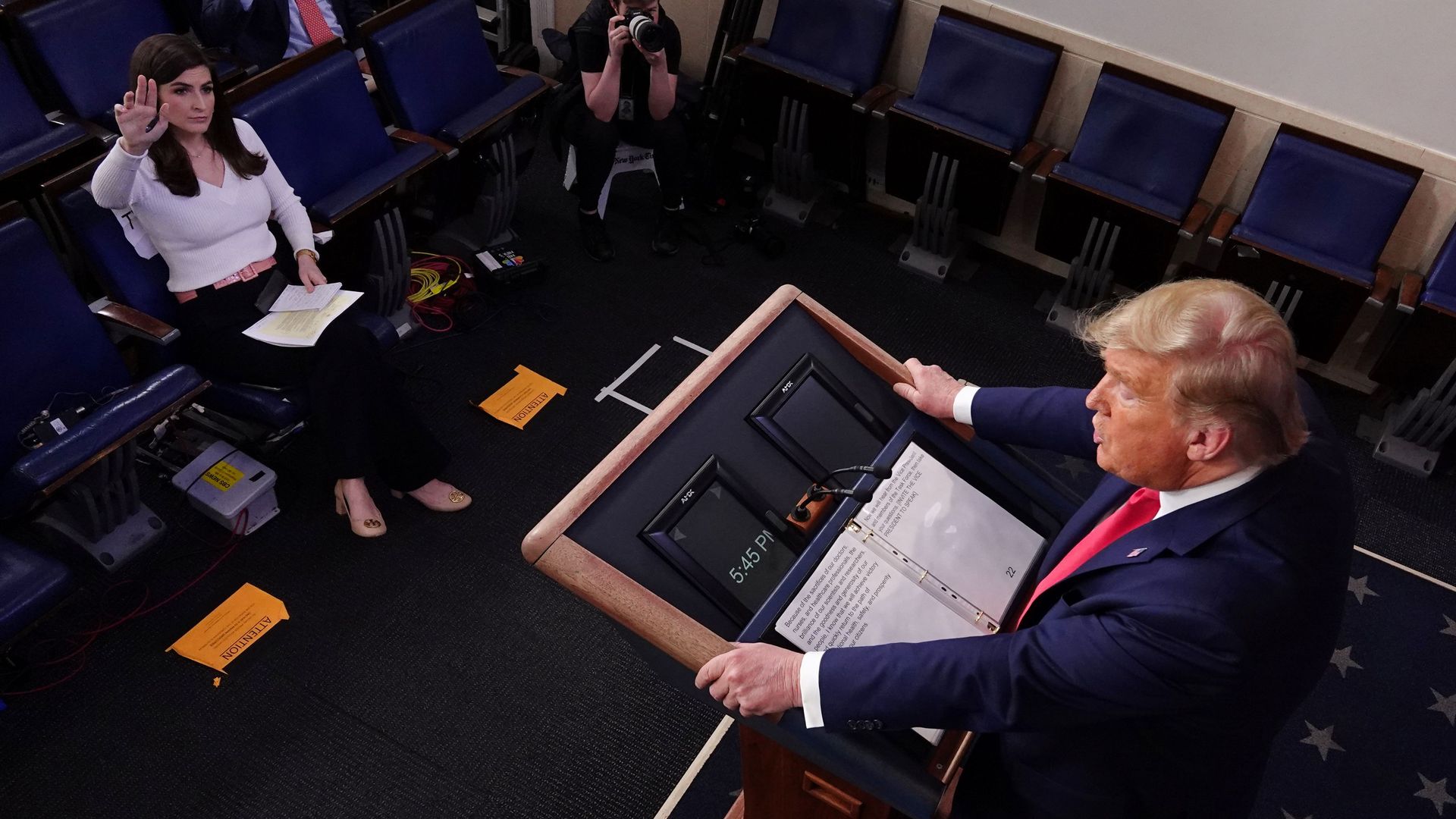
White House trade adviser Peter Navarro was appointed as the Trump administration's point man to enforce the Defense Production Act on Friday, after President Trump authorized the use of the DPA to direct General Motors to build ventilators for patients affected by the novel coronavirus.
Why it matters: America's hospitals, doctors and nurses have urged Trump since last week to use the DPA to ramp up the country's domestic production of medical supplies crucial for health care workers, saying "there will not be enough medical supplies" without it.
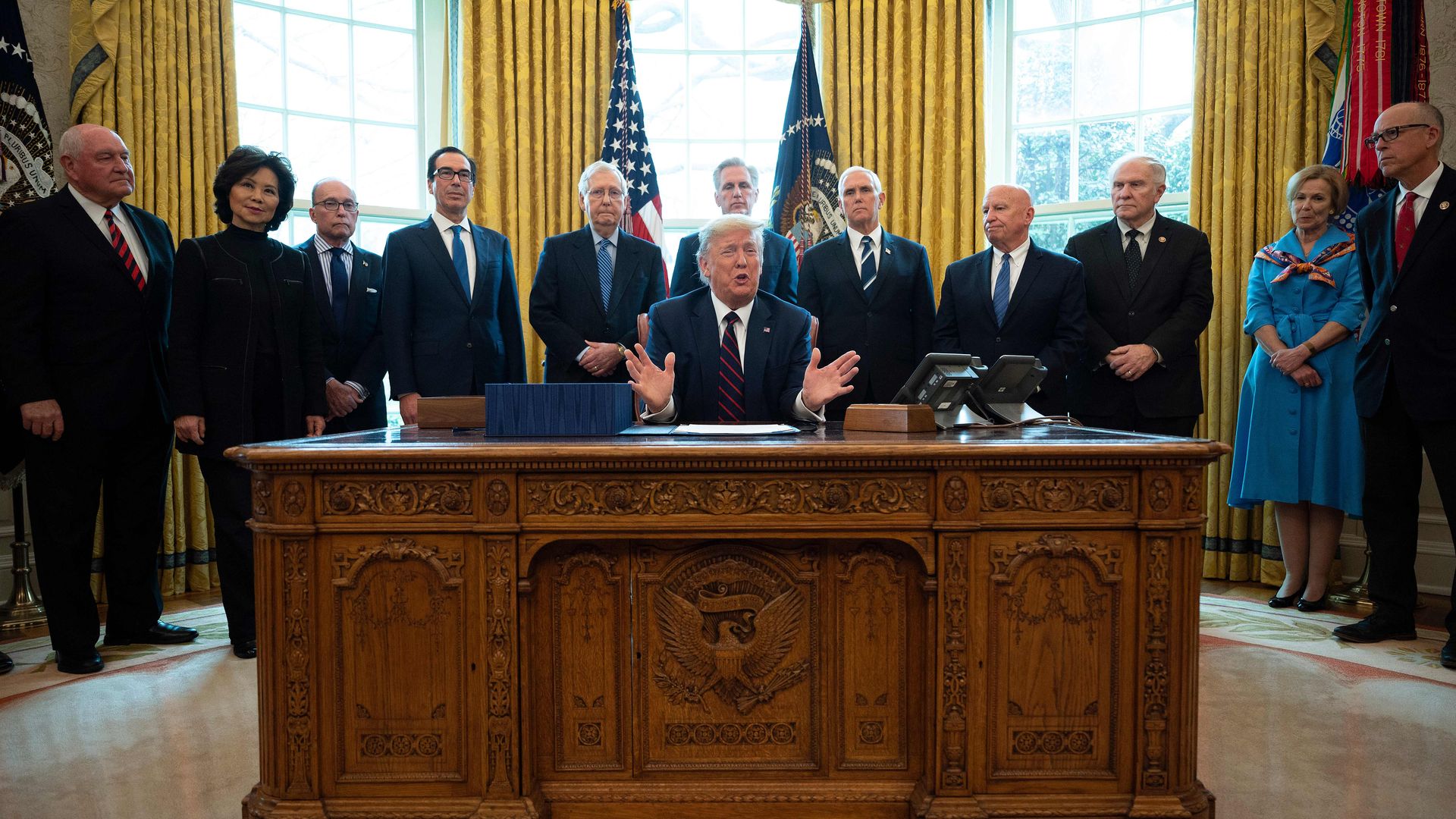
President Trump signed the $2.2 trillion coronavirus stimulus package into law on Friday shortly after the House passed the bill.
Why it matters: What happens in Washington is often lost on the rest of the country. But this rescue package is the largest in American history, has the attention of leaders on both sides of Pennsylvania Avenue and matters to Americans back home.
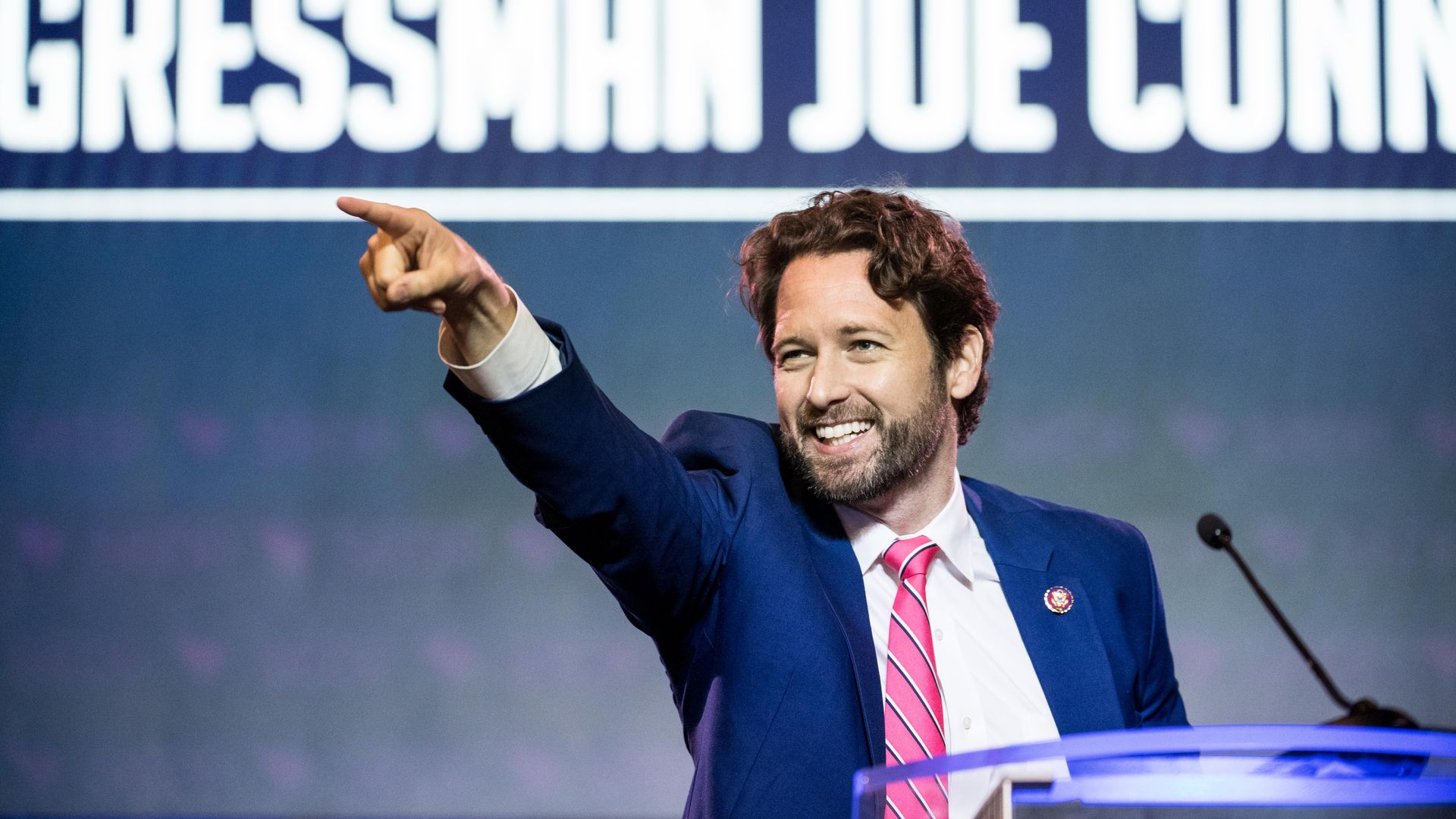
Rep. Joe Cunningham (D-S.C.) has tested positive for COVID-19, the freshman congressman revealed publicly on Friday.
Where it stands: The 37-year-old is the third known member of the House to contract the virus, after Rep. Mario Diaz-Balart (R-Fla.) and Rep. Ben McAdams (D-Utah) announced they tested positive last week. Sen. Rand Paul (R-Ky.) is the only known senator to have tested positive.
At President Trump's urging, automakers have mobilized with astonishing speed to help medical equipment makers produce much-needed ventilators and masks to fight the coronavirus.
But, but, but: With pressure mounting as the pandemic spreads and mixed signals coming from the White House's emergency response team, an agitated president lashed out at GM and Ford Friday morning on Twitter.
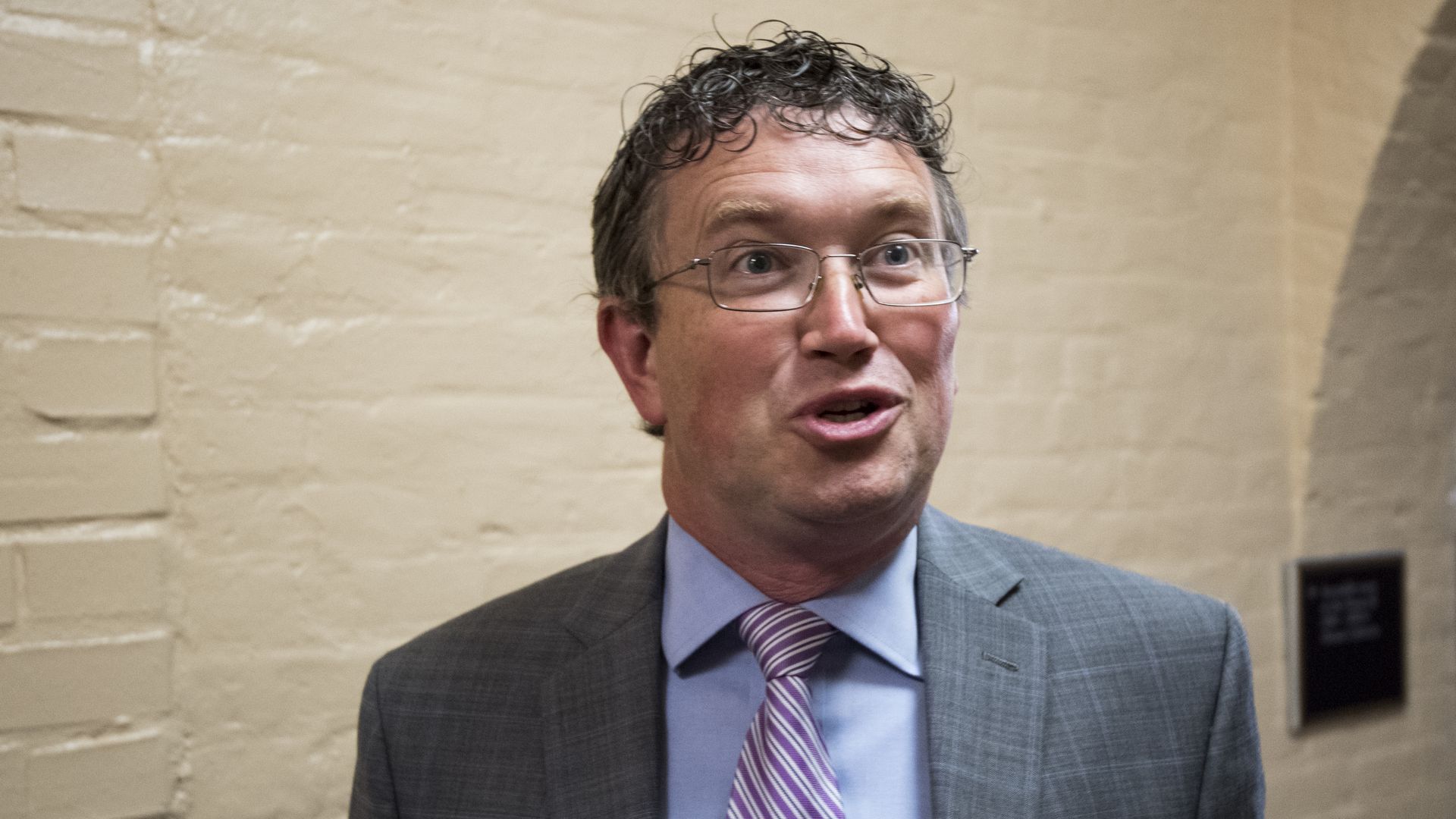
Politicians on both sides of the aisle lined up to condemn Rep. Thomas Massie (R-Ky.) Friday for his reported attempt to delay the passage of the $2 trillion coronavirus stimulus package, which he opposes.
What's happening: Congress had wanted to approve the measure by voice vote on Friday to reduce the risk of exposure to the coronavirus for members who had to travel back to D.C. But those plans changed late Thursday over concerns that Massie could force a roll-call vote, requiring at least 216 members present on the House floor, per NBC New York.
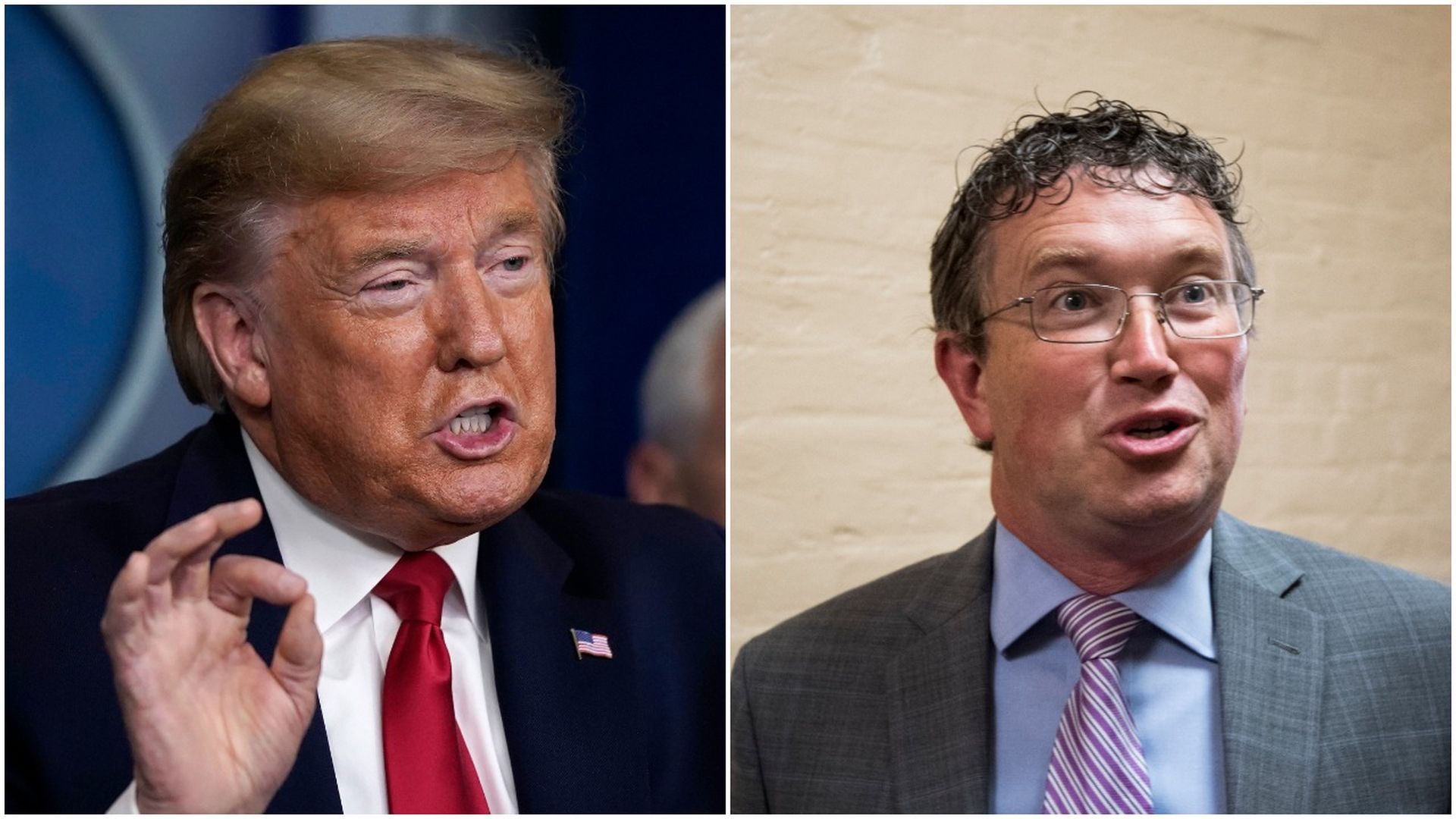
President Trump has denounced Rep. Thomas Massie (R-Ky.) after a report that the congressman could delay passage of Congress' $2 trillion stimulus package by calling for a vote that requires members to be present on the House floor.
What's happening: Massie opposes the package. Congress had wanted to approve the measure by voice vote on Friday to reduce the risk of exposure to the coronavirus for members who had to travel back to D.C.
The growing throng of critics who have assailed the Senate's $2.2 trillion spending bill as avarice, insufficient and disappointing have an alternative.
Enter Rep. Rashida Tlaib (D-Mich.) and the Automatic BOOST to Communities Act, a bill so massive, audacious and unparalleled in scope that one of its primary authors asserts "There is no number that would be meaningful to estimate" its cost.
Believing the worst is yet to come, some top advisers to President Trump are struggling to steer him away from Easter as an arbitrary deadline for much of the nation to reopen.
State of play: The operating assumption among administration officials involved in the coronavirus planning is that the April 12 mark — 16 days away — will not, in fact, turn out to be the starting gun for businesses across America to reopen.
Congress is about to provide $100 billion for hospitals and other health care providers to cope with the fallout from the coronavirus, but small hospitals have no idea how to access those funds — and many need the money immediately.
What they're saying: "A lot of rural hospitals out there need a cash infusion today," Alan Morgan, CEO of the National Rural Health Association, told Axios. "How is it going to happen? What is the process? There are way more questions than answers."