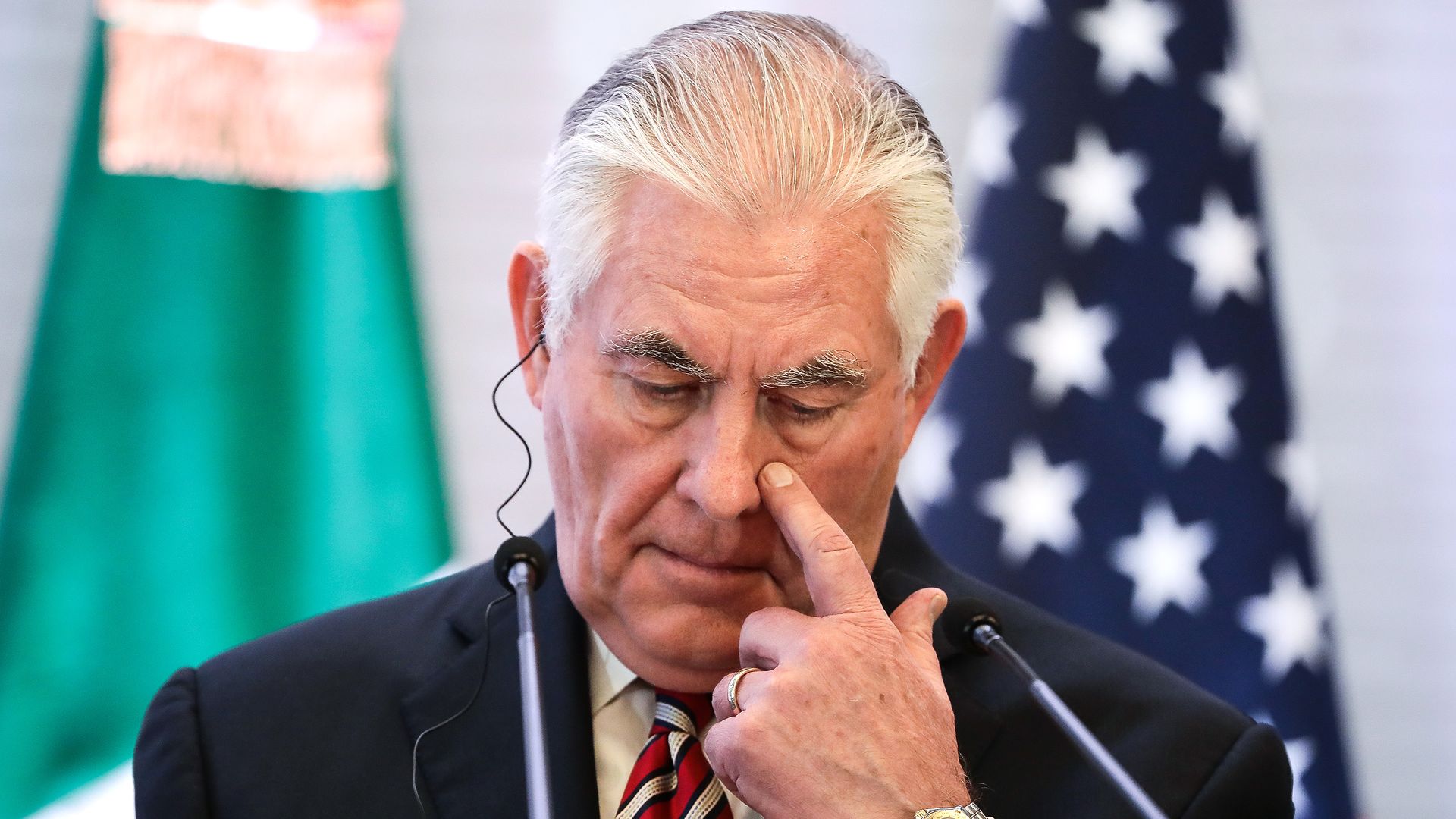
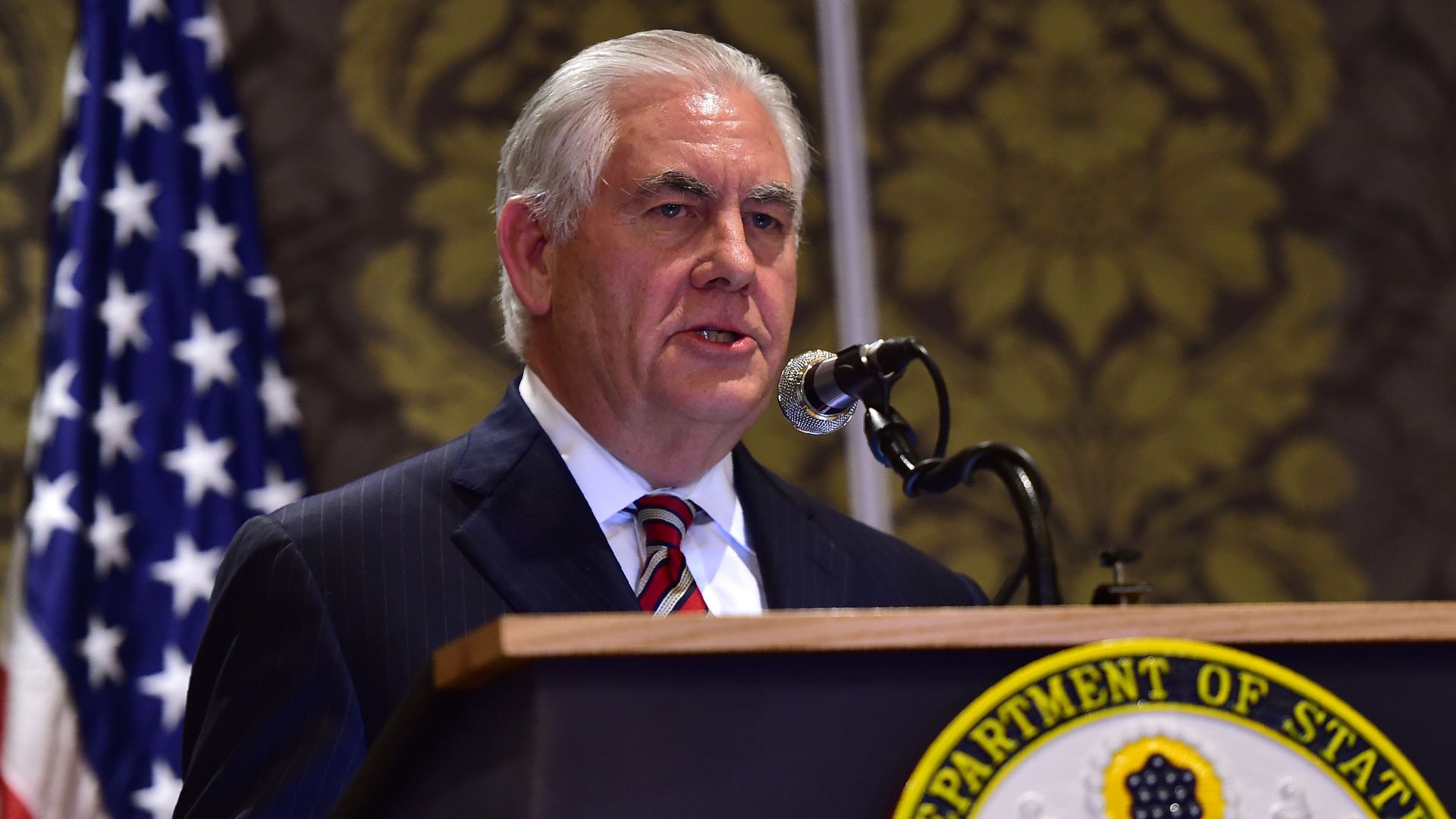
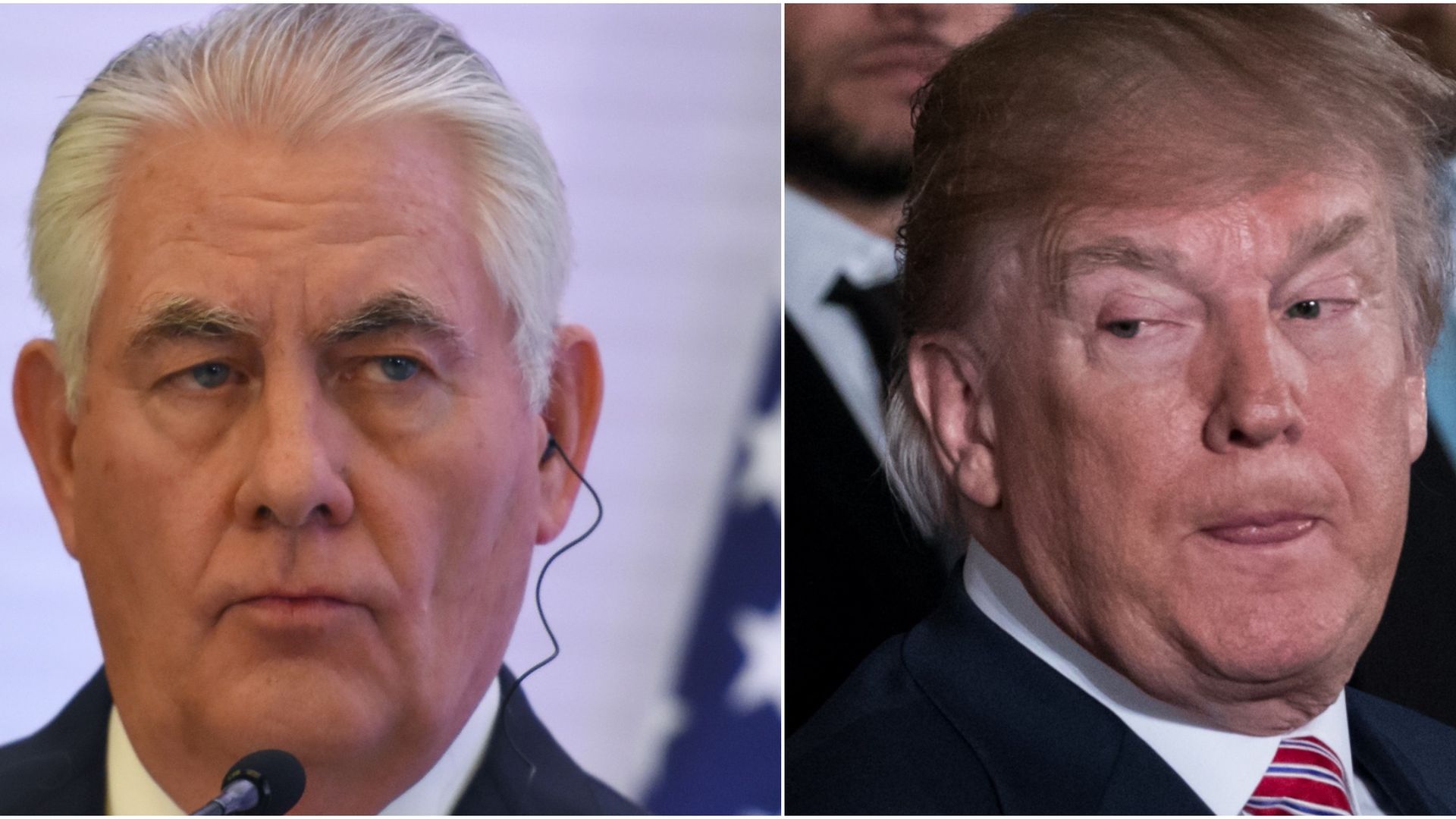
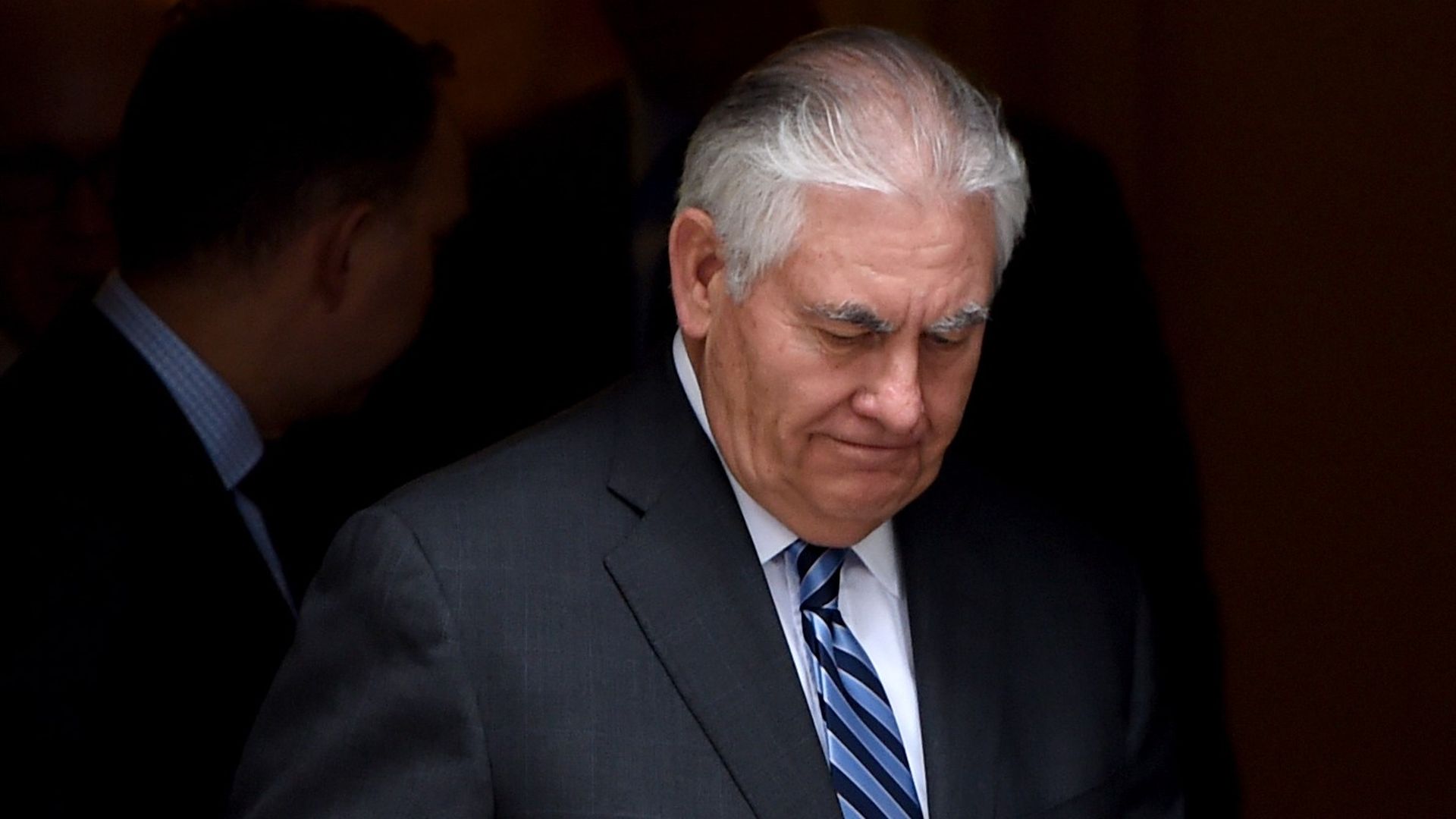
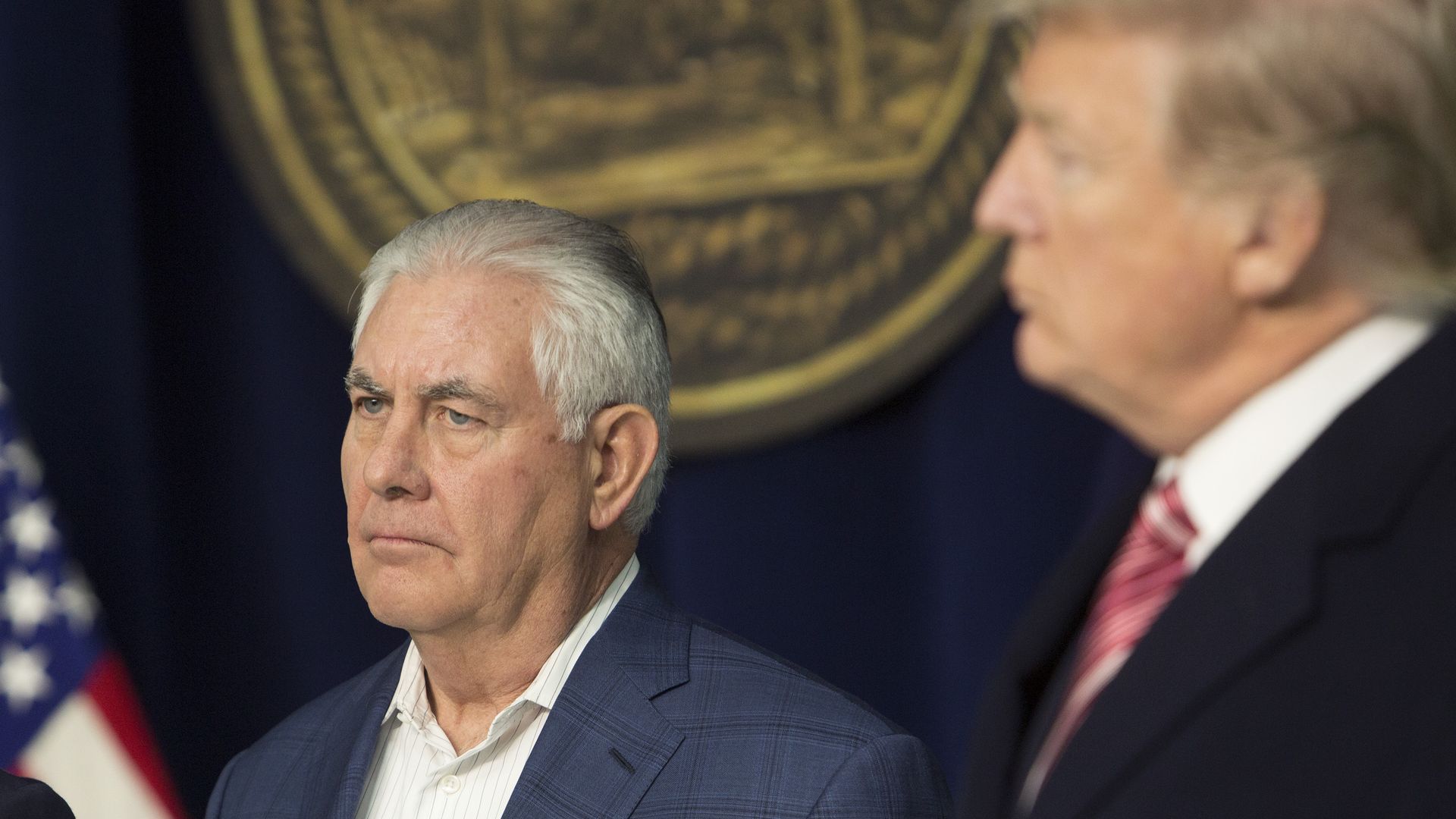
Outgoing Secretary of State Rex Tillerson said in a press conference on Tuesday that he "received a call today from the President of the United States a little after noon time." Trump tweeted about Tillerson's dismissal at 8:44am. In closing, Tillerson said he thanked the "300 plus million Americans...for your devotion to a free and open society, to acts of kindness toward one another, to honesty." He took no questions.
Catch up quick: Trump tweeted Tuesday morning that CIA Director Mike Pompeo would replace Tillerson. The State Department issued a statement shortly after that said Tillerson was unaware of the reason he was fired. Trump said he made the decision by himself.
There are many conflicting reports about how Secretary of State Rex Tillerson found out he was fired. Tillerson"did not speak to the President [Tuesday] morning and is unaware of the reason" for his termination, said Steve Goldstein, the State Department's Under Secretary of State for Public Diplomacy and Public Affairs.
He wasn't the only one to lose his job. The White House fired Goldstein for what they considered a contradictory account, per the AP. The State Department confirmed to Axios Goldstein is leaving.
State Department Under Secretary Steve Goldstein was also fired Tuesday, several news outlets report, after issuing a statement that said Rex Tillerson had not spoken with the president prior to being fired.
The backdrop: Axios' Jonathan Swan reported last month that Goldstein was universally loathed within the White House and seen as openly anti-Trump. Several administration officials also told Swan they felt Goldstein had a history of exacerbating tensions between the White House and the State Department.
The San Francisco ICE spokesman James Schwab has quit following the DHS' spread of false information that "roughly 800 undocumented immigrants escaped arrest" because of the warning issued by the Oakland Mayor of the ICE raids the day prior, according to the San Francisco Chronicle. Schwab believed the number to be significantly less than what agency officials — including Jeff Sessions — were saying, and had reportedly asked for a correction.
Key quote: “I asked them to change the information. I told them that the information was wrong, they asked me to deflect, and I didn’t agree with that. Then I took some time and I quit.”
Mike Pompeo takes over the State Department with three decided advantages over his predecessor: familiarity with foreign policy, experience in government and a good rapport with President Trump. Rex Tillerson, by contrast, had none of those.
The background: Tillerson made a difficult situation worse by failing to develop a strong relationship with the foreign service. He did not get the department fully resourced and depended on only a small core staff. His focus on restructuring amounted to a corporate CEO’s attempt to superimpose a structure he knew well onto a fundamentally different organization. Not surprisingly, the effort came to naught and many experienced hands abandoned ship.
President Trump said on Tuesday that he will nominate Gina Haspel to be his new CIA Director, replacing Mike Pompeo who will replace Rex Tillerson as Secretary of State.
Haspel, 61, has worked in the CIA since 1985. Her appointment as Deputy Director of the agency last year drew praise from former senior intelligence officials, and she will be the first female director of the CIA.
I'm told that Justin Clark is going to be the head of the Office of Public Liaison at the White House, according to three sources with knowledge of the decision.
What it means: Clark, who served on the Trump campaign, is currently a deputy assistant to the president and the White House director of intergovernmental affairs. His new job will be to build coalitions outside the White House. It's a job that could be powerful, but under this administration has been incredibly weak.
Today, President Trump brought an end to the Rex Tillerson era, removing him as Secretary of State after months of disagreements over everything from Charlottesville to Russia.
Why it matters: The relationship between the President and Rex Tillerson hasn't been good for months. Tillerson has broken with Trump on several important international issues and there were even reports that he had called Trump a "f****ing moron."
This has been months in the making. Mike Allen and I were the first to report that President Trump was considering Mike Pompeo for the job, and that was back in October.
The bottom line: The relationship between Trump and Rex Tillerson was untenable. They clashed on just about every major policy issue — from the Iran deal to North Korea and Qatar. Tillerson even privately argued against Trump’s signature foreign policy decisions to withdraw from the Paris climate accords and to recognize Jerusalem as Israel’s capital and to move the US embassy there.
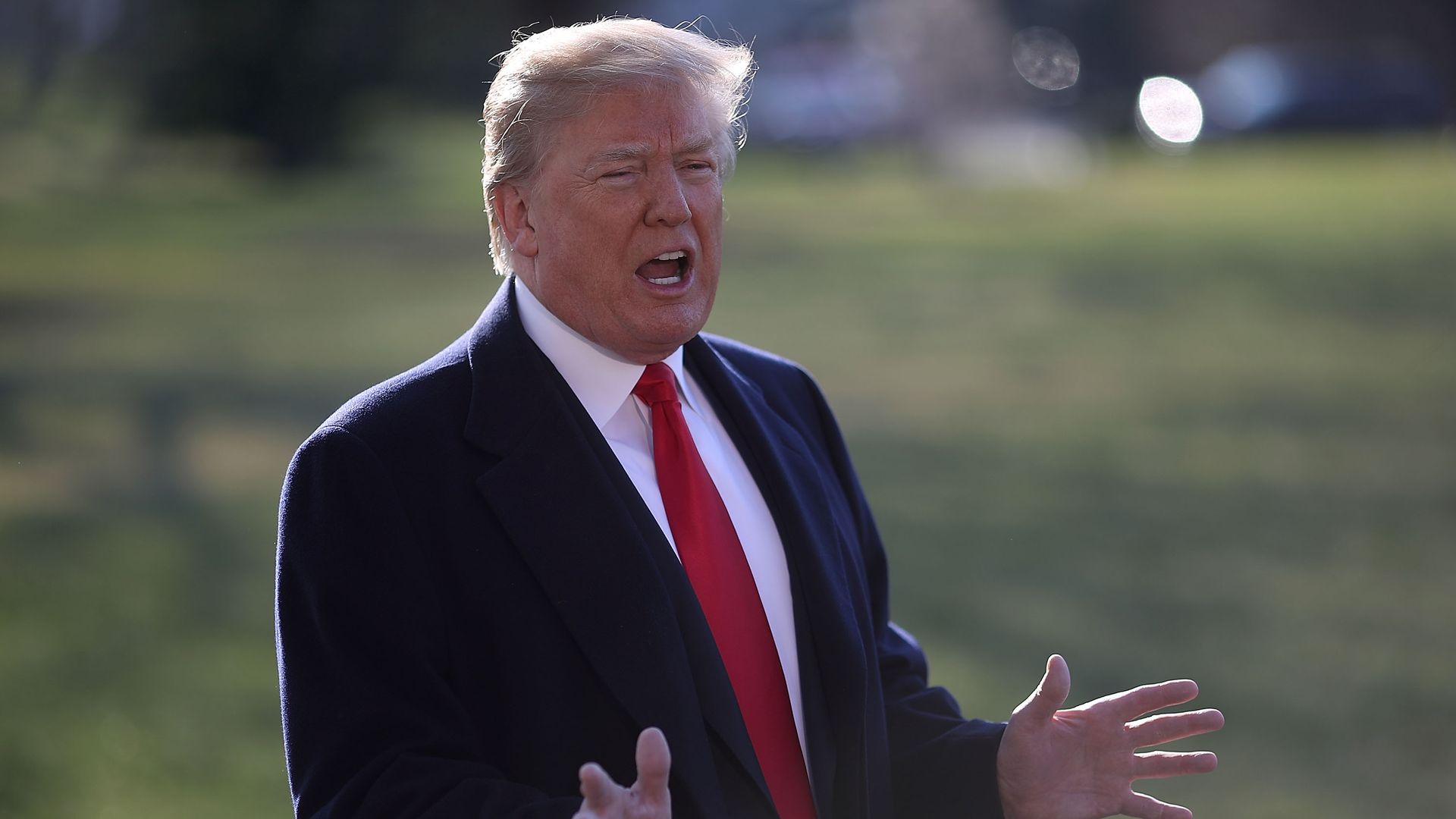
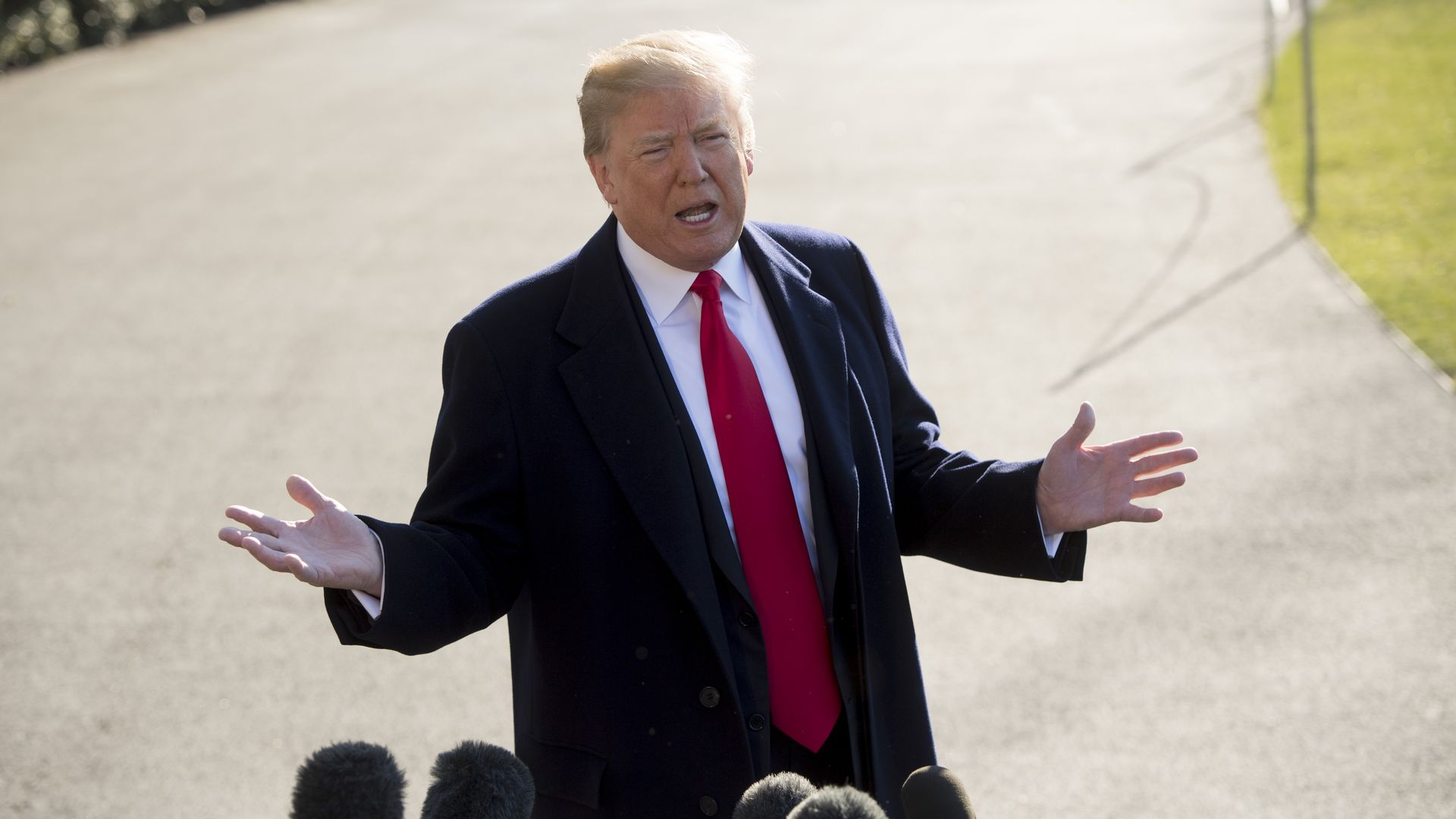
President Trump told reporters as he left the White House Tuesday that he made the decision to fire Secretary of State Rex Tillerson "by myself" and admitted that he "didn't really discuss it much" with Tillerson before announcing it on Twitter.
His reasoning: Trump said that he appreciated Tillerson's commitment the position, but that the two "disagreed on things." The president said that he and Pompeo are much more aligned, adding, "From day one, I have gotten along with Mike Pompeo."
The State Department said that Rex Tillerson did not speak to President Trump before the tweeted announcement that Mike Pompeo would replace Tillerson as Secretary of State, adding that Tillerson was "unaware of the reason" for his dismissal. State added that Tillerson "had every intention of staying because of the critical progress made in national security."
How it went down: According to the Washington Post, Tillerson abruptly returned to Washington from a five-day Africa trip after Trump fired him on Friday. But senior State Department officials have been pushing back on that narrative, stating that Tillerson found out about his dismissal via Trump's tweet, per NBC News' Andrea Mitchell.
Hillary Clinton, in comments in India this weekend seized on by the Republican National Committee, attributed some of Trump's insurgent victory to discriminatory attitudes among his supporters, per CNN:
"I won the places that represent two-thirds of America's gross domestic product... So I won the places that are optimistic, diverse, dynamic, moving forward. And his whole campaign, 'Make America Great Again,' was looking backwards. You know: 'You didn't like black people getting rights, you don't like women, you know, getting jobs, you don't want to, you know, see that Indian-American succeeding more than you are, whatever your problem is, I'm going to solve it.'"
President Trump recently said he plans to eventually spend four to five days campaigning for Republican candidates ahead of the midterm elections. But the reality is that out of the 23 most vulnerable House Republicans, only two candidates said they would accept Trump's help — and neither were especially eager about it.
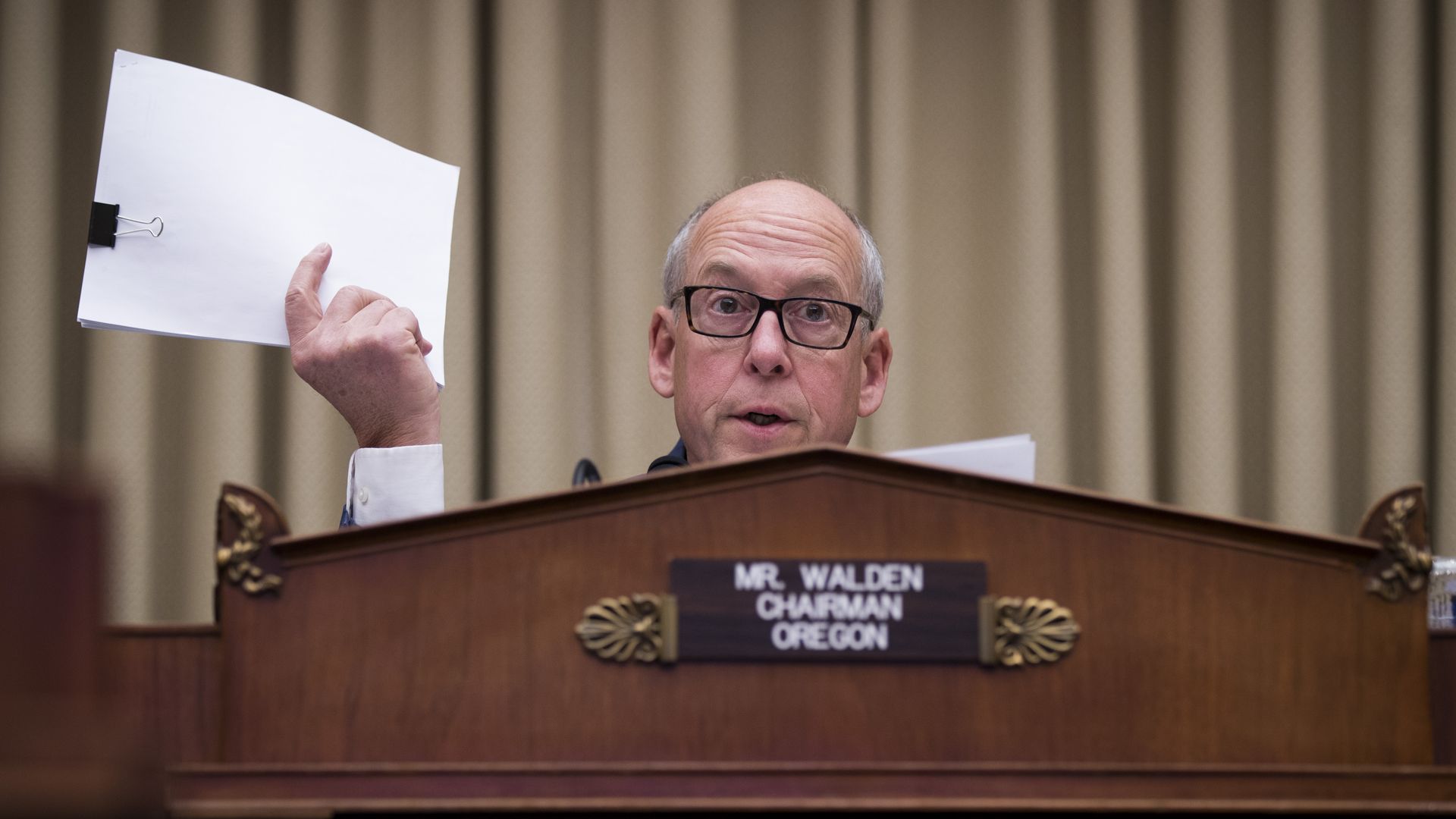
The House will vote today on a bill that would expand terminally ill patients' access to medical products that are still being reviewed by the Food and Drug Administration. Most Democrats are still expected to oppose it.
Why this matters: Access to these experimental medicines could give one last option to people with none left, although it's unclear how many doctors, drug makers and patients would take advantage of this new option.
There's little chance that gun or immigration legislation will become a part of a must-pass spending bill later this month, but that doesn't mean Congress won't return to the issues later this year — even with midterm elections looming.
Why this matters: That Republicans want to return to these hot-button issues in an election year, particularly gun legislation, reflects recognition of a shift in public opinion. There's no plan in place, but this time some members of both parties genuinely want to find solutions to — or at the very least seriously debate — these issues.