Tuesday's politics & policy stories

The highlights from Spicer's Tuesday briefing
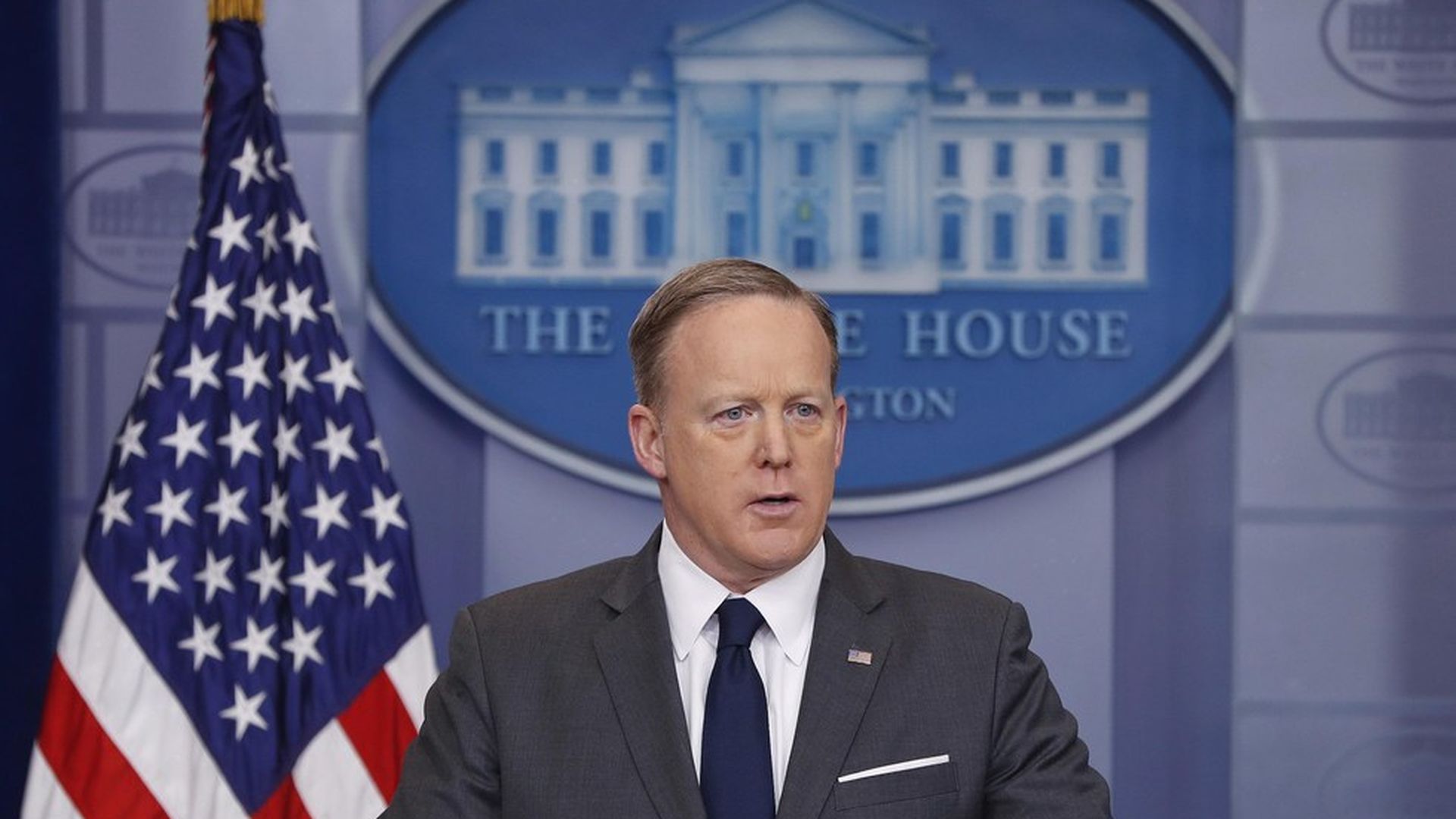
Sean Spicer began by railing against reports that former acting AG Sally Yates was blocked from testifying on Trump associates' ties to Russia. "I hope she testifies," said Spicer, calling the Post's report "100% false." He also denied that the Trump admin pressured House Intel Chairman Devin Nunes to shut down the hearing. Other takeaways:
- Healthcare round 2: "Have we had discussions? Yes. Are we actively planning immediate strategy? Not at this time."
- On whether Nunes should recuse himself: "It's not up to me," said Spicer. "He is running an investigation which we asked for."
- Does Trump still think climate change is a hoax? Spicer dodged, and said that shouldn't be what people focus on.
- Tax reform: The middle class individual tax and the corporate tax rate need to come down, said Spicer. He said the FY17 reconciliation is probably the "most likely" way forward.
- Gorsuch confirmation: Trump "hopes to find common ground" with Dems tonight's reception for senators
Flashback: McConnell on tax reform and infrastructure
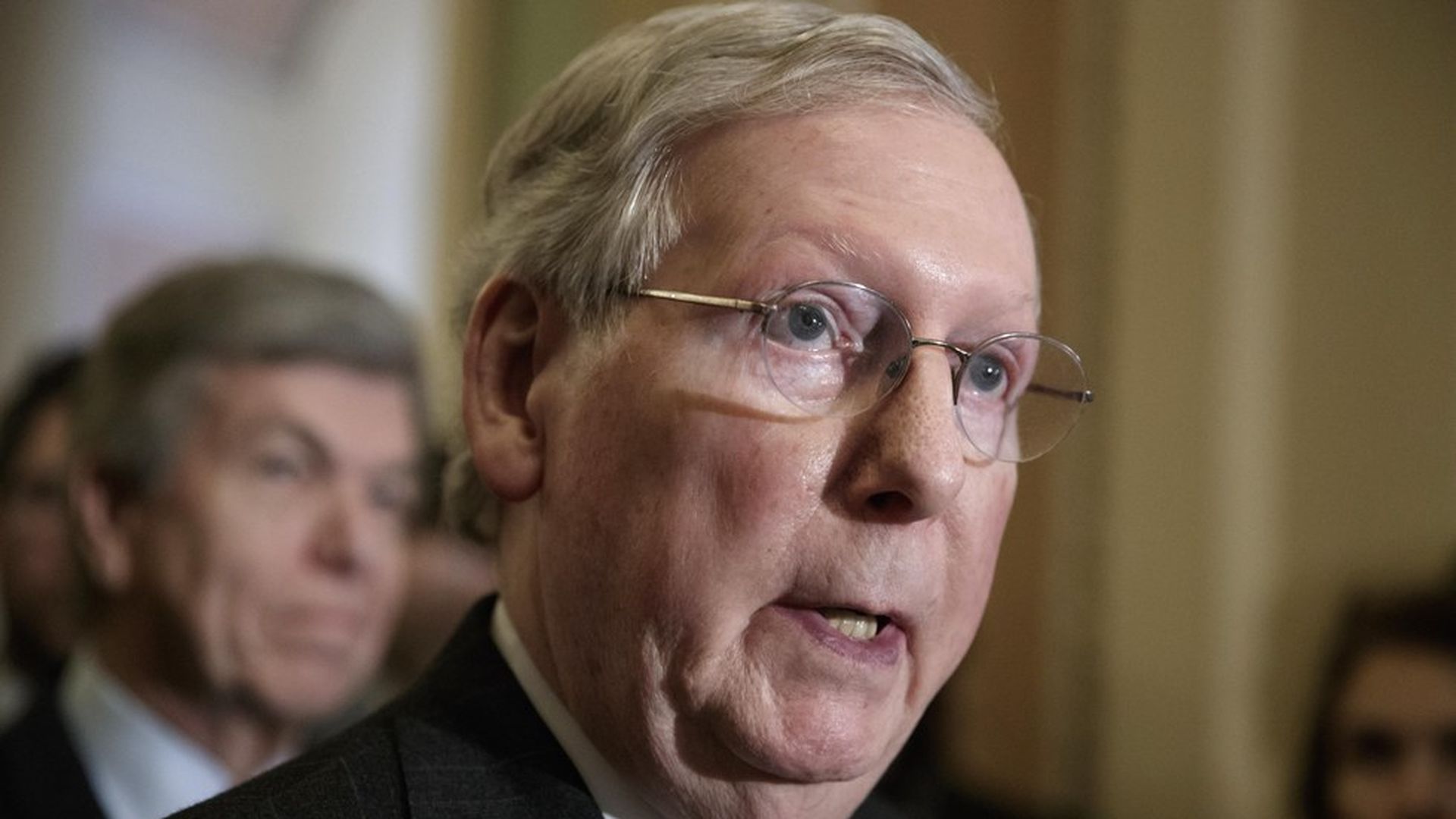
The Trump administration is looking at concurrently tackling tax reform and infrastructure, as Axios' Jonathan Swan scooped last night. Back in January, National Journal Alex Rogers asked Senate Majority Leader Mitch McConnell what he thought about tying the two together. Quotables:
- "I'm not interested in doing anything like the stimulus... It's like withdrawing the funds from the bank and lighting a match to it and adding that much to the deficit."
- "Whatever we do needs to be credibly paid for... the way transportation projects really, actually occur is at the state level. They're the ones who build roads, repair roads and actually spend the gas-tax money..."
- McConnell's questions: What is the administration going to recommend? How big is it? How do we pay for it? How is it going to be structured?

Red Hat CEO says businesses remain confident under Trump

While it saw a brief delay in some government spending late last year, Red Hat says that business has resumed and corporations are continuing to invest heavily.
"There's right now a sense of business confidence that is driving the stock market but also investment plans by companies," CEO James Whitehurst told Axios on Monday. "If anything, it's more positive than its been in years."

Top Dem calls for Mnuchin ethics investigation over "Lego Batman"

Sen. Ron Wyden wants government ethics watchdogs to probe Treasury Secretary Steve Mnuchin's "Lego Batman" comments made during an Axios interview last week, according to Reuters.
The charge: Did Mnuchin's comments violate his ethics agreement when he plugged a movie produced by Ratpac-Dune Entertainment Holdings LLC, which he'd promised to divest himself from within 120 days of confirmation?
The Mnuchin quote: "I'm not allowed to promote anything that I'm involved in. So I just want to have the legal disclosure, you've asked me the question, and I am not promoting any product," Mnuchin said. "But you should send all your kids to 'Lego Batman.'"

Trump's grand bargain
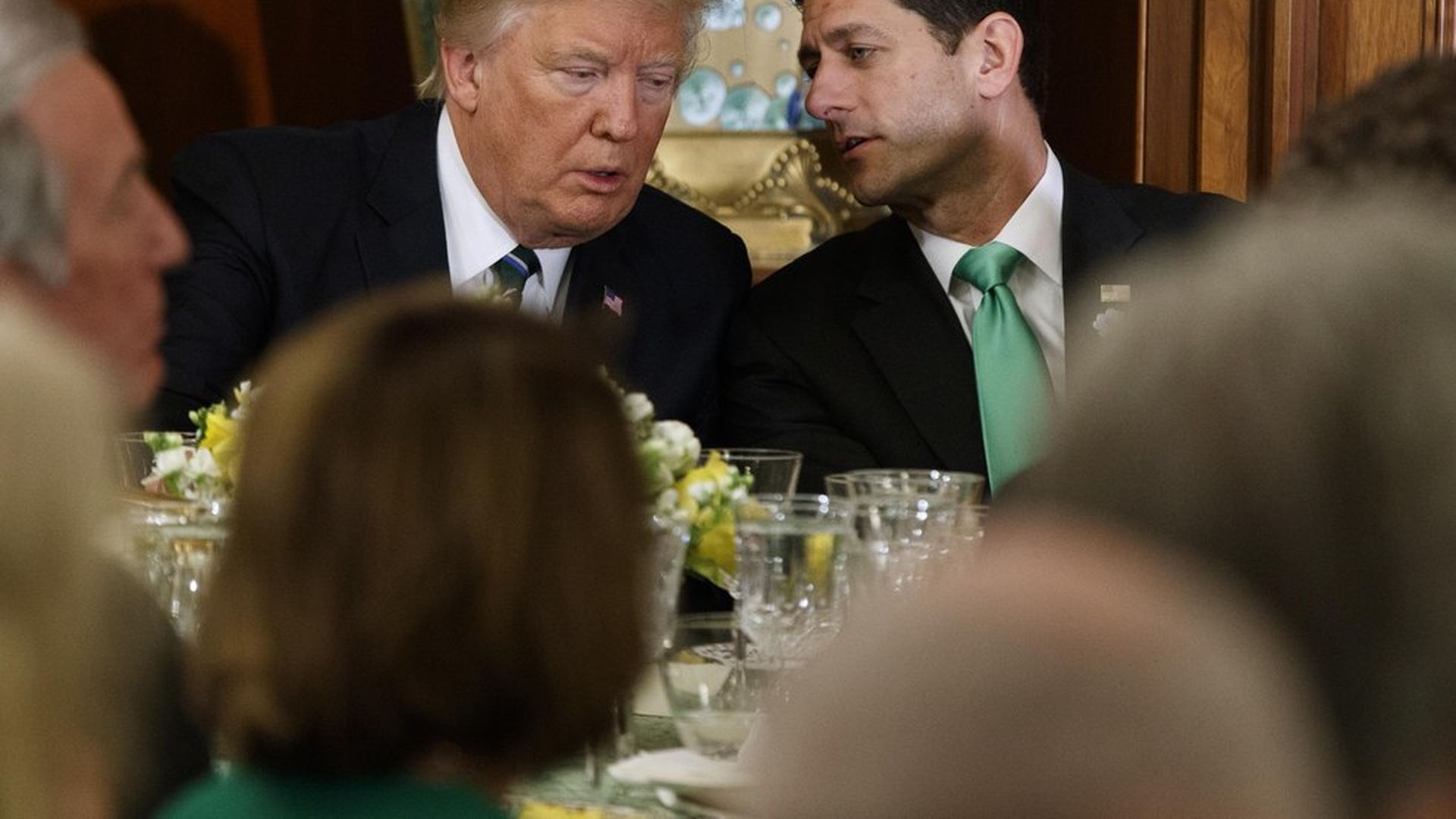
As Republicans frantically look for a roadmap after Friday's collapse, the White House is talking about moving to a novel, risky strategy: tackling tax reform and infrastructure at the same time (not necessarily in the same bill). Axios' Jonathan Swan broke the story last night:

Trump could intervene in fight over Pentagon tech contract
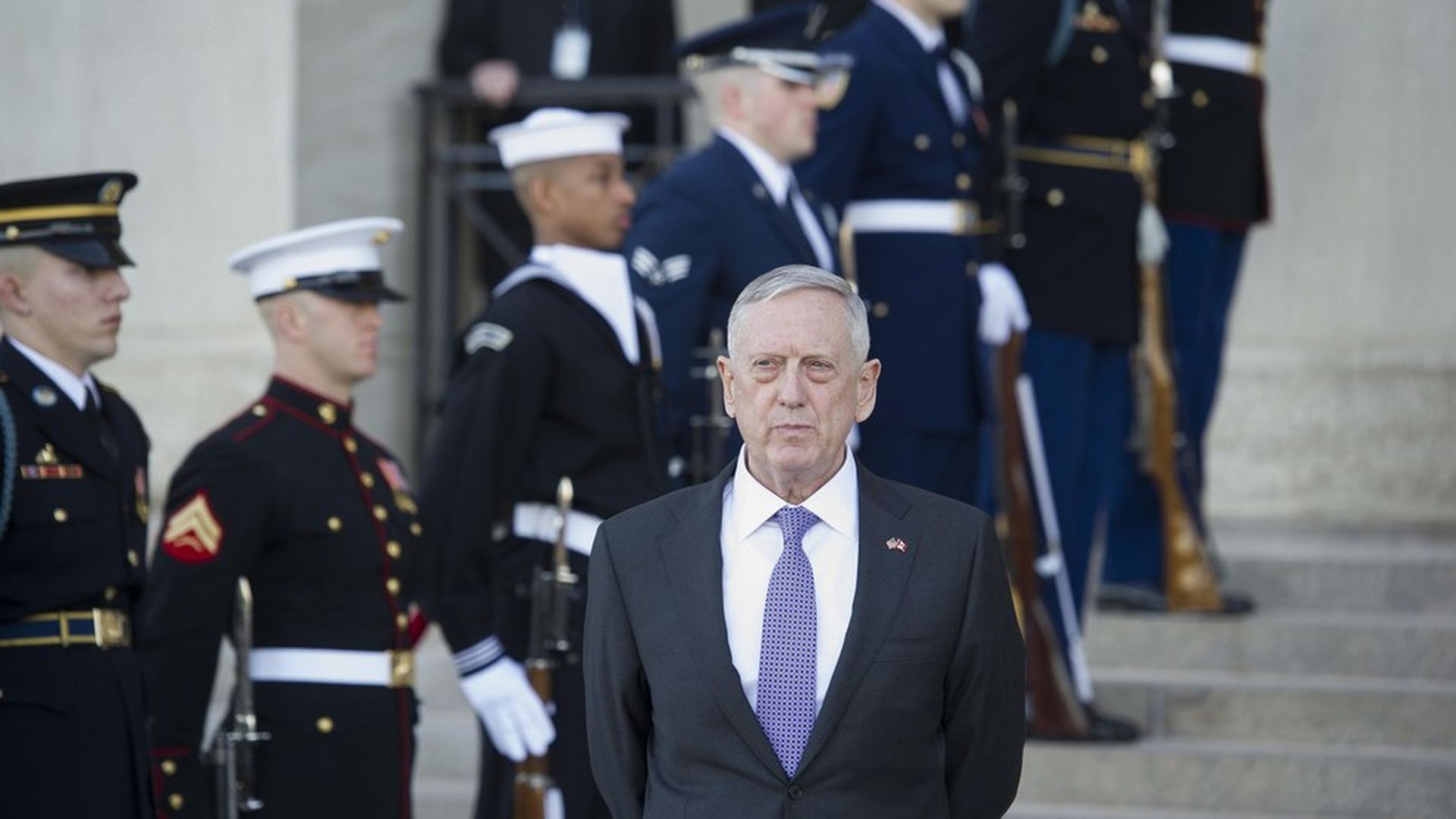
A court blocked Palantir, a software company, from bidding last year on an Army data analytics program that is currently overpriced and underperforming. Palantir said it could supply a system (at around $100 million/yr) that would give soldiers information about weather, terrain, and likely locations for ambushes and roadside bombs. Palantir is appealing the ruling.
Given Trump's track record of vying with Boeing and Lockheed Martin for cheaper contracts, he could swoop in and change the game in order to cut costs, according to Fortune.

Scoop: Trump wants to do tax reform and infrastructure at the same time
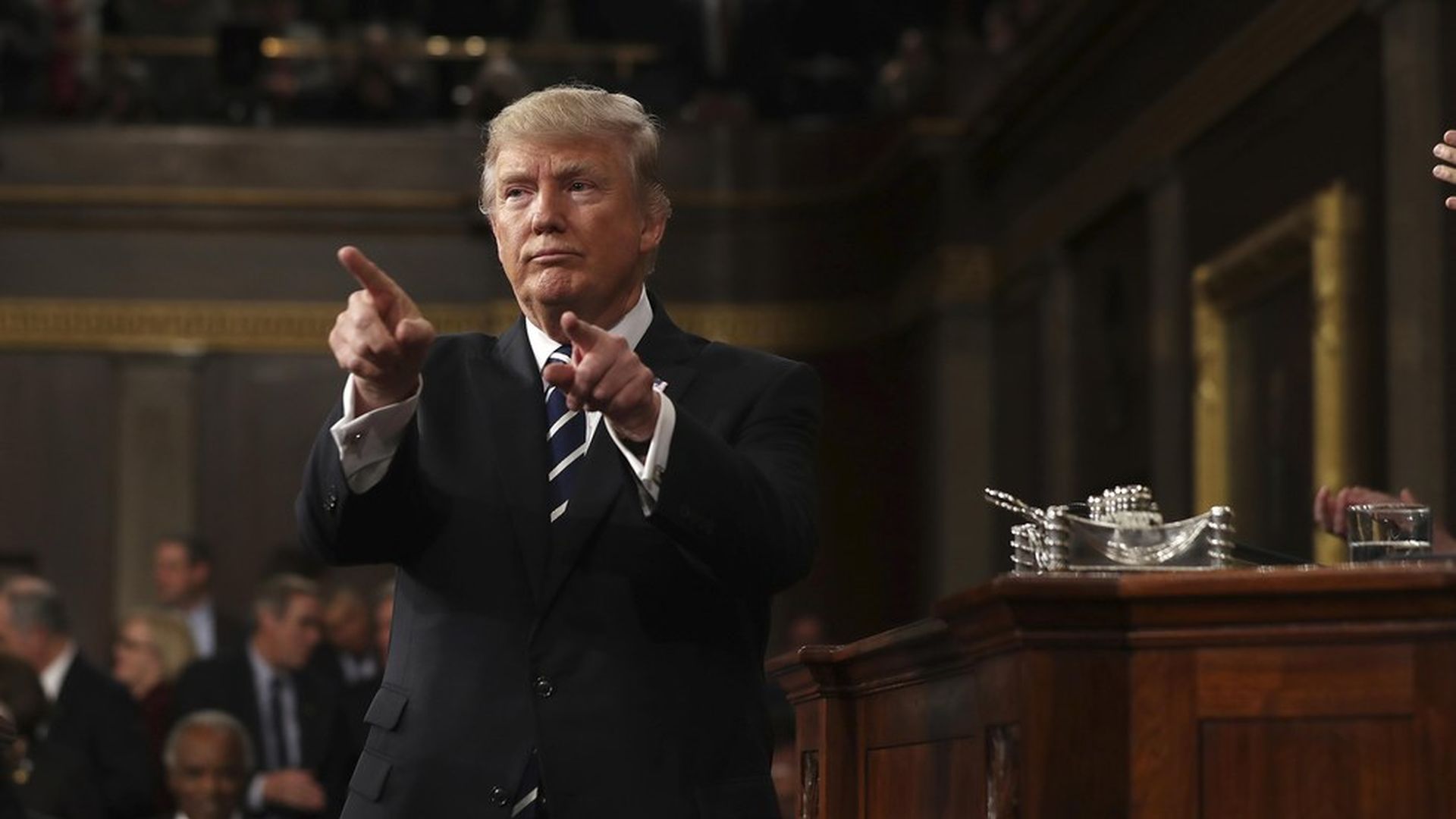
The Trump administration is looking at driving tax reform and infrastructure concurrently, according to a White House source with direct knowledge.
It's a major strategic shift - infrastructure was likely going to be parked until next year - and is only possible because of last week's healthcare debacle.
President Trump feels burned by the ultra conservative House Freedom Caucus and is ready to deal with Democrats. Dangling infrastructure spending is an obvious way to buy the support of potentially dozens of Dems, meaning he wouldn't have to bargain with the hardliners.
Trump wants $1 billion for first 62 miles of border wall

The Trump Administration is requesting $1 billion this year to cover 62 miles of the border wall, according to DHS documents obtained by CNN.
The documents detail specific locations where current fencing requires upgrades, and stretches near San Diego and in the Rio Grande Valley where the wall is to be built.
Do the math: Estimates of the total wall cost have varied widely, but 62 miles is about 1/32 of the total US/Mexico land border.
Take Two: Paul Ryan to present new health care plan Thursday
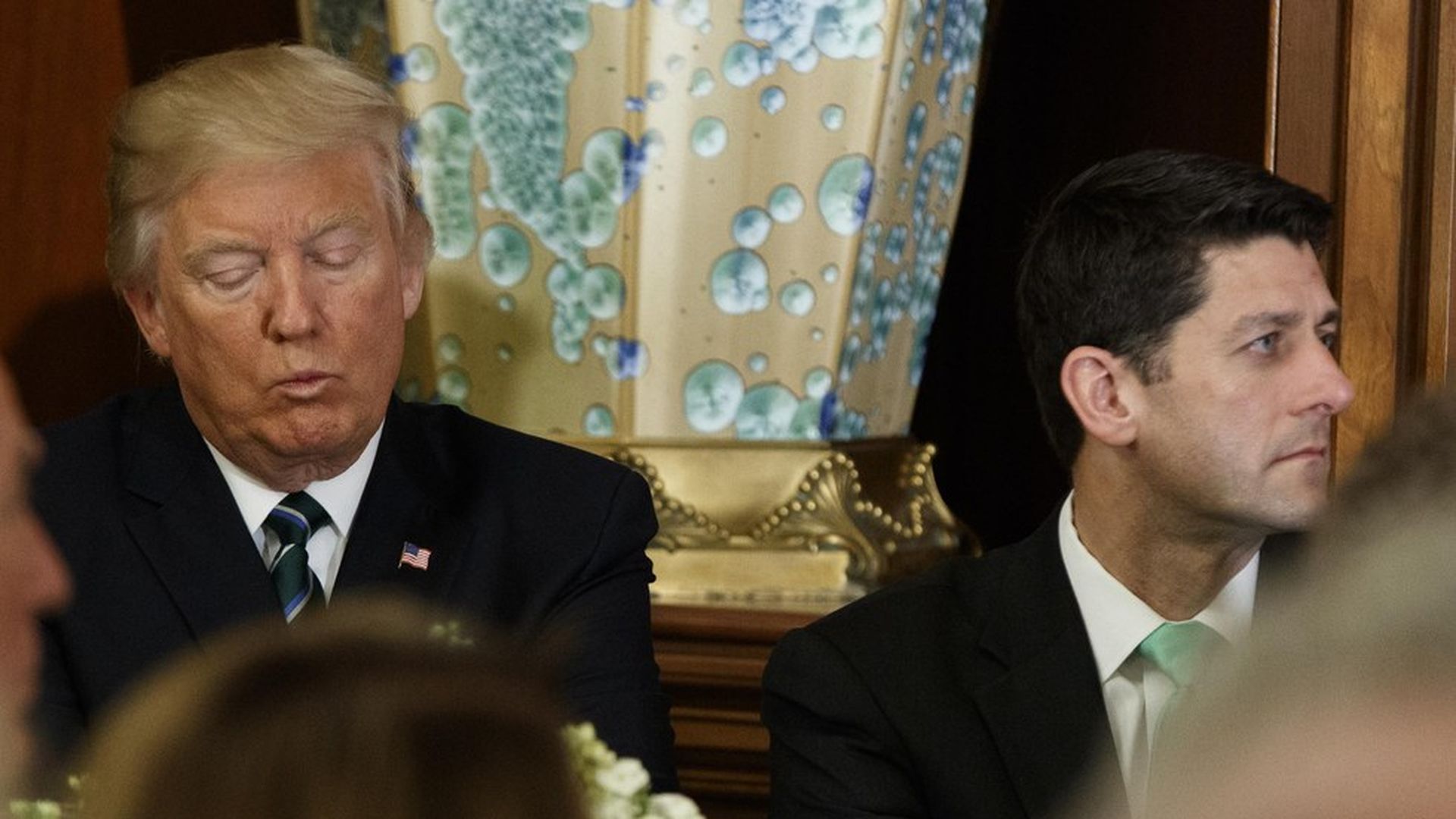
Speaker of the House Paul Ryan told Republican donors Monday he would brief them at a retreat scheduled for Thursday and Friday in Florida about how he will push forward on a healthcare overhaul, according to The Washington Post.
"When we're in Florida, I will lay out the path forward on health care and all the rest of the agenda. I will explain how it all still works, and how we're still moving forward on health care with other ideas and plans... know this: we are not giving up."
No details are available on the new plan yet but Ryan met with Trump at the White House today and separately with VP Mike Pence, HHS Secretary Tom Price, and Chief of Staff Reince Priebus.
Russian bank confirms Kushner meeting
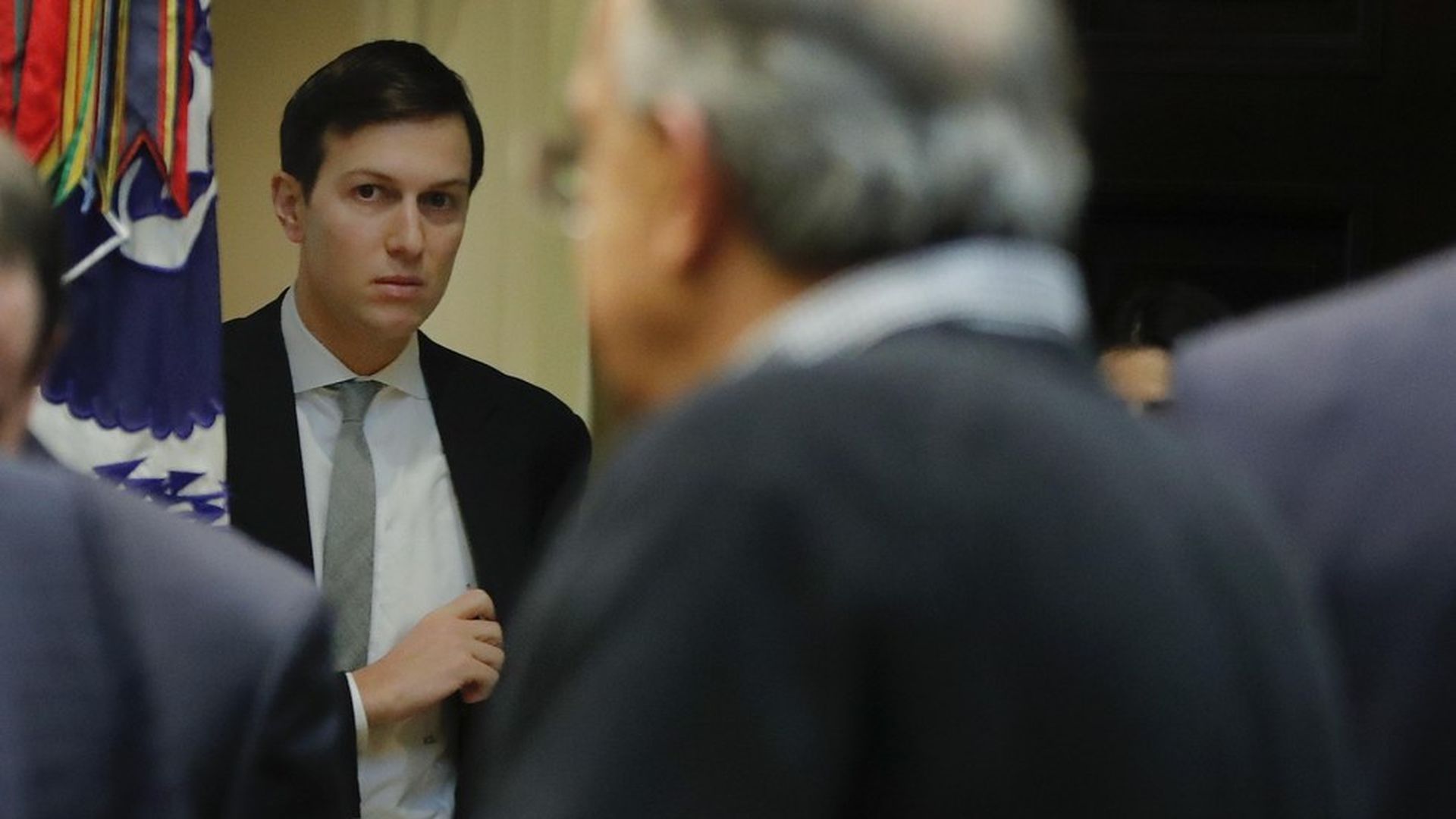
The Russian state bank Vnesheconombank confirmed to the AP that its chair met with Jared Kushner, Trump's senior advisor and son-in-law. The bank said the meeting was part of "road show" discussions with representatives of financial institutions throughout the world, and they discussed strategies for development banks.
The White House said Kushner was just doing his job by holding this meeting, but Obama sanctioned this bank in 2014 and contacts with Russia have other Trump associates in hot water.
What to watch: Kushner has agreed to discuss his Russia contacts with the Senate Intelligence Committee.
Get to know House Intel Chair Devin Nunes
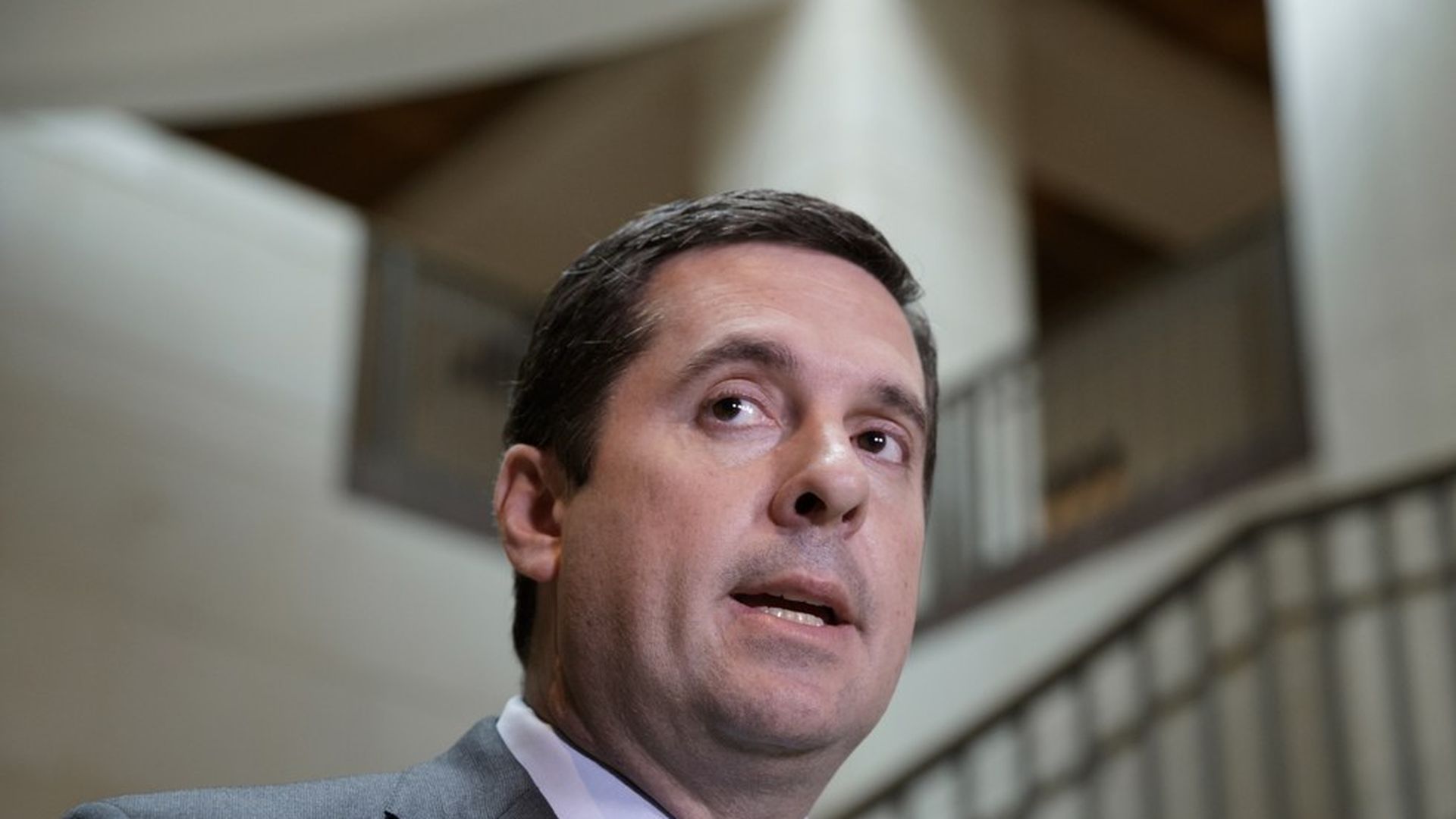
House Intelligence Chairman Devin Nunes, 43, grew up on a farm in Tulare, California. He started buying cows as a teenager, used his savings to begin a harvesting business, and then bought farmland with his brother before studying agriculture at Cal Poly San Luis Obispo.
His political rise: In 2001, Nunes was appointed by George W. Bush to serve as Calif. State Director for the Dept. of Agriculture's Rural Development section. He was then elected to the House in 2002, and quickly became a protege of former House Speaker John Boehner, who tapped Nunes as chairman of the intelligence committee in 2014. He became an early Trump supporter and was particularly influential in shaping Trump's national security team.
Characteristics: As the Washington Post notes, Nunes is known more for his skills as a political operator than his expertise on policy, and he can be a "fiercely loyal protector" of his allies. That instinct was on display last week when Nunes chose to brief the White House on intelligence reports he received before going to his committee: "Loyalty can sometimes make you, you know, go a step too far," said Oklahoma Rep. Tom Cole. "I'm pretty heartened that [Nunes] recognized that within 24 hours and moved to change it."
Dick Cheney: Russian cyber hack could be "an act of war"
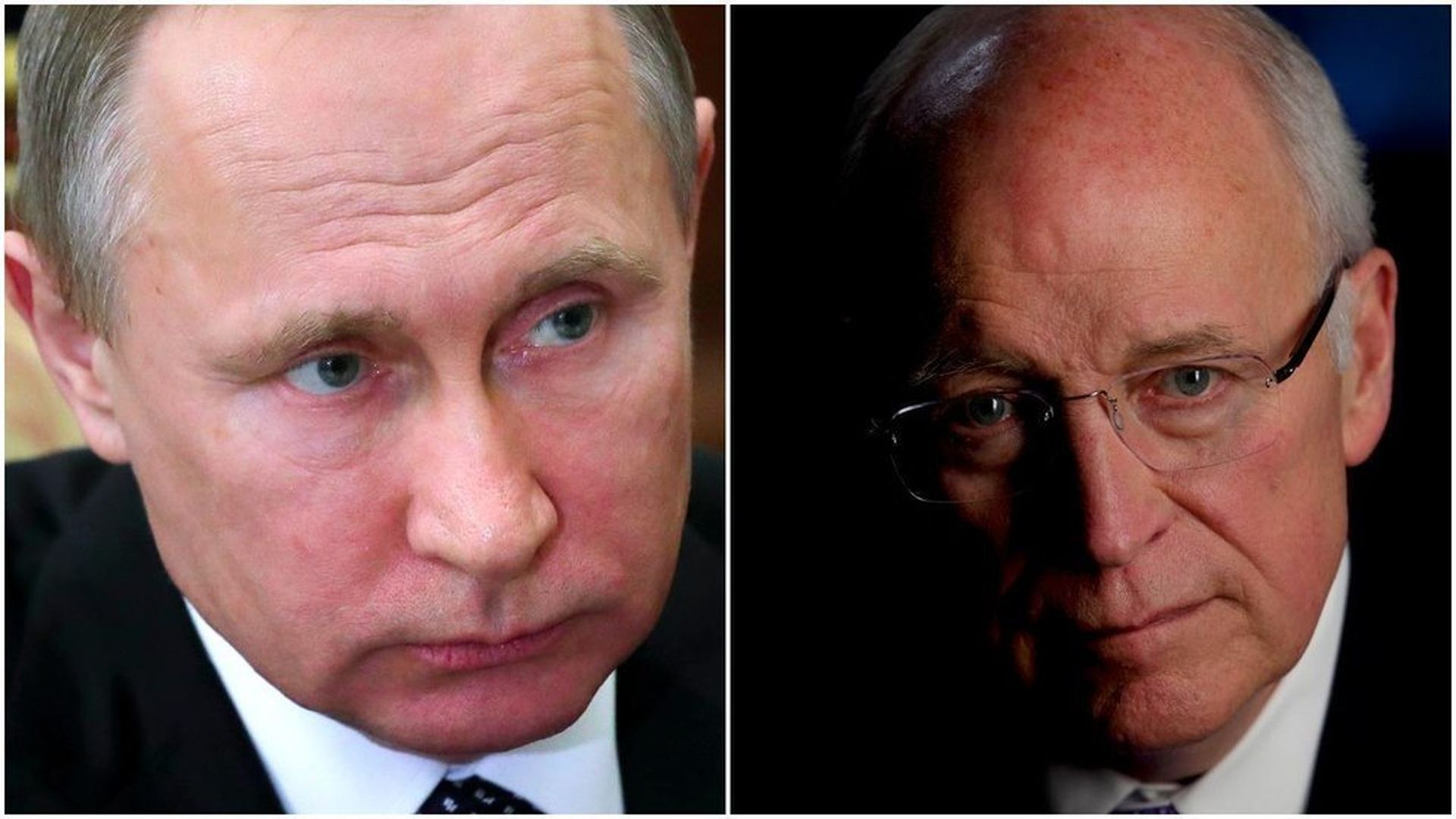
Former U.S. VP Dick Cheney highlighted American security concerns at the Economic Times Global Business Summit today, and touched on Russian interference in the U.S. presidential elections last year, according to the Economic Times. His perspective on Putin's cyber hacking and NATO is particularly of note:
He has found a way to undermine NATO...There are some serious effort made by Putin and his government to interfere in our election which can be considered as an act of war.
Why it matters: The crux of the issue in coming months will be determining whether it was an act of war, which ups the ante in terms of the ways countries can respond to being attacked, some of which can be all-out military responses.
Context: As we wrote earlier, there is a lot of disagreement about what constitutes an act of war when it comes to cyber hacking. This puts Russia at an advantage in cyber space, since countries and NATO don't know how to respond to attacks, and Cheney is affirming that belief.
The takeaways from Spicer's Monday briefing
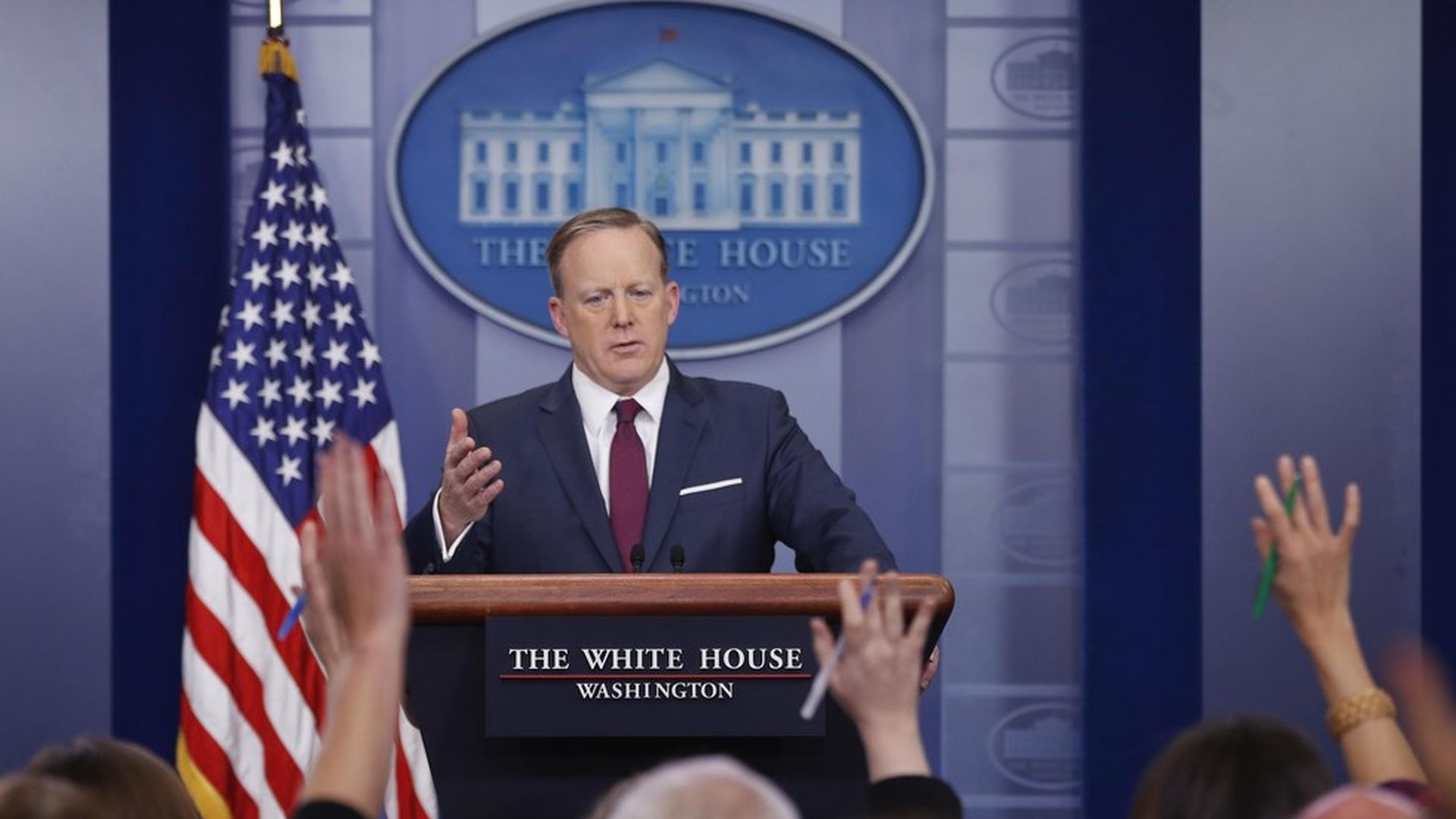
Attorney General Jeff Sessions made a surprise visit, announcing actions the DOJ is taking against sanctuary cities. He said states and localities seeking DOJ grants must certify compliance with immigration policy, or lose federal funding. He added: "I strongly urge our nation's states... to seriously consider the harm they are doing to our citizens" by refusing to implement federal law.
Report: Intel Chair visited WH grounds before surveillance claims
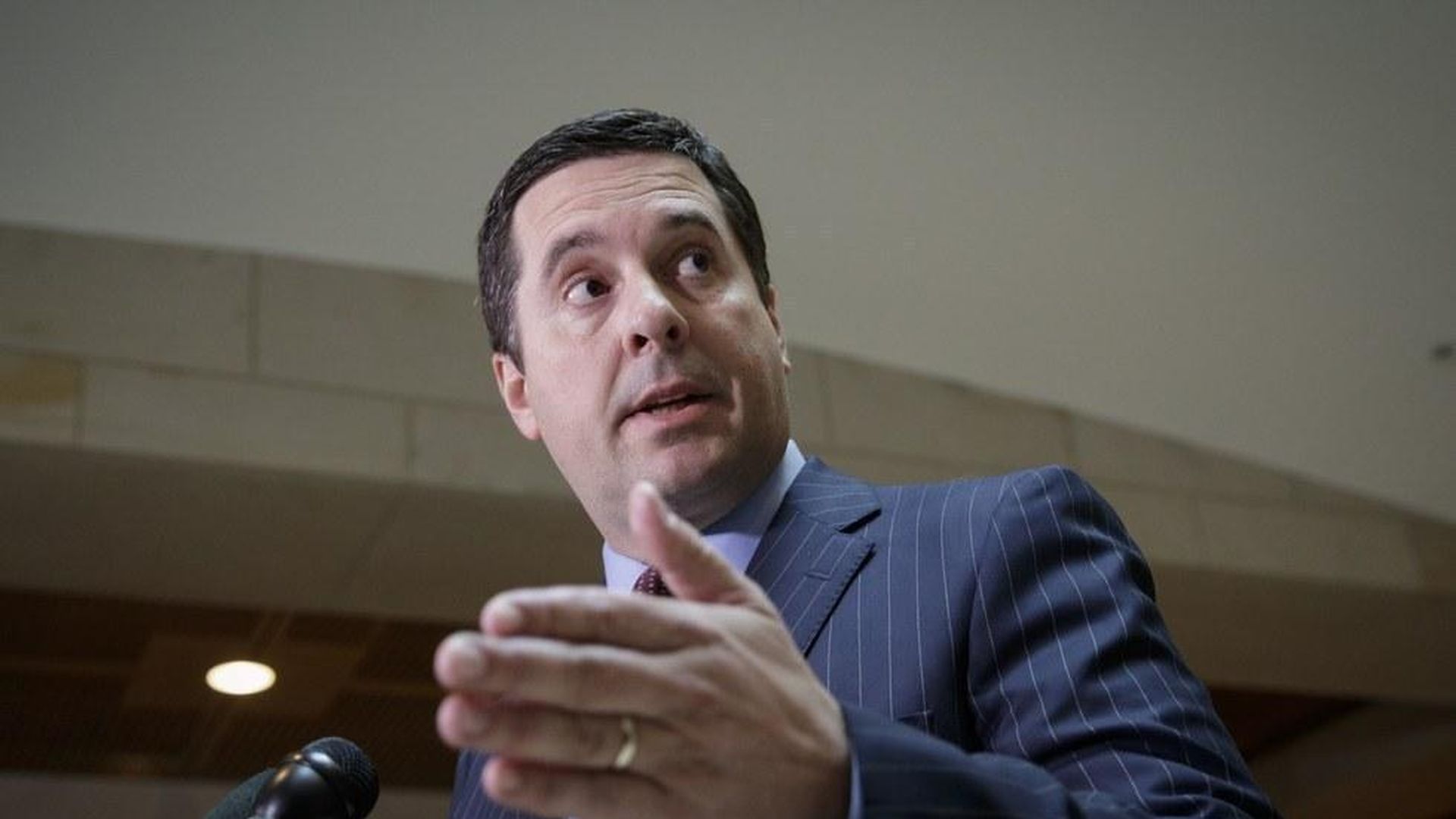
CNN's Jake Tapper finds an interesting nugget on the mystery of where House Intel Chair Devin Nunes learned of potential surveillance on the Trump transition team. The California Republican was on White House grounds the day before his explosive claims:
In a phone interview, Nunes confirmed to CNN that he was on the White House grounds that day -- but he said he was not in the White House itself. (Other buildings, including the Eisenhower Executive Office Building, are on the same grounds.) No one in the White House was aware that he was there, Nunes said.
Why it matters: Nunes hasn't been heavy on the details on the sourcing of his claims, although he reportedly prematurely hopped out of an Uber and disappeared from the staff that night. With Nunes and fellow Republicans quick to criticize leaks from the intelligence community, plenty of attention will come his way on the source of his claims.
North Carolina's bathroom bill could cost the state nearly $4B

North Carolina's HB2 "bathroom bill" limiting LGBT rights will cost the state more than $3.76 billion in lost business over 12 years, reports the AP, citing data compiled through interviews and public records requests.
But HB2 supporters argue they're willing to absorb the costs. "The effect is minimal to the state," said Lt. Gov. Dan Forest, a stringent defender of the bill, to Texas legislators considering a similar law. "Our economy is doing well. Don't be fooled by the media. This issue is not about the economy. This issue is about privacy, safety and security in the most vulnerable places we go."