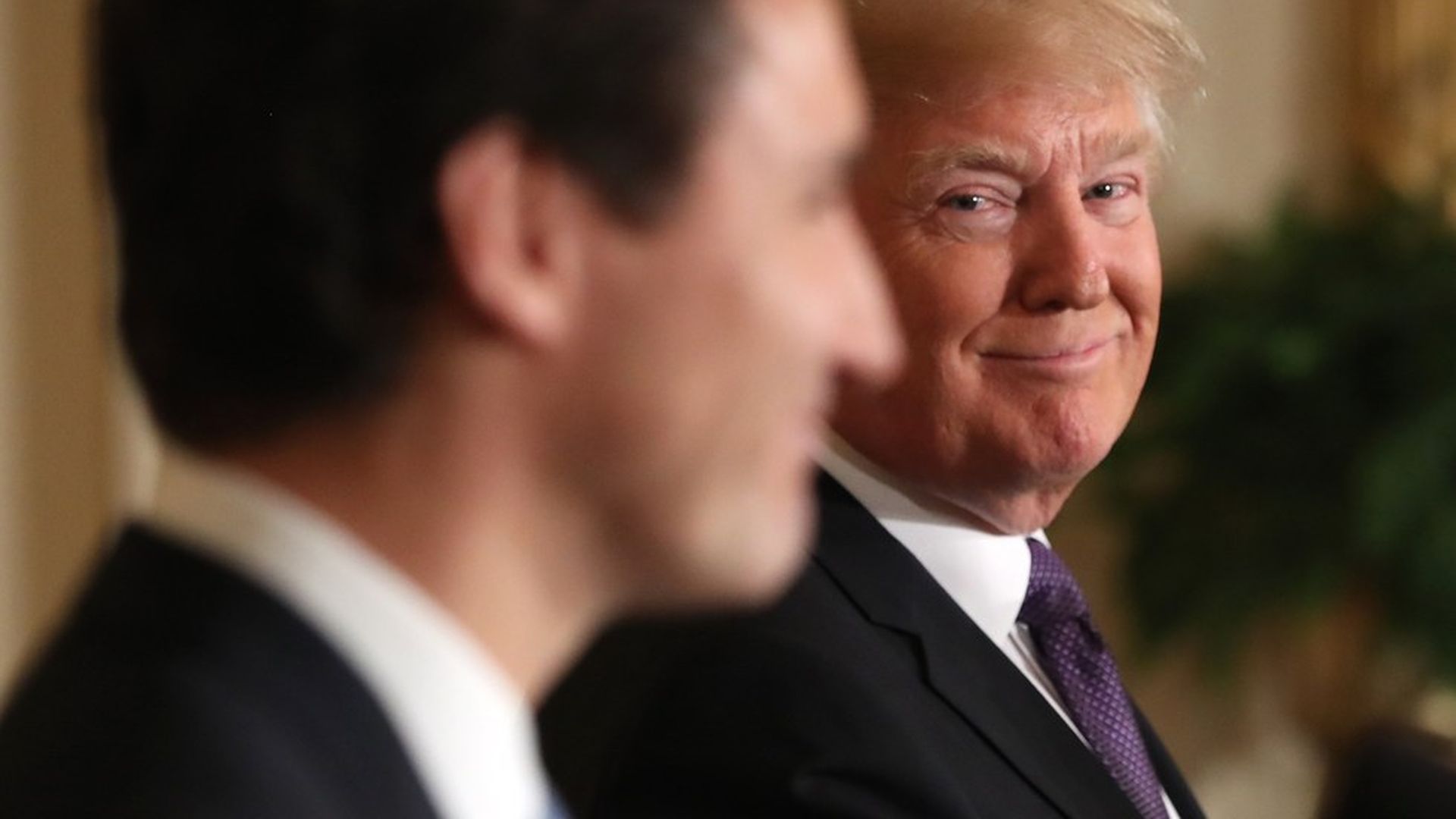
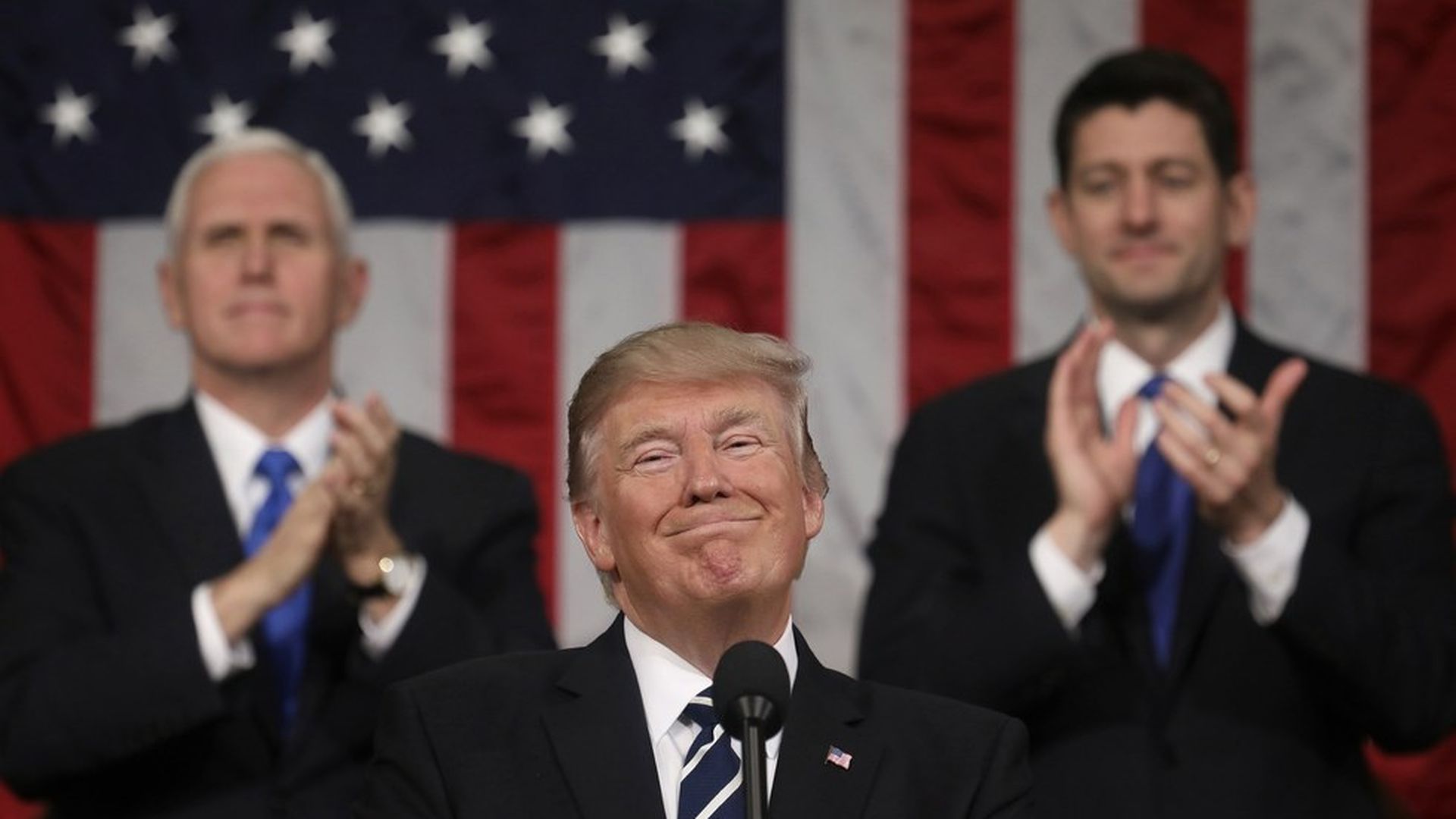
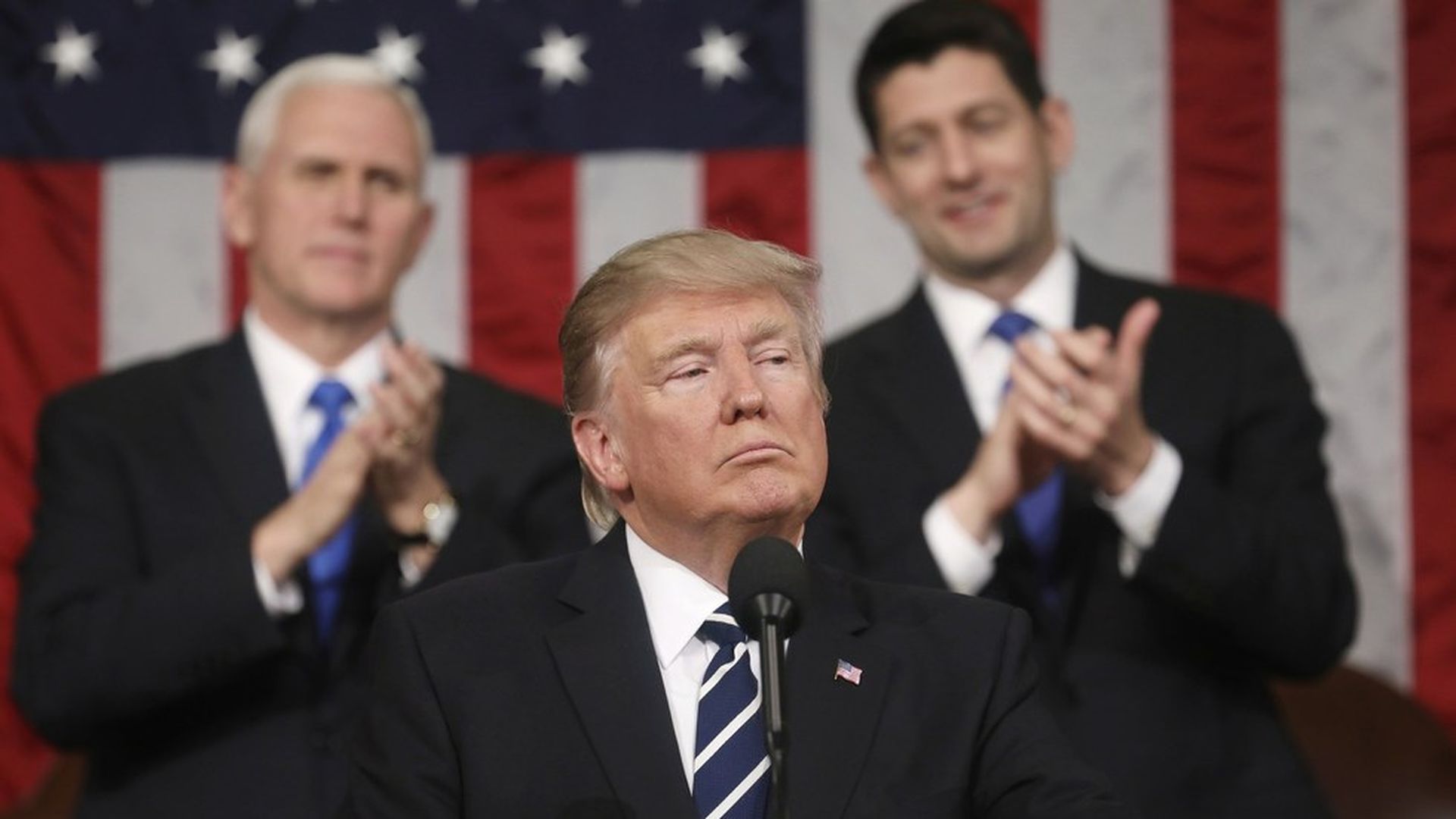
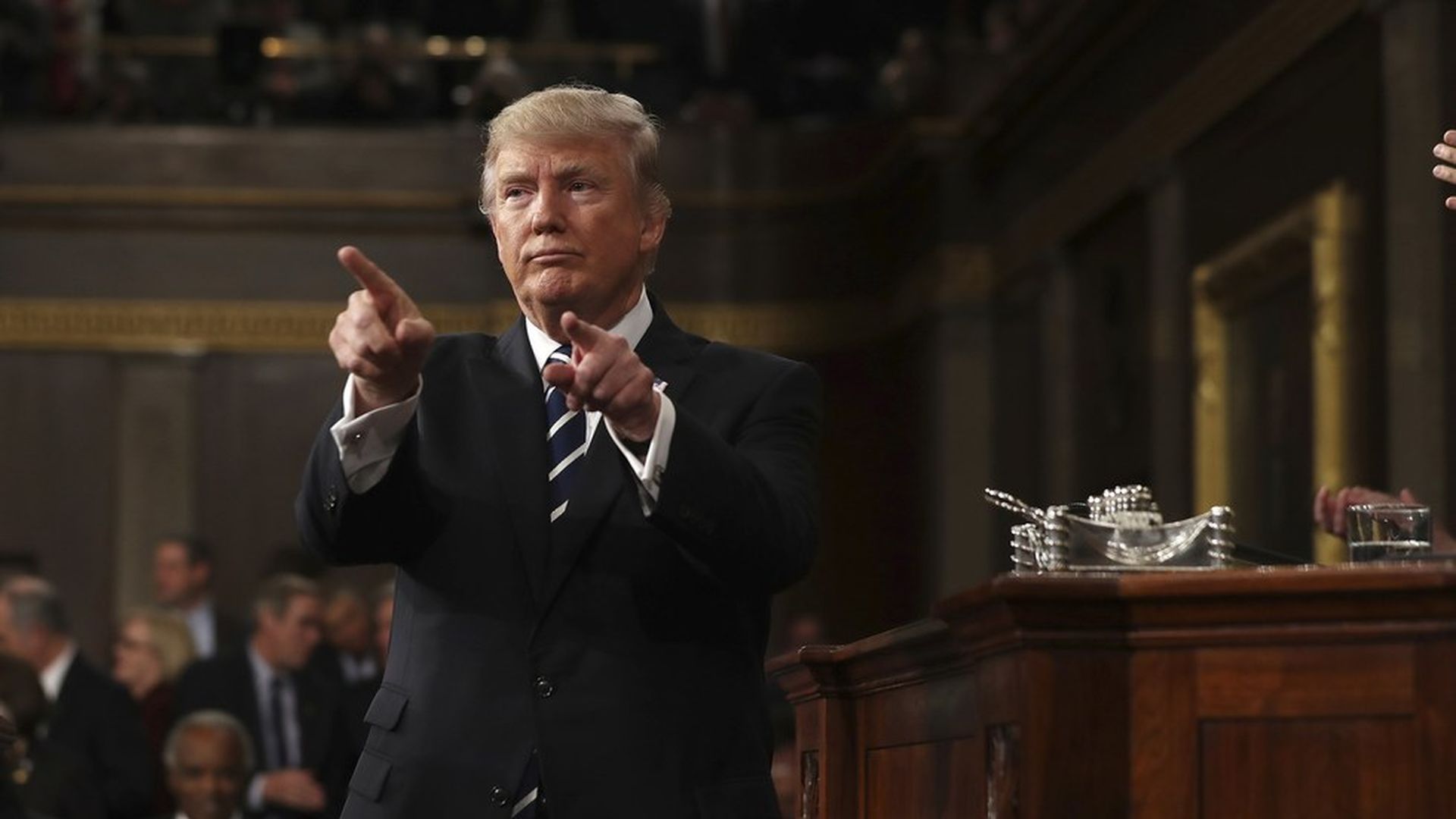
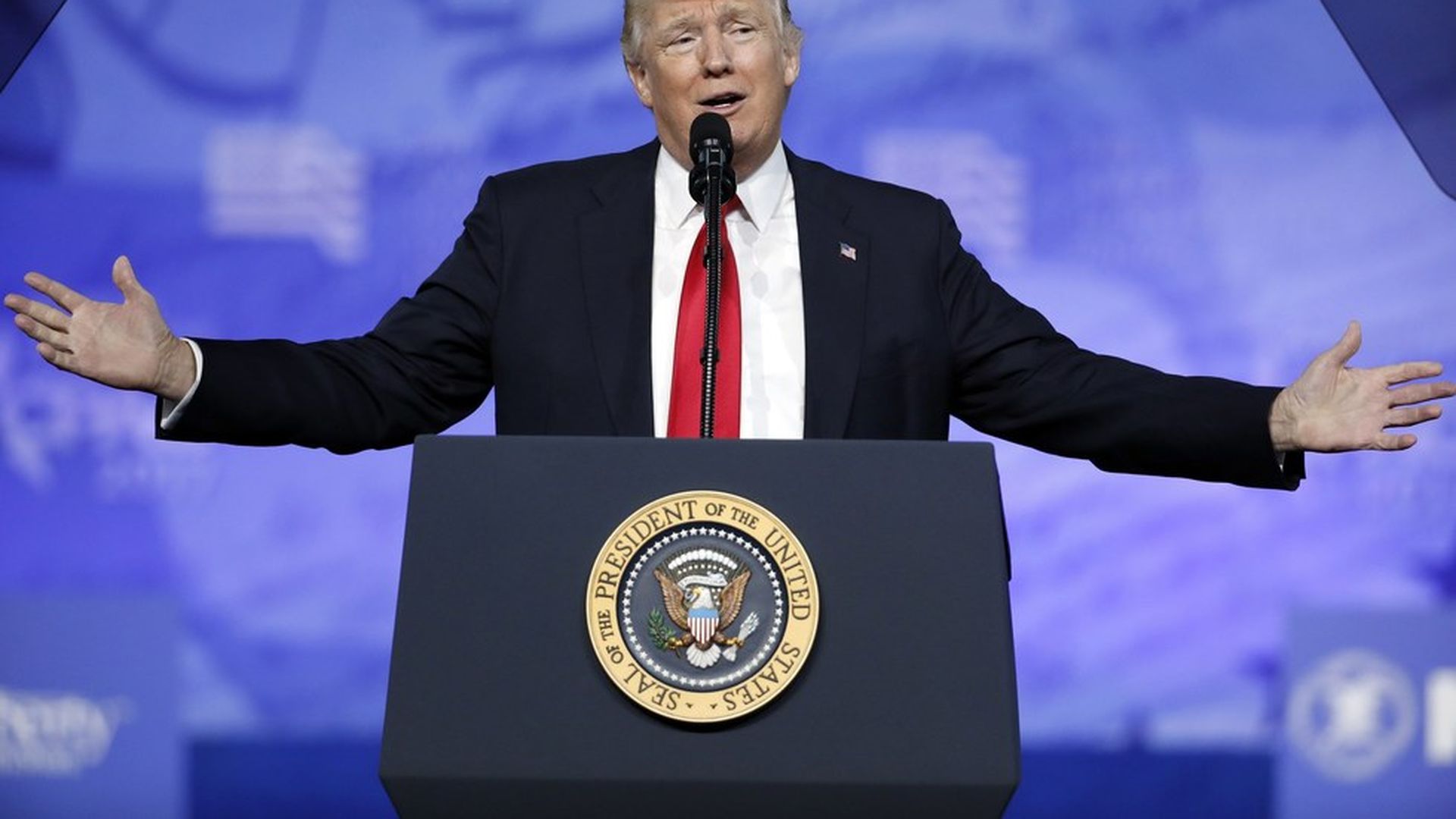
In his first address to Congress Tuesday night, President Trump called for the U.S. to adopt a "merit-based" immigration system, favorably nodding to places "like Canada, Australia and many others." Trump has taken particular interest in Canada's immigration system, which he expressed while meeting with Canadian Prime Minister Justin Trudeau in February. Canada's points-based system requires that:
Those applying for a federal skilled worker visa without a job offer are capped at 25,500, plus 1,000 each for a number of professional and technical professions.
To qualify, an immigrant has to meet a minimum amount of points achieved from their education, proficiency in English and French, previous work experience, age, potential offer of employment and financial background.
Immigrants must undergo medical examination. All cases are assessed individually.
Student visas are offered to any applicant who has: a) been accepted by an institution of higher education b) enough money to pay for tuition fees, living expenses, and return transportation from Canada c) no criminal record d) a bill of clean health, with a medical exam if necessary; and e) a definite plan to leave after the course of study.
Trump's take: "Switching away from [America's] current system of lower-skilled immigration, and instead adopting a merit-based system will have many benefits: It will save countless dollars, raise workers' wages, and help struggling — families including immigrant families — enter the middle class."
In the first restrained — dare we say conventional — speech of his lifetime, Donald Trump delighted Republicans, disarmed critics (at least for a night) and left anyone who doesn't waste their day on Twitter with the impression of quick accomplishments and big, easily doable things ahead.
In @cnn poll 78% of @POTUS#JointAddress watchers say positive, 69% say policies will move country in right direction, 69% more optimistic— Sean Spicer (@PressSec) March 1, 2017
The news looks good: 57% of respondents to a CNN poll last night had a "very positive" reaction to Trump's speech.
But the context makes it look less sexy: 68% gave former President Obama a "very positive" reaction to his first joint session, compared to 66% for former president George W. Bush.
The same pattern came out on moving the country in the right direction, with 69% saying Trump would do that. Again, a good number, but Obama scored 88% in 2009, and Bush 91% in 2001.
President Trump, who gave an incredibly efficient inaugural address of just 16 minutes, played more to presidential type in his first address to a joint session of Congress.
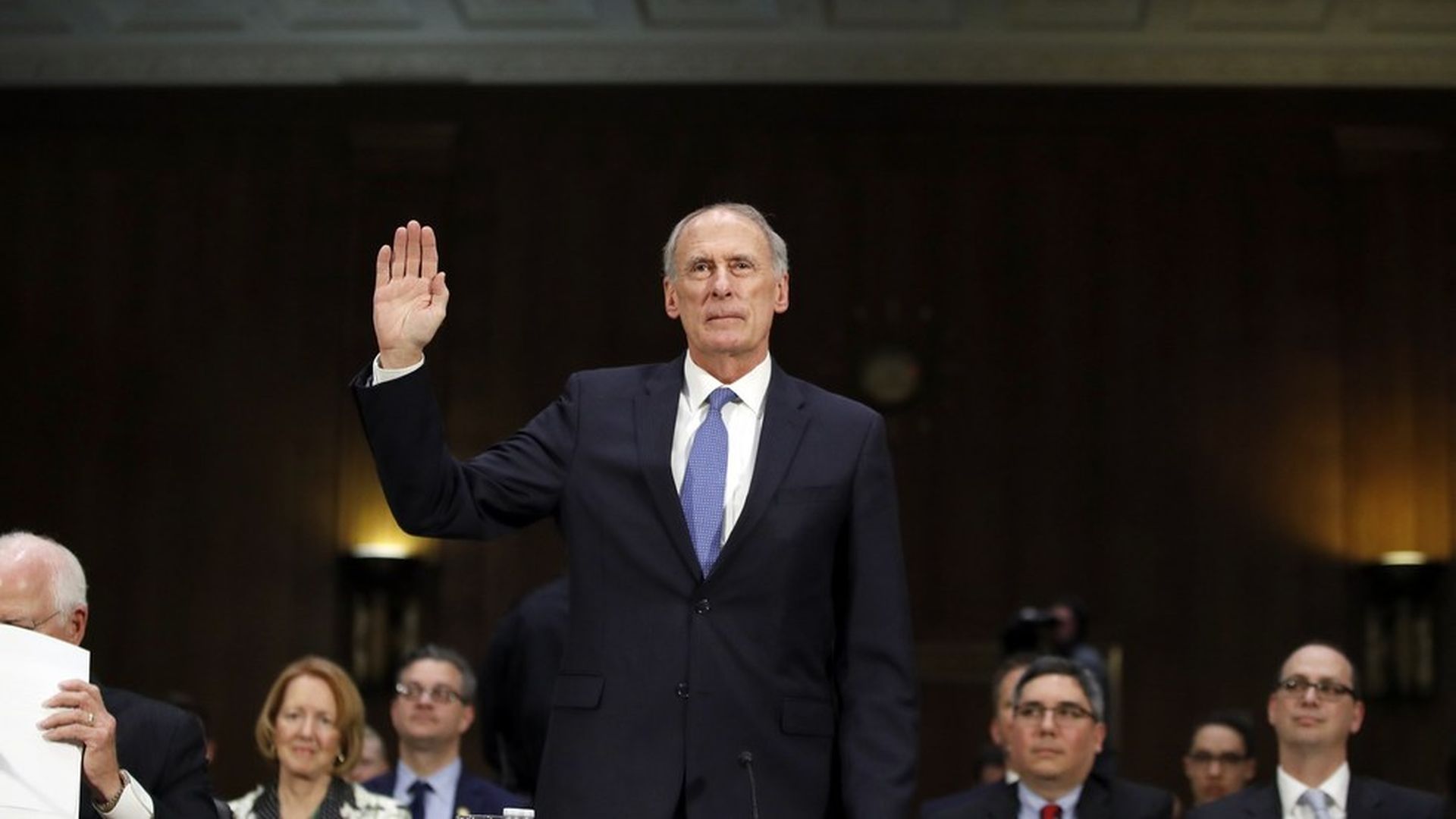
Director of National Intelligence nominee Dan Coats testified in front of the Senate Intelligence Committee today. Here are the key takeaways:
He would cooperate with the committee on their Russia hacking probe, including by providing intelligence community cables, sourcing, and other raw intelligence.
He would be willing to investigate Russia's interference in U.S. elections — and in elections around the world.
He supports keeping Guantanamo Bay open.
He will seek to release the number of Americans currently being surveilled by the NSA.
Coats said his goal is to have an apolitical intelligence community:
Our job is not to influence intelligence for political reasons…I will not tolerate anything that falls short of that standing.
If confirmed as DNI he would oversee 17 U.S. intelligence agencies amid investigations directly affecting the Trump administration, including the probe into contacts between the Trump campaign and Russian intelligence.
History: Underlying this is Coats' less-than-harmonious relationship with Russia- the Kremlin placed him on a sanctions list in 2014.
Note, the former Indiana senator would be the first DNI who has not had a career in intelligence or diplomacy.
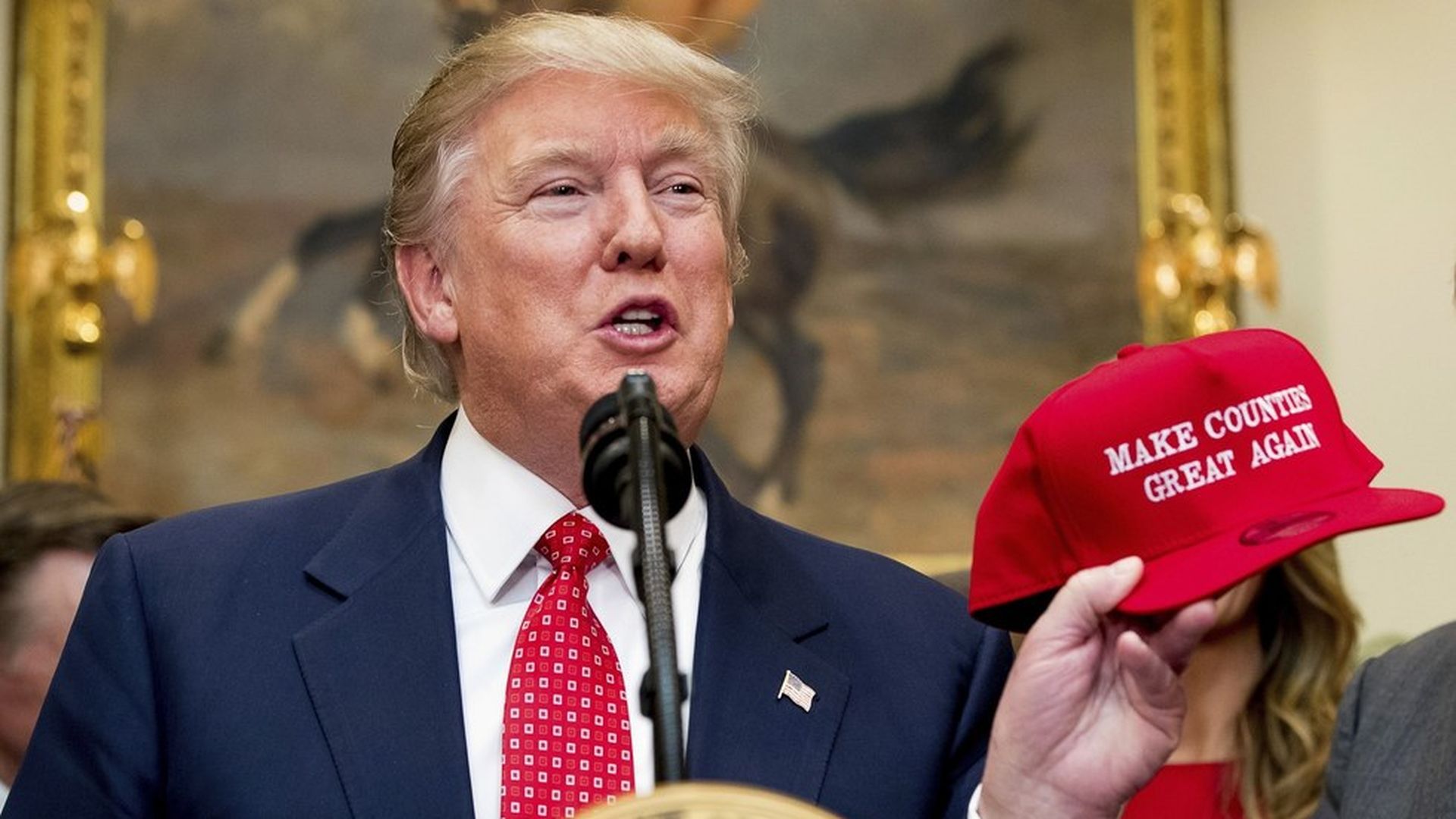
Don't get too excited about the idea that President Trump is having a last-minute conversion to Jeb Bush-style immigration reform. We've been talking with conservatives in his orbit, and here's what you need to understand about how Trump and Attorney General Jeff Sessions view the issue:
Trump reportedly wants a bill which could include a path to legal status for undocumented immigrants who have not committed serious crimes, per a senior administration official quoted by TV news anchors leaving a luncheon with Trump.
The White House told CNN there "has to be a softening on both sides. There's got to be a coming together" in order to pass immigration reform. The "far right" and "far left" will both approve of the bill, the official said, but "it has to be a negotiation."
But... Democrats may be unwilling to work with Trump on immigration after the new deportation guidelines making millions subject to deportation and his controversial travel ban.
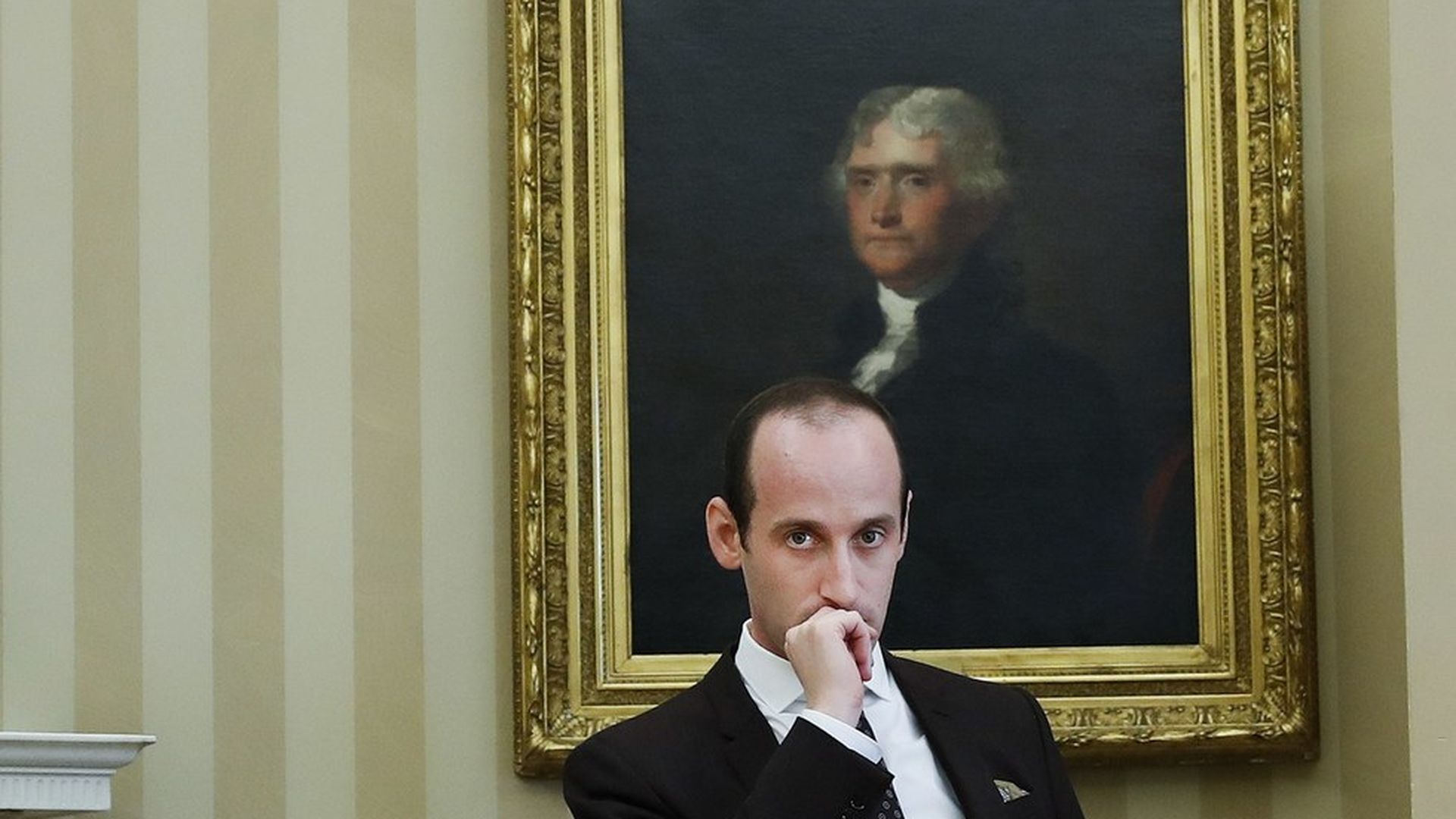
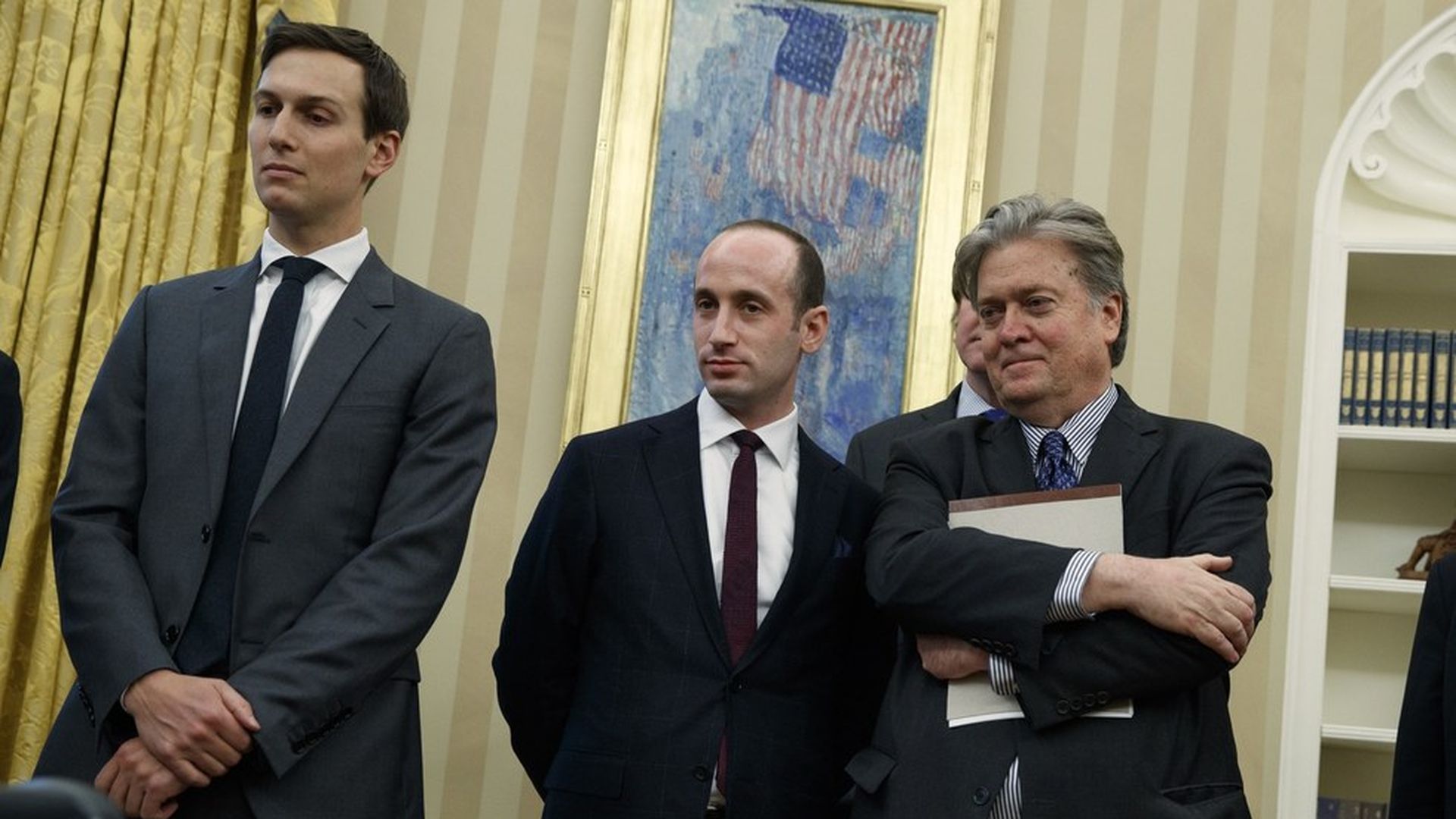
Trump's "minister of truth" Stephen Miller is the subject of Bloomberg Businessweek's cover story, profiling his impact on the Trump administration. Some choice quotes...
What got populist conservatives mad at Fox News, per a WH source close to Bannon: "[Conservative media sources] only aired stories about Benghazi and the IRS scandal."
Miller on the media and immigration: "The media tends to cover immigration issues through the frame of how it impacts everybody but actual citizens of the United States."
Joe Scarborough on Miller and Steve Bannon: "[O]pposition party hacks [who] humiliate themselves by being so ignorant of American history and the Constitution that they declare in their big-boy voices that the president's powers are not to be questioned."
What Miller learned from Jeff Sessions: "His whole approach to politics came from the vantage point of being a prosecutor. It made a profound impression on me and shaped how I approach policy."
Miller on Trump…in 2014: "Trump gets it. I wish he'd run for President."
Summed up: Ryan says Congress is investigating the issue to "make sure nothing happened that shouldn't have" and that "we need to get answers." He says that will happen through Congress, and wants patience.
Forget the theater, the palace intrigue, the stumbles. One thing you should know on Day 40 (and soon the 40th night) of President Trump: This is Bannon-Miller presidency in the making. Think about the dark view of the state of the world, of the state of our nation, of the state of media. This is the worldview of the Stephens — chief strategist Bannon and policy guru Miller — trumpeted by Trump. We see this in ...
In an interview with Fox & Friends that aired early Tuesday morning, Trump said that he would've handled the crackdown on government leaks differently, having "one-on-one sessions with a few people," instead of the way White House Press Secretary Sean Spicer did it: in an "emergency meeting" for White House communications staffers where he asked them to dump their phones on the table for a "phone check" to prove they had nothing to hide.
More from the interview: Trump gives himself an A+ "in terms of effort," so far in his presidency, but for messaging only a C or C+; "My messaging isn't good ... Maybe I change that during the speech."
And he says Obama is "behind" the protests at GOP town halls and "possibly" some of the leaks.
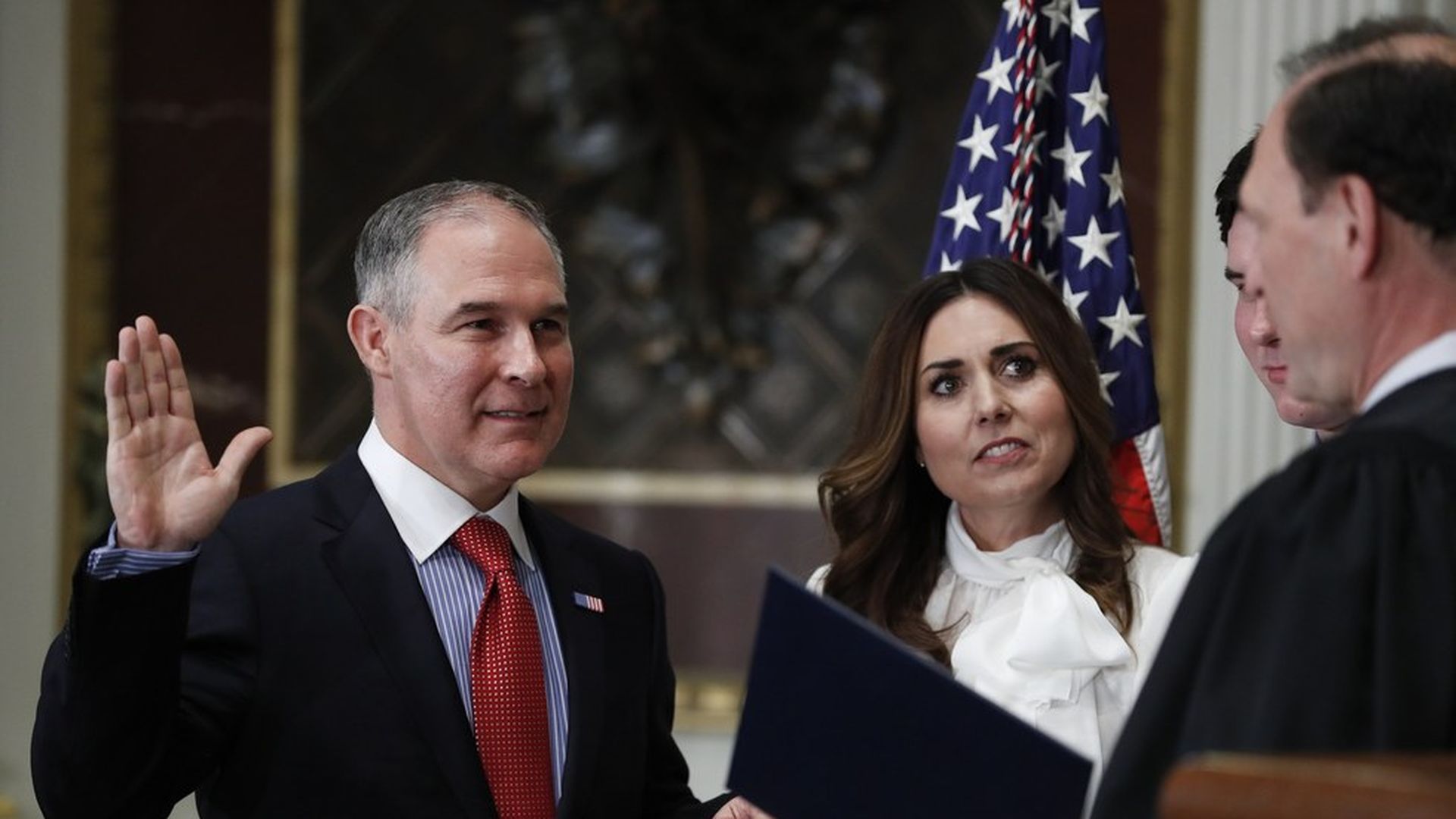
The White House begins attacking President Obama's specific environmental policies today with an executive order that launches the process of killing regulations designed to provide expansive federal water-quality protections.
Why it matters: The Waters of the U.S. (WOTUS) rule is a top target of Republicans and various industry interests, such as agriculture and home building groups, who say Obama's EPA grabbed power to regulate a vast array of minor streams and wetlands in a way that far exceeds what Congress allowed under the Clean Water Act. Politically, Trump's order attacking WOTUS allows the White House to get Republicans all over the Capitol on the same page about at least one thing at a time when they're splintered over tax reform and replacing Obamacare.
Yahoo has provided the Senate commerce committee with new details about its security breaches over the past four years. Here's what you need to know:
The damning tidbit: The accounts involved in Yahoo's series of breaches in 2013 and 2014 were mostly the same ones.
Yahoo hired a risk management executive and is reportedly more engaged with law enforcement than was previously public; it is working with federal, state, and foreign government officials about the breaches. Recall that Yahoo only learned of its 2013 breach in 2016 when user data turned up online.
The specifics on its cyber security updates: Yahoo is growing its Advanced Persistent Threat team to better deal with state-sponsored attacks (which likely caused the 2016 breaches). The company also takes a "kill chain" approach to detect attacks, runs a vulnerability assessment team that attacks its own products (the "red team"), and has a "bug bounty program" that pays those external to Yahoo to inform it of bad code.
Plus, Yahoo will present its briefing to the Senate committee via a committee it formed internally just to investigate the breaches. The briefing is not yet scheduled.