House Republicans are moving forward with health care votes next week, but an extension of enhanced Affordable Care Act subsidies is not part of their plan.
Why it matters: The strategy further heightens the likelihood that the subsidies will expire at the end of the year — but it will give House Republicans some alternatives they can point to to try to blunt Democrats' criticism.
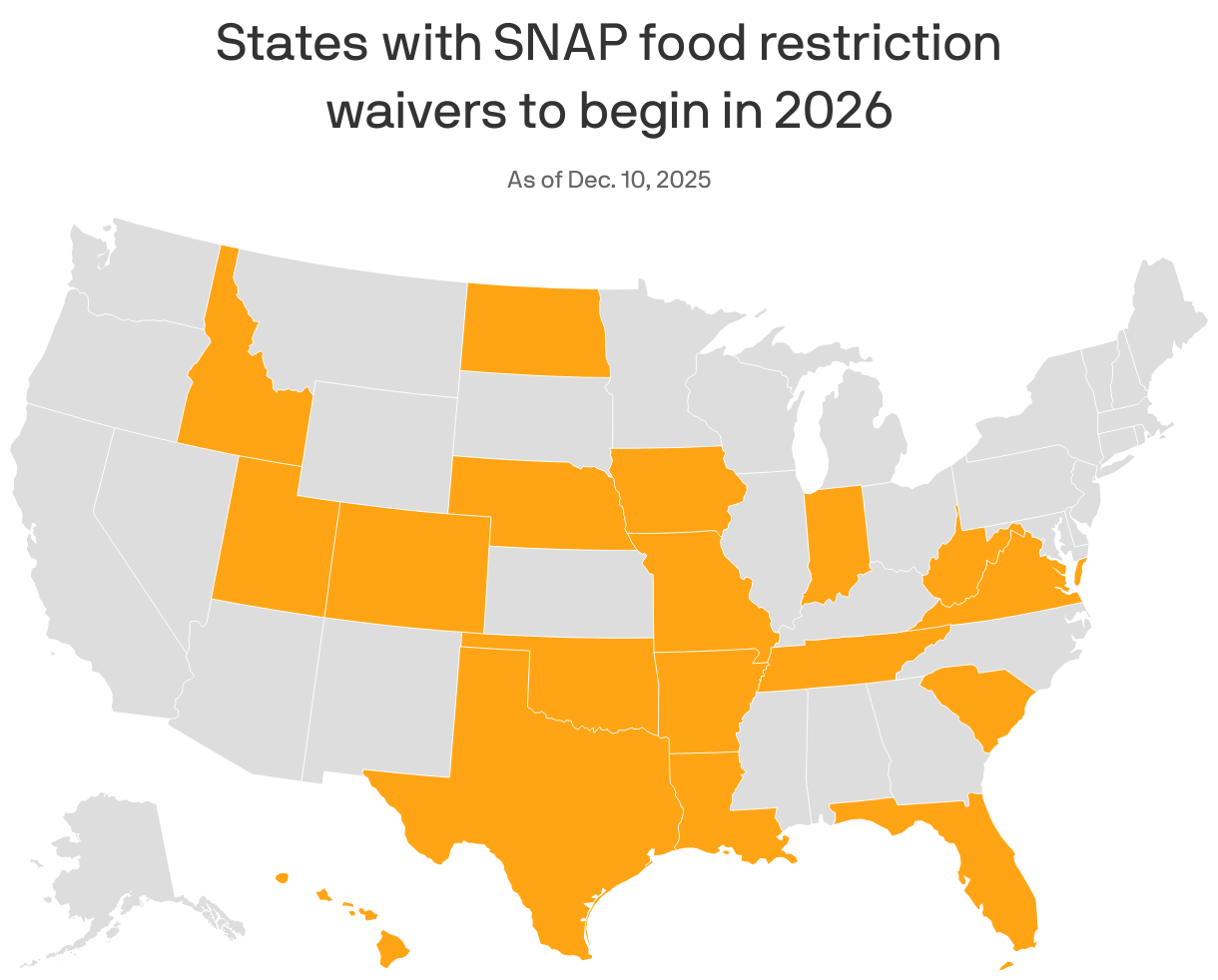
Six more states agreed Wednesday to ban the use of Supplemental Nutrition Assistance Program (SNAP) benefits for junk food under new deals with the Trump administration.
Why it matters: The move expands the Trump administration's use of the federal safety net to expand its Make America Healthy Again agenda. More SNAP recipients will be restricted from buying certain sugary drinks and food.
Rep. Haley Stevens (D-Mich.) on Wednesday filed articles of impeachment against Health and Human Services Secretary Robert F. Kennedy Jr.
Why it matters: The thrum of impeachment is growing among House Democrats, with lawmakers also targeting Defense Secretary Pete Hegseth and President Trump himself.
Hospitals are closing unprofitable pediatric units and eliminating some surgical services for kids as they grapple with lower Medicaid reimbursements, staffing issues and more complicated cases, a 20-year review in the journal Pediatrics found.
Why it matters: The cuts can create more barriers to getting care in already underserved communities and require families to travel longer distances to regional or urban health centers.
Lab testing companies including giants Quest Diagnostics and LabCorp are pressing Congress to stop hundreds of millions of dollars of Medicare cuts for diagnostic tests that are due to take effect at the end of January.
Why it matters: Their push could add to the health care issues piling up on lawmakers' plates as the calendar flips over.
Instacart orders for cold and flu medicine, cough suppressants and other sick-day essentials tend to spike around Christmas, per new data the company shared with Axios.
Why it matters: It's a way of seeing how our shopping patterns are affected by outside factors — in this case, cold and flu season.
What they found: Orders for cold and flu medicine and cough suppressants both peaked on Dec. 26 last winter, per Instacart.
Facial tissues peaked on Dec. 27, while "immune support" products peaked on Dec. 28.
How it works: That's based on each category's daily order share between July 1, 2024, and June 30, 2025.
Between the lines: Some relevant items had definite wintertime spikes, but others — like hand sanitizer and wipes — saw steadier demand over the covered period.
What's next: Experts are warning of a new flu outbreak tied to an emerging version of strain H3N2, Axios' Herb Scribner reports.
The conservative Heritage Foundation released its policy priorities for 2026, many of which align with goals already on the Trump administration's horizon.
The big picture: The think tank crafted Project 2025, which President Trump sought to distance himself from while campaigning despite embracing many of those same policies when back in in office.
Two cases of the MERS coronavirus were identified in France this month, a surprising development for a virus typically confined to the Arabian Peninsula.
Why it matters: Middle East Respiratory Syndrome (MERS), which can cause a litany of symptoms and even death, hasn't been a major concern since early in the pandemic with the arrival of the novel coronavirus.
Here's the deal: Danone, a leader in nutrition science and innovation, is now the Big Ten Conference's first official partner for yogurt and plant-based beverages, featuring Danone's Oikos and Silk brands.
SAN FRANCISCO — Improving communication and cross-functional collaboration could greatly improve how AI is used in health care environments, according to experts at the Axios AI+ Summit on Dec. 4.
Axios' Maya Goldman and Brock Turner moderated the roundtable discussion, which was sponsored by AstraZeneca.
Why it matters: Health care technology has the potential to transform how physicians discover, diagnose and treat patients' illnesses.
What they're saying: Getlabs CEO Claire Hough said that although the organization has successfully incorporated AI to improve efficiency and accuracy, the biggest obstacle it faces is getting its partners to do the same.
"For us, the barrier is really, how fast can we make that connection to automate as much as possible, or AI-enable our workflows as much as possible," Hough said.
Another challenge is that a universally accepted objective for AI doesn't exist, says Sonny Shergill, AstraZeneca's vice president of commercial digital health: "I think it stops … even the big tech companies at that last mile point."
Zoom in: Governance remains a central point of confusion, with organizations unclear of its meaning, how to act on it and who is responsible.
Trustible co-founder and CEO Gerald Kierce explained that when governance is understood and built into an AI strategy, adoption is quicker, helping "manage the negative downfalls, the risks [and] the harm."
Zoom out: Waymark co-founder and CEO Rajaie Batniji pointed to the inconsistencies in state-by-state regulation.
For example, he said, some are already strict about how AI can be used, and some differentiate between the definitions of "machine learning" and "artificial intelligence."
What's next: Companies like Oura are trying to use continuous biometric data to address the dilemma of fragmented patient information, in particular.
Clinical lead Tanvi Jayaraman highlighted a new partnership between Oura and Essence Healthcare. The program aims to use collected information to identify vulnerable patients early, and guide them to seek preventive — rather than reactive — care.
Content from the sponsor's remarks:
"We must identify the life-changing opportunities. … The ways to delight, or the things that get the imagination to think about what could be possible," Dave Fredrickson, AstraZeneca executive vice president of the oncology haematology business unit, said of AI.
Mail delivery slowdowns could leave people with asthma, diabetes and other chronic illnesses without needed medications, particularly in rural areas, a new report from the Brookings Institution concludes.
Why it matters: Prescription delivery improves the odds people stay on their treatments. Some 6% of all diabetes prescriptions in the U.S. are delivered through the mail, the report authors wrote, citing IQVIA data.
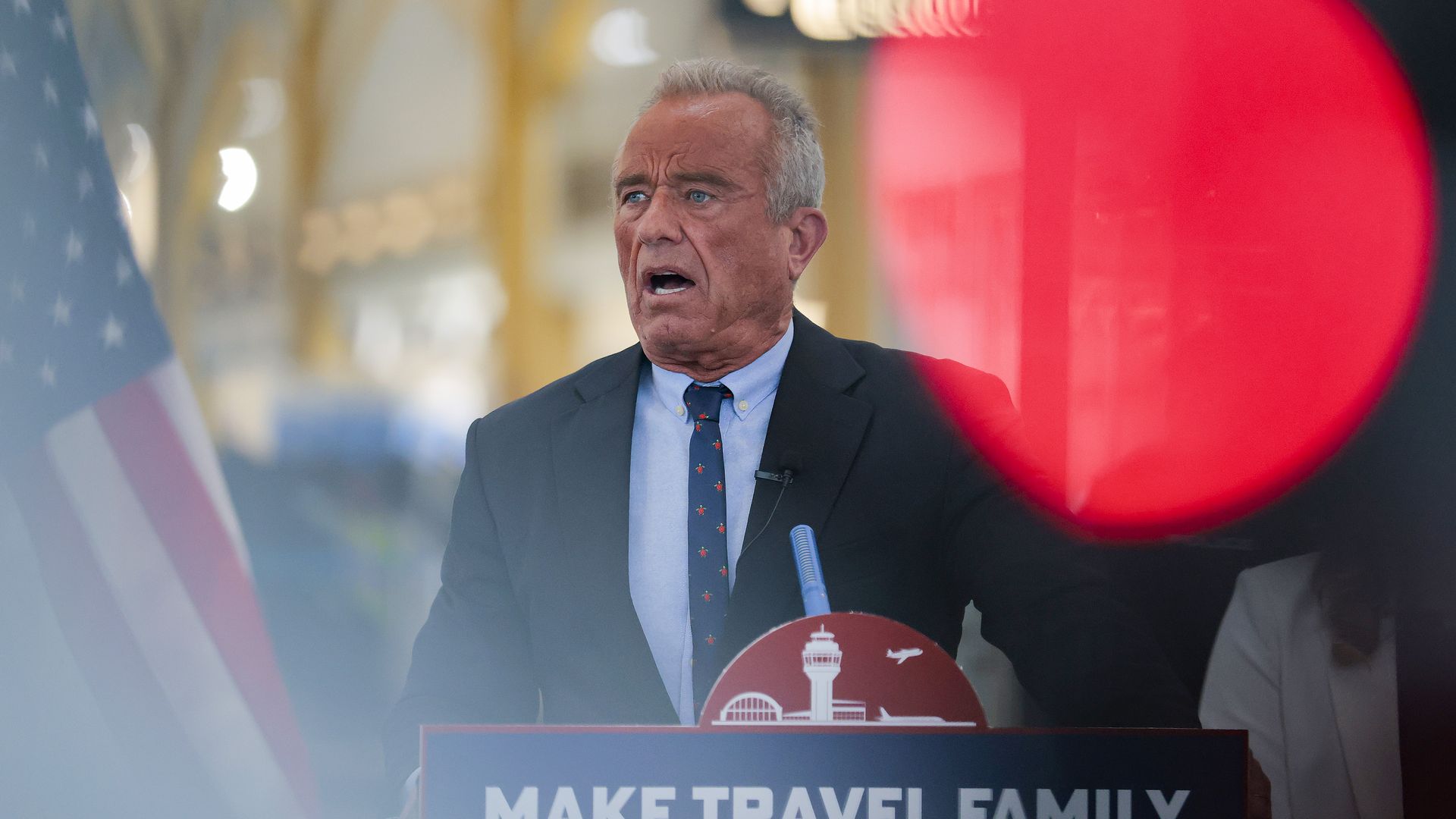
The Department of Transportation unveiled a new $1 billion grant program Monday that will let airports apply for funding aimed at improving the overall travel experience for Americans.
The big picture: Funding for Transportation Secretary Sean Duffy's "Make Travel Family Friendly Again" campaign comes from the 2021 Biden-era Infrastructure Investment and Jobs Act's Airport Terminal Program, per the DOT.
The outlines of a Senate Republican health care plan are coming into focus, and it wouldn't extend enhanced Affordable Care Act subsidies — increasing the likelihood that the assistance will expire in less than a month.
Why it matters: An expiration would expose millions of Americans to sharp increases in out-of-pocket premium costs that could lead some to go without insurance.
Scientists are warning that the ongoing measles outbreak might force the United States to lose its elimination status for the first time in decades.
The big picture: For 25 years, the U.S. has been free of yearly measles outbreaks. But this year's spike in cases and sustained outbreaks could change that.