Friday's health stories

House GOP details health plan for vote next week
House Republicans unveiled details of their health care plan Friday ahead of planned votes next week.
Why it matters: The plan does not include an extension of enhanced Affordable Care Act subsidies. Instead, there are other GOP ideas aimed at lowering health care costs.
- House GOP leadership aides said they also expect a vote on an amendment to extend the ACA subsidies in some form.
- While the details are still being worked out, the ACA extension is unlikely to pass, since Democrats are still pushing for a "clean" extension, not one with GOP-backed reforms attached.
- Many Republicans oppose any kind of subsidy extension.
What's inside: The underlying GOP plan includes a measure to expand association health plans, which allow employers to band together to purchase coverage.
- Another provision would impose new transparency measures on pharmacy benefit managers, aimed at lowering drug costs.
- The plan also funds ACA cost-sharing reduction payments, which would lower overall premiums in ACA markets but also have the effect of cutting the subsidies that some enrollees receive.
- The plan also includes a GOP measure aimed at easing the ability for small businesses to purchase health coverage.
Between the lines: House Republicans did not include a Senate GOP plan that would have provided $1,000 to $1,500 in health savings accounts, as an alternative to a subsidy extension.
- GOP aides said further health proposals could get House votes early next year.
The big picture: Even if House Republicans muster enough votes to advance a plan, it is likely to die in the Senate, where proposals would need 60 votes and Democratic buy-in.
- Democrats still insist a subsidy extension is the answer to avert a steep rise in out-of-pocket premiums for millions of ACA enrollees in the new year.
- House Republicans argue that their plan would also help people outside of the ACA markets who get insurance through employers.
The bottom line: The ACA subsidies are still likely to expire at the end of the year, but the votes will give House Republicans a chance to say they did put forward their own health care plan.

Scoop: Hawleys launch dark money group to revive anti-abortion politics

Sen. Josh Hawley (R-Mo.) and his wife, Erin Hawley, are launching a new dark money group to shine a spotlight on anti-abortion rights ballot measures and policies that benefit families.
Why it matters: After Roe vs. Wade was overturned in 2022, the Republican establishment quietly moved on from abortion rights politics. The Hawleys want to revive the issue.

What to know about the surging South Carolina measles outbreak and quarantines

A dangerous and highly contagious measles outbreak that began in October has ignited a fierce new round of cases across South Carolina, and there's no immediate end in sight.
Why it matters: Over 100 people have been infected and hundreds more quarantined in the recent S.C. outbreak, which follows a wave of widespread measles cases nationwide.

Trump leans toward reclassifying marijuana
President Trump is likely to loosen still-tough federal restrictions on marijuana use early next year, Axios has learned.
Why it matters: While conservatives have long expressed a degree of discomfort with pot, Trump has shown an openness to it.
Senate rejects rival Obamacare bills
The Senate voted down competing health care proposals on Thursday, likely guaranteeing that the enhanced Affordable Care Act tax credits will expire at the end of the year.
Why it matters: The failed votes on Democratic and Republican plans highlight the deadlock in Congress over how to respond to steep increases in out-of-pocket premium costs for millions of ACA enrollees.

COVID-19 vaccine prevented kids' emergency room visits: CDC
Last season's COVID-19 vaccine significantly reduced kids' emergency room and urgent care visits, newly released Centers for Disease Control and Prevention data shows.
Why it matters: The data released on Thursday comes amid intensifying calls from anti-vaccine groups to pull immunizations off the market.
- The FDA's top vaccine regulator recently linked COVID-19 vaccines to the deaths of at least 10 children without presenting new evidence.
By the numbers: The 2024-2025 COVID shots reduced emergency department and urgent care visits linked to the virus 76% for kids ages 9 months to four years within six months, per CDC's Morbidity and Mortality Weekly Report.
- The vaccines lowered visits by 56% in children 5 to 17 years old.
- The conclusions are consistent with CDC data from the 2023-2024 season.
- The data was collected from a collaborative vaccine effectiveness network that pulls data from providers in nine states.
What they're saying: HHS does not believe there's any conflict between the new data and recent comments from agency officials, department spokesperson Andrew Nixon told Axios.
- "CDC's analysis and FDA's safety oversight serve different purposes and attempts to frame them as contradictory misunderstand how these agencies operate. FDA leadership is focused on righting the wrongs of the Biden Administration and evaluating all emerging safety data,"
Zoom in: CDC's summary of Thursday's report says that the study shows "that updated vaccines provided added protection for those who received them."
- Parents "should discuss the benefits of COVID-19 vaccination with a health care provider. Health care providers should discuss the benefits of COVID-19 vaccination with parents," it adds.
- CDC this year dropped a broad COVID vaccine recommendation and instead accepted revised guidance from Health Secretary Robert F. Kennedy Jr.'s vaccine advisors that all people age six months and older get a COVID-19 shot based on "individual decision-making." Parents should consult with their child's doctor about the vaccine, per CDC.
- The winter 2025 COVID season was generally considered mild compared to previous years.
"I don't think this is anything new — we know that the COVID vaccine does have protective efficacy against emergency department visits," said Amesh Adalja, a senior scholar at the Johns Hopkins Center for Heath Security.
Between the lines: HHS laid off many staff who produce the Morbidity and Mortality Weekly Report during the government shutdown earlier this year, before rescinding the firings.
Big insurers provide incomplete transparency data: Study

Three of the nation's biggest health insurers have provided an incomplete picture of their negotiated prices in transparency data that's required by federal rules, according to a new analysis.
Why it matters: The partial disclosures by UnitedHealthcare, Aetna and Cigna could leave employers in the dark when shopping for workplace coverage, per the analysis in the American Journal of Managed Care.
What's next after the failed Senate Obamacare votes
There's likely to be one more round of health care votes in the House next week after the Senate votes down two rival Affordable Care Act subsidy proposals Thursday — but they won't get any closer to extending the enhanced subsidies.
Why it matters: Those subsidies now appear certain to expire at the end of the year, short of a last-minute breakthrough — and out-of-pocket premium costs will more than double on average for roughly 20 million ACA enrollees.

Calls to pull COVID vaccines get louder

Health Secretary Robert F. Kennedy Jr. may have said he won't take vaccines away from anyone, but that's exactly what the anti-vaccine organization he founded asked the Food and Drug Administration to do in a petition this week.
Why it matters: The formal document — which the agency is required to respond to — is part of a growing call to pull the shots from the market. And it comes during a week when the agency said it's expanding an investigation of deaths potentially related to the shots, this time in adults.
Exclusive poll: Where voters are most persuadable on ACA subsidies
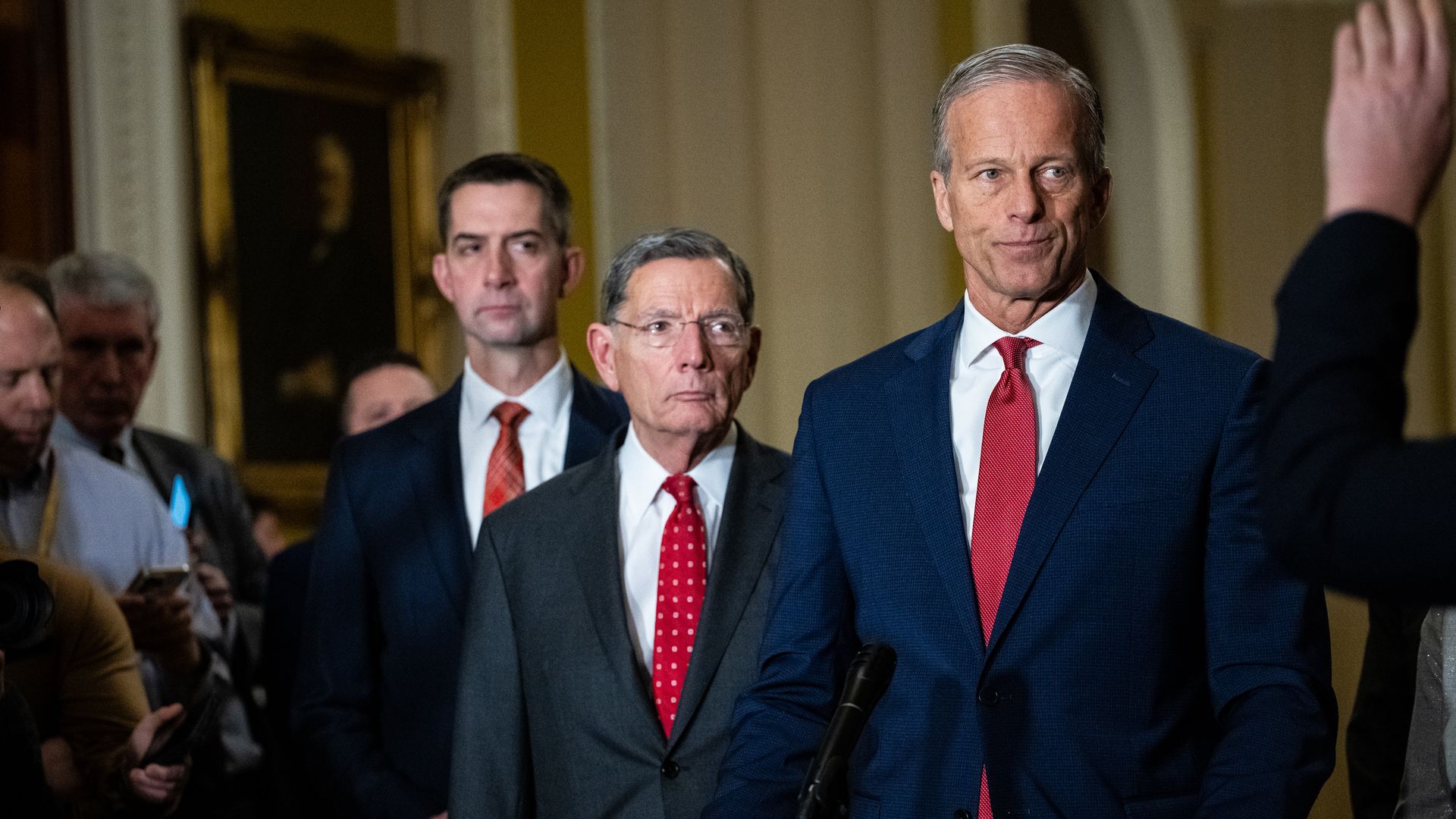
Half of Republicans and 60% of voters overall said they supported extending the Affordable Care Act tax credits that expire in a few weeks — but many can be persuaded, according to new GOP polling.
Why it matters: A clear majority likes the subsidies, but there's significant support for the GOP's desired changes, including work requirements and redirecting the funding straight to individual health spending accounts.

House passes defense bill, pressuring Pentagon to release boat strike video

The House passed a sweeping defense policy bill Wednesday evening that authorizes a record $901 billion in annual military spending.
Why it matters: The National Defense Authorization Act (NDAA) is a traditionally bipartisan bill, but the 2026 legislation contains some pushback against the agenda of the Trump administration, which had earlier called for the measure to pass.