What to know about the surging South Carolina measles outbreak and quarantines

Add Axios as your preferred source to
see more of our stories on Google.
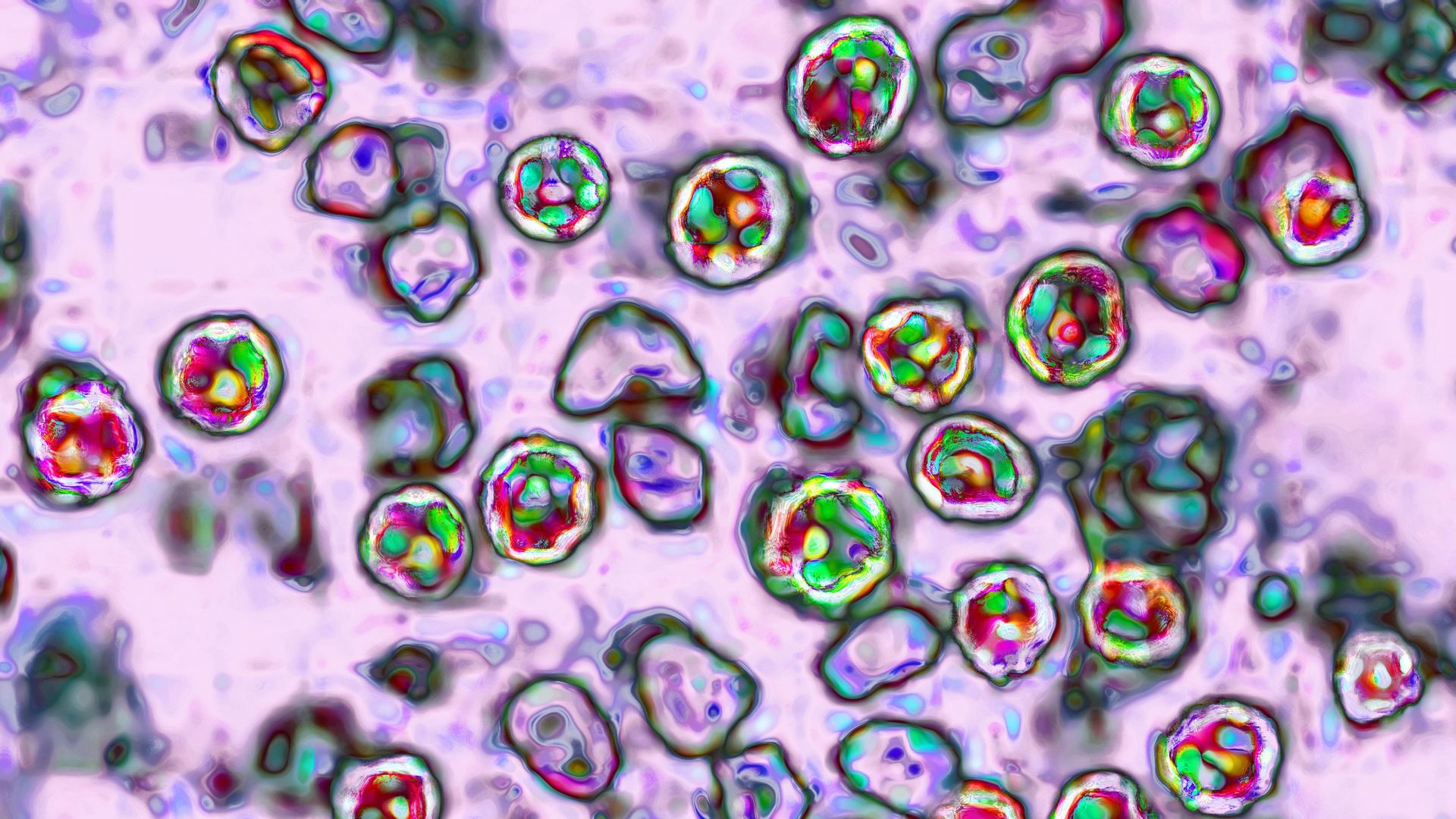
Microscopic view of the measles virus, a member of the Morbillivirus genus in the Paramyxoviridae family. Photo: BSIP/Universal Images Group via Getty Images
A dangerous and highly contagious measles outbreak that began in October has ignited a fierce new round of cases across South Carolina, and there's no immediate end in sight.
Why it matters: Over 100 people have been infected and hundreds more quarantined in the recent S.C. outbreak, which follows a wave of widespread measles cases nationwide.
- "We are faced with ongoing transmission that we anticipate will go on for many more weeks, at least in our state," South Carolina epidemiologist Dr. Linda Bell told AP.
- S.C. is one of multiple states where measles cases are spiking. If this outbreak continues into January 2026, the U.S. risks losing its internationally recognized measles-free status.
State of play: There have been more than 110 measles cases this year within the state, S.C. public health officials warned Tuesday.
- More than 250 people have been quarantined over transmission fears, officials said.
- Additionally, 16 patients with the illness remain in isolation.
Here's what to know about the South Carolina outbreaks.
Measles outbreak in South Carolina
By the numbers: S.C. Department of Public Health officials said in a statement that there were 27 new cases within the state.
- 16 came from exposure at the Way of Truth Church in Inman, S.C.
- Eight from household members who were known to have cases.
- One case from a school exposure.
- One case from exposure at a health care setting.
- Exposure remains unknown for one case.
Zoom in: More than 40 students are in quarantine after exposure to students, staff and faculty at Inman Intermediate School, the DPH said.
- The quarantined students who don't become ill are expected to return to class by Dec. 15.
S.C. measles outbreak and the holidays
Flashback: South Carolina public health officials reported eight new cases in mid-November, with six coming from a single household. It was unclear at the time how the other two were infected.
Flash forward: Officials in South Carolina warned that the measles outbreaks would likely extend into the holiday season since large family gatherings were on tap.
What they're saying: "We are reminding people that travel for the upcoming holidays increases the risk of exposures greatly for those traveling and for those accepting visitors," S.C. public health officials said in a statement.
- "If those currently in quarantine join family gatherings during the Thanksgiving holiday, we may see many more cases during the Christmas holidays," per the S.C. DPH.
Dangerous wave of measles cases
The big picture: South Carolina is far from the only area of the country seeing a measles outbreak. Dozens of states have grappled with outbreaks since January.
- Texas has seen more than 800 cases, per data from the Centers for Disease Control and Prevention.
- Similarly, Utah, Arizona and New Mexico have seen more than 100 cases in recent months. These surges represent some of the biggest outbreaks of the year behind the Texas wave.
Of note: The U.S. has seen new measles cases every week of 2025 since January, per the CDC.
- For 25 years, the U.S. hasn't had measles outbreaks for 12-straight months. But the recent surge of cases has changed that.
- Canada similarly lost its elimination status in November.
What to know about measles
Measles, also known as rubeola, is a highly contagious disease that spreads through coughing and breathing.
- The CDC says about 9 out of 10 people near someone with measles can contract the disease if they're not protected against it.
- Anyone who isn't vaccinated against measles is at risk for getting it.
What are common measles symptoms?
Most measles symptoms appear within seven to 14 days after one contracts the virus, the CDC says.
Some of the common symptoms include:
- High fever.
- Cough.
- Runny nose.
- Watery and red eyes.
- Rash.
- Ear infections and diarrhea are also potential symptoms.
Measles can cause a slew of serious health conditions, including:
- Pneumonia.
- Encephalitis (inflammation of the brain).
- Vision loss.
- Subacute sclerosing panencephalitis (a rare and fatal disease of the brain that can develop years after infection).
What to know on measles vaccines
Experts recommend getting two doses of the measles, mumps, rubella (MMR) vaccine to stay protected against the condition.
- The CDC currently advises children to receive two doses of the MMR vaccine, with the first dose happening at 12 to 15 months old and the second dose coming at 4 to 6 years old.
- The CDC used to recommend the MMR vaccine to be taken alongside the measles, mumps, rubella and varicella (MMRV) vaccine, but advisers for Health Secretary Robert F. Kennedy Jr., a vaccine skeptic, recently voted to change that.
More from Axios:
