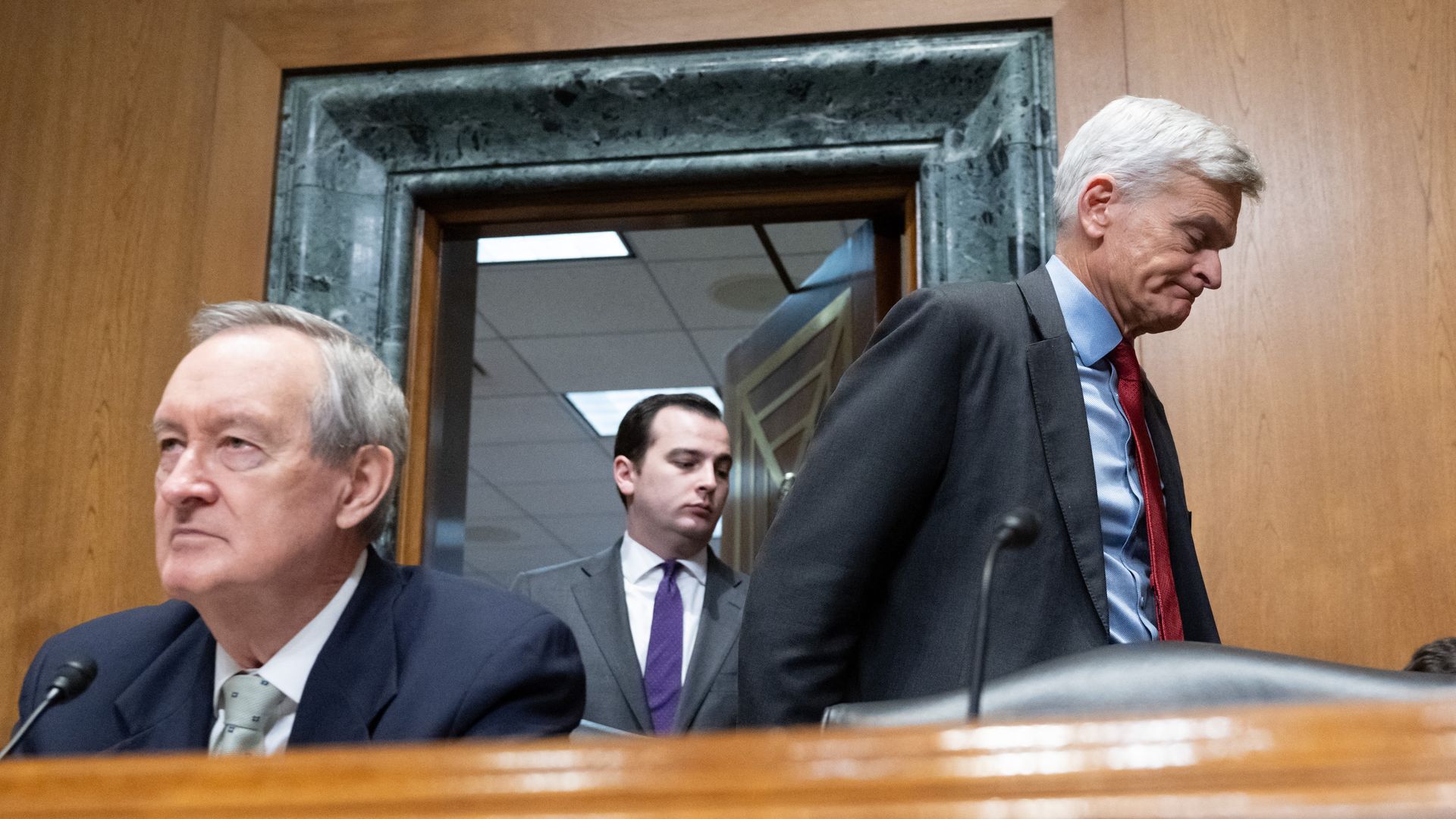
Two key Senate Republican chairmen are circulating the outline of a health care plan to Republican offices ahead of a crucial week that could decide the fate of enhanced Affordable Care Act subsidies, multiple sources tell Axios.
Why it matters: The plan from Finance Committee chair Mike Crapo (R-Idaho) and health committee chair Bill Cassidy (R-La.) does not extend the tax credits past their expiration at year's end, instead providing funds to enrollees in health savings accounts, according to a summary obtained by Axios.
It's not the only GOP plan that's been floated in recent days as Republicans struggle to unite around health care policies.
What's inside: Certain ACA enrollees earning less than 700% of the federal poverty level would receive $1,000 in an HSA if they're 18 to 49 years old, and $1,500 if they're 50 to 64, according to the outline distributed to Senate offices over the weekend.
It would also fund ACA cost-sharing reduction payments that would lower overall premiums but cut subsidies to some ACA enrollees.
Other provisions expand the availabilty of low-cost "catastrophic" health plans and cut Medicaid funding to states that provide coverage to undocumented immigrants.
The big picture: The Senate is due to vote on a three-year extension of the tax credits that Democrats have united around, which would lower premium payments for roughly 20 million ACA enrollees. That vote is expected to fail.
It's not clear whether the Crapo-Cassidy proposal will also get a vote.
A Crapo spokesperson declined to comment. A Cassidy spokesperson did not respond to requests for comment.
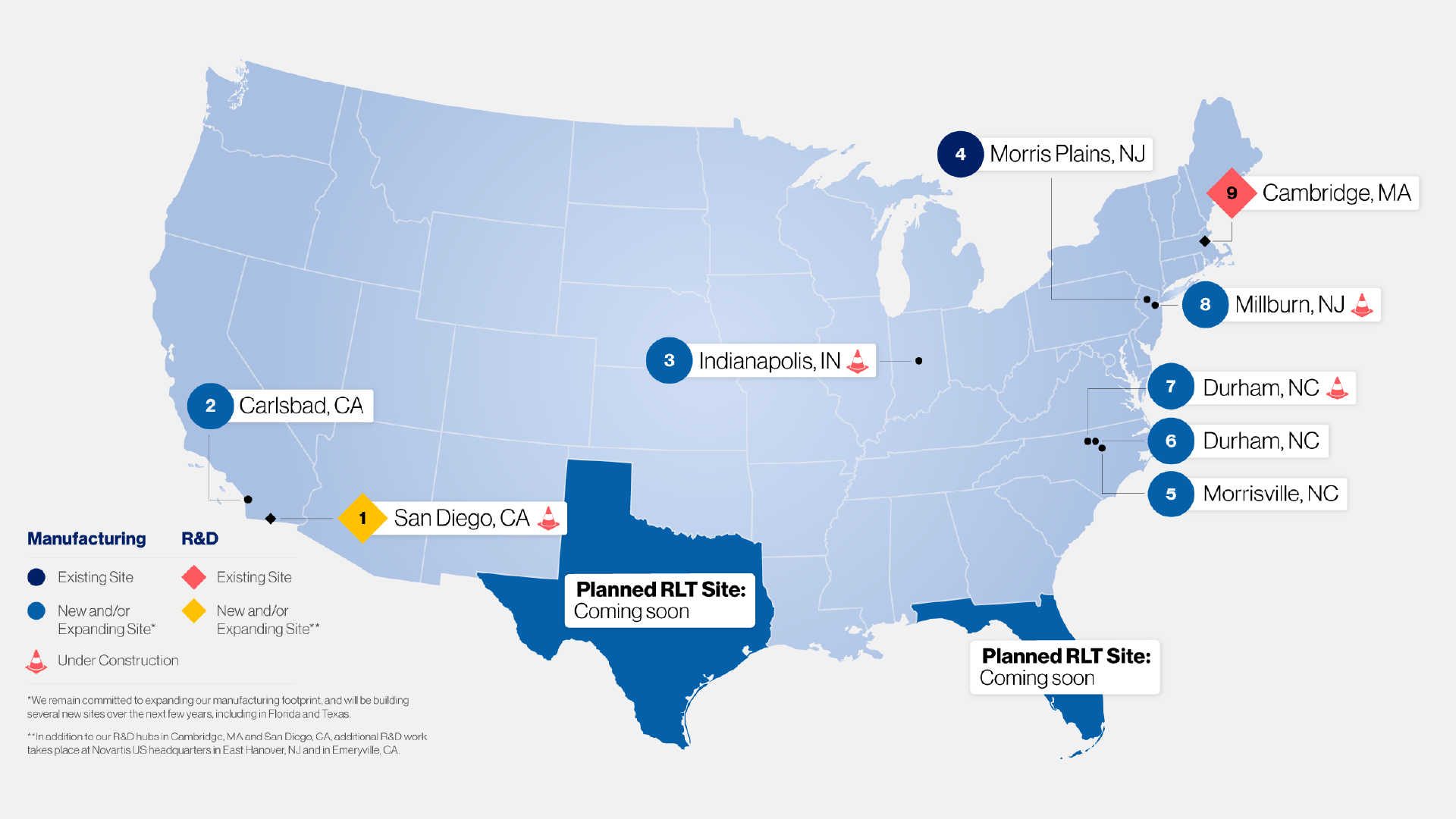
The next decade of medicine will be defined by breakthrough medicines and their quick delivery to patients.
Novartis is working to ensure both happen in the United States, strengthening outcomes for patients, creating jobs and driving progress in communities nationwide.
A new Medicare payment trial will determine whether the federal government can promote digital health applications like remote monitoring to manage chronic illnesses.
Why it matters: Traditional Medicare currently pays care providers based on the volume of individually billable services they deliver, which makes digital health adoption difficult.
MAHA Action, a political advocacy group dedicated to advancing Health Secretary Robert F. Kennedy Jr.'s agenda, made its first state-level election endorsement last week by wading into a key farm state's gubernatorial race.
Why it matters: The group is branching out to state politics while top Republicans rally the wide-ranging MAHA coalition to prevent control of the House from flipping in the midterms.
President Trump's new push for sweeping changes to childhood immunizations feeds off of a divide — narrow but growing — over who should have the final say over whether and when kids get their shots.
The big picture: Trump and Health Secretary Robert F. Kennedy Jr. think they've hit a nerve with their emphasis on personal choice in contrast to blanket recommendations, whichthey say discouraged discussions about the risks and benefits of vaccination.
Why it matters: Scientists say these hums can mask environmental distractions and even sync brain activity tied to relaxation — though not all "colors" work the same way for everyone.