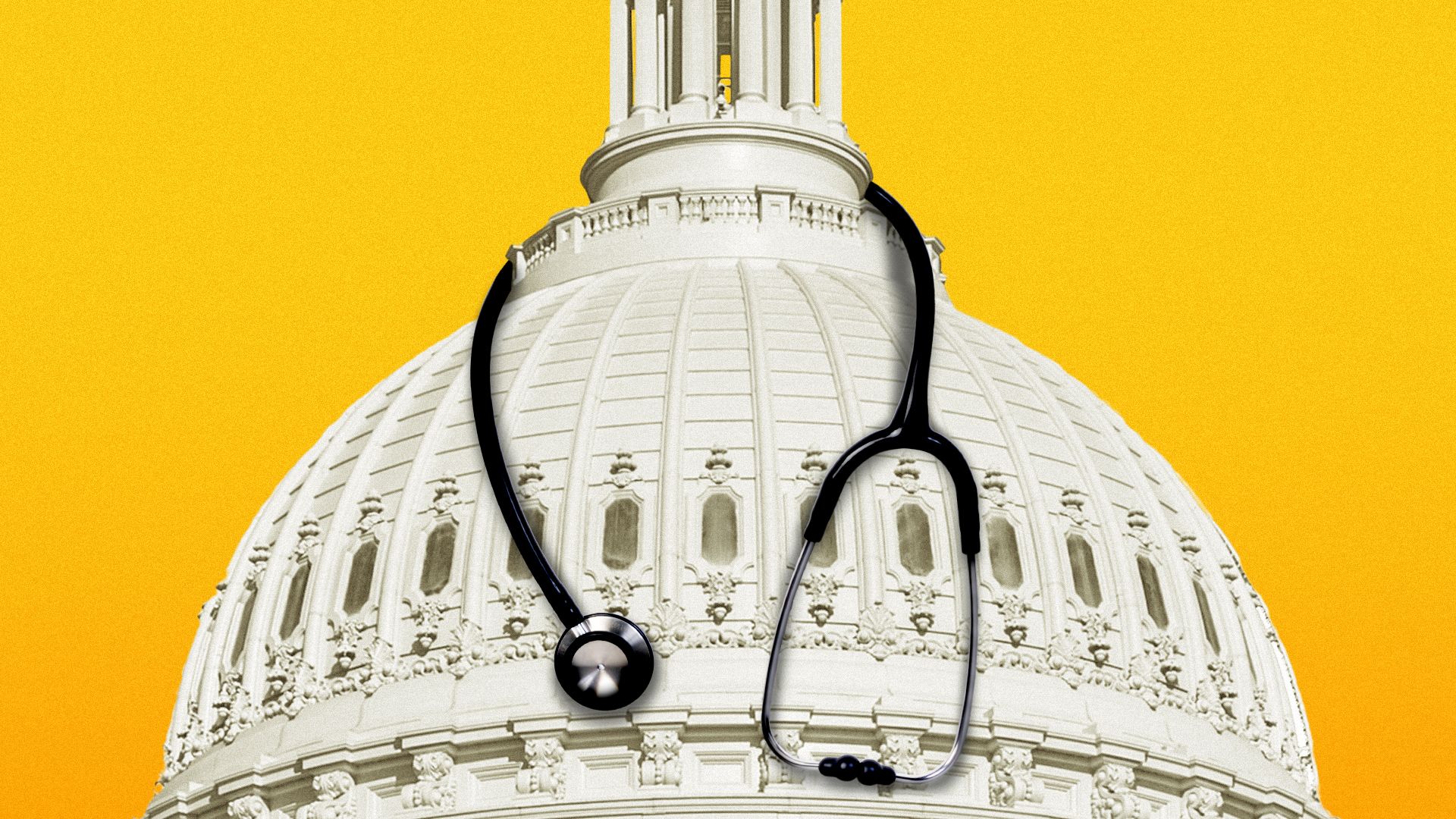
The conservative Heritage Foundation released its policy priorities for 2026, many of which align with goals already on the Trump administration's horizon.
The big picture: The think tank crafted Project 2025, which President Trump sought to distance himself from while campaigning despite embracing many of those same policies when back in in office.
Two cases of the MERS coronavirus were identified in France this month, a surprising development for a virus typically confined to the Arabian Peninsula.
Why it matters: Middle East Respiratory Syndrome (MERS), which can cause a litany of symptoms and even death, hasn't been a major concern since early in the pandemic with the arrival of the novel coronavirus.
Here's the deal: Danone, a leader in nutrition science and innovation, is now the Big Ten Conference's first official partner for yogurt and plant-based beverages, featuring Danone's Oikos and Silk brands.
SAN FRANCISCO — Improving communication and cross-functional collaboration could greatly improve how AI is used in health care environments, according to experts at the Axios AI+ Summit on Dec. 4.
Axios' Maya Goldman and Brock Turner moderated the roundtable discussion, which was sponsored by AstraZeneca.
Why it matters: Health care technology has the potential to transform how physicians discover, diagnose and treat patients' illnesses.
What they're saying: Getlabs CEO Claire Hough said that although the organization has successfully incorporated AI to improve efficiency and accuracy, the biggest obstacle it faces is getting its partners to do the same.
"For us, the barrier is really, how fast can we make that connection to automate as much as possible, or AI-enable our workflows as much as possible," Hough said.
Another challenge is that a universally accepted objective for AI doesn't exist, says Sonny Shergill, AstraZeneca's vice president of commercial digital health: "I think it stops … even the big tech companies at that last mile point."
Zoom in: Governance remains a central point of confusion, with organizations unclear of its meaning, how to act on it and who is responsible.
Trustible co-founder and CEO Gerald Kierce explained that when governance is understood and built into an AI strategy, adoption is quicker, helping "manage the negative downfalls, the risks [and] the harm."
Zoom out: Waymark co-founder and CEO Rajaie Batniji pointed to the inconsistencies in state-by-state regulation.
For example, he said, some are already strict about how AI can be used, and some differentiate between the definitions of "machine learning" and "artificial intelligence."
What's next: Companies like Oura are trying to use continuous biometric data to address the dilemma of fragmented patient information, in particular.
Clinical lead Tanvi Jayaraman highlighted a new partnership between Oura and Essence Healthcare. The program aims to use collected information to identify vulnerable patients early, and guide them to seek preventive — rather than reactive — care.
Content from the sponsor's remarks:
"We must identify the life-changing opportunities. … The ways to delight, or the things that get the imagination to think about what could be possible," Dave Fredrickson, AstraZeneca executive vice president of the oncology haematology business unit, said of AI.
Mail delivery slowdowns could leave people with asthma, diabetes and other chronic illnesses without needed medications, particularly in rural areas, a new report from the Brookings Institution concludes.
Why it matters: Prescription delivery improves the odds people stay on their treatments. Some 6% of all diabetes prescriptions in the U.S. are delivered through the mail, the report authors wrote, citing IQVIA data.
The Department of Transportation unveiled a new $1 billion grant program Monday that will let airports apply for funding aimed at improving the overall travel experience for Americans.
The big picture: Funding for Transportation Secretary Sean Duffy's "Make Travel Family Friendly Again" campaign comes from the 2021 Biden-era Infrastructure Investment and Jobs Act's Airport Terminal Program, per the DOT.
The outlines of a Senate Republican health care plan are coming into focus, and it wouldn't extend enhanced Affordable Care Act subsidies — increasing the likelihood that the assistance will expire in less than a month.
Why it matters: An expiration would expose millions of Americans to sharp increases in out-of-pocket premium costs that could lead some to go without insurance.
Scientists are warning that the ongoing measles outbreak might force the United States to lose its elimination status for the first time in decades.
The big picture: For 25 years, the U.S. has been free of yearly measles outbreaks. But this year's spike in cases and sustained outbreaks could change that.
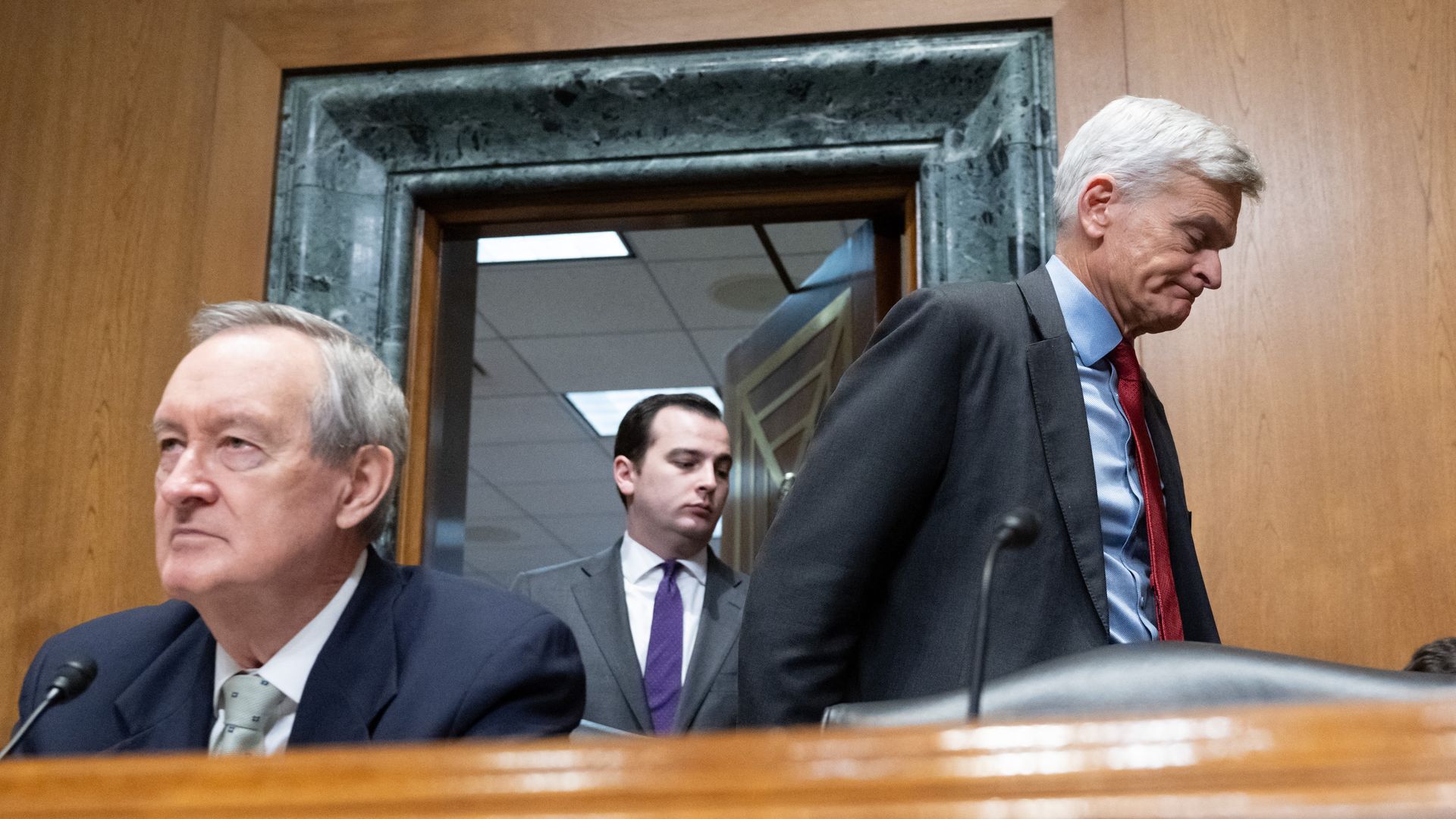
Two key Senate Republican chairmen are circulating the outline of a health care plan to Republican offices ahead of a crucial week that could decide the fate of enhanced Affordable Care Act subsidies, multiple sources tell Axios.
Why it matters: The plan from Finance Committee chair Mike Crapo (R-Idaho) and health committee chair Bill Cassidy (R-La.) does not extend the tax credits past their expiration at year's end, instead providing funds to enrollees in health savings accounts, according to a summary obtained by Axios.
It's not the only GOP plan that's been floated in recent days as Republicans struggle to unite around health care policies.
What's inside: Certain ACA enrollees earning less than 700% of the federal poverty level would receive $1,000 in an HSA if they're 18 to 49 years old, and $1,500 if they're 50 to 64, according to the outline distributed to Senate offices over the weekend.
It would also fund ACA cost-sharing reduction payments that would lower overall premiums but cut subsidies to some ACA enrollees.
Other provisions expand the availabilty of low-cost "catastrophic" health plans and cut Medicaid funding to states that provide coverage to undocumented immigrants.
The big picture: The Senate is due to vote on a three-year extension of the tax credits that Democrats have united around, which would lower premium payments for roughly 20 million ACA enrollees. That vote is expected to fail.
It's not clear whether the Crapo-Cassidy proposal will also get a vote.
A Crapo spokesperson declined to comment. A Cassidy spokesperson did not respond to requests for comment.
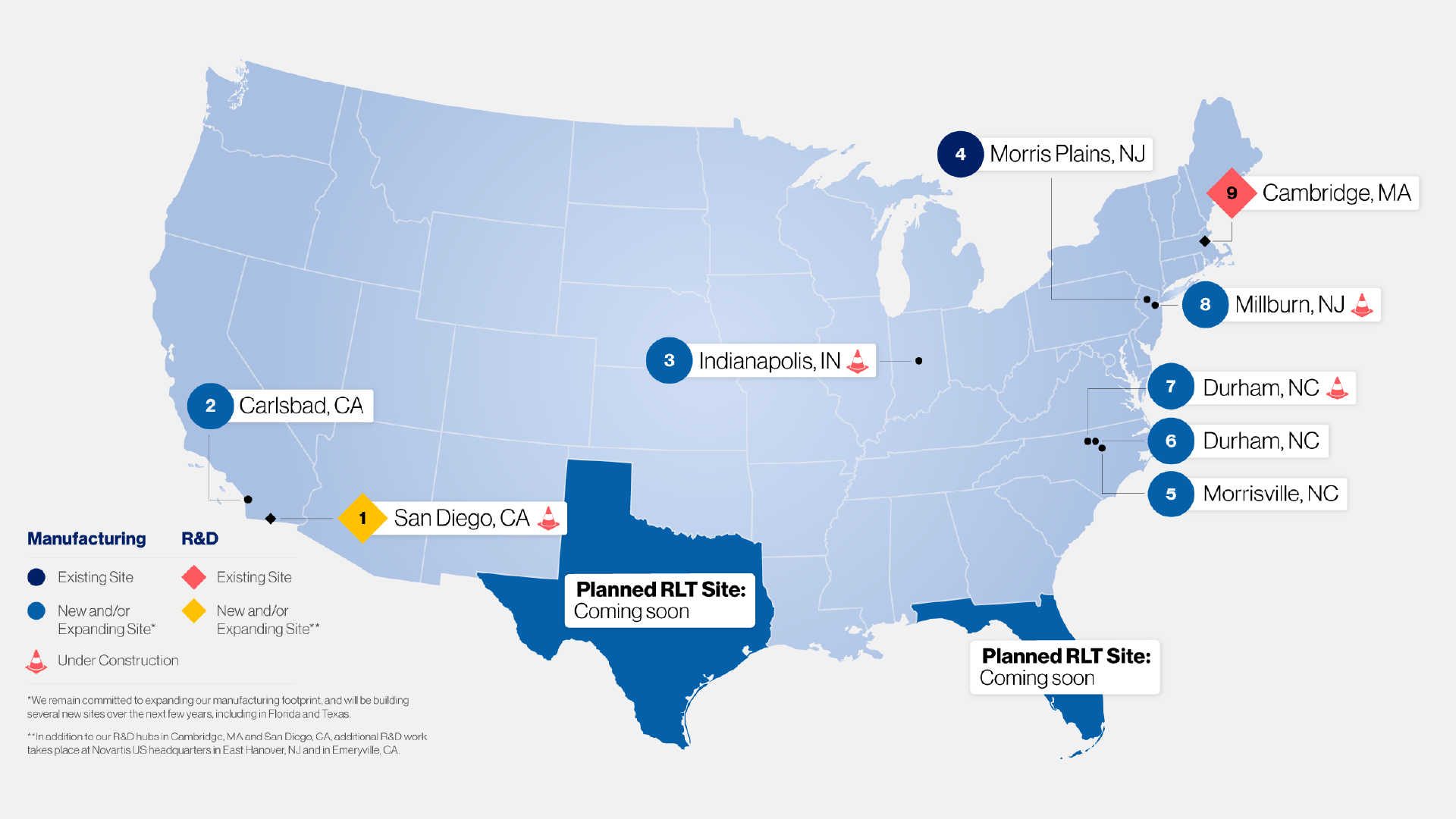
The next decade of medicine will be defined by breakthrough medicines and their quick delivery to patients.
Novartis is working to ensure both happen in the United States, strengthening outcomes for patients, creating jobs and driving progress in communities nationwide.
A new Medicare payment trial will determine whether the federal government can promote digital health applications like remote monitoring to manage chronic illnesses.
Why it matters: Traditional Medicare currently pays care providers based on the volume of individually billable services they deliver, which makes digital health adoption difficult.
MAHA Action, a political advocacy group dedicated to advancing Health Secretary Robert F. Kennedy Jr.'s agenda, made its first state-level election endorsement last week by wading into a key farm state's gubernatorial race.
Why it matters: The group is branching out to state politics while top Republicans rally the wide-ranging MAHA coalition to prevent control of the House from flipping in the midterms.
President Trump's new push for sweeping changes to childhood immunizations feeds off of a divide — narrow but growing — over who should have the final say over whether and when kids get their shots.
The big picture: Trump and Health Secretary Robert F. Kennedy Jr. think they've hit a nerve with their emphasis on personal choice in contrast to blanket recommendations, whichthey say discouraged discussions about the risks and benefits of vaccination.
Why it matters: Scientists say these hums can mask environmental distractions and even sync brain activity tied to relaxation — though not all "colors" work the same way for everyone.