What to know about U.S. measles cases as outbreak worsens


Add Axios as your preferred source to
see more of our stories on Google.
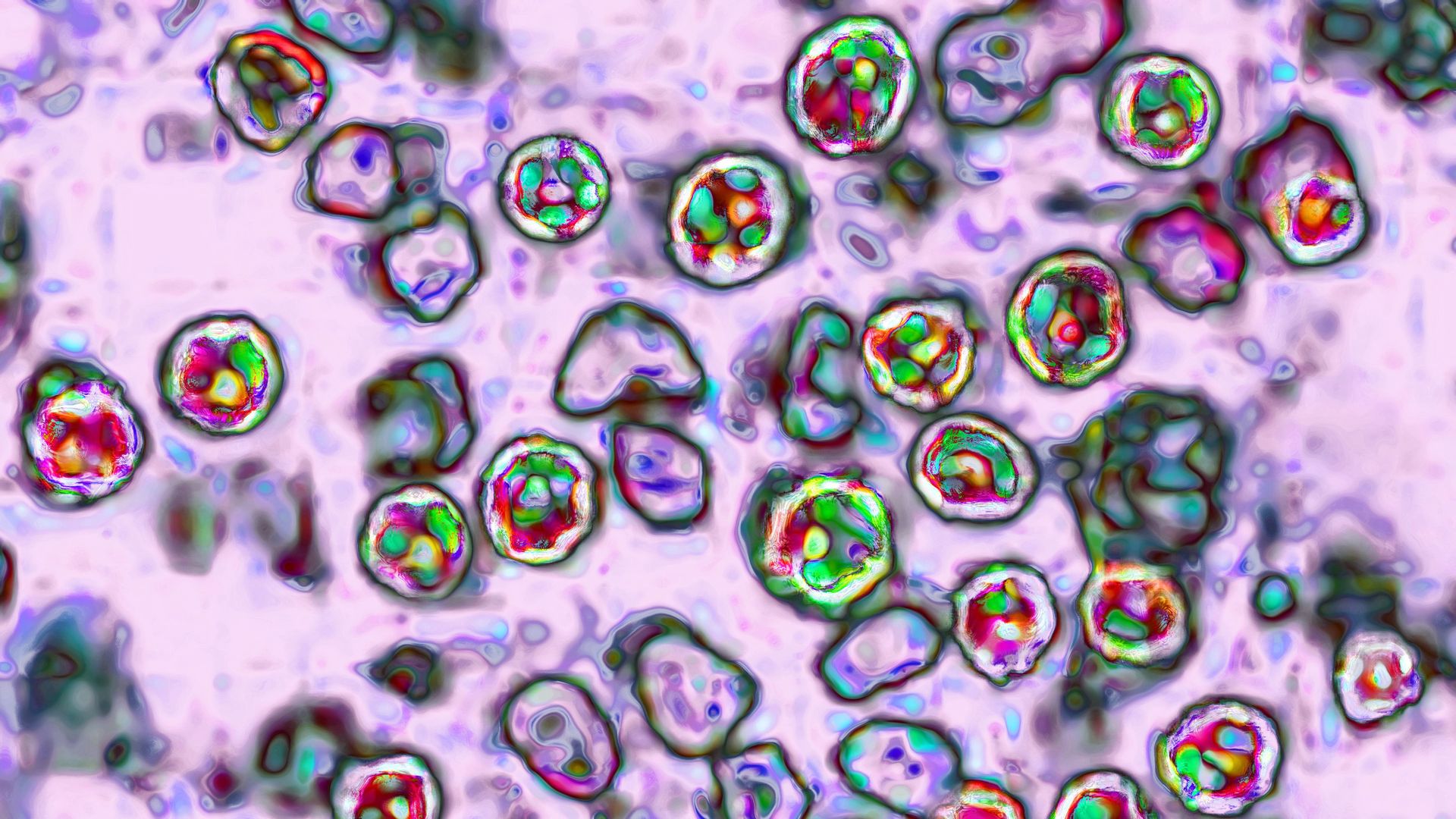
The measles virus, paramyxoviridae from the Morbillivirus family, transmission microscopy view. Photo: BSIP/Universal Images Group via Getty Images
The growing measles outbreak in the U.S. has since January infected 642 people in 22 states, per Health and Human Services Secretary Robert F. Kennedy Jr.. That's more than the number of total cases in the country last year.
Why it matters: The outbreak comes at a time of dropping vaccination rates and declining trust in public health institutions. It's an early test of how President Trump's administration — and Kennedy — will handle public health emergencies and infectious disease surveillance.
The big picture: In 2024, the U.S. recorded 285 measles cases and no deaths from the disease, per the Centers for Disease Control and Prevention (CDC).
Here's what to know about the disease and current outbreak.
Texas measles outbreak: What's happening?
There were 499 confirmed cases in the state as of April 6, per Kennedy's post to X. As of April 4, 56 people were hospitalized with measles, according to the Texas Department of State Health Services.
Catch up quick: The outbreak started in Gaines County, Texas, a locality of roughly 23,000 people that is home to a community of Mennonites.
- The area has a low vaccination rate and some of the highest school vaccine exemption rates in the state, according to CBS News.
- Many of the people affected are either unvaccinated or have an unknown vaccination status.
- The U.S. recorded its first measles death in a decade in February, in a 6-year-old girl in Lubbock, West Texas.
- Health officials said a second child, an 8-year-old girl in Lubbock, died of "measles pulmonary failure" on Thursday.
- Both children were unvaccinated.
Measles in New Mexico, Oklahoma and elsewhere
New Mexico declared a measles outbreak in Lea County, located near Texas' Gaines County.
- So far, 54 people in New Mexico have been infected with measles, 36 of whom were unvaccinated.
- The New Mexico Department of Health is investigating the cause of death of a Lea County resident last month who tested positive for measles.
Zoom out: A measles case was also confirmed in a Los Angeles County resident flying through the city's airport earlier this month.
- Other cases were reported in Alaska, California, Florida, Georgia, Kansas, Kentucky, Maryland, Michigan, New Jersey, New York State, Ohio, Oklahoma, Pennsylvania, Rhode Island, Vermont and Washington, per the CDC and state health officials.
Who's at risk of infection?
Measles is a highly contagious, airborne disease that can cause serious health complications, including death, especially in children under five.
- Immunocompromised people, unvaccinated people and vaccinated people who did not develop immunity are at highest risk of infection, according to the World Health Organization.
- Pregnant women, adults over 20, immunocompromised people and young unvaccinated children are at the highest risk of severe complications.
If 10 unvaccinated people are in contact with someone who has measles, nine of them will become infected, according to Johns Hopkins Medicine.
Flashback: The disease was officially eradicated in the U.S. in 2000 thanks to an effective vaccination program.
- Measles rates have risen again as vaccination rates among kindergarteners have dropped below the 95% target set by the CDC.
- Meanwhile, global measles cases are increasing — leading to more chances of an unvaccinated traveler bringing the disease to the U.S.
What are the symptoms?
Symptoms for measles include a high fever, a runny nose, a "barky" cough, red or bloodshot eyes, a blotchy rash and tiredness, per the Cleveland Clinic.
- Other symptoms could be a sore throat, muscle pain, sensitivity to light and white spots in the mouth.
- The rash starts as red spots on the face and then spreads downward to cover the entire body. This lasts from seven to 10 days.
- There's no specific treatment for measles other than treating symptoms and preventing complications. Some measures can be taken to treat people without measles immunity who have been exposed to the virus, according to the Mayo Clinic. These include post-exposure vaccination and immune serum globulin.
How dangerous is measles?
While measles is a minor illness for most, it can pose a risk for serious complications, including death.
- Acute encephalitis is a serious complication that causes brain inflammation, which can cause permanent brain damage. This happens in about one in 1,000 cases, per University of Chicago Medicine.
- Other potential complications include blindness, ear infections, diarrhea and pneumonia.
- An estimated one to three children in 1,000 who become infected with measles will die, per the Centers for Disease Control and Prevention (CDC).
How can I stay safe?
The best way to protect yourself against measles is vaccination, per the CDC. The measles, mumps and rubella vaccine (MMR) is safe and effective.
- All U.S. states require children to have the MMR vaccine to attend school, and the CDC recommends children get two doses.
- If you're unsure if you've been vaccinated for measles, contact your medical provider for verification.
- Céline Gounder, editor-at-large for public health at KFF Health News, told CBS News that people born after 1957 and vaccinated before 1968 could use a booster because at the time they were using less effective vaccines.
Go deeper: Kennedy's early warning signs on vaccine policy
Editor's note: This story was updated with additional developments.
