Vaccine hesitancy eats into back-to-school shots

Add Axios as your preferred source to
see more of our stories on Google.
A recent measles outbreak in Oregon is refocusing attention on declining childhood vaccination rates as kids head back to school.
Why it matters: Lingering vaccine hesitancy from the pandemic is evident in pediatricians' offices as more parents opt out of the shots for measles, chicken pox, and whooping cough, among others, using non-medical religious exemptions.
- While official data lags by several months, public health experts told Axios that anecdotal reports suggest rates continue to fall, leaving the population more vulnerable to outbreaks.
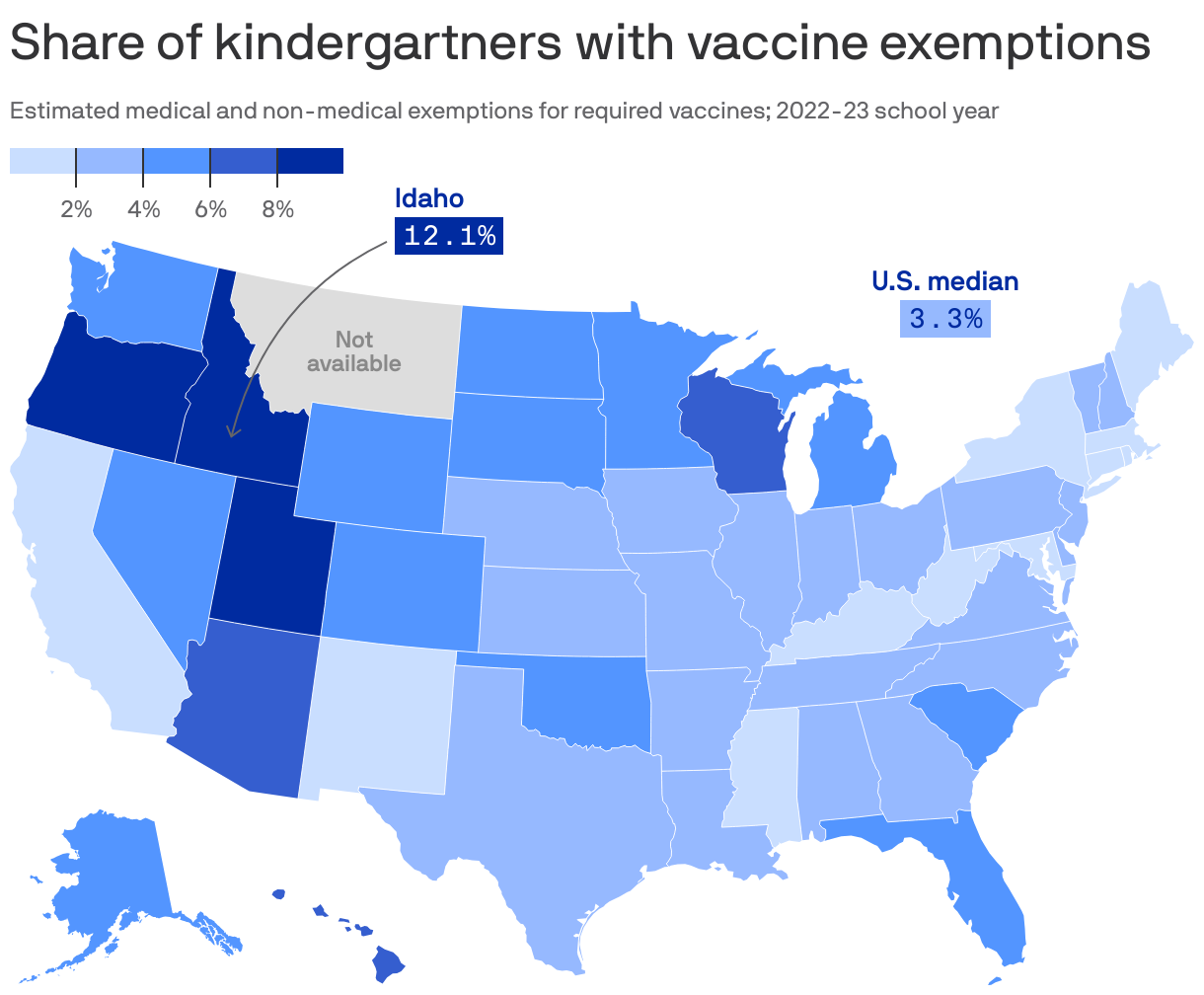
The big picture: U.S. parents still overwhelmingly support childhood vaccinations. But kindergarten exemptions rose to a median of 3.3 % nationally during the 2022-2023 school year, up from 2.7% the year before.
- A Gallup Poll this month found that 69% of respondents view childhood vaccines as "extremely" or "very" important, down from 94% in 2001.
- Gallup attributed the dropoff to people who lean Republican, noting the percentage of that cohort saying childhood vaccinations were "extremely important" stood at 26% this year, compared to 62% in 2001.
What they're saying: Non-medical religious exemptions to school vaccine requirements rose 1% annually over the past several years in Florida, said Tom Lacy, chief of Florida Primary Care for Nemours Children's Health.
- While large numbers of kids are getting vaccinated, it takes a 95% rate to maintain herd immunity against a disease like measles, he pointed out.
- Parents are not just opting out of the well-known childhood shot against measles, mumps, and rubella known as MMR, but also vaccines against whooping cough, chicken pox, meningitis, and the flu, he said.
- Some may be picking and choosing vaccines based on their perceptions of which seem more important or safer.
Between the lines: Another trend that may not show up in the data: More parents are delaying critical vaccines because they worry about administering too many shots at a young age — a hesitancy that can put the most vulnerable kids at greater risk, Lacy added.
- "Parents, sometimes in their attempt to protect their children, are really making the wrong decision."
Yes, but: It's not just hesitancy, but "a perfect storm" of factors like physician shortages and pharmacy closures that putting a drag on vaccination rates, FarmboxRx CEO Ashley Tyrner told Axios.
- The company, which is used by insurers to get healthy foods and other resources into patients' hands, has found that giving rides to appointments or hosting health fairs has persuaded more parents to vaccinate their children.
The ease of opting out of vaccinations varies by state and can have a direct bearing on uptake, Megan Ranney, dean of the Yale School of Public Health told Axios.
- In Idaho, which had a measles outbreak in the last year, parents only need to sign a statement citing religious "or other reasons." The state had the highest kindergarten vaccination exemption rate in the country in the 2022-2023 school year, at 12.1%, per the most recent federal data.
- Oregon, where parents can apply for a non-medical exemption after completing an education module on vaccines, saw its kindergarten exemption rate reach 8.8% in the 2023-2024 school year up from 8.1% and 6.9% in the two preceding years, Oregon Public Broadcasting reported.
- On the other end of the spectrum, Connecticut removed its religious exemption option for required vaccinations in schools in 2021 and saw fewer than 1% of kindergartners opt out, Ranney said.
- "The point being is that you have to try. Immunizations don't just happen."
Editor's note: This story has been corrected to reflect that kindergarten exemptions rose to a median of 3.3% (not 3%) nationally during the 2022-2023 school year.
