Axios AI+ SF Summit: Fractured system blocks AI's full potential in health care, experts say

Add Axios as your preferred source to
see more of our stories on Google.
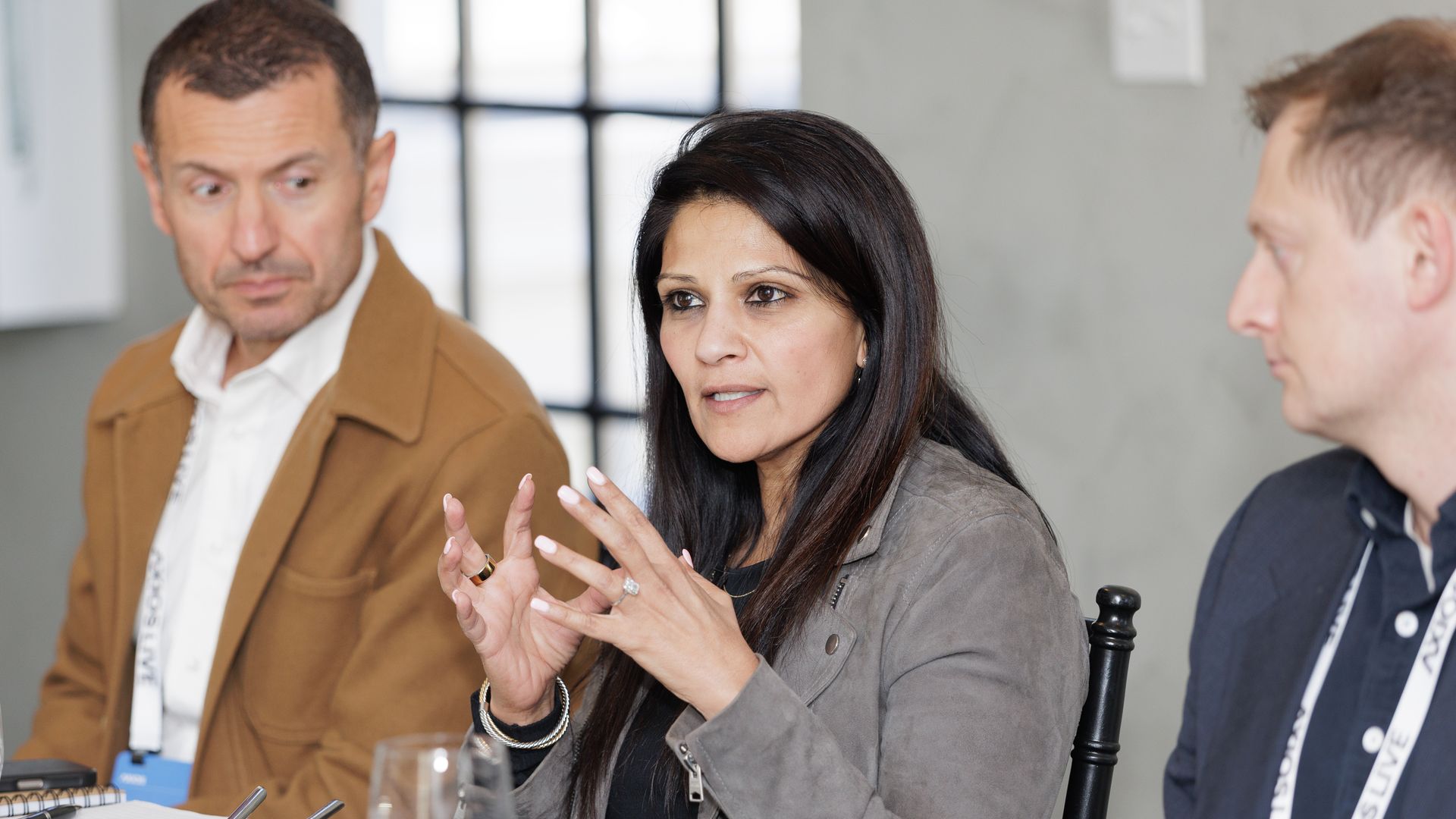
Arm chief marketing officer Ami Badani speaks during the roundtable. Photo: Chris Constantine on behalf of Axios
SAN FRANCISCO — Improving communication and cross-functional collaboration could greatly improve how AI is used in health care environments, according to experts at the Axios AI+ Summit on Dec. 4.
- Axios' Maya Goldman and Brock Turner moderated the roundtable discussion, which was sponsored by AstraZeneca.
Why it matters: Health care technology has the potential to transform how physicians discover, diagnose and treat patients' illnesses.
What they're saying: Getlabs CEO Claire Hough said that although the organization has successfully incorporated AI to improve efficiency and accuracy, the biggest obstacle it faces is getting its partners to do the same.
- "For us, the barrier is really, how fast can we make that connection to automate as much as possible, or AI-enable our workflows as much as possible," Hough said.
- Another challenge is that a universally accepted objective for AI doesn't exist, says Sonny Shergill, AstraZeneca's vice president of commercial digital health: "I think it stops … even the big tech companies at that last mile point."
Zoom in: Governance remains a central point of confusion, with organizations unclear of its meaning, how to act on it and who is responsible.
- Trustible co-founder and CEO Gerald Kierce explained that when governance is understood and built into an AI strategy, adoption is quicker, helping "manage the negative downfalls, the risks [and] the harm."
Zoom out: Waymark co-founder and CEO Rajaie Batniji pointed to the inconsistencies in state-by-state regulation.
- For example, he said, some are already strict about how AI can be used, and some differentiate between the definitions of "machine learning" and "artificial intelligence."
What's next: Companies like Oura are trying to use continuous biometric data to address the dilemma of fragmented patient information, in particular.
- Clinical lead Tanvi Jayaraman highlighted a new partnership between Oura and Essence Healthcare. The program aims to use collected information to identify vulnerable patients early, and guide them to seek preventive — rather than reactive — care.
Content from the sponsor's remarks:
"We must identify the life-changing opportunities. … The ways to delight, or the things that get the imagination to think about what could be possible," Dave Fredrickson, AstraZeneca executive vice president of the oncology haematology business unit, said of AI.
