SNAP is back, but with work requirements as Trump admin signals major changes


Add Axios as your preferred source to
see more of our stories on Google.
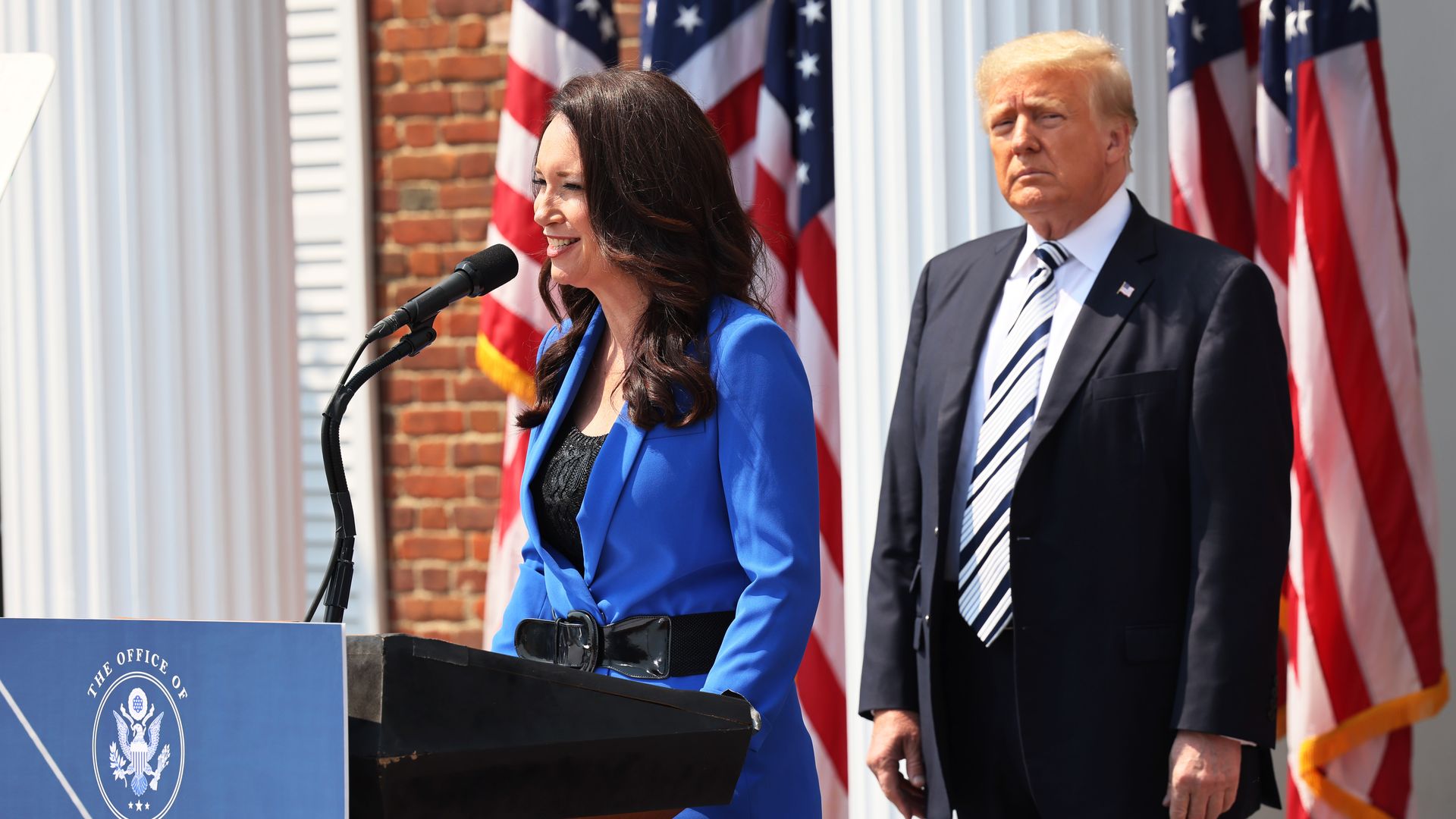
U.S. Department of Agriculture Secretary Brooke Rollins and President Trump. Photo by Michael M. Santiago/Getty Images
SNAP benefits are back online for December, but the program looks different than it did before the shutdown.
The big picture: November's mass chaos over the freezing of Supplemental Nutrition Assistance Program (SNAP) payments is over, but new work requirements and Trump administration threats make qualifying for benefits — and potentially receiving them — more fraught.
- For December, however, payments have generally resumed as normal.
Driving the news: Agriculture Secretary Brooke Rollins on Tuesday threatened to cut off federal SNAP funding to Democratic-leaning states.
- Rollins alleged during a Cabinet meeting that some states are refusing to share SNAP program data with the Trump administration.
- The administration "will begin to stop moving federal funds into those states" starting next week until they share the data, Rollins said.
Catch up quick: Roughly 42 million people receive SNAP benefits for food and goods. The record-shattering government shutdown this fall threw those benefits into limbo, given that SNAP benefits are distributed by the states but federally funded.
- A series of court rulings and challenges raised several questions about when SNAP payments would be sent in November amid payment delays.
Here's what to know about the SNAP status quo:
December SNAP payments
State of play: In general, December SNAP payments will return to their regular schedules.
- Each state has a different schedule for their payment dates, some of which are designated by one's last name, or by their Social Security numbers.
- Several states had to tweak their November payment schedules for the shutdown. By the middle of the month, several had already disbursed the payments to recipients.
New work requirements go into effect
Zoom in: The One Big Beautiful Bill Act went into effect on Dec. 1, and that's going to cause a slight change for SNAP benefits.
- Under the new rules, "able-bodied adults without dependents" (ABAWD) must prove they are working at least 80 hours a month or enrolled at least half of the time in educational programs (or some combination of the two), adding up to 80 hours.
- The OBBBA also raises the work requirement for ABAWD from 18-55 years of age to 18-65.
Context: Previously, the work requirement offered more exemptions, such as one for parents. Now, parents of children aged 14 or older will also have to meet work requirements.
The new rules also require "homeless individuals, veterans and certain foster care individuals to meet these work requirements."
- The law defines foster care individuals as those who are "24 years old or younger and were in foster care on the date of attaining 18 years of age or a higher age."
Yes, but: The OBBBA adds work requirement exemptions for "Indians, also referred to as Native Americans, Alaska Natives, Indigenous Peoples and Tribal Members."
- In places where it is difficult to obtain a job, the work requirement may be waived.
Trump administration threats to SNAP
Zoom out: Rollins said on Tuesday that 29 "red states" complied to a February request for SNAP program data, but that 21 "blue states continue to say no."
- The data, she said, is meant to help address "fraud and to protect the American taxpayer."
What they're saying: "We have sent Democrat States yet another request for data, and if they fail to comply, they will be provided with formal warning that USDA will pull their administrative funds," the department told Axios in a statement.
- "28 States and Guam joined us in this fight," the department said, "but states like California, New York, and Minnesota, among 19 other blue States, keep fighting us."
The other side: "We no longer take the Trump Administration's words at face value —we'll see what they actually do in reality," Marissa Saldivar, a spokesperson for California Gov. Gavin Newsom, told Axios.
- "Cutting programs that feed American children is morally repugnant."
In response to a request for comment, New York Gov. Kathy Hochul's office said that the agency which runs the state's SNAP program has not received any official guidance from the Agriculture Department regarding allegedly withheld funds.
- Hochul's office also directed Axios to Hochul's Tuesday post on X.
- "Why is the Trump Administration so hellbent on people going hungry?" Hochul replied to a video of Rollins threatening the states.
Minnesota Gov. Tim Walz did not immediately respond to a request for comment.
Flashback: Following the shutdown, Rollins said she planned to "have everyone reapply for their benefits."
- "Secretary Rollins wants to ensure the fraud, waste, and incessant abuse of SNAP ends," a department spokesperson told Axios at the time, adding that an "ongoing analysis of State data" and "improved collaboration with the States" is "part of that work."
What's next for SNAP payments
What we're watching: More changes could be on the way for SNAP payments, with states bearing more of the burden.
- Starting in October 2026, states will provide 75% of the program's administrative costs, which is an uptick from 50%. This could cost taxpayers millions.
- States may soon have to pay up to 15% of SNAP benefits, too.
