Pfizer will vaccinate all residents over the age of 12 in the Brazilian city of Toledo as part of a study measuring the effectiveness of its COVID-19 vaccine, the company said in a statement.
Why it matters: Researchers in the study hope to monitor viral transmission in a real-life scenario after the population has been inoculated.
Parents and kids can trick or treat outdoors safely this Halloween, especially if they are vaccinated, NIAID director Anthony Fauci told CNN's "State of the Union" on Sunday.
Why it matters: During the program, Fauci noted that COVID-19 cases, hospitalizations and deaths in the U.S. are declining, calling it “good news."
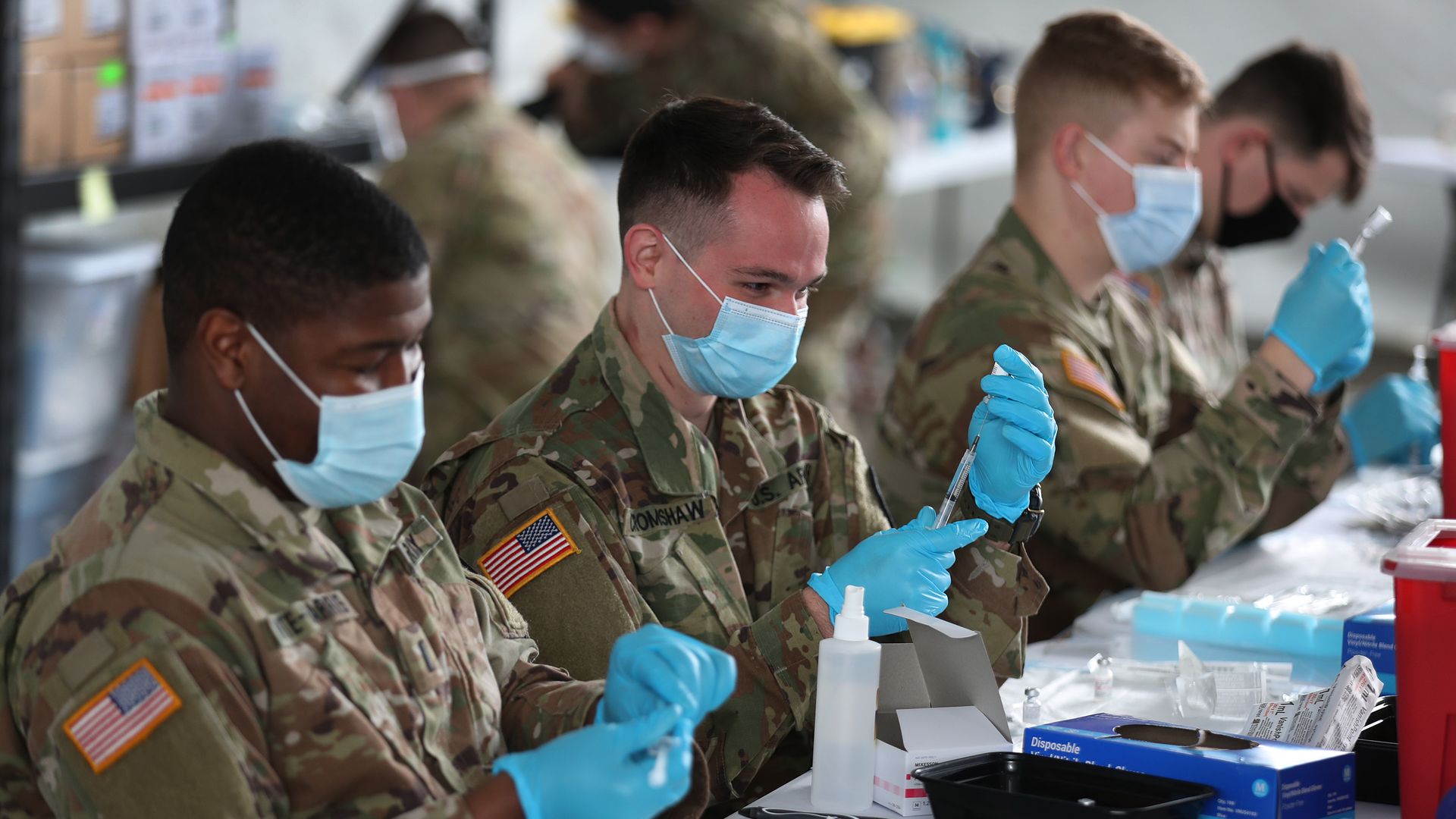
Hundreds of thousands of U.S. service members remain unvaccinated ahead of the impending deadlines set by the individual service branches, the Washington Post reports.
Driving the news: The deadlines for active-duty members are quickly approaching, and while the military's overall vaccination rate has increased, it is still shy of full compliance.
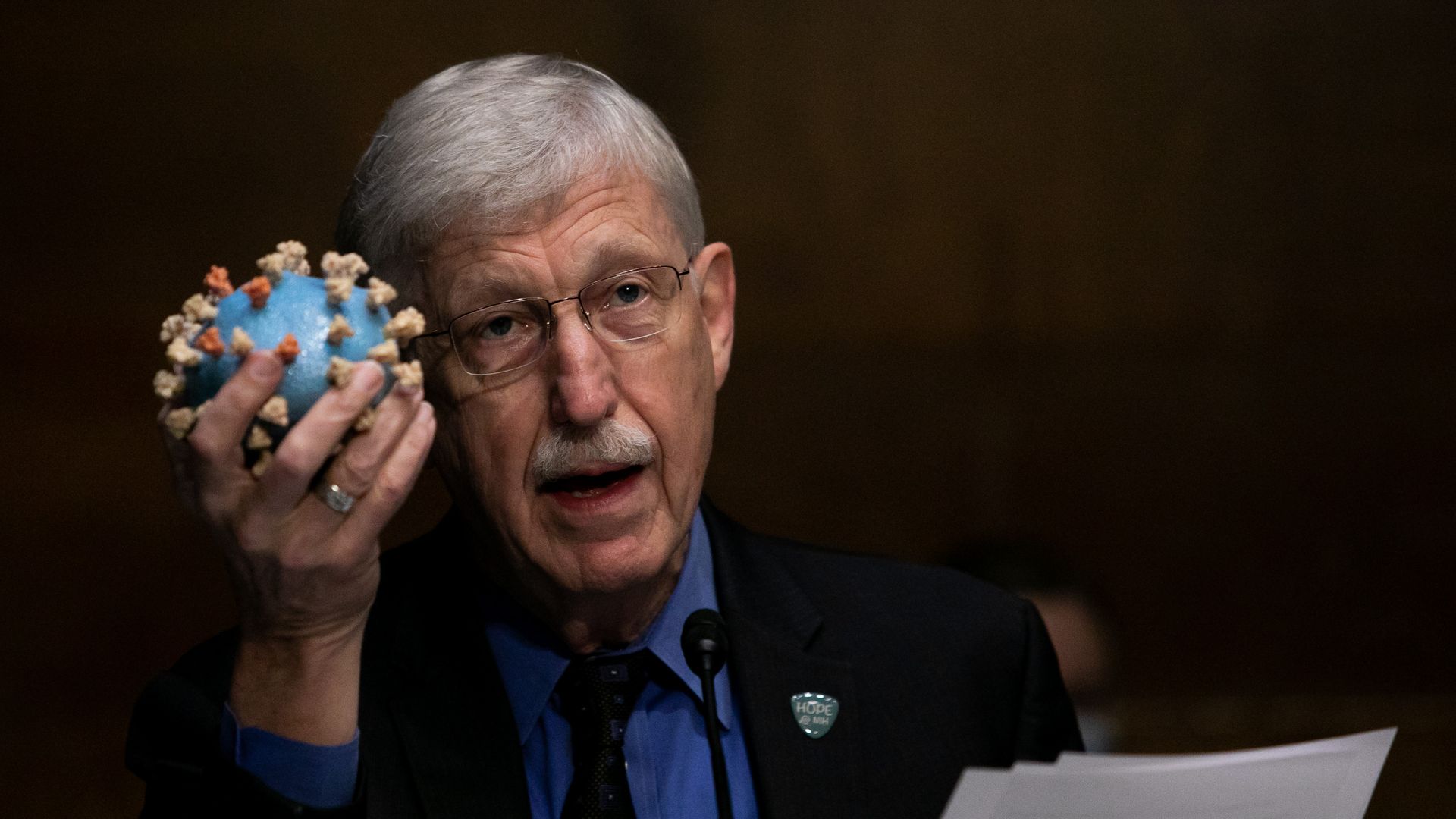
National Institutes of Health director Francis Collins said Saturday on CNN that it's "truly heartbreaking" to see fellow evangelical Christians hesitant to get vaccinated against COVID-19 due to disinformation.
Why it matters: "We see still more than 1,000 people [per day] losing their lives to this disease — almost all of those unvaccinated and, therefore, didn't have to happen," said Collins, who's due to retire at the end of 2021.
The big picture: He and his wife, Angela West, both tested positive for the virus, according to statements posted to the former Texas GOP chair's Twitter account. He wasn't vaccinated against the coronavirus, but Angela West was.
One of the best-known protections of the Affordable Care Act was a requirement that contraception be 100% covered by insurers — but that doesn't always mean women are able to access the birth control their doctor prescribed for them.
The catch: In many cases, the newest contraceptives on the market are not covered — even when they are recommended by the patient's doctor — because an insurer's formulary calls for an older version of the same method.
The pandemic may have put millions of more women — particularly young women — unknowingly on track for heart disease complications.
Driving the news: Several studies have emerged in the past year sounding alarms on how pandemic stressors like the increasingly difficult work-life balance, caregiving burdens and social isolation have left women bearing the brunt of this epidemic.
When it comes to women's health, Americans — and the advertisers that market to them — are getting blunter.
What's happening: Women's health is undergoing a generational cultural change. Younger women talk more openly about their periods and sexual health concerns — and more companies are marketing to them with messages that women only whispered about a few years ago.
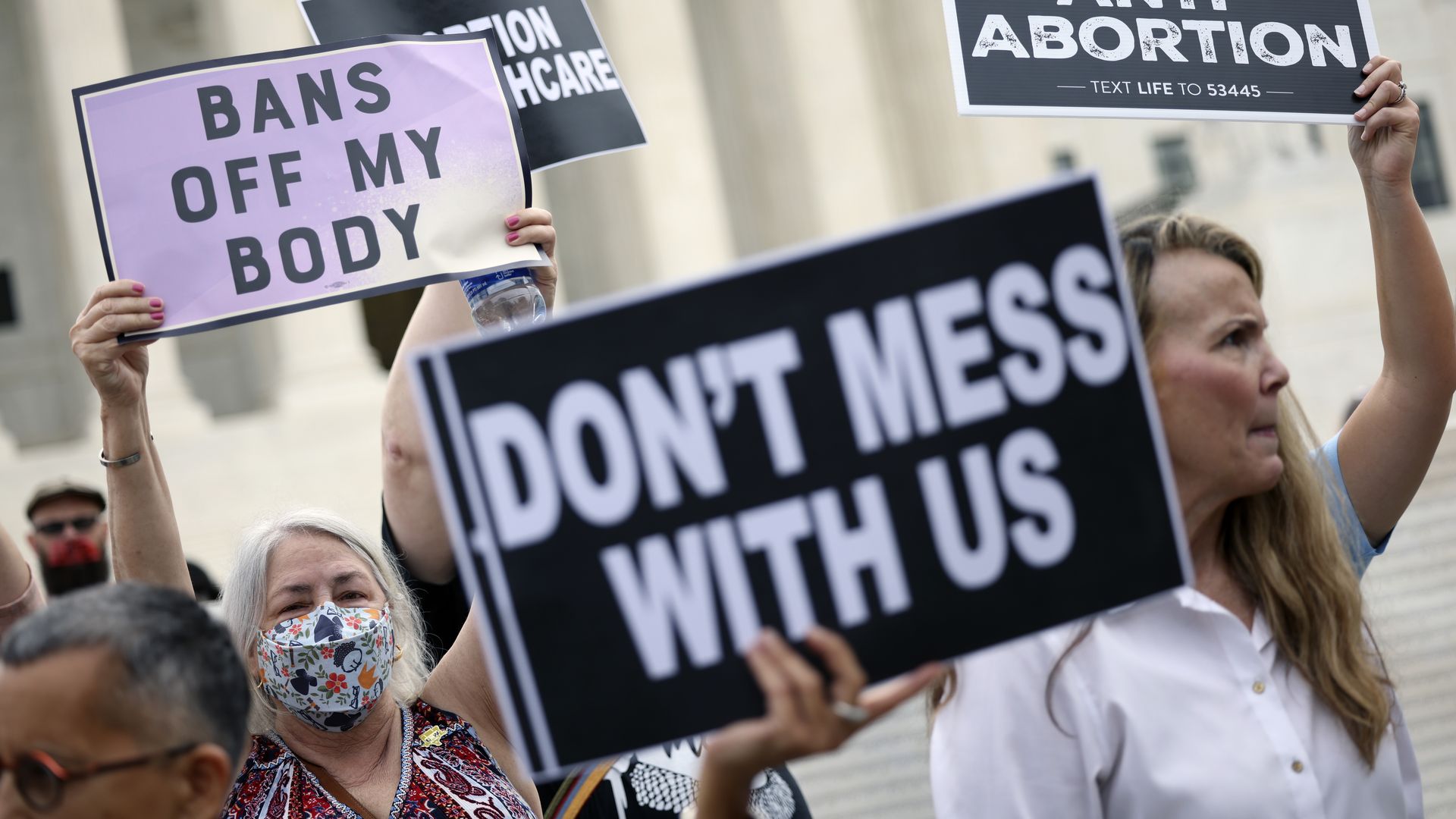
Now that a Texas law has banned abortion in the state after six weeks, more states are expected to follow suit, making access to women’s health care in certain parts of the country even harder than it already is.
Why it matters: Large areas of the U.S. — particularly in the central region of the country — alreadyhave no options within a 250-mile drive, and some counties are at least 350 miles from the nearest abortion provider.
The lingering legacy of clinical trials failing to include women as participants, combined with frequent gaslighting by doctors and a general lack of research on women's bodies, has led many to mistrust medicine.
Why it matters: This mistrust plus a constant barrage of misinformation can influence women's health decisions, including deciding not to follow recommendations for the COVID-19 vaccine.
The White House allocated an additional $1 billion to buy millions of rapid at-home COVID-19 tests earlier this week.
Why it matters: Rapid tests can quickly determine whether you're infected with COVID-19 and at risk of spreading it to others, but lack of funding — and slow approval — has led to a dire shortage.
Why it matters: The three-judge panel's decision will allow Texas to once again enforce the ban despite a lower court judge's earlier ruling that the law is unconstitutional.