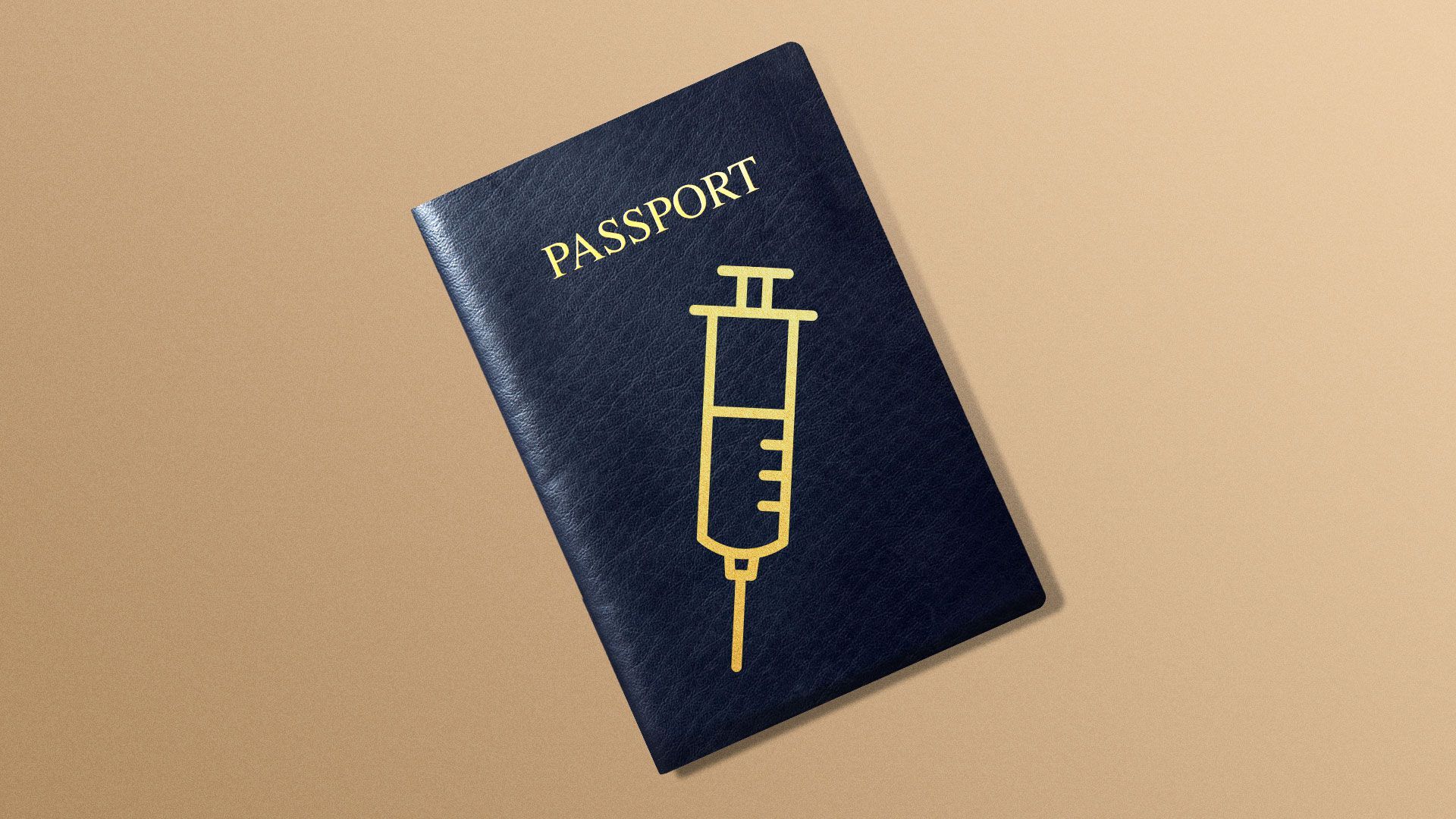
The EU unveiled its proposalfor vaccine passports this week, offering the most detailed picture yet of how international travel might resume in the coming months.
Why it matters: People are desperate to travel, and tourism-reliant countries like Greece are desperate to receive them. Vaccines should provide a path out of closed borders and mandatory quarantines, but there’s no universal way to track who has actually been vaccinated.
Paris and other regions within France will enter a month-long lockdown starting Friday as coronavirus cases, hospitalizations and deaths across the country spike, Prime Minister Jean Castex announced Thursday, according to Le Parisien.
Driving the news: The lockdown, the third for France's capital city since the start of the pandemic, will include the closure of nonessential businesses, a curfew and restrictions on outdoor trips.
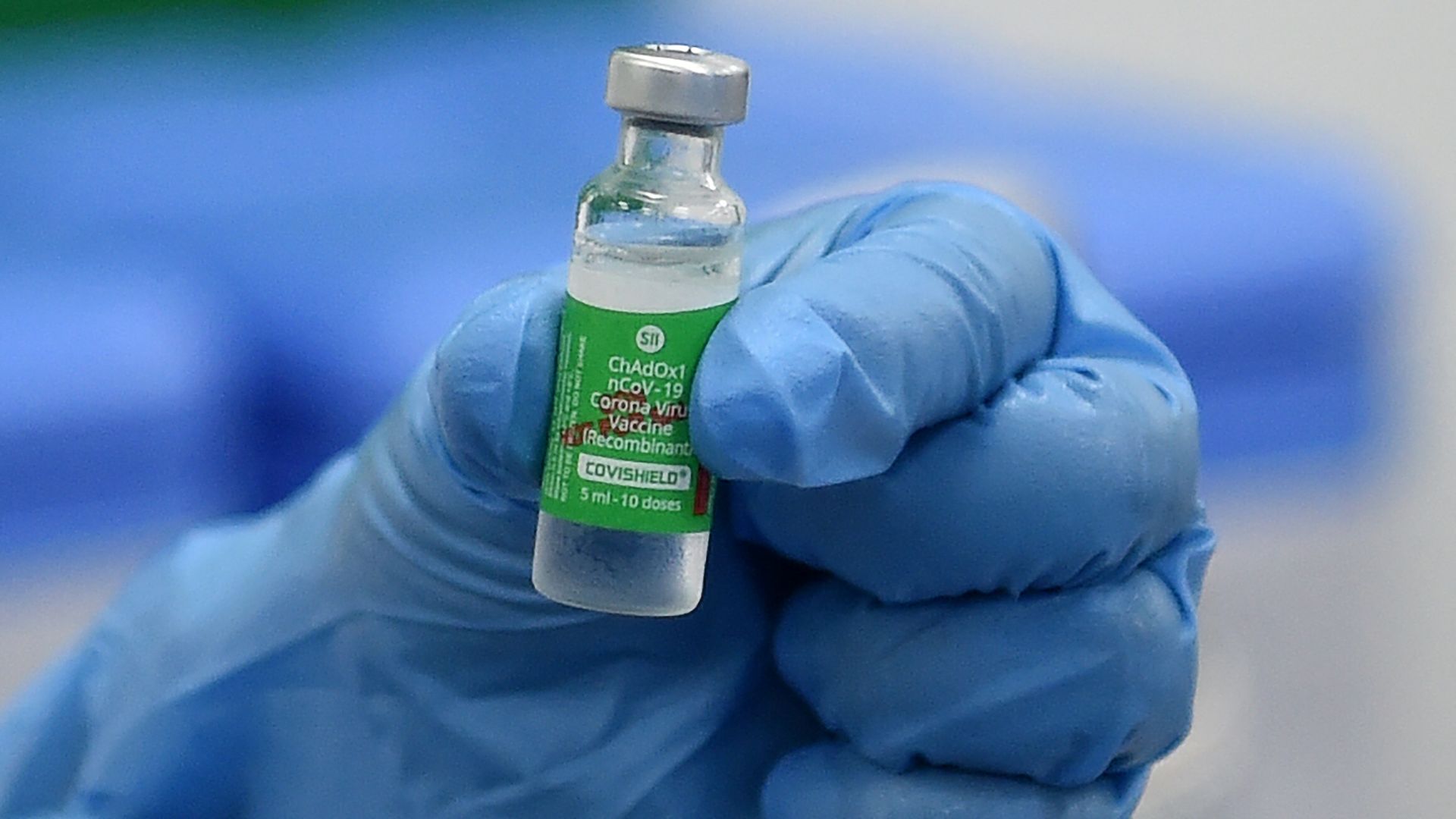
The European Medicines Agency on Thursday declared that the COVID-19 developed by AstraZeneca and Oxford University is "safe and effective," giving a nod of approval for European nations to resume using the inoculation.
Why it matters: It comes after vaccination was halted across much of Europe, following reports that a small number of patients who received the vaccine experienced blood clots. EMA Executive Director Emer Cooke said Thursday the vaccine benefits "outweigh the possible risks."
The pace of new coronavirus infections in the U.S. has stabilized as vaccinations continue to ramp up.
The big picture: We could make the next phase of COVID-19 easier on ourselves if we’d do a better job containing the virus now. But a safe return to some version of normalcy, even if it’s not as complete as it could be, is still close at hand, thanks to the vaccines.
Improving schools' ventilation systems won't only help keep kids safe from COVID-19, but may also improve their academic performance in the process.
Why it matters: As schools figure out what they need to do to safely resume in-person classes, some experts are advocating for options — like better air filtration — that would yield added benefits beyond the pandemic.
The Federal Emergency Management Agency announced Wednesday it will reimburse the families of COVID-19 victims for funeral expenses incurred after Jan. 20, 2020.
Why it matters: The coronavirus has killed more than 537,000 people in the United States, inflicting emotional and financial pain on thousands of families across the country.
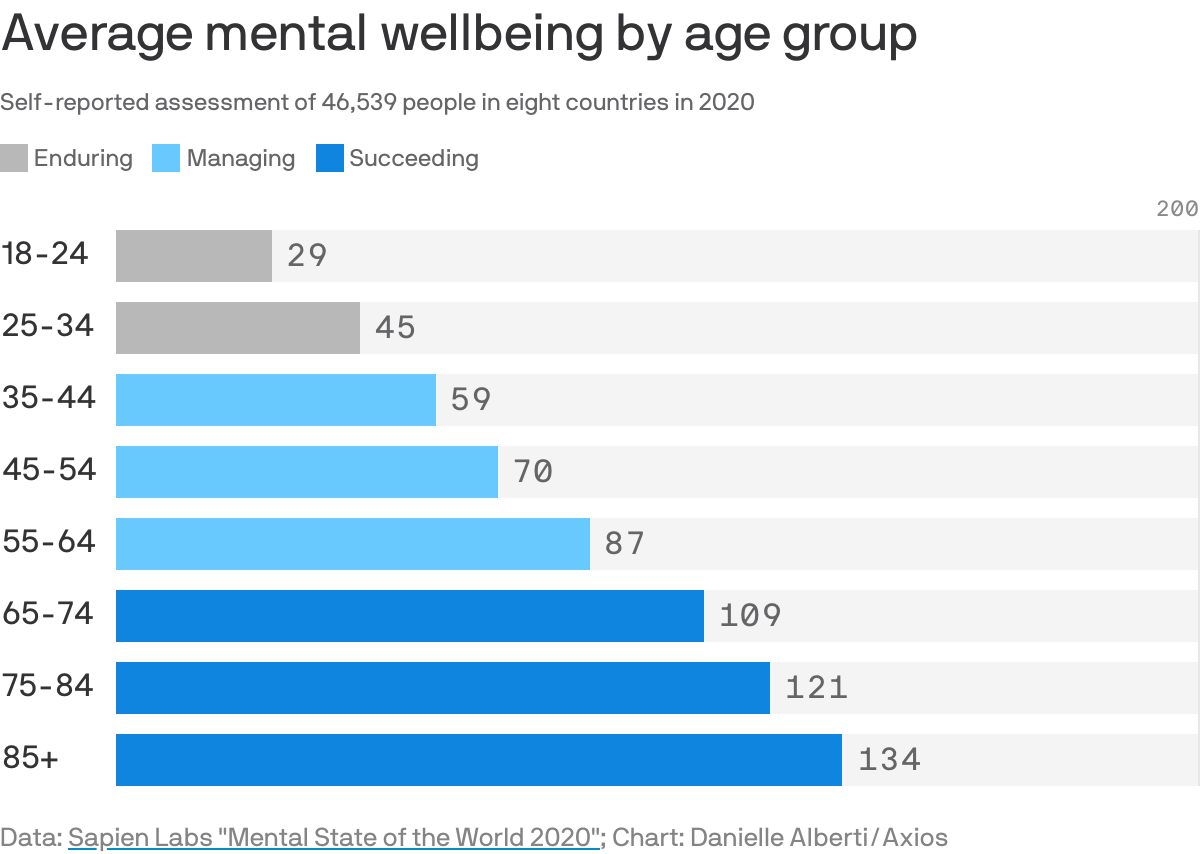
A new survey of people in eight countries finds that mental wellness took a dive in 2020, with the worst effects found among the young.
Why it matters: Few people's mental health escaped unscathed from the effects of the pandemic, but the gap between the state of the young versus older adults could mean serious problems down the road.
More than 15% of Americans 18 and older are now fully vaccinated for COVID-19, with nearly 28% having received at least one shot, and many states loosening eligibility rules.
Axios Re:Cap digs into where the vaccine rollout goes from here, and who might be getting skipped over, with Zeke Emanuel, an adviser in the Obama White House and chair of the University of Pennsylvania's Department of Medical Ethics and Health Policy.
After a more than yearlong closure, Disneyland's two California theme parks will reopen their doors to the general public on April 30, Disney announced in a statement Wednesday.
Why it matters: As Axios' Sara Fischer previously noted, Disney said in February that it did not expect to reopen its California parks until the end of Q2 2021. The April 3o reopening reflects a growing confidence in safety due to dropping COVID-19 cases and increased vaccinations.
The Biden administration will funnel more than $12 billion from the American Rescue Plan toward COVID-19 testing in K-12 schools, as part of a push to reopen the remaining closed districts for in-person learning, the Department of Health and Human Services will announce Wednesday.
Why it matters: About 20% of the country's students are still fully remote. Though the number of reopened schools grows each week, many still aren't at full capacity or are struggling to convince some parents and teachers to return to the classrooms.
The Cherokee Nation is now facing the issue that the rest of America will have to deal with in the coming months: demand for coronavirus vaccines has dried up, the New York Times reports.
The big picture: So far, demand for vaccines has outstripped supply in the U.S. But at some point the vaccination effort's biggest challenge will be finding the unvaccinated and convincing them they should get a shot.
Some people with "long COVID" say their symptoms have gotten better after they received a vaccine, the Washington Post reports.
The big picture: The evidence so far is largely anecdotal, but further research could help determine whether vaccines can offer some help to the millions of people worldwide who are suffering through long-term illness that science doesn't understand very well.
Several states are making their entire adult populations eligible for coronavirus vaccines well ahead of President Biden's May 1 goal.
Why it matters: Opening up eligibility could get more shots in arms, but it also risks creating more competition for vaccines before many vulnerable Americans have received theirs.
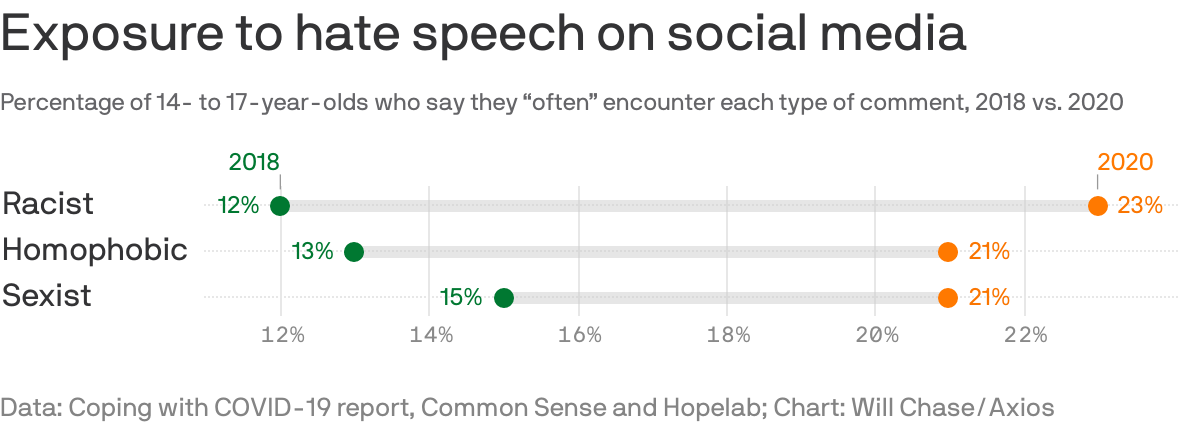
Young people are encountering far more hate speech on social media than they did just two years ago, according to new survey data out Wednesday from Common Sense Media.
Why it matters: Cooped-up teens and young adults are spending more time than ever on social media to cope with loneliness during the pandemic, the survey shows, but they are also met with a new wave of vitriol, including body shaming and racist, sexist and homophobic content.