California health officials on Tuesday told theme parks like Disneyland and Universal Studios Hollywood that they can reopen once daily coronavirus cases in their respective counties drop below one per 100,000 people.
Why it matters: Disney and Universal, both of which hoped to reopen when their counties reached "moderate" spread, have been negatively impacted by the pandemic. Deadline reported that Universal Studios Hollywood laid off over 2,200 employees since July and Disney laid off 28,000 employees in September.
University of Michigan students must shelter-in-place for 14 days due to an uptick in COVID-19 cases on campus, the school's president Mark Schlissel wrote in a letter on Tuesday.
Why it matters: Schlissel said the order is meant to address small- and medium-sized social gatherings that have been identified as the primary cause of new cases on campus.
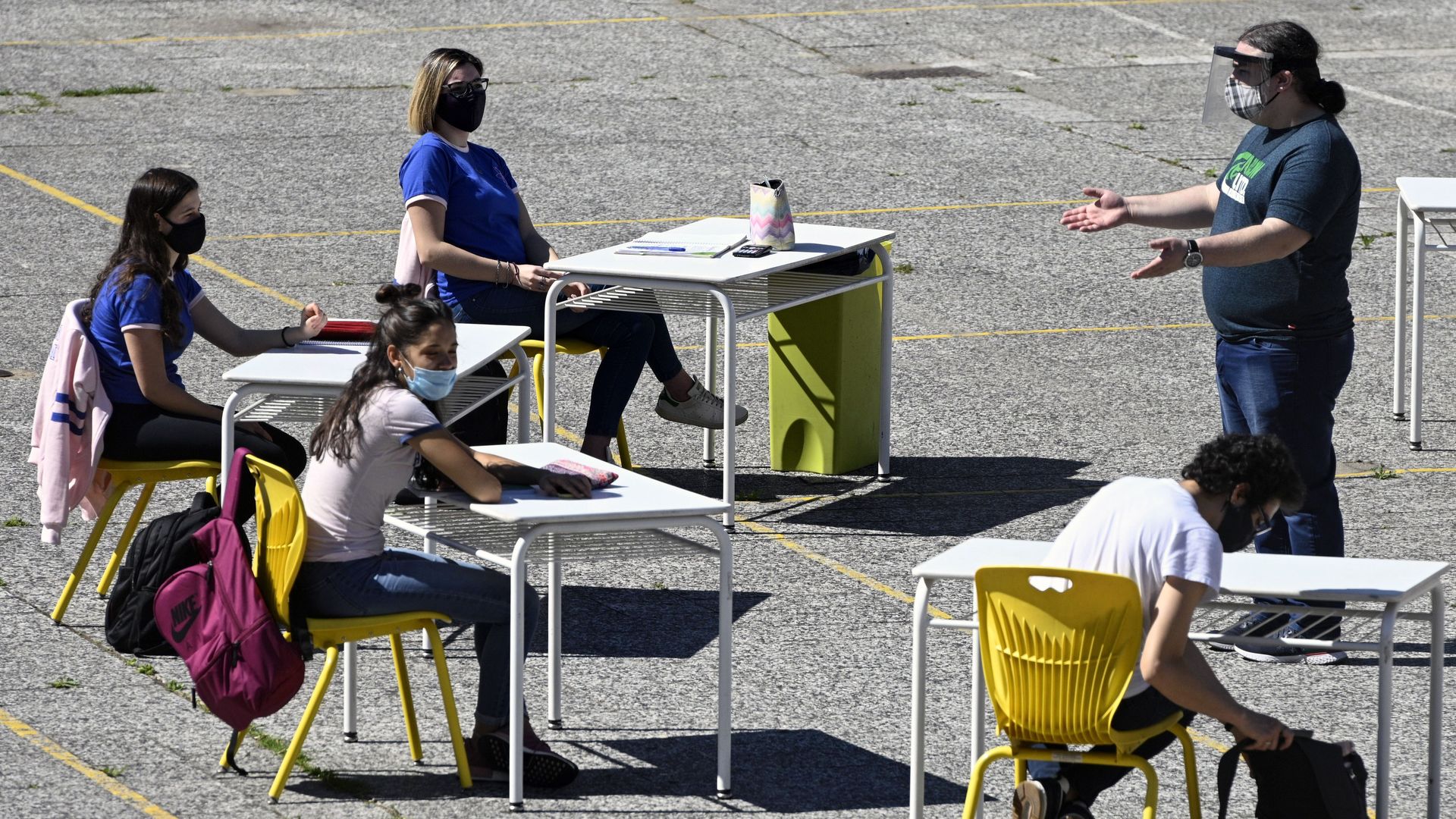
Reopened schools generally have not experienced large coronavirus outbreaks, an early sign that they may not be the super-spreaders some experts had feared.
Why it matters: Data so far suggest that schools can be safely reopened, alleviating one of the biggest and most sensitive tensions of the pandemic.
Large shares of women, seniors and independents now say they're less likely to trust President Trump for accurate information about COVID-19 since he caught it himself, according to the latest installment of the Axios/Ipsos Coronavirus Index.
The big picture: Week 28 of our national survey has most Americans rejecting ideas that Trump has floated around hydroxychloriquine as a virus treatment, how herd immunity works or any imminent availability of a vaccine.
The percentage of coronavirus tests coming back positive is rising across the country, including in states that are also seeing a spike in cases.
Why it matters: High positivity rates indicate a worsening outbreak, and put together with the rise in cases and hospitalizations across the country, suggest that the U.S. is in bad shape.
The Republic of Ireland will return to its highest level of lockdown restrictions this week to combat surging coronavirus cases, Taoiseach Micheál Martin announced Monday evening.
Why it matters: The country is the first in Europe to announce a return to a nationwide lockdown. Martin described the measures that'll see non-essential retailers close, home visits banned and a three-mile travel limit imposed from midnight Wednesday as "probably Europe's strictest regime." Bars, cafes and restaurants can only serve takeout meals only under the measures, which will last for six weeks.
Argentina's health ministry reported 12,982 new coronavirus cases Monday night, taking the country's total to 1,002,662.
Why it matters: Argentina is the fifth country to surpass 1 million COVID-19 cases, after Russia (over 1.4 million), Brazil (more than 5.2 million), India (7.5-plus) and the U.S. (over 8.2 million), per Johns Hopkins. "It means one in every 45 Argentinians have had the virus," the Guardian notes. The country reported Monday that the virus had killed another 451 people, taking the death toll to over 26,000.
Editor's note: The headline of this story has been corrected to show Argentina passed 1 million cases not 5 million.
California will "independently review" all coronavirus vaccines approved by the Food and Drug Administration before allowing their distribution, Gov. Gavin Newsom (D) announced at a news conference Monday.
Why it matters: The move could raise further public concern that the federal government could release a vaccine based on political motives, rather than safety and efficacy. Newsom noted the "political polarization" around the issue.
Anders Tegnell, Sweden's chief epidemiologist, defended his country's coronavirus strategy in an interview with the New Statesman, telling the newspaper that Sweden did not pursue "herd immunity" and "definitely had a virtual lockdown" — despite looser restrictions than most countries.
Why it matters: Sweden's more relaxed approach to the pandemic compared to other industrialized countries has been a source of controversy, with many libertarians and conservatives, including Sen. Rand Paul (R-Ky.), arguing that the U.S. should have pursued a similar strategy.
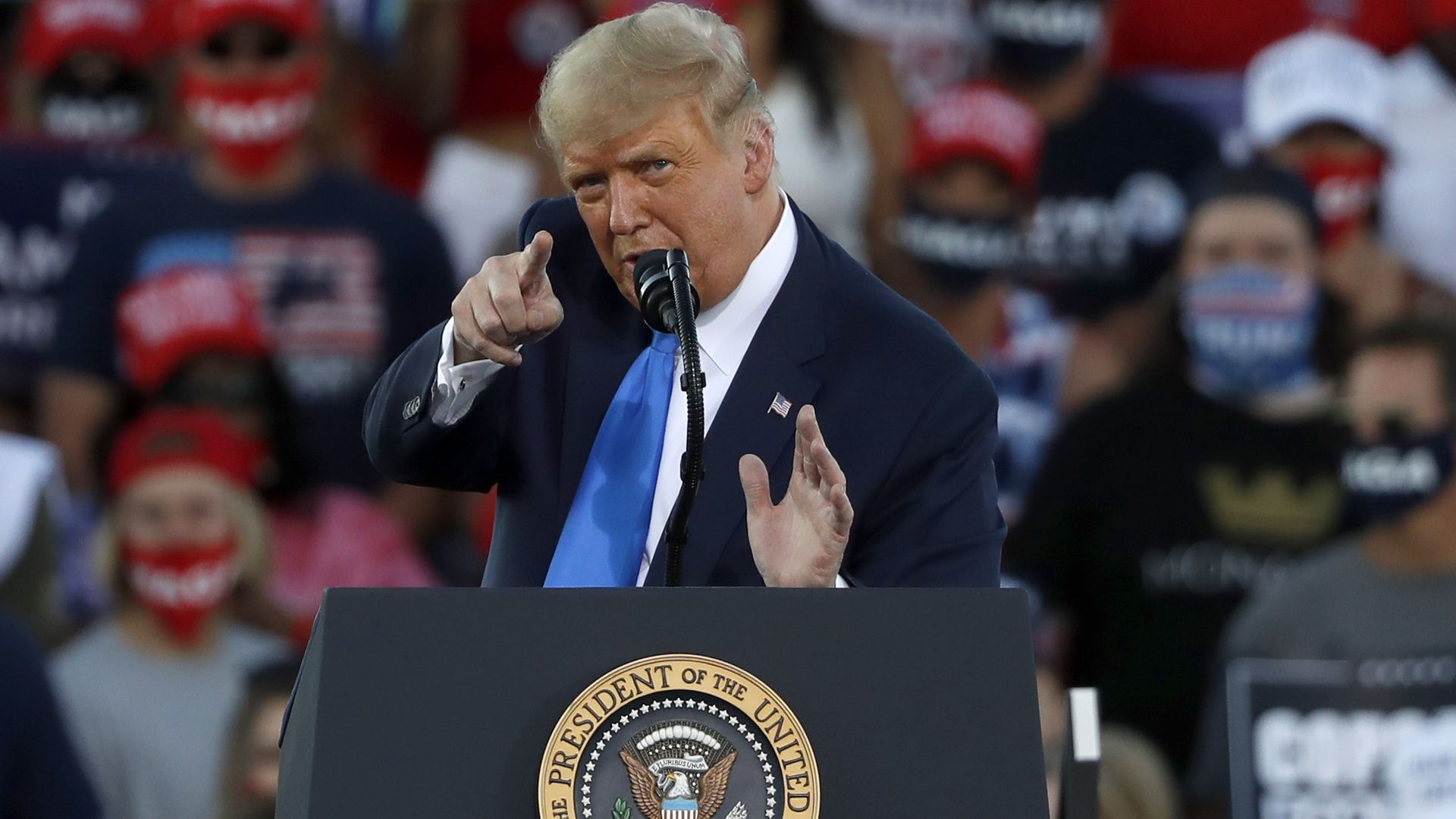
President Trump attacked CNN for continuing to cover the coronavirus pandemic, calling the network "dumb b*stards" at a campaign rally in Prescott, Arizona on Monday.
Why it matters: The president's attacks on the media and Anthony Fauci, the government's top infectious-disease expert, come as coronavirus cases and hospitalizations are again surging across the country, just two weeks out from Election Day.
Sen. Lamar Alexander (R-Tenn.) praised NIAID Director Anthony Fauci on Monday, tweeting that the U.S. would have fewer COVID-19 cases if more Americans "paid attention to his advice."
Between the lines: Alexander, who is retiring at the end of this year, did not specifically name Donald Trump, but his comments came less than 30 minutes after the president escalated his attacks on Fauci on Twitter.
During a campaign call on Monday, President Trump slammed infectious disease expert Anthony Fauci, calling him a "disaster" and claiming that "people are tired of COVID," according to multiple reporters who listened to the call.
Why it matters: Fauci, who considers himself apolitical, is one of the most trusted voices in the country on the coronavirus. Trump's escalating attacks on the government's top infectious-disease expert come as coronavirus cases and hospitalizations are again surging across the country, just two weeks out from Election Day.
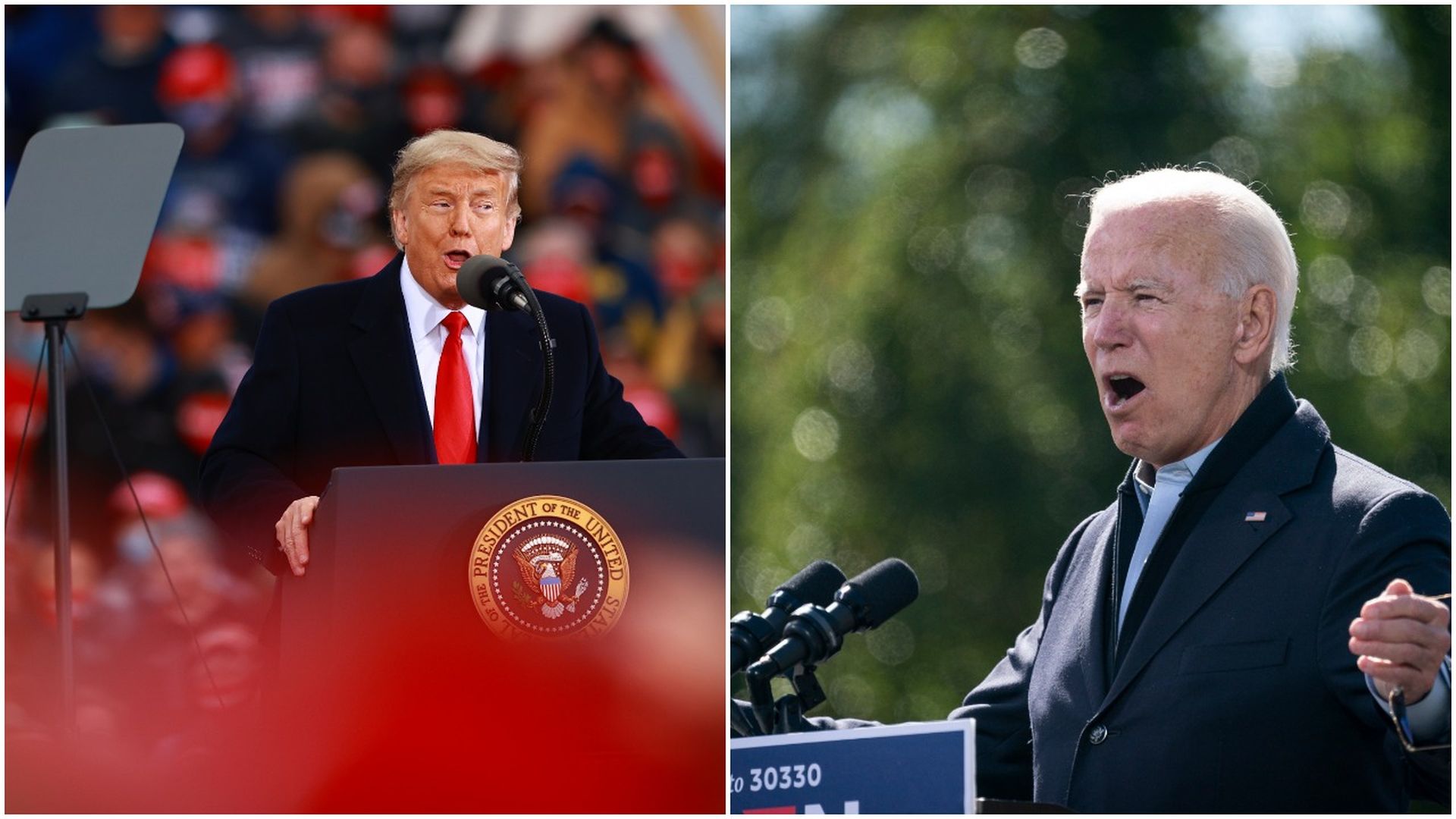
The presidential race has been dominated by President Trump's handling of the pandemic, but there's been relatively little talk of what Joe Biden would do were he to take office in January.
Axios Re:Cap digs into Biden's pandemic plan — including details on mask mandates, shutdowns, and vaccine distribution — with campaign surrogate Rep. Ami Bera (D-Calif).
A Wisconsin judge on Monday reimposed a previous order from Gov. Tony Evers (D) limiting the number of people who can gather indoors in bars, restaurants, and other places to 25% capacity.
Why it matters: Wisconsin, a swing state for the presidential elections, is facing one of the worst coronavirus surges in the country, with a record 1,090 people hospitalized as of Sunday. The state also hit new records last week for daily COVID-19 infections and deaths.
Coronavirus hospitalizations are increasing in 39 states, and are at or near their all-time peak in 16.
The big picture: No state is anywhere near the worst-case situation of not having enough capacity to handle its COVID-19 outbreak. But rising hospitalization rates are a sign that things are getting worse, at a dangerous time, and a reminder that this virus can do serious harm.
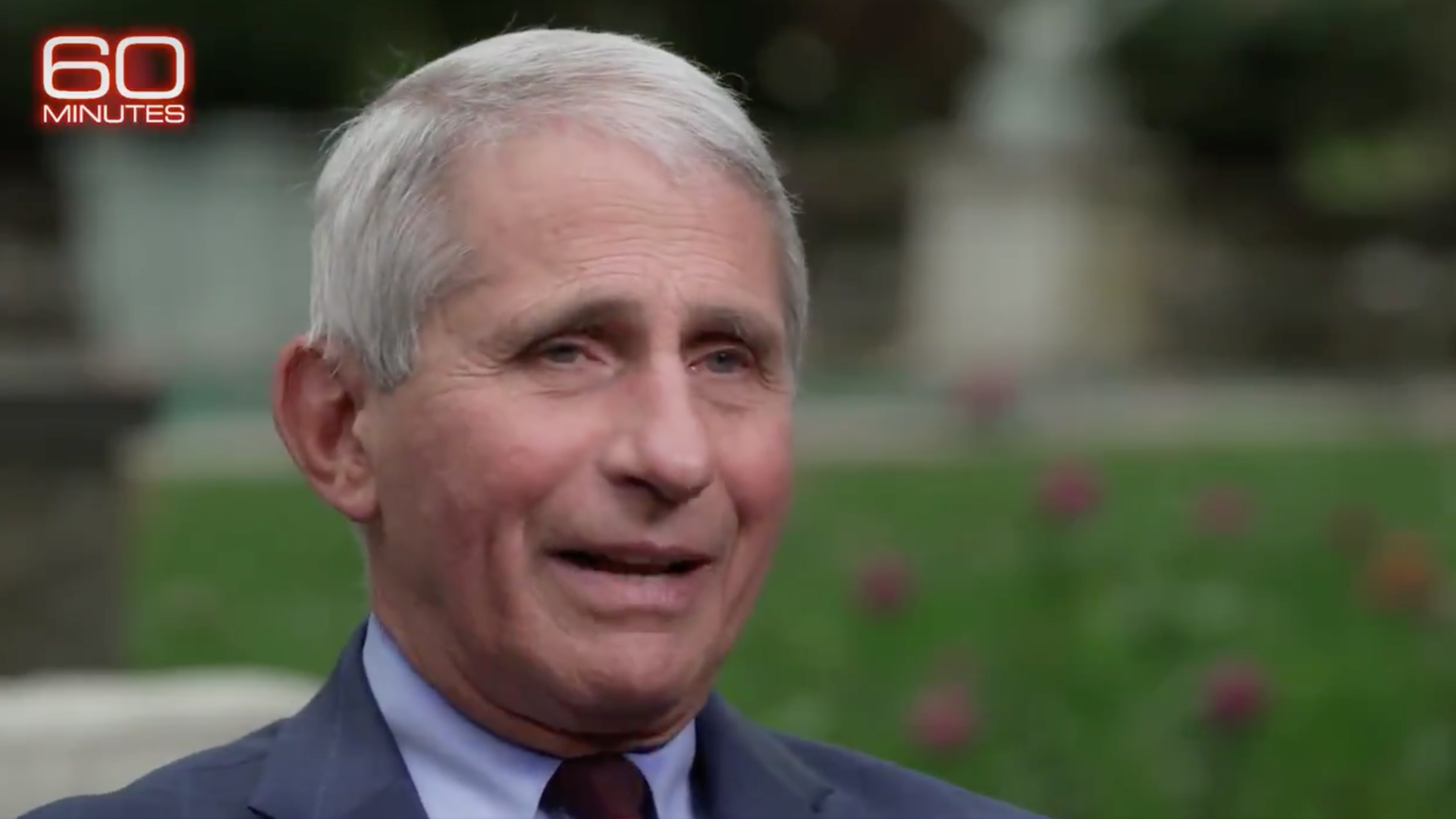
NIAID director Anthony Fauci told CBS' "60 Minutes" in an interview broadcast Sunday he's "absolutely not" surprised that President Trump contracted Covid-19 after seeing him on TV in a crowded place with "almost nobody wearing a mask."
The big picture: Fauci said after watching the footage, he thought: "'Oh my goodness. Nothing good can come outta that, that's gotta be a problem.' And then sure enough, it turned out to be a superspreader event." Fauci appeared to be referencing the Sept 26. Rose Garden celebration of Supreme Court nominee Judge Amy Coney Barrett.
The Biden campaign slammed President Trump after he said at a Nevada rally Sunday if his Democratic presidential rival Joe Biden were elected there'd be more coronavirus pandemic lockdowns because "he'll listen to the scientists."
What he's saying: "If I listened totally to the scientists, we would right now have a country that would be in a massive depression," Trump said.