Utah Gov. Gary Herbert (R) issued a public school face mask mandate on Thursday for all K-12 students, faculty, staff and visitors for the fall term to prevent the spread of the coronavirus.
Why it matters: States across the U.S. are currently wrestling with how to get kids back to school this coming academic year amid increasing COVID-19 caseloads and strained budgets.
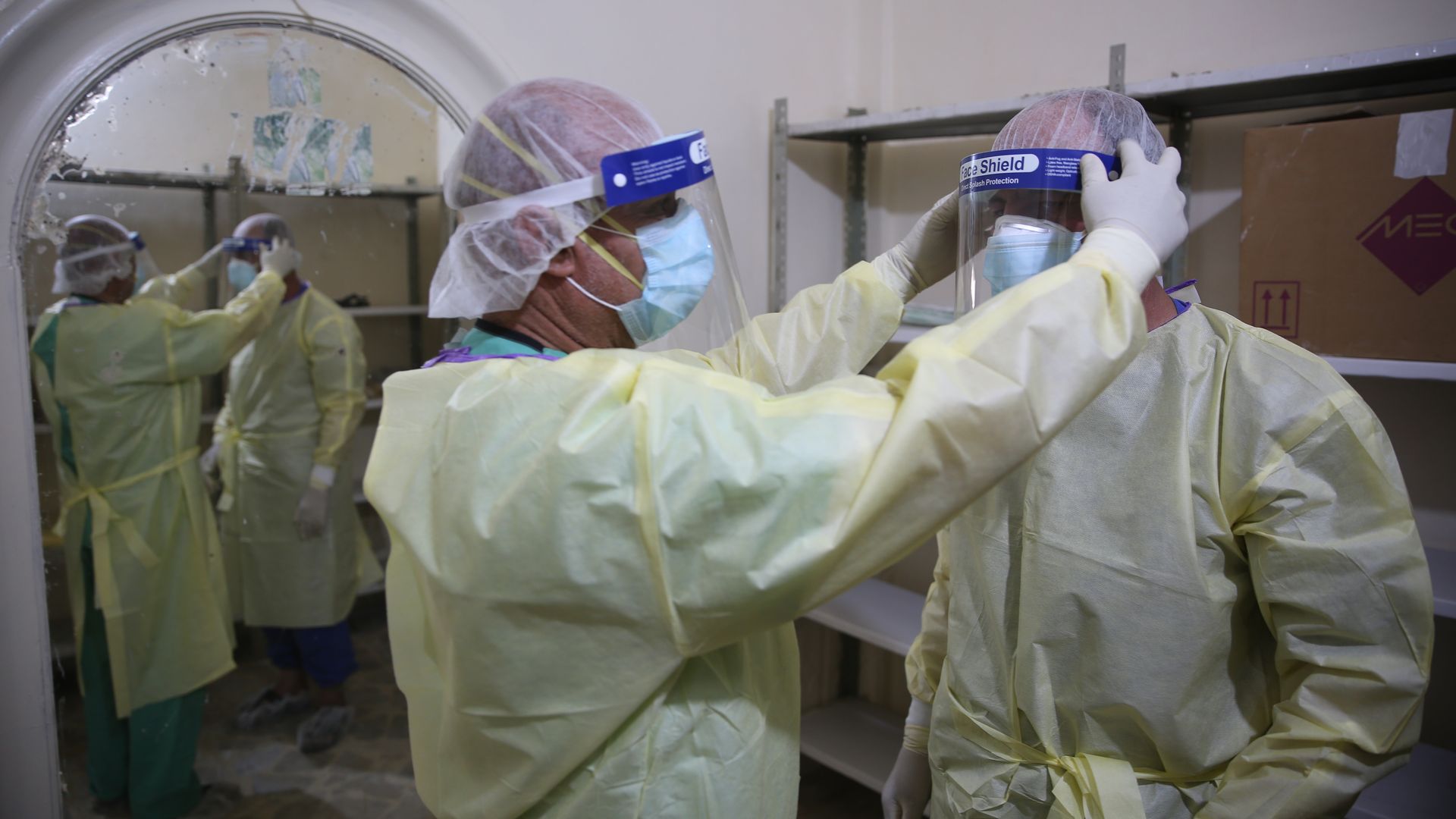
A 39-year-old doctor tested positive for the coronavirus in northwestern Syria, making him the first confirmed case in the region, according to the aid group Union of Medical Care and Relief Organizations.
Why it matters: The spread of COVID-19 in Syria, particularly in Aleppo, could have a devastating impact on people already displaced by the Syrian Civil War.
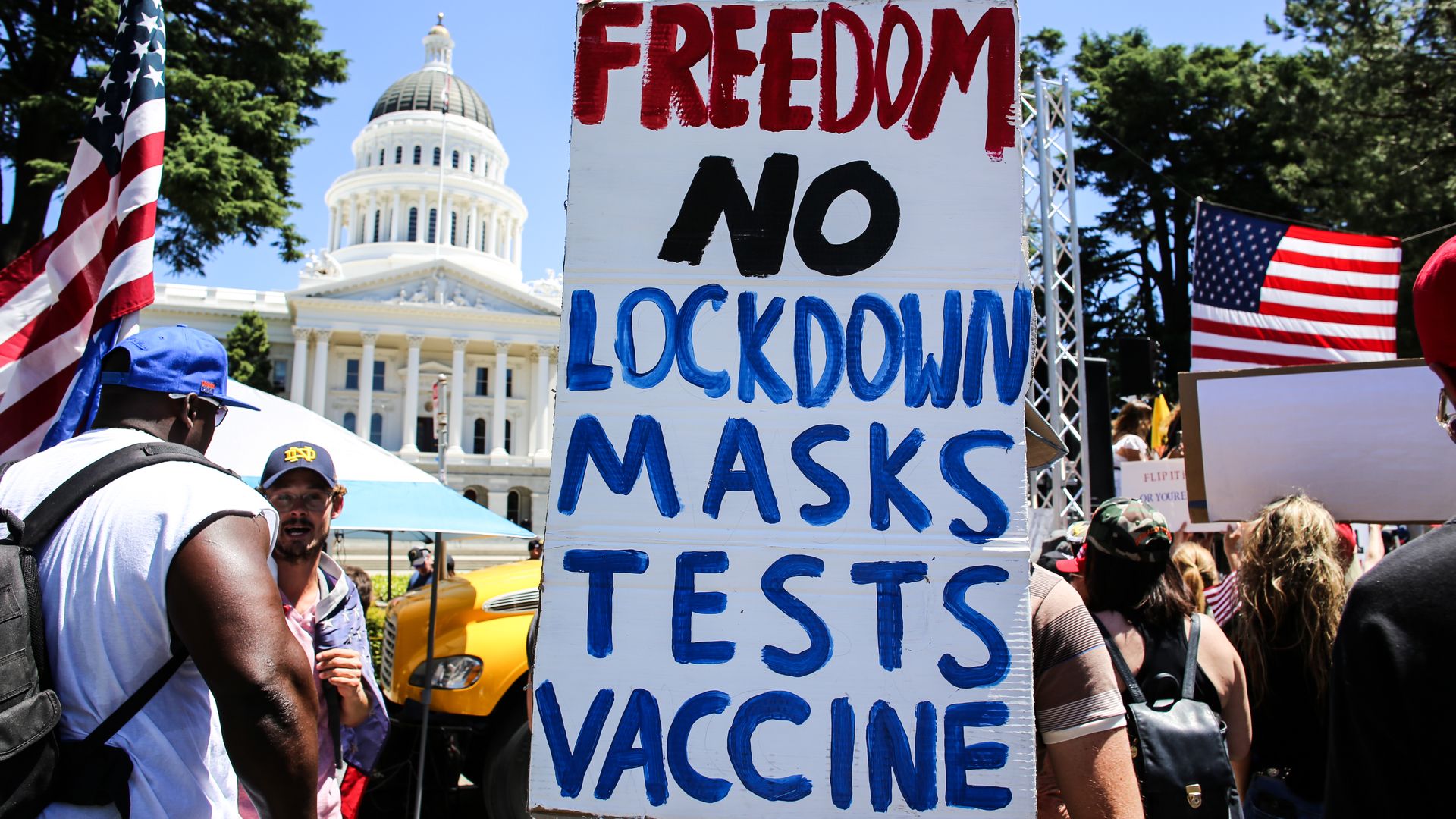
As many as 250,000 to 370,000 deaths may have been averted between March and May 15 as a result of the statewide stay-at-home orders enacted to mitigate spread of the coronavirus, a study published Thursday in Health Affairs projects.
Why it matters: Lockdown restrictions have largely been lifted, but the coronavirus pandemic keeps getting worse all across the country. New modeling suggests the outbreaks could lead to more than 200,000 deaths by the end of year.
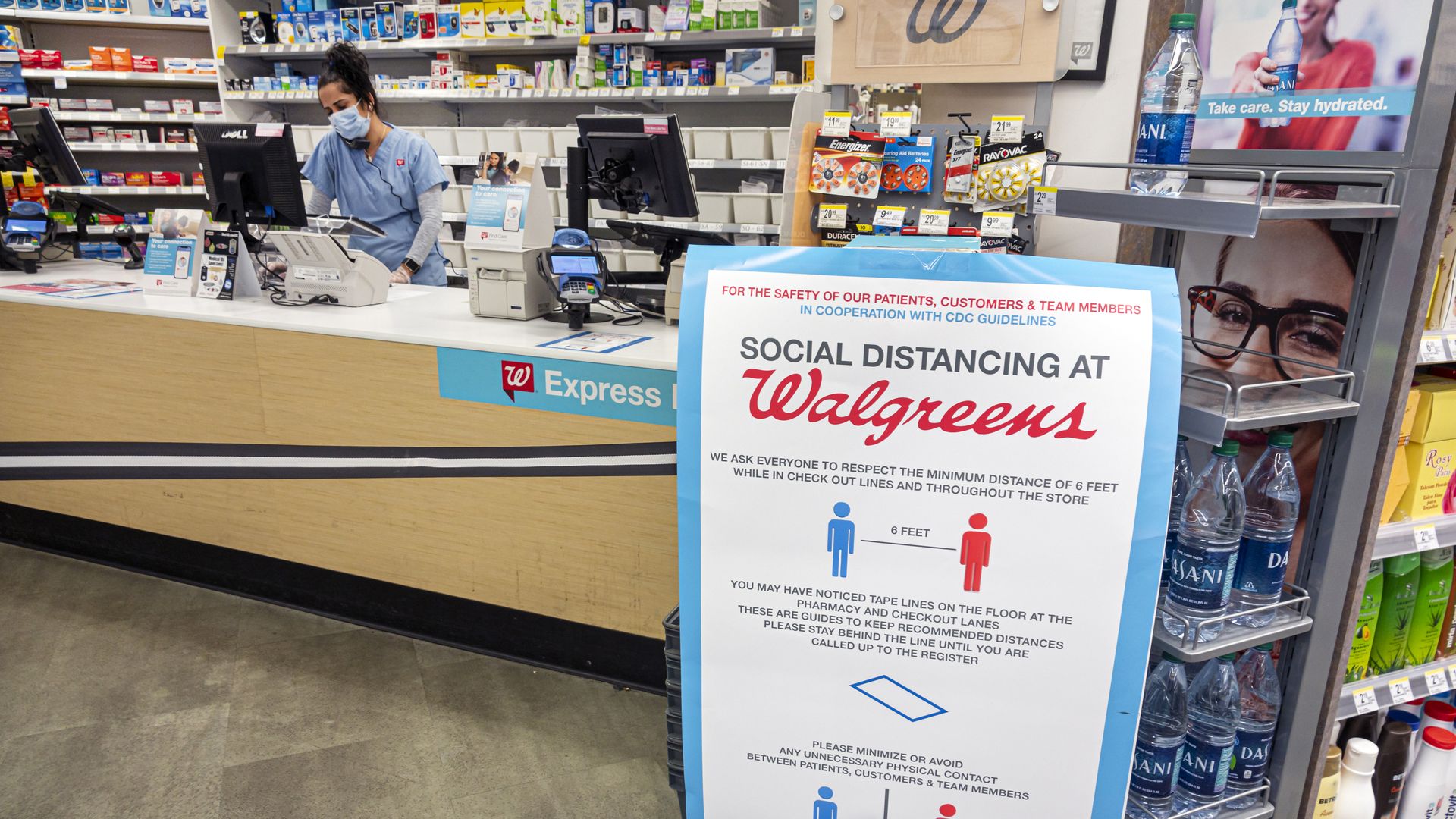
The big picture: "...many retail workers have reluctantly turned into de facto enforcers of public health guidelines, confronting customers who refuse to wear masks or to maintain a wide distance from others," the New York Times reported in May.
The spillover of pathogens from animals to humans — driven mainly by human behaviors like urbanization and the demand to eat meat — is increasing and will continue wreaking havoc unless global action is taken.
Driving the news: The United Nations Environment Program issued a report this week outlining steps to prevent spilloversand encouraging governments to adopt a "One Health" approach to humans, animals and the environment.
More young people are being infected with the coronavirus, and even though they're less likely to die from it, experts warn the virus' spread among young adults may further fuel outbreaks across the United States.
Why it matters: Some people in their 20s and 30s face serious health complications from COVID-19, and a surge in cases among young people gives the virus a bigger foothold, increasing the risk of infection for more vulnerable people.
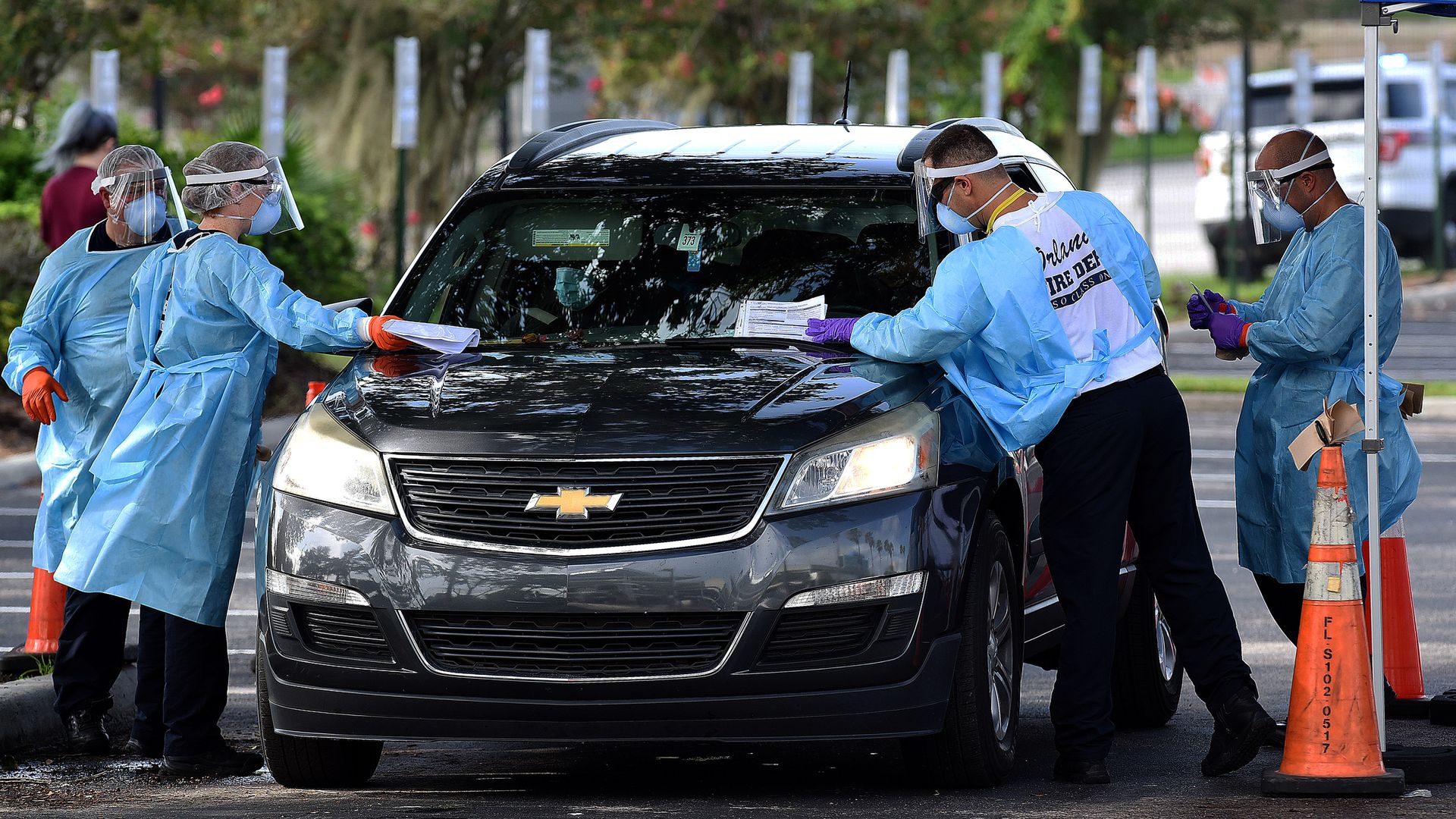
120 people in Florida have died from the novel coronavirus in the last 24 hours, the state's health department reported on Thursday.
Why it matters: It's the state's highest daily death toll from the coronavirus since the pandemic began, according to data from the COVID Tracking Project.
The World Health Organization published an update on Thursday that states that airborne transmission of the novel coronavirus is possible, especially in poorly ventilated buildings.
Why it matters: Hundreds of scientists around the world have called on the WHO, which informs public health policy around the world, to acknowledge that particles containing the virus can float indoors and remain infectious, per the New York Times.
A group of large drug companies launched a $1 billion AMR Action Fund Thursday in collaboration with policymakers, philanthropists and development banks to push the development of two to four new antibiotics by 2030.
Why it matters: Antimicrobial resistance (AMR) is a growing problem — possibly killing up to 20 million people annually by 2050 — but a severe lack of R&D market incentives has hampered efforts to develop a robust antibiotic pipeline to address the issue.
School districts are taking it upon themselves to help families get connected to the internet as they face down a long future of virtual learning.
Why it matters: In the COVID-19 era of education, broadband is an essential service that families need to stay connected — and that school systems require to equitably educate children in their districts.
Walgreens lost $1.7 billion in the three-month stretch that ended May 31, as the coronavirus outbreak kept shoppers at home and raised stores' costs.
Why it matters: The pandemic and global stay-at-home orders consumed almost all of those three months. Walgreens will now cut 7% of its workforce, mostly in the United Kingdom.
A coalition of AI groups is forming to produce a comprehensive data source on the coronavirus pandemic for policymakers and health care leaders.
Why it matters: A torrent of data about COVID-19 is being produced, but unless it can be organized in an accessible format, it will do little good. The new initiative aims to use machine learning and human expertise to produce meaningful insights for an unprecedented situation.
1,018 federal TSA employees have tested positive for the coronavirus, the agency said in data updated on Thursday.
Why it matters: More people are getting on flights. After the TSA screened fewer than 100,000 people per day at airports across the U.S. in early April, the agency processed over 630,000 travelers on Wednesday.
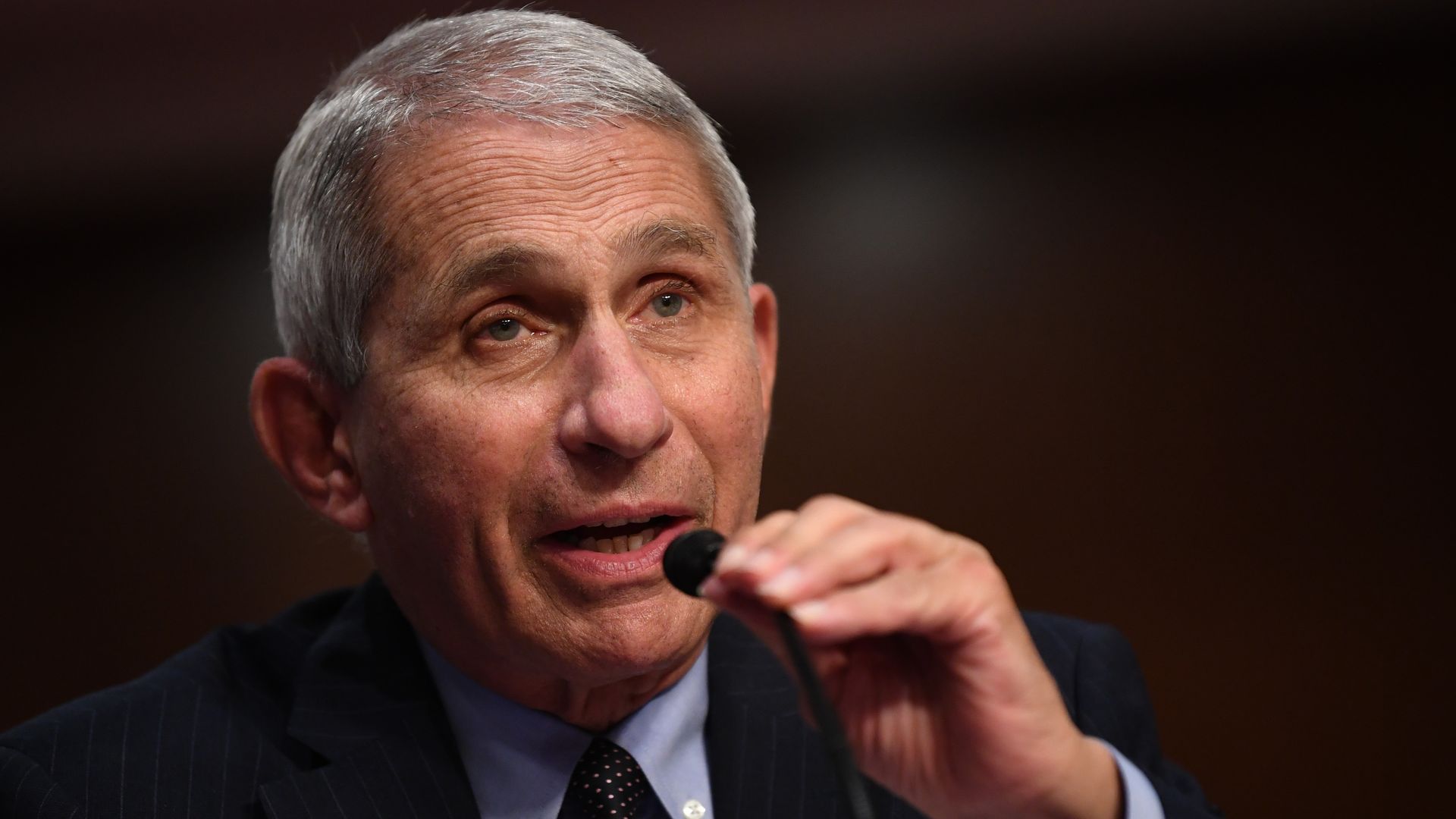
Anthony Fauci on Wednesday told a Wall Street Journal podcast that states experiencing a significant uptick in new coronavirus cases "should seriously look at shutting down."
The big picture: The comments come as states like Florida, Texas and Arizona have become new hotspots for the virus, with soaring rates of infections and rising deaths.
The Trump administration’s full-steam-ahead push to fully reopen schools this fall is on a collision course with the U.S.' skyrocketing coronavirus caseload and its decades-long neglect of public education.
Why it matters: Getting kids back to school is of paramount importance for children and families, especially low-income ones. But the administration isn’t doing much to make this safer or more feasible.
Hospitals in coronavirus hotspots are not scaling back their elective procedures, even as their intensive-care units are filling up with coronavirus patients.
Between the lines: Hospitals are ignoring federal recommendations and their own industry's guidance, which says non-urgent procedures should not restart until there is a "sustained reduction in the rate of new COVID-19 cases in the relevant geographic area for at least 14 days."
As the coronavirus poses risks and concerns for the youngest and oldest Americans, the generations in the middle are buckling under the increasing strain of having to take care of both.
Why it matters: People that make up the so-called sandwich generations are typically in their 30s, 40s and 50s, and in their prime working years. The increasing family and financial pressures on these workers means complications for employers, too.
The coronavirus pandemic keeps getting worse, all across the country. Thirty-three states saw their caseloads increase this week, continuing a scary nationwide trend that’s been getting worse since mid-June.
Why it matters: The U.S. is right back in the situation we were afraid of earlier this year, with a rapidly spreading outbreak, strained hospitals, and projections of more than 200,000 deaths by the end of the year.